The Reason Rufous Hummingbirds Start Stopping In Arizona Yards This September
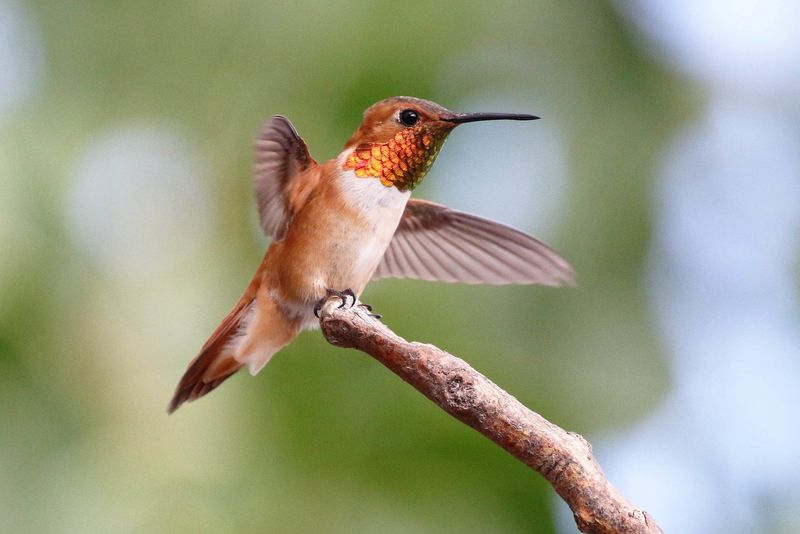
Every fall, a tiny bird with a remarkable story passes through parts of Arizona on one of the longest migratory routes of any North American hummingbird. Rufous Hummingbirds travel thousands of miles from their breeding grounds in the Pacific Northwest, western Canada, and Alaska down through the Rocky Mountain region toward Mexico.
September can be a strong time to spot one in southeastern and higher-elevation parts of the state, though the evidence does not promise a visitor to every yard. Knowing what draws these birds through Arizona, how to recognize them, and how to support them responsibly makes the difference between a lucky sighting and a missed one.
September offers a strong viewing window in parts of Arizona
Fall migration for Rufous Hummingbirds is already underway well before September arrives. Southeastern Arizona birding resources note that southbound movement can begin as early as late June, with the strongest push generally running from late August through mid-September.
September, then, is closer to a peak viewing window in certain parts of the state than it is to the start of the entire migration.
Rufous Hummingbirds breed primarily in the Pacific Northwest, western Canada, and Alaska before heading south and east through the Rocky Mountain region toward Mexico. Their total annual journey can approach 4,000 miles, making them one of the longest-distance migrants relative to body size in North America.
Arizona sits along that route, which means birds may pause briefly where food and habitat are available.
The key qualifier here is geography. The clearest evidence for strong September viewing comes from southeastern and higher-elevation Arizona, not from the low-desert Phoenix metro or the state as a whole.
A Rufous Hummingbird could appear in a Tucson or Phoenix yard, but frequency depends heavily on elevation, local flowering, nearby habitat, weather, and the individual bird’s chosen route. Treating September as a timely reason to look up in the right parts of Arizona is accurate; treating it as a statewide guarantee is not.
Mid-elevation southeastern sites provide the clearest local evidence
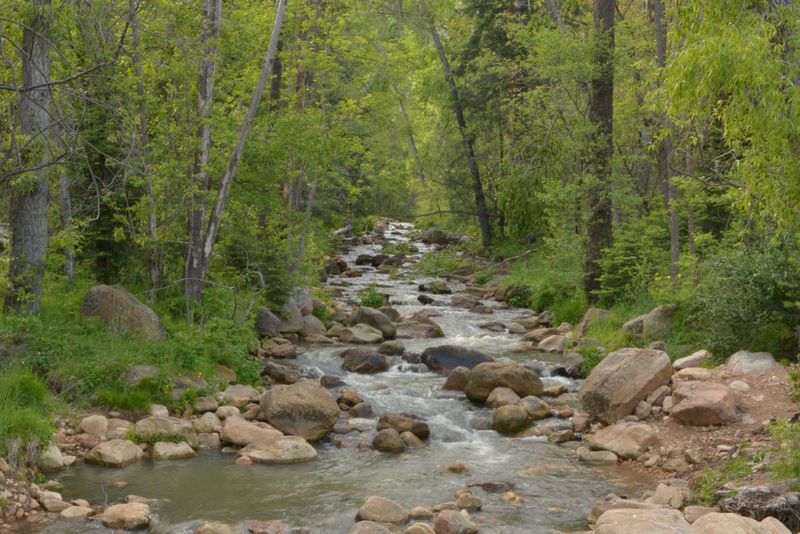
The most detailed local data on Rufous Hummingbird migration in Arizona comes from a peer-reviewed study conducted at two sites near Sonoita and Harshaw Creek in the southeastern corner of the state. University of Arizona banding research placed those sites at approximately 1,370 and 1,530 meters in elevation, within oak woodland and riparian habitat.
These are not typical Phoenix backyard conditions.
At those sites, Rufous Hummingbird migration began as early as July and continued through October, with a peak recorded in early September. The researchers also found that Rufous birds arrived after Black-chinned Hummingbirds had mostly passed through and before Anna’s Hummingbirds became dominant.
That sequence gives observers a useful frame of reference: if Black-chinneds have thinned out and Anna’s have not yet taken over, the timing may favor a Rufous sighting at compatible sites.
Elevation and habitat matter enormously here. The study itself noted that the same large migration pattern was not necessarily expected across all of southeastern Arizona, let alone across the entire state.
Your Arizona Garden Changes Every Week. Your Plan Should Too.
Gardening in Arizona changes quickly throughout the season. Every Friday you’ll receive a simple weekly plan showing exactly what to plant, prune, fertilize, harvest, and protect so you never miss the right timing.
Low-desert yards sit hundreds of meters below those study sites and lack the oak canopy and riparian corridors that appear to concentrate migrating birds. Phoenix and Tucson residents can still watch for Rufous Hummingbirds, but the conditions that produce consistent September counts at Sonoita-area sites simply do not replicate across every Arizona neighborhood.
Juvenile Rufous Hummingbirds can hide the familiar rusty color
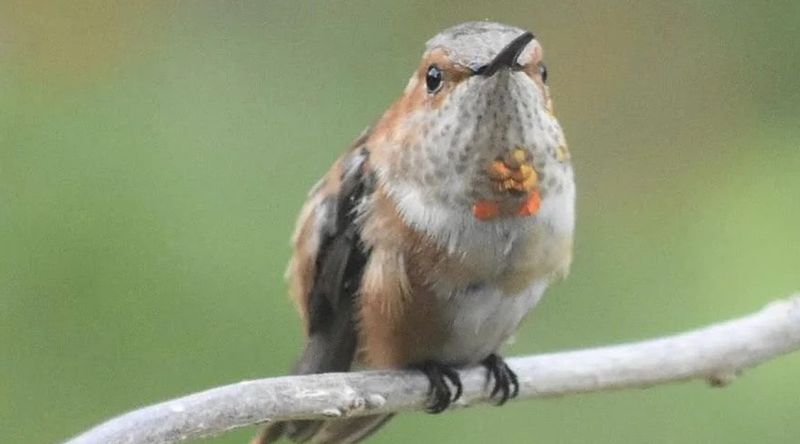
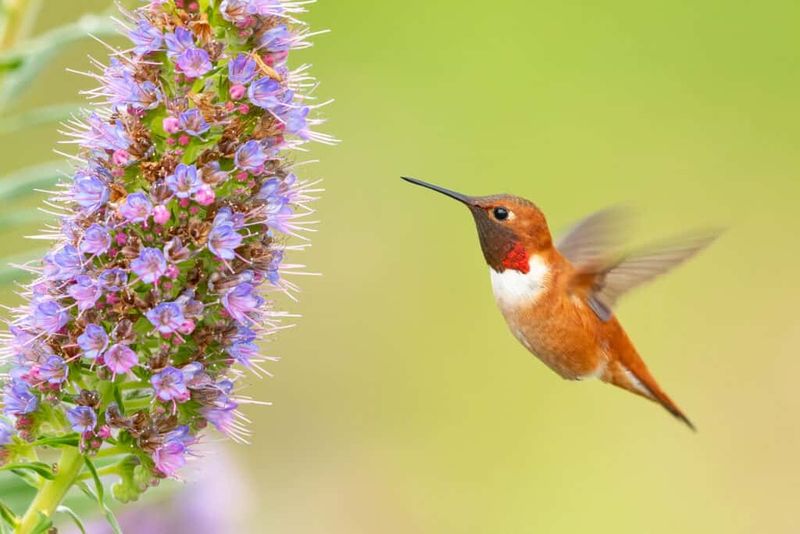
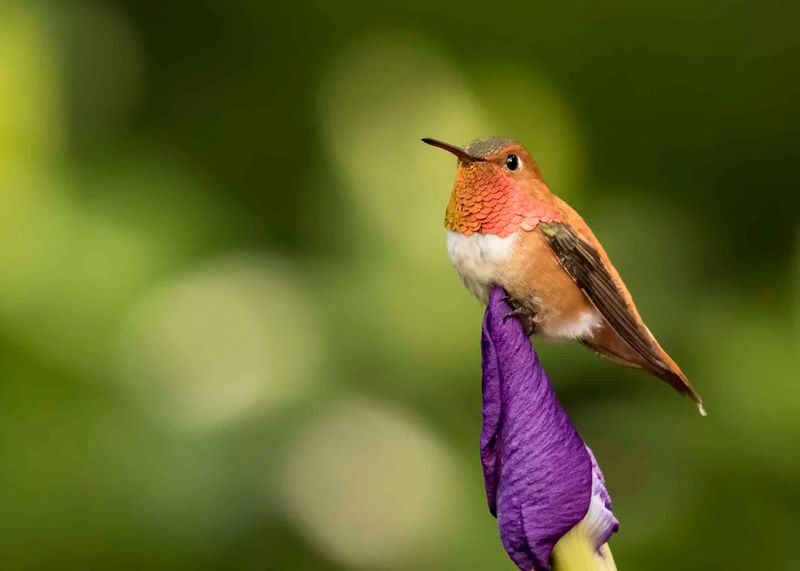
Most people picture a Rufous Hummingbird as a small, fiery-orange bird, and an adult male does fit that description fairly well. The rusty back, orange-red gorget, and warm flanks can catch the eye even in brief flight.
The problem is that the birds most likely to visit Arizona in September are not adult males.
The University of Arizona banding study found that roughly 90 percent of migrating Rufous Hummingbirds recorded at the southeastern Arizona sites were juveniles. Juvenile and female Rufous Hummingbirds are predominantly green on the back and can carry only a modest rufous wash on the sides, base of the tail, or flanks.
That coloring overlaps significantly with female and immature Allen’s Hummingbirds, which share a nearly identical body shape and can appear in the same region. Even some green-backed adult male Rufous birds exist and may require close inspection.
Separating Rufous from Allen’s often comes down to tail-feather structure, a detail that is difficult to assess on a bird hovering at a feeder. Cornell’s bird guide notes that tail-feather width and shape are important for making that call, and photographs from multiple angles give a much better chance at a correct identification than a quick visual impression.
Arizona also hosts Black-chinned, Anna’s, Costa’s, Broad-tailed, and Broad-billed hummingbirds, among others. A September visitor at a feeder deserves a careful look before anyone labels it a Rufous with confidence.
A feeder can offer supplemental fuel without delaying migration
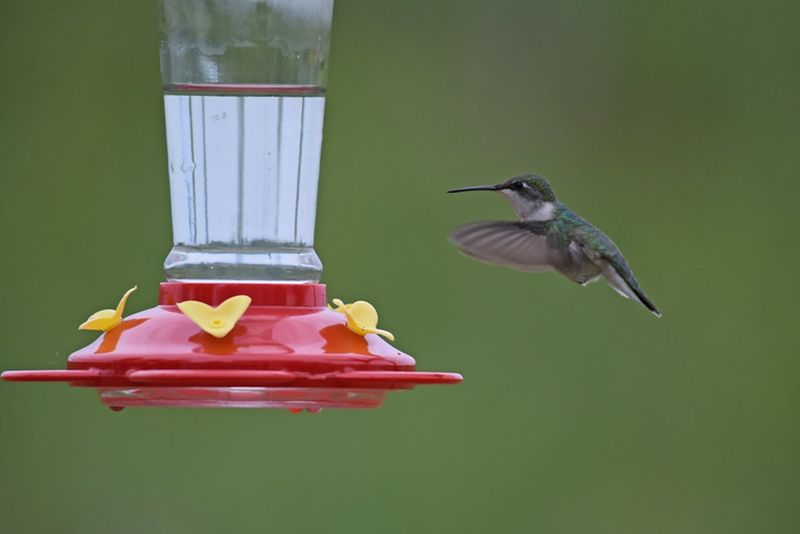
One concern that comes up regularly among Arizona homeowners is whether leaving a feeder out in fall might somehow trap hummingbirds and prevent them from moving south. Current guidance from Audubon addresses this directly: keeping feeders available does not generally prevent normal migration.
The cues that trigger departure are largely internal and seasonal, not controlled by whether a feeder happens to be hanging on a porch.
Seasonal cues including day length and sun angle help time migration, while food availability and weather can influence movement and the decision to stop and refuel. A well-maintained feeder gives a passing bird a quick energy source without overriding the biological signals that eventually push it onward.
Framing a feeder as optional supplemental fuel is accurate; framing it as something a migrating Rufous requires to survive is not.
One other detail worth skipping: feeder color does not reliably attract one hummingbird species over another, and no evidence supports the idea that a red feeder specifically draws Rufous Hummingbirds. Hummingbirds notice feeders through a combination of color, movement, and prior experience.
If a feeder is clean, filled with fresh nectar, and placed in a spot with some visibility, it has done its job.
Arizona heat makes nectar care the real feeder challenge
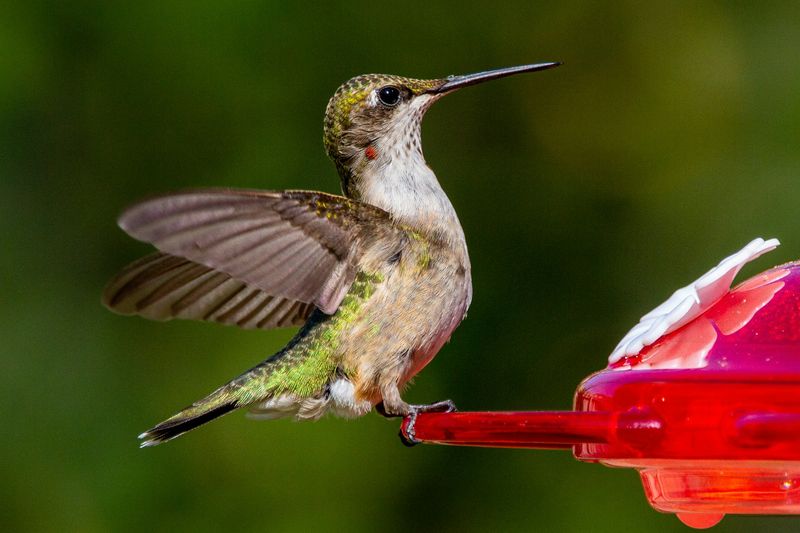
Getting the nectar recipe right is straightforward: one part ordinary white table sugar dissolved in four parts water. U.S.
Fish and Wildlife Service bird-feeding guidance supports this standard mixture and explicitly excludes red dye, honey, artificial sweeteners, and any other additives. Red dye is unnecessary because hummingbirds locate feeders through shape and prior memory, not nectar color, and honey can promote harmful bacterial growth.
The harder part in Arizona is maintenance. Nectar spoils much faster in triple-digit heat than in the cooler climates where many feeder recommendations were written.
The University of Arizona recommends cleaning and refilling every two to three days during hot weather, while Audubon recommends emptying and cleaning daily or every other day in hot conditions. For low-desert yards in summer and early fall, daily or every-other-day replacement is the practical target, especially if the feeder sits in direct sun or sees light traffic.
Keeping the feeder in shade helps slow spoilage and reduces the frequency of emergency changes. Filling it only partway is another practical move: a small amount of nectar replaced often is far safer for visiting birds than a full reservoir that sits for a week.
Weekly cleaning is simply not adequate when afternoon temperatures regularly exceed 100 degrees Fahrenheit, and cloudy or fermented nectar can harm the birds the feeder is meant to help.
Desert-adapted flowers can support more than one brief stopover
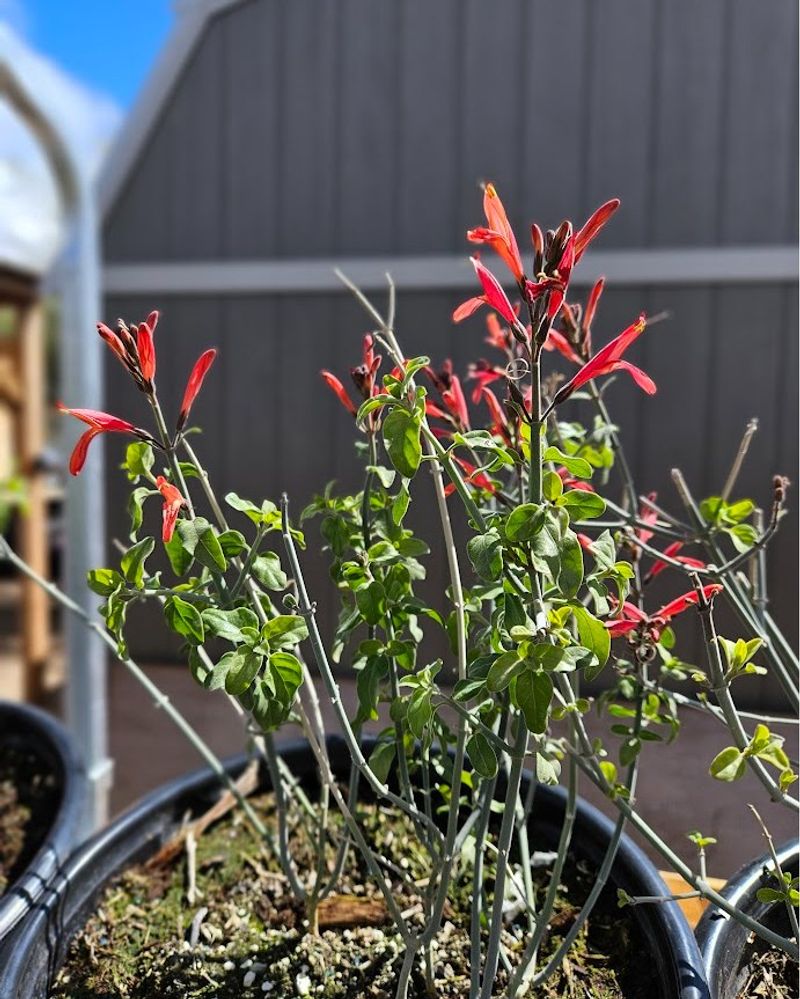
Chuparosa stands out as one of the most Arizona-relevant plants for anyone hoping to make their yard useful to migrating hummingbirds. Native to southern Arizona, it produces tubular, nectar-rich red flowers that hummingbirds actively seek out.
The Desert Botanical Garden describes chuparosa as a plant used by migrating hummingbirds and notes that its apparent die-back during the hottest, driest months is a normal drought-adaptation response rather than a sign of plant death. Once temperatures moderate and monsoon moisture arrives, the shrub typically rebounds.
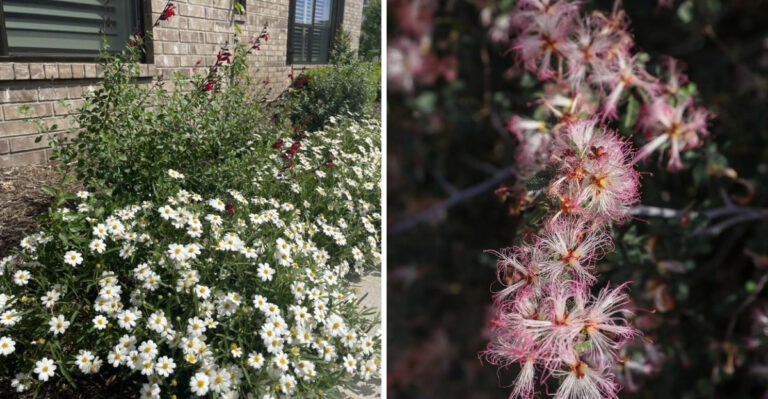
Other documented options from University of Arizona Extension resources include desert willow, penstemons, autumn sage, red yucca, fairy dusters, and Tecoma species. These plants share a few key traits: they are adapted to Arizona’s alkaline soils, extreme heat, and limited water, and they produce flowers in shapes and colors that hummingbirds can access efficiently.
Planting even one or two of these species near a feeder creates a more complete stopping point, offering natural nectar alongside the supplemental sugar water.
Planting any of these species can improve the habitat potential of a yard, but no single plant guarantees that a Rufous Hummingbird will appear. Elevation, route, bloom timing, nearby cover, and competing food sources all shape whether a migrant pauses or passes through.
What a desert-adapted planting does reliably is make the yard more functional for whichever hummingbird species do happen through, and that benefit extends well beyond a single September window.
Watch carefully, help responsibly, and keep the promise precise
Readers in southeastern Arizona and higher-elevation areas have the best reason to be attentive from late August through mid-September. Checking feeders, watching flowering native plants, and scanning the edges of nearby habitat during that window gives a real chance at a Rufous sighting.
Phoenix and Tucson residents should treat a September visit as possible rather than expected, and worth investigating when it happens.
Photographing any unfamiliar hummingbird before declaring it a Rufous is the single most useful habit to build. A clear shot of the back, tail, and throat, combined with a field guide or a resource like Cornell’s bird ID pages, will settle most questions that a quick glance cannot.
September is a reasonable prompt to look up and pay attention, and that alone has value.
A clean feeder, a well-placed desert-adapted plant, and patient observation are what responsible support looks like. They improve the odds without overpromising the outcome, which is the most honest thing anyone can say about hosting a long-distance migrant passing through on its own schedule.