This Yard Visitor Can Easily Be Mistaken For A Snake In Georgia
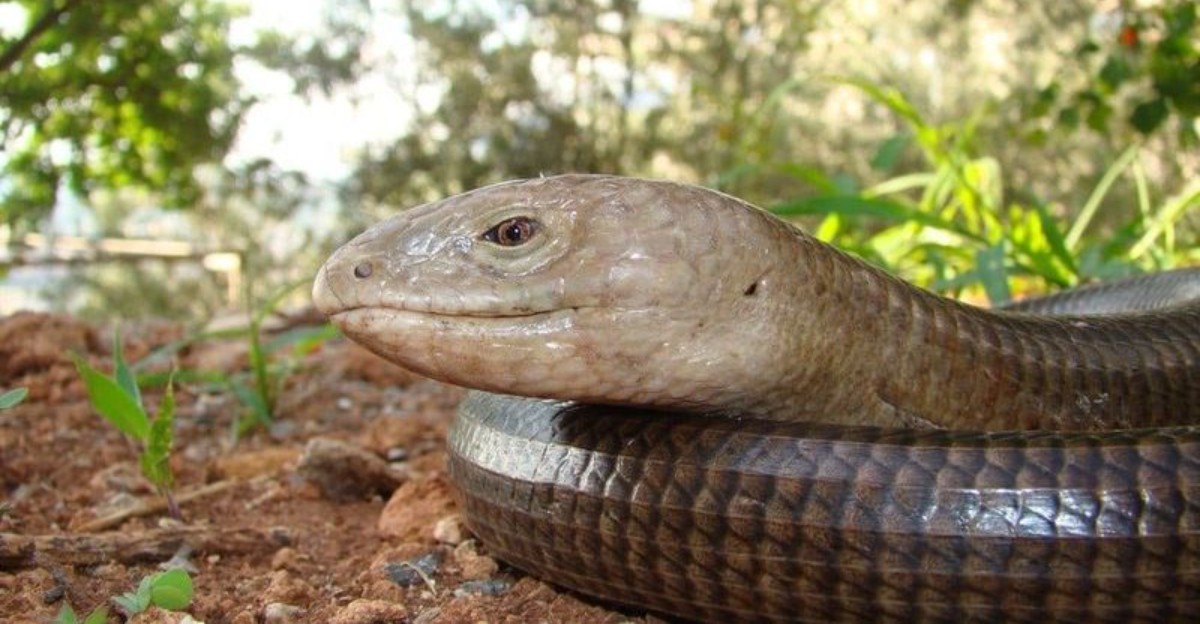
Your first glance at something long and smooth moving through the grass may send your mind straight to snakes. Another Georgia yard visitor can create the same impression.
The confusion makes sense because this animal has a stretched body and barely noticeable legs.
Those features can fool you from a distance, especially when only part of its body is visible between plants. A closer look reveals details that separate it from a true snake.
Knowing those differences can change how you react when one suddenly appears nearby.
There is usually no reason to disturb this quiet visitor as it moves through the yard. Give it room, and use the sighting as a chance to recognize something new.
Next time that slender shape appears, you may know what you are seeing before fear takes over.
1. This Long Animal May Look Like A Snake At First
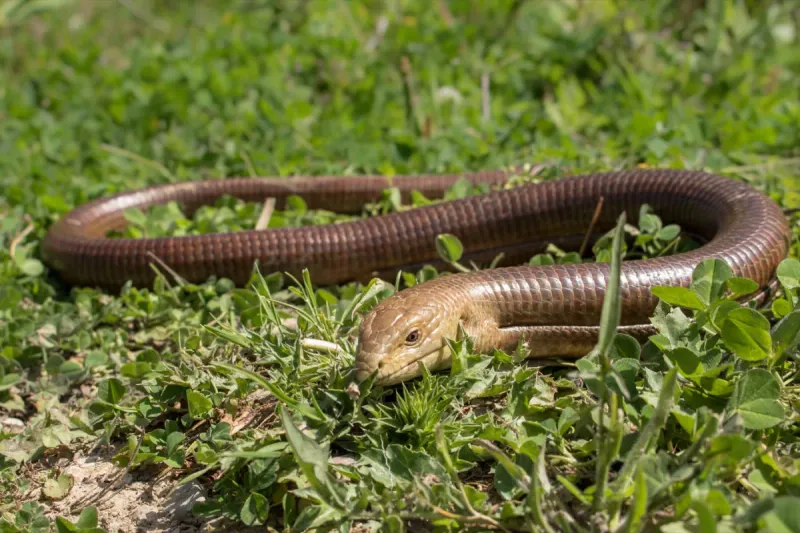
At first glance, a glass lizard can stop you in your tracks. Its long body slides through grass with no obvious legs, creating a shape that looks remarkably similar to a snake.
Color does not make the first impression any easier.
Depending on the species and age, the body may show brown, tan, olive, yellowish, or darker markings. These shades blend easily with leaves and grass, making a quick identification even harder.
Length adds another surprise because much of this animal is tail.
Some glass lizards can reach well over two feet from head to tail. When only part of one is visible in a Georgia garden, judging its true shape becomes even harder.
Watch a little longer and the illusion starts to weaken. Glass lizards have a more rigid body than snakes, so they cannot form the same tight curves while traveling over the ground.
That stiffness can make their movement look less fluid, especially when they cross an open patch.
The smooth scales may also catch sunlight and give the body a polished appearance. None of these clues requires getting close.
From a comfortable distance, the combination of length, movement, and body shape can turn an alarming first glance into a much clearer sighting.
2. Glass Lizards Are Actually Lizards Without Legs
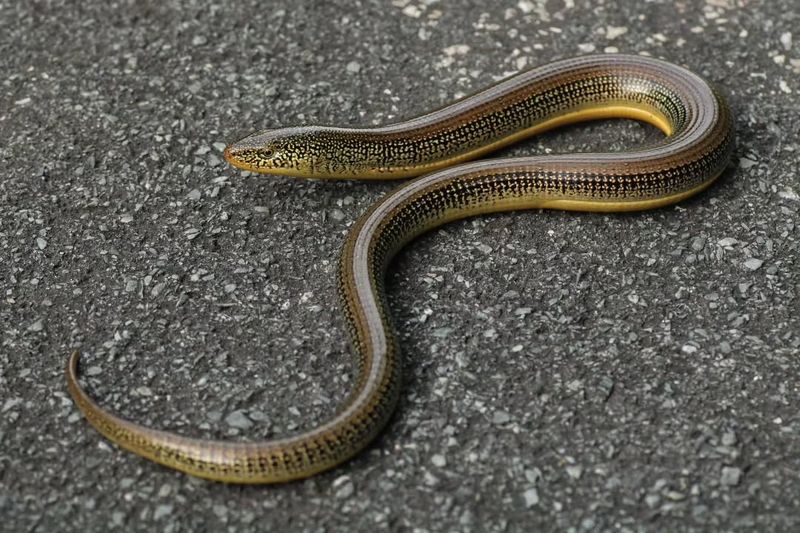
Despite the missing legs, this animal belongs firmly in the lizard world. Glass lizards are members of Anguidae, a family that includes several long-bodied species with features snakes simply do not have.
Their anatomy makes that connection much clearer.
Unlike snakes, glass lizards have movable eyelids and visible openings for their ears. They also have a flexible groove along each side of the body, giving you several clues beyond their unusual shape.
Several species can be found in Georgia, including the eastern glass lizard.
Their skulls also work differently from those of snakes. Glass lizards cannot open their jaws nearly as wide, so they are limited to prey that fits comfortably inside the mouth.
That helps explain why smaller creatures suit them so well.
Insects, spiders, snails, and similar prey make up much of their diet. Their stiff bodies are another reminder that the resemblance to snakes only goes so far.
Your Georgia Garden Changes Every Week. Your Plan Should Too.
Gardening in Georgia changes quickly throughout the season. Every Friday you’ll receive a simple weekly plan showing exactly what to plant, prune, fertilize, harvest, and protect so you never miss the right timing.
Small bony plates beneath the skin provide support but reduce flexibility.
Put all these traits together and the mystery disappears. The missing limbs may dominate your first impression, yet the eyes, ears, jaws, and body structure reveal an animal that is clearly built like a lizard.
3. Their Moving Eyelids Help Tell Them Apart From Snakes
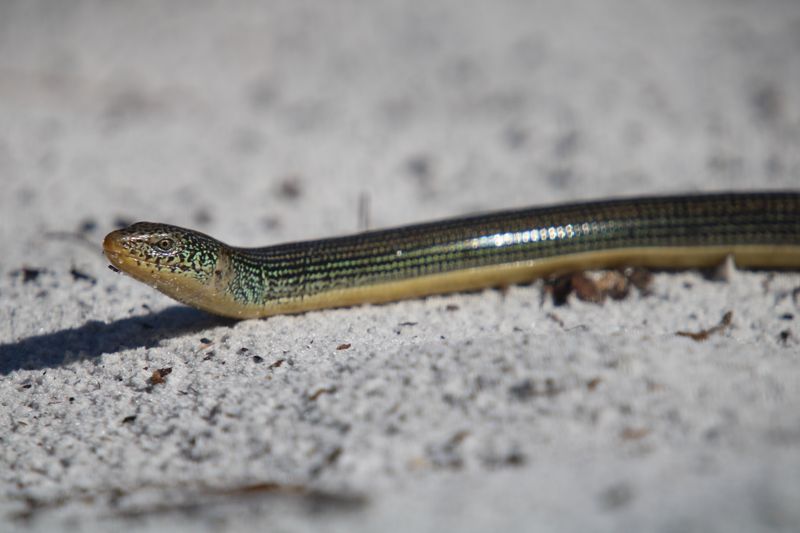
One tiny movement can settle much of the confusion. Glass lizards have movable eyelids, so a patient observer may actually see one blink while it pauses in the grass.
That is something a snake cannot do.
Instead of movable eyelids, snakes have a clear protective scale over each eye. This covering stays in place, creating the steady stare many homeowners associate with snakes.
The difference is useful, but you may not notice it immediately.
Glass lizards often disappear into vegetation before anyone gets a good look. If one pauses in an open part of a Georgia yard, watching the head can reveal more than staring at its long body.
A phone photo can preserve details that disappear too quickly outdoors.
The eyelid line may become visible when you enlarge a sharp side view. This can help when the animal never stays still long enough for careful observation.
Still, a blink should be treated as one clue rather than the entire identification.
Body stiffness and the small ear openings behind the eyes can support what you noticed. Together, these details create a clearer picture without requiring any contact.
Sometimes the smallest feature is enough to turn a confusing sighting into something you can recognize with confidence.
4. Small Ear Holes Are Another Sign You Found A Lizard
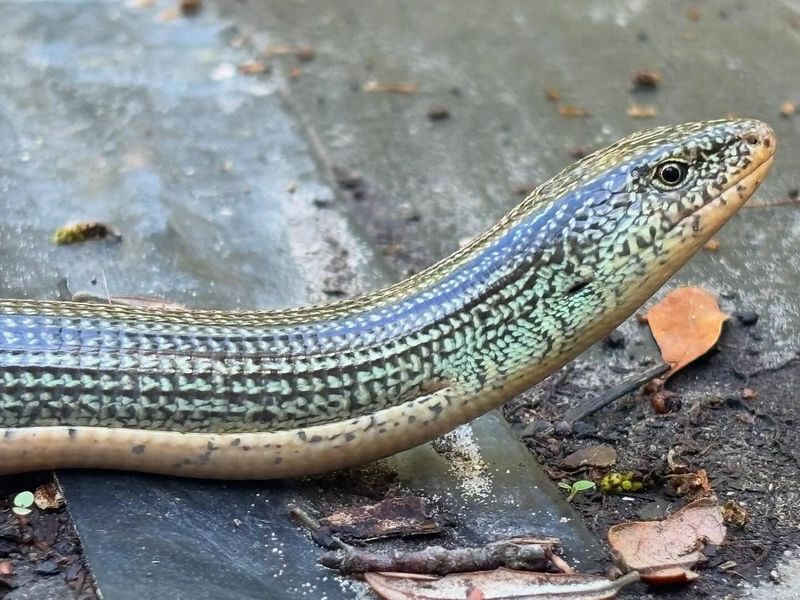
After checking the eyes, shift your attention slightly farther back. Glass lizards have external ear openings on the sides of the head, while snakes lack visible openings in that location.
They are small enough to miss during a quick encounter.
A clear side view offers the best chance to notice them. On a younger animal, you may need a good photograph before the opening becomes obvious.
Another clue runs much farther down the body.
Glass lizards have a lateral fold, which appears as a groove along each side. This flexible area allows the body wall to expand and gives you another feature that snakes do not share.
Seeing both traits can make a confusing sighting much easier to sort out.
Neither detail requires touching the animal. If one pauses in a Georgia garden, binoculars or a zoomed photo can reveal far more than trying to approach closely.
That matters because handling can trigger a defensive response.
Glass lizards can release part of their tail when seriously stressed. Picking one up simply to inspect its head creates a problem that careful observation avoids.
Look behind the eye and along the side of the body. Those areas hold two useful clues that can confirm you are looking at a lizard.
5. They Often Look For Food Under Leaves And Yard Debris
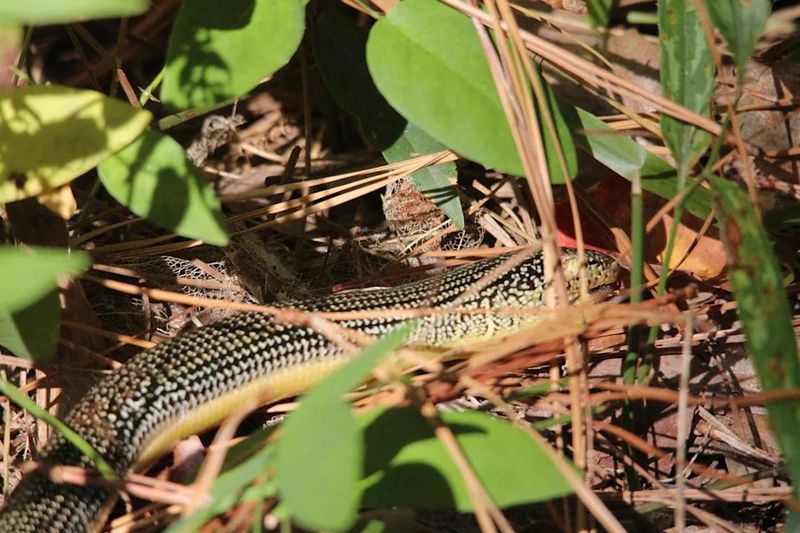
Fallen leaves are more than a hiding place for a glass lizard. They also shelter many of the small creatures these reptiles hunt, turning ground cover into a useful feeding area.
Beetles, grasshoppers, spiders, snails, and similar prey can all end up on the menu.
That explains why glass lizards spend so much time close to the ground. They search through loose vegetation and sheltered spots where small animals are easier to find.
Garden beds can offer the same combination of food and protection.
In Georgia, one may turn up around grassy edges, leaf litter, low plants, or objects resting near the soil. Moving an old pot or board can suddenly expose a lizard that was hidden underneath.
Its presence does not mean the area needs to be cleared.
Some natural ground cover can support yard wildlife while still looking maintained. Leaves tucked beneath shrubs or low plants provide shelter without taking over the lawn.
Yard work simply calls for a little awareness in these spots.
Lift objects carefully, especially when they have remained undisturbed for a long time. If a glass lizard darts out, pause and let it disappear into vegetation.
Soon it can return to the reason it was there in the first place and continue searching for food.
6. Their Long Tails Can Break Off When They Feel Threatened
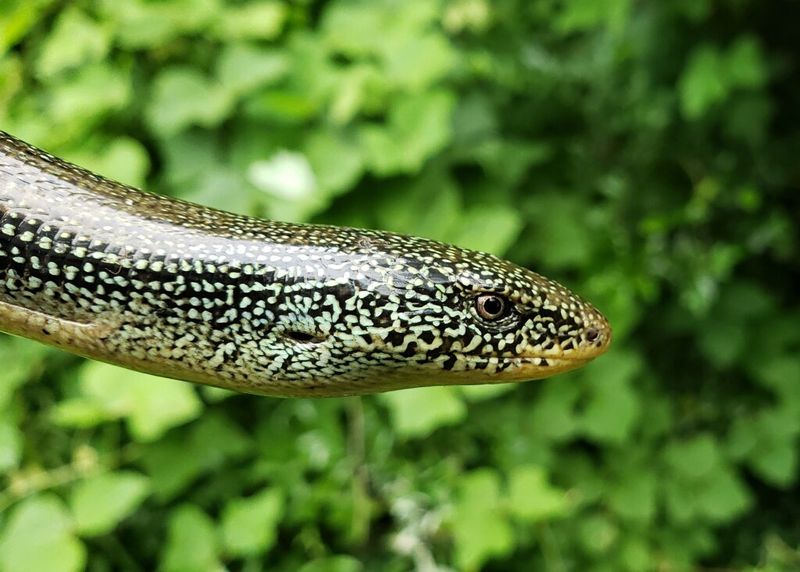
The tail explains how the glass lizard earned such an unusual name. When the animal is seized or seriously threatened, part of that long tail can separate from the body.
The detached piece may continue twisting and moving on the ground.
That motion draws attention away from the escaping lizard. While a predator focuses on the wriggling section, the rest of the animal has a chance to reach shelter.
The effect looks dramatic because the tail accounts for much of its total length.
Some glass lizards carry tails considerably longer than their bodies. After losing one, the animal can look very different from the visitor you noticed moments earlier.
A replacement can grow, but it will not perfectly match the original.
Regeneration also requires valuable energy, making this defense useful but costly. That is why an encounter in a Georgia yard should never turn into an attempt to grab the animal.
Pets can trigger the same response if they chase or corner one.
Calling a curious dog away can prevent unnecessary stress before the lizard resorts to shedding its tail. If a detached section is left behind, there is no reason to interfere.
The strange movement is simply part of the escape strategy behind the glass lizard’s memorable name.
7. Seeing One In Your Yard Is Usually Nothing To Worry About
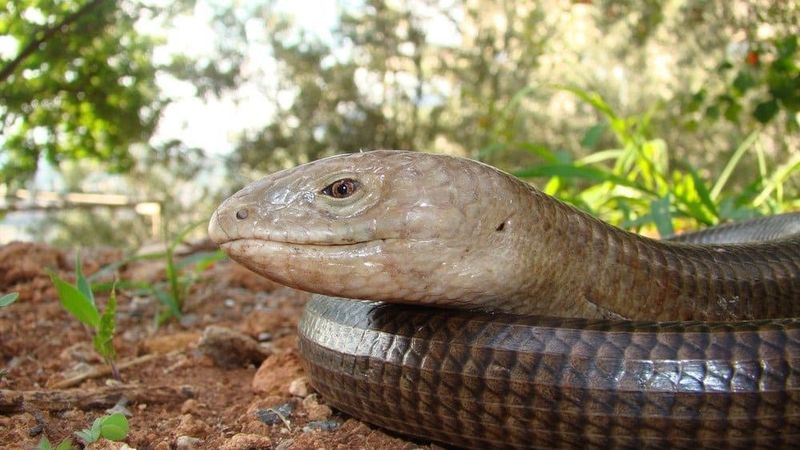
Once you know what you are looking at, a glass lizard becomes a much less troubling yard visitor. These reptiles are nonvenomous and generally avoid confrontation, preferring to slip away when they feel exposed.
Their daily activity is centered on finding food and shelter.
Small insects, spiders, snails, and similar prey keep them searching through vegetation near the soil. That feeding behavior can bring one surprisingly close to patios, garden beds, or other maintained spaces.
Finding one does not mean anything needs to be removed.
In a Georgia garden, the simplest response is usually to let the animal continue on its way. Chasing or catching it adds stress and increases the chance that it will shed its tail.
Occasionally, one may wander into a garage or another open structure.
Providing an easy exit can solve the problem without direct handling. Once the path is clear and activity around it settles, the lizard may leave on its own.
Uncertain identification calls for more caution.
If the long body still leaves you wondering whether you are looking at a snake, do not rely on a guess. Keep your distance and take a clear photo if possible.
Most outdoor encounters end quietly, with the glass lizard slipping back into vegetation.