The Secrets To Keeping Texas Knockout Roses Blooming All Summer
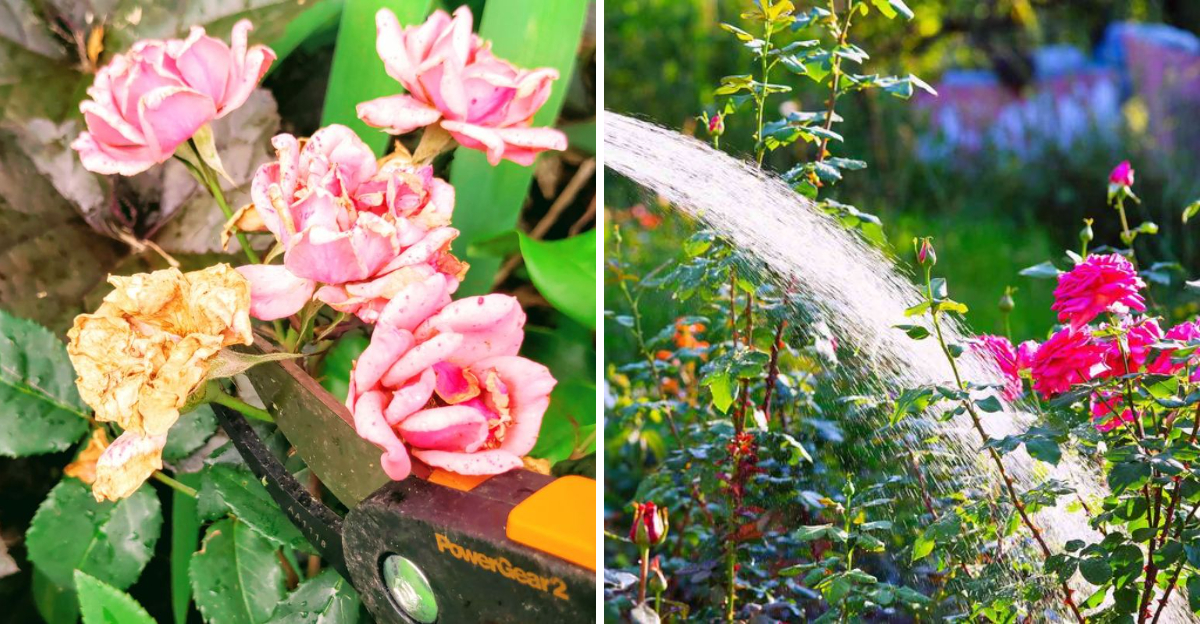
What would your Texas garden look like from June through September if your knockout roses stayed in heavy bloom the entire time instead of fading out halfway through summer?
That outcome is more achievable than most Texas gardeners realize, and the difference between roses that peak in spring and coast the rest of the season versus ones that keep producing through the worst heat comes down to a handful of specific habits done consistently and at the right time.
Knockout roses have a well-earned reputation for toughness, but toughness does not mean they perform at their best without any guidance.
There are things these roses respond to strongly and things that quietly work against their rebloom cycle in ways that are easy to overlook.
Getting those details right does not require a complicated care routine. It requires knowing what actually drives consistent summer blooming in the Texas climate and doing those things on schedule rather than whenever it happens to come to mind.
1. Give Them Full Sun
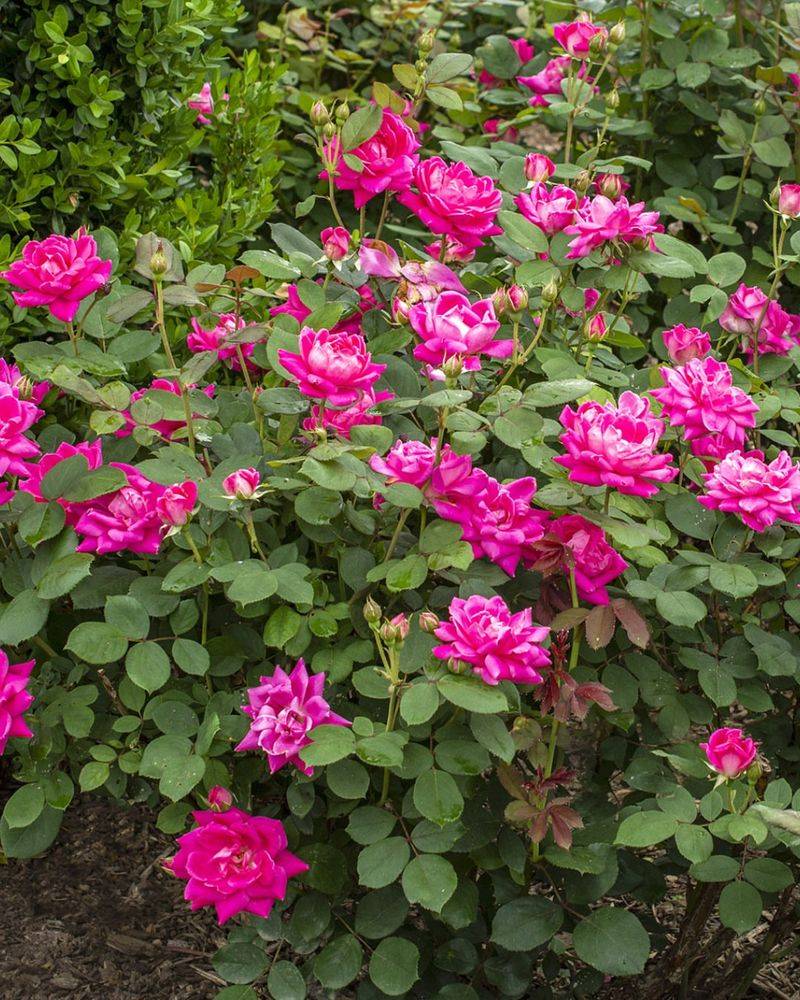
Sunlight is everything when it comes to Knockout roses. Without enough of it, your plants will struggle to produce the big, colorful blooms you are hoping for.
Knockout roses need at least six hours of direct sunlight every single day to perform at their best.
Planting your roses in the right spot makes a huge difference. Avoid shaded corners, spots under large trees, or areas near buildings that block afternoon sun. The more sun your roses get, the more energy they have to push out new flower buds.
In Texas, the sun is strong and reliable for most of the year. That is actually great news for rose growers.
The heat and light work together to fuel rapid growth and repeat blooming cycles throughout the summer months.
If your roses are already planted in a low-light area, you might notice fewer flowers and weaker stems. Moving them to a sunnier location, even if it feels like a big task, can completely transform how they grow and bloom.
One easy tip is to observe your yard at different times of day before you plant. Watch where the sun hits longest and strongest.
That sweet, sunny spot is exactly where your Knockout roses will thrive and keep blooming from early summer all the way through the first cool days of fall. Full sun is not just helpful for these roses. It is absolutely necessary.
Give your plants the light they crave, and they will reward you with a stunning, non-stop flower show all season long.
2. Water Deeply And Consistently
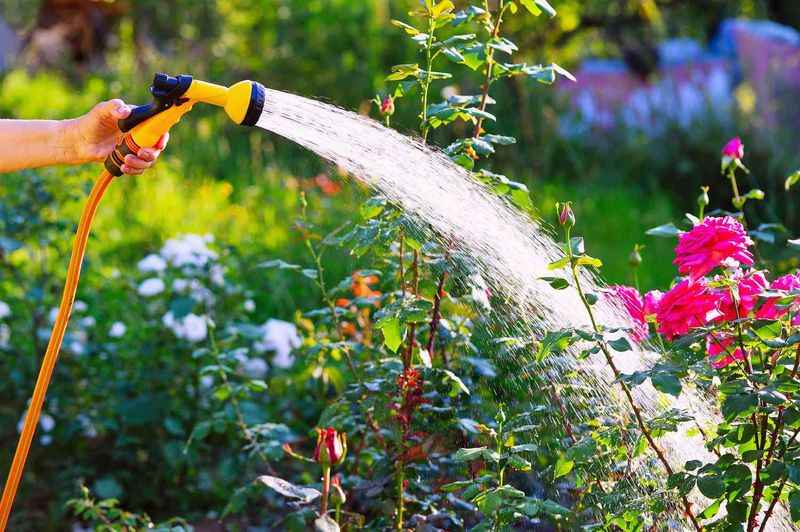
Ask any experienced Texas gardener and they will tell you the same thing: watering matters more than almost anything else during a hot summer. Knockout roses are tough, but they still need steady moisture to keep blooming through the heat.
The key is to water deeply, not just a quick sprinkle on the surface. Deep watering pushes moisture down into the soil where the roots actually live.
When roots grow deep, they can access water even during dry spells, which keeps your plant stable and strong.
Your Texas Garden Changes Every Week. Your Plan Should Too.
Gardening in Texas changes quickly throughout the season. Every Friday you’ll receive a simple weekly plan showing exactly what to plant, prune, fertilize, harvest, and protect so you never miss the right timing.
Shallow watering is one of the most common mistakes rose growers make. It encourages roots to stay near the surface, where they dry out fast.
During a Texas heat wave, surface roots can get stressed quickly, causing blooms to drop and leaves to wilt.
Aim to water your roses about two to three times per week during the hottest months. Always water at the base of the plant, not from overhead. Wet leaves can lead to fungal problems, especially in humid parts of Texas.
Mulching around your roses is a smart move too. A two to three inch layer of wood chips or shredded bark helps the soil hold onto moisture much longer between watering sessions. It also keeps the root zone cooler on blazing hot days.
Consistent watering creates a rhythm your roses can count on. When the soil stays evenly moist, the plant can focus all its energy on producing new flower buds instead of just trying to survive the heat. That consistency is what keeps blooms coming all summer.
3. Use Bloom-Boosting Fertilizer
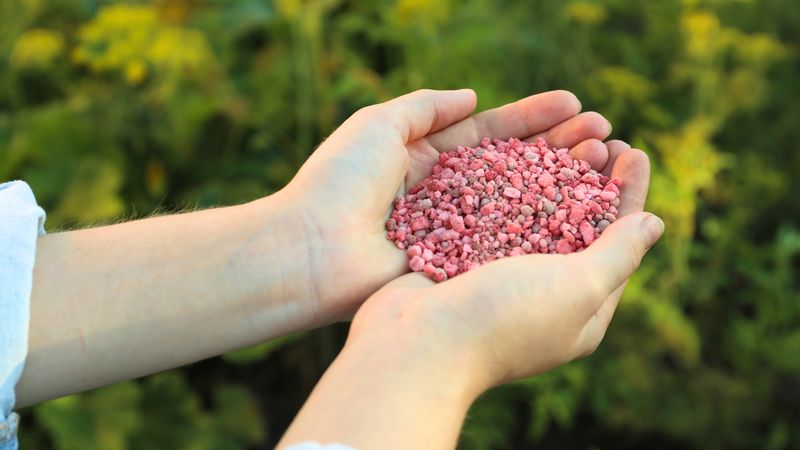
Feeding your roses the right food can be a total game changer. Knockout roses are heavy bloomers, and all that flowering takes a lot of energy.
Without regular fertilizing, your plants can run low on the nutrients they need to keep pushing out new flowers.
Look for a fertilizer that is balanced or slightly higher in phosphorus. Phosphorus is the nutrient most responsible for flower production.
You will often see it listed as the middle number on a fertilizer bag, such as 5-10-5 or 10-20-10. A higher middle number means more phosphorus and more blooms.
One thing to watch out for is too much nitrogen. Nitrogen is great for growing lush green leaves, but too much of it can actually work against you when it comes to flowers. You might end up with a big, leafy bush that produces very few blooms all summer long.
Apply fertilizer about once every four to six weeks during the growing season. Start in early spring when new growth appears and continue through late summer.
Stop fertilizing about six weeks before the first expected frost so the plant can begin resting naturally.
Slow-release granular fertilizers are a popular choice because they feed your roses steadily over time. Liquid fertilizers work faster and can give a quick boost when your plants need it most. Many gardeners use both types throughout the season for the best results.
Always water your roses well before and after applying fertilizer. This helps the nutrients absorb into the soil properly and prevents any chance of burning the roots on a hot Texas afternoon.
4. Deadhead Spent Blooms
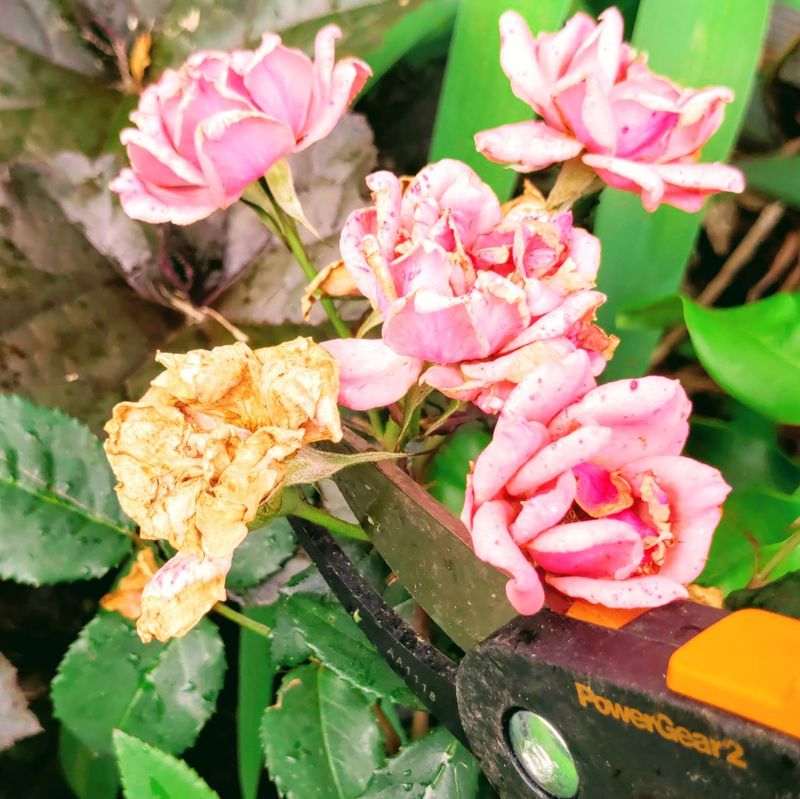
Here is a trick that many beginner gardeners overlook: removing old flowers actually tells your rose bush to make new ones.
It sounds almost too simple, but deadheading spent blooms is one of the most effective ways to keep your Knockout roses flowering nonstop all summer.
When a flower fades and starts to look brown or droopy, the plant naturally shifts its energy toward forming seed pods, called rose hips. Once the plant starts making seeds, it slows down flower production.
By removing those faded blooms before seed pods form, you redirect the plant’s energy right back into making more flowers.
Deadheading does not have to be complicated. Just use a clean pair of garden scissors or pruning shears and snip off the spent flower just above the nearest set of healthy leaves.
Make your cut at a slight angle to help water run off the stem instead of pooling on it.
Make it a habit to walk through your garden every few days and check for fading blooms. The more consistently you deadhead, the faster your roses will cycle through new blooms. During peak summer heat, flowers can fade quickly, so staying on top of it really pays off.
Besides encouraging new growth, regular deadheading also keeps your plants looking tidy and attractive. A rose bush covered in brown, shriveled flowers is not exactly a pretty sight. Keeping things clean makes the whole garden look more polished and well cared for.
Knockout roses are known for being somewhat self-cleaning, but giving them a helping hand with regular deadheading pushes their blooming power to a whole new level all season long.
5. Prune Lightly For Airflow

Pruning might sound intimidating if you have never done it before, but a light trim can make a surprisingly big difference in how well your roses bloom. The goal is not to cut the plant back drastically.
Instead, you are just cleaning things up to help air move through the bush more freely. Good airflow is essential for healthy roses. When branches grow too close together or cross over each other, air gets trapped inside the plant.
That trapped moisture creates the perfect environment for fungal diseases like black spot and powdery mildew, both of which can weaken your plant and reduce blooming.
In early summer, take a few minutes to look closely at your rose bush. Identify any branches that are rubbing against each other or crowding the center of the plant.
Use clean, sharp pruning shears to carefully remove those crossing or crowded branches at their base.
You do not need to remove a lot of growth to make a real impact. Even taking out just a few problem branches can dramatically open up the center of the plant.
More open space means better air circulation, which means a healthier, more productive rose bush throughout the season.
Always clean your pruning tools before and after use. Wiping the blades with rubbing alcohol prevents spreading any disease from one plant to another. It is a small step that protects your entire garden.
Light pruning also encourages the plant to push out fresh new growth from the base. That new growth often carries the most flower buds, giving you an extra wave of beautiful blooms right when summer is hitting its hottest stretch.
6. Monitor And Manage Pests And Diseases
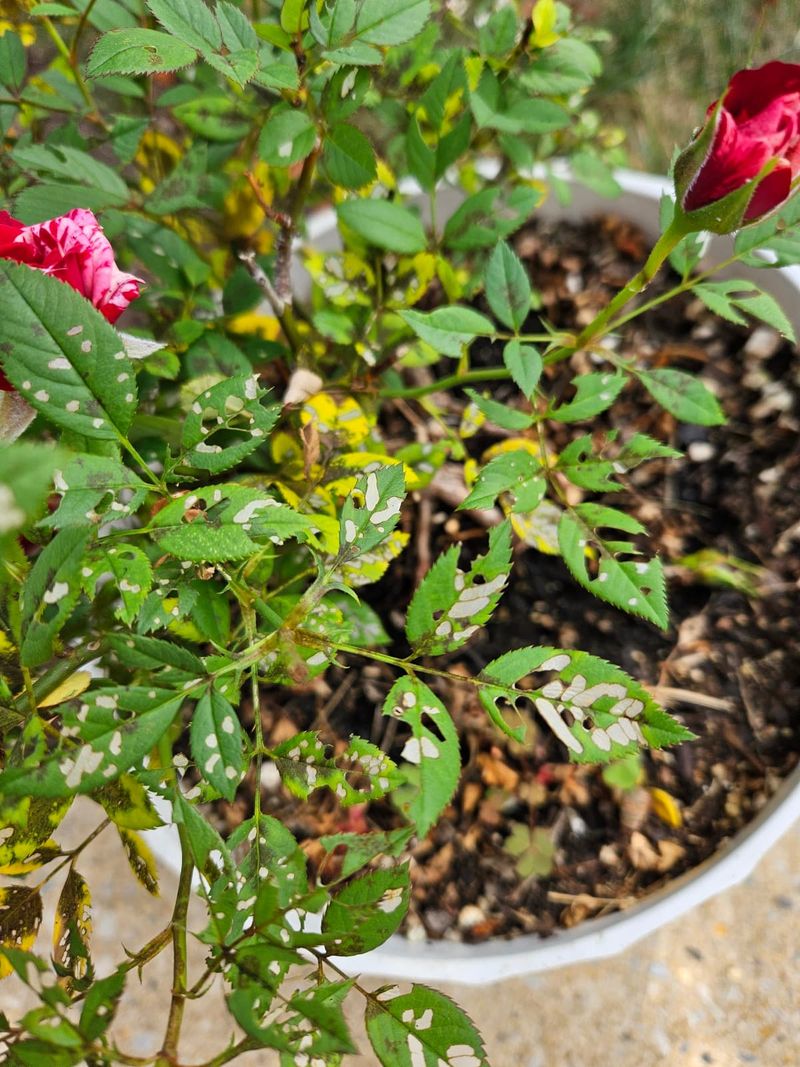
Even the toughest roses in your garden need a watchful eye. Knockout roses are more disease-resistant than many other varieties, but that does not mean they are completely immune to pests and problems.
Catching issues early is the best way to keep your plants healthy and blooming all summer. Aphids are tiny, soft-bodied insects that cluster on new growth and flower buds.
They feed by sucking sap from the plant, which can weaken stems and cause buds to drop before they even open. A strong blast of water from your garden hose is often enough to knock them off and send them packing.
Spider mites are another common pest, especially during hot and dry Texas summers. These microscopic bugs cause leaves to look dusty, yellowed, or speckled.
They thrive in dry conditions, so keeping your roses well-watered and misting the undersides of leaves occasionally can help keep their numbers down.
Black spot is a fungal disease that shows up as dark, circular spots on leaves. It spreads quickly in wet or humid conditions and can cause leaves to drop off the plant entirely. Avoid overhead watering and remove any infected leaves right away to slow its spread.
Organic treatments like neem oil are a popular and effective option for managing both pests and fungal issues.
Neem oil is safe for most beneficial insects when used correctly and can be applied as a preventive spray every week or two throughout the growing season.
Walking through your garden regularly and checking the undersides of leaves gives you the best chance of catching problems before they get out of hand. A little attention goes a long way toward keeping your roses thriving all season.