The September Watering Mistake That Can Rot A Desert Rose In Florida
September in Florida arrives with a sticky handshake and a sky that leaks all afternoon. The soil under your pots stays damp long after the clouds move on.
Most gardeners keep doing exactly what worked in May, hauling out the hose like clockwork. That loyal habit is the very thing that quietly turns a healthy plant into a soft, sour mess.
The trouble hides underground, where you cannot see it until the top starts looking strange. By then, the damage has often been building for weeks.
The fix costs nothing and takes about ten seconds of attention. Learn what to skip this month, and your plant sails into fall looking plump and proud.
The Habit That Turns Fat Roots Soft In Late Summer
Picture a plant built for dry stone hills in Africa and Arabia, suddenly parked on a patio in Tampa during the wettest month of the year. That mismatch is the whole story.
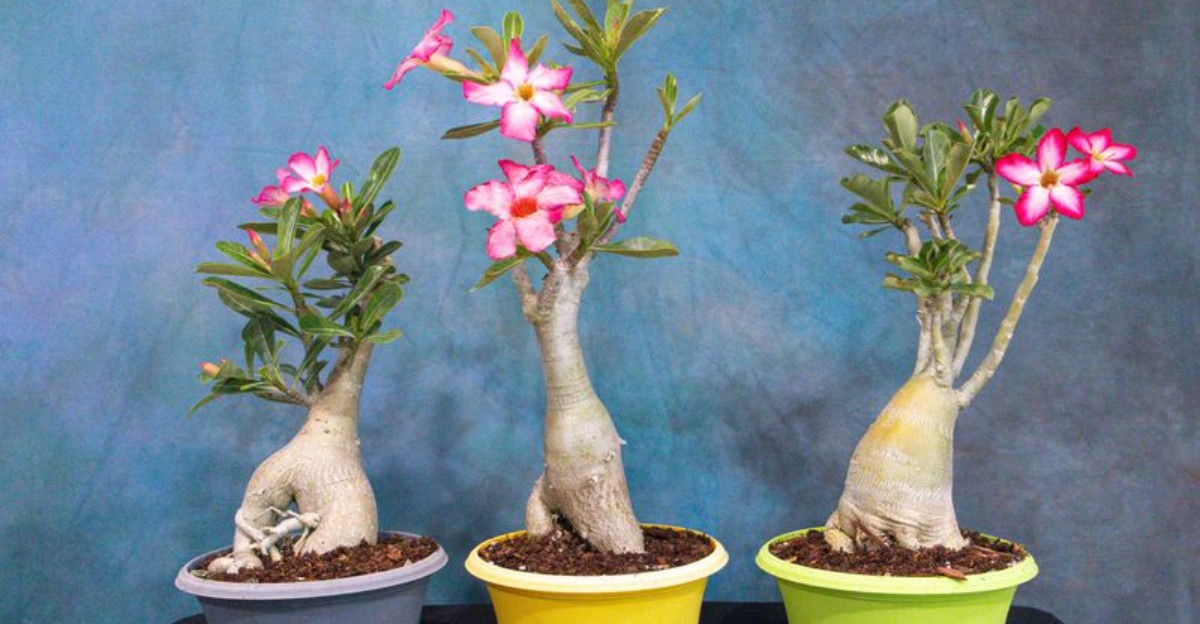
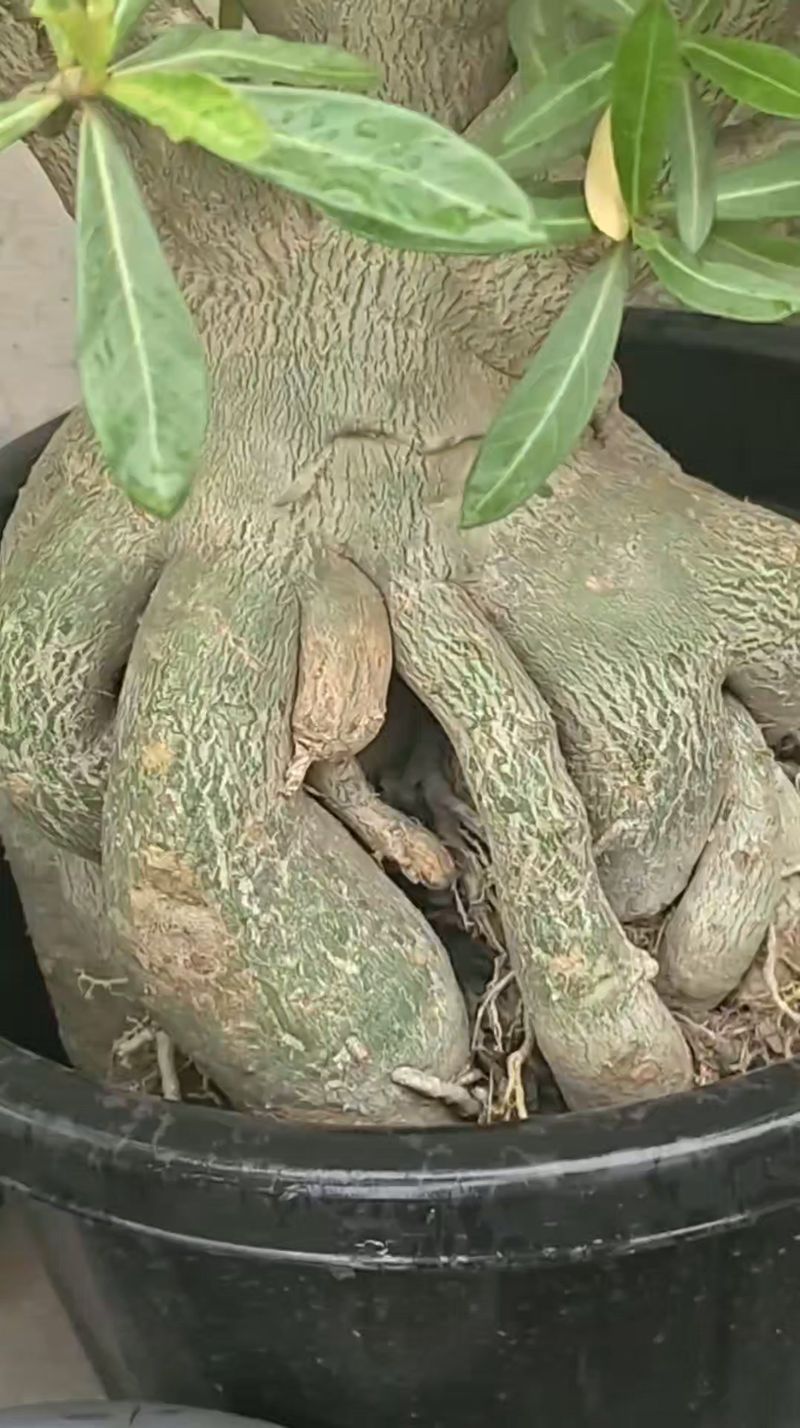
Desert roses store water inside that swollen base, called a caudex, and inside their thick roots. They are living canteens. When the sky delivers three inches of rain in a week and you add hose water on top of your regular schedule, the canteen has nowhere to put the extra.
Roots sitting in wet, warm soil struggle to get the oxygen they need. Water molds such as Phytophthora and Pythium, common in warm wet soil and standing water, spread quickly in those conditions. They feed on stressed tissue, and soft brown spots spread from the root tips upward into the caudex.
The frustrating part is how normal the plant looks at first. Leaves may even stay green for a week or two while the base turns spongy underneath.
September is the peak of hurricane season along both coasts, so rainfall totals often double what the plant would ever see in its native range. Humidity stays high overnight, meaning pots barely dry between storms.
Sticking to a calendar-based routine is the actual error, not the water itself. A schedule that suited April drought becomes a slow soak in September.
Switch from watching the calendar to reading the pot, and most rot problems stop before they start.
Florida Rain Patterns And Their Effect On Potted Adeniums
Ask any Floridian about September weather and you will get an eye roll. Afternoon storms roll in like clockwork, dump hard, then leave the air thick enough to chew.
Rainfall across much of the state averages six to eight inches during the month, and Southeast Florida often sees closer to ten. Compare that with the desert rose’s homeland, where a whole year might bring fifteen inches spread thin.
What matters even more than the total is the recovery time. In spring, a pot might dry out in two days of breeze and sunshine. In September, cloud cover cuts evaporation, night temperatures often stay in the mid to upper seventies, and the same pot can hold moisture for a week or longer.
Tropical systems make it worse. A slow-moving system can linger over your county and keep soil wet for days.
Your Florida Garden Changes Every Week. Your Plan Should Too.
Gardening in Florida changes quickly throughout the season. Every Friday you’ll receive a simple weekly plan showing exactly what to plant, prune, fertilize, harvest, and protect so you never miss the right timing.
Pots left in the open catch every drop. Saucers underneath act like little bathtubs, keeping the bottom inch of soil wet for days at a time.
Plants tucked under a lanai or roof overhang dodge most of this, and gardeners who move their containers there in September report far fewer problems. Even a temporary spot against a wall with good airflow helps.
A quick glance at the radar before you reach for the hose prevents more trouble than any treatment applied afterward.
Early Warning Signals Hiding Below The Soil Line
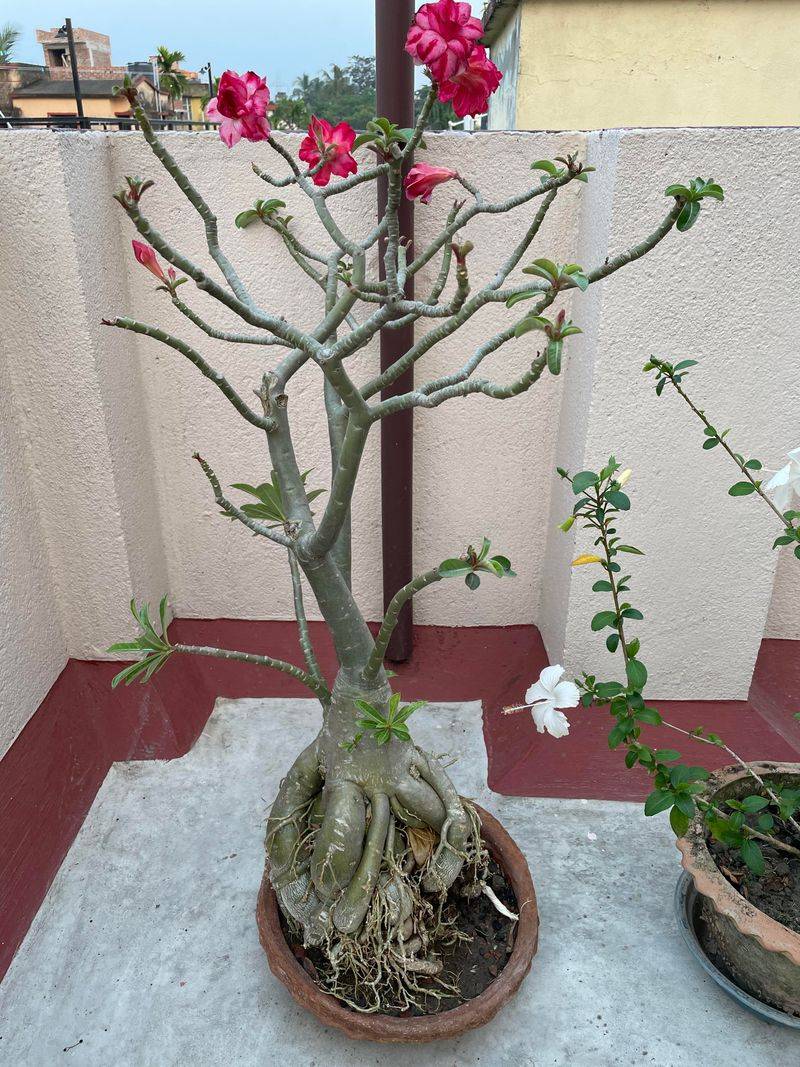
Rot rarely announces itself politely. It whispers, and most people miss the whisper.
Start with the caudex. A healthy one feels like a firm potato or a slightly underripe pear. Press gently with your thumb near the soil line. Any give, sponginess, or wrinkle that appears while the soil is still wet deserves immediate attention.
Yellowing leaves confuse people because dry plants drop leaves too. The difference lies in the soil. Yellow leaves plus soggy mix points to drowning roots, while yellow leaves plus bone-dry mix points to thirst.
Smell is the honest witness. Lean close to the base and take a sniff. Fresh soil has a clean, earthy scent. Rotting roots produce a sour, swampy odor that reminds people of pond muck.
Watch the color at the soil line too. Healthy bark there is tan or gray-green. Dark brown or blackish patches that feel slick are a red flag.
Branch tips sometimes turn black and mushy from the top down when the problem started in the roots and traveled upward through the plant’s plumbing.
A wobble test helps as well. Grip the caudex and rock it gently. Firm anchoring is good. A plant that swivels loosely in its pot has lost root mass underground.
Checking once a week during September takes under a minute per plant. Catching softness early often means the difference between a small trim and starting over entirely.
Adjusting The Watering Routine For Humid Autumn Weeks
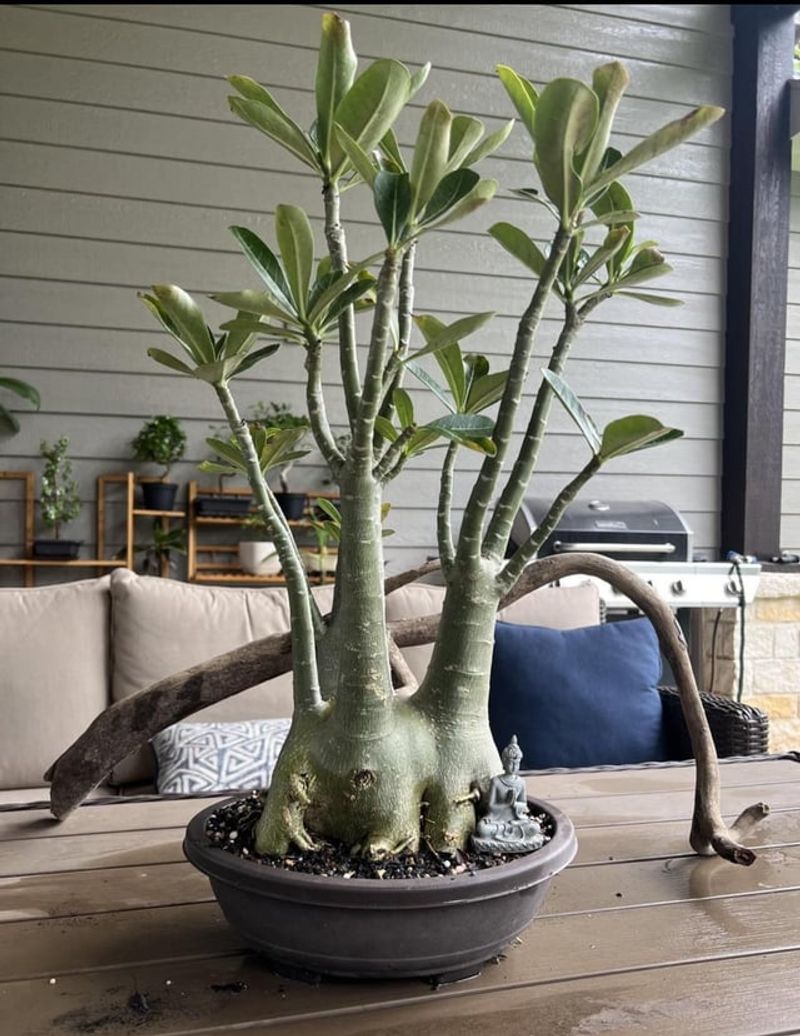
Here is the shift that saves plants: stop watering on a schedule and start watering on evidence.
The finger test works fine. Push a finger two inches into the mix. Damp means wait. If your pot is deep, a bamboo skewer or wooden chopstick pushed near the center tells you more. Pull it out and look. Dark and cool means moisture remains, so put the hose down.
Weight works too. Lift the pot after a thorough soak and remember how heavy it feels. A dry pot feels noticeably lighter, and after a few tries your arms become a reliable meter.
During September, many Florida growers cut watering to once every ten to fourteen days, and some skip entirely for weeks when storms keep rolling through. That sounds harsh, but a well-fed caudex carries plenty of reserve.
Water in the morning when you do water. Roots that get soaked at dusk sit wet through the whole warm night, which is exactly the setup those pathogens enjoy.
Soak thoroughly rather than sprinkling. A proper drench that runs out the drainage holes flushes salts and encourages deep root growth. Light daily sips keep the surface wet and the deeper roots weak.
Empty every saucer soon after the rain stops. Standing water is one of the quietest culprits.
Erring toward dry is safe with this plant. A slightly thirsty desert rose bounces back in days, while a waterlogged one may not recover at all.
Soil, Pots, And Drainage Choices That Buy You Insurance
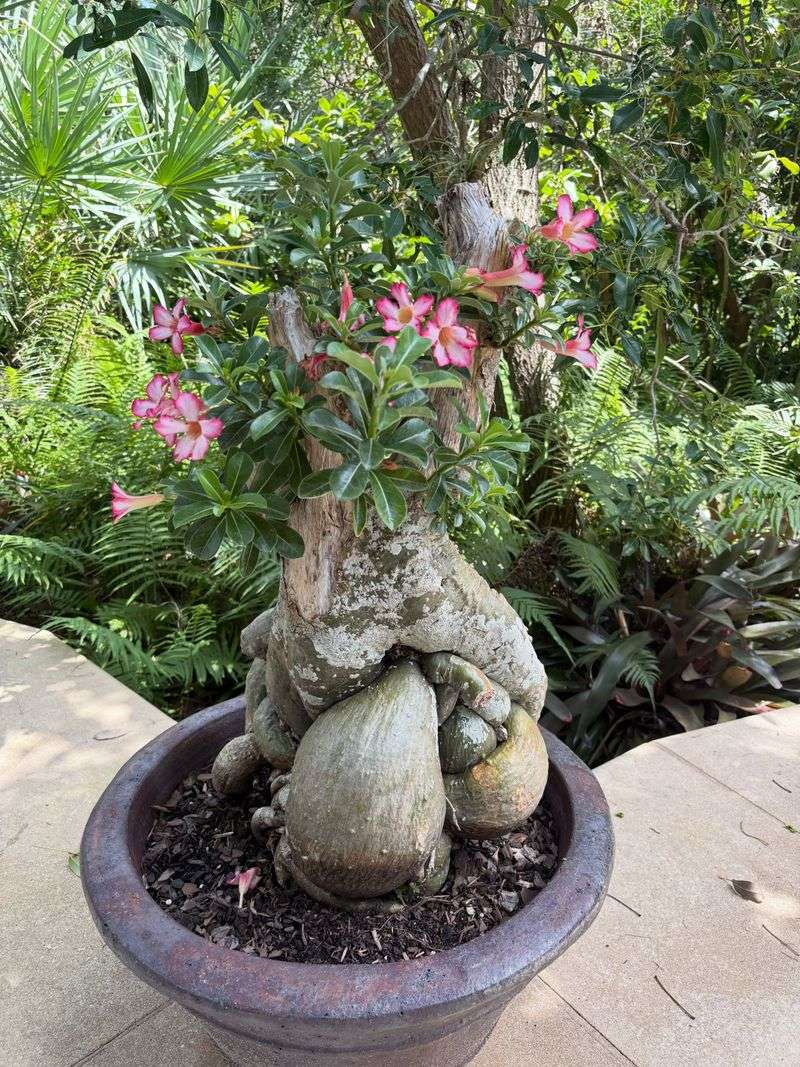
You can water perfectly and still watch a plant fail if it sits in the wrong mix. Drainage is the safety net under every good habit.
Standard bagged potting soil holds far too much moisture for an adenium in Florida. Peat-heavy blends act like sponges and stay saturated for days after rain.
Aim for a gritty mix instead. Many growers use roughly half coarse material such as perlite, pumice, or crushed granite, blended with a cactus mix or pine bark fines. Water should run through in seconds, not minutes.
Terracotta has a clear edge over plastic in humid climates. Clay breathes and wicks moisture out through its walls, which shortens the soggy window considerably. Unglazed pots noticeably shorten the time soil stays saturated compared with glazed or plastic containers.
Check drainage holes before the rainy season peaks. Roots, packed soil, and old bits of gravel can plug them without you noticing. A chopstick pushed through clears most blockages.
Raise pots off the ground on feet, bricks, or a slatted bench. Air moving under the base speeds drying and stops the bottom from wicking water back up from a wet patio.
Size matters as well. An oversized pot holds excess unused soil that stays wet, so choose a container only slightly wider than the root mass.
Setting all this up in spring means September rain becomes a minor inconvenience rather than an emergency you scramble to fix.
Rescue Steps And The Payoff Of Getting Fall Care Right
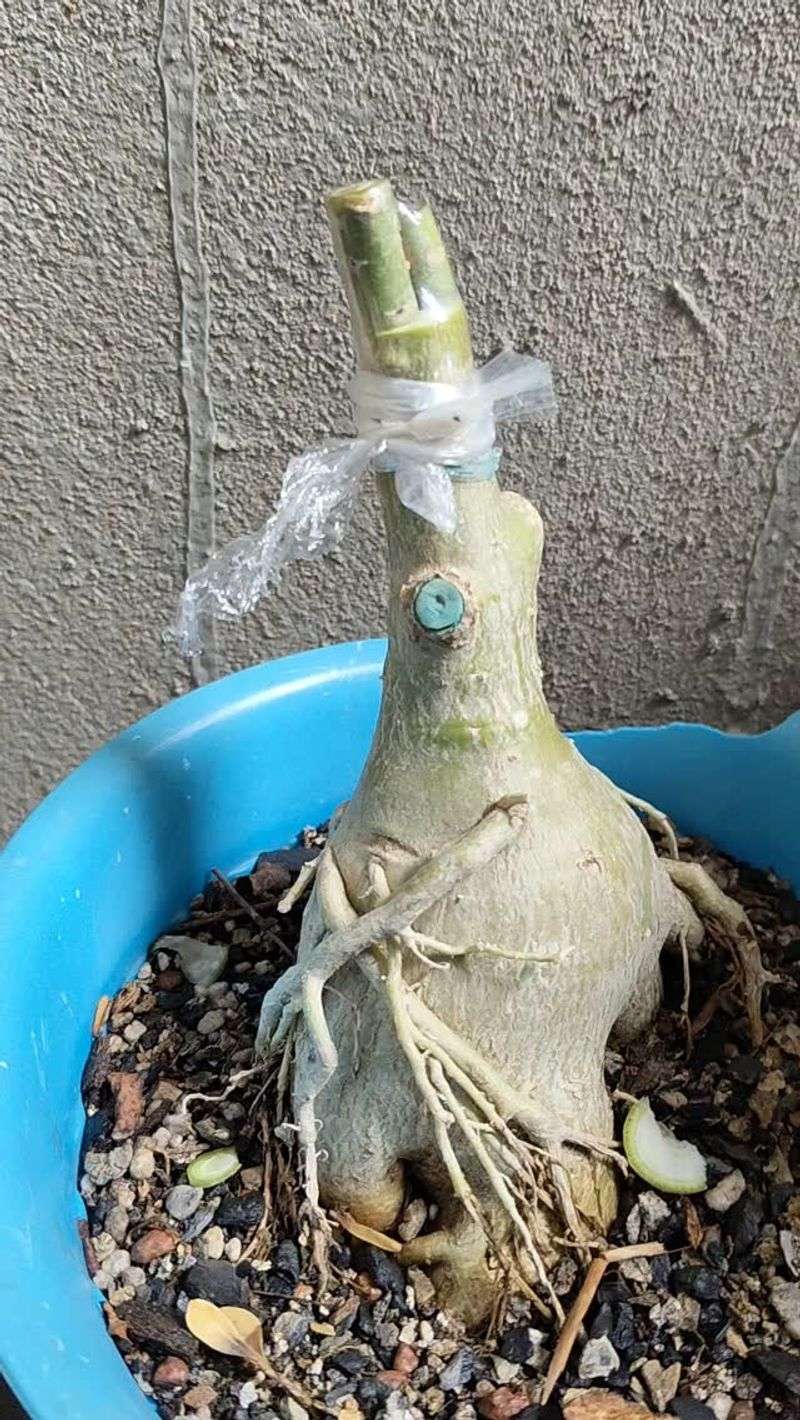
Suppose you press the base and it gives. Do not panic, and do not water it again hoping it perks up.
Pull the plant from its pot right away. Rinse the roots under a gentle stream and look for anything brown, mushy, or stringy. Healthy adenium roots are firm and pale.
Cut away every soft section with a clean blade, sterilizing between cuts with a disinfecting solution. Keep trimming until you reach solid white or cream tissue, even if that means removing a lot.
Dust the wounds with powdered sulfur or a garden fungicide. Then set the plant somewhere shaded and airy for three to seven days so the cuts callus over. Skipping this drying step often lets the rot return.
Repot into fresh gritty mix in a clean container, and hold off on watering for another week. Roots need to seal before they meet moisture again.
Plants caught early often push new leaves within a month. Even a badly cut caudex can regrow, and many gardeners end up with an interesting sculpted shape as a souvenir.
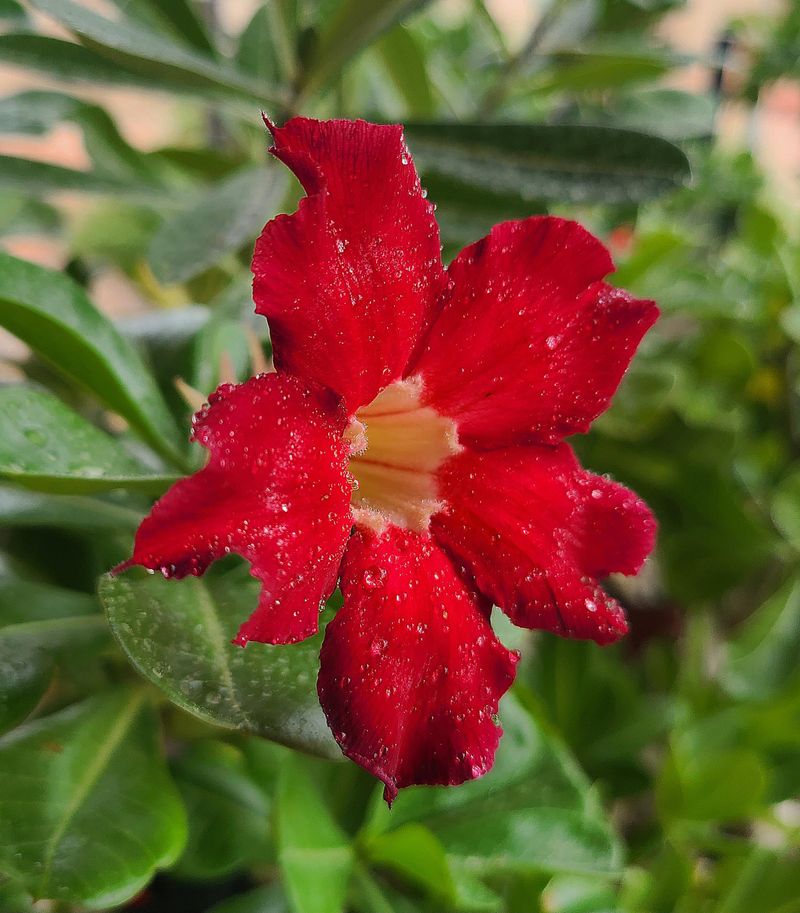
Get the fall routine right and the reward shows up quickly. Cooler, drier October weather often brings a fresh flush of blooms in pink, red, and white on plants that entered autumn firm and healthy.
Treat September as the month to step back rather than step up. Your desert rose asks for less attention, not more, and repays that restraint with a caudex you can be proud of.