The Simple Habit That Brings More Painted Buntings To Texas Yards Before They Migrate
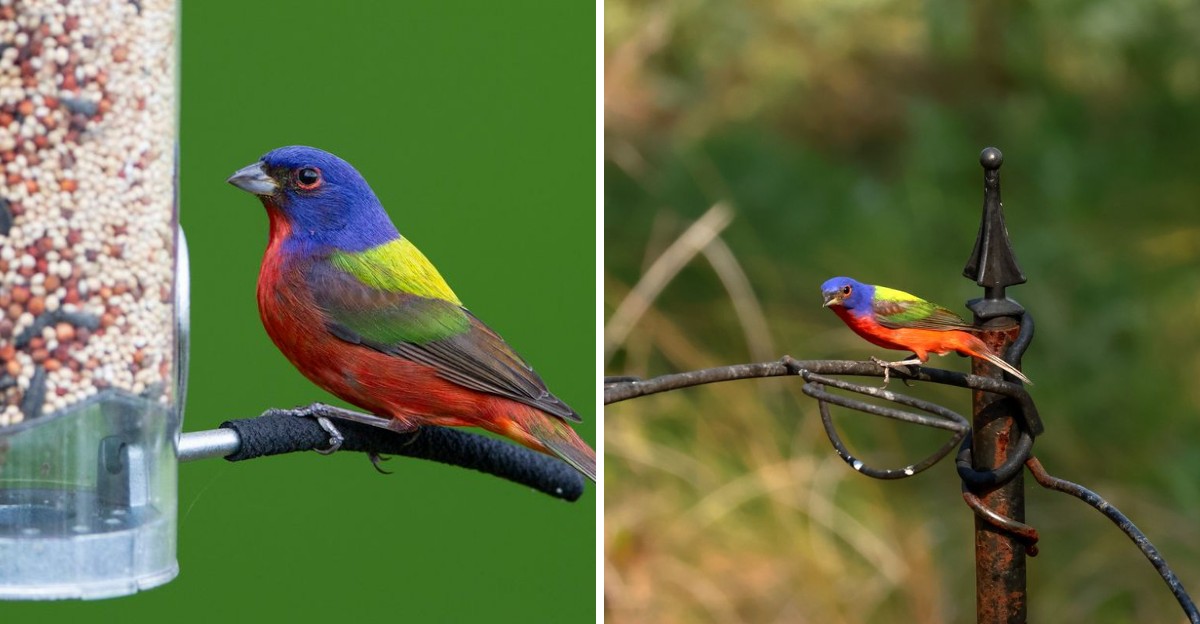
Spotting a painted bunting in your yard feels like winning a small prize. Unfortunately, they don’t make it easy. Painted buntings are shy, quick, and happiest when they’re tucked out of sight.
Time is running short, too. As fall sets in, they’re fueling up for their long trip south to Mexico and Central America. Once they’re gone, you’ll have to wait until spring for another chance.
The good news? One simple habit can make your yard far more appealing to these dazzling birds. It takes very little effort, and the payoff can be unforgettable.
Offer White Proso Millet Near Dense Cover
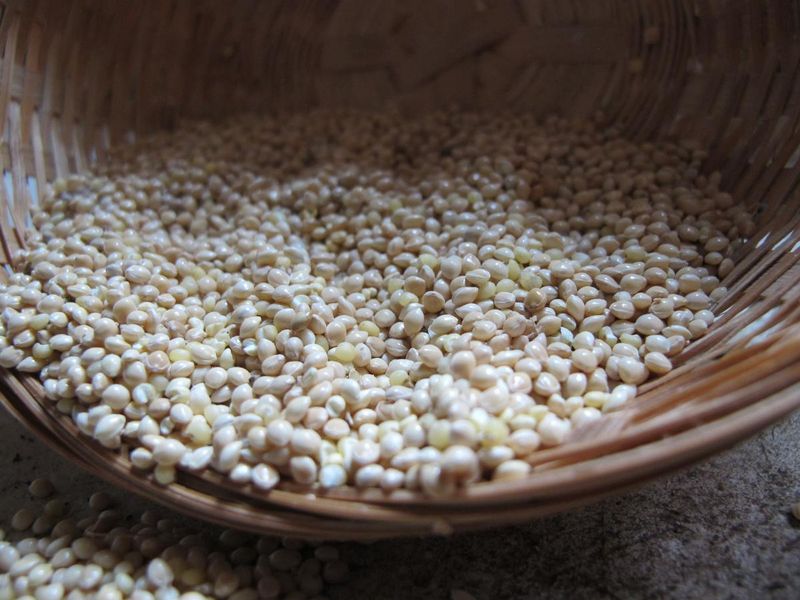
Ask any Texas birder about painted buntings, and one word pops up again and again. Millet. These small birds have short, thick beaks made for cracking tiny seeds.
White proso millet is round, cheap, and easy to find at most feed stores. Buntings seem to love it more than almost anything else. Sunflower seeds are fine for cardinals, but many buntings will skip them for millet.
Where you put the seed matters just as much as what you buy. Painted buntings are very shy birds. They spend most of their time tucked inside tangled brush and thickets.
A feeder out in the middle of an open lawn may feel scary to them. They know hawks can swoop down fast. Open space leaves them with nowhere to hide.
Try placing your feeder about three to ten feet from thick shrubs, a brush pile, or a hedge. That short distance gives the birds a quick escape path. They can grab a few seeds and dart back into cover in a second.
Good cover plants include yaupon holly, agarita, and Texas sage. A simple pile of branches in a corner of the yard also works well. Some folks leave a messy patch of brush on purpose just for birds.
Be patient after you set things up. Buntings may take days or even a few weeks to find a new feeder. Once one bird finds it, others often follow.
Keep the millet fresh and the feeder full. A steady supply tells the birds your yard is a safe place to eat. Before long, you may spot a flash of red and blue near your bushes.
Choose A Feeder They’ll Actually Use
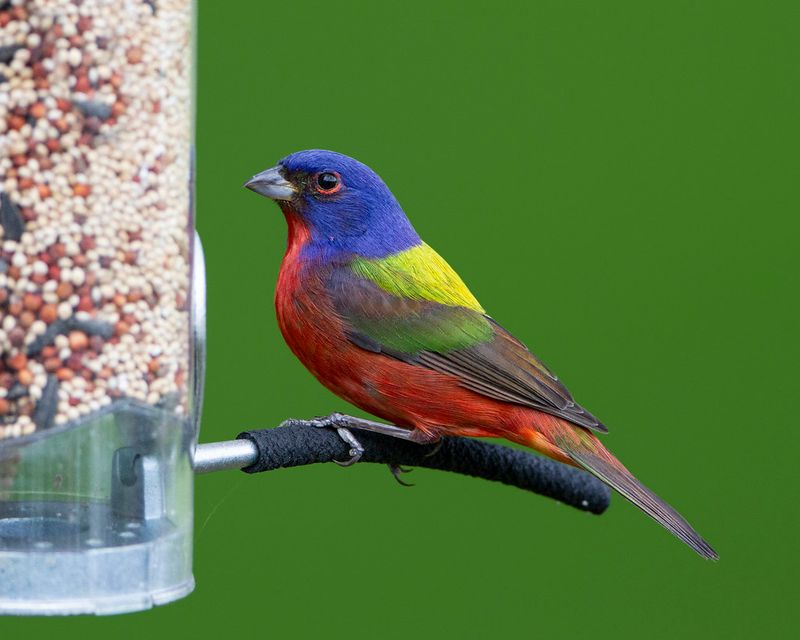
Squirrels are clever little thieves, and they love millet almost as much as buntings do. That is one big reason your feeder choice counts.
Painted buntings are not picky about style, but they do have favorites. Tube feeders with small perches suit their tiny feet well. Open platform feeders also work, since the birds can hop right onto the tray.
Here is a fun secret. Buntings often feed on the ground under a feeder. They pick up seeds that other birds knock loose.
Because of that habit, you might sprinkle a small handful of millet on the ground near your shrubs. Just keep the amount small so it does not pile up and spoil. A low tray feeder can do the same job in a neater way.
Your Texas Garden Changes Every Week. Your Plan Should Too.
Gardening in Texas changes quickly throughout the season. Every Friday you’ll receive a simple weekly plan showing exactly what to plant, prune, fertilize, harvest, and protect so you never miss the right timing.
Now for the tricky part. Larger birds like grackles, doves, and blue jays can gobble millet in minutes. Squirrels can empty a feeder before lunch.
Many gardeners solve this problem with caged feeders. These feeders sit inside a wire cage with gaps about one and a half inches wide. Small birds like buntings slip right through, while bigger birds and squirrels get blocked.
Caged feeders cost a bit more, but they save a lot of seed over time. They also give shy buntings a calmer place to eat. Nobody likes being shoved aside at the dinner table.
Hang your feeder about four to five feet off the ground. That height is easy for you to refill and comfortable for the birds. Watch for a week or two, and you will learn which setup your buntings like best.
Why Late Summer And Early Fall Are Key
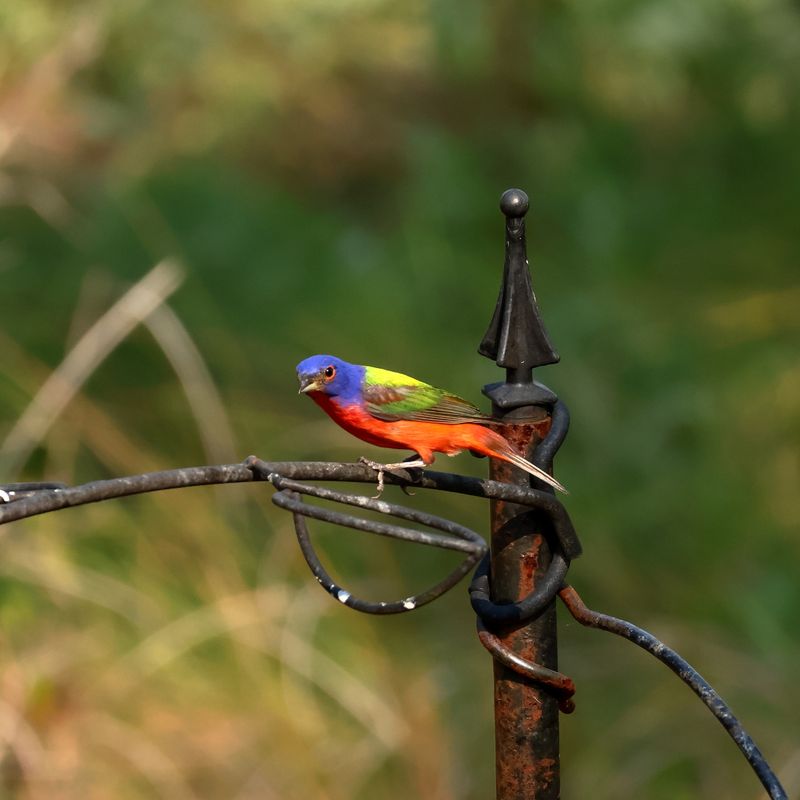
By the time school starts in Texas, painted buntings are already thinking about a long trip. Their journey takes them south to Mexico and Central America for the winter.
Flying hundreds of miles takes a lot of energy. So in late summer, buntings go on an eating spree. They pack on fat to use as fuel along the way.
Think of it like filling up a car before a road trip. A bird with a full tank has a much better chance of making it safely. Your feeder can be one of their gas stations.
Most painted buntings leave Texas by October. Some stragglers hang around a little longer, especially in the southern part of the state. August and September are often the busiest months at feeders.
There is another bonus to this season. Buntings that nested farther north, in places like Oklahoma and Arkansas, pass through Texas on their way south. That means your yard might host more birds than it did all summer.
Young birds hatched this year also show up now. Young males look green like females at first. It takes them until their second year to get those famous bright colors.
So keep your feeders stocked from late July through October. Check them every day or two, since busy weeks can empty them fast. Running out of seed during migration is a missed chance.
Keep a little notebook by the window if you can. Write down the date and how many buntings you see. Over the years, you will learn exactly when the rush begins in your own yard.
Why It Can Help Bring Them Back Next Spring
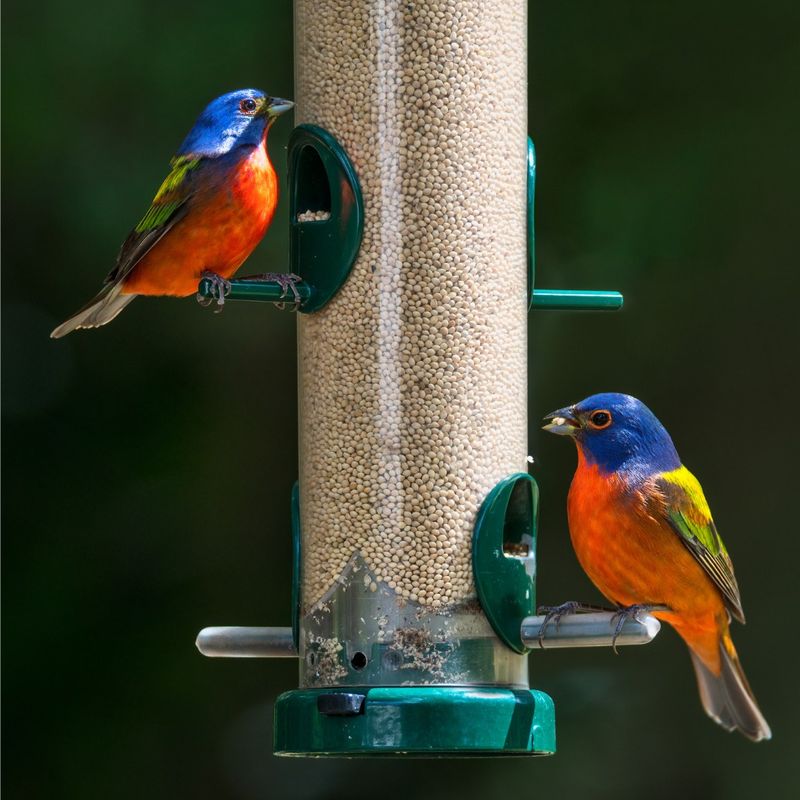
Here is something amazing about tiny songbirds. Many of them remember places. A bird smaller than your hand can fly thousands of miles and still find its way back to the same neighborhood.
Scientists call this site fidelity. It simply means birds tend to return to spots that worked well for them before. Painted buntings often come back to the same general area to nest year after year.
So what makes a yard worth remembering? Birds look for three main things. They want food, water, and a safe place to hide and raise babies.
If your yard offered all three last fall, you gave the buntings good reasons to trust it. That trust may bring them back when spring rolls around. It is a bit like returning to a favorite restaurant.
Painted buntings usually arrive back in Texas around April. Males show up first and start singing to claim a territory. Their song is a sweet, bubbly warble that is fun to learn.
Try to have fresh millet in your feeder by early April. That way, returning birds find food right away. A tired bird after a long flight will be glad for an easy meal.
Keep your shrubs and brush in place over winter too. Avoid heavy trimming right before spring, since buntings like thick cover for nests. They often build low in bushes or small trees.
Nothing is guaranteed in nature, of course. Still, a yard that stays welcoming gives you the best odds. There are few thrills like spotting that first bright male of the year.
Add Water And Native Plants
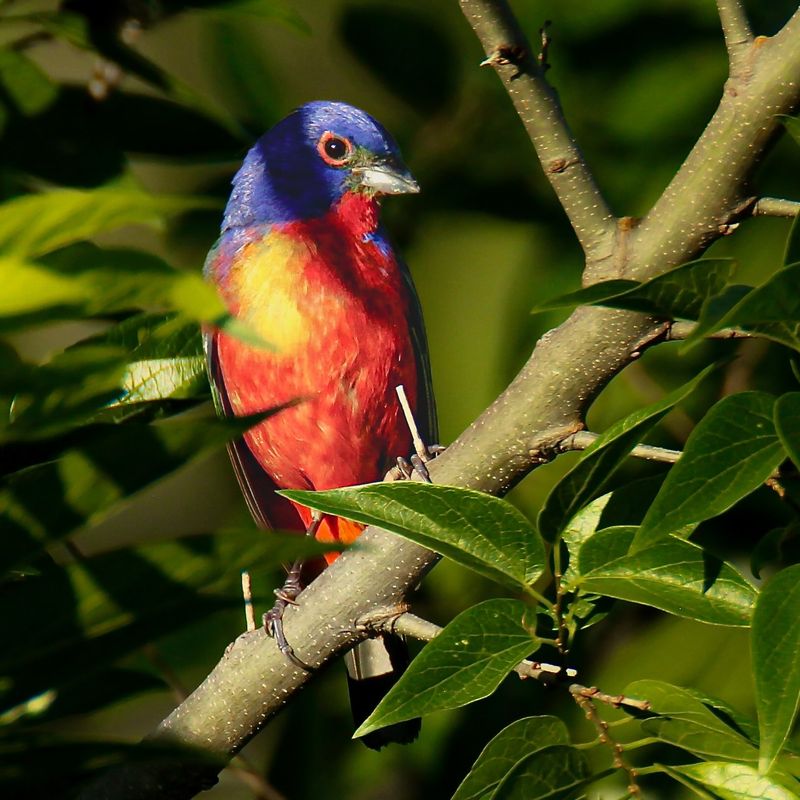
Texas summers can feel like an oven. Birds feel that heat too, and water becomes just as important as food.
A shallow birdbath is one of the best tools you can add. Painted buntings like water that is only one to two inches deep. Deep bowls can feel unsafe for such small birds.
Moving water works like a magnet. Birds notice the sparkle and sound of dripping water from far away. A simple dripper or small solar fountain can make your birdbath much more popular.
Place the bath near cover, just like your feeder. A wet bird cannot fly as fast, so it wants a hiding spot nearby. Put a flat rock in the middle so birds have a place to stand.
Change the water every day or two in hot weather. Fresh water stays cleaner and keeps mosquitoes from breeding. A quick scrub once a week also helps a lot.
Now let’s talk plants. Native plants are ones that grow naturally in Texas. They are adapted to the heat and usually need less water than fancy imports.
Many native grasses make seeds that buntings adore. Try little bluestem, sideoats grama, or switchgrass. Wildflowers like purple coneflower and Indian blanket also produce tasty seeds.
Let some flowers go to seed instead of cutting them back right away. Those dried seed heads are like a free buffet.
Buntings also eat insects in summer, and native plants attract plenty of bugs for them. Add a few dense shrubs, and your yard becomes a natural bunting hangout.
Keep Feeders Clean And Safe
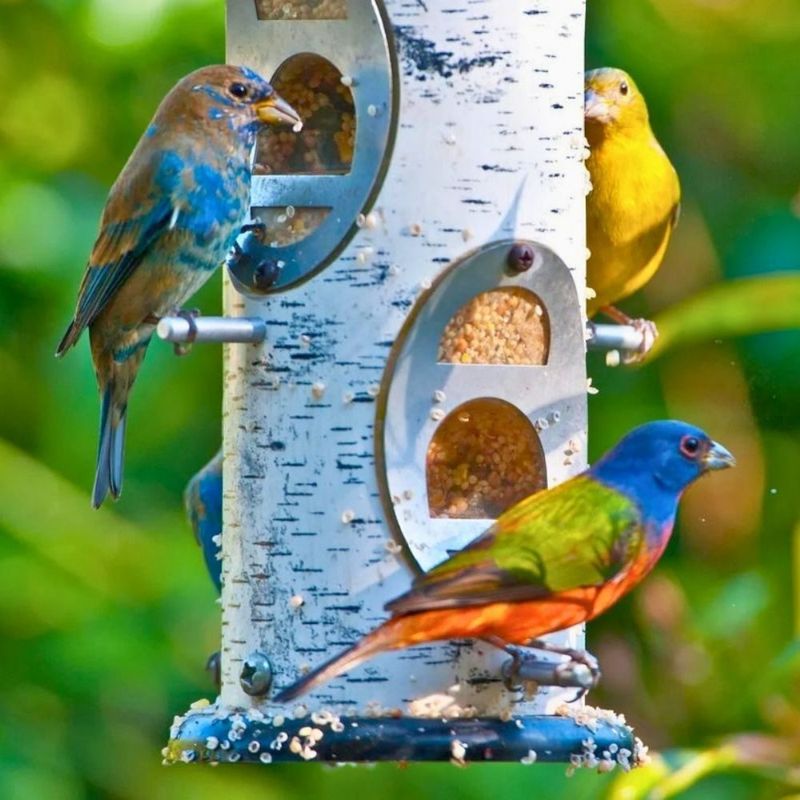
Nobody wants to eat off a dirty plate, and birds are no different. A messy feeder can spread germs quickly from one bird to the next.
Plan to clean your feeders every couple of weeks. Clean them more often during hot, humid weather or after heavy rain. A little effort goes a long way.
Cleaning is easy. Scrub the feeder with warm, soapy water and a bottle brush. Some people soak feeders in a mix of one part bleach to nine parts water, then rinse very well.
Let the feeder dry completely before refilling it. Wet seed turns moldy fast, and mold can make birds sick. If you see clumpy, smelly, or dark seed, throw it out right away.
Rake up old seed hulls under the feeder too. Piles of spoiled seed can attract rats and spread illness. Moving the feeder a few feet now and then also helps keep the ground cleaner.
Safety goes beyond cleaning. Outdoor cats are one of the biggest threats to backyard birds. Keeping your cat indoors protects buntings and keeps your pet safer too.
Windows can also be a danger. Birds sometimes see reflections of trees and fly straight into the glass. Place feeders either very close to a window, within three feet, or farther than thirty feet away.
Window decals or screens can help as well. Every bit of care matters. Painted bunting numbers have dropped in parts of their range, partly because of habitat loss and trapping.
By keeping your yard clean and safe, you become a real helper for these colorful birds.