The Small Brown Nuts Covering Connecticut Sidewalks Are Not Acorns
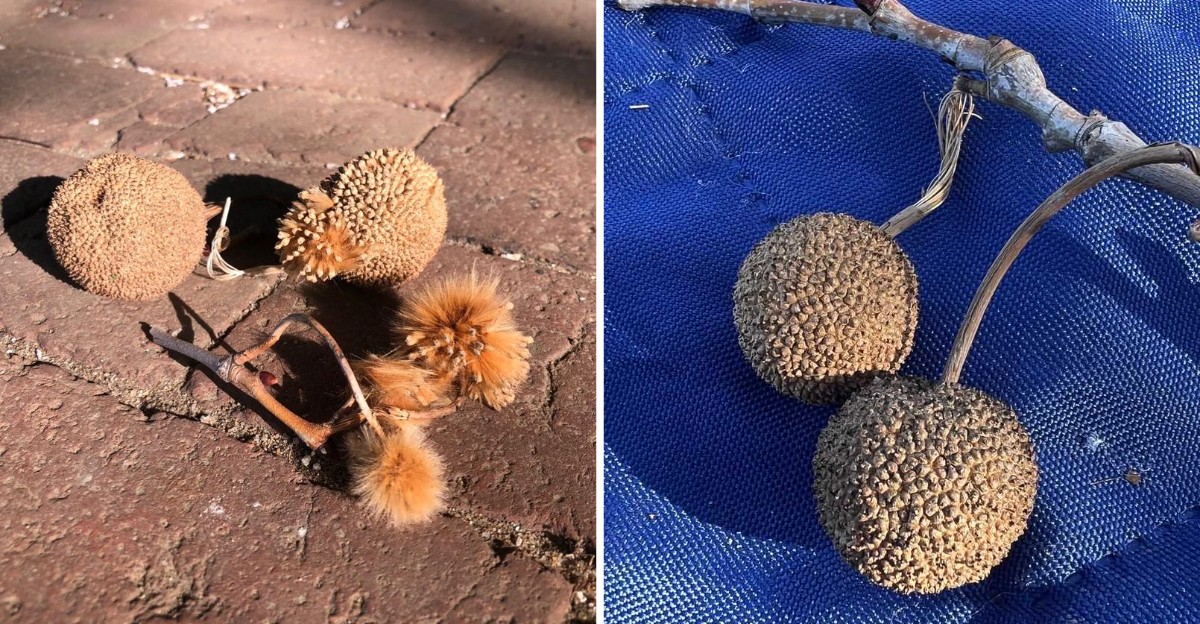
Step outside almost anywhere in Connecticut this month and your shoes crunch loudly with every single stride. The sidewalk suddenly looks scattered with hundreds of odd little brown bits that nobody around here remembers ordering.
Most folks glance down, shrug, and then mutter something vague about acorns and busy neighborhood squirrels. The squirrels, for the record, would very much like everyone to stop blaming them for this.
Look closer and the whole pile gets much stranger, full of bristly pods and pale tan spheres. Some crumble into drifting fuzz, while others split into tiny wooden stars under a boot heel.
Two very different trees stand overhead, quietly emptying their deep pockets onto your freshly swept sidewalk. Neither one is an oak, and neither one seems even slightly sorry about the mess.
The True Identity Of Connecticut’s Sidewalk Litter
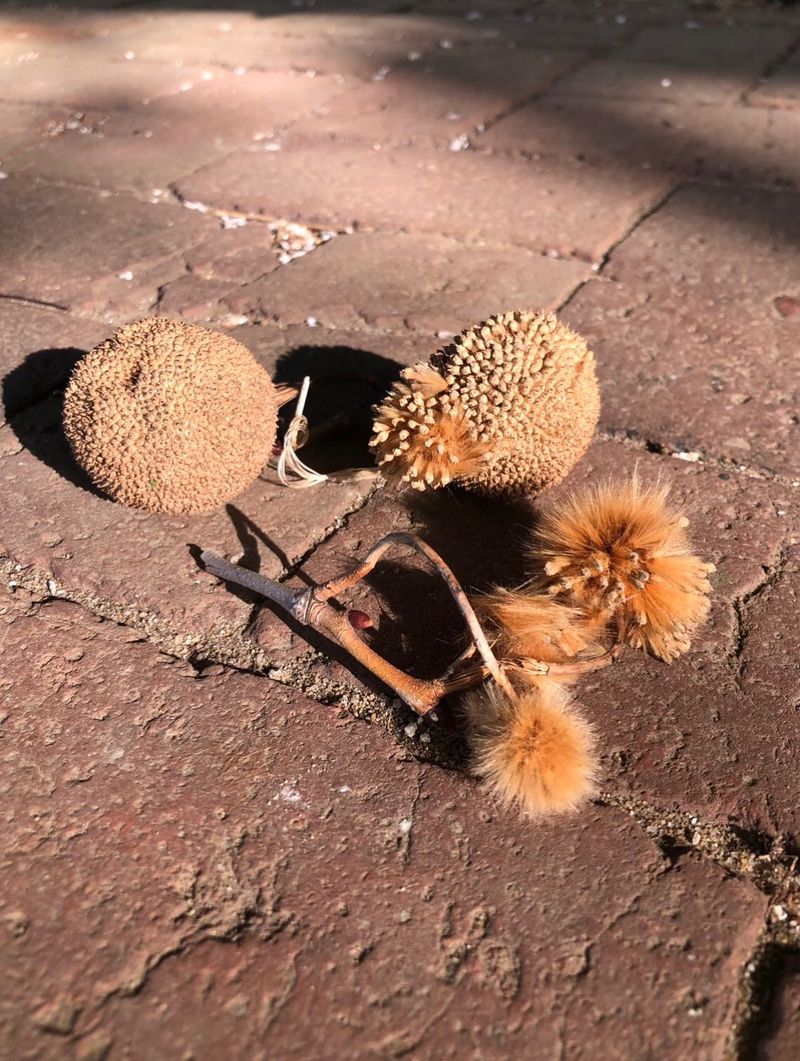
Those crunchy brown bits underfoot come from beech trees and sycamores, not from oaks. Both species drop seeds by the thousands once cool nights settle over the state.
Beech nuts arrive as small three-sided kernels tucked inside bristly husks the size of marbles. Sycamores send down tan spheres that break apart into fluff and tiny tufted seeds.
Acorns wear a smooth cap and a rounded body, which makes them easy to separate. Once you notice the difference, sidewalk litter starts telling you which trees stand nearby.
American beech grows thick through Connecticut woodlands and older neighborhoods with tall shade canopies. Sycamores prefer riverbanks, park edges, and street plantings where roots reach steady moisture.
Homeowners often blame squirrels for the mess, though the trees hardly need any help. Wind, rain, and a single chilly night can bring a heavy shower down overnight.
The litter matters because both types roll underfoot and turn smooth pavement surprisingly slick. Bicycle tires and sneaker soles lose grip fast on a carpet of round seed balls.
Kids love collecting the prickly husks, which open like tiny wooden flowers when fully dry. Squirrels, turkeys, and blue jays arrive soon after to claim the richest kernels.
Knowing the source helps you plan cleanup, protect visitors, and appreciate what falls. Your sidewalk is basically a seed catalog, delivered free and without any packaging.
Give the pile a closer look before you sweep, because identification takes only seconds. A quick glance at the nearest trunk usually confirms exactly who made the mess.
Beech Nuts And Their Prickly Little Husks
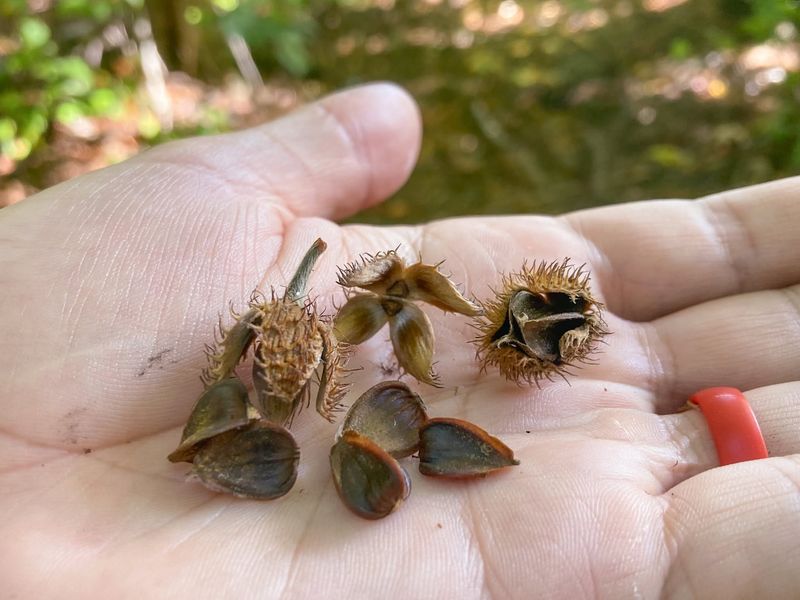
Crack open one of those spiky brown pods and you will find a small treasure. Inside sit two or three triangular nuts, each smaller than a kernel of corn.
American beech trees carry smooth gray bark that many people compare to elephant skin. They hold that bark so tightly that carved initials from decades ago remain readable.
The husks, called burrs, feel bristly rather than sharp, so bare hands handle them fine. Each burr splits into four woody sections once September sun dries the outer shell.
Beech nuts taste sweet and slightly oily, similar to a mild sunflower seed. People have eaten them for centuries, though large amounts can upset a sensitive stomach.
Your Connecticut Garden Changes Every Week. Your Plan Should Too.
Gardening in Connecticut changes quickly throughout the season. Every Friday you’ll receive a simple weekly plan showing exactly what to plant, prune, fertilize, harvest, and protect so you never miss the right timing.
Wildlife treats a good crop like a holiday feast across Connecticut forests. Bears, deer, turkeys, chipmunks, and wood ducks all compete for the fallen kernels.
Heavy crops arrive in cycles known as mast years, sometimes two to five years apart. During those seasons a single mature tree can release tens of thousands of nuts.
Shelling takes patience, since the papery skin clings and the kernels stay quite tiny. Roasting them briefly loosens the skins and brings out a richer, nuttier flavor.
Sweep burrs off steps quickly, because they roll like miniature ball bearings. A stiff broom works better than a blower, which tends to scatter them everywhere.
Should you find a beech in your yard, treat the tree as a gift. The mess lasts a few weeks; the shade and the wildlife stick around far longer.
Sycamore Seed Balls And The Fuzzy Mess They Leave
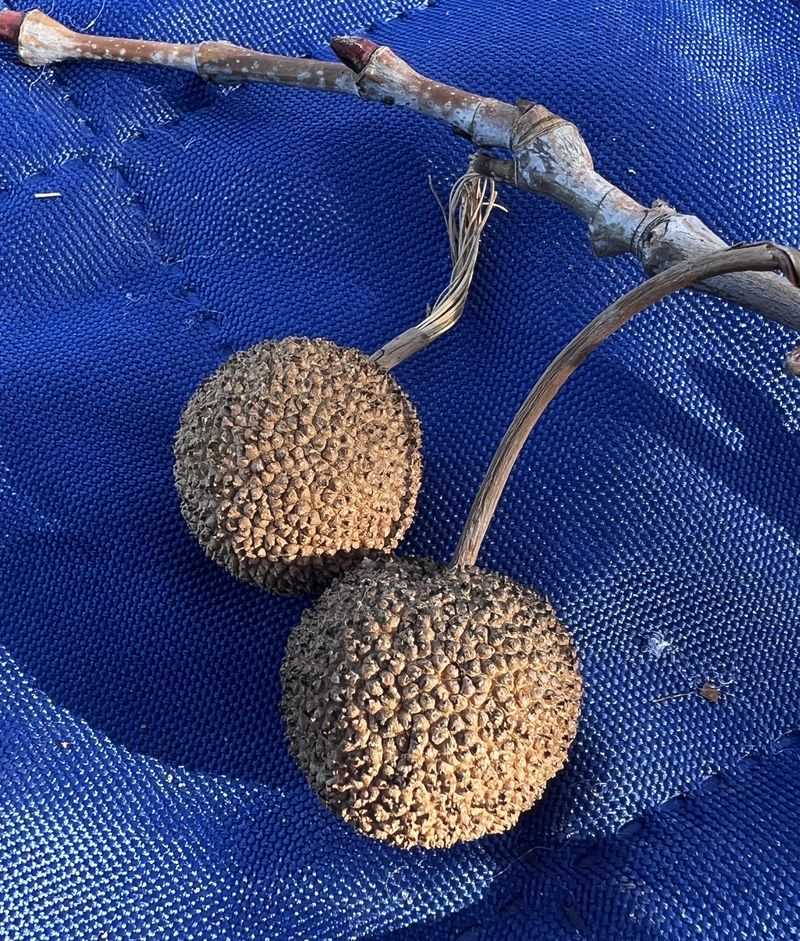
Picture a tan ping pong ball dangling from a bare branch on a long stem. That is a sycamore seed head, and Connecticut streets collect plenty of them each fall.
Each ball holds hundreds of narrow seeds packed around a small central core. Brush one and it explodes into a cloud of tan fuzz that drifts everywhere.
Sycamores announce themselves with mottled bark in patches of cream, olive, and gray. The peeling trunk looks like military camouflage, which makes winter identification almost effortless.
Leaves grow unusually large, sometimes eight to ten inches across, with broad pointed lobes. They pile up alongside the seed balls and clog gutters faster than most street trees.
The fuzz can irritate noses and throats when swept on a dry, breezy afternoon. A dust mask and a light spray of water keep the cloud under control.
Intact balls survive winter on the branches and drop gradually through March. Cleanup therefore stretches across several months rather than finishing in one tidy weekend.
Squirrels and finches pick at the seeds, though the crop rates poorly as wildlife food. Most seeds simply blow away and sprout in damp soil along rivers and streams.
Planners once loved sycamores and London planetrees for shade over wide city sidewalks. Those same trees now hand residents an annual delivery of fuzzy brown ornaments.
Rake the balls before heavy rain glues them into the pavement seams. Left alone, they turn into mush that stains concrete a stubborn shade of brown.
September Drop Timing Across The State
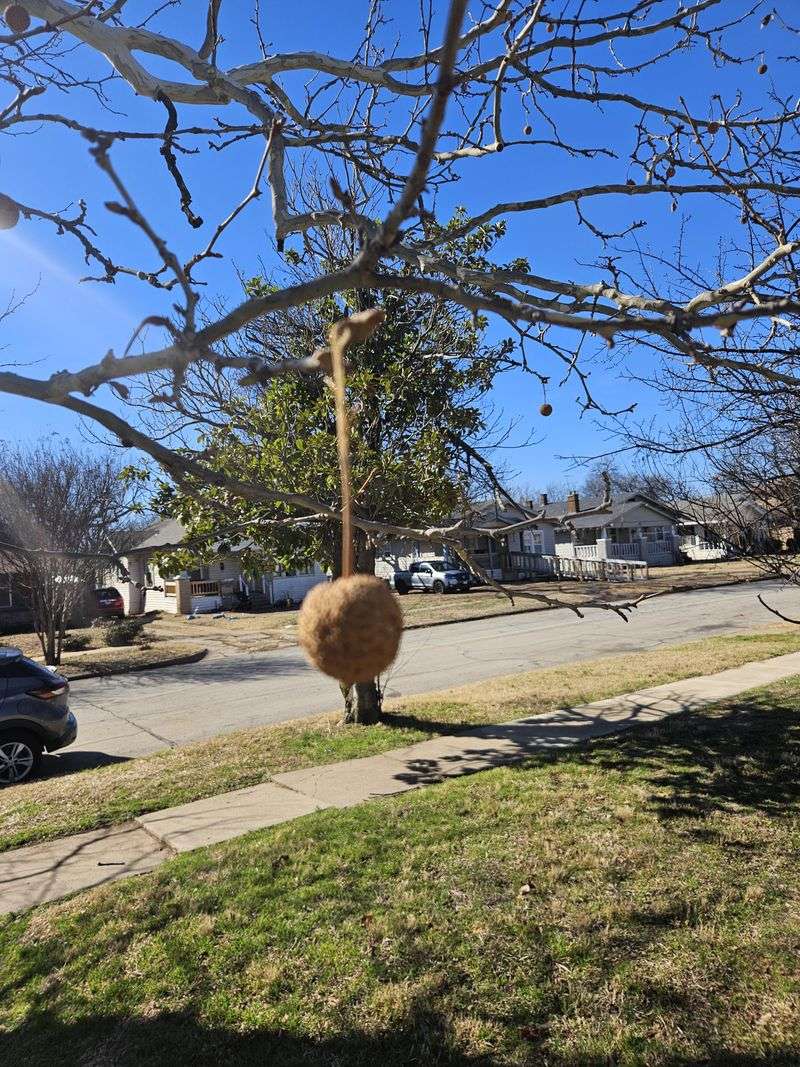
Late summer heat fades and the trees begin letting go, often within the same week. Beech burrs usually start falling in September, while sycamore balls loosen a bit later.
Shorter days trigger the change, not temperature alone, so the calendar stays fairly predictable. Shoreline towns run a week or two behind the cooler northwest hills.
A windy storm speeds everything up dramatically. One gusty night in September can empty a beech canopy onto your driveway.
Squirrels often begin cutting nuts before the burrs open naturally. Green husks scattered on the lawn mean the harvest race has officially started.
Sycamores hold their seed balls stubbornly through autumn and into deep winter. Freeze and thaw cycles crack the stems, releasing balls in scattered batches.
Plan two cleanup passes for beech, roughly two weeks apart, for the best results. Plan monthly sweeps for sycamore, since the drop refuses to happen all at once.
Rain adds weight to the burrs and hurries them along even faster. Check under the canopy the morning after a downpour for a fresh brown layer.
Watch the sidewalk after the first cold snap, which usually loosens everything remaining. That single morning often produces more litter than the previous three weeks combined.
Schools and parks schedule field maintenance around these weeks for good reason. Slippery walkways and busy foot traffic make a poor combination in early October.
Mark your calendar now and the season stops catching you off guard. Your broom will thank you, assuming brooms are capable of gratitude.
Common Mix-Ups With Acorns And Chestnuts
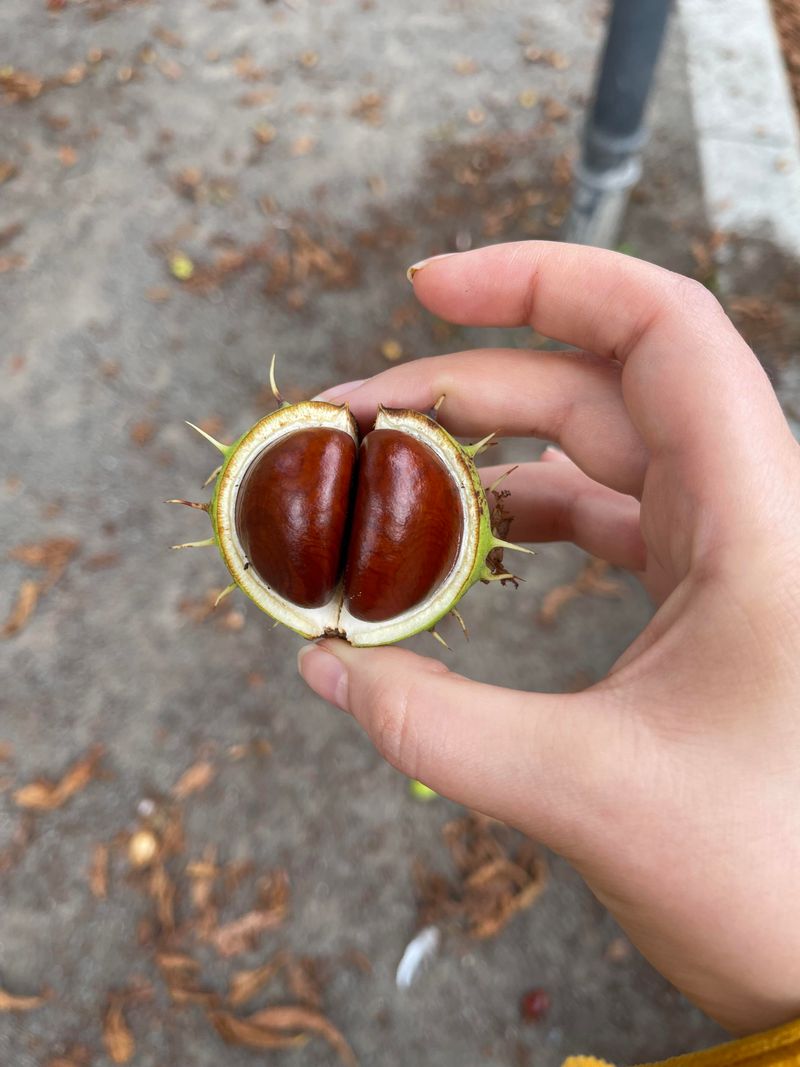
Plenty of Connecticut residents sweep beech burrs and call them baby chestnuts. The confusion makes sense, since both wear spiky coats and drop around the same time.
Real chestnut burrs bristle with long, needle sharp spines that hurt bare fingers. Beech burrs feel soft and flexible, more like a stiff paintbrush than a weapon.
Horse chestnuts, close relatives of buckeyes, come wrapped in thick green shells with blunt bumps. Their glossy brown seeds are large, round, and not safe for people to eat.
Acorns stay easy to spot thanks to that familiar little cap on top. Few other things on a Connecticut sidewalk wear a hat quite like an oak seed.
Sycamore balls get mistaken for sweetgum fruit, which also dangles on slender stems. Sweetgum balls carry stiff spikes and stay woody, while sycamore balls crumble into fuzz.
A simple squeeze test settles most arguments in about two seconds. A sycamore ball collapses under light pressure; a sweetgum ball pokes back.
Identification matters for pets, because some seeds cause stomach trouble when swallowed. Horse chestnut seeds and sweetgum balls create the most problems for curious dogs.
Foragers care too, since beech nuts are edible while several lookalikes are not. Confidence should come from the tree above, not the mystery pile below.
Snap a photo of the bark, leaf, and seed together before asking for help. That trio answers the question faster than any single blurry close up ever will.
Local extension offices identify samples for free and enjoy the puzzle. Bring a small bag, and expect a friendly lecture about your tree.
Cleanup And Prevention Along Sidewalks And Driveways
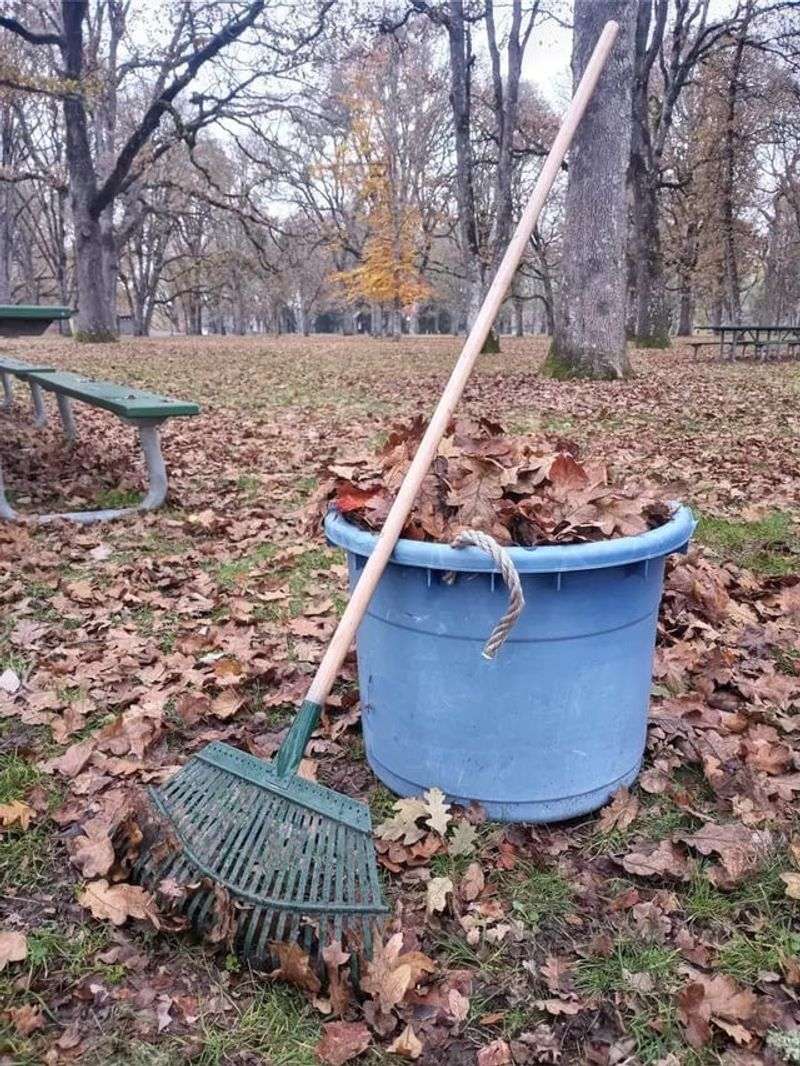
Slip risk drives most complaints, and round seeds roll like marbles under a shoe. A few minutes of raking prevents a twisted ankle and an awkward apology.
Stiff push brooms handle beech burrs well on flat concrete and asphalt. Lawn sweepers or a rake with springy tines pull sycamore balls off grass quickly.
Shop vacuums with wide hoses swallow both types without clogging much. Empty the canister outdoors, because sycamore fuzz escapes through the smallest gaps.
Toss the debris into compost, where burrs break down over a single season. Sycamore balls take longer, so shred them or bury them deeper in the pile.
Gutter guards save real money during a heavy sycamore year. Seed balls and oversized leaves together create the worst clogs on any roofline.
Pruning branches away from walkways reduces the drop zone without harming the tree. Hire a certified arborist for anything above shoulder height near power lines.
New plantings offer the simplest long term fix for a troublesome spot. Choose smaller shade trees, or set large species well back from pavement edges.
Salt and heavy scraping damage concrete faster than seed stains ever could. Warm water, mild soap, and a scrub brush lift the brown marks fine.
Neighbors sharing a sidewalk can split the work into short weekly shifts. One person sweeps, another bags, and the whole block stays walkable through October.
Treat the annual chore as rent for living under a genuine shade canopy. The trees pay you back in July, when your neighbor’s yard feels like an oven.