The Strange-Looking Native Pennsylvania Flowering Shrub Pollinators Can’t Resist
There is a native Pennsylvania shrub that stops people in their tracks when it blooms, not because it looks like anything they’ve seen in a typical garden, but because it looks like almost nothing else in the plant world at all.
The flowers are unlike most standard garden shrubs. They’re unusual, almost otherworldly in their structure, and the first time most people encounter them, the instinct is to stare before asking what on earth they’re looking at.
Pollinators have a completely different reaction. They find this shrub with a enthusiasm that is almost hard to believe until you’ve seen it for yourself.
Bees, butterflies, and beneficial insects return to it repeatedly during its bloom window, making it one of the most ecologically productive native shrubs a Pennsylvania gardener can plant.
The Unusual Shrub Pollinators Love
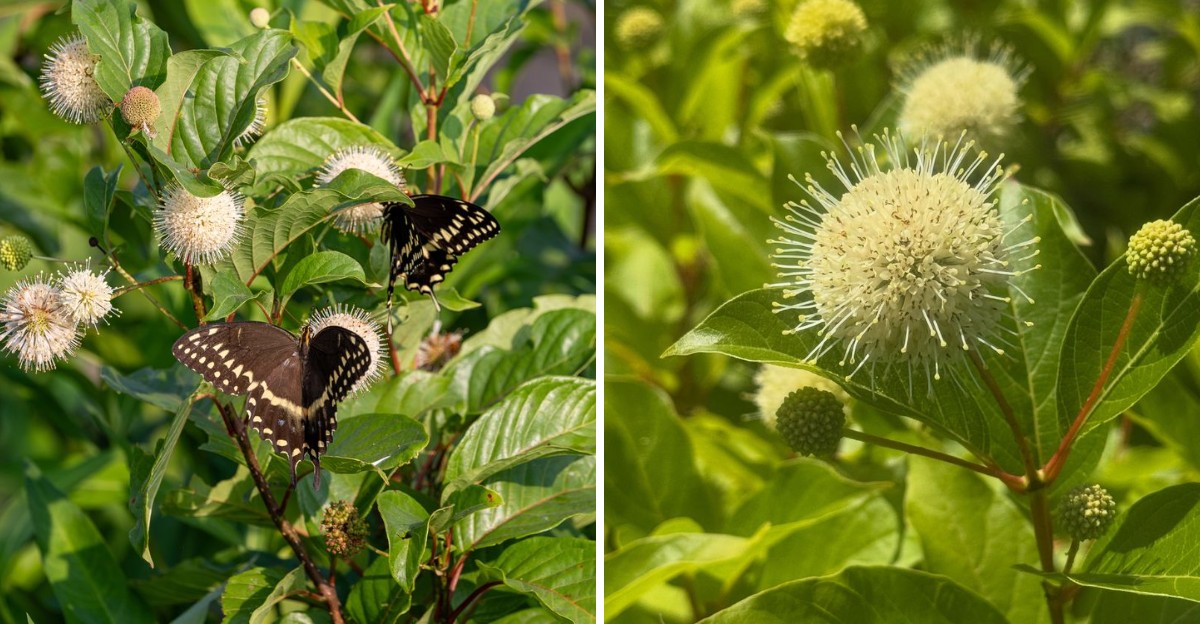
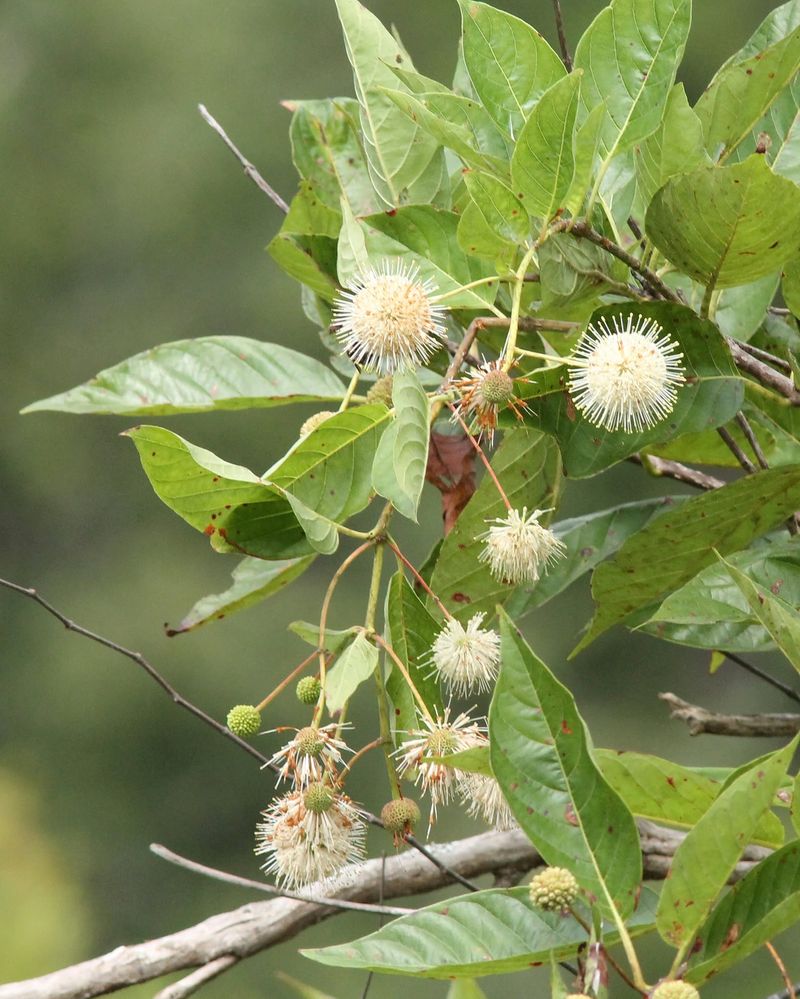
Picture a shrub covered in fuzzy white balls that look like they belong in a science fiction movie. That’s buttonbush, and it grows wild across Pennsylvania.
Its scientific name is Cephalanthus occidentalis, but most folks just call it buttonbush because of those round, button-shaped flowers. Each bloom looks like a tiny pincushion with little white spikes sticking out in every direction.
The flowers show up in summer, usually from June through August. They start out as small green globes, then burst open into creamy white spheres about the size of a golf ball.
Pollinators go wild for it. Bees, butterflies, and moths visit all day long, and hummingbirds sometimes stop by too. The shrub practically hums with activity when it’s in full bloom.
Buttonbush is a true Pennsylvania native, which means it belongs here naturally. It grew in local wetlands and along streams long before anyone planted it in gardens.
Because it’s native, local wildlife already knows how to use it. The plants and animals here evolved together, so buttonbush fits right into the natural rhythm of the land.
It usually grows between five and twelve feet tall, forming a rounded, bushy shape. Given enough room and moisture, it can spread out nicely and become a standout feature.
What makes it so fun is how different it looks from ordinary garden shrubs. Nobody walks past a blooming buttonbush without doing a double take.
If you want a plant that’s both strange and useful, this one checks every box. It’s proof that weird can also be wonderful in the garden.
Why Buttonbush Flowers Are So Attractive To Pollinators
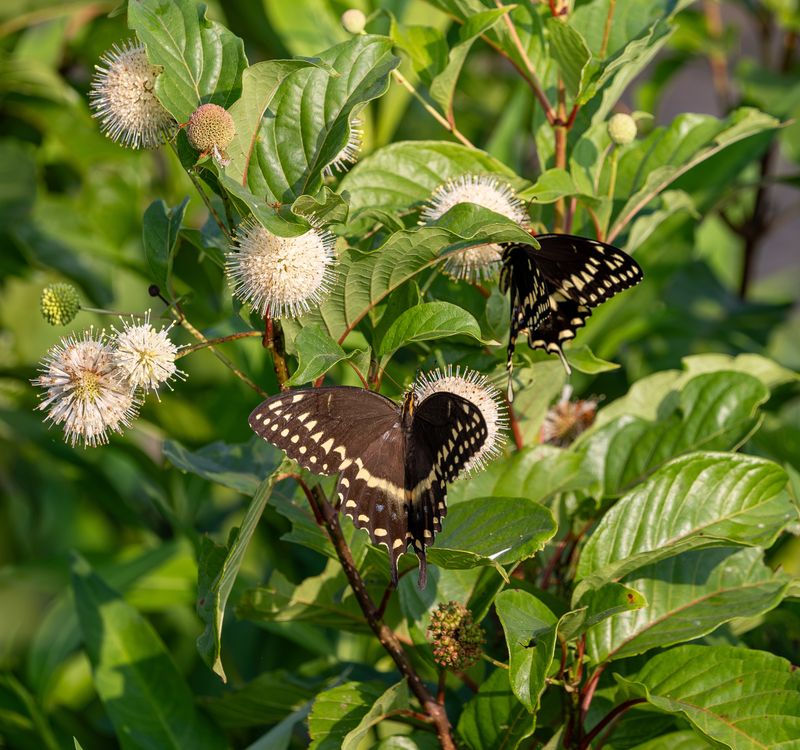
Ever wonder why insects swarm one plant and ignore another? With buttonbush, the secret is hidden inside those spiky white balls.
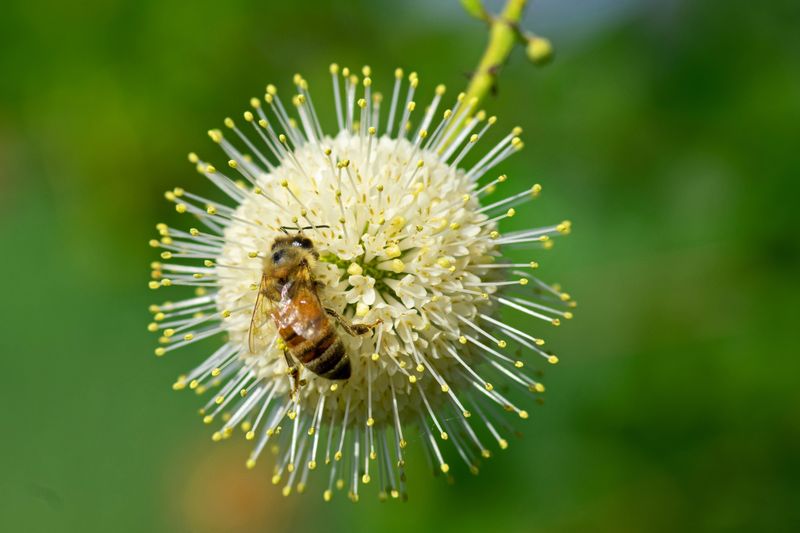
Each round bloom is actually made of dozens of tiny flowers packed tightly together. What looks like one flower is really a whole cluster of little ones sharing the same space.
All those small flowers mean lots of nectar in one convenient spot. A bee can land once and feed from many blooms without flying far, which saves it energy.
That efficiency is a big deal for hardworking pollinators. Butterflies especially love landing on the rounded shape, using it like a little platform while they sip.
Your Pennsylvania Garden Changes Every Week. Your Plan Should Too.
Gardening in Pennsylvania changes quickly throughout the season. Every Friday you’ll receive a simple weekly plan showing exactly what to plant, prune, fertilize, harvest, and protect so you never miss the right timing.
The long white spikes you see are the flower parts that hold pollen and nectar. Insects brush against them and carry pollen from one bloom to the next, helping the plant make seeds.
Buttonbush also blooms in the heart of summer, when many spring flowers have already faded. That timing makes it a valuable food source when pollinators need it most.
You’ll notice all kinds of visitors, not just honeybees. Native bees, wasps, beetles, hummingbird moths, and colorful butterflies all show up for the feast.
The sweet smell helps too. On a warm day, the flowers give off a light, pleasant scent that draws insects from across the yard.
If you sit quietly near a blooming buttonbush, you’ll hear a soft buzzing hum. It’s like watching a busy airport, with insects landing and taking off nonstop.
For anyone who loves watching wildlife up close, this shrub delivers hours of entertainment. It turns a plain corner into a living show.
Give Buttonbush The Moisture It Prefers
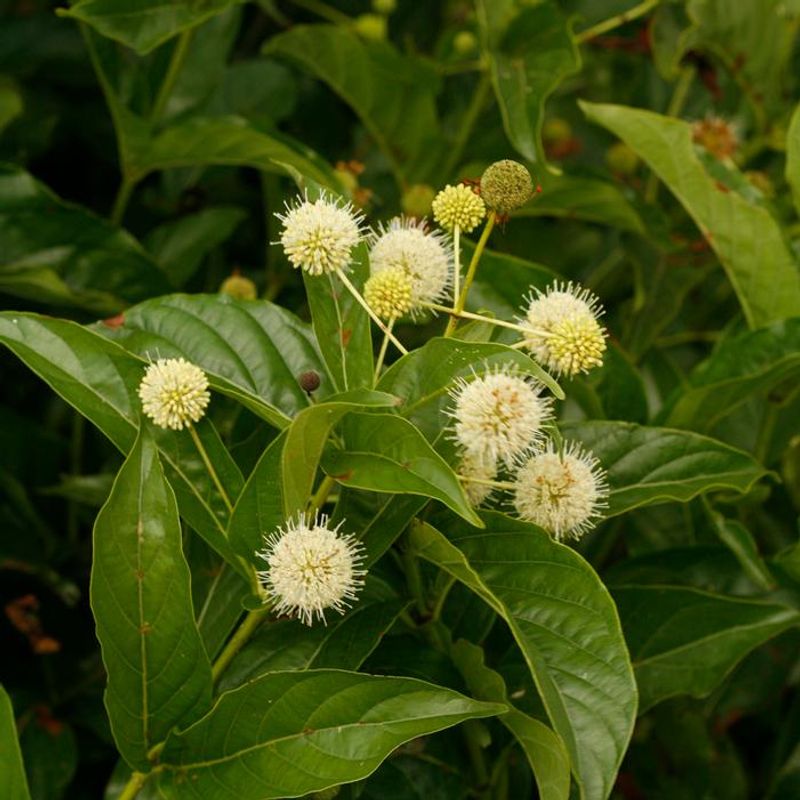
Most shrubs hate soggy feet, but buttonbush is the opposite. It actually thrives in wet ground that would drown other plants.
In the wild, you’ll find it growing along pond edges, stream banks, and in swampy low spots. It even tolerates standing water for short periods.
That makes it a lifesaver for those tricky wet corners of a yard. If you have a spot that stays damp after rain, buttonbush might be the perfect fix.
Rain gardens are one of its best homes. These are shallow, planted dips that collect runoff from roofs and driveways, and buttonbush loves the extra moisture.
It also works beautifully around the edges of ponds and water features. The roots help hold soil in place and keep banks from washing away.
You don’t need a swamp to grow it, though. Buttonbush can handle regular garden soil as long as you water it during dry spells.
Full sun to part shade suits it just fine. More sunlight usually means more flowers, so aim for a bright spot if you can.
When planting, dig a hole about as deep as the root ball and twice as wide. Set the shrub in, fill the soil back, and water it well.
For the first year, keep the soil consistently moist while the roots settle in. After that, it becomes much tougher and needs less fussing.
Adding a layer of mulch helps trap moisture and keeps roots cool. Just avoid piling it right against the stems. Match this plant to a damp spot, and it will reward you with steady, easy growth for years.
How Buttonbush Fits Into A Pennsylvania Wildlife Garden
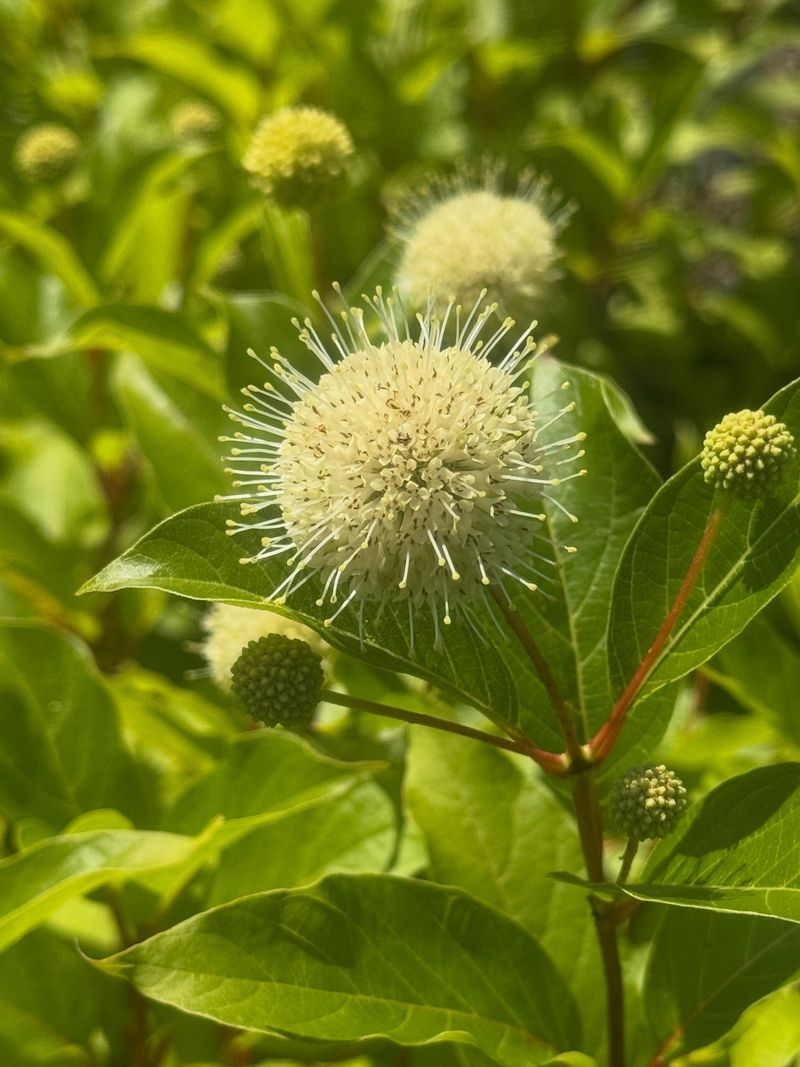
Flowers are just the beginning of what this shrub offers. Buttonbush works hard all year to support local wildlife.
After the blooms fade, they turn into round, reddish-brown seed balls. These clusters hang on through fall and winter, adding food and interest.
Many birds and waterfowl feast on those seeds. Ducks especially enjoy them, which is why buttonbush often grows near water where birds gather.
The leafy branches also give small creatures a place to hide. Birds nest in the tangle, and insects shelter among the stems.
Because it grows near water, buttonbush supports a whole web of life. Frogs, dragonflies, and other pond visitors benefit from the cover it provides.
Pollinators get their summer nectar, birds get their seeds, and the soil gets protection from erosion. One plant does several jobs at once.
That’s the beauty of native shrubs. They connect with local animals in ways that fancy imported plants often can’t.
If you’re building a wildlife garden, buttonbush makes a strong anchor plant. Pair it with other Pennsylvania natives like swamp milkweed or joe-pye weed for even more buzz.
You’ll notice more visitors over time as word spreads through the animal world. A garden with buttonbush becomes a gathering place.
It also handles the seasons gracefully. Green leaves in spring, showy flowers in summer, and seed balls in fall keep the show going.
Kids love watching the parade of creatures it attracts. It’s a living lesson in how nature all fits together.
Plant it once, and you’ll be feeding and sheltering wildlife for many years with almost no extra effort.
Let Buttonbush Grow Without Over-Pruning
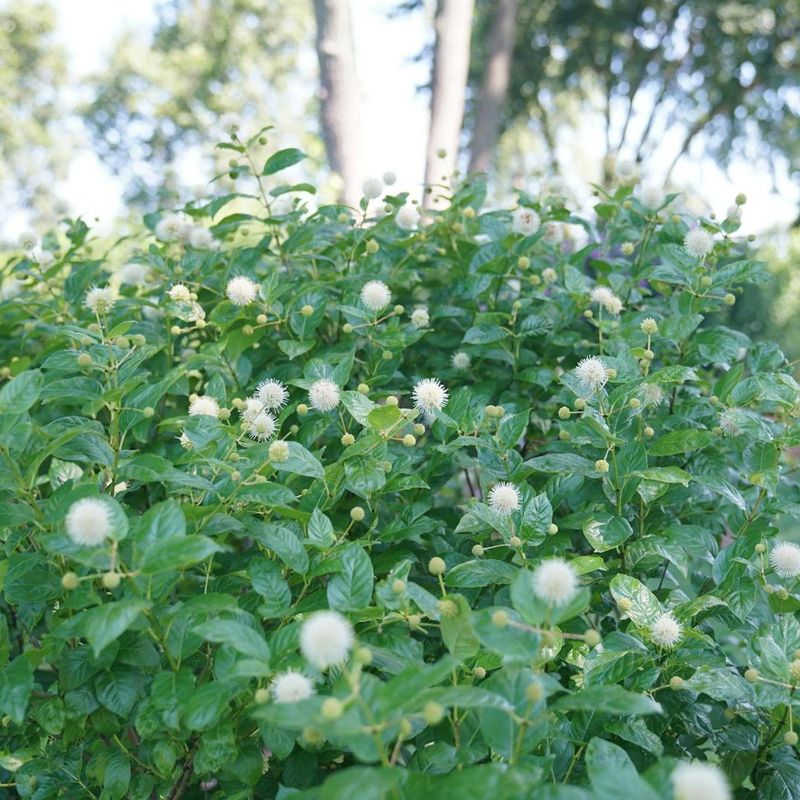
Here’s a tip that saves you work: put down the pruners. Buttonbush looks best when you let it grow naturally.
Left alone, it forms a loose, rounded shape with arching branches. That relaxed, slightly wild look is part of its charm.
Many gardeners make the mistake of shearing it into a tight ball. Cutting it that often removes flower buds and stresses the plant.
Give it room to spread instead. Since it can reach five to twelve feet wide, plant it where it has space to stretch out.
If you do want to shape it, wait until late winter or early spring. Prune before new growth starts so you don’t cut off summer blooms.
Light pruning is all it needs. Remove dry or broken branches and thin out crowded stems to let air move through.
Buttonbush is also forgiving. If it gets leggy or overgrown, you can cut it back hard and it will bounce right back.
This is called rejuvenation pruning, and it works well every few years. The plant responds with fresh, healthy growth.
Try to plan ahead when you plant it. Picking the right spot from the start means less trimming later on.
Crowding it against a fence or path just leads to constant cutting. A little space now saves lots of hassle.
Its natural form also looks more welcoming to wildlife. Loose branches give birds and insects more places to rest and hide.
Let this shrub be itself, and it repays you with easy care and plenty of blooms. Sometimes the best gardening is doing less.
Add Buttonbush For Flowers, Wildlife, And Fall Interest
By now you can probably tell why buttonbush deserves a place in your yard. It brings beauty and life in equal measure.
Those quirky round flowers are true conversation starters. Guests always ask what that strange, spiky shrub is when it’s in bloom.
The show doesn’t stop with summer flowers, either. In fall, the blooms become reddish seed balls that add texture and warm color.
Some plants even show soft yellow tones in their leaves as the season cools. It keeps looking interesting long after other shrubs fade.
Beyond looks, it pulls its weight for the environment. Every bloom feeds pollinators, and every seed cluster feeds birds.
For Pennsylvania yards with damp spots, it solves problems while looking great. Wet corners become lively, blooming features instead of muddy eyesores.
It’s also low maintenance once established. Give it moisture, sunlight, and a little room, and it mostly takes care of itself.
Native plants like this one help restore balance in our neighborhoods. They support the insects and birds that keep local ecosystems healthy.
Planting buttonbush is a small choice with a big impact. You get a beautiful shrub and help nature at the same time.
Imagine stepping outside on a summer morning to a chorus of buzzing wings. That’s the everyday magic this plant brings.
If you have the right spot, there’s little reason to wait. Local nurseries and native plant sales often carry it.
Give buttonbush a try, and you’ll gain a shrub that surprises visitors, feeds wildlife, and stays interesting through every season.