The Texas Native That Attracts Both Monarch And Queen Butterflies In September
September in Texas has a certain smell to it, warm dust with a hint of rain that may or may not show up by evening. The heat still leans on you all day, but something in the light has quietly shifted.
Out in the yard, most summer flowers have already said their piece and gone quiet for the season. Then one low, unassuming patch starts throwing dusty blue puffs around like confetti.
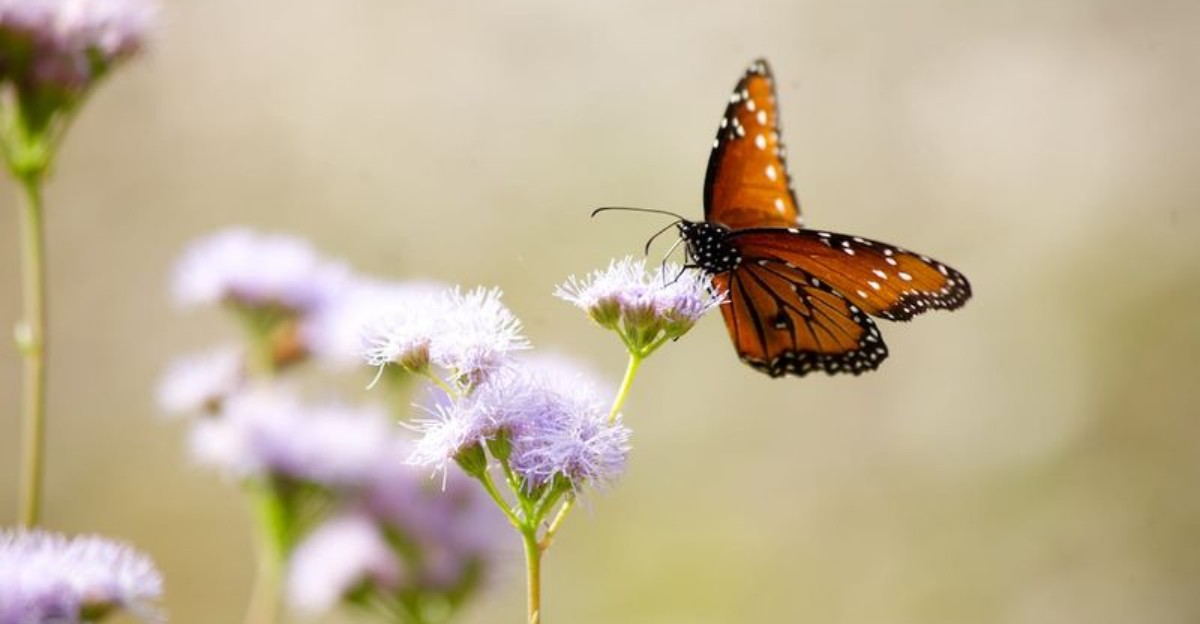
Within just a few days, the orange arrives in force. Not one butterfly, not five, but a restless crowd that lifts and settles and lifts again every single time you step close.
Gardeners here trade notes on this plant like anglers trade fishing spots, half proud, half secretive. Watch one patch pull in that kind of crowd, and a bare flower bed starts to feel plain.
Gregg’s Mistflower And Its Late-Season Pull
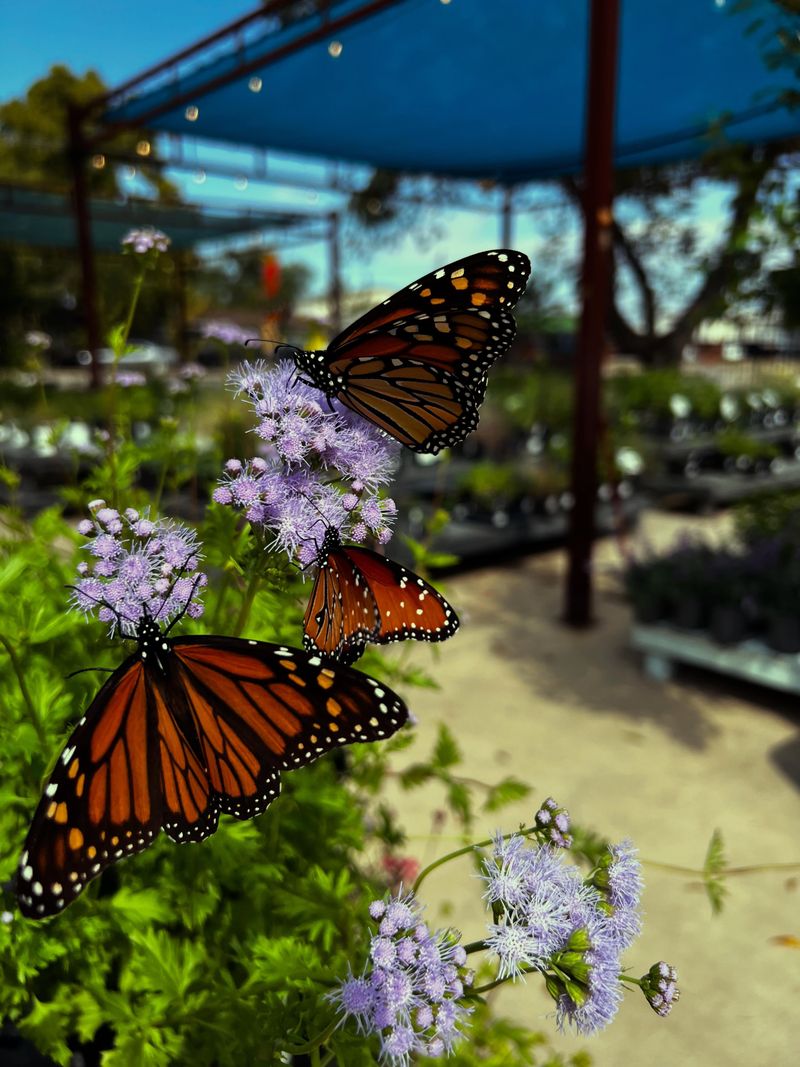
Ask a Texas gardener what turns a quiet flower bed into a swirling orange party each fall, and the answer is usually Gregg’s mistflower. Botanists call it Conoclinium greggii, though plenty of folks know it as palmleaf thoroughwort or simply blue mist.
The plant grows low and loose, reaching a foot or two tall with soft, lobed leaves shaped a bit like tiny hands. Its flowers skip showy petals and instead form powder-puff clusters in dusty lavender-blue, each one packed with dozens of tiny florets.
That structure matters more than it looks. Every floret holds its own small sip of nectar, so a single puff works like a buffet table where a butterfly can feed for a long stretch without moving on.
Native to the Trans-Pecos region and northern Mexico, this perennial handles heat, rocky ground, and long dry spells with ease. It travels by underground stems, so one small transplant from a neighbor can become a wide mat in two or three seasons.
Monarchs and queens both find it, but queens are the true regulars, sometimes covering a patch so thickly the blue disappears underneath them. Add painted ladies, skippers, and bumblebees, and the whole bed hums.
Gardeners who want the show without the sprawl tuck it along a walkway edge or into a raised bed where roots stay in bounds. Either way, the payoff arrives right when most summer flowers have wound down for the year.
Nectar Chemistry That Draws Monarchs And Queens
Here is the strange part of the story. The pull these flowers have on queens and monarchs goes well beyond sweet nectar, and it involves a bit of butterfly chemistry.
Plants in the mistflower group produce compounds called pyrrolizidine alkaloids, usually shortened to PAs. Male queens and monarchs actively seek them out, sipping from fresh blooms and even scratching at drying stems to gather more.
Those compounds get converted into a courtship pheromone stored in hair-pencils, the small brushes a male flares near a female during mating flights. Without a decent supply, his signal is weaker and his odds are slimmer.
So when dozens of butterflies cling to one blue patch for hours, some are refueling while others are stocking up on perfume ingredients. That double purpose explains why the crowd lingers long after a nearby lantana has been abandoned.
Your Texas Garden Changes Every Week. Your Plan Should Too.
Gardening in Texas changes quickly throughout the season. Every Friday you’ll receive a simple weekly plan showing exactly what to plant, prune, fertilize, harvest, and protect so you never miss the right timing.
Females gain something too, since alkaloids can pass into their eggs and make them less appetizing to predators. Nectar sugar powers the wings, and the alkaloids handle the rest.
Leave spent blooms alone during peak season. Browning flower heads still carry compounds males want, so a slightly scruffy bed beats a tidy one.
It also explains a sight that puzzles people, butterflies working a patch that looks half finished. They are not confused at all, just shopping for a different ingredient than the one you assumed.
September Timing And The Migration Overlap
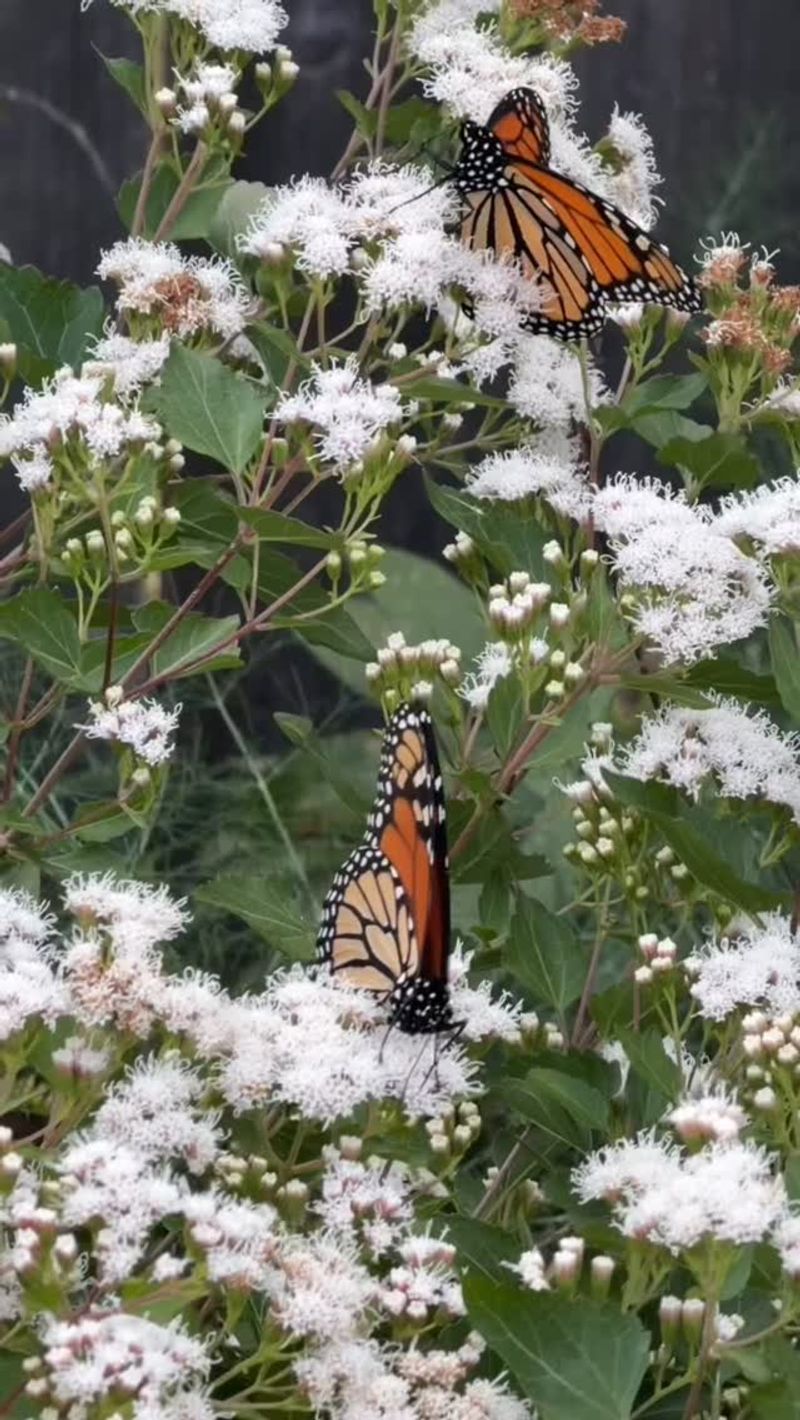
Timing is the quiet reason this plant earns so much praise. Its heaviest flush lands in late September and October, right as monarchs funnel down through the state toward the mountains of central Mexico.
Shorter days and cooler nights trigger the bloom, and a good September rain pushes it harder still. In North Texas the show often starts around the second week of the month, while Central and South Texas peak a couple of weeks later.
Monarch movement follows a similar rhythm. The leading edge crosses the Red River in mid to late September, and the main wave rolls through the I-35 corridor from the last days of September into mid October.
Queens play by their own rules. Many stay in South and Central Texas through the whole year, building big numbers by late summer, so they usually claim a fresh patch first.
That overlap is what makes September worth watching. For a few weeks, resident queens and traveling monarchs share the same flower heads, and sorting one from the other becomes a fun backyard puzzle.
If you are planting for that window, set transplants out in spring or very early fall so roots settle before hard heat or the first cool snap. A first-year plant may bloom lightly, while a second-year clump can carry hundreds of puffs.
Weather shifts the schedule by a week or two each season, so watch the buds rather than the calendar and you will catch the peak.
Placement And Watering Missteps In Texas Gardens
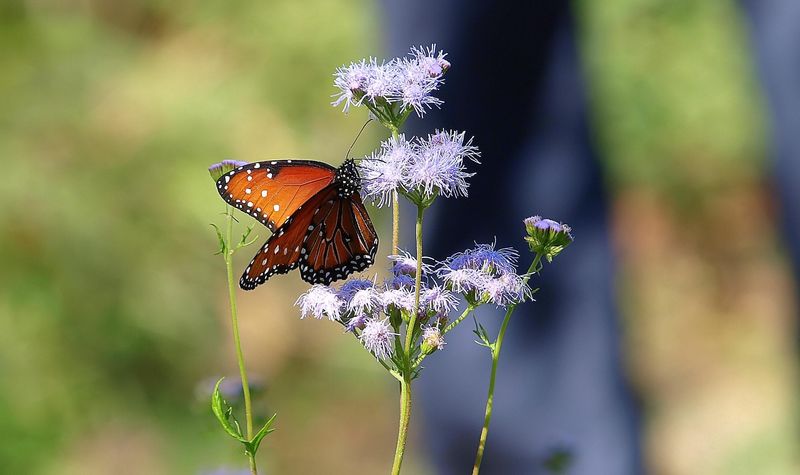
Plenty of gardeners buy this plant, tuck it into a shady corner, and then wonder why the butterflies keep skipping their yard. Shade is mistake number one, because flower count drops fast with less than six hours of sun.
Soggy ground causes the second headache. Heavy clay that stays wet after a storm produces weak, floppy stems and roots that sulk, since this species grew up on rocky, fast-draining slopes out west.
Overwatering does similar harm in a gentler way. Daily sprinkler runs push soft leafy growth instead of flower buds, and the clump splits open in the middle like a poorly stacked woodpile.
A third slip happens at the nursery counter. Two plants share the mistflower nickname, and the eastern one, Conoclinium coelestinum, wants steady moisture and part shade, so the wrong pick disappoints in a dry Hill Country bed.
Late-season pruning ranks high on the regret list too. Shearing stems in August or September removes the buds that were about to open, and the fall display shrinks to almost nothing.
Then there is spray drift. One mosquito treatment or broad insecticide application near the bed undercuts the whole point of growing it, since butterflies land directly on treated leaves and flowers.
The last one surprises people: a cramped planting spot. Rhizomes want elbow room, and a plant wedged between a sidewalk and a clipped hedge stays thin instead of forming the wide mat that pulls in crowds.
Midsummer Trims, Soil Fixes, And Root Control
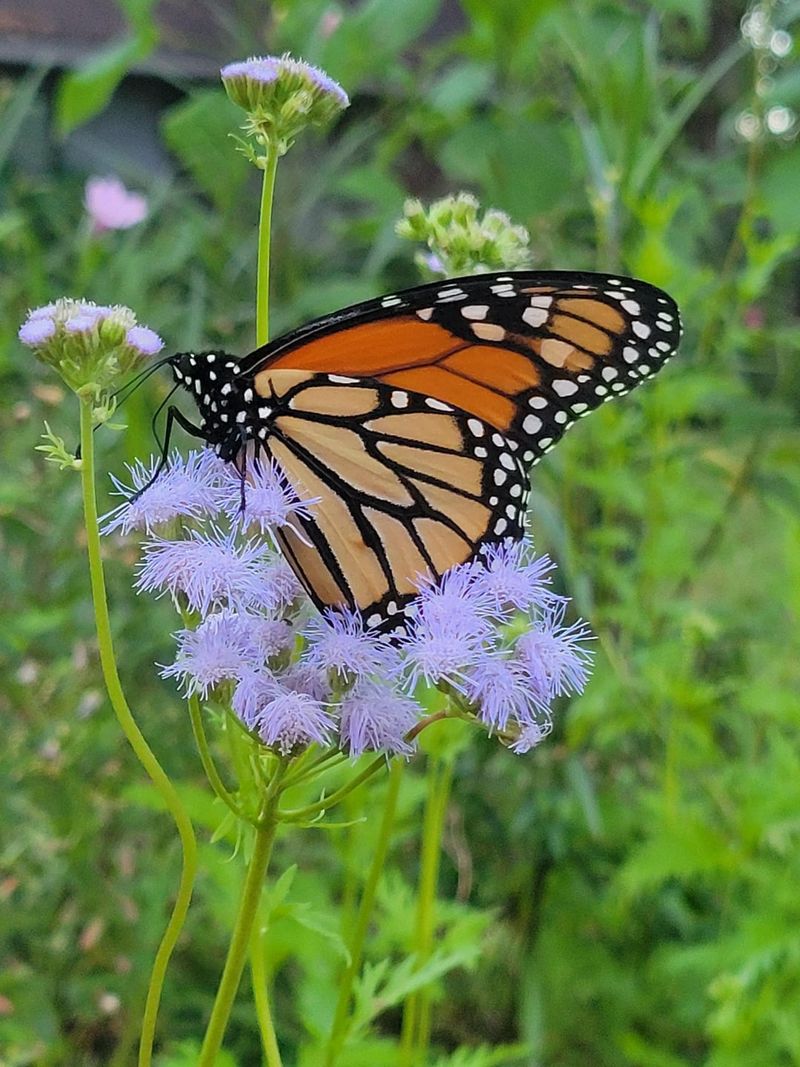
There’s a simple fix for anyone stuck with a leggy, flower-shy patch. Most trouble clears up with one well-timed haircut and a little attention to drainage.
Shear the whole clump back by about a third in mid to late June, then leave it be. That single trim forces side branching, keeps stems upright, and can roughly double the number of flower clusters come autumn.
Mark early August as your cutoff. Anything snipped after that point takes fall buds along with it, so put the shears away and let the plant build.
For drainage, blend a few inches of compost with decomposed granite or expanded shale into heavy clay before planting. Raised beds and low berms do the same job when deep digging is not realistic.
Watering works best as a deep-and-rare habit once plants settle in, maybe a long soak every week or two through the hottest stretch. Established clumps in open ground often coast on rainfall alone.
Traveling roots need boundaries in a small yard. Buried edging, a sidewalk, or a roomy container keeps the colony in place, and spring is the right time to lift and divide extra pieces for friends.
After frost, top growth fades back and returns from the roots in spring. Leave old stems standing until late February since they shelter overwintering insects, then cut them low before new shoots push up.
Light mulch, steady sun, and a hands-off approach round out the routine. Skip the plant food, because rich soil makes it flop.
Clouds Of Orange Wings By Late September
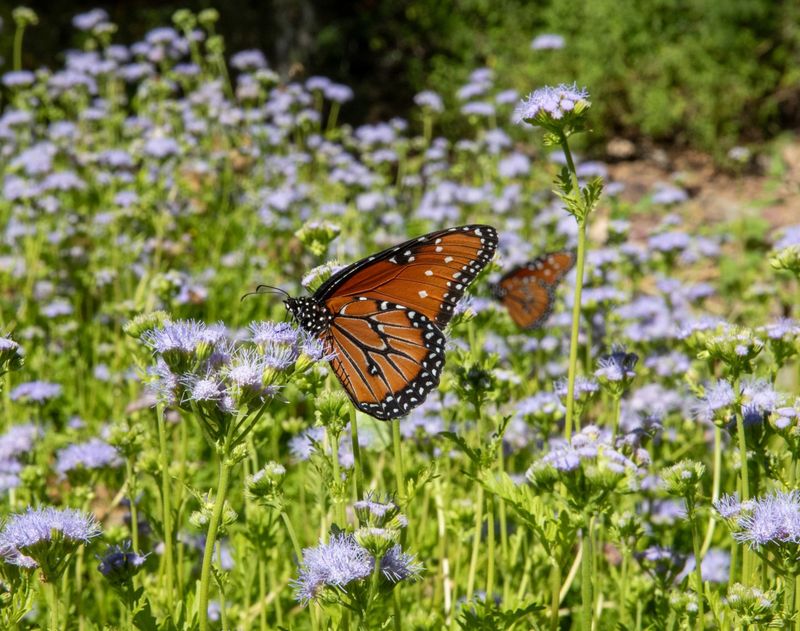
Picture late September, around ten in the morning, sun warm and the air still. A three-foot patch can hold thirty or forty butterflies at once, and the whole thing shimmers when a shadow drifts across it.
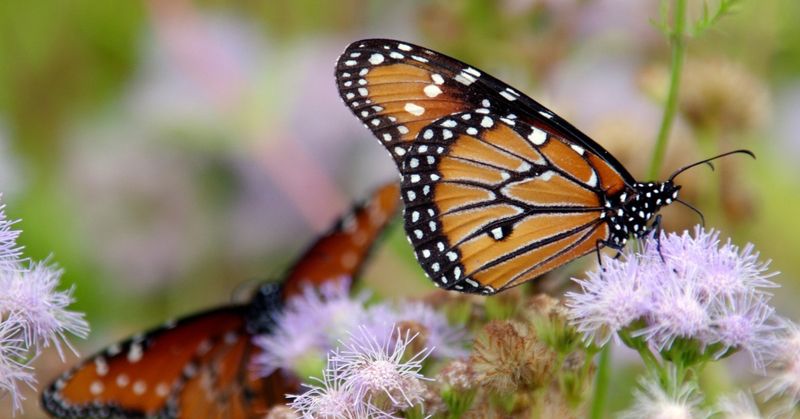
Queens usually dominate the head count. Their wings glow a deeper mahogany brown with scattered white flecks on the forewing, and the heavy black veins that mark a monarch are missing.
Monarchs stand out by contrast, brighter orange with bold black lines like stained glass. Spotting both species on one flower head is the moment most gardeners end up describing to anyone who will listen.
Mid-morning through late afternoon brings the biggest numbers, and warm, calm days beat breezy ones. Overcast weather thins the crowd, though a few stubborn regulars hold their spots.
Visitors do not stop at butterflies, either. Bumblebees, tiny sweat bees, hairstreaks, skippers, and the occasional hummingbird moth work the same puffs, turning a modest bed into a busy little neighborhood.
One thing worth remembering: nectar feeds adults, but caterpillars need milkweed. Pairing your patch with antelope-horns or green milkweed gives the next generation somewhere to grow up.
Frostweed, fall aster, and goldenrod stretch the buffet into November, so the crowd sticks around longer. Butterflies favor reliable stops and tend to return season after season.
For something beyond a pretty view, log sightings with Journey North or look into tagging through Monarch Watch. Backyard reports from Texas help researchers follow the migration closely.