The Texas Shrubs To Plant Before Halloween
Digging planting holes in July is nobody’s idea of fun. The sun beats down, the ground is hard as a brick, and you’re drenched in sweat before the first shrub even comes out of its pot.
Late October is a whole different experience, for you and for your plants. The air finally feels comfortable, and the soil is still warm from summer. That combination is perfect for new shrubs.
Their roots can spread out and get established while the tops rest instead of battling the heat. Planting before Halloween gives them a few extra weeks of good growing weather before winter slows things down.
By the time next summer rolls around, they’ll be far better prepared to handle the scorching days and dry spells.
Some shrubs make especially smart choices for Texas yards, offering color, structure, and toughness with very little fuss.
1. American Beautyberry Brings A Burst Of Purple
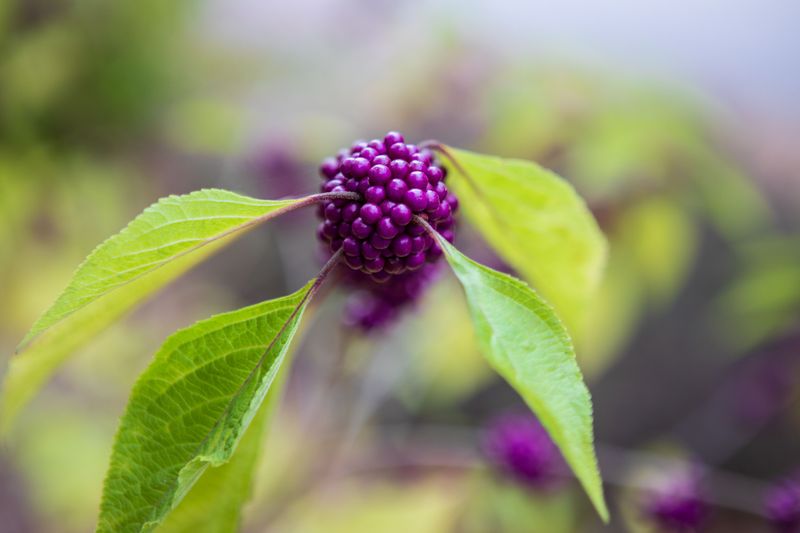
Walk past a beautyberry in October and you might stop in your tracks. Its berries are so purple they almost look fake. Clusters wrap around each branch like little beaded bracelets.
American beautyberry is a native Texas shrub that loves part shade. It does great under tall trees or along the north side of a fence. In full sun, it needs more water to stay happy.
The berries show up in late summer and stick around into fall. Mockingbirds, cardinals, and robins gobble them up. Some birds even return to the same bush year after year, so you get a free bird show from your window.
Fall planting gives this shrub a big advantage. The roots can spread out in cool, moist soil during winter. By the time summer heat arrives, the plant is settled and ready.
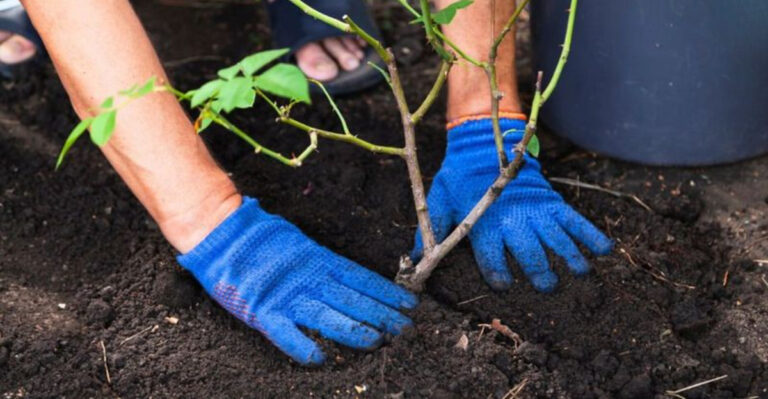
Here is how to plant it the right way. Dig a hole about twice as wide as the pot, but no deeper. Set the plant in, fill with your native soil, and water deeply.
Spread two or three inches of mulch around the base, but keep it off the stems. Water once or twice a week for the first few months if rain is scarce. After the first year, it can handle most dry spells on its own.
Beautyberry grows fast and can reach five or six feet tall. In late winter, you can cut it back hard to about a foot high. It will bounce back with fresh growth and plenty of berries.
Fun fact: old-timers used to crush the leaves and rub them on their skin to keep mosquitoes away. Scientists later found compounds in the leaves that really do repel bugs.
2. Texas Sage Puts On A Rain Show
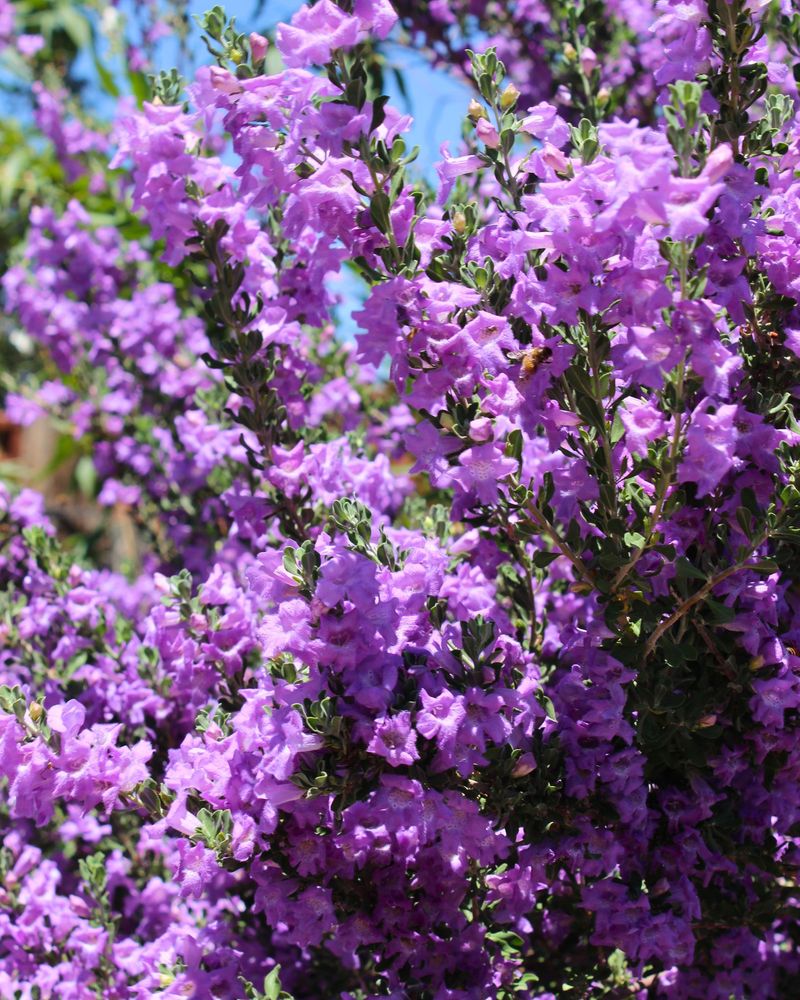
Ranchers have a saying that cenizo can predict the weather. After a good rain, the whole shrub suddenly bursts into purple flowers. Some folks even call it the barometer bush.
Texas sage, also known as cenizo, is a true survivor. Its leaves are soft, fuzzy, and silvery gray. They look good all year, even in the middle of winter.
Your Texas Garden Changes Every Week. Your Plan Should Too.
Gardening in Texas changes quickly throughout the season. Every Friday you’ll receive a simple weekly plan showing exactly what to plant, prune, fertilize, harvest, and protect so you never miss the right timing.
The blooms come in waves of lavender, pink, or purple. They pop out a few days after rain or high humidity. Bees love these flowers, so expect a buzzing crowd when it blooms.
Give this shrub plenty of sun. Six or more hours a day is best. In shade, it gets leggy and blooms less.
Drainage matters more than anything else with cenizo. It hates wet feet and soggy clay. If your soil holds water, plant it on a slope or a raised mound mixed with gravel.
October planting lets the roots dig deep while the weather is mild. Water it regularly the first fall and winter. Once it is established, you may only need to water during long, harsh droughts.
Watch out for one common mistake. Too much water and fertilizer can make the plant weak and floppy. Treat it a little rough, and it rewards you with tight, healthy growth.
Most varieties grow four to six feet tall and wide. Compact types like Compacta stay smaller for tight spaces. Skip the hard shearing into boxes or balls, since that cuts off future flowers.
For a low-water yard that still looks lush, few plants beat cenizo. It pairs nicely with agaves, yuccas, and native grasses for a true Texas look.
3. Dwarf Yaupon Holly Makes A Tidy Hedge
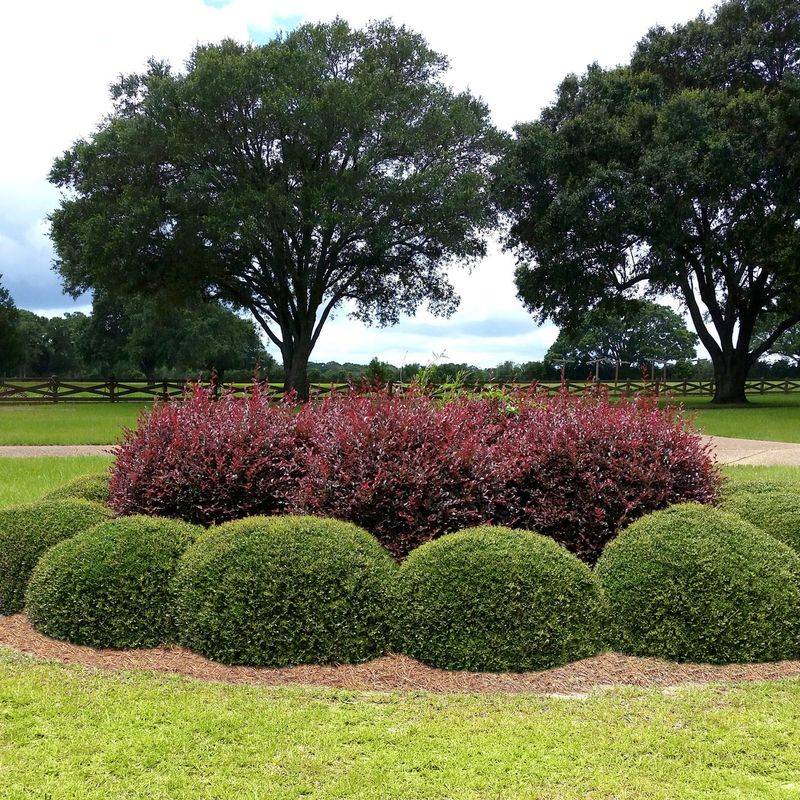
Boxwood gets all the fame, but it often struggles in Texas heat. Dwarf yaupon holly quietly does the same job without the drama. Many landscapers call it the hardest-working shrub in the state.
Dwarf yaupon is a native evergreen with tiny, glossy leaves. It naturally grows into a neat mound about three to four feet tall. That shape makes it perfect for low hedges, borders, and foundation plantings.
Toughness is its middle name. It handles blazing sun, part shade, drought, and heavy clay. It even tolerates alkaline soil, which gives many other plants trouble.
So why plant it before Halloween? Evergreen shrubs keep their leaves all winter, and they need strong roots to support them. Fall planting gives those roots months to grow before summer stress hits.
For a hedge, space plants about three feet apart. They will fill in and touch each other within a few years. Water deeply after planting and keep the soil lightly moist through the first winter.
Trimming is simple. A light shearing once or twice a year keeps the shape crisp. You can also leave it alone for a soft, natural look.
Pests and diseases rarely bother it. Deer usually leave it alone too, which is great news for Hill Country gardeners.
Here is a cool history bit. Native Americans brewed yaupon leaves into a tea because the plant contains caffeine. It is the only native North American plant known to have caffeine.
Popular varieties include Schillings and Nana. Both stay compact and dense. If you want a classic look that does not need babying, dwarf yaupon is a smart pick.
4. Turk’s Cap Laughs At Tough Conditions
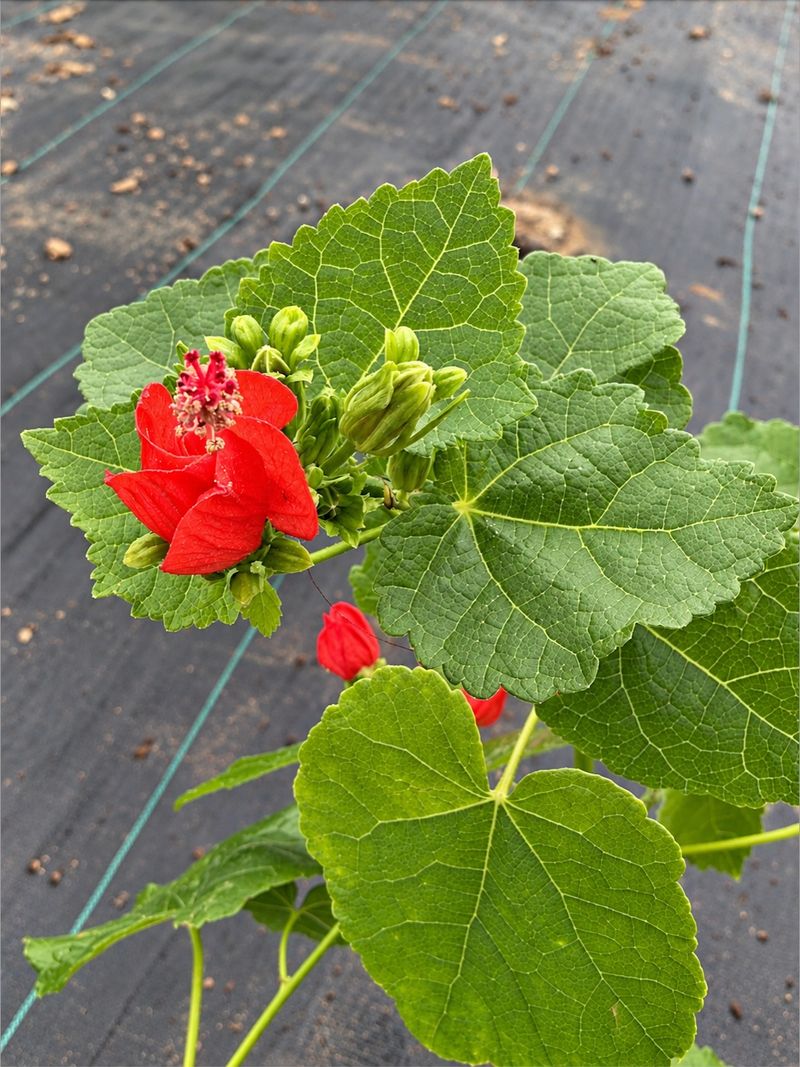
Some plants sulk when life gets hard. Turk’s cap just keeps blooming. Shade, sun, clay, sand, drought, it shrugs off all of it.
The flowers are what make people smile. They are bright red and twisted, like a tiny turban or a swirl of candy that never fully opens. Kids often think they are flower buds waiting to pop.
Hummingbirds adore them. They zip in all summer and fall to sip nectar. Butterflies stop by too, and later small red fruits appear that birds enjoy.
Turk’s cap is one of the few blooming shrubs that thrives in deep shade. That makes it a lifesaver for dark corners under trees. In full sun, it stays more compact and blooms even more.
Planting in fall works beautifully. The cool season helps roots spread before the summer bloom show starts. Water weekly for the first couple of months, then cut back.
Expect it to grow three to five feet tall and spread out over time. It can creep and form a small thicket. Give it room, or plan to share extra pieces with friends.
In colder parts of Texas, frost may knock it back to the ground. Do not worry. It comes back from the roots in spring, full of energy.
A quick tip: cut the old stems down to a few inches in late winter. Fresh growth will be fuller and greener.
Did you know the flowers and fruit are edible? Some people add the petals to salads or make tea from them. Just make sure no chemicals have been sprayed nearby before tasting.
5. Flame Acanthus Lights Up Hot Spots
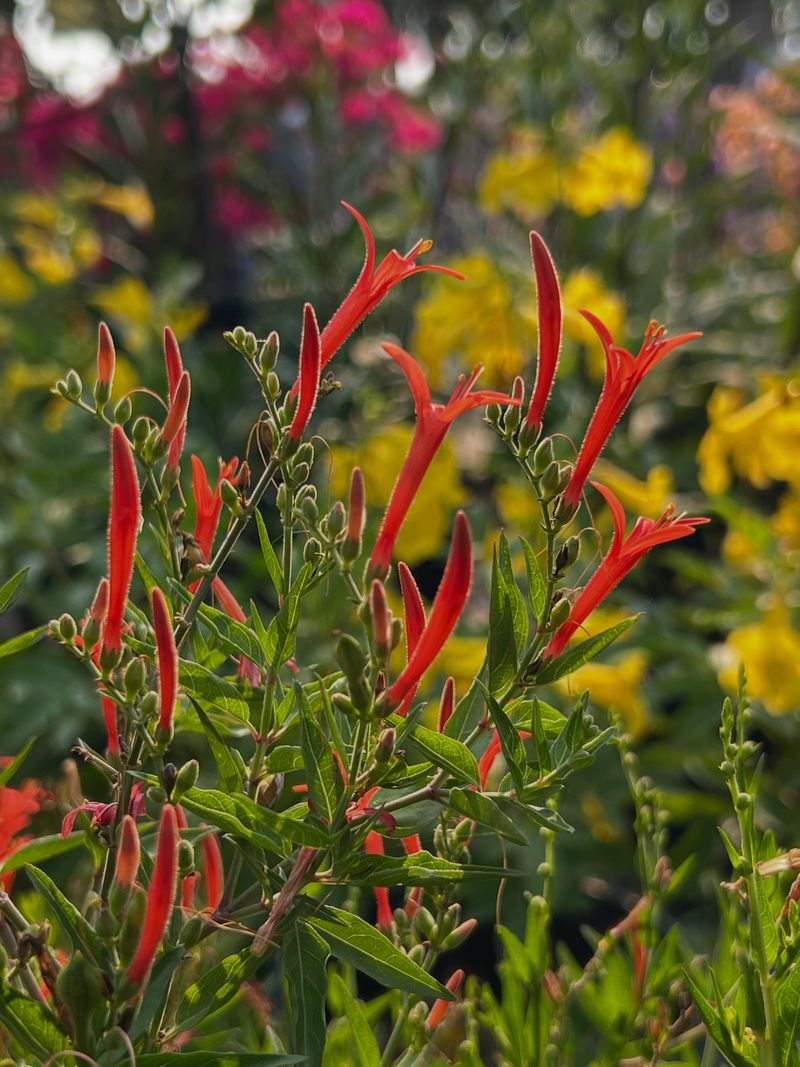
Got a spot in your yard where everything fries? Maybe it is next to a driveway or a south-facing wall. Flame acanthus was made for places like that.
Native to the dry parts of Texas and Mexico, it shrugs off triple-digit heat. Once settled, it barely needs water. Many gardeners forget it is even there until the blooms start.
And those blooms are something special. Slim, tube-shaped flowers glow orange-red from summer into fall. Hummingbirds treat this shrub like their favorite fast food stop.
Plant it in full sun with soil that drains well. It can handle rocky or poor soil without complaint. Rich, soggy soil is the one thing it does not like.
Getting it in the ground before Halloween lets the roots go deep while temperatures are mild. Deep roots mean less watering later. Give it a good soak once a week until winter rains take over.
Flame acanthus usually grows three to four feet tall and wide. Left alone, it can look a bit twiggy and wild. That is where your pruning shears come in.
Here is the secret to a full, flower-packed plant. In late winter, cut it back hard to about six inches from the ground. It sounds scary, but new stems shoot up fast and bloom heavily.
Deer usually skip this shrub, which helps in rural areas. It also pairs well with other heat lovers like lantana and salvia. Together they make a bright, low-water garden bed.
If you want to become the most popular house on the block for hummingbirds, this is your plant. Pull up a chair and enjoy the show.
6. Autumn Sage Blooms Twice The Fun
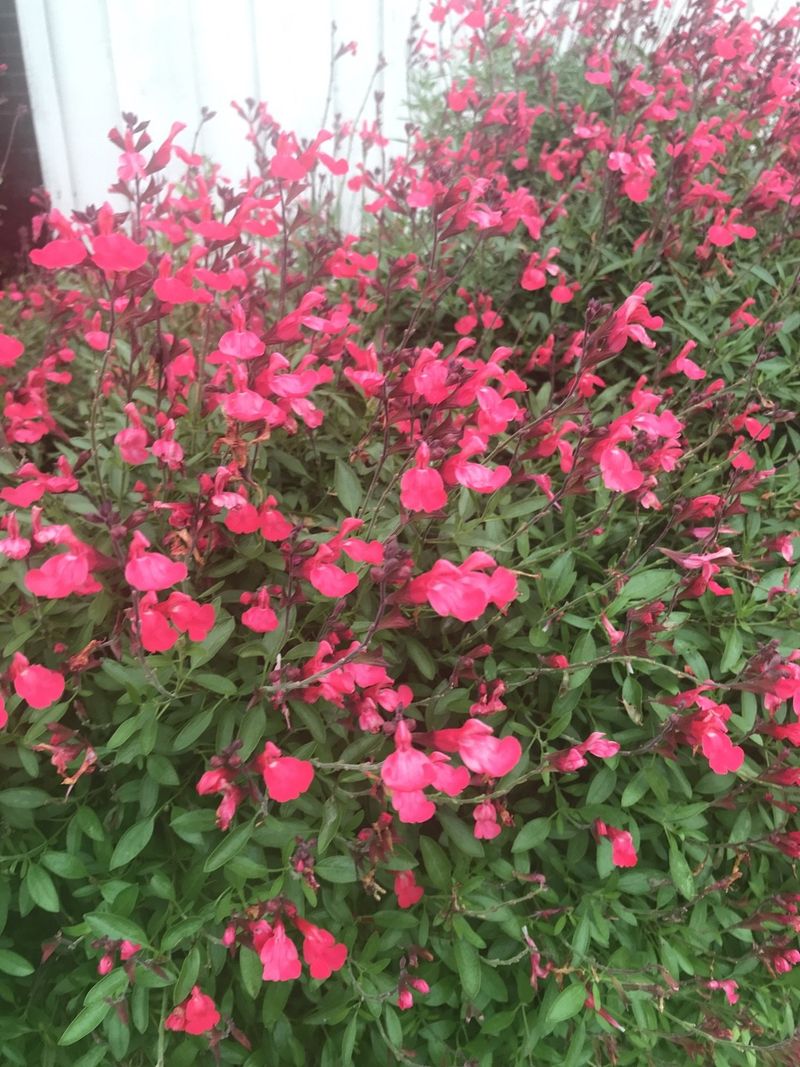
Picking just one color is hard. With autumn sage, you do not have to. It comes in red, pink, coral, white, purple, and even two-toned blends.
Known to plant lovers as Salvia greggii, autumn sage is a small native shrub. It stays about two to three feet tall. That size fits nicely in front borders, beds, and even large pots.
Its name is a little misleading. It blooms from spring through fall, with the biggest bursts in spring and autumn. Summer heat slows it down, but rarely stops it completely.
Hummingbirds and bees cannot resist the small, lipped flowers. Brush the leaves with your hand, and you will notice a fresh, minty scent. Deer usually dislike that smell and move on.
Full sun and good drainage keep it happiest. Heavy clay can cause root rot, so mix in some compost or plant on a slight mound. Once rooted, it handles long dry stretches with ease.
Fall planting is ideal because the shrub can settle in during the cool months. Water it a couple of times a week at first. Slowly stretch out the time between waterings.
Pruning keeps it neat. Give it a light trim after each big bloom to encourage more flowers. In late winter, shape it a bit to stop it from getting woody and sprawling.
Try mixing several colors in one bed for a cheerful, candy-shop look. Varieties like Hot Lips, with red and white flowers, always get people talking.
For new gardeners, autumn sage is a confidence builder. It is forgiving, colorful, and almost always successful.
7. Dwarf Wax Myrtle Handles Wet Or Dry
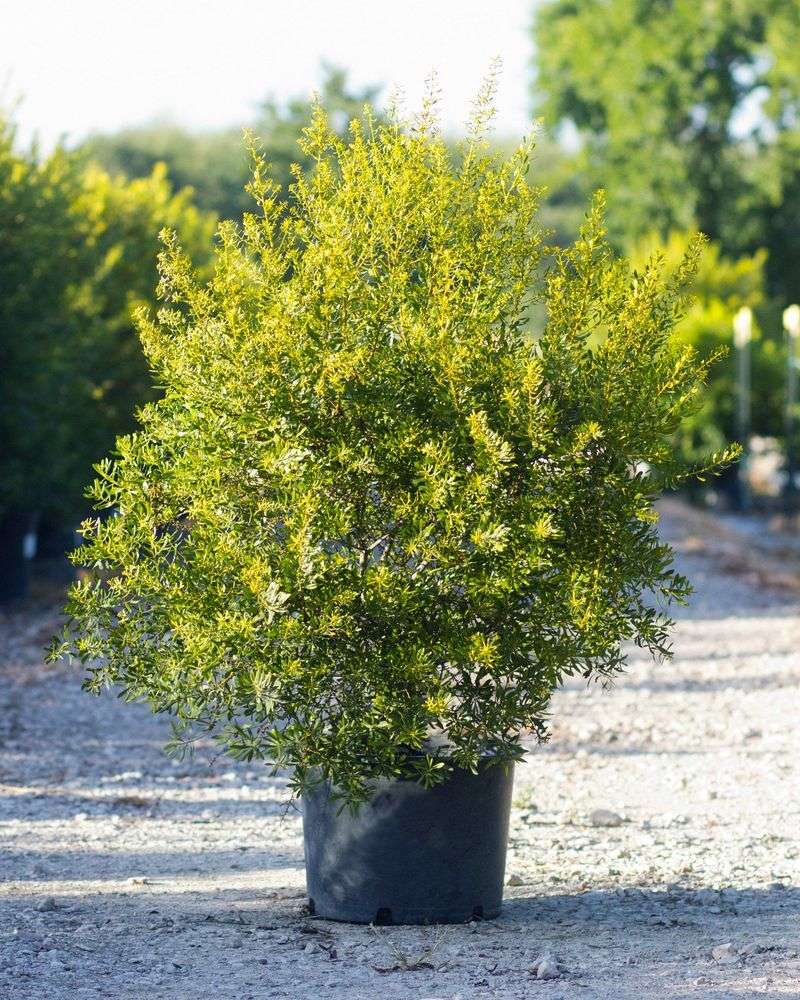
Most shrubs pick a side. They either love moist soil or they love dry ground. Dwarf wax myrtle happily lives on both sides of that line.
Native to East Texas and the Gulf Coast, it forms a dense, rounded mound. Its olive-green leaves stay on all year. Crush one between your fingers and you will smell a spicy, clean scent.
That flexibility makes it a problem solver. Plant it near a downspout, in a low spot, or on a dry slope. It adjusts without much fuss.
Dwarf types usually grow three to five feet tall and wide. That makes them great for low screens, borders, and hiding things like AC units or utility boxes. Space them about four feet apart for a solid row.
Sun or part shade both work. More sun means thicker, fuller growth. In heavy shade, it gets thin and open.
October is a great planting month for this evergreen. Roots grow steadily in the cool soil, getting ready to support all those leaves next summer. Water deeply once a week during the first few months.
Pruning is easy. Trim it lightly in late winter or spring to keep the shape. It takes shearing well if you prefer a formal look.
Here is a neat piece of history. Early American colonists boiled the waxy berries of wax myrtle to make fragrant candles. That is how it got another nickname, bayberry.
Birds still enjoy those berries in winter. Yellow-rumped warblers are especially big fans. With so many uses and so little care needed, dwarf wax myrtle earns a spot in almost any Texas yard.