The Texas Watering Mistake That Keeps Christmas Cactus Buds From Opening
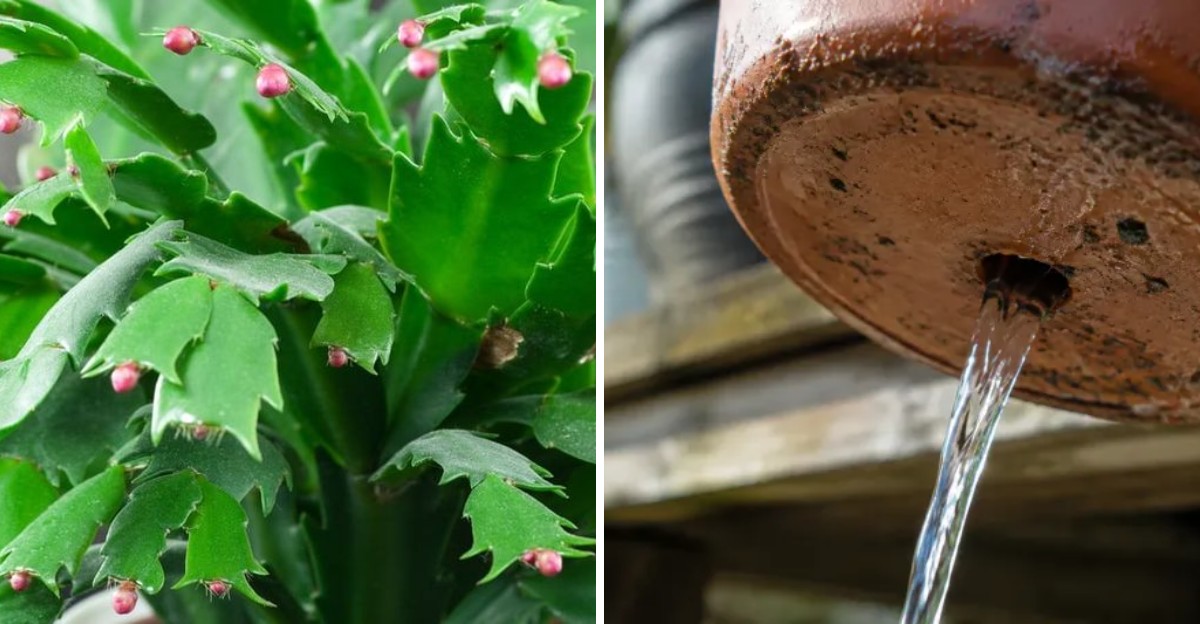
Wild relatives of a popular holiday houseplant grow on mossy tree branches in Brazilian mountain forests, far from any sandy desert.
That surprised me, because the word cactus on the tag made me treat mine like a tough little camel. I skipped water for weeks, then drowned it in guilt.
The buds looked plump and promising, then dropped onto the windowsill like tiny pink beads. You might notice the same heartbreak in a Texas living room around Thanksgiving.
Our homes swing from sticky humid to bone dry once the heater kicks on, and a sudden Texas cold snap makes that swing even sharper. Those swings matter more than most of us realize.
After I tested a few changes, the pattern became clear. The problem was rarely too little care.
It was the wrong kind of care, delivered at the wrong time, so what is really happening down in that pot?
Those Dropped Christmas Cactus Buds Point Straight to the Soil
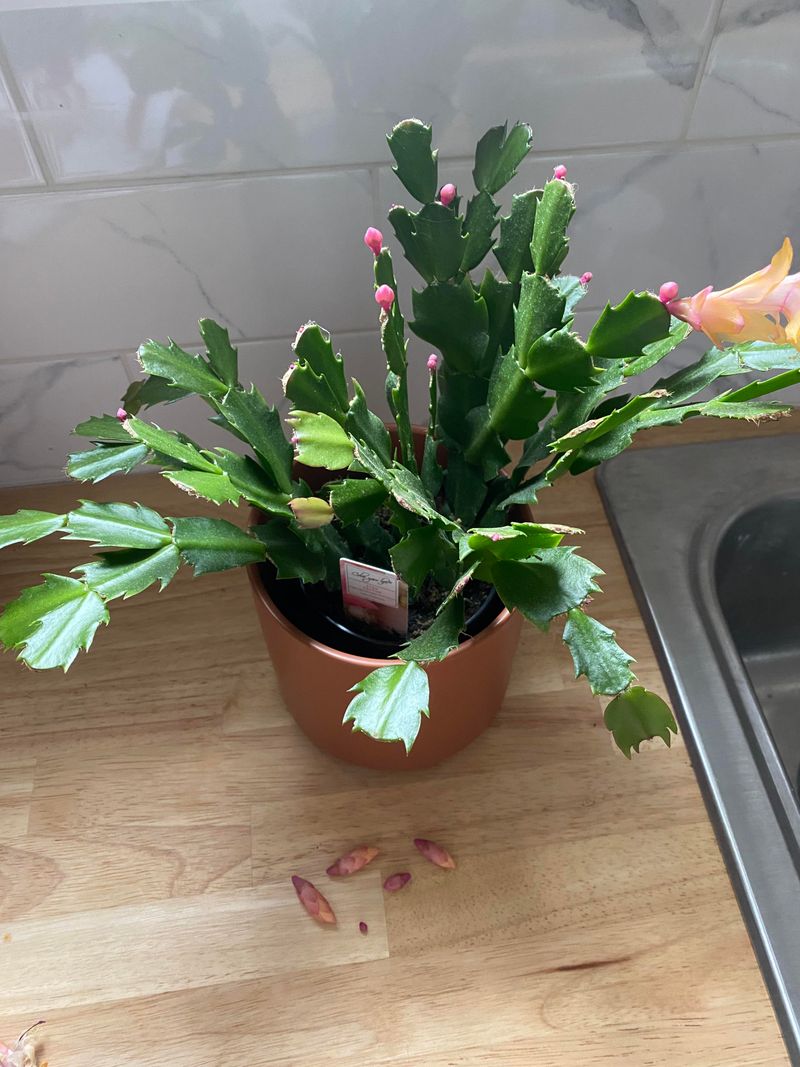
Plump buds that fall before opening are a common complaint among Christmas cactus growers every December. Most of the time, the clue sits right under the leaves, in the potting mix.
Christmas cactus is not a desert plant. It is a tropical epiphyte from the coastal mountains of southeastern Brazil, where it grows on tree branches and rocks.
Its roots are used to quick rain showers followed by fast drainage, with plenty of air around them.
When the pot stays soggy, those roots run short of oxygen. Damaged roots cannot move water and nutrients up to the stems, so the plant does the sensible thing. It sheds its most expensive project, which is the flower buds.
The flip side matters too. A pot left bone dry for weeks, then flooded, stresses the plant just as much. Many growers fall into this boom and bust rhythm.
So the real mistake is not simply too much water. It is water that lingers, or water that arrives in wild swings.
Fix the rhythm, and many buds will hold on long enough to open into those glowing, layered blooms.
A Finger Test Beats Any Christmas Cactus Watering Calendar
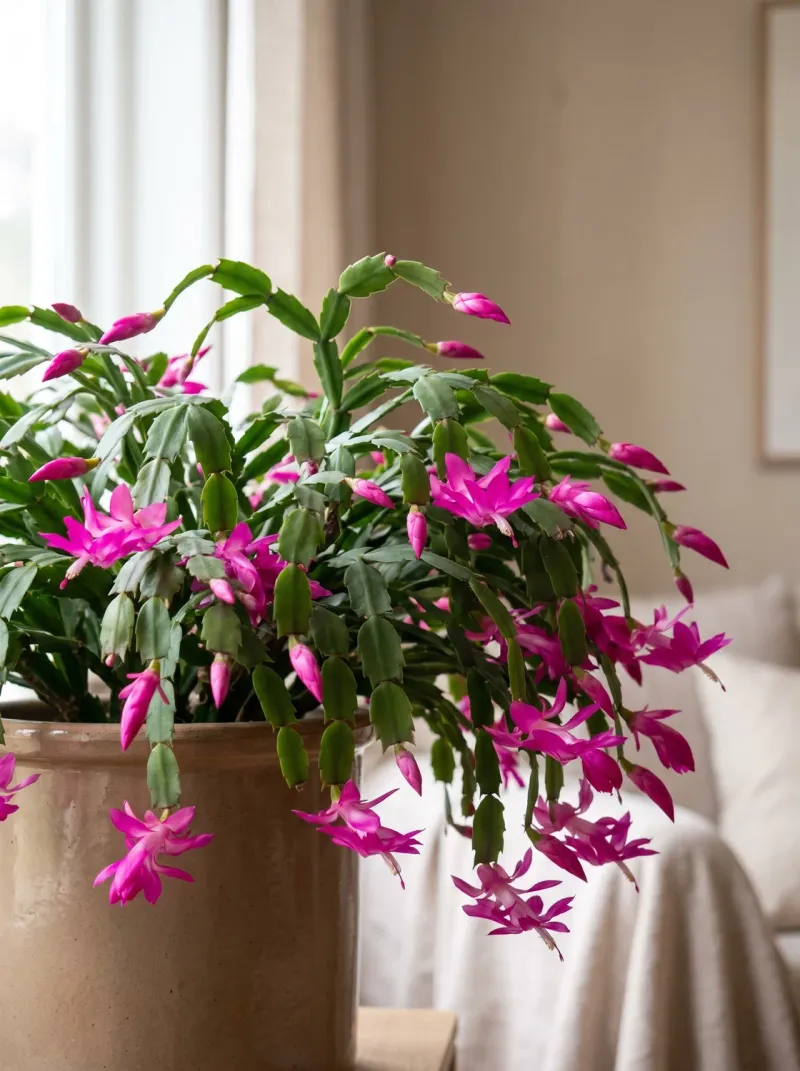
My old routine was simple: some weeks I skipped water entirely, then gave it a big drink, no questions asked. Every Sunday, the Christmas cactus got a big drink, no questions asked. That schedule ignored the weather, the season, and the plant itself.
A better method takes about five seconds. Push your finger into the potting mix about an inch deep. If it feels dry, water thoroughly until a little runs out the bottom, then let the pot drain fully.
During bud set and bloom, aim for evenly moist soil, never soaked and never parched. Many gardening resources suggest checking every few days rather than following a fixed calendar. Cooler, cloudier weeks mean the pot dries slower, so you will water less often.
A few small habits help a lot: Empty the saucer within about 15 minutes so roots are not sitting in a puddle. Use room temperature water, since a cold blast can shock buds. If your tap water is heavily treated, letting it sit out overnight is an easy option.
Steady, moderate moisture is the goal. Think of it like a gentle forest drizzle instead of a flash flood. Your plant will reward that consistency with buds that keep swelling instead of letting go.
Heavy Potting Soil and No Drainage Hole Spell Trouble
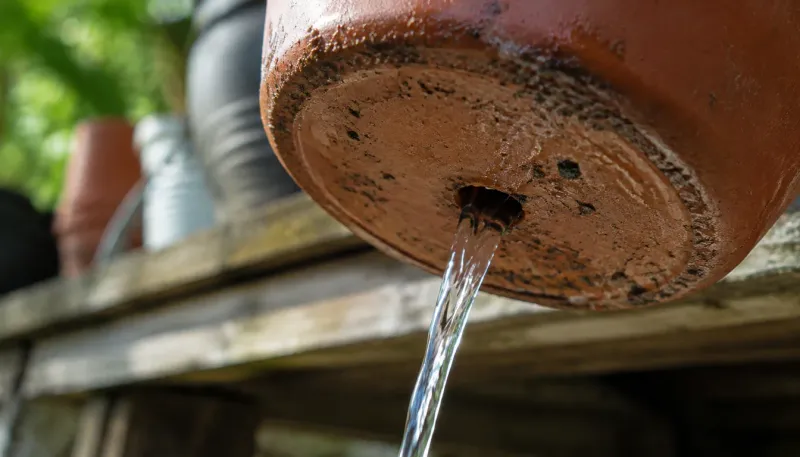
Even perfect watering habits fail in the wrong pot. A decorative container without a hole turns every drink into a slow soak that never leaves.
Christmas cactus roots like a loose, airy mix. Many growers blend regular potting soil with perlite, pine bark, or a cactus mix to speed up drainage.
The texture should feel light and crumbly, not dense like garden dirt. Pot size matters as well. These plants actually bloom well when slightly snug in their containers.
An oversized pot holds extra soil that stays wet for days, which invites root rot. Here is a quick check you can do today. Lift the pot after watering and again a few days later.
If it still feels heavy and wet after a week, the mix or pot is holding too much water. Do not repot while the plant is loaded with buds, though.
That disturbance can trigger the very drop you are trying to prevent. Instead, for now, simply tip out extra water after each drink.
Save the real repotting job for late winter or spring, after blooming wraps up and new growth begins.
Dry Heater Air Leaves Christmas Cactus Buds Thirsty
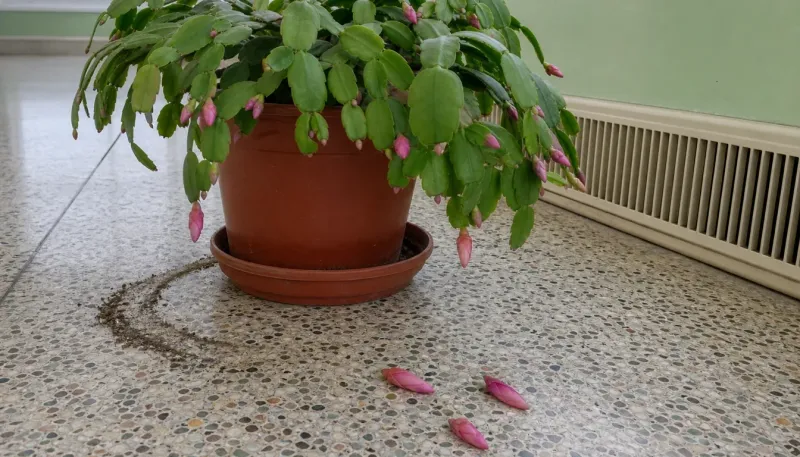
Funny thing about Texas winters. Outside, the Gulf Coast can feel muggy, yet indoor air turns surprisingly dry once the furnace starts running.
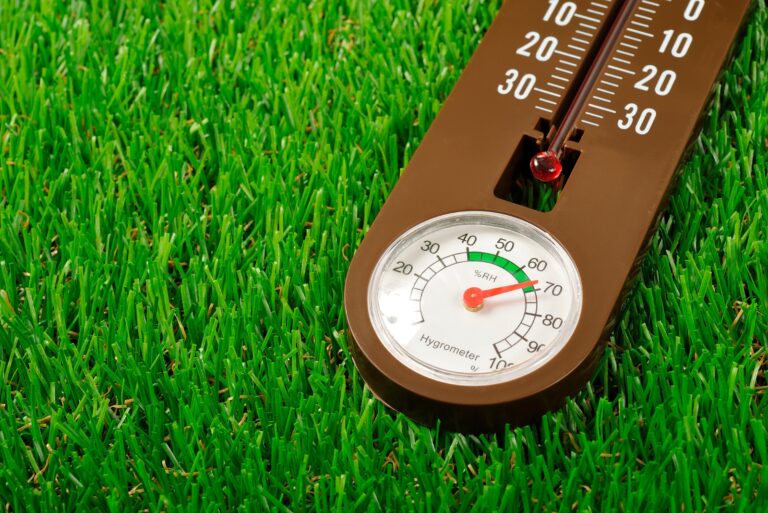
Christmas cactus evolved in humid forests, so buds can shrivel when the air gets parched. Many sources recommend humidity around 50 percent or higher for the best bloom.
Dry air pulls moisture from buds faster than roots can replace it. Here is the tricky part. Some folks respond to crispy buds by pouring on more water. That only soaks the roots without fixing the air problem, which brings us right back to root rot.
Try raising humidity instead: Set the pot on a tray of pebbles with water below the top of the stones. Group houseplants together so they share moisture. Run a small humidifier nearby if your home runs especially dry.
Keep the plant away from heating vents, too, since a direct stream of warm air dries buds quickly.
Folks in drier West Texas and Panhandle homes may notice this effect more strongly than gardeners near Houston or Corpus Christi. Moist air plus moderate soil water is the winning combination for holiday flowers.
Cold Drafts and Hot Spells Shake Loose Holiday Cactus Flowers
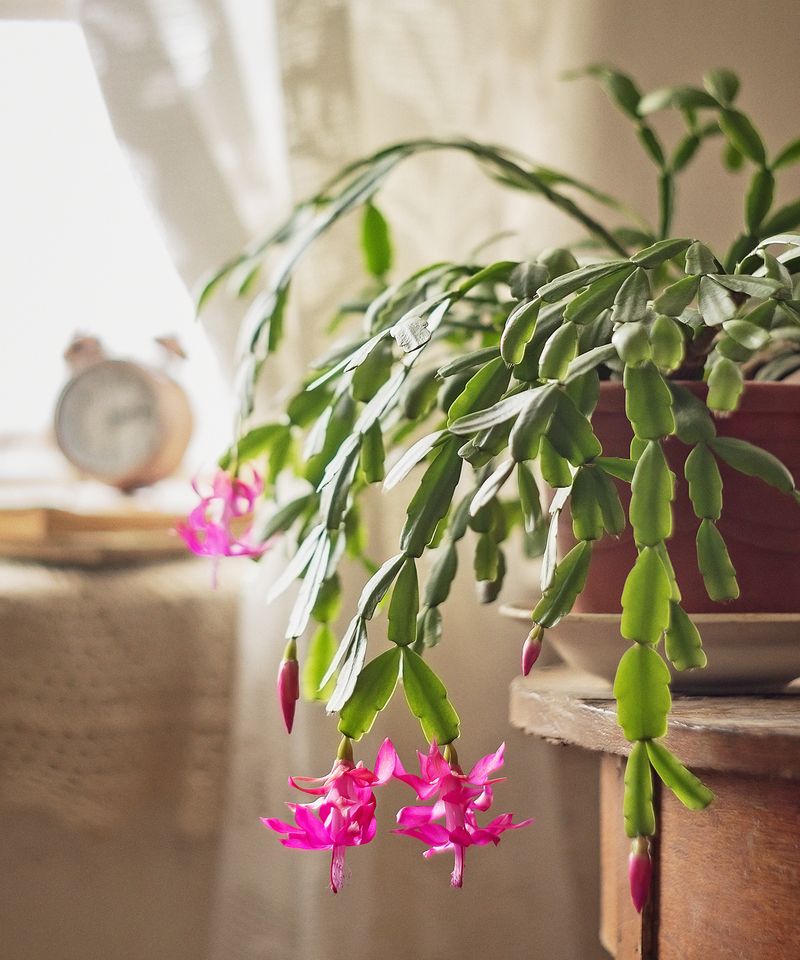
A Texas blue norther can drop temperatures 30 degrees in an afternoon. If your Christmas cactus sits by a door that keeps opening, those buds feel every bit of that change.
Sudden temperature swings rank right behind watering problems as a top cause of bud drop. Cold drafts, hot vents, and sunny windows that bake at noon all add stress.
Buds respond by loosening their grip. Cool nights actually help these plants form buds in fall.
University extension guides often mention night temperatures around 50 to 60 degrees Fahrenheit to encourage flowering. The trouble comes from abrupt shifts, not steady coolness.
Some simple moves help: Keep the plant away from exterior doors, fireplaces, and heating registers. Bring it indoors before nights fall near 45 degrees, especially in North Texas where early freezes arrive sooner.
A spot with stable, moderate temperatures works best once buds appear. Temperature also changes how fast soil dries. A warm room speeds up drying, while a chilly porch slows it way down.
Adjust your watering to match the spot, and you will avoid both soggy roots and thirsty buds.
Moving a Budding Christmas Cactus Can Undo Weeks of Progress
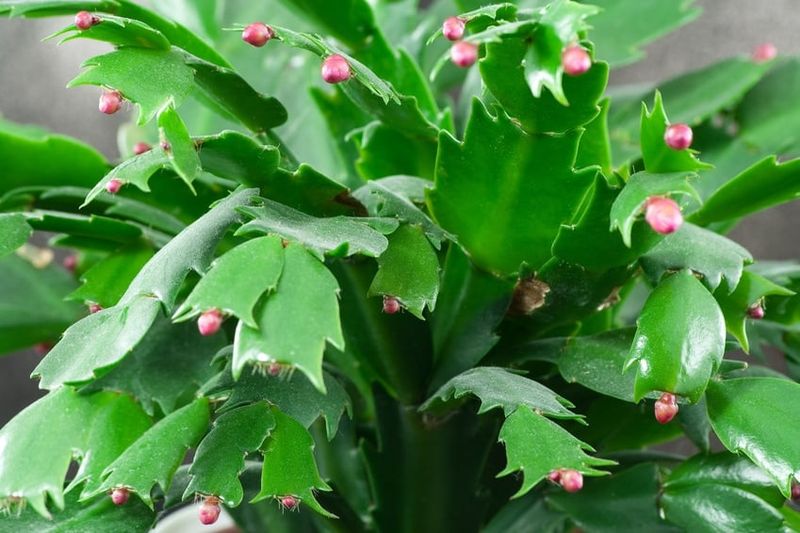
Guilty confession time. I once carried my budding cactus from room to room so guests could admire it, and half the buds landed on the carpet by New Year.
Once buds form, Christmas cactus prefers to stay put. Changes in light direction, temperature, and humidity all arrive at once when you move it. Even rotating the pot can confuse buds that have angled toward the light.
Bud formation begins in fall, triggered by long nights and cooler temperatures. Many guides suggest roughly 12 to 14 hours of darkness for about six weeks. Streetlights or a lamp left on in the evening can interrupt that signal.
So choose a home base early, ideally before buds show up. Look for bright, indirect light, a stable temperature, and a spot that stays dark at night.
Then leave it alone, aside from careful watering. Resist the urge to show it off in a new room or swap it with holiday decorations.
Patience feels hard when those colorful tips start peeking out. Still, a quiet, steady corner gives those buds their best shot at opening fully.
Set Up Your Christmas Cactus Now for a Fuller Bloom Next Year
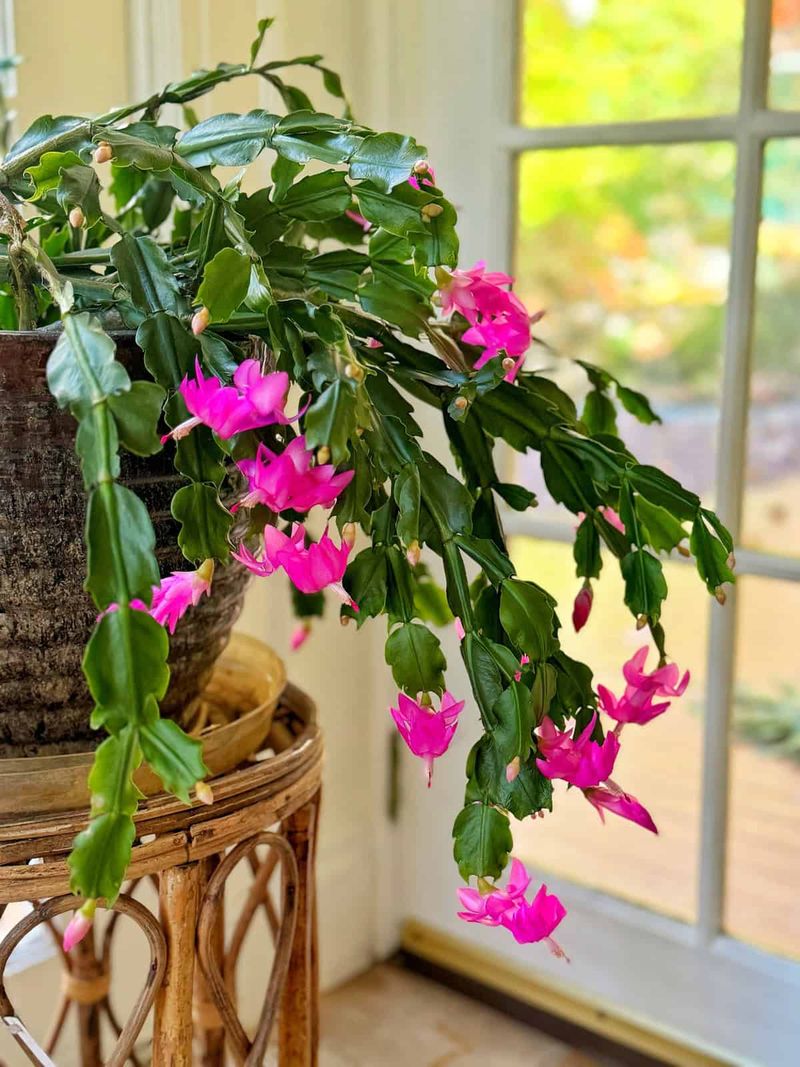
Bud drop this year is not the end of the story. These plants often live for decades, and some families pass them down for generations.
After flowering ends, give the plant a short rest with lighter watering for several weeks. In spring, resume regular watering and feed with a balanced houseplant fertilizer about once a month through summer.
Stop fertilizing in early fall as buds start forming. Many Texas gardeners move their plants outdoors to a shady patio in spring. Keep them out of hot afternoon sun, which can redden or scorch the stems.
Watch summer storms, too, since several days of heavy rain can waterlog a pot quickly. Bring the plant inside before nights dip below about 45 degrees. That fall transition is when watering habits matter most, because cooler weather slows drying.
A handy checklist for next season: Use a pot with drainage and a light, airy mix. Water when the top inch feels dry. Provide long, dark nights in fall, steady temperatures, and decent humidity.
Follow that rhythm, and your next holiday season could bring a cascade of blooms that actually open.