The Thatch Problem Thick Florida Bermudagrass Can Hide Until The Lawn Starts Struggling
Your bermudagrass can look like the healthiest lawn on the street and still be fighting a problem you cannot see. The thick green carpet that makes Florida lawns look impressive can sometimes hide what is happening underneath the blades.
Water runs differently. Roots compete for space.
Treatments that should help may not reach where the grass needs them most. Then the warning signs appear: dry patches that return, weak growth, or areas that stop responding the way they used to.
Many homeowners blame weather, fertilizer, or pests first because the surface gives them no obvious answer. The real clue is sitting lower, in the layer most people rarely check.
A dense bermudagrass lawn is not always a stronger lawn. Sometimes the very thing that makes it look beautiful is what starts holding it back.
1. Thick Bermuda Can Hide A Spongy Layer Underneath
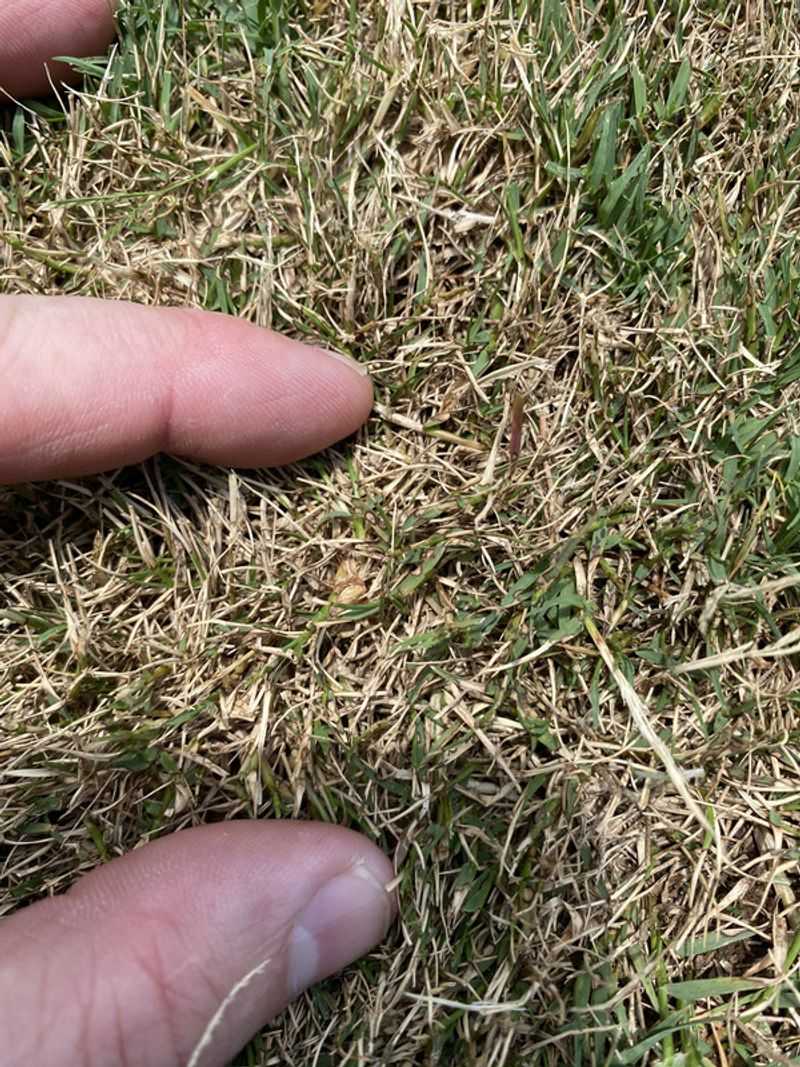
Reach down and part the green blades of a dense Florida bermudagrass lawn and you might find something unexpected.
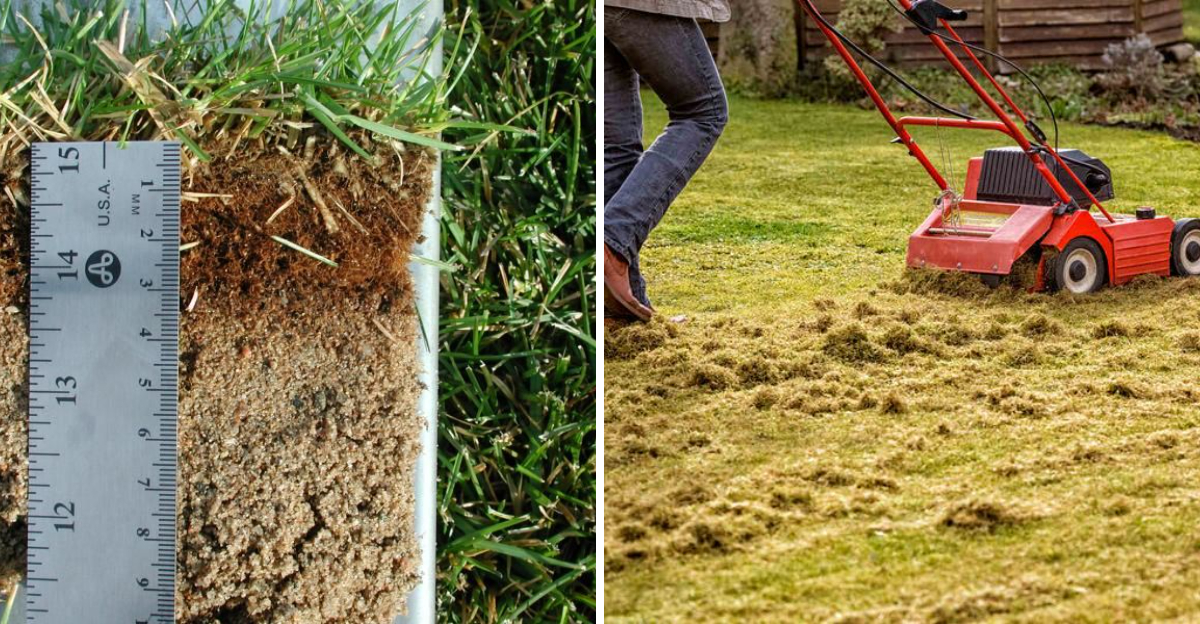
Beneath the bright canopy lies a brown, spongy layer made of stems, roots, stolons, rhizomes, and other organic turf material in various stages of breakdown.
That layer is thatch, and it sits right between the living green turf and the mineral soil below.
Thatch is not simply loose clippings sitting on top of the lawn. Clippings from a properly timed mowing break down fairly quickly.
True thatch is built from tougher, slower-decomposing plant parts like stems and root crowns that accumulate over time. A thin layer, roughly a quarter inch or so, is considered normal and can even protect the root zone from temperature swings.
Bermudagrass is especially prone to building up this layer because of how aggressively it spreads. Its horizontal stems, called stolons, run above the soil, while rhizomes push through the ground below.
Both add organic material continuously. When that material accumulates faster than soil microbes can break it down, the layer thickens.
Dense bermudagrass can look healthy from above while a thick organic layer builds underneath. Checking below the surface is the only reliable way to confirm the problem.
2. A Lawn That Feels Spongy Is Giving You A Clue
A springy step across the Florida yard can feel pleasant at first, almost like walking on a cushion. But when that bounce does not go away and the turf compresses noticeably with each step, the lawn may be sending a signal worth paying attention to.
Excessive thatch can give bermudagrass a soft, spongy feel because the thick organic layer acts like a mat rather than a firm base.
Mowing on a spongy surface creates its own set of problems. A mower riding on top of a thick thatch layer rather than on firm ground can cut unevenly.
Low spots may get scalped while raised areas escape the blade. The result is a patchy, inconsistent cut that looks rough no matter how carefully the mowing is done.
Softness alone does not confirm excessive thatch. Wet soil, recently aerated ground, or loosely compacted areas can also make a lawn feel soft.
Your Florida Garden Changes Every Week. Your Plan Should Too.
Gardening in Florida changes quickly throughout the season. Every Friday you’ll receive a simple weekly plan showing exactly what to plant, prune, fertilize, harvest, and protect so you never miss the right timing.
Jumping to conclusions without checking beneath the turf can lead to unnecessary work. Before assuming thatch is the cause, pull back the turf and look at what is actually underneath.
A quick visual inspection of the organic layer gives far more reliable information than the feel of the turf surface alone. Softness is a clue, not a diagnosis, so treat it as a reason to look closer.
3. Water Can Struggle To Reach The Soil Below
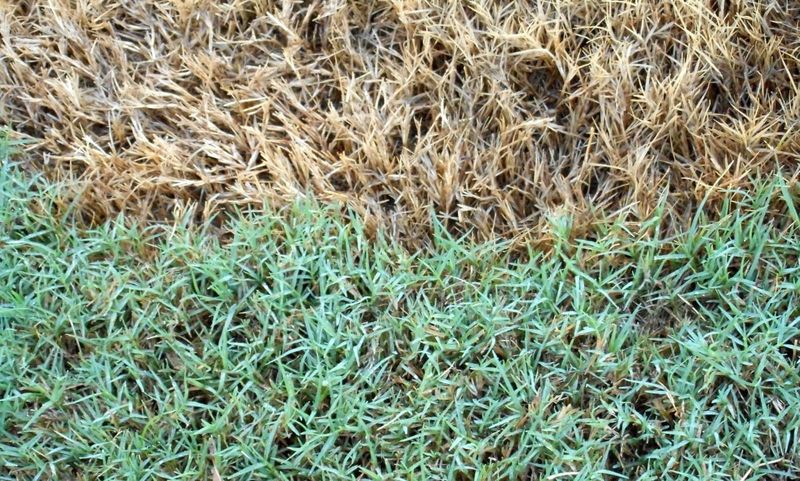
Dry soil sitting beneath green turf is one of the more puzzling things a homeowner can discover. Irrigation runs on schedule, the canopy looks dense, and yet certain spots stay dry or show signs of stress.
A thick thatch layer can be part of the reason water does not reach the root zone the way it should.
Excessive thatch can become water-repellent when dry. Water hitting a thick organic mat may run off or move sideways instead of soaking directly into the soil.
Oxygen movement into the root zone can also be reduced when a dense layer sits between the canopy and the ground. Roots need both moisture and air to stay healthy, and a thick thatch layer can limit the availability of both.
Dry patches from poor irrigation, compacted soil, drought, or root problems can resemble thatch issues. Rule out other causes before assuming thatch is responsible.
Checking the actual soil moisture beneath the thatch layer is a smarter first step. If the soil stays dry even after irrigation passes through, and a thick organic layer is confirmed underneath, the connection becomes much clearer.
Always verify before changing the irrigation schedule or adding more water to compensate.
4. More Fertilizer And Water Can Make The Buildup Worse
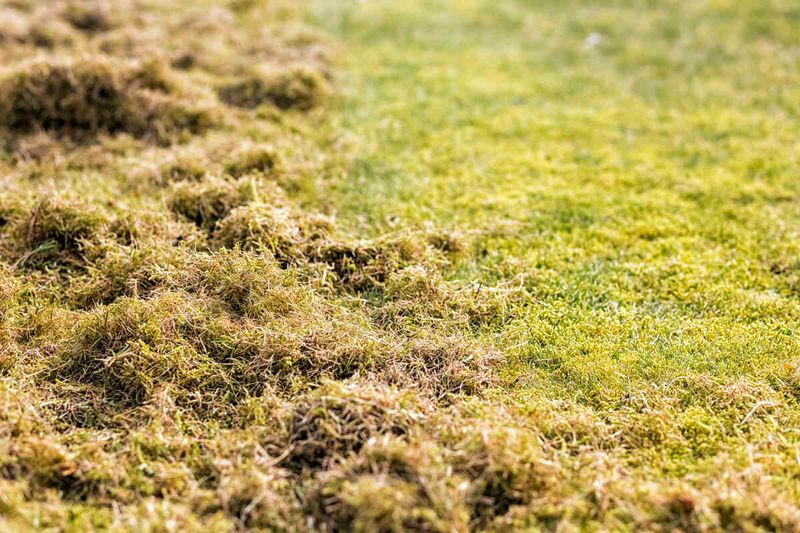
A fertilizer spreader rolling across a struggling lawn feels like the right response when the turf looks thin or pale. More fertilizer, more water, and the grass should bounce back.
That instinct makes sense, but applying more than bermudagrass actually needs can quietly make a thatch problem significantly worse.
Excessive nitrogen pushes rapid top growth and heavy stem production. Bermudagrass already grows aggressively on its own.
Add a surge of extra nitrogen and the plant produces organic material faster than soil microbes and natural processes can break it down. That excess accumulates in the thatch layer.
Excessive irrigation can also encourage dense, shallow growth patterns that contribute to faster buildup over time.
Proper fertilization and irrigation are not the problem here. Bermudagrass needs both to stay healthy.
Problems begin when applications exceed what the turf and soil actually require. UF/IFAS guidance emphasizes matching nitrogen rates to realistic turf needs instead of using maximum label amounts.
Keep application records, test soil periodically, and follow regional schedules. These steps help prevent extra inputs from feeding the same problem causing the lawn to struggle.
5. Grass Clippings Are Probably Not The Culprit
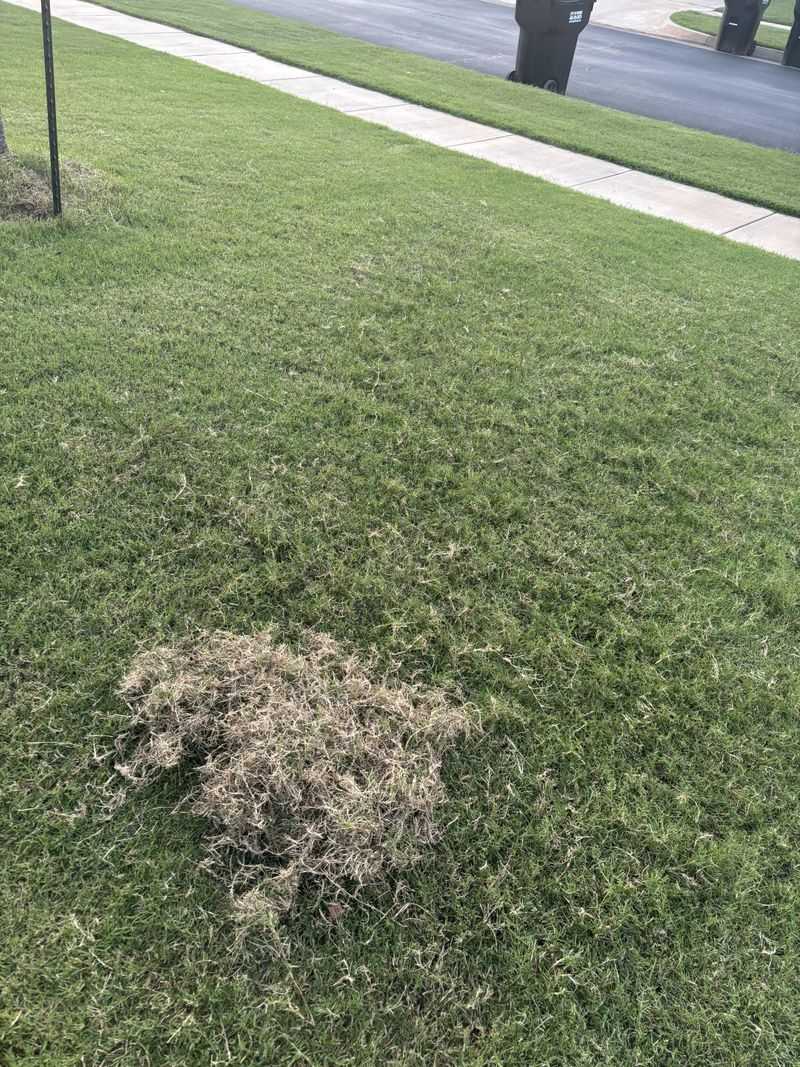
Clippings get blamed for thatch more often than they deserve. Many homeowners bag every mowing to keep thatch from building up, but that extra effort may not be necessary or even helpful for routine lawn care.
Normal grass clippings from a properly timed mowing are small, fine, and break down relatively quickly when left on the surface.
The real contributors to serious thatch buildup are tougher plant parts. Stolons, rhizomes, roots, and stem crowns are much slower to decompose than leaf blades.
They form the dense, fibrous mat that defines true thatch. Clippings from regular mowing generally do not add significantly to that layer because they are mostly soft tissue with a high water content.
Bagging clippings after every mowing can actually remove nutrients that would otherwise cycle back into the soil. Returning fine clippings is generally considered acceptable practice when mowing is done at the right frequency.
The exception comes after a delayed mowing that leaves behind heavy clumps. Thick clumps can smother turf and should be dispersed or removed to prevent smothering.
Outside of that situation, routine clippings and true thatch are not the same thing.
Correcting this misunderstanding can save homeowners from unnecessary work and help them focus on the management practices that actually drive buildup in bermudagrass lawns.
6. Pests And Disease Can Take Advantage Of The Extra Layer
A thick organic layer sitting close to the soil surface can do more than slow down water movement. Certain insects that feed on turf roots or stems may find the protected zone near the base of a thick thatch layer to be a convenient place to live and feed.
The layer can offer shelter, moisture buffering, and proximity to plant material, which makes it easier for some pests to establish themselves.
Altered moisture and airflow near the soil surface can also shift conditions in ways that favor certain fungal diseases. Turf diseases often develop more easily when the surface stays wet longer than it should or when airflow through the canopy is reduced.
A thick thatch layer can contribute to those conditions by holding moisture close to the surface and limiting the movement of air through the turf system.
None of this means that excessive thatch automatically leads to an infestation or a disease outbreak. Many Florida lawns with thatch buildup never develop serious pest or disease problems.
The point is that managing thatch as part of an overall lawn care routine reduces one of the conditions that can make turf more vulnerable. Treating a pest or disease problem without addressing an underlying thatch issue may produce only temporary results.
Reducing the buildup can make the entire turf system easier to manage going forward.
7. Cut A Small Plug Before You Reach For A Dethatcher
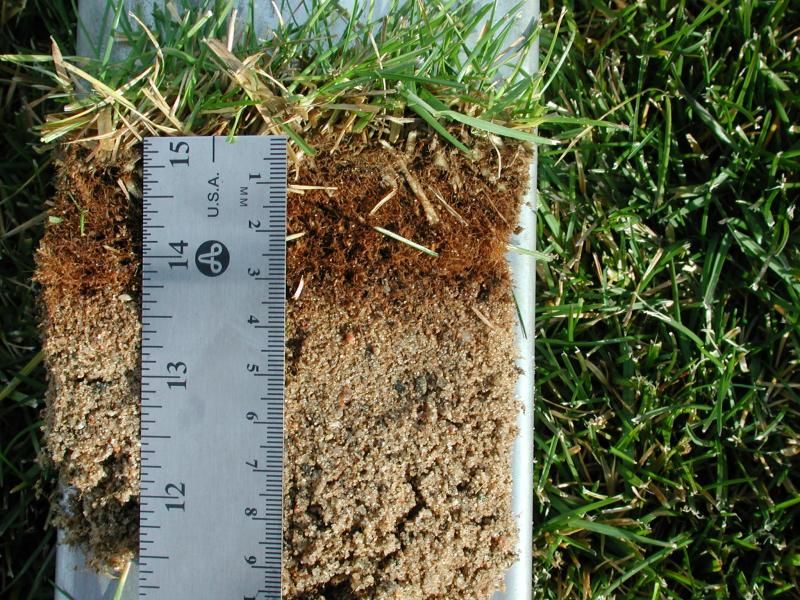
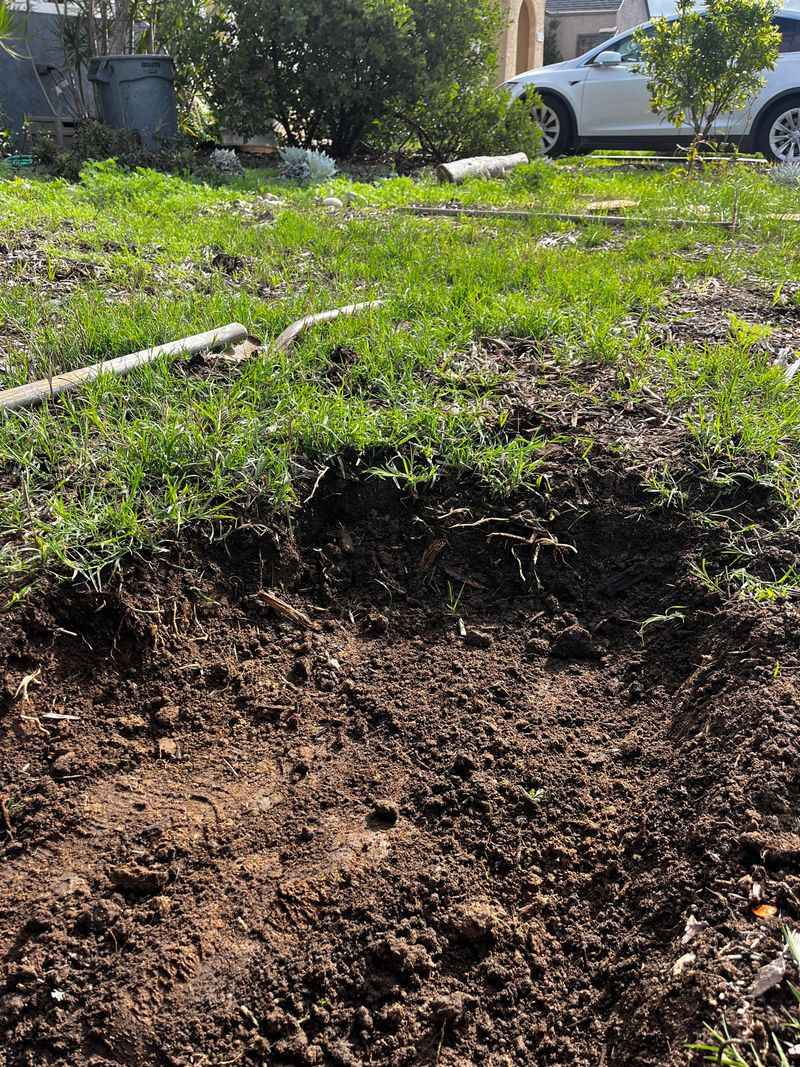
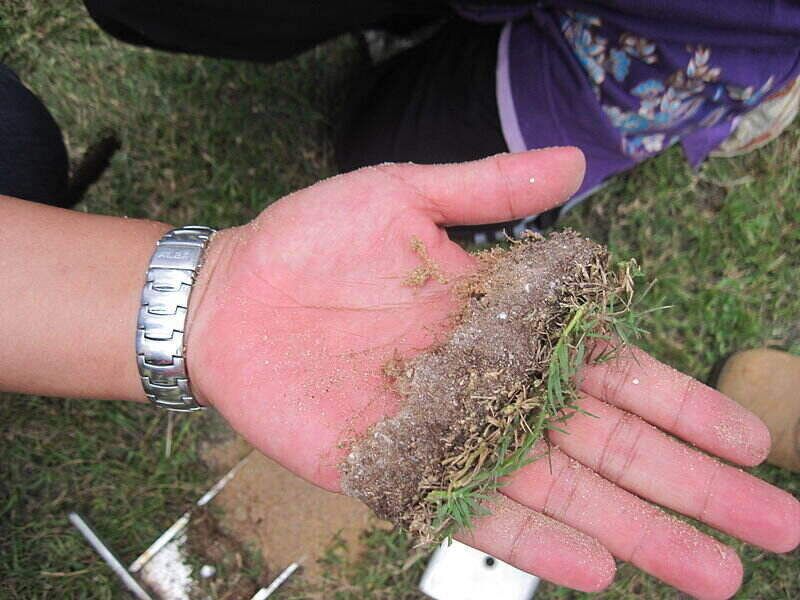
Pulling a small wedge or plug of turf out of the lawn is one of the most straightforward ways to see what is actually going on beneath the surface.
A clean cut with a knife or a small trowel can reveal the green canopy at the top, a brown organic layer in the middle, and the mineral soil below.
That cross-section tells a much clearer story than any surface symptom alone.
A modest amount of thatch is not a problem that needs fixing. A thin layer can cushion the root zone and help moderate soil temperature.
Research from turfgrass extension sources generally suggests that concern for bermudagrass may be appropriate when the thatch layer approaches roughly half an inch or more, though that number should be treated as a guide rather than a firm rule.
Conditions vary by lawn, soil type, and management history.
Seeing any brown layer beneath the turf is not a reason to immediately start dethatching. Some decomposing organic material is a normal part of a healthy turf system.
The key question is whether the layer interferes with water movement, roots, or turf health. Measure its depth and compare it with extension guidance instead of reacting only to symptoms.
Confirm the layer before planning any treatment.
8. Dethatch Only While Bermuda Has Time To Recover
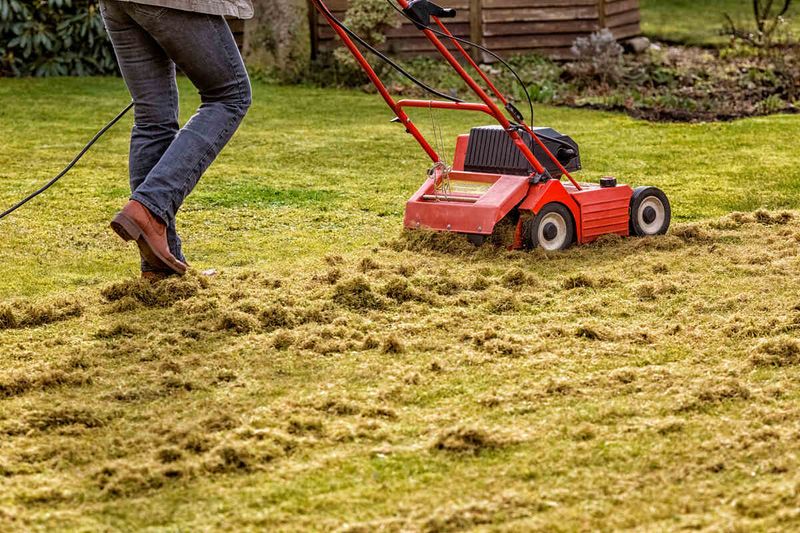
A dethatching machine working through bermudagrass pulls up a surprising amount of material. Vertical mowing and other aggressive removal methods can temporarily leave a lawn looking rough, with exposed soil and thin turf in some areas.
That disruption is manageable when the grass is actively growing and has enough warm weeks ahead to fill back in.
Timing matters significantly. Bermudagrass recovers best when dethatching is done during its active growing season, generally late spring through mid-summer across most of Florida.
Late-season dethatching leaves less warm weather for recovery, especially in northern Florida. Southern lawns have more flexibility, but timing still matters for successful recovery.
Dethatching is not the only tool available. Core aeration can improve water and air movement into the root zone while causing less surface disruption.
Light topdressing with compatible material can help smooth the surface and encourage decomposition over time. Adjusting irrigation and moderating nitrogen applications addresses the management practices that contributed to buildup.
A thick bermudagrass lawn can hide excessive thatch. Check the layer underneath before changing fertilizer, irrigation, mowing, or using a dethatcher.
Confirm the problem first, then choose the right method.