Why Florida Grub Damage Shows Up In August Lawns Before You See It Above Ground
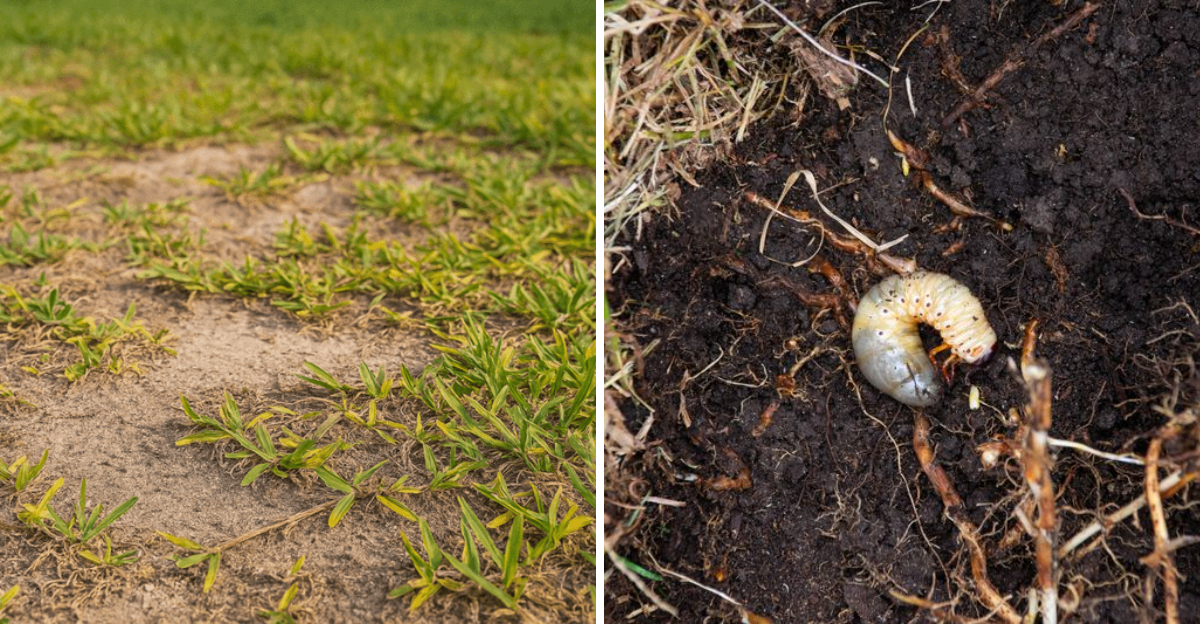
Florida lawns have a talent for looking perfectly fine right up until they do not, and late summer is when that particular trick shows up most often.
One week the grass looks healthy and even, and a few weeks later it is yellowing, thinning, and feeling suspiciously soft underfoot with no obvious explanation in sight.
Here is what is actually going on though. The real problem has often been developing quietly below the soil surface for weeks before anyone notices anything above ground.
White grubs, the larvae of several scarab beetle species, feed on turf roots underground in a way that stays completely hidden until the damage reaches a tipping point.
UF/IFAS notes that late summer into early fall is when significant white grub injury tends to become noticeable across Florida lawns, which makes this exactly the right time to start paying attention.
1. White Grubs Start By Feeding On Turf Roots Below The Surface
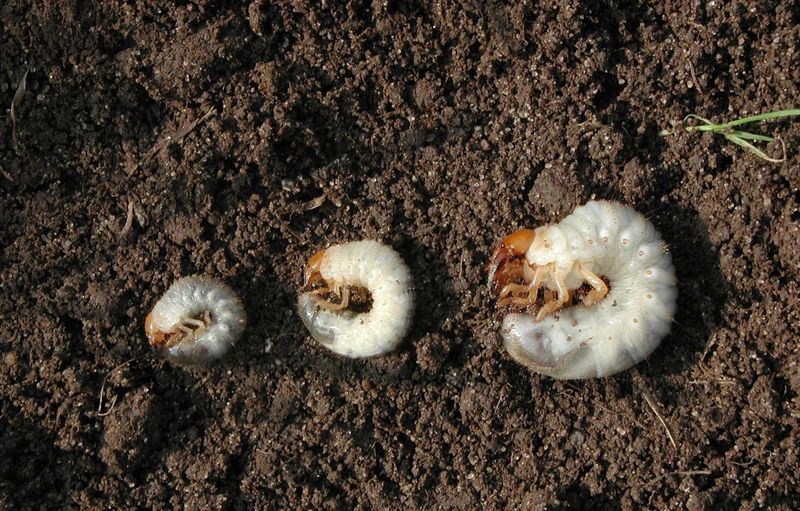
Hidden beneath a healthy-looking Florida lawn, white grub larvae can begin doing real damage long before a single grass blade shows any sign of trouble.
These larvae are the immature stage of several different scarab beetle species, and they live in the soil or near the soil-thatch interface where they feed on turfgrass roots.
Because the feeding happens underground, a lawn can appear completely normal from the surface while root injury is already building.
Not every grub found in the soil automatically signals a crisis. A small number of larvae may cause little noticeable harm, especially when turf is otherwise healthy and well-rooted.
The concern grows when larval populations reach levels that remove enough root tissue to interfere with how the grass functions.
Grubs chew through root tissue rather than feeding on blades or stems above ground, which is a key reason why the early stages of an infestation can go undetected.
Florida’s warm soil temperatures through late summer can support active larval feeding, meaning the damage can accumulate gradually over a period of weeks.
Because the grass blades may still receive some water and nutrients from remaining roots, the turf often holds its color for a while.
Recognizing that root feeding can begin quietly, well before any visible stress appears, helps Florida homeowners understand why grub problems can seem to appear suddenly when the real timeline started much earlier.
2. Root Loss Reduces The Turf’s Ability To Take Up Water And Nutrients
Grass roots do a lot of quiet, essential work. They pull water and dissolved nutrients up from the soil and deliver them to the rest of the plant, supporting green color, growth, and resilience.
When white grub feeding removes a meaningful portion of that root system, the turf loses some of its ability to keep up with those basic functions, and the effects can start to show in the grass blades above.
A small amount of root feeding may not create noticeable problems right away, especially in turf that starts with a deep, dense root system. The relationship between root loss and aboveground decline is proportional rather than immediate.
Your Florida Garden Changes Every Week. Your Plan Should Too.
Gardening in Florida changes quickly throughout the season. Every Friday you’ll receive a simple weekly plan showing exactly what to plant, prune, fertilize, harvest, and protect so you never miss the right timing.
As larval feeding continues and root tissue is progressively reduced, the grass may begin struggling to stay adequately hydrated and nourished, even when irrigation or rainfall is available.
Florida’s late-summer heat places extra demands on turf, requiring more water uptake than cooler months would. A lawn with a reduced root system may reach the point where it simply cannot pull in enough moisture to keep up with that demand.
Nutrient uptake can also slow when fewer roots are available to do the work.
Over time, a lawn that looks reasonably healthy may quietly become more fragile and less able to recover from normal environmental stress, setting the stage for more obvious symptoms to appear as conditions intensify through the season.
3. Early Grub Injury Can Be Difficult To Notice From Above
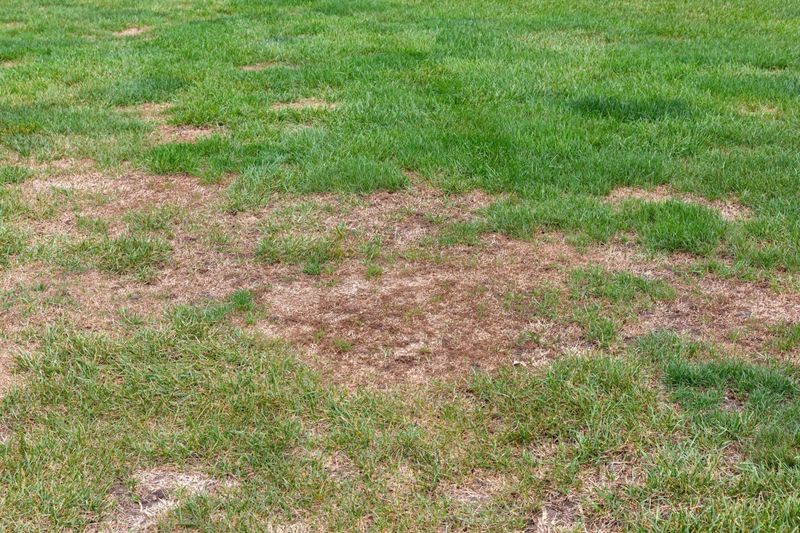
Mild or developing grub injury has a frustrating habit of blending in with other common lawn problems.
In the early stages, affected turf may show only slight discoloration, reduced vigor, or areas that seem a little slower to recover after mowing or a dry spell.
These subtle changes can be easy to dismiss, especially during Florida’s demanding summer months when heat and humidity already put lawns under pressure from multiple directions.
The symptoms that appear early in a grub infestation are not unique to white grubs. Drought stress, irrigation inconsistencies, turf diseases, nematodes, and other root disorders can all produce similar-looking patches of pale or weakened grass.
Assuming grubs are the cause based on color changes alone would be a mistake, since misidentifying the problem can lead to treatments that do not address what is actually happening.
While larval feeding continues below the surface, homeowners may wait for the lawn to improve on its own, adjust irrigation settings, or apply fertilizer, without realizing the root system is being gradually reduced.
The longer the feeding continues undetected, the more root tissue can be lost before any clear pattern emerges above ground.
Paying attention to areas that seem slightly off compared to the surrounding turf, rather than waiting for dramatic decline, can make it easier to catch a developing problem before it becomes significantly harder to manage.
4. Late-Summer Stress Can Make Hidden Root Damage More Obvious
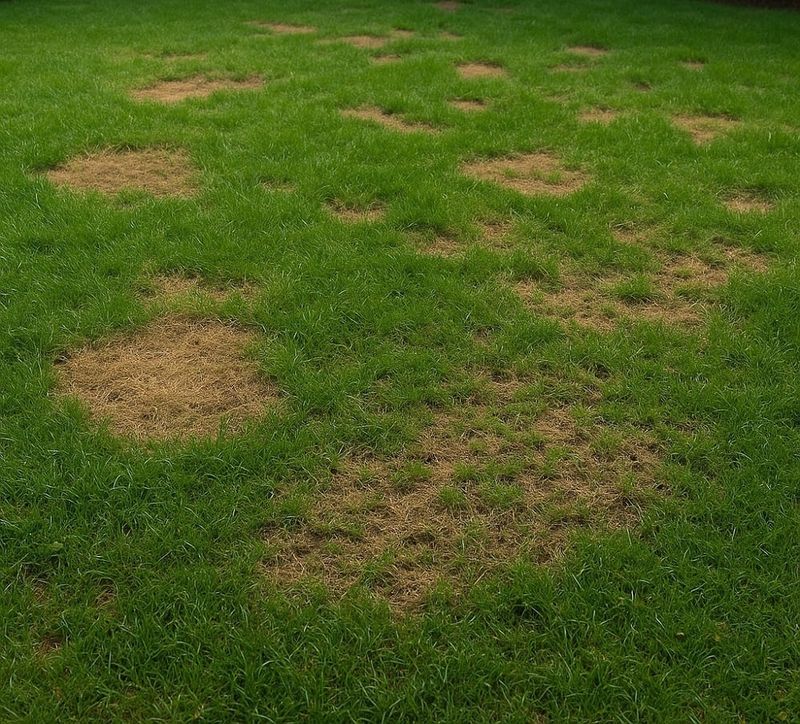
UF/IFAS identifies late summer into early fall as a period when significant white grub injury can become noticeable in Florida turf. Part of the reason is environmental.
Florida’s late-summer conditions, with intense heat, periods of uneven rainfall, and high evaporative demand, place greater stress on turf roots than cooler months would.
A lawn that has been quietly losing root tissue to larval feeding may handle that stress poorly compared to a lawn with a fully intact root system.
When a Florida lawn faces heat or a stretch of limited moisture, healthy turf can draw on a deep, well-established root system to stay hydrated. Turf that has lost a meaningful portion of its roots to grub feeding may not have that same reserve capacity.
The result is that stressed areas can deteriorate faster and more visibly than nearby grass, making the pattern of decline more apparent to a homeowner who had not noticed anything unusual before.
Late-summer stress does not cause grub injury on its own, and not every struggling August lawn has a grub problem. The connection is that environmental pressure can reveal a weakness that was already building underground.
A lawn with compromised roots simply has less ability to handle the demands that Florida’s summer weather routinely places on turf, which is why damage that developed gradually can seem to appear more suddenly when conditions become difficult.
5. Yellowing And Thinning Can Be The First Visible Warning
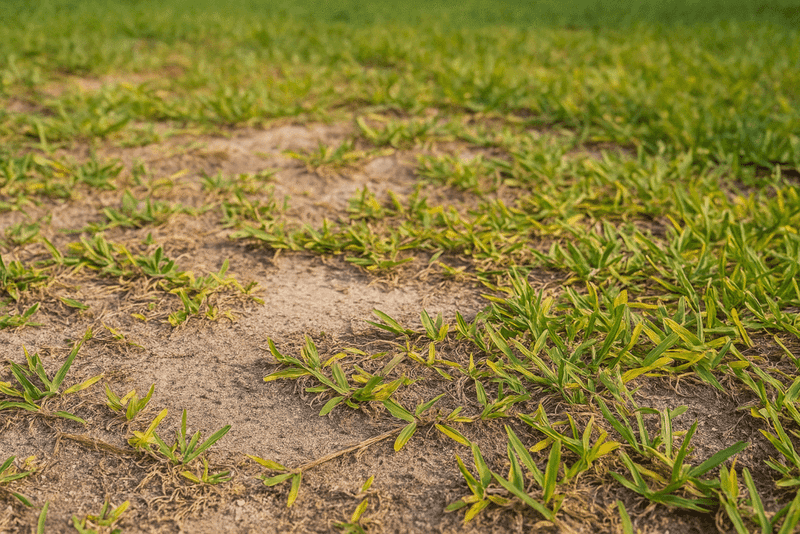
Before a Florida lawn develops obvious brown zones or patches of bare soil, the first visible signals of grub-related root injury are often more subtle. Affected turf may begin looking slightly yellow, pale, or washed out in irregular areas.
Grass density can thin gradually, leaving sections that look sparse or weak compared to healthier parts of the lawn nearby. These early color and texture changes are worth paying attention to, even if they seem minor at first.
The pattern of decline can vary. Some affected areas may look scattered and uneven rather than forming a neat, well-defined patch.
Grass at the edges of a declining area may still look relatively green while the center continues to weaken. This irregular appearance can make it tempting to blame irrigation coverage gaps, soil differences, or shade variation rather than considering an underground pest problem.
Yellowing and thinning are nonspecific symptoms, meaning they can result from many different lawn problems including drought stress, disease, nematode activity, or nutritional deficiencies.
Seeing these symptoms should prompt closer inspection rather than an immediate assumption that white grubs are responsible.
Checking the root zone and soil near the edge of an affected area, where grubs may still be actively feeding, offers more reliable information than trying to diagnose the problem from the color of grass blades alone.
Early attention to these signals can help narrow down what is actually happening beneath Florida turf.
6. Damaged Turf Can Begin To Feel Soft Or Spongy
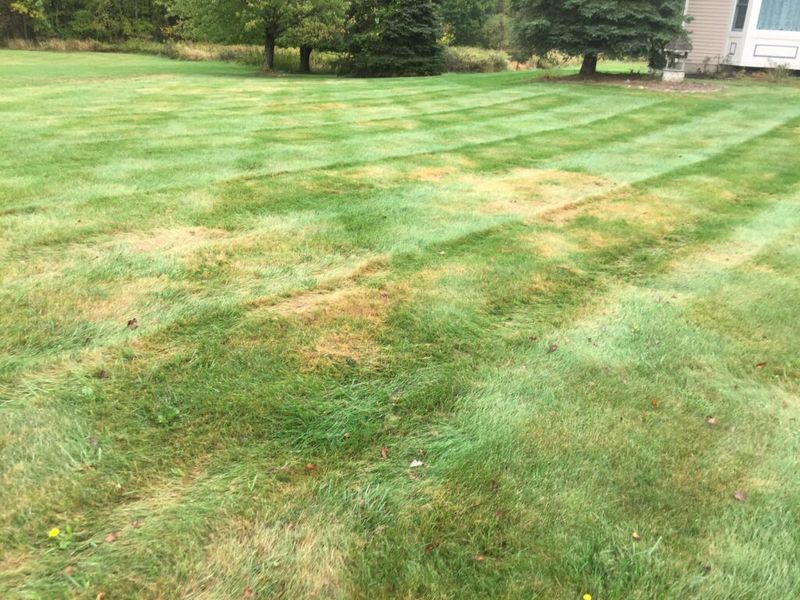
Walking across a lawn and noticing that one section feels noticeably softer or less firm than the rest can be an unexpected clue that something is wrong below the surface.
Turf that has experienced substantial root loss may feel loose, spongy, or slightly unstable underfoot compared to well-rooted surrounding grass.
That physical difference happens because roots normally anchor sod firmly to the underlying soil, and fewer healthy roots means less of that secure attachment.
This spongy sensation is not painful or dramatic, but it stands out once a homeowner notices it.
A section of lawn that compresses more than expected when walked on, or that feels slightly bouncy in a way the rest of the yard does not, can justify taking a closer look at what is happening in the root zone.
The feeling alone is not enough to confirm a grub problem, but it is a reasonable prompt to investigate further rather than assuming the turf is simply soft from recent irrigation.
Excessive thatch, waterlogged soil, and certain soil conditions can also make a lawn feel soft, so the sensation should be considered alongside other symptoms rather than treated as a standalone diagnosis.
When softness appears in combination with yellowing, thinning, or irregular decline in the same area, the case for inspecting the root zone becomes stronger.
Florida lawns that feel unusually spongy in late summer, particularly without recent heavy rain, may be worth checking below the surface.
7. Severely Root-Damaged Sod Can Peel Back Easily
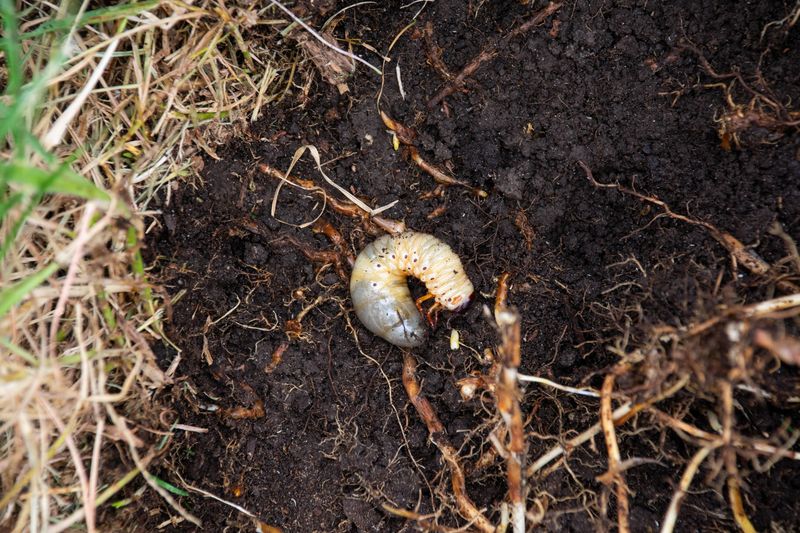
One of the more telling physical signs of serious grub feeding is turf that lifts away from the soil with surprisingly little resistance. Healthy, well-rooted sod holds firmly to the ground because its root system anchors it in place.
When white grub feeding has removed a large portion of that root tissue, the sod may pull back or roll up more like a loose mat than a firmly attached layer of living grass.
Florida homeowners who notice declining turf and press down gently at the edge of an affected area may find that the grass lifts with almost no effort. This is different from the normal resistance felt when tugging at healthy turf.
Severely affected sod may peel back in a way that reveals bare or sparsely rooted soil beneath, and that is often where the larvae responsible for the damage can be found.
Finding loose turf alone is still not enough to confirm a grub infestation with confidence.
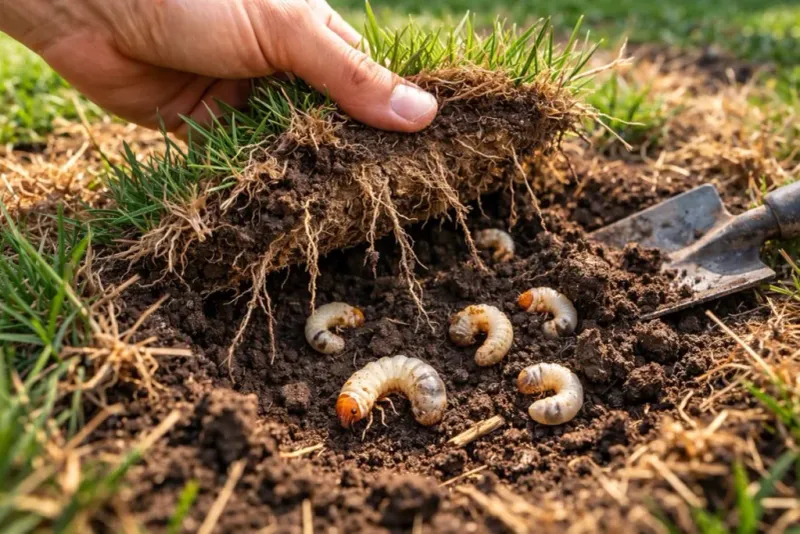
The presence of characteristic C-shaped, creamy white larvae in the soil beneath the affected area provides much stronger evidence that scarab beetle larvae are responsible for the root loss.
Other factors, including disease, nematodes, or drought-related root decline, can also weaken the connection between sod and soil.
Peeling back a section of turf near the edge of a declining patch, where active feeding is more likely to be occurring, gives a clearer picture of whether grubs are actually present in meaningful numbers.
8. Checking Beneath The Turf Is More Reliable Than Guessing From Brown Patches
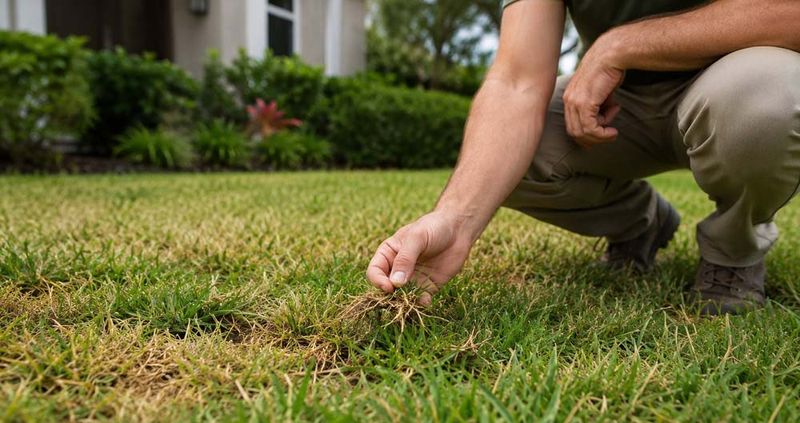
Brown patches, yellowing, and thinning turf can point in several directions at once. Drought stress, turf disease, nematodes, other insects, and root problems unrelated to grubs can all produce similar-looking symptoms from above.
Relying on surface appearance alone to conclude that white grubs are responsible is not a reliable approach, and acting on a wrong diagnosis can waste time and resources while the actual problem continues.
A more dependable method involves directly inspecting the soil and root zone near the edge of a declining area. The edge of a damaged patch, rather than the center, tends to be where active larval feeding is more likely to be occurring.
Cutting and lifting a section of sod allows a homeowner to examine the root zone and underlying soil for the presence of larvae.
White grubs are typically creamy or milky white, C-shaped larvae with a distinct head capsule, and they represent the immature stage of various scarab beetle species rather than a single insect.
For specific sampling procedures and population thresholds relevant to Florida conditions, current UF/IFAS guidance offers practical direction on how to assess whether the number of grubs found is likely to be causing the observed turf decline.
Correct identification matters because several Florida lawn problems can produce symptoms that look nearly identical above ground.
Taking the time to look below the surface gives homeowners and lawn-care professionals a much clearer foundation for deciding what, if anything, needs to be done next.