The Underrated North Carolina Native That Peaks In Late Summer When Everything Else Fades
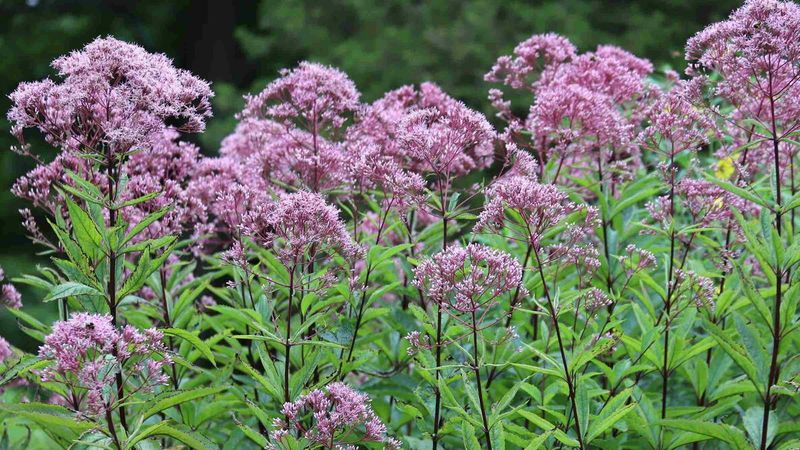
By late July, a lot of North Carolina yards go quiet. The spring bloomers are done, the early summer color has faded, and the August heat makes everything look a little defeated. That is exactly when Joe-Pye weed steps up, offering big clusters of pink and purple flowers right when the garden needs them most. It is not a magic fix for every yard, but for the right spot, it is genuinely one of the best native perennials this state has to offer.
Joe-Pye Weed Helps Carry Color Into Late Summer
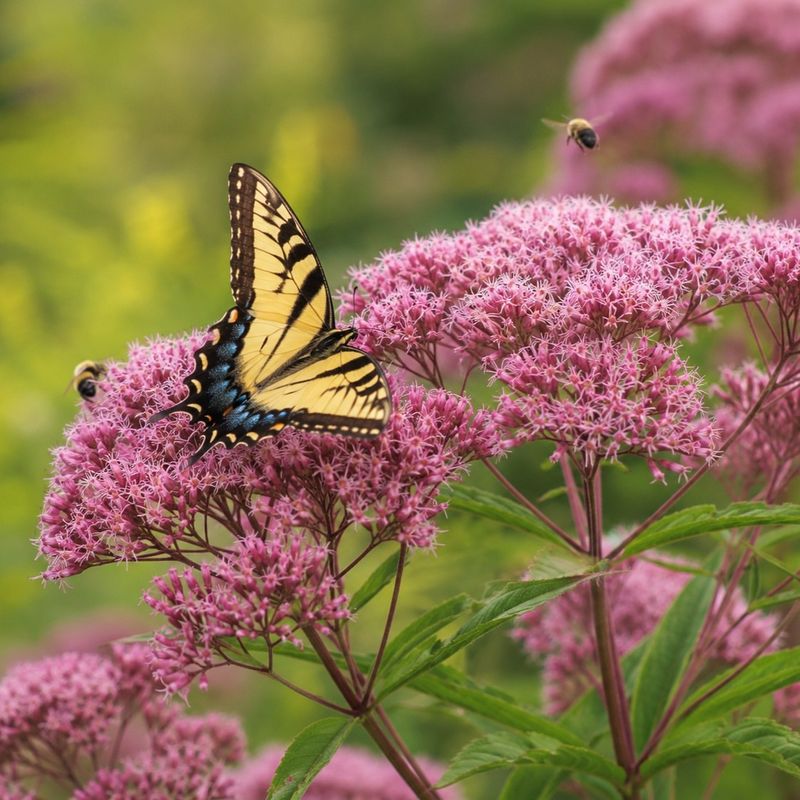
Hollow Joe-Pye weed, known botanically as Eutrochium fistulosum, is the plant this article has been building toward. It is a true North Carolina native, found naturally in moist meadows, low ground, and stream margins across the state. NC State Extension lists it as producing large clusters of pink, purple, or dusky-pink flowers from mid-summer into early fall, a window that often includes August. The state recognized it as the 2017 North Carolina Wildflower of the Year, which tells you something about how well it belongs here.
What you get is not one oversized bloom but a broad, domed cluster made up of dozens of small flowers packed together at the tops of tall stems. The effect from a few feet away is a warm haze of color that holds up through heat that sends other perennials into retreat. That said, bloom timing shifts depending on the species, the cultivar, the weather, and how recently the plant went into the ground, so your experience may not match a neighbor’s exactly.
The central qualification is moisture. Joe-Pye weed is not drought-tolerant, and its foliage can scorch when the root zone dries out. Plant it in a spot where moisture is reliably available and you give it room to reach its full size, and it can genuinely extend your garden’s color into late summer. Skip the moisture requirement and you will likely be disappointed, no matter how promising the plant tag looks at the nursery.
Its Flower Clusters Support a Living Garden
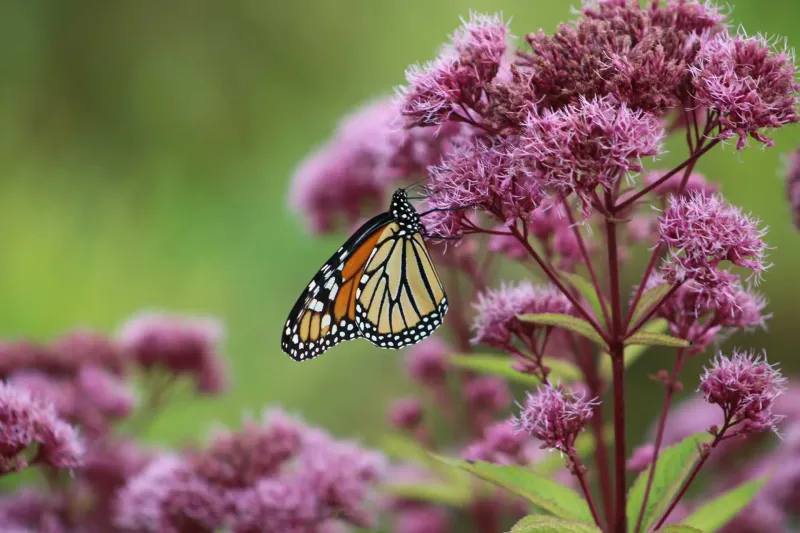
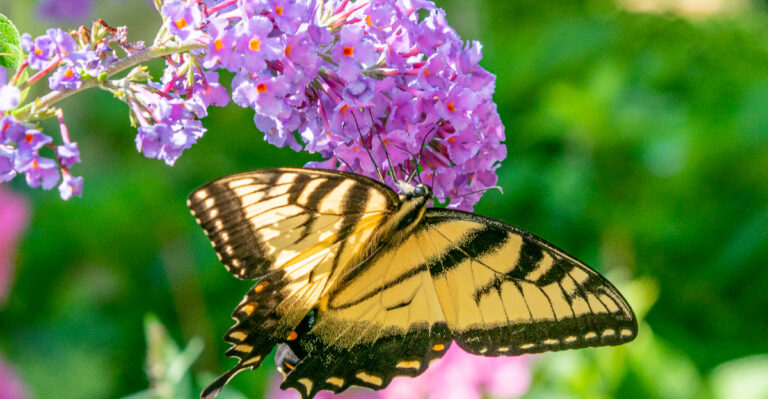
Walk past a Joe-Pye weed in full bloom on a warm August morning and you will hear it before you see it clearly. Bees work the flower clusters steadily, and several butterfly species treat the plant like a reliable stop on a long summer route. The flowers themselves are small individually, but gathered into clusters that can span several inches across, they create a landing platform that pollinators actually use.
Hollow Joe-Pye weed supports Pearl Crescent butterfly larvae, which is a concrete contribution beyond just providing nectar. Its seeds can serve songbirds once the flowers fade and the seedheads develop through fall and into winter. NC State Extension guidance on landscaping for wildlife frames native plants like this as part of a broader habitat system rather than a guaranteed wildlife magnet, and that framing is honest. Pollinator visits depend on surrounding habitat, pesticide use nearby, weather, and what else is blooming in the area.
By the time some spring and early-summer bloomers begin to decline, a well-established Joe-Pye weed is often just hitting its stride. That overlap matters for pollinators that need a continuous food supply across the season, not just a spring burst followed by a long gap. Adding this plant to a yard does not promise a yard full of butterflies, but it does add a real late-season resource at a time when those resources can be genuinely scarce.
Your North Carolina Garden Changes Every Week. Your Plan Should Too.
Gardening in North Carolina changes quickly throughout the season. Every Friday you’ll receive a simple weekly plan showing exactly what to plant, prune, fertilize, harvest, and protect so you never miss the right timing.
Test the Site Before You Plant
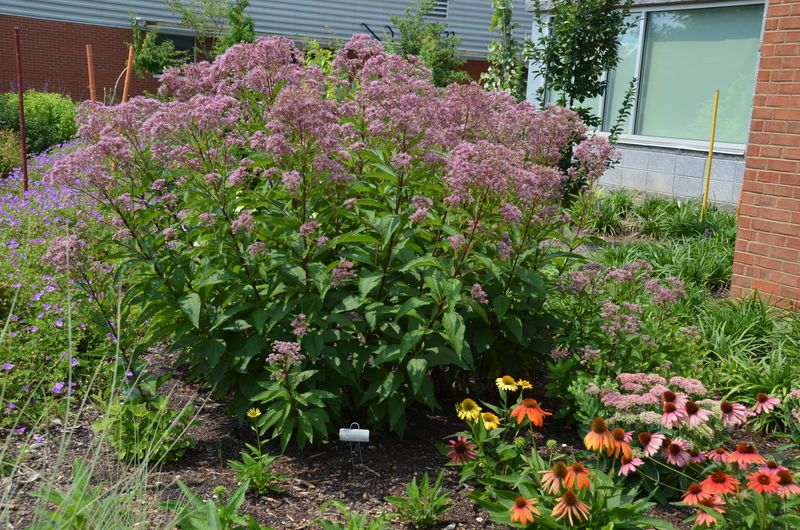
Before you order a plant, walk your yard after a heavy rain and notice where water lingers. A spot that stays damp for a day or two after a storm, a low area near a downspout, a swale along a fence line, or the edge of a pond or stream, those are the kinds of places where hollow Joe-Pye weed can settle in and perform well. Rain gardens and naturally damp low spots in the Piedmont are particularly good candidates.
Contrast those sites with a south-facing foundation bed beside a brick wall, a raised sandy mound in the Sandhills that drains fast, or a dry border that gets watered only when someone remembers. Joe-Pye weed can grow in clay or sandy soil when adequate moisture stays available, but drying out is a hard limit. NC State’s plant profile for hollow Joe-Pye weed consistently emphasizes moist to wet conditions and full sun to partial shade as the baseline requirements.
North Carolina’s regions are not interchangeable. The Piedmont’s red clay holds moisture but can also compact and crack. The Coastal Plain’s sandy soils drain quickly and may need more attention to irrigation during dry stretches. The mountains offer cooler temperatures and different moisture patterns altogether.
NC State Extension’s native plants handbook stresses matching the plant to the specific site rather than assuming a native species will adapt to whatever conditions exist. That advice applies directly here. A marginal site will produce a struggling plant, and a struggling plant will not give you the late-summer color this article is promising.
Match the Species to the Available Space
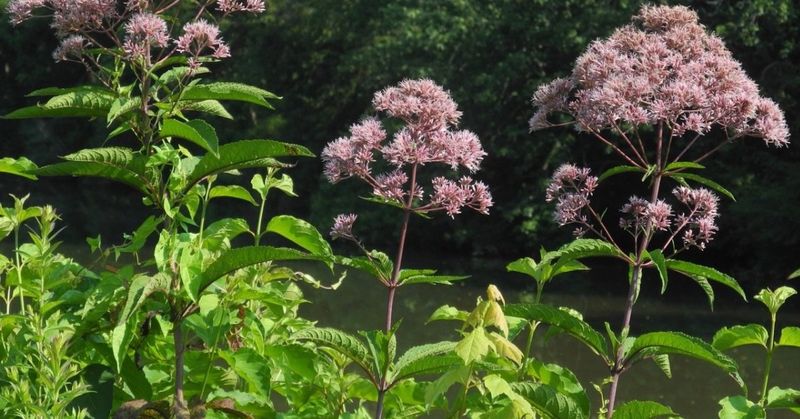
Here is where a lot of gardeners get caught off guard. “Joe-Pye weed” is not one plant. It is a group of related species with real differences in height, moisture preference, and regional fit, and treating them as interchangeable can lead to a plant that overwhelms your bed or sulks in the wrong conditions.
Hollow Joe-Pye weed commonly reaches 4 to 7 feet tall and spreads 2 to 4 feet wide at maturity. Some plants push even taller under favorable conditions. That scale works beautifully at the back of a wide border or in a naturalistic planting with room to breathe, but it will swallow a narrow suburban bed. NC State Extension’s profile for hollow Joe-Pye weed is clear about this size range, so read the label carefully before you commit.
For smaller yards or tighter spaces, coastal plain Joe-Pye weed (Eutrochium dubium) offers a more manageable frame. Penn State Extension reports coastal plain Joe-Pye weed at roughly 3 to 5 feet tall, with bloom in August and September. The cultivar ‘Gateway’ generally falls in the 4-to-6-foot range, which is still substantial but a step down from the tallest hollow Joe-Pye weed. Penn State’s Gateway Joe Pye weed profile gives useful detail on that cultivar’s habit and care needs.
Choosing a compact cultivar or a shorter species solves the space problem, but it does not eliminate the need for appropriate moisture, adequate light, and patient establishment care. The plant still needs the right conditions to actually deliver late-summer color.
Build the Conditions for Establishment
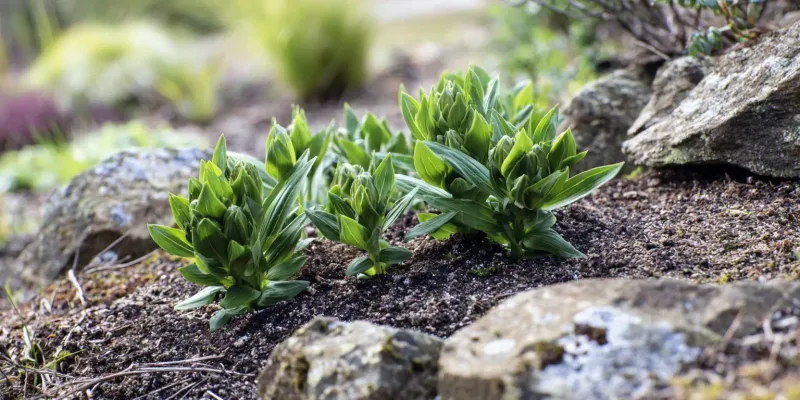
Fall is actually a good time to plant many North Carolina natives, including Joe-Pye weed, when nursery stock is available and the weather cooperates. Cooler temperatures and more reliable rainfall give new roots a chance to settle in before summer heat arrives. NC State Extension’s wildlife landscaping guide recommends fall planting for most native species, though local conditions and what your nursery has in stock will shape the timing.
If you are working with Piedmont red clay, do not just dig a hole and drop the plant in. NC State Extension’s native plants handbook recommends getting a soil test first, then addressing compaction across the full planting area rather than just the hole. Incorporating about 1 to 3 inches of compost across the bed improves soil structure and moisture retention in a way that a handful of amendments in a single hole cannot match.
Water new plants consistently during the first few weeks, especially if the weather turns warm or dry. There is no single gallon-per-week number that works for every North Carolina site because soil texture, sun exposure, and the size of the plant all affect how fast the root zone dries. The practical rule is to check the soil a few inches down and water before it gets completely dry, then ease off gradually as the plant establishes and rainfall becomes more reliable.
Spread a 2-to-3-inch layer of mulch over the root zone to hold moisture, moderate soil temperature, and keep weeds from competing with a young plant. Keep the mulch a few inches back from the stems so it does not trap moisture against the crown. Proper site conditions and careful establishment improve the plant’s chances of strong late-season growth, but no single step is the whole story.
Manage Height, Cleanup, and Dry-Weather Stress
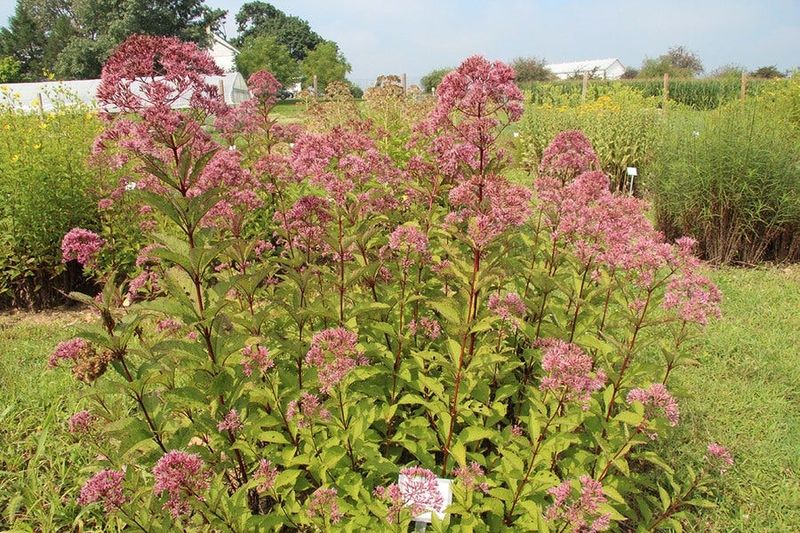
A 6-foot plant at the back of a border can look dramatic and intentional. That same plant crammed into a 4-foot-wide bed looks like it is trying to escape. If height is a concern, there is an option worth knowing about: cutting the stems back by about one-third in mid-to-late June can encourage shorter, sturdier growth. NC State’s profile for sweet Joe-Pye weed notes that cutting before early July may produce more compact stems, though flowering could be delayed and results vary by plant and conditions.
Treat this as optional shaping, not a guaranteed shortcut.
Late winter is the standard time to cut hollow Joe-Pye weed to the ground. The old stems do not do much after the seedheads are spent, and clearing them makes room for fresh spring growth. That said, leaving the seedheads standing through fall and into winter gives birds a potential food source and adds some structure to an otherwise bare bed. NC State’s hollow Joe-Pye weed profile supports late-winter cutback as the standard approach, with seedhead retention as a gardener’s choice.
One claim worth correcting before it causes frustration: Penn State Extension specifically states that deadheading does not stimulate rebloom in Joe-Pye weed. Cutting off the spent flowers will not give you a second flush of color, so leaving them for birds and winter interest is the better call.
Deer may browse the plant, particularly in spring before the stems toughen. Hot, dry stretches can scorch the foliage even in a normally adequate site. Serious insect and disease problems are generally uncommon, but “generally uncommon” is not the same as pest-proof, and a dry August in the Sandhills will test even a well-placed plant. University of Maryland Extension notes that deer may browse hollow Joe-Pye weed, especially earlier in the season.
Use Joe-Pye Weed as One Layer in the Plan
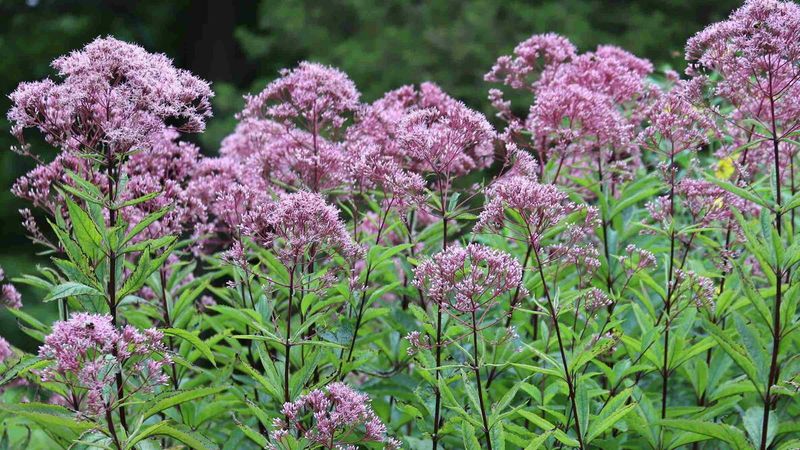
No single perennial covers every season, and Joe-Pye weed is not trying to. It fills a specific window, typically from mid-summer into early fall, and it fills it well when the site is right. The stronger move is to pair it with other regionally appropriate natives whose bloom periods and habitat requirements line up with what you already have.
Goldenrod is a natural companion that many North Carolina gardeners skip because of a persistent myth. Penn State Extension’s native perennials for fall resource points out that goldenrod’s pollen is heavy and insect-carried, not the airborne type responsible for fall hay fever. That blame belongs to ragweed, which blooms at the same time but is far less showy. Goldenrod is actually a strong pollinator plant, and it pairs naturally with Joe-Pye weed in a late-summer to fall sequence.
Asters, mountain mint, coneflower, and milkweed can all contribute to a broader succession when their light and moisture needs match the site. NC State Extension recommends planning for multiple native species with staggered bloom periods so the garden supports wildlife across more of the year, not just in one concentrated burst. A yard that feeds pollinators from spring through fall is more valuable than one that peaks dramatically in August and then goes quiet.
NC State’s landscaping for wildlife guidance is consistent on this point: native plants still need adequate space, establishment care, and occasional management, and wildlife activity depends on weather, surrounding habitat, pesticide use, and the overall diversity of what is blooming nearby. Joe-Pye weed can become a genuine late-summer backbone when you give it the damp conditions and room it requires, and that is actually a meaningful thing to offer a garden that tends to run out of ideas by August.