Skip Japanese Honeysuckle On North Carolina Fences And Plant This Native Vine Instead
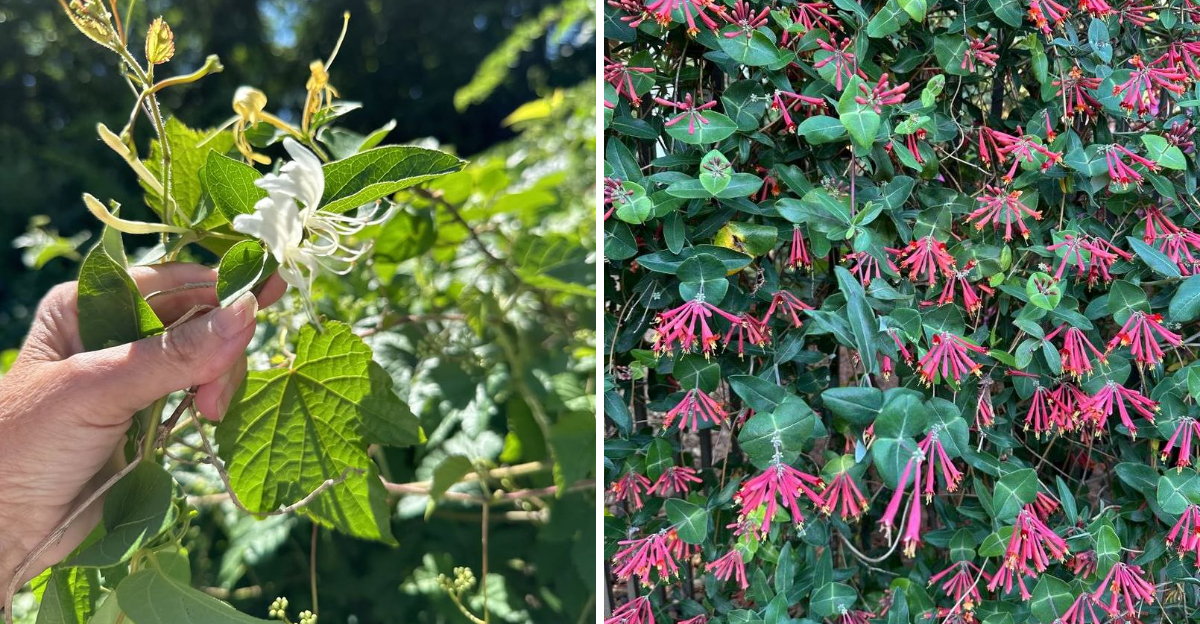
Japanese honeysuckle is one of those plants that feels harmless until the scale of what it does becomes impossible to ignore.
It smells extraordinary, covers a fence with convincing speed, and then keeps going, moving into tree canopies, smothering shrubs, and spreading into natural areas where it forms the kind of dense monoculture that takes years and significant effort to reverse.
North Carolina’s natural areas have been losing ground to this vine for decades, and every garden planting adds to that pressure.
A native vine provides the same fast coverage and seasonal beauty without harming the local ecosystem. Unlike Japanese honeysuckle, it also turns your fence line into valuable wildlife habitat from the very first season it begins to grow.
1. Japanese Honeysuckle Is Invasive In North Carolina
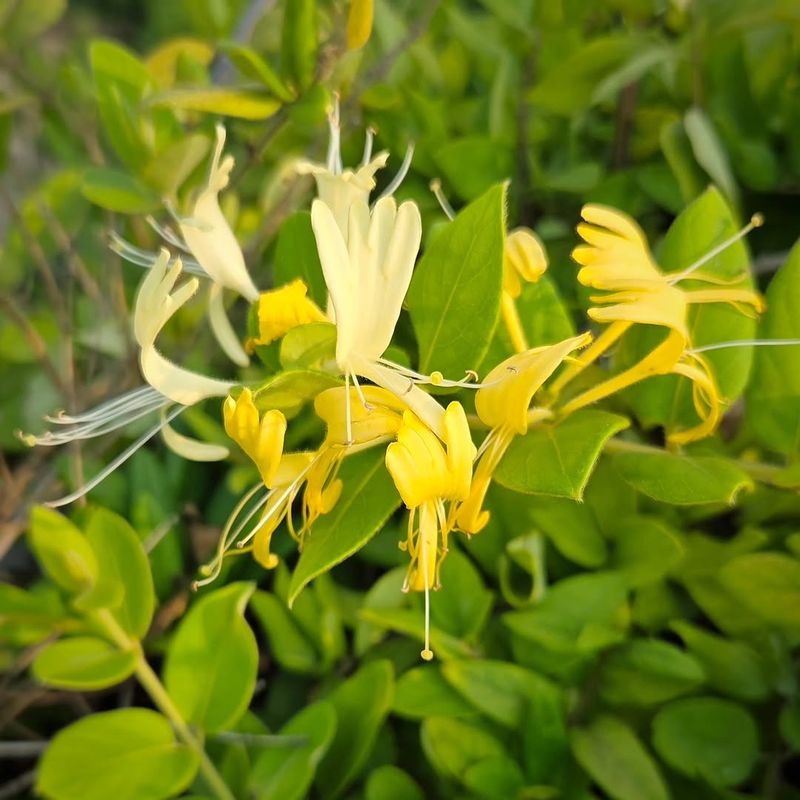
Most gardeners fall for Japanese Honeysuckle because of its sweet scent and pretty white and yellow blooms.
It looks innocent enough climbing a fence post, but NC State University lists it as an invasive plant in North Carolina, and that label comes with good reason. Once it gets comfortable in your yard, it rarely stays polite.
Japanese Honeysuckle, known botanically as Lonicera japonica, was brought to the United States from Asia in the early 1800s.
It was originally planted as an ornamental vine and for erosion control, but over time it escaped into natural areas across the Southeast.
North Carolina’s warm climate and moist soils give it the perfect conditions to thrive far beyond where anyone intended it to grow.
NC State’s Extension program recommends that gardeners consider alternatives before reaching for this vine at the nursery. The problem is not just about your yard looking messy.
Invasive plants can shift the balance of entire natural ecosystems over time. Choosing not to plant it is one of the simplest things a responsible gardener can do.
Plenty of gardeners are surprised to learn this, especially since Japanese Honeysuckle is still sold in some garden centers. Availability does not equal a green light for planting.
When you know that a vine has been flagged as invasive by your state’s own university extension system, that is a strong signal to look for something better.
Fortunately, North Carolina has an excellent native alternative waiting to take its place on your fence.
2. It Spreads Beyond The Fence
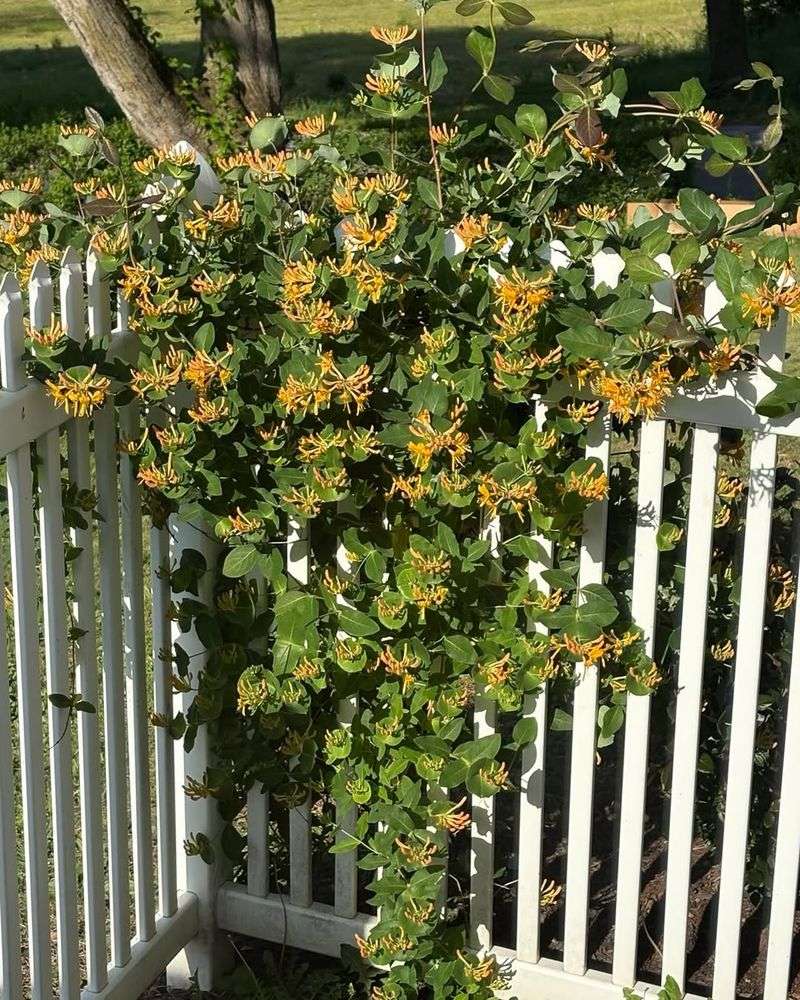
Planting Japanese Honeysuckle on a fence might feel contained at first. You have your structure, the vine climbs it, and everything looks tidy for a season or two.
Then something shifts. Runners start creeping along the ground, roots spread underground through rhizomes, and before long, the vine has crept well beyond the fence line.
This plant spreads in multiple ways at once, which is part of what makes it so hard to manage once established. Above-ground runners can root wherever they touch the soil, creating new plants without any help from seeds.
Underground rhizomes push outward steadily, sending up new shoots in your garden beds, your lawn, and even into neighboring natural areas.
Birds and small mammals love the berries that Japanese Honeysuckle produces. That sounds charming until you realize those animals carry seeds into woodlands, stream edges, and parks far from your property.
Your North Carolina Garden Changes Every Week. Your Plan Should Too.
Gardening in North Carolina changes quickly throughout the season. Every Friday you’ll receive a simple weekly plan showing exactly what to plant, prune, fertilize, harvest, and protect so you never miss the right timing.
A vine you planted on your fence can end up establishing itself in a nature preserve miles away. That is a significant ecological ripple effect from one backyard decision.
Once the vine gets into a tree line or a wooded edge, removing it becomes a real challenge. The roots run deep, the stems tangle around everything, and cutting it back without removing the roots just encourages more vigorous regrowth.
Gardeners who have dealt with an established patch of Japanese Honeysuckle often describe it as one of the most stubborn plants they have ever faced. Starting with a better vine saves enormous effort down the road.
3. It Can Crowd Nearby Native Plants
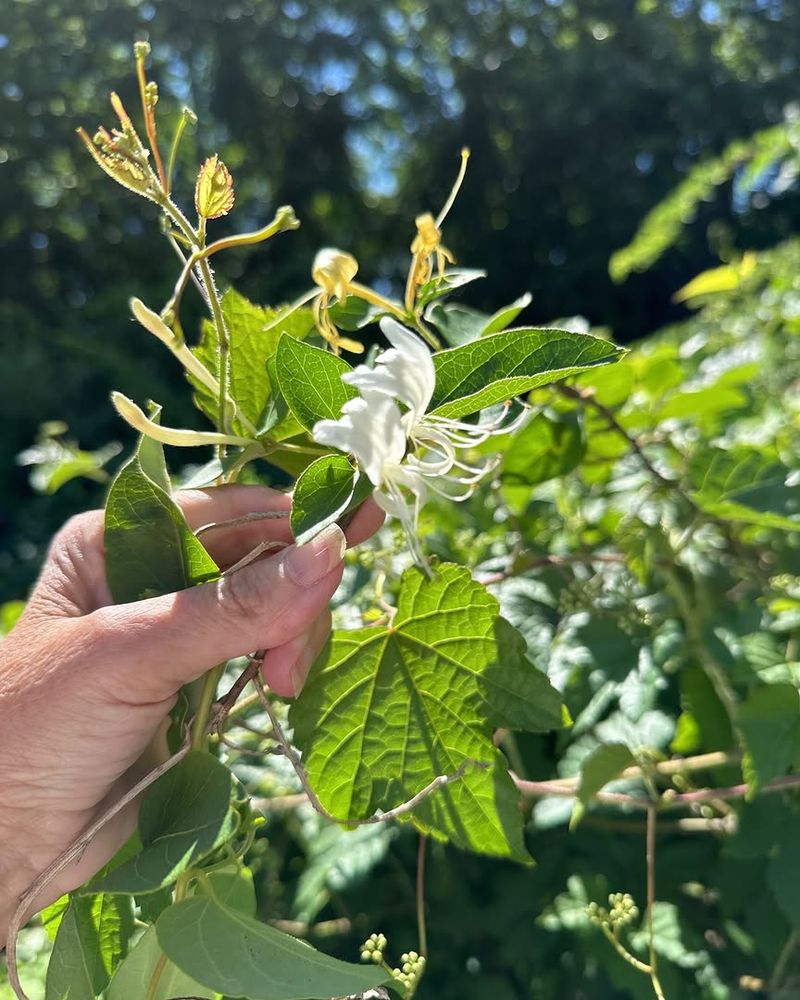
North Carolina is home to an impressive variety of native plants, from wild columbine and trillium to native azaleas and dogwoods. These plants have evolved alongside local insects, birds, and pollinators over thousands of years.
When an aggressive vine moves in and starts competing with them, the whole system feels the pressure.
Japanese Honeysuckle is a vigorous grower that climbs up and over other vegetation. It drapes itself across shrubs, scrambles up young trees, and blankets low-growing wildflowers in dense mats of foliage.
The shading effect alone can dramatically reduce the ability of native plants to photosynthesize and grow. Add competition for water, nutrients, and root space, and the native plants around your fence can really struggle.
Pollinators like native bees, butterflies, and beetles rely on specific native plant species for food and nesting. When those plants get crowded out, the insects that depend on them lose their resources.
Birds that nest in native shrubs or feed on native berries face the same problem. The loss of plant diversity triggers a chain reaction through the local food web that affects far more than just your garden.
Keeping native plant diversity intact is one of the most valuable things a North Carolina gardener can do for local wildlife.
Choosing plants that support rather than compete with the native landscape is a straightforward way to make your yard part of the solution.
Swapping out an invasive climber for a native vine is a small change that genuinely supports the bigger ecological picture in your region.
4. It Creates More Maintenance Than Gardeners Expect
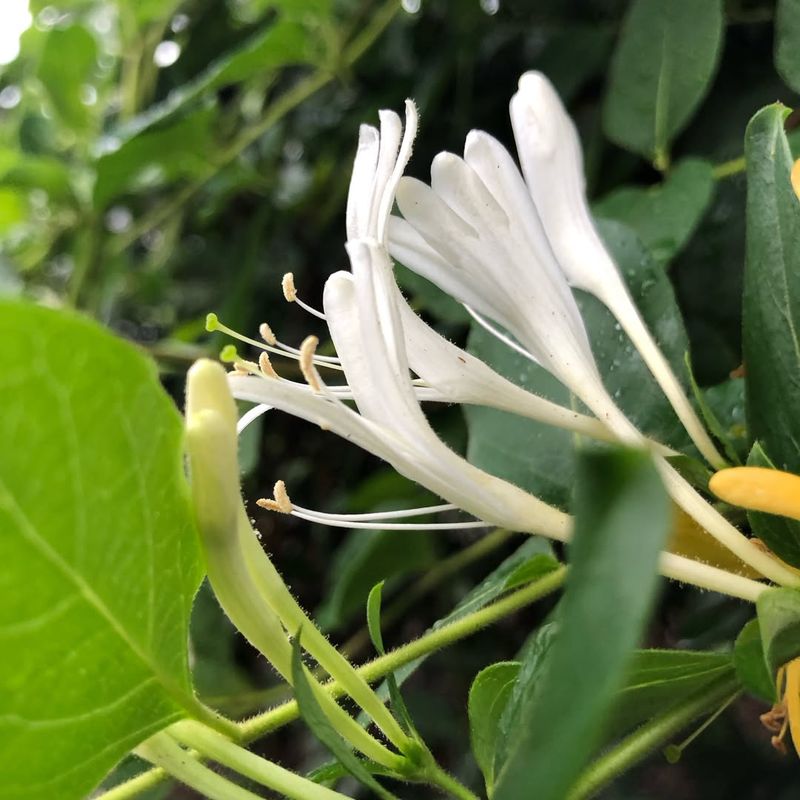
One of the biggest surprises new gardeners face with Japanese Honeysuckle is just how much work it creates over time. It looks easy at first.
The vine grows fast, fills in quickly, and seems like a low-effort solution for a bare fence. But fast growth is not the same as easy growth, and this vine will remind you of that difference every single season.
Japanese Honeysuckle can grow several feet in a single growing season under good conditions.
That speed means regular cutting is not just a suggestion but a real necessity if you want to keep it from swallowing nearby shrubs, creeping into tree canopies, or spilling over into neighboring properties.
Even with consistent trimming, the underground roots keep pushing new growth back up from the soil.
Monitoring is another piece of the maintenance puzzle that gardeners often underestimate. Runners can root themselves several feet from the main plant without you noticing until a new patch has already established.
Woodland edges, fence corners, and garden borders all become potential colonization zones. Staying ahead of it requires regular walkarounds and prompt action whenever you spot new shoots.
The time and energy spent managing Japanese Honeysuckle adds up quickly across a growing season. Many gardeners who planted it with good intentions end up spending weekends pulling, cutting, and monitoring instead of enjoying their yards.
Choosing a native vine that grows at a more manageable pace and stays where you plant it is simply a smarter investment of your gardening time and energy. Your future self will absolutely thank you for making the switch now.
5. Coral Honeysuckle Is The Native Vine To Plant Instead
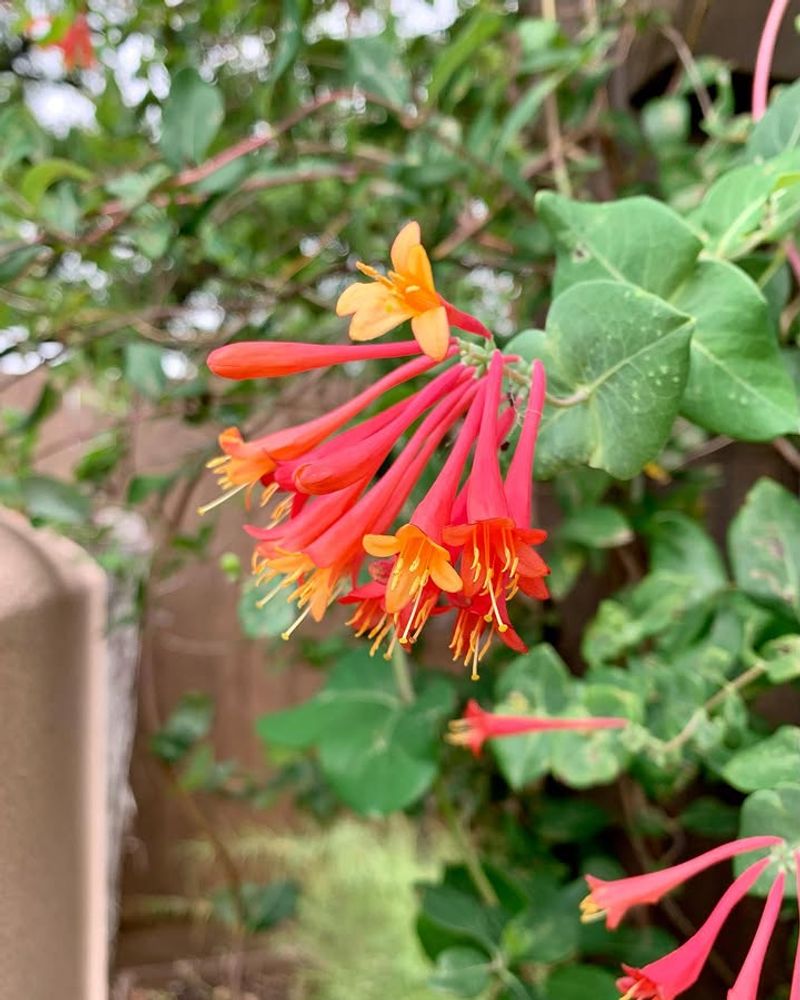
Meet Coral Honeysuckle, or Lonicera sempervirens, the vine that North Carolina gardeners have been looking for.
Unlike its invasive cousin, this one is native to the eastern United States, including North Carolina, and it has been growing here long before anyone thought to plant it on a fence. It belongs here, and the local ecosystem knows it.
Coral Honeysuckle grows as a twining perennial vine, meaning it wraps its stems around a support structure rather than using adhesive pads or hooks.
Give it a fence, an arbor, a trellis, or a garden post, and it will happily climb upward in a neat and manageable way.
It reaches mature heights of around ten to twenty feet, which gives excellent coverage without becoming an uncontrollable thicket.
Because it is native, Coral Honeysuckle has natural relationships with the plants, insects, and animals in North Carolina’s ecosystems. It does not aggressively outcompete neighboring plants the way Japanese Honeysuckle does.
Its growth habit is vigorous enough to give you a beautiful, lush fence covering while still being a responsible and thoughtful planting choice for the broader landscape.
Finding Coral Honeysuckle at a nursery is easier than ever as more garden centers stock native plants. Look for it by its botanical name, Lonicera sempervirens, to make sure you are getting the right plant.
Some nurseries carry named cultivars with particularly showy blooms, so you have options depending on your color preferences and garden style. Starting with the right plant from the beginning sets your fence garden up for long-term success.
6. Coral Honeysuckle Feeds Hummingbirds With Tubular Flowers
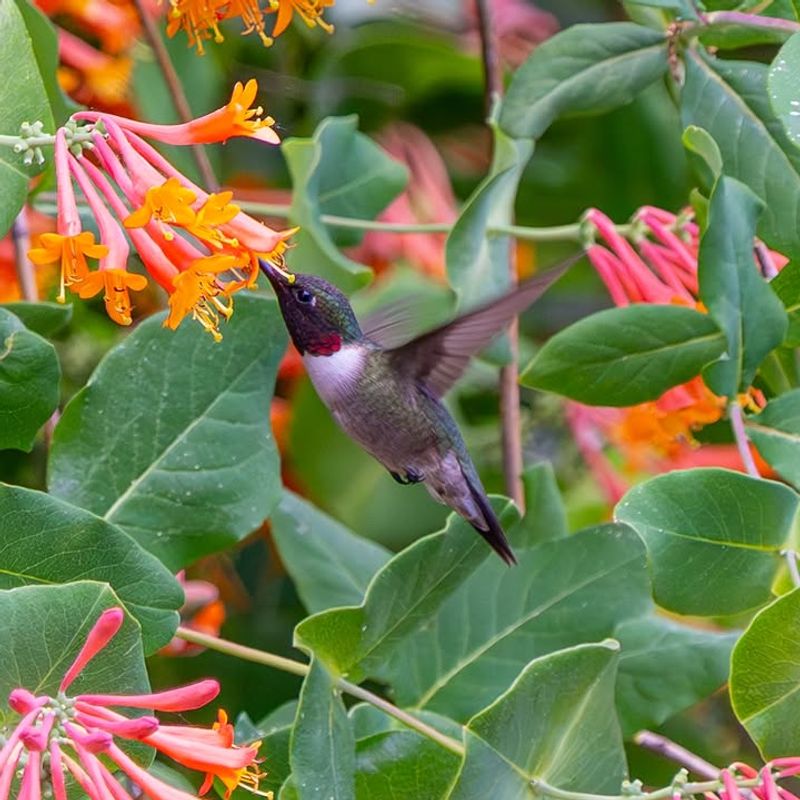
Few things in a garden are as exciting as watching a hummingbird hover at a flower just a few feet away. Coral Honeysuckle makes that experience possible in a North Carolina backyard, and it does it reliably season after season.
The tubular shape of its flowers is practically custom-made for hummingbird feeding, and these birds seem to know it instinctively.
Ruby-throated hummingbirds are the primary hummingbird species in North Carolina, and they are strongly attracted to the red, coral, and orange tubular blooms of Lonicera sempervirens.
The long narrow flower shape fits perfectly with the hummingbird’s long bill and tongue, allowing the bird to reach nectar that many insects cannot easily access.
This specialized relationship means hummingbirds actively seek out Coral Honeysuckle wherever it grows.
Beyond hummingbirds, the plant also supports native bees and certain butterfly species that can access the nectar from the flower openings. The red berries that follow the blooms provide food for songbirds in the fall and winter months.
Planting Coral Honeysuckle on your fence essentially creates a wildlife feeding station that works across multiple seasons without any extra effort on your part.
Compare that to Japanese Honeysuckle, which does attract some pollinators but also spreads aggressively into natural areas and disrupts the native plant communities that local wildlife truly depend on.
Coral Honeysuckle gives you the same joy of watching wildlife visit your garden while actively contributing to a healthier local ecosystem.
That is a genuinely satisfying trade-off that makes every bloom feel even more rewarding to see.
7. It Gives A Fence Color Without The Same Invasive Problem
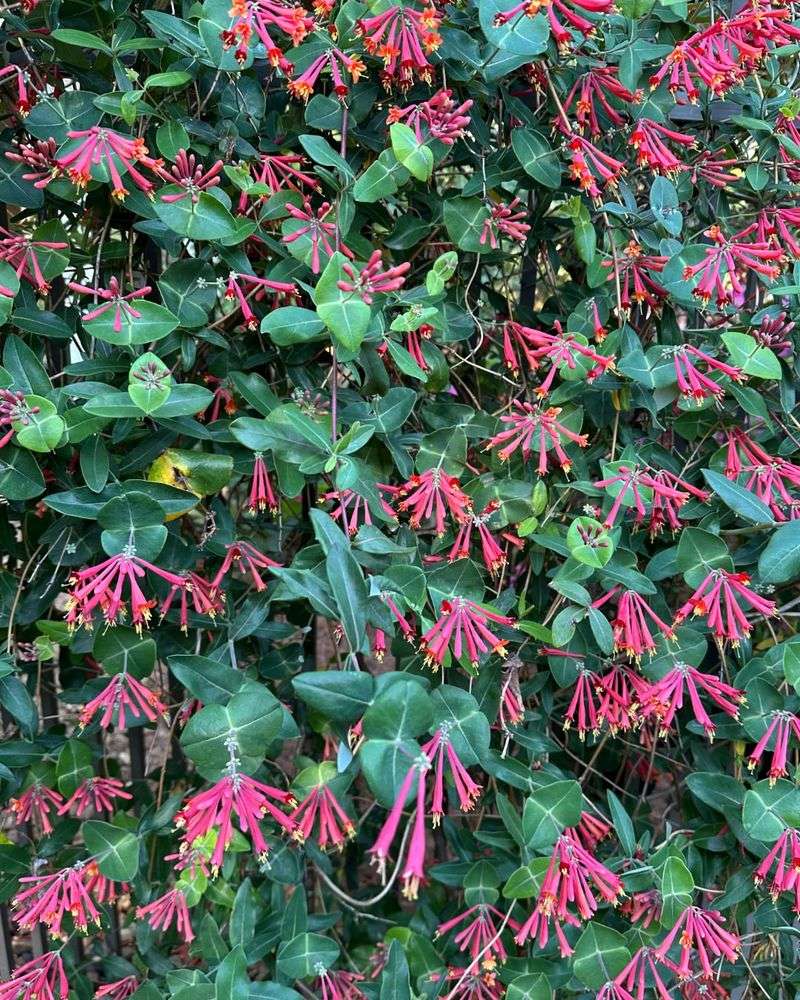
One reason gardeners reach for Japanese Honeysuckle is the visual payoff. It covers a fence quickly and produces fragrant flowers that people genuinely love.
The good news is that Coral Honeysuckle delivers a stunning visual display too, and it does so without the ecological baggage that comes with planting an invasive species in your yard.
Lonicera sempervirens produces showy clusters of tubular flowers that range in color from deep red and coral to orange and soft yellow, depending on the cultivar.
The blooms appear in spring and can continue through summer and into fall with the right conditions.
That extended flowering season means your fence stays colorful for a long stretch of the growing year, which is exactly what most gardeners are hoping for when they choose a climbing vine.
Because Coral Honeysuckle is not the same plant as Japanese Honeysuckle, it is worth being precise when you shop for it. Always ask for it by its botanical name, Lonicera sempervirens, to avoid any mix-up at the nursery.
Some garden centers carry multiple honeysuckle species, and grabbing the wrong one by accident is easier than you might think if you are only going by a common name.
The foliage of Coral Honeysuckle is also attractive on its own, with blue-green leaves that look clean and fresh against a fence or trellis. Even when the plant is not in full bloom, the vine itself adds texture and structure to a vertical garden space.
You get the coverage, the color, and the wildlife value all in one plant, with none of the regret that comes from planting something invasive.
8. Plant It In Sun For The Best Flower Show
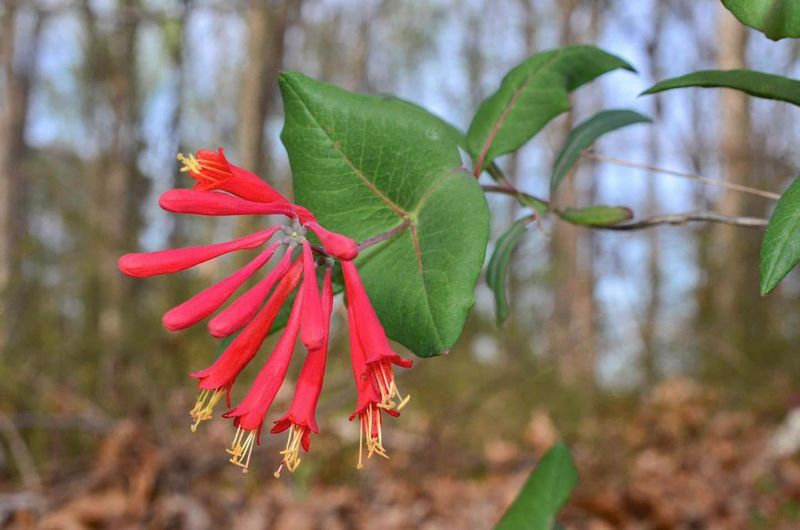
Getting the most out of Coral Honeysuckle on your fence comes down to placement. Sun is the single biggest factor in how well this vine blooms.
Plant it in a spot that receives at least six hours of direct sunlight per day, and you will be rewarded with the fullest, most colorful flower display the plant can produce. Less sun means fewer blooms, though the plant will still grow.
Coral Honeysuckle can handle some shade, especially in the afternoon during the hottest parts of a North Carolina summer.
A spot with morning sun and afternoon shade can work reasonably well, particularly in the Piedmont and coastal regions where summer heat gets intense.
However, if you want the strongest flowering performance, full sun is the way to go whenever your fence location allows for it.
Soil preference is straightforward with this plant. Coral Honeysuckle does best in medium moisture, well-drained soil.
It tolerates a range of soil types, including clay-heavy soils common in many North Carolina yards, as long as the drainage is decent. Avoid planting it in spots where water pools after rain, as consistently soggy roots can cause problems over time.
Pruning is simple and should be done right after the main flowering period ends. Light shaping at that point encourages fresh growth and can promote a second flush of blooms later in the season.
Avoid heavy pruning in late fall or winter since the vine may be holding buds for the following spring. With the right sun, decent soil, and a little seasonal tidying, Coral Honeysuckle will put on a fence show that gets better every single year.