The One Thing North Carolina Squash Needs In Summer Or Powdery Mildew Will Ruin Your Harvest
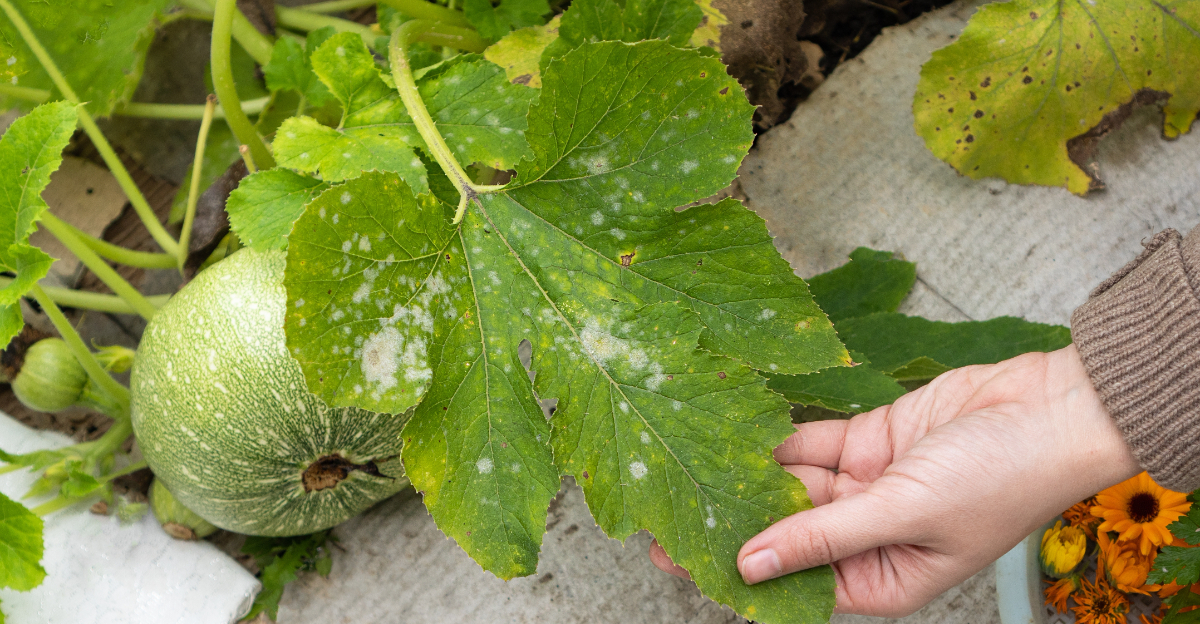
Squash and powdery mildew have a predictable relationship in North Carolina gardens, and most summers it is only a matter of when rather than whether the white coating shows up on the leaves.
The humidity that defines the growing season across much of the state creates conditions where powdery mildew spreads with very little resistance once it gets started, and squash foliage is particularly susceptible through the peak of summer heat.
There is one specific thing squash plants need during this period that most gardeners either skip entirely or handle incorrectly.
That gap is almost always what allows powdery mildew to advance from isolated patches to full canopy coverage fast enough to cut the harvest season significantly short.
Getting this right does not require complicated intervention, just the right action applied consistently at the right stage of plant development.
1. Powdery Mildew Loves A Crowded Squash Canopy
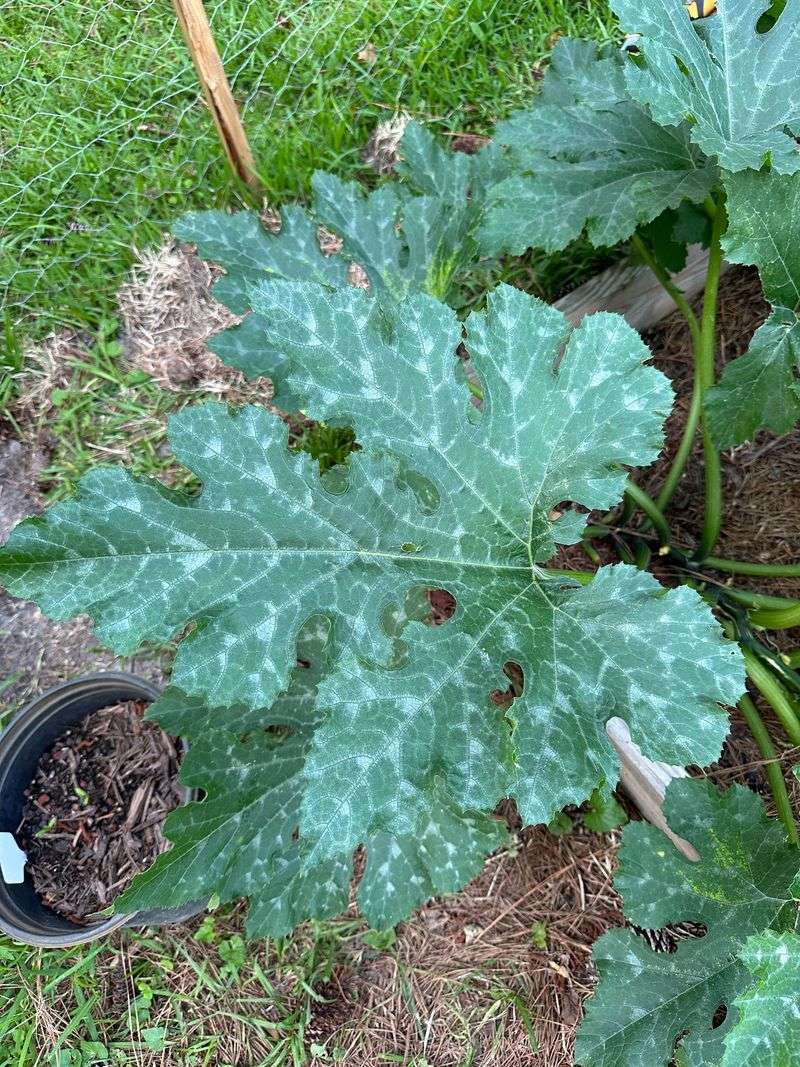
Picture a squash plant so full of leaves that you can barely see through it.
That thick, tangled canopy might look healthy and impressive, but it is actually an open invitation for powdery mildew to move in and spread fast.
North Carolina summers bring the exact combination of warm temperatures and high humidity that this fungal disease absolutely thrives in.
Powdery mildew does not need standing water or rain to get started. It only needs still, warm air trapped between dense leaves, and a crowded squash canopy provides exactly that.
Sunlight struggles to reach the lower and interior parts of the plant, and that shaded, humid zone becomes the perfect breeding ground for the fungus to take hold and spread outward from leaf to leaf.
The goal every summer is to keep your squash canopy open enough for light and fresh air to move through it freely.
Good airflow does not guarantee a completely mildew-free plant, because the spores are naturally present in the environment and will find their way onto your squash regardless.
What airflow does is reduce the conditions that let the disease explode across the whole plant quickly. Think of it like ventilation in a home.
You cannot stop every bit of dust from getting in, but good circulation keeps it from piling up in every corner.
Managing your squash canopy all summer is the single most effective habit a North Carolina gardener can build to protect the harvest from powdery mildew pressure.
2. Space The Plants Before They Turn Into A Leaf Wall
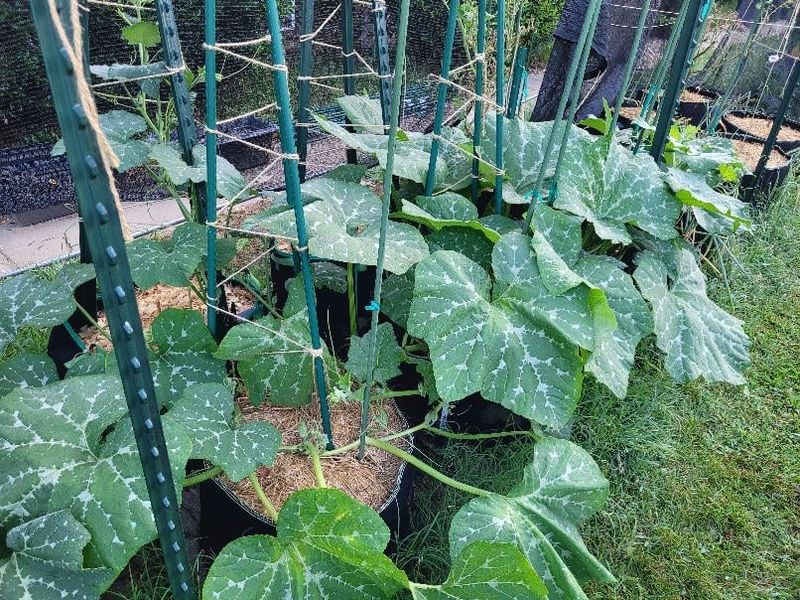
Squash plants are enthusiastic growers, and in a North Carolina summer they can go from a small seedling to a sprawling leaf wall faster than most gardeners expect.
When plants get crowded together, something important gets lost: space for air to move.
Tight spacing traps humidity right around the leaves, and that warm, moist microclimate is exactly what powdery mildew needs to get comfortable and spread.
Blocked sunlight is another big problem with crowded squash. When leaves overlap and shade each other, the lower parts of the canopy stay dim and damp for hours after morning dew or watering.
Your North Carolina Garden Changes Every Week. Your Plan Should Too.
Gardening in North Carolina changes quickly throughout the season. Every Friday you’ll receive a simple weekly plan showing exactly what to plant, prune, fertilize, harvest, and protect so you never miss the right timing.
Powdery mildew spores settling onto those shaded leaves have an easy time establishing themselves because the conditions stay favorable much longer than they would in an open, sunny spot.
Spacing squash properly from the beginning is far easier than trying to fix a crowded bed mid-season.
Most summer squash varieties do well with at least three feet of space between plants, and some larger varieties appreciate even more room.
Giving each plant its own territory lets air circulate freely around and through every part of the canopy. Resist the urge to squeeze extra plants into one bed just because you have extra seedlings.
More plants in a small space means more competition for light, more trapped humidity, and a much faster spread of mildew once it arrives.
Starting with smart spacing is one of the simplest and most effective things you can do to protect your squash harvest all summer long.
3. Remove A Few Crowded Leaves, Not The Whole Plant
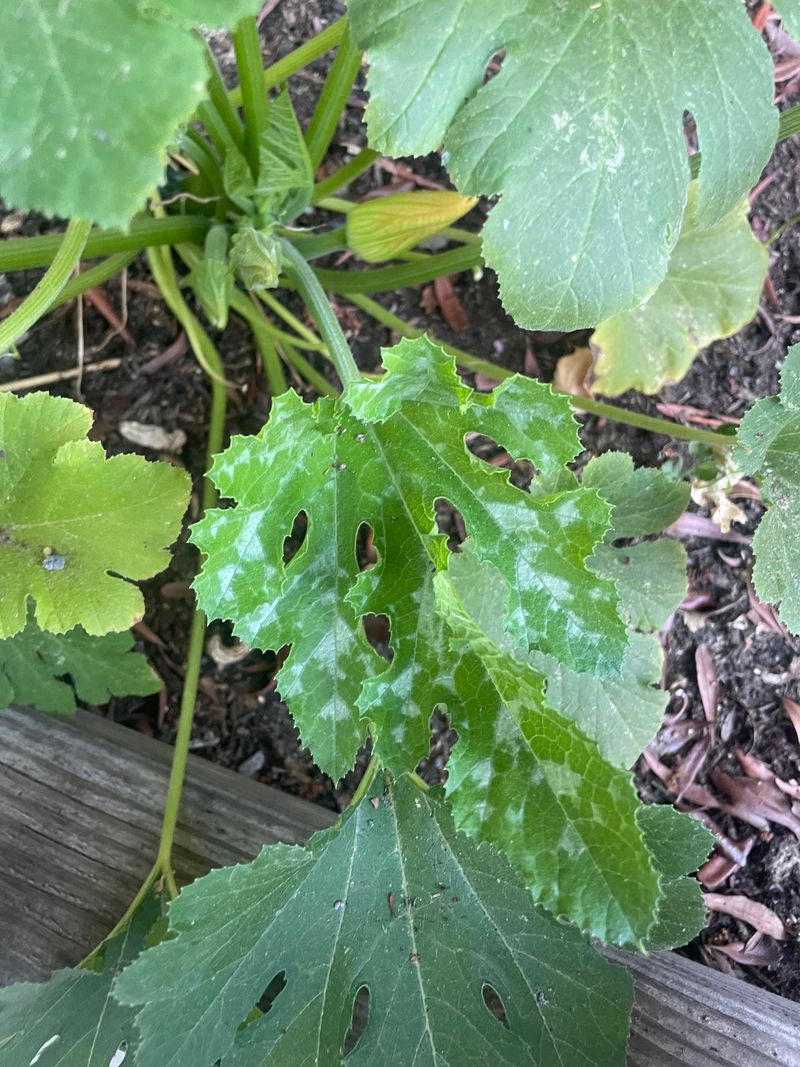
Sometimes even the best-spaced squash plant gets a little too full as summer rolls on.
The lower leaves age out, the canopy thickens, and airflow through the plant starts to slow down.
A little light thinning at the right time can make a real difference in how well air and sunlight move through the plant, and it does not take much work to do it right.
Focus on the oldest leaves first, especially those sitting close to the soil at the base of the plant.
These lower leaves are usually the first to show signs of powdery mildew, and they tend to block airflow more than any other part of the canopy.
Using clean pruners or scissors, remove just a few of the most crowded or most affected leaves at a time, cutting cleanly at the stem without tearing.
The goal here is better airflow and easier inspection, not a bare plant.
Stripping too many leaves at once stresses the squash and removes the photosynthesis power it needs to keep producing fruit.
Removing too many upper leaves also exposes developing fruit to direct harsh sun, which can cause sunscald on the skin of the squash.
A light, thoughtful approach works best. Take out a handful of the worst leaves, step back, and see how the plant looks and breathes. You can always remove a few more later if the canopy closes back up.
Small, regular adjustments throughout the season keep the plant healthier and the mildew pressure noticeably lower without doing more harm than good.
4. Water Below The Leaves
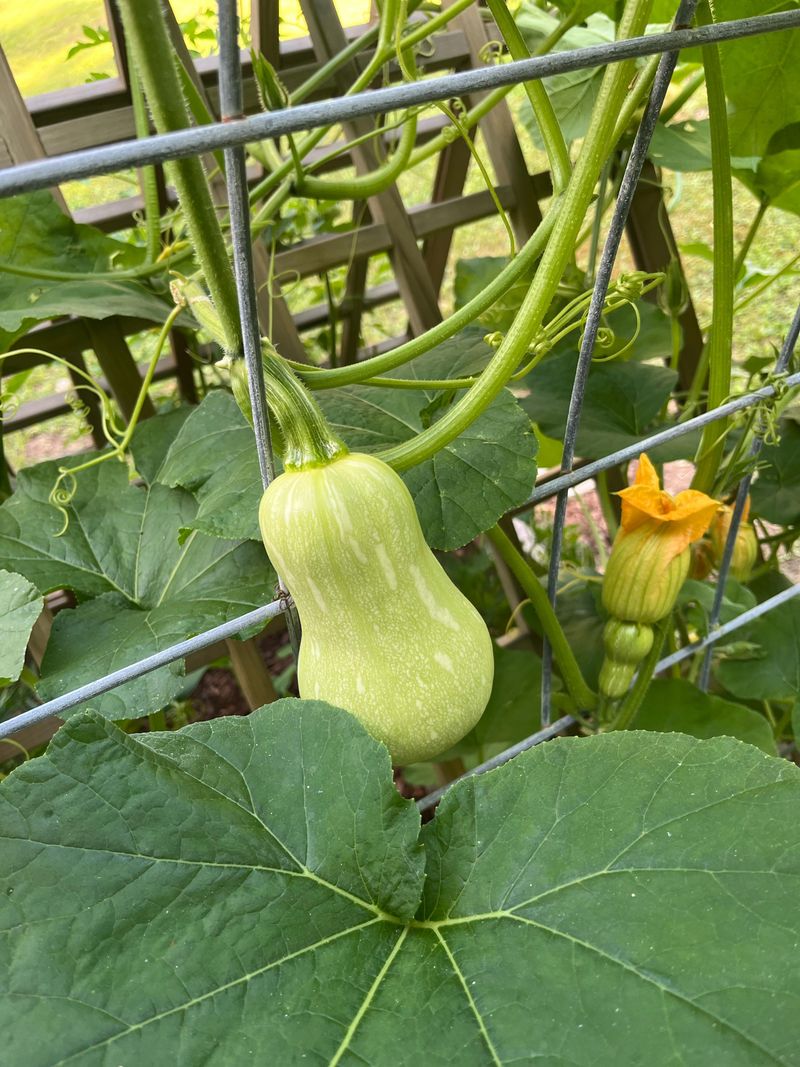
Where the water lands matters more than most gardeners realize.
Spraying water over the top of squash leaves might seem like the quickest way to get the job done, but it leaves the canopy wet and raises the humidity around the leaves for hours.
While powdery mildew actually does not require wet leaves the way some other fungal diseases do, keeping the canopy drier and better ventilated still gives the plant a real advantage throughout the season.
Drip irrigation is the gold standard for squash watering in North Carolina.
A drip system delivers water right to the root zone, keeps the soil consistently moist, and never touches the leaves at all.
Soaker hoses work in a very similar way and are a budget-friendly option that many home gardeners find easy to set up and move around as needed.
If you water by hand, aim the hose or watering can directly at the base of the plant and keep the flow gentle so the water soaks in rather than splashing up onto the lower leaves.
Morning watering is always a smart choice because any accidental moisture on leaves or soil surface has the entire warm day to evaporate before cooler evening temperatures arrive.
Keeping the canopy drier also reduces other common leaf problems beyond powdery mildew, including bacterial spots and other fungal issues that love wet foliage.
Soil-level watering is a simple habit that costs nothing extra and pays off in a healthier, more productive squash plant from the first harvest all the way through the end of summer.
5. Keep Squash In Strong Sun
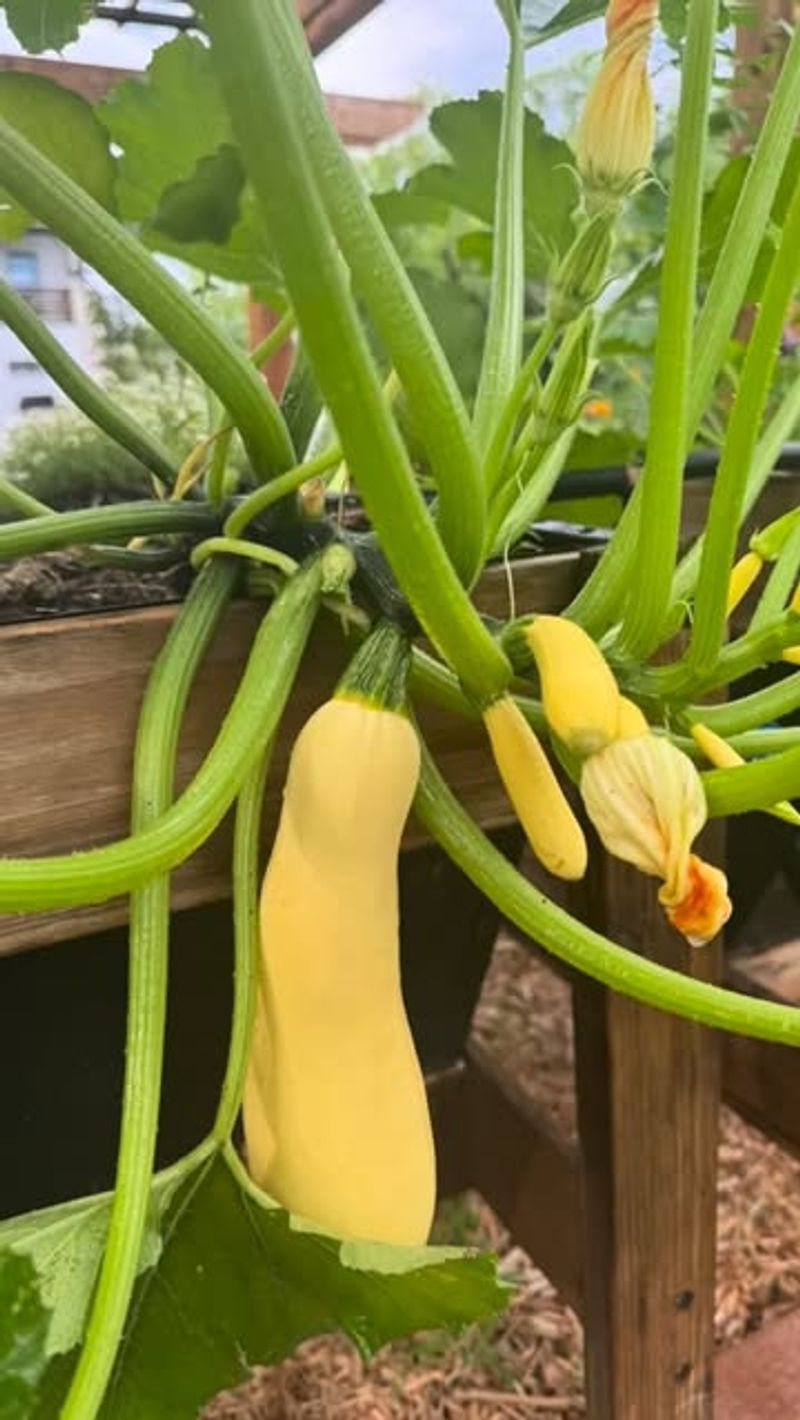
Squash is a sun-loving plant, and it needs a genuinely bright spot to perform its best all summer. Strong sunlight does more than fuel growth and fruit production.
It also warms and dries the canopy throughout the day, which directly reduces the low-light, humid conditions that powdery mildew thrives in.
Shaded squash stays cooler and damper inside the canopy, and that difference adds up fast when mildew pressure is high.
North Carolina summers bring plenty of sun, but gardens can have surprising shade pockets that are easy to overlook when planning.
Tall corn planted nearby can cast long afternoon shadows over squash beds.
Tomato cages and sprawling tomato plants, overgrown shrubs, wooden fences, and even tall flower varieties can all block enough light to keep part of the squash canopy dim and poorly ventilated throughout the day.
Pick the sunniest available spot in your garden for squash, and think ahead about what will be growing nearby as the season progresses.
A spot that gets full sun in May might be partly shaded by July when neighboring plants have grown up around it.
Planning with the full summer picture in mind helps you choose a location that stays bright and open from planting through the final harvest.
Full sun for squash generally means at least six to eight hours of direct sunlight daily. More is better when it comes to drying out the canopy and keeping the plant vigorous.
A squash plant in strong sun is simply better equipped to handle the stress of summer heat, pest pressure, and the ever-present threat of powdery mildew spreading through the garden.
6. Stop Pushing Too Much Leaf Growth
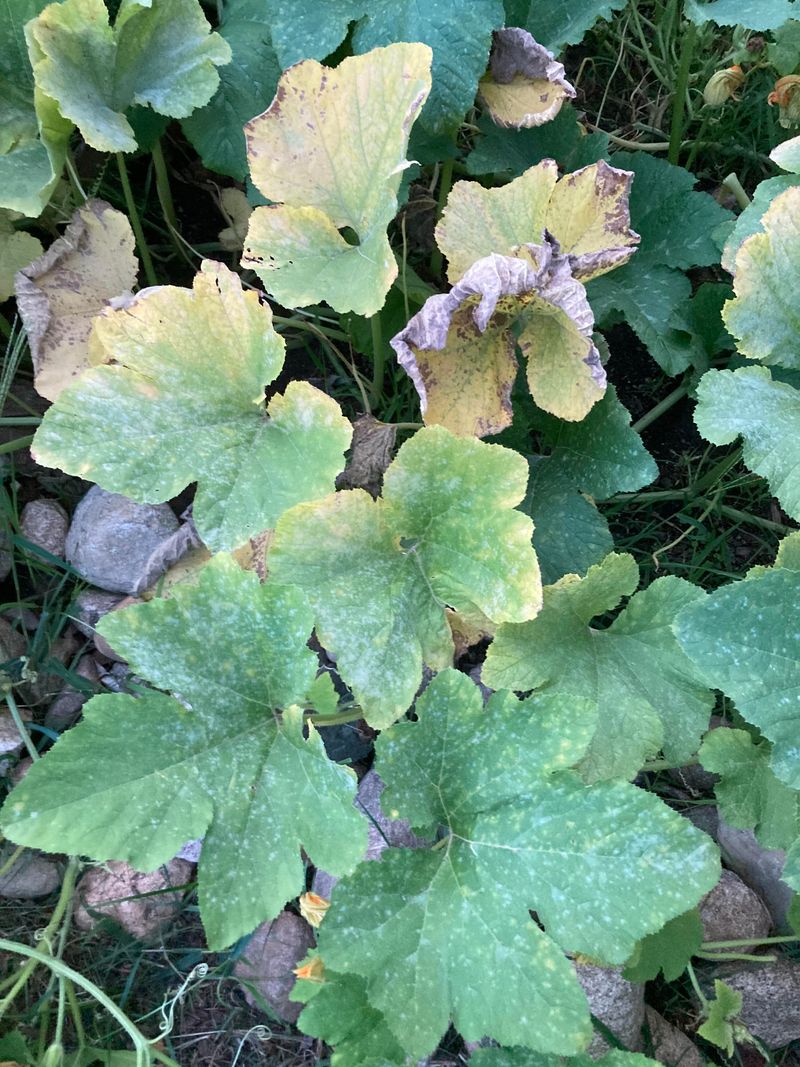
Fertilizer is a great tool, but too much of a good thing can actually work against your squash plants in summer.
Nitrogen is the nutrient that drives leafy, green growth, and when squash gets too much of it, the plant puts its energy into making enormous leaves rather than flowers and fruit.
That thick, lush canopy might look impressive, but it creates a dense, shaded interior that traps humidity and makes powdery mildew much harder to manage.
Heavy nitrogen feeding encourages soft, fast-growing tissue that is actually more vulnerable to fungal issues.
The leaves grow large and close together, overlap heavily, and create exactly the kind of still, shaded, humid microclimate that mildew spores love.
Meanwhile, the plant produces fewer flowers and less fruit because its energy is tied up in all that extra leaf growth rather than reproduction.
Feed your squash based on actual soil needs rather than a set schedule of heavy applications.
A soil test from your local North Carolina Cooperative Extension office can tell you exactly what your garden needs before you add anything.
Balanced fertilizers that include phosphorus and potassium alongside modest nitrogen support root development, flowering, and fruiting without pushing the plant into overdrive on leaf production.
Midseason, ease back on nitrogen altogether and let the plant focus on fruit.
Squash that gets balanced, sensible nutrition grows at a healthy pace, stays more open and manageable, and produces better harvests than an overfed plant drowning in its own foliage.
Smarter feeding habits make a bigger difference to your harvest than most gardeners initially expect.
7. Check The Oldest Leaves Every Few Days
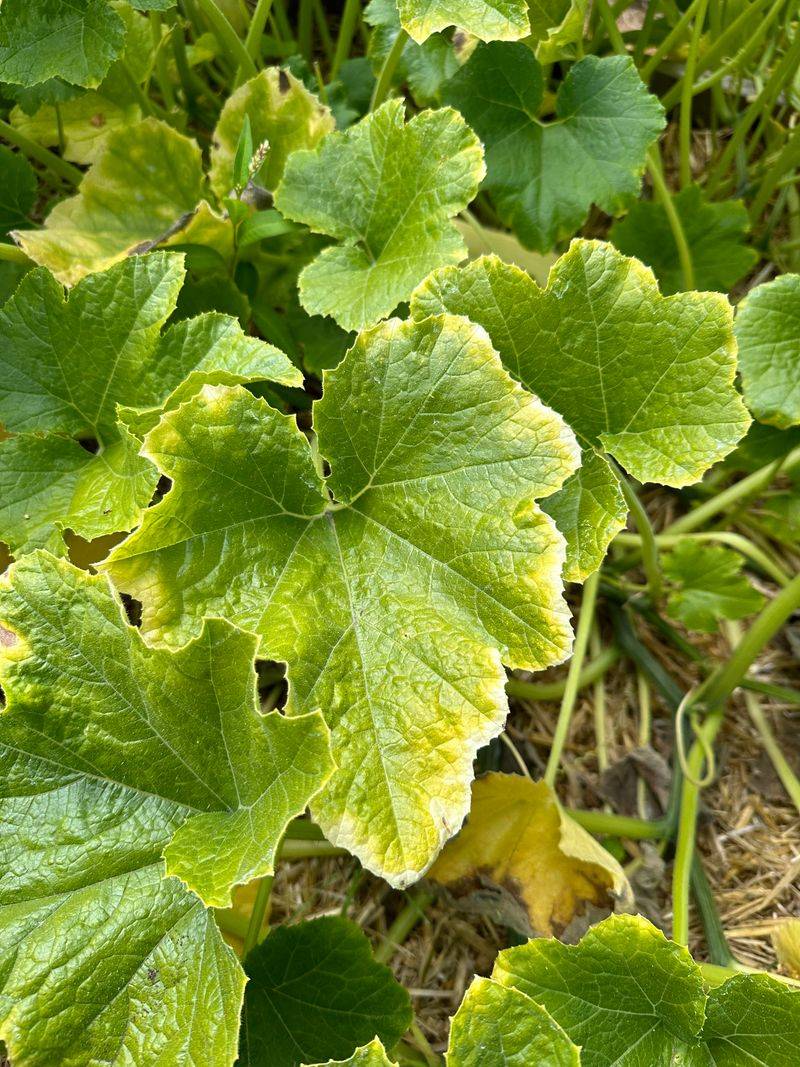
Catching powdery mildew early is one of the most useful things you can do all summer, and the oldest leaves on your squash plant are almost always where it shows up first.
The lower, interior leaves that have been on the plant the longest tend to get the least airflow and light, making them the easiest target for the fungus to settle in and begin spreading.
Checking them every few days takes only a minute or two. Early mildew looks like scattered white or grayish powdery spots on the leaf surface.
Those small patches are far easier to manage than a canopy that has been covered for weeks before anyone noticed.
Catching the problem at that early stage gives you options, whether that means removing the affected leaf, adjusting your watering habits, or simply increasing airflow through the canopy before the fungus spreads further.
One thing worth knowing is that many squash varieties naturally have pale silvery or white markings on their leaves as part of their normal appearance.
These markings are part of the leaf pattern and do not spread or change over time.
True powdery mildew looks different because it appears as a dusty, chalky coating that spreads across the leaf surface and grows larger and more widespread each time you check.
Building a quick leaf-check into your regular garden routine takes almost no extra time and pays off enormously.
Summer moves fast in a North Carolina garden, and a disease that looked minor on Monday can cover the whole plant by the following weekend if conditions stay warm, humid, and crowded inside that canopy.
8. Keep Harvesting To Keep The Plant Open And Productive
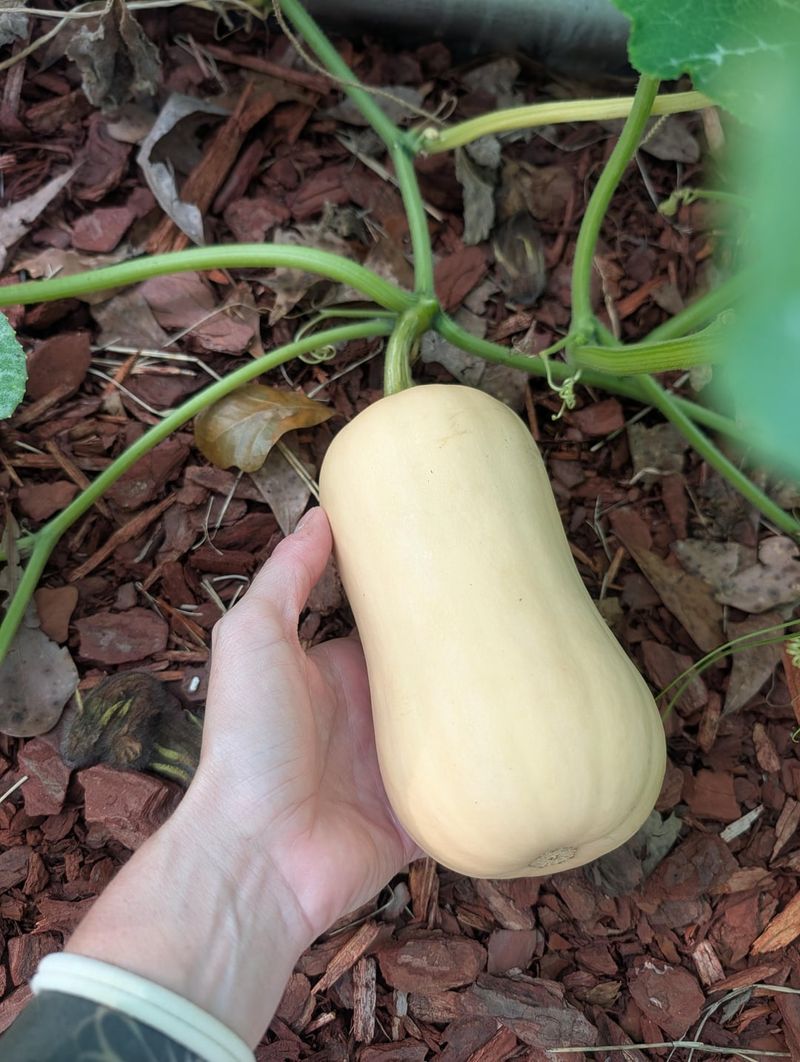
Frequent harvesting is one of the most overlooked tools for managing squash health in summer.
Every time you go in to pick ripe squash, you naturally part leaves, peek into the interior of the plant, and move through the canopy in a way that gives you a clear look at what is happening inside.
That regular hands-on attention helps you spot problems early, adjust crowded leaves, and keep the bed from turning into a tangled, humid tangle of vines and overgrown fruit.
Leaving mature squash on the plant too long is a common mistake that actually slows the whole harvest down.
When a squash plant puts energy into maturing one enormous fruit, it produces fewer new flowers and slows down its overall output.
Harvesting summer squash while it is still young and tender, usually at six to eight inches for most varieties, signals the plant to keep flowering and producing rather than shifting into seed-development mode.
A well-harvested squash plant also stays more physically open.
Overgrown fruit sitting heavy on the plant bends stems, pushes leaves into awkward overlapping positions, and contributes to the kind of dense, shaded canopy that traps humidity and encourages mildew to spread.
Keeping fruit picked keeps the plant lighter, more upright, and easier to manage throughout the season.
The key message to carry through every North Carolina summer is this: squash needs airflow, strong sun, soil-level watering, balanced nutrition, and careful leaf management working together consistently.
No single step solves everything on its own, but all of them together give your squash the best possible chance of a long, productive, mildew-resistant harvest season.