The V-Shaped Tree Trunk California Homeowners Should Inspect Before Winter Storms Arrive
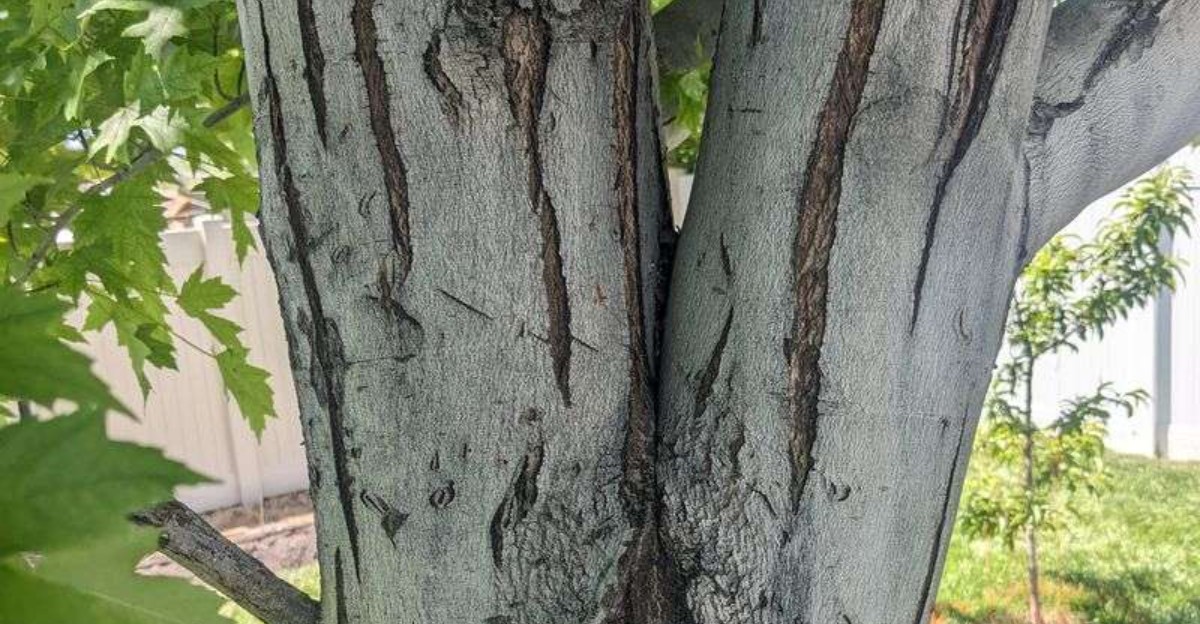
Some of the weakest points in a mature tree hide in plain sight. They sit at eye level, in places people walk past every day without a second glance.
From the outside, everything can look sturdy, with thick wood, healthy leaves, and years of steady growth.
California’s winter storms test that appearance. Long dry months give way to soaked soil, heavy branches, and gusts that push hard against the canopy.
A joint that held through summer may not hold through January.
The encouraging part is that trouble usually announces itself ahead of time, through clues anyone can learn to read on a slow walk.
A few minutes of observation now can spare a roof, a fence, or a car later.
Look For A Tight V Where Two Trunks Meet
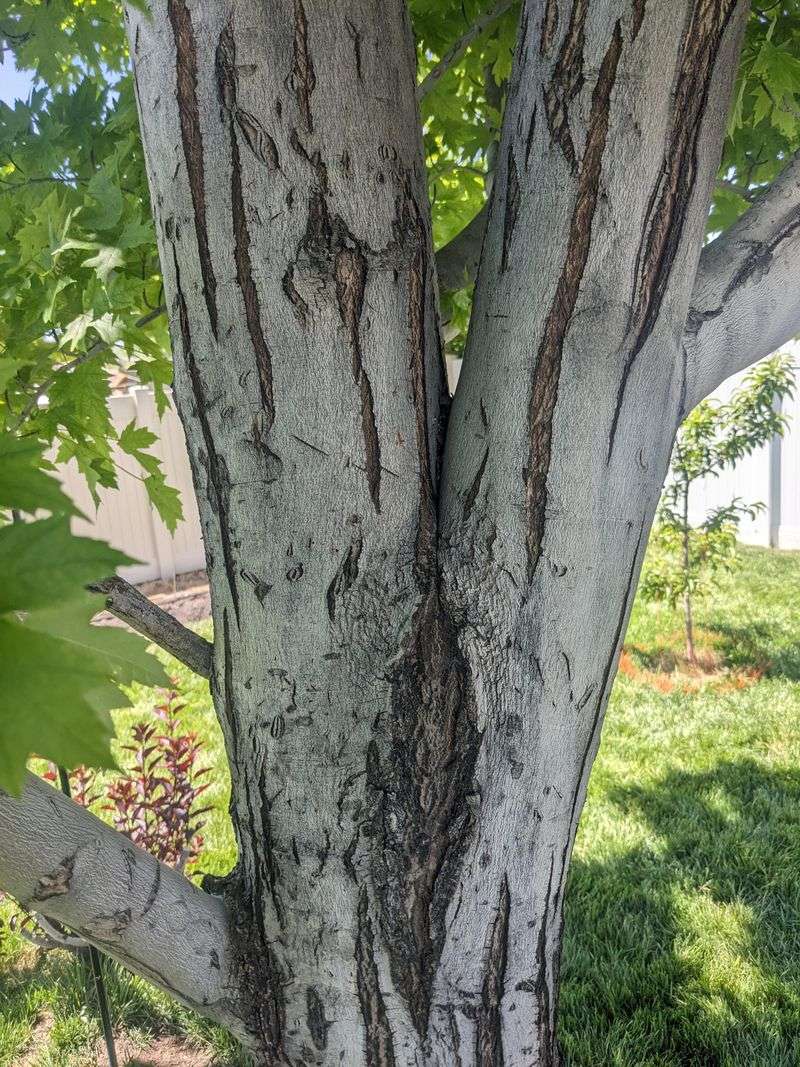
A step back of about twenty feet gives the best view of a tree’s main trunk. Following it upward from the ground often reveals the key question, whether it splits into two stems that look almost like twins.
Size matters here. A healthy branch is usually much thinner than the trunk it grows from, often less than half as wide.
When two stems reach nearly the same thickness, neither one leads, and arborists call them co-dominant stems, competing for light and space as they grow.
The angle where they meet deserves the next look. A narrow, pinched fork resembling a tuning fork is the shape to worry about, since stems rising nearly straight up, side by side, squeeze each other as they thicken each year.
Many common California yard trees form these forks. Silver maples, Modesto ash, Chinese elms, and some oaks and eucalyptus often grow this way, especially when nobody pruned them young.
Fast-growing trees planted for quick shade tend to develop these forks more often.
A fork can sit low near the ground or high in the canopy, so a scan of the whole tree pays off.
A photo of each fork, with the date noted, creates a simple record. Comparing photos over time makes changes easier to spot, much like a yearly checkup for the tree.
October and November, before the first big storms, make an ideal window for this first inspection.
Included Bark Makes The Union Weak
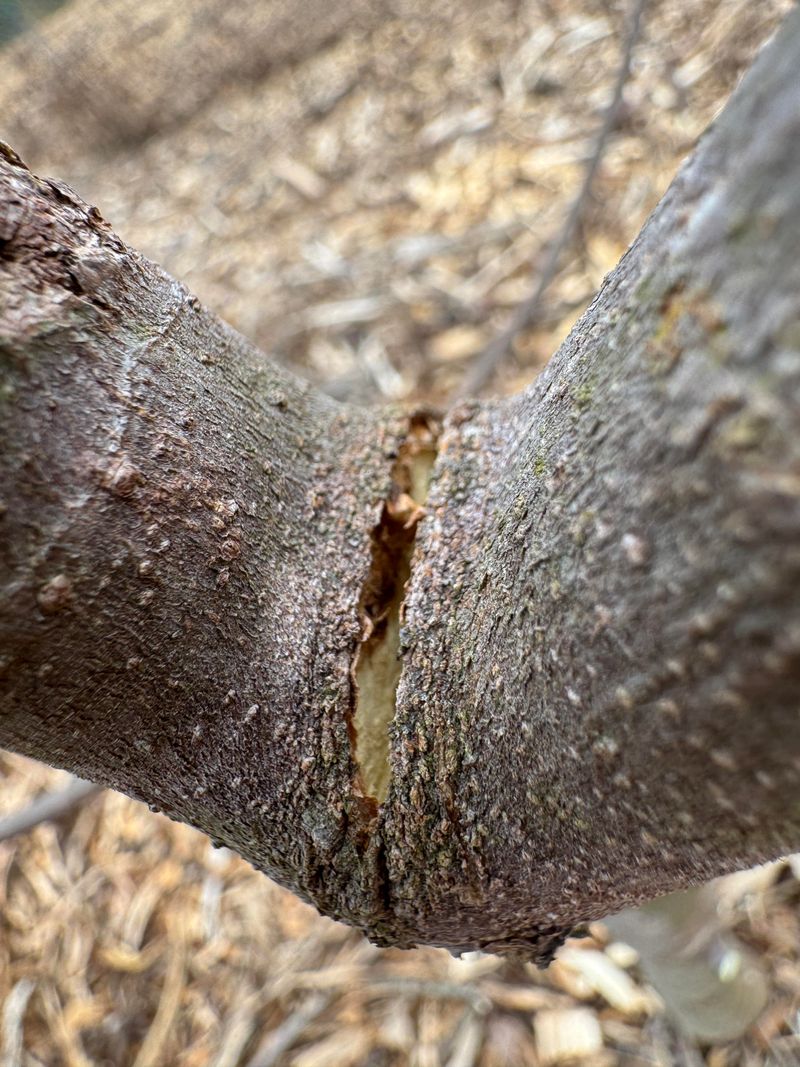
Two stems growing side by side and widening every year eventually press into each other. The bark caught between them has nowhere to go.
Arborists call this trapped layer included bark. A strong branch joint normally forms with overlapping layers of wood wrapping around the union like a collar, locking the branch to the trunk, while included bark blocks that process.
Instead of solid wood knitting together, a thin wall of bark ends up sandwiched in the middle.
Bark works as a skin rather than glue, with very little holding power. The two stems end up connected mostly along their outer edges, so a joint that looks normal outside may resemble two boards leaning together rather than one solid post.
A close look at the very bottom of the V offers clues. Bark that folds inward and disappears into a deep, dark line suggests included bark. Binoculars help with forks too high to see clearly from the ground.
Your California Garden Changes Every Week. Your Plan Should Too.
Gardening in California changes quickly throughout the season. Every Friday you’ll receive a simple weekly plan showing exactly what to plant, prune, fertilize, harvest, and protect so you never miss the right timing.
A healthy union often shows a raised ridge of bark pushed upward, called the branch bark ridge, while an included union shows bark pinched downward instead.
Over time, the stems grow heavier while the weak seam stays weak. Rain-soaked leaves and a gusty Santa Ana or Pacific storm add plenty of stress, and splits often begin right along that hidden seam.
Evergreen trees carry their full leaf load through winter, which adds extra weight to these joints during wet storms.
A U Shaped Join Is Stronger
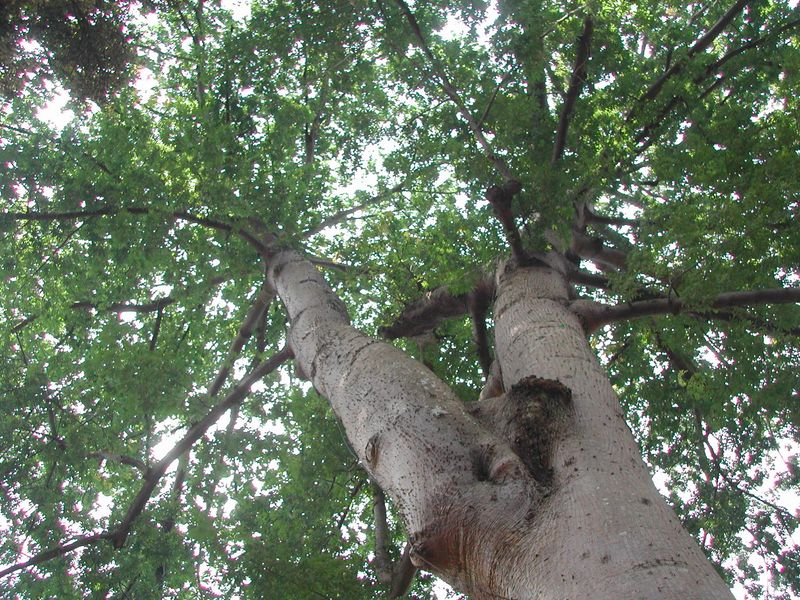
Not every fork spells trouble. Some trees split into two stems at a wide, rounded angle resembling the letter U, and those joints usually hold up far better in storms.
A wider angle gives the stems room to grow without crushing bark between them. Wood from each stem can wrap around the union and overlap, and year after year, those layers build a thick, strong connection, a bit like woven fibers in a rope.
The evidence often shows on the surface. The top of a U-shaped joint typically displays a raised, wrinkled ridge of bark, the branch bark ridge, signaling that wood is pushing together and bonding well.
A healthy branch may also show a slightly swollen collar where it meets the trunk.
Size still plays a role. A U-shaped union with one stem clearly smaller than the other makes the strongest setup, since the bigger stem acts as the leader and the smaller one stays in a supporting role.
Two equal stems, even at a wide angle, can still compete, so they deserve continued attention.
The yard itself makes a fine classroom. Comparing forks on different trees, with solid U-shaped joints beside tight V-shaped ones, makes the contrast obvious.
After a few comparisons, reading tree structure becomes second nature. That skill also helps when choosing new trees at a nursery, since young trees with a single clear leader avoid many future problems.
Check For Cracks At The Crotch
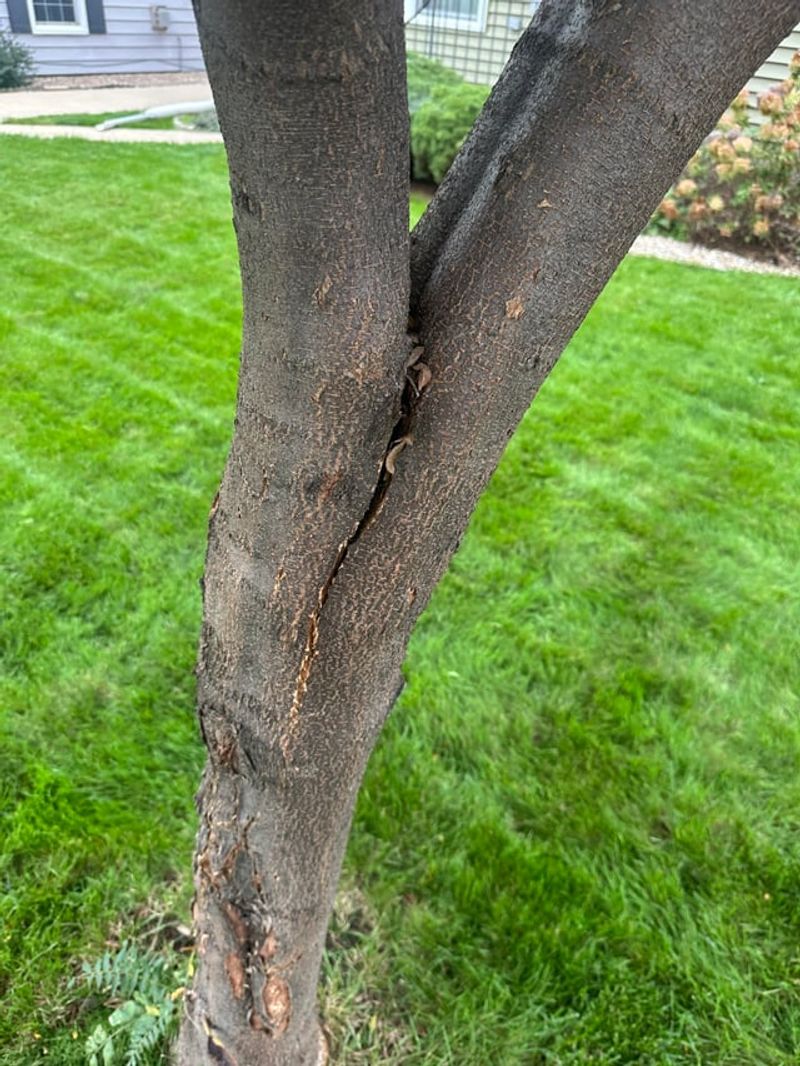
A thin line running down from a fork might look harmless, yet a crack at the union ranks among the most serious warning signs a tree can show. Small splits can widen quickly once storms push the stems apart.
The inspection starts at the base of the V and works downward. Any line in the bark running up and down the trunk below the split deserves attention, whether it looks like a dark seam, a gap wide enough for a coin, or bark that appears torn.
Both sides of the trunk need checking, since cracks often appear on just one side.
High forks are harder to see, and binoculars work well here. Climbing a ladder to inspect a weak tree is best avoided, especially with a heavy stem overhead.
Movement on a breezy day offers more clues. Stems swaying in opposite directions, or a gap at the fork that opens and closes, suggest the union may already be separating, and creaking or cracking sounds raise another red flag.
A crack calls for calm but prompt action. Clear photos and a call to a certified arborist come first, along with keeping people, pets, and parked cars out from under the tree until it’s checked.
An arborist may recommend cabling or bracing, which adds support between stems, or reduction pruning to lighten the load. In some cases, removal offers the safest path. Cables require regular professional inspection to stay effective.
Watch For Oozing Sap Or Seams
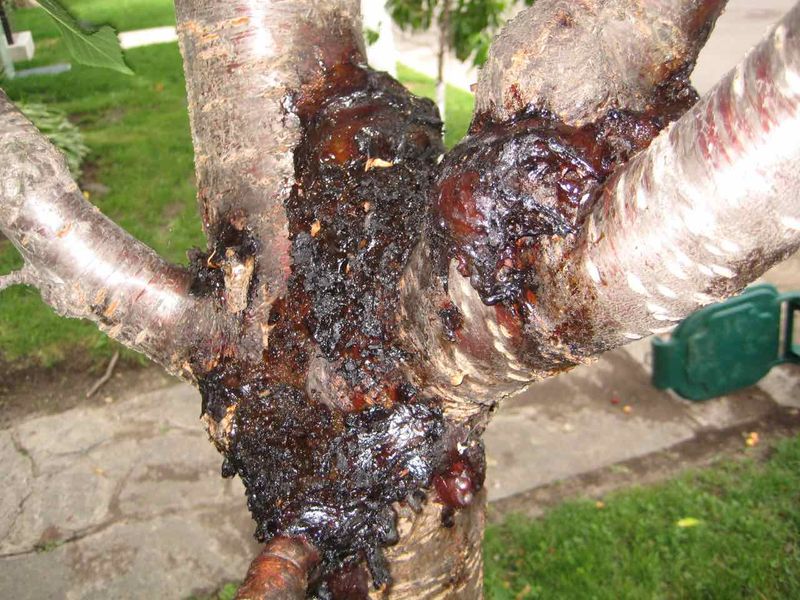
Dark, wet streaks running down a trunk on an otherwise dry day often catch the eye. That staining can serve as a small warning flag, since many weak unions leak as water and sap collect inside the hidden seam.
Oozing sap, dark stains, or a sticky, shiny spot just below the V all deserve a note. Some trees push out sap or a foamy liquid when bark inside the fork is wounded or decaying, and a long, weeping streak that keeps returning is worth tracking.
Fungus, mushrooms, or soft, crumbly wood near the union can signal decay that weakens the joint further.
Seams offer another clue. A ridge or line running down the trunk below the fork may show where included bark extends deep into the wood, appearing as a bulge, a long scar, or a crease that keeps going.
Sudden changes deserve fast action. A new lean in the tree or one stem, fresh cracks, peeling bark, or torn wood near the fork, and soil heaving or roots lifting on one side after rain all point to rising risk.
Comparing current conditions with last year’s photos helps. A slow, steady change can wait for a routine visit, while a quick change calls for an arborist right away.
Trees rarely change shape overnight without a reason, so any surprise at a fork deserves professional eyes before the next storm.
Prune Young Trees To One Leader
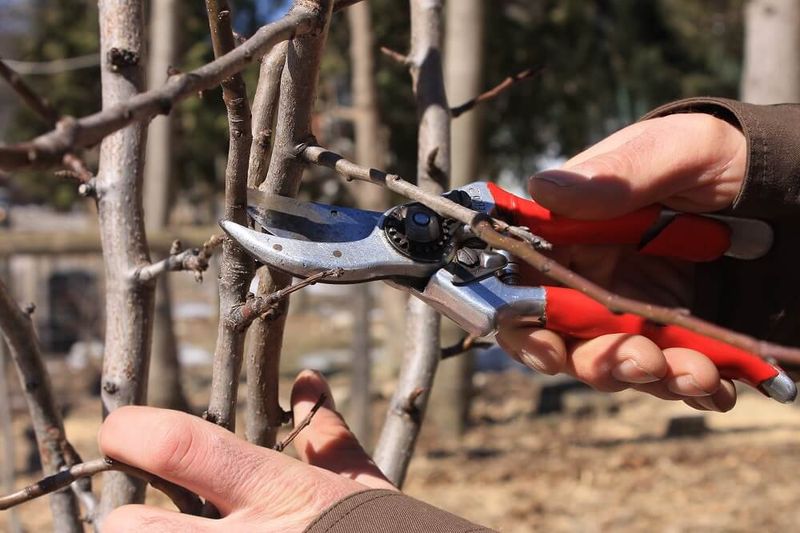
Fixing a V is easiest while a tree is still small enough to fit in a pickup truck. A few smart cuts now can prevent a major problem twenty years later, a practice arborists call structural pruning.
The idea stays simple. One strong, straight stem becomes the main leader, while any competing stem gets slowed down rather than necessarily removed.
Shortening the rival by cutting it back to a smaller side branch, known as subordination pruning, turns it into the junior partner.
Once shortened, that stem grows more slowly while the main leader pulls ahead and thickens. Over a few years, the size difference strengthens the union, making solid wood more likely than trapped bark.
Early timing helps most, ideally within the first few years after planting. Removing no more than about a quarter of the leaves in one season protects the tree’s energy. And, clean cuts just outside the branch collar heal best.
In much of California, late winter makes a common time to prune many deciduous trees, since the branch layout shows clearly without leaves.
Follow-up checks every year or two keep the plan on track. A little guidance early, much like training wheels on a bicycle, helps a tree stand strong on its own later.
Mature trees with established V-shaped forks need a certified arborist rather than home pruning, since large cuts on old wood can create more problems than they solve.