The Walking Stick Bug Hiding In Your Florida Hibiscus (And Why It’s Mostly Harmless)
Some insects in your yard carry a chemical spray strong enough to make a curious dog yelp and back away. One of them might be resting on your shrubs right now, looking exactly like a brown twig.
I found mine by accident while snipping spent blooms. The twig I grabbed for had legs, and it was carrying a smaller twig on its back. Not going to lie, I nearly dropped my pruners.
Here in Florida, this odd creature goes by nicknames like devil’s riding horse and musk mare. Those names sound scary, yet the critter itself is slow, shy, and mostly content to sit still all day.
So why does it pick your flowering shrubs as a hangout, and should you worry about your leaves? The answer surprised me, and it might change how you feel about that twig that moved.
That Twig On Your Hibiscus Branch Has Six Legs
Grab a flashlight and peek at your hibiscus some evening. That brownish stick lying along a stem might suddenly lift a leg and shuffle sideways.
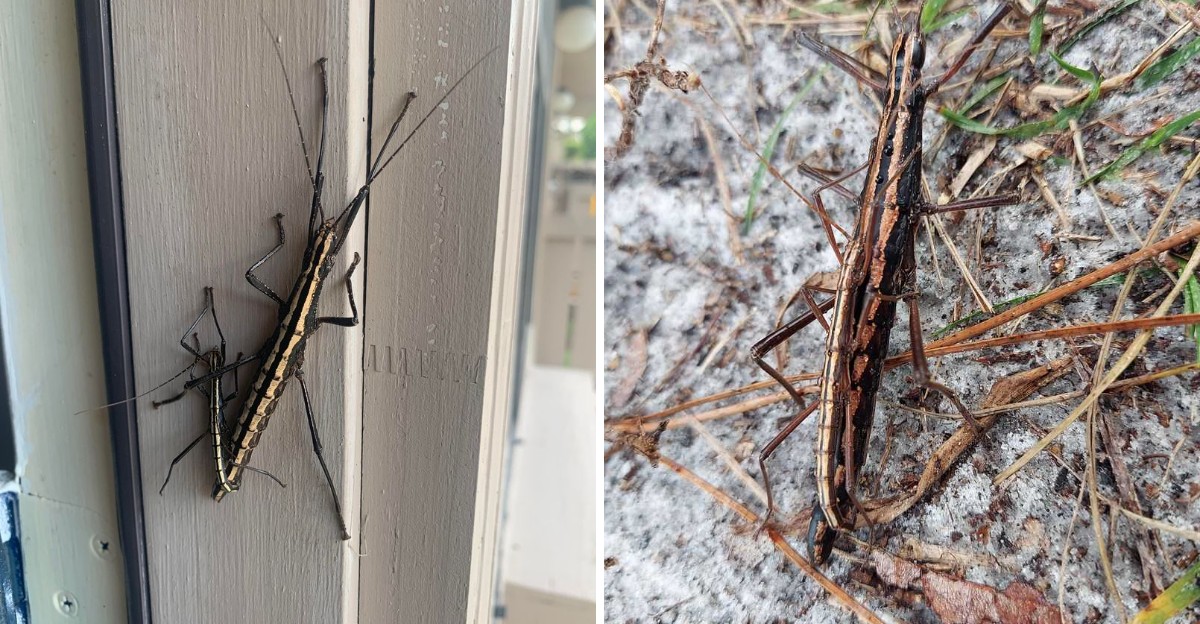
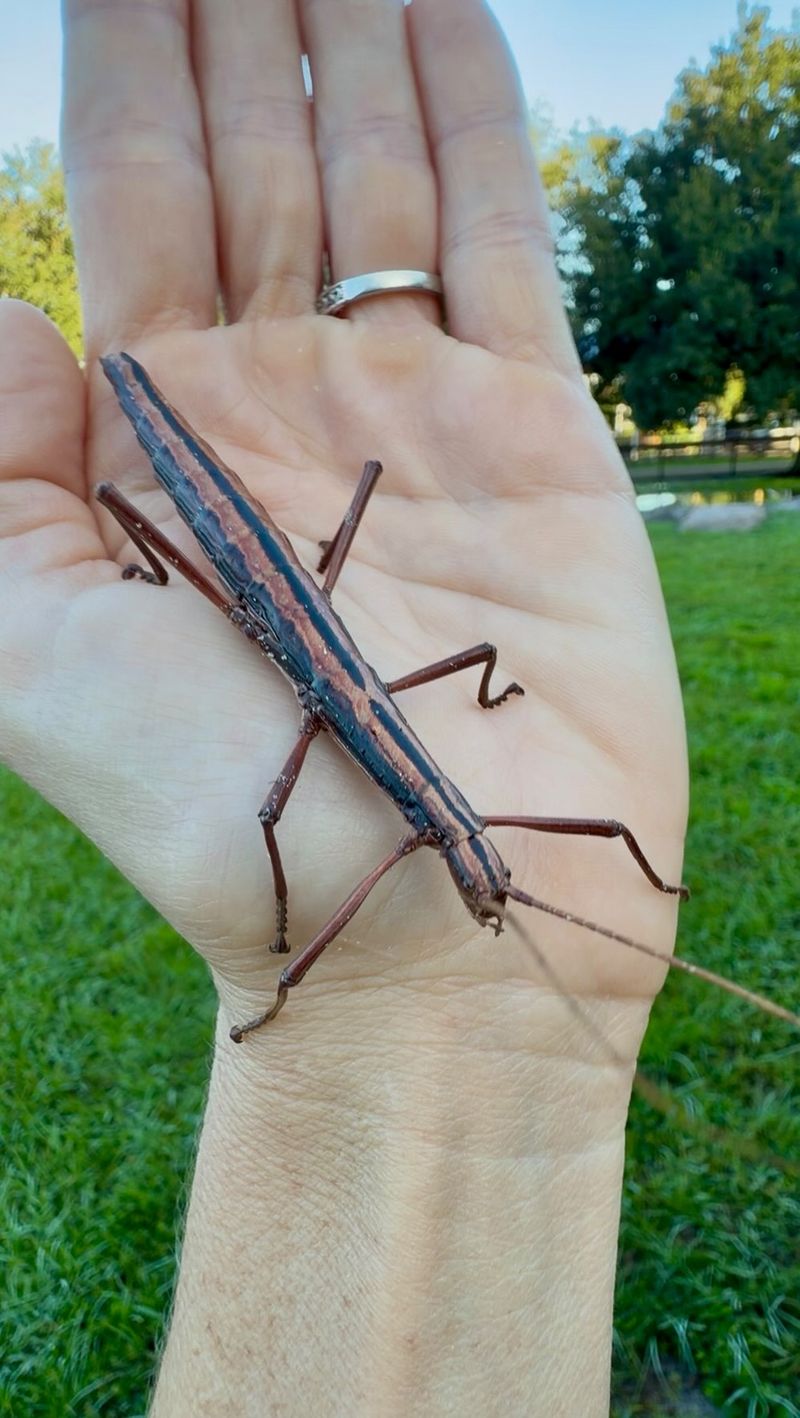
The most likely culprit in Florida yards is the two-striped walkingstick, known to scientists as Anisomorpha buprestoides. University of Florida entomologists list it as the most common walking stick in the state. Adults are thick-bodied for a stick insect, with dark stripes running down a tan or brown back.
Pairs are easy to spot once you know the trick. The female is much bigger, often around two and a half to nearly three inches long. The smaller male rides on her back for days at a time, which is why you see what looks like a stick piggybacking another stick.
A few other walking sticks live in Florida too, and some of them are slender and leggy. Still, the striped one is the usual suspect near homes.
Camouflage does most of the work for these insects. They hold still during the day, and some sway slightly to copy a branch in the breeze. So if a twig on your shrub seems a bit too neat, look twice before you snap it off.
Your Hibiscus Leaves Are Mostly Safe From These Stick Insects
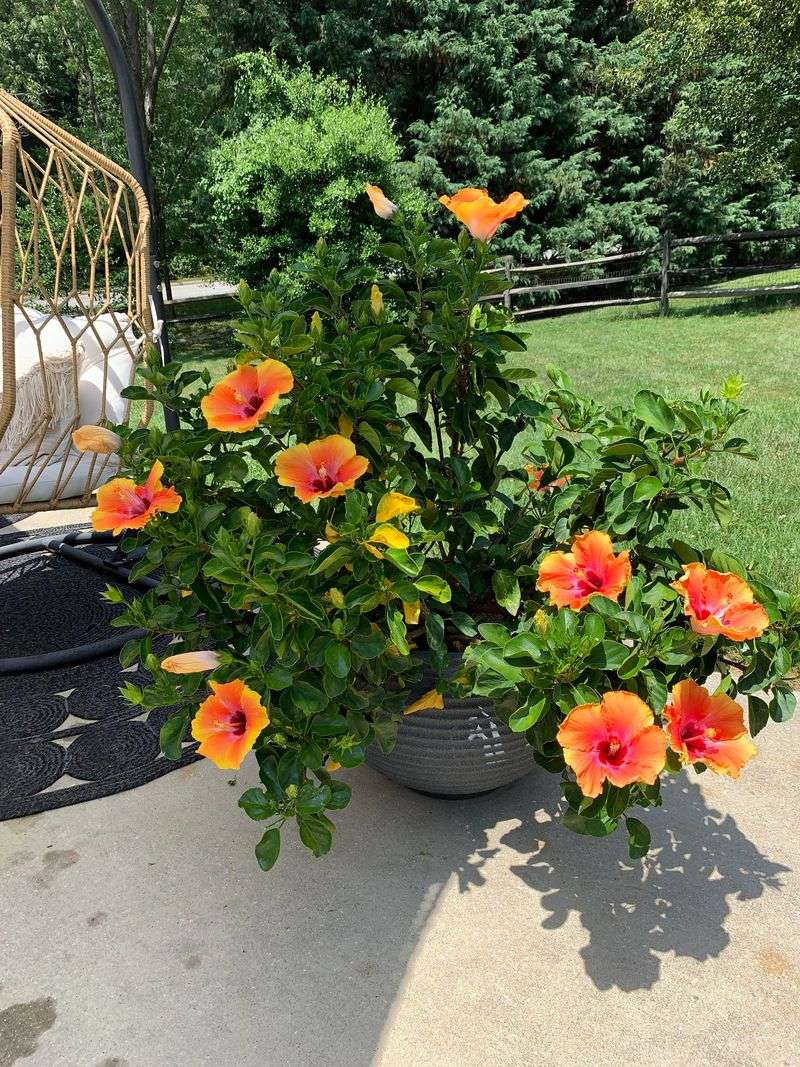
Relax, your blooms are going to be fine. That is the short answer most gardeners want, and the research backs it up.
Walking sticks chew leaves, but one or two insects eat very little. UF/IFAS sources describe the two-striped walkingstick as feeding on the leaves of trees and shrubs, including crepe myrtle and roses. Hibiscus is not a well-documented favorite for this species, so many sightings are likely insects resting or passing through.
Serious damage from this striped species is rarely reported in home landscapes. You might notice a few notched leaf edges, and that is often the whole story. A healthy hibiscus pushes out new leaves fast during the warm months anyway.
People also get spooked thinking these insects bite or carry germs. They do not bite, they do not sting, and they do not spread plant or human diseases. Their only real weapon is a defensive spray, which I will cover in a moment.
Honestly, the bigger hibiscus threats in Florida are things like whiteflies, aphids, mealybugs, and the pink hibiscus mealybug. If your plant looks sick, check for those first. Blaming the stick insect usually means you are looking at the wrong bug.
Keep Your Face Away From A Startled Walkingstick
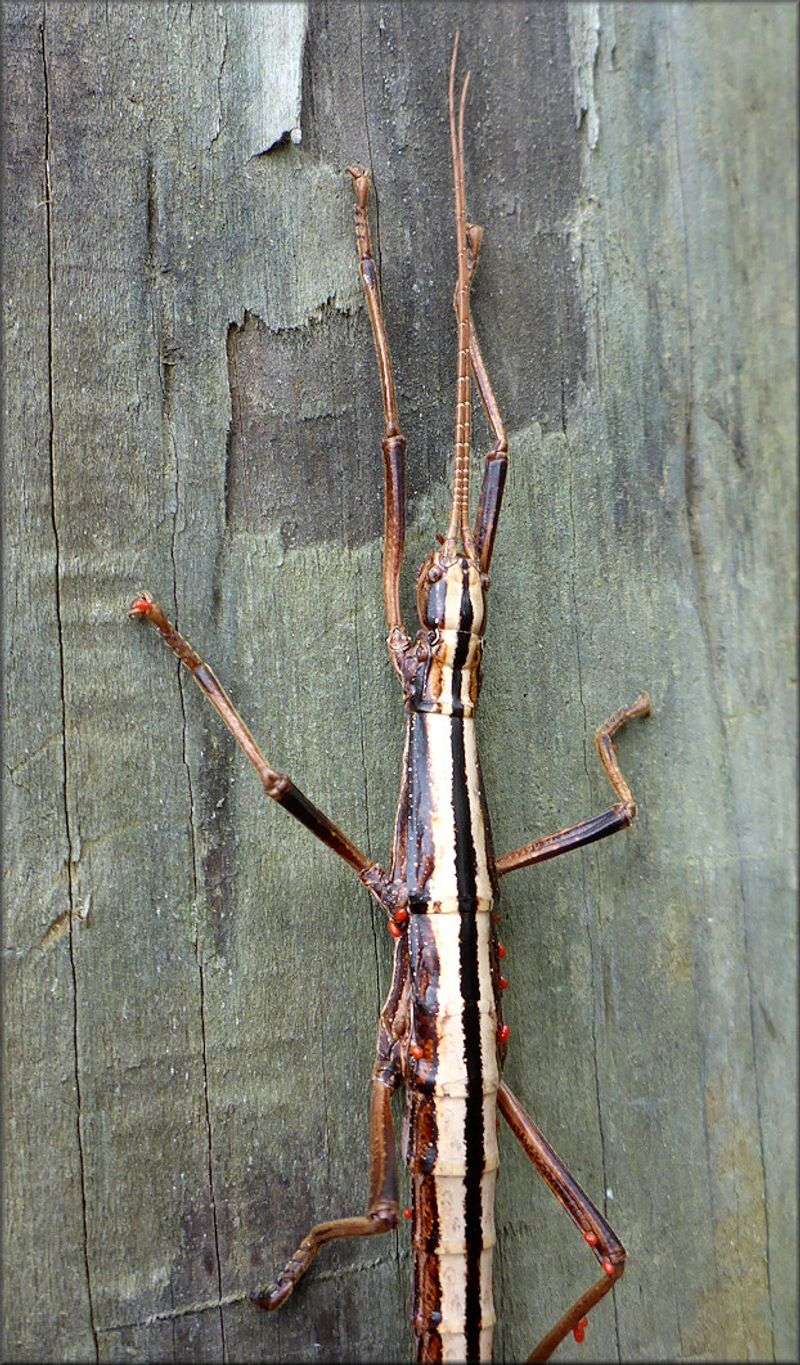
Fair warning, this is the one part where you need to pay attention. The two-striped walkingstick can squirt a milky defensive spray from glands just behind its head.
The spray contains a compound called anisomorphal, and it can be aimed with surprising accuracy. Reports from UF/IFAS describe it reaching a foot or more. If it hits your eyes, it can cause intense burning, redness, and irritation of the cornea that may need a doctor’s care.
Dogs are frequent victims because they sniff right up close. A pup that gets sprayed may paw at its face, squint, or drool. Flush the eyes gently with plenty of clean water and call your vet if symptoms last.
For people, the same rule applies. Rinse eyes with cool water for several minutes and seek medical help if pain or blurry vision continues.
Avoiding trouble is simple. Wear safety glasses when pruning thick shrubs where you have seen these insects. Use gloves and avoid pinching or poking them, since the spray is a reaction to feeling threatened.
Teach kids to admire with their eyes only. A calm insect is a harmless one, and keeping your distance keeps everyone comfortable.
Nighttime Is When These Leaf Munchers Get Busy
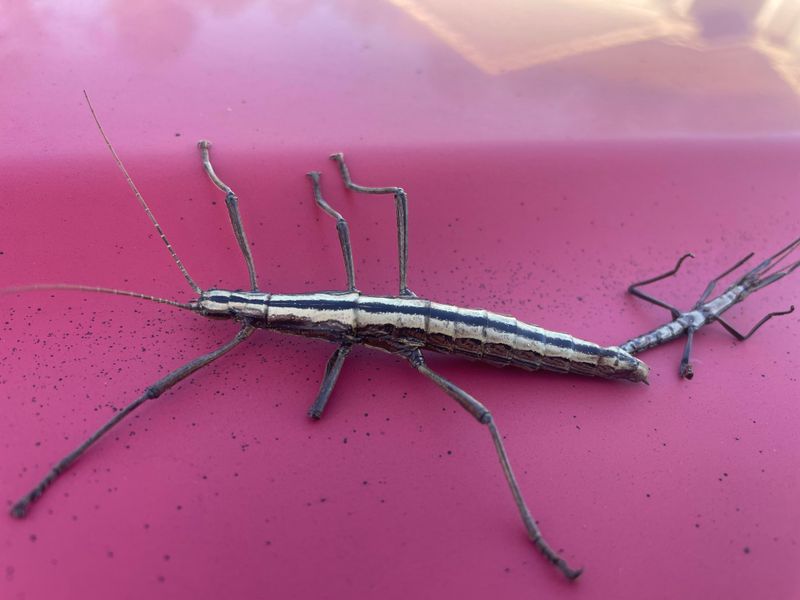
Here is a fun backyard game for a warm evening. Walk out after sunset with a flashlight and scan your hibiscus slowly, branch by branch.
Walking sticks are mostly nocturnal feeders. During daylight they rest motionless, often tucked against stems or under leaves. After dark, they creep out to chew on foliage, using jaws designed for snipping leaf tissue.
Damage, when you notice it, starts at the leaf edges, and heavier feeding simply removes more of the leaf. With a few insects on a large shrub, though, you might struggle to find any bite marks.
I’m a sucker for night garden walks, and this hobby made me notice a lot more life. You may also spot tree frogs, moths, and anoles sleeping on branches. It feels like a whole hidden shift clocks in once the sun drops.
Try a red flashlight or a dim light so you don’t startle anything. Move slowly, since sudden shaking can trigger that defensive spray. Keep your face back while you look.
Snap a photo if you find one. Pictures help you track whether the same insect hangs around, or whether numbers are growing over the season.
Fall Brings More Walking Stick Pairs To Florida Shrubs
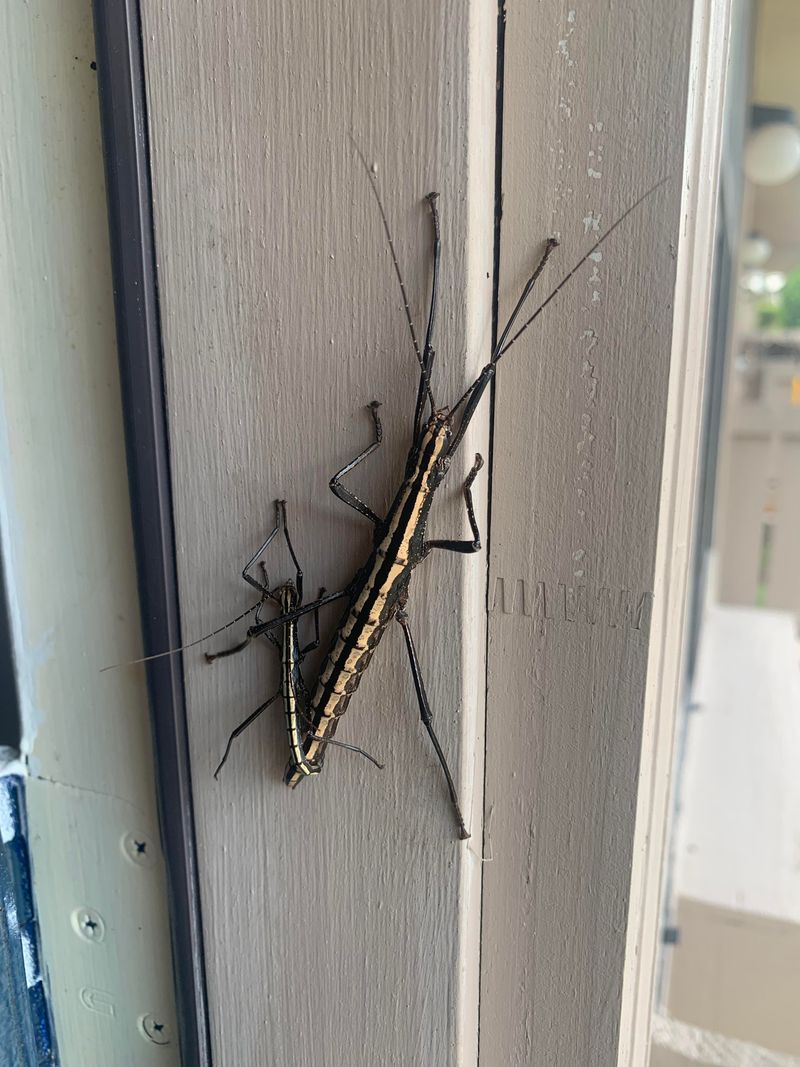
Ever notice you see more stick bugs once summer starts winding down? That timing is no coincidence.
Adult two-striped walkingsticks are especially common in late summer and fall in much of the state. That is the season for mating, and pairs stay linked together for long stretches. Seeing a male riding a female is a classic autumn sight in Florida yards.
Females bury small clusters of eggs in the soil, often in sandy or loose ground. Those eggs rest through the cooler months. In South Florida, where winters are mild, you may spot active insects across more of the year than folks in the Panhandle do.
Walking sticks grow through simple, or incomplete, metamorphosis. Babies, called nymphs, hatch looking like tiny copies of adults. They climb the nearest plant and start nibbling, shedding their skin several times as they grow.
That leaf litter under your hibiscus matters here. A thick layer of fallen leaves offers shelter for eggs. You don’t need to rake it all away, since mulch and leaf cover help soil and plenty of helpful critters.
Just know that a busy fall season can mean a few more tiny stick nymphs next spring.
Birds And Mantises Help Keep Stick Insect Numbers Low
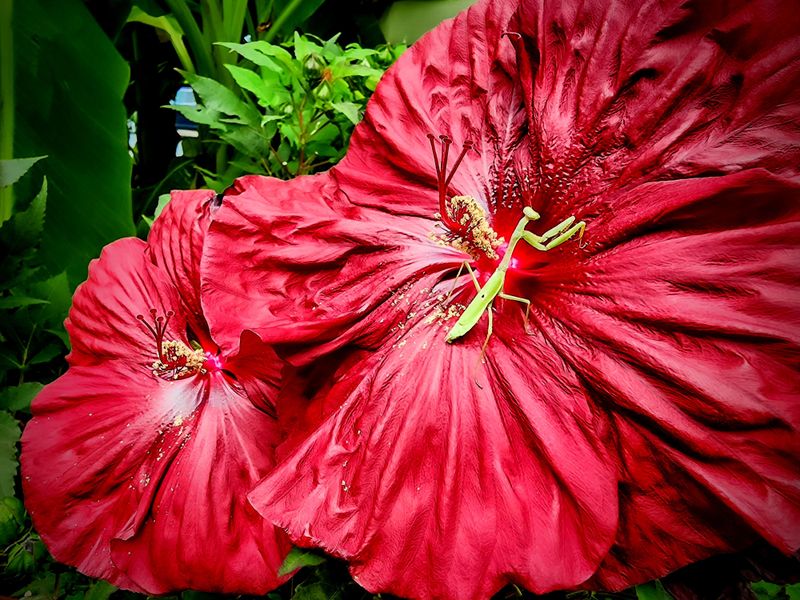
Nature runs its own pest patrol in your yard. Most of the time, you can let it do the job.
Walking sticks have plenty of enemies. Birds pick them off branches, while lizards, spiders, rodents, and praying mantises take their share too. Even the famous defensive spray doesn’t stop every hungry predator.
I used to reach for a spray bottle at the first sign of a strange bug. Truth is, broad insecticides often hurt the very predators that keep things balanced. Remove the mantises and spiders, and other pests on your hibiscus can bounce back faster.
A few easy habits make your garden more welcoming to these helpers:
Plant a mix of Florida native shrubs and flowers near your hibiscus. Firebush, coontie, and beautyberry offer food and cover for birds and beneficial insects.
Provide a shallow water source like a birdbath, and clean it often to discourage mosquitoes.
Skip routine spraying and treat only real problems you have identified.
Leave some leaf litter and a few brushy corners where lizards and spiders can hide.
These steps help your whole garden, not just your hibiscus. A busy food web means fewer surprises and healthier blooms overall.
Hand-Moving A Walking Stick Beats Reaching For Pesticides
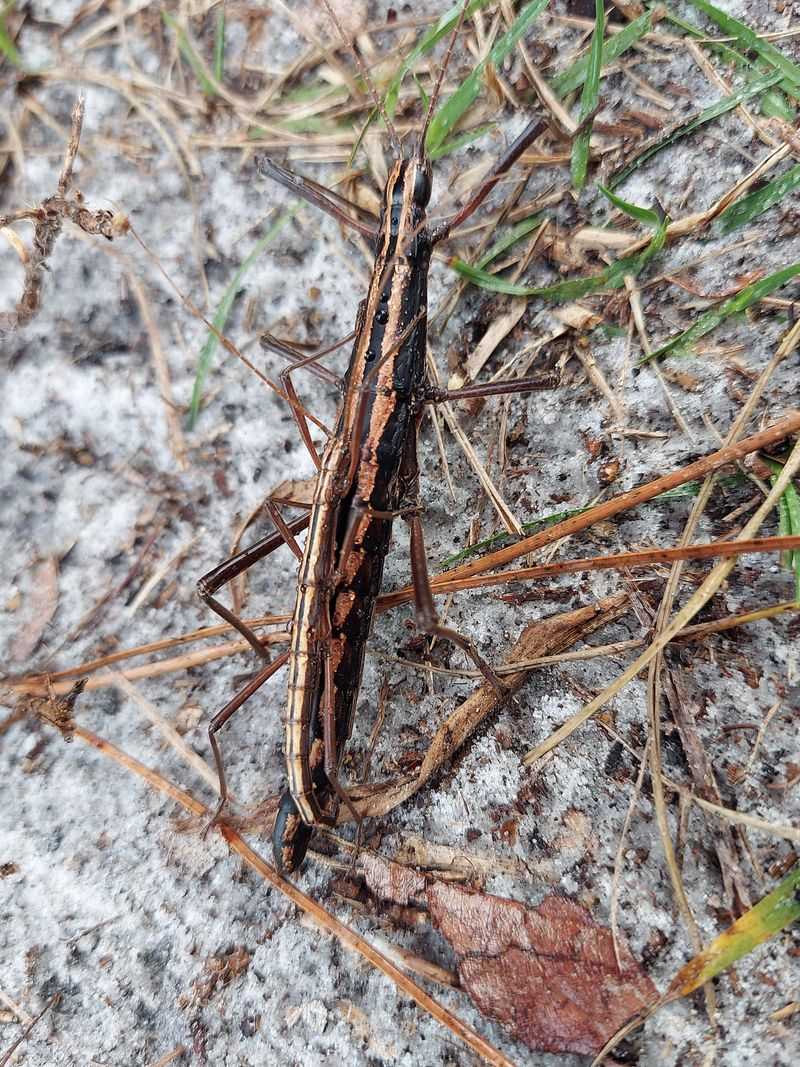
So what should you actually do when you find one? In most cases, nothing at all.
Leave a single walking stick alone and enjoy the show. Light leaf nibbling won’t harm an established hibiscus, and the insect will often wander off on its own.
Things change if you see many insects on a small, young, or stressed plant. Check leaves every few days and note how much is being eaten. Fresh growth disappearing quickly is your cue to act.
Relocation is the gentlest fix. Put on gloves and safety glasses, then coax the insect onto a long stick or into a jar. Move it to an oak or wooded edge away from your patio and pets.
Chemical treatments are rarely needed for these insects, according to extension guidance. If a real infestation ever happens, ask your local UF/IFAS Extension office for advice that fits your area.
Keep your hibiscus healthy with steady watering, good sunlight, and light feeding during the growing season. Strong plants shrug off small leaf losses with ease.
Next time a twig walks across your shrub, smile and give it some space. You just found one of the most clever disguises in your own backyard.