The Watering Mistake That Turns California ZZ Plants Yellow
A single houseplant can hide a stash of water underground that lasts for weeks. Those fat, potato-like lumps tucked in the pot work like a private water tank.
I love that kind of quiet survival trick. It comes from the dry grasslands of eastern Africa, where rain shows up on its own schedule.
The catch is sneaky. Glossy green leaves can slowly fade to butter yellow, and many California plant owners blame the sun, the pot, or bad luck. Personally, I blamed my lighting for months.
You may be giving this tough plant the very thing it handles worst. The clue sits in your watering can, and the fix is easier than you expect. So what is really going on under that soil?
Those Potato-Like ZZ Rhizomes Are Holding a Secret
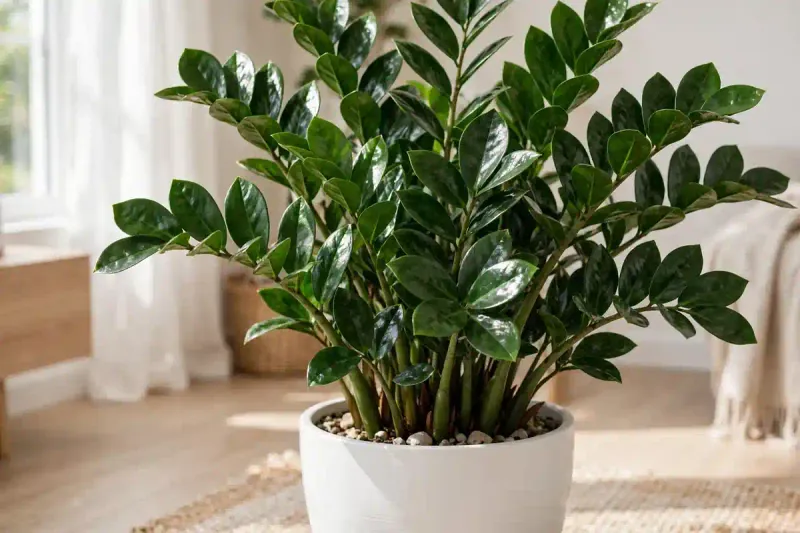
Pull a healthy ZZ plant out of its pot and you will find something that looks like a pile of small potatoes. Those chunky rhizomes are the plant’s water bank, built to survive long dry spells in its native eastern Africa.
Above them, the thick stems also store moisture. Even the leaves are waxy and tough, helping the plant hold on to every drop. Put together, a ZZ can often go two to four weeks indoors without needing a drink, and sometimes longer in low light.
I find this design clever, but it also explains a lot. A plant packed with stored water simply does not need frequent refills. When you water on a set schedule, like every Saturday, the rhizomes stay plump and the soil never fully dries.
That steady moisture becomes the real problem. Roots and rhizomes need air pockets in the soil, not just water. Constant dampness pushes that air out and invites trouble.
So when leaves start fading to yellow, the first suspect usually is not light or food. It is the watering habit. Once you see those storage organs with your own eyes, the idea of watering less starts to make perfect sense.
Watering Your ZZ on a Schedule Is the Big Mistake
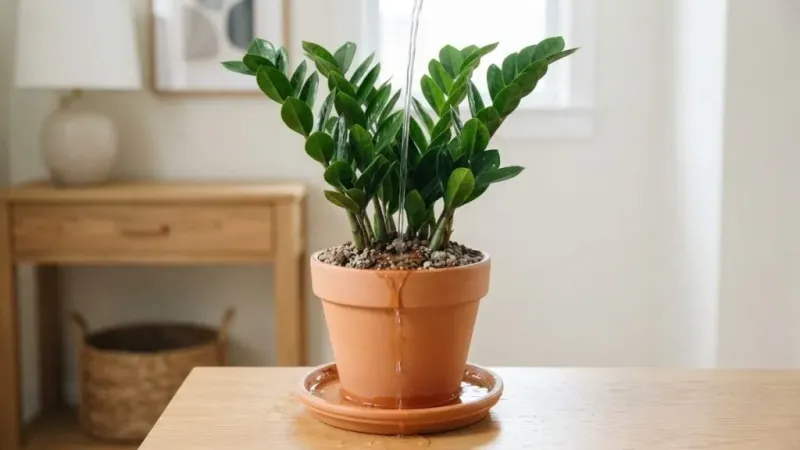
Calendar watering feels responsible. You set a reminder, grab the can, and give every plant the same treat. For a ZZ, that tidy habit is the most common reason leaves turn yellow.
Overwatering is the top cause of yellowing ZZ leaves, according to plenty of houseplant growers and extension-style care guides. The plant uses water slowly, especially in cooler months or dim rooms. Extra water just sits in the pot.
Here in California, indoor conditions vary a lot. A ZZ in a bright Sacramento living room in July may dry out faster than one in a foggy San Francisco flat in January. A fixed schedule ignores those differences.
The better approach is simple. Water only when the soil is dry all the way through, then soak it until water drains from the bottom. Empty the saucer afterward so the pot is not sitting in a puddle.
For many homes, that works out to about every two to four weeks in spring and summer. In winter, a ZZ may want water only once a month or even less. Let the plant set the pace, not your phone reminder.
Soggy Soil Starves ZZ Roots of Air
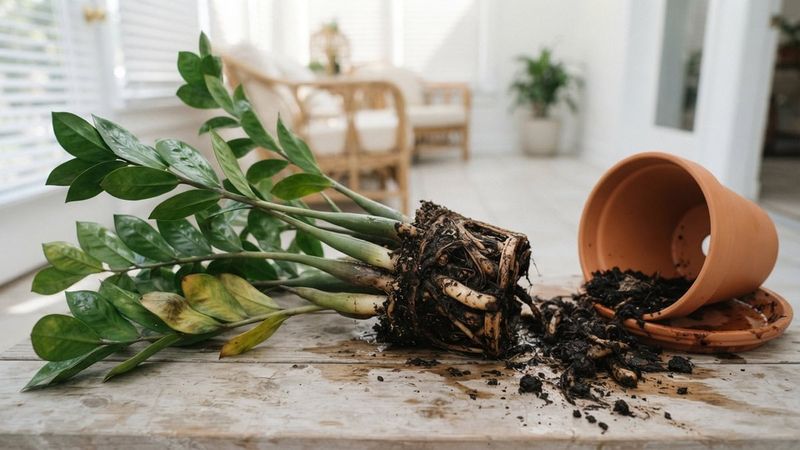
Roots breathe. That surprises many people, but plant roots need oxygen from tiny air spaces in the soil to stay healthy and active.
When a ZZ pot stays wet for days, water fills those spaces. Roots begin to struggle, and fungi and bacteria that love soggy conditions move in. The result is root rot, which turns firm roots and rhizomes soft, brown, and mushy.
Damaged roots cannot move water and nutrients up to the leaves. That is why an overwatered ZZ can look thirsty, with drooping, yellow stems, even while the soil is wet. It feels backward, but it happens often.
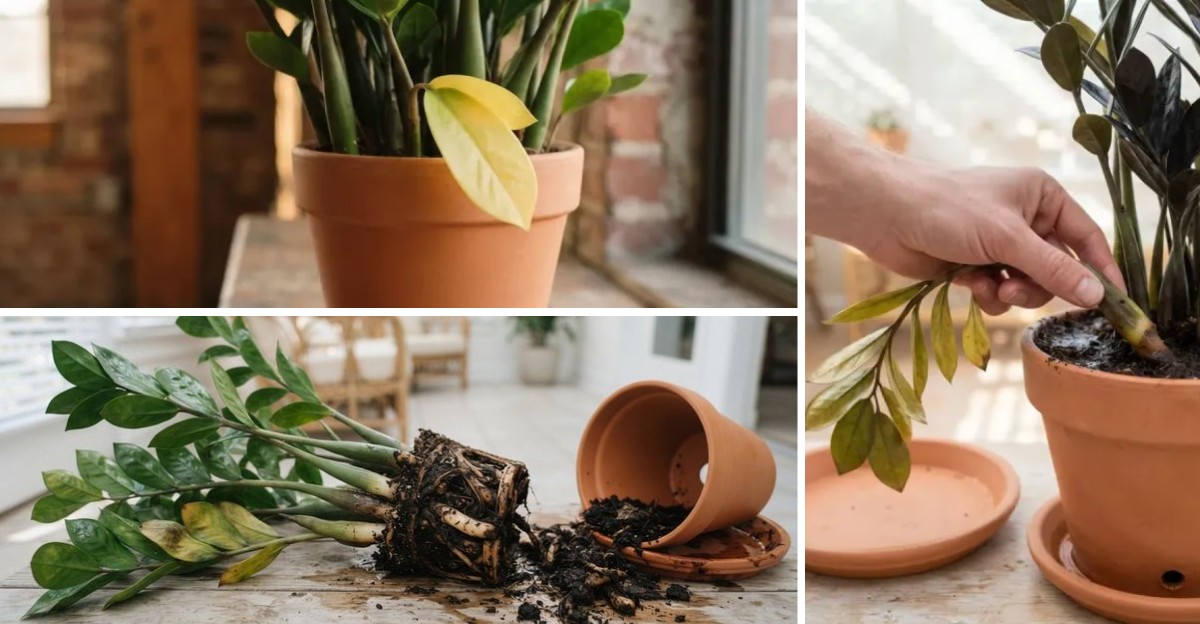
Yellowing usually starts on lower or older leaves, then spreads along a stem. Sometimes an entire stalk flops and turns yellow from the base up. Leaves may also drop with a light touch.
I like to think of the pot as a sponge that needs to wring out between drinks. A sponge that stays soaked starts to smell sour. Roots in waterlogged soil go through something similar, and the leaves are just the messengers telling you about it.
Mushy ZZ Stems and a Sour Smell Give It Away
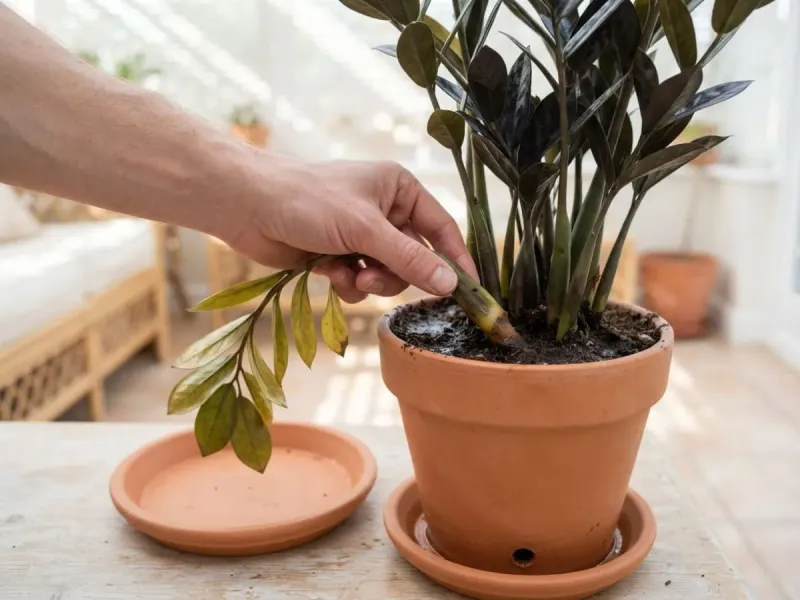
Yellow leaves can come from several causes, so a little detective work helps. Overwatering leaves behind some clear fingerprints.
Start at the soil line. Gently squeeze the base of each stem. Healthy ZZ stems feel firm and almost rubbery, while overwatered ones feel soft, squishy, or look darkened where they meet the soil.
Next, take a sniff. A sour, swampy, or rotten odor coming from the pot is a strong sign that rot has started below. Fresh soil should smell earthy and mild.
Compare that with an underwatered ZZ. Thirsty plants tend to have bone-dry soil, wrinkled or curled leaves, and crispy brown tips. The stems may look slightly shriveled, and the rhizomes feel lighter.
Also keep a few other causes in mind. A single old leaf turning yellow now and then is normal aging. Strong direct afternoon sun can scorch leaves pale yellow, and a plant stuck in the same tired soil for years may need fresh mix or a light feeding.
Still, if the soil is wet and the stems are soft, you have your answer. Water is the culprit, and the fix begins right away.
A Wooden Chopstick Beats the Fingertip Test for ZZ Soil
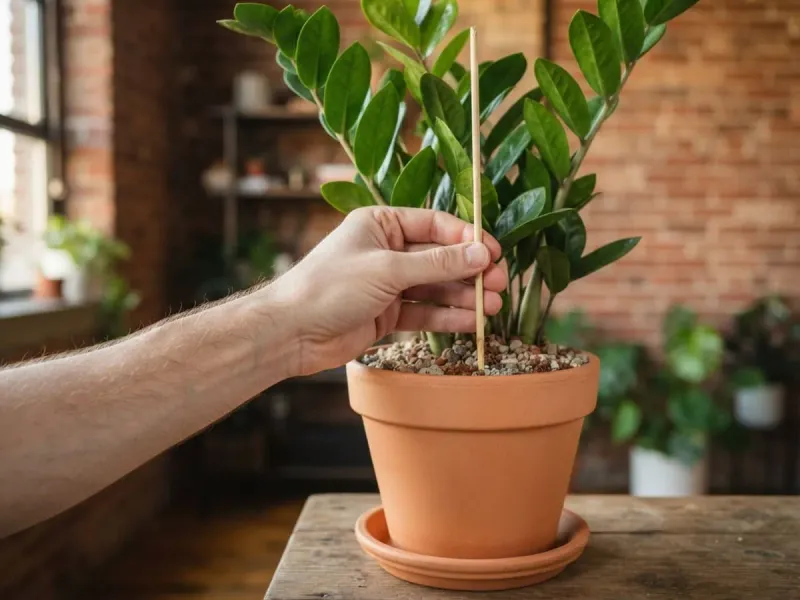
Most plant guides tell you to poke a finger an inch into the soil. That trick works for many houseplants, but a ZZ needs the whole pot dry, not just the top layer.
My favorite tool costs nothing. Slide a plain wooden chopstick or bamboo skewer straight down to the bottom of the pot and leave it for a minute. If it comes out damp, dark, or with soil stuck to it, wait longer.
Pot weight is another easy clue. Lift your ZZ right after a thorough watering and notice how heavy it feels. When it feels noticeably light, it is probably ready for a drink.
A basic moisture meter can help too, though cheap ones are not perfectly accurate. Use it as a second opinion rather than the final word.
Plastic pots hold moisture longer than unglazed terra cotta, so adjust your expectations based on the container. Large pots also stay wet longer than small ones.
Checking takes about thirty seconds. That small habit saves weeks of worry and keeps those glossy leaves from fading. It quickly becomes second nature once you try it a few times.
Gritty Soil and a Drainage Hole Keep ZZ Rhizomes Happy
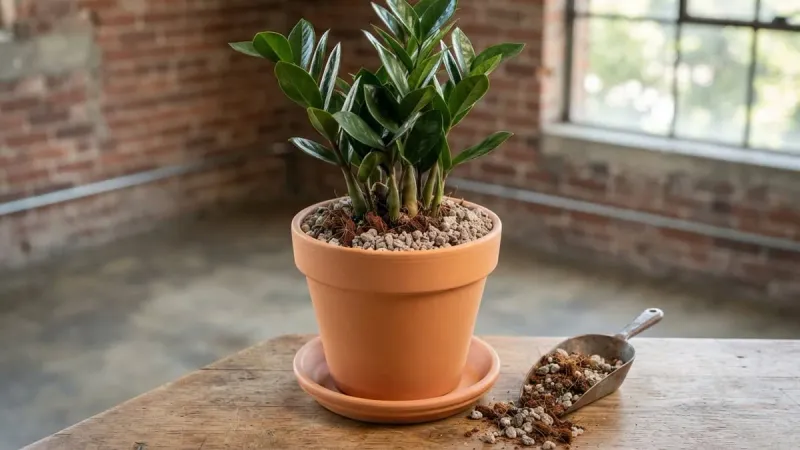
Even careful waterers can run into trouble if the pot fights back. Heavy soil and containers without drainage holes trap water around those thirsty-looking but well-stocked rhizomes.
Start with the pot. Choose one with at least one drainage hole, and skip decorative containers that hold water inside. If you love a fancy cachepot, set a plastic nursery pot inside it and empty any runoff.
For soil, a cactus and succulent mix is a solid choice. You can also blend regular potting mix with perlite or pumice, roughly half and half, for a looser, faster-draining home. Pumice is easy to find at many California nurseries.
Size matters as well. A pot only an inch or two wider than the root mass is plenty. Too much extra soil holds water the roots cannot reach, and it stays soggy for days.
One more tip comes from our dry summers. Gravel at the bottom of a pot does not improve drainage, despite the old advice. It actually raises the wet zone higher in the soil, so skip it and let the gritty mix do the work.
Bring a Yellowing ZZ Plant Back With a Simple Rescue Plan
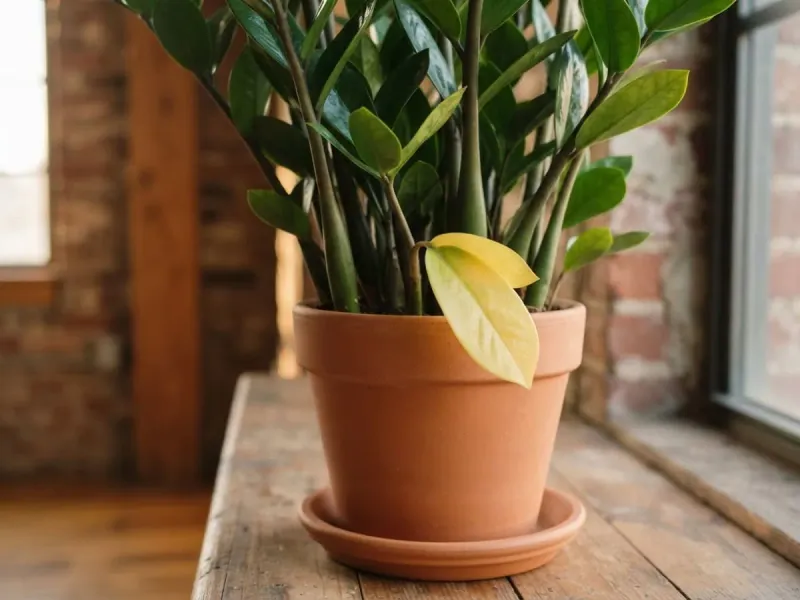
Spotting yellow leaves can feel discouraging, but ZZ plants are tough. Those stored rhizomes often give them enough reserves to bounce back when you act early.
First, stop watering and move the plant to bright, indirect light. If the stems are still firm, let the soil dry completely and the plant may recover on its own.
For soft stems or a sour smell, unpot it. Rinse away old soil and inspect each rhizome and root. Healthy ones are firm and pale, while rotted parts are brown, black, or mushy.
Trim away the damaged sections with clean, sharp scissors. Let the cuts air dry for a day, then repot into fresh, dry, gritty mix in a clean pot with drainage. Wait about a week before watering lightly.
Remove yellow stems at the base, since they will not turn green again. Healthy leaflets from trimmed stems can even be rooted in water or soil, though it takes patience.
New shoots may take a few months to appear. Be patient, water only when the pot is dry, and wear gloves, because ZZ sap can irritate skin and the plant should be kept away from pets.