These Are The 11 Best Plants for Along a Florida Fence Line
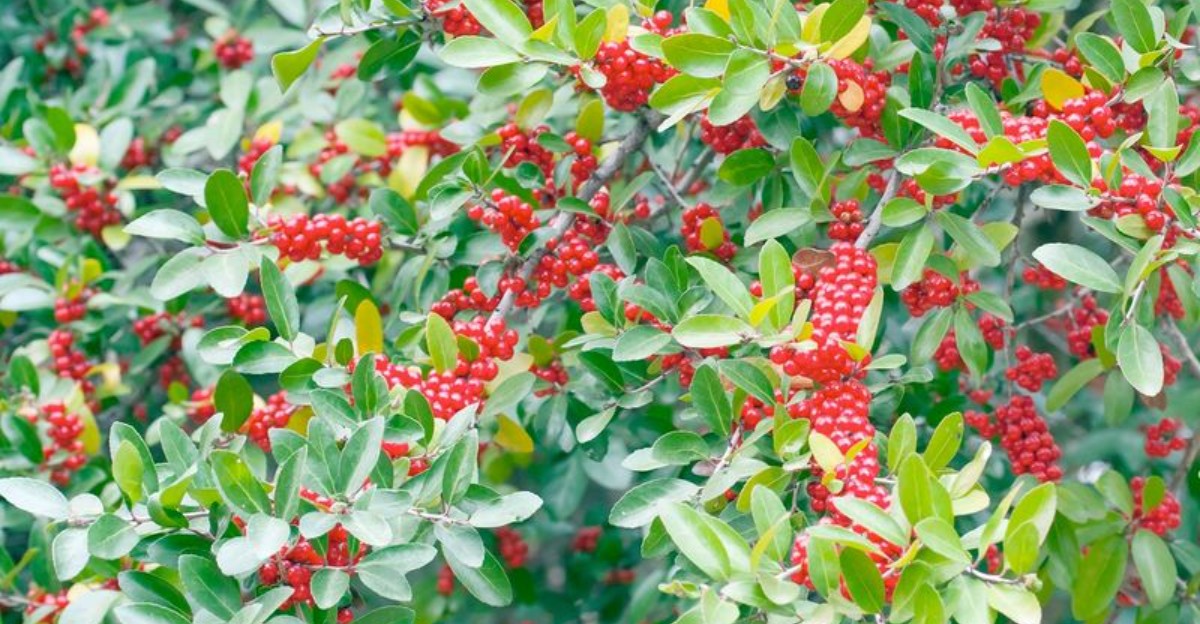
Early colonists once boiled waxy berries from a scrappy coastal shrub to make candles that smelled like the holidays. Another fence-friendly plant has leaves with enough caffeine that
Native people brewed them into a ceremonial drink.
Bare chain link along a Florida yard rarely feels welcoming, and it often shows every passing car and curious neighbor. A living screen softens those hard lines and gives hungry songbirds a reason to stop by daily.
I love how the right shrubs shrug off sandy soil and summer storms with barely a fuss from me. You need plants that handle Florida heat and humidity, not delicate divas that sulk after one dry week.
Several of my favorites are natives, and a couple even produce fruit you can turn into homemade jam. One of them might be the perfect excuse to finally say goodbye to that bare chain link.
1. Wax Myrtle
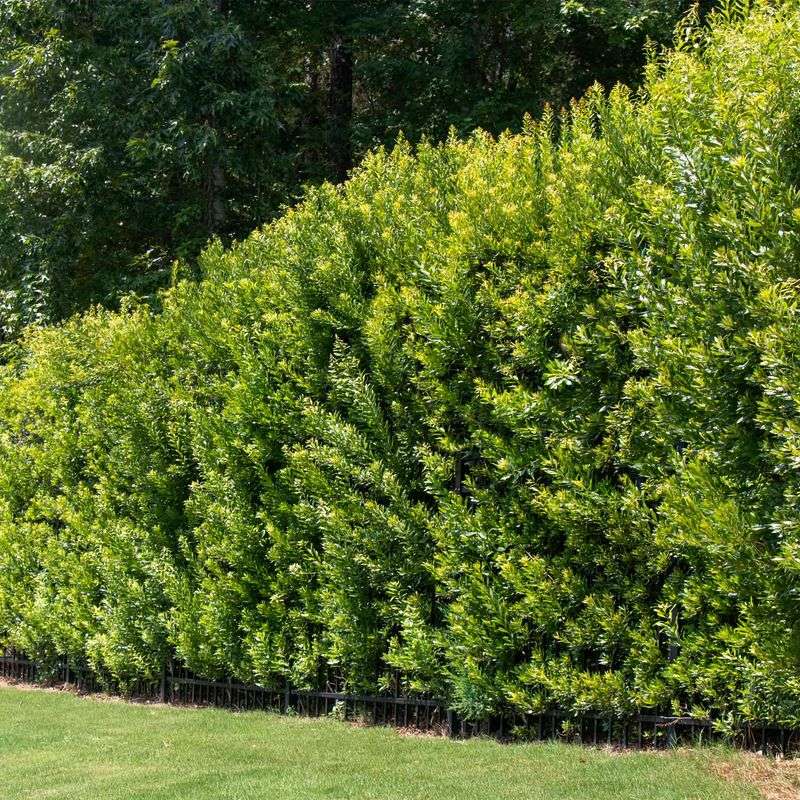
Crush a single leaf of this shrub and your fingers will smell like a cozy bayberry candle for an hour. Colonial families actually boiled the waxy berries to make candles, which explains the old nickname candleberry.
Wax myrtle is a native evergreen that usually reaches 10 to 15 feet tall with an 8 to 10 foot spread. It branches densely and often forms multiple twisted trunks, so it fills gaps along a fence quickly.
I like how forgiving it is about water, handling both soggy low spots and dry sandy patches with ease. Once established, it tolerates drought, wind, and salt spray, making it handy for coastal yards near the beach.
Plant it in full sun for the thickest screen, since deep shade tends to leave the branches looking thin. It can also sucker into thickets, so pull stray shoots if you prefer a tidier row along the fence.
Female plants grow blue-gray berries from late summer into winter when a male plant grows nearby to pollinate them. Yellow-rumped warblers and bluebirds feast on those berries during cooler months when other food runs low.
Keep it away from the house in fire-prone areas, because the aromatic leaves and stems burn easily. A fence line farther from buildings makes an ideal home.
2. Walter’s Viburnum
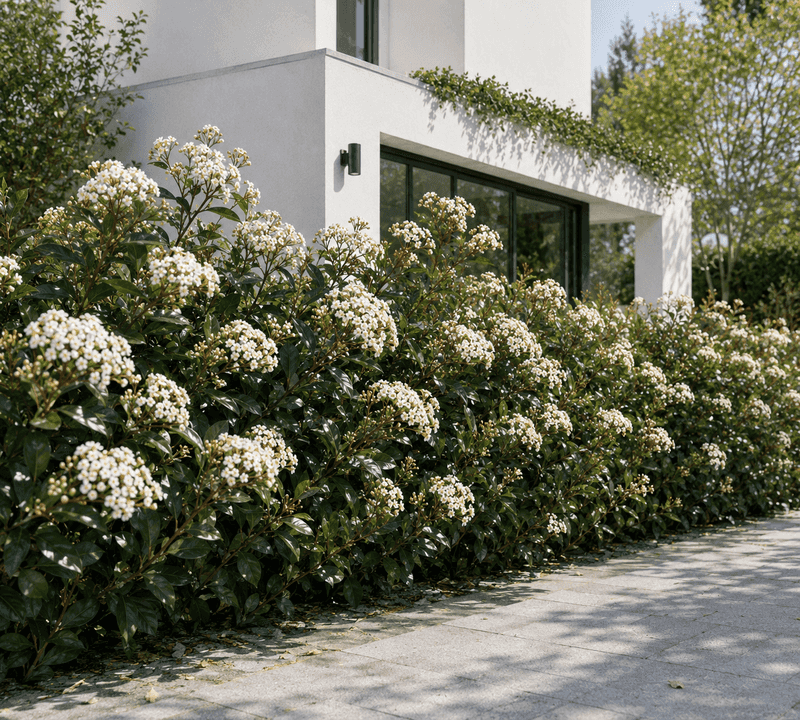
Gardeners sometimes call this shrub Florida snow, and one spring look at it explains the name. Masses of tiny white flowers cover the branches so thickly that the leaves nearly vanish for a few weeks.
Walter’s viburnum grows naturally across most of the state, though it skips the Keys. It typically reaches 10 to 20 feet tall and 6 to 12 feet wide, with small, leathery leaves about an inch long.
What surprises me most is how happily it grows in full sun or full shade without much complaining. It handles wet clay, sandy soil, and alkaline ground, then shows solid drought tolerance after it settles in.
Those fine little leaves take pruning beautifully, so you can shape a formal hedge or leave a loose, natural screen. Some leaves pick up a soft burgundy blush in winter, which adds a nice seasonal touch.
Bees and butterflies crowd the spring blooms, and it serves as a host plant for the spring azure butterfly. By fall, red fruits ripen into shiny black drupes that cardinals happily gobble down.
You might notice it shrugs off hurricane winds better than many hedges. Pests and diseases rarely bother it, which makes for an easygoing fence partner.
3. Simpson’s Stopper
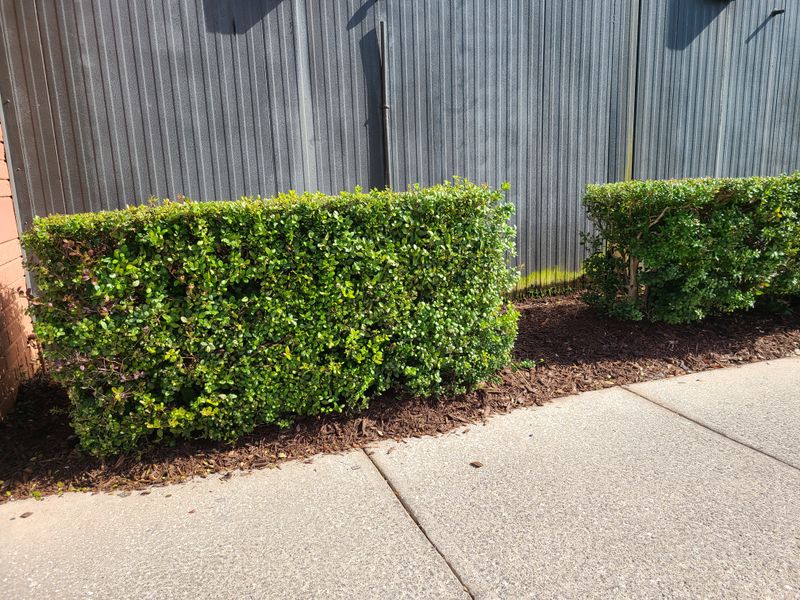
Flaky reddish bark, nutmeg-scented leaves, and coppery new growth make this native shrub feel like a little treasure chest. I have to admit, I rub the leaves every time I walk past one.
Simpson’s stopper usually grows 5 to 20 feet tall, with an upright, slightly columnar shape that fits narrow fence strips nicely. Its glossy, one-inch leaves stay dense, so the screen looks full from top to bottom.
The plant is listed as threatened in the state, so buy yours from a reputable native nursery rather than digging from the wild. Growing it at home actually helps keep this lovely species around for future gardeners.
Give it full sun to partial shade and soil that drains well, though it adapts to sand and alkaline ground. Established plants handle drought and salt spray, which makes them excellent for coastal properties near the water.
Fragrant white flower clusters show up mostly in spring and attract bees and butterflies looking for a sweet snack. Orange-red berries follow in late summer and fall, drawing mockingbirds, cardinals, and blue jays to your fence.
Growth runs slow to moderate, so patience pays off with this one. Plant it in central or south regions where winters stay mild.
4. Cocoplum
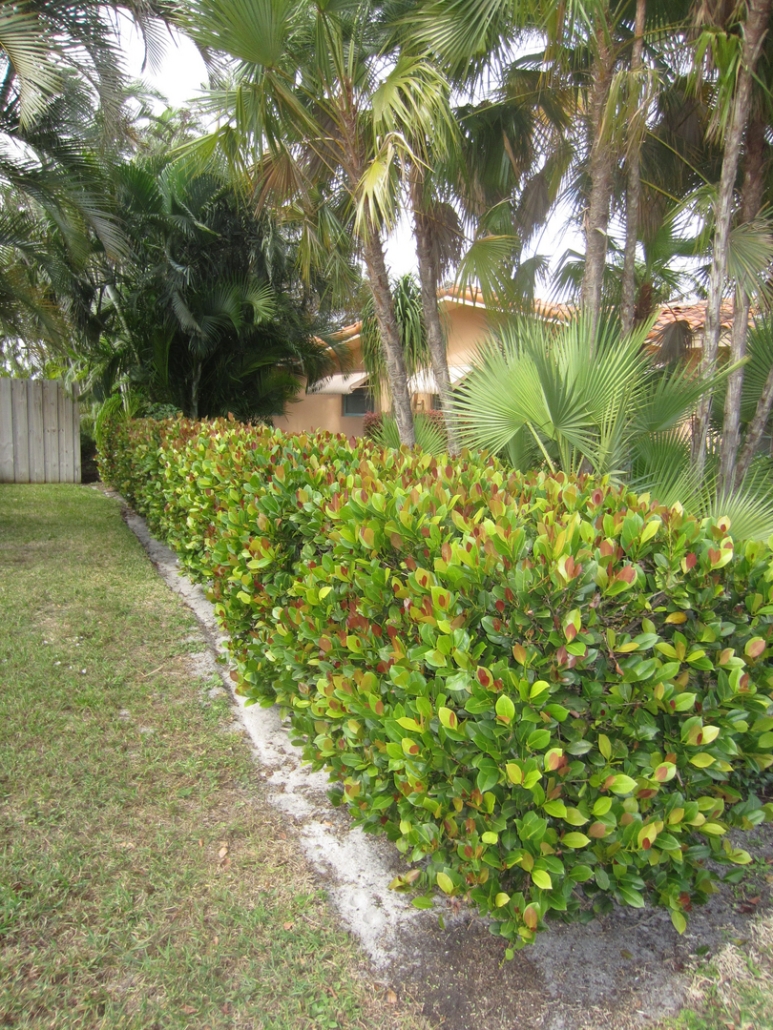
A hedge that hands you fruit for homemade jam sounds almost too good, yet cocoplum delivers exactly that. Its plum-like fruits ripen in shades of white, pink, or purple and taste lightly sweet.
This native shrub grows in pine flatwoods, coastal dunes, and canal banks across central and south parts of the state. Shiny round leaves up to three inches long often wear a pretty reddish tint on new growth.
Two main types show up at nurseries, and choosing correctly matters for your site. Low, spreading Horizontal cocoplum handles heavy salt, while upright Red Tip forms taller screens but tolerates less salt.
Plant it in full sun or partial shade, and it will handle sandy, wet, or organic soils with ease. Growth runs moderate to fast, so your fence disappears behind leaves sooner than you might expect.
Frost is its weak spot, since leaves can suffer damage when temperatures drop near freezing. Gardeners in colder northern areas should pick a hardier option from this list instead.
Bees visit the small greenish-white flowers, and birds plus gopher tortoises enjoy the fallen fruit. Watch for Sri Lanka weevil or lac scale, then treat early if leaves start looking chewed.
5. Marlberry
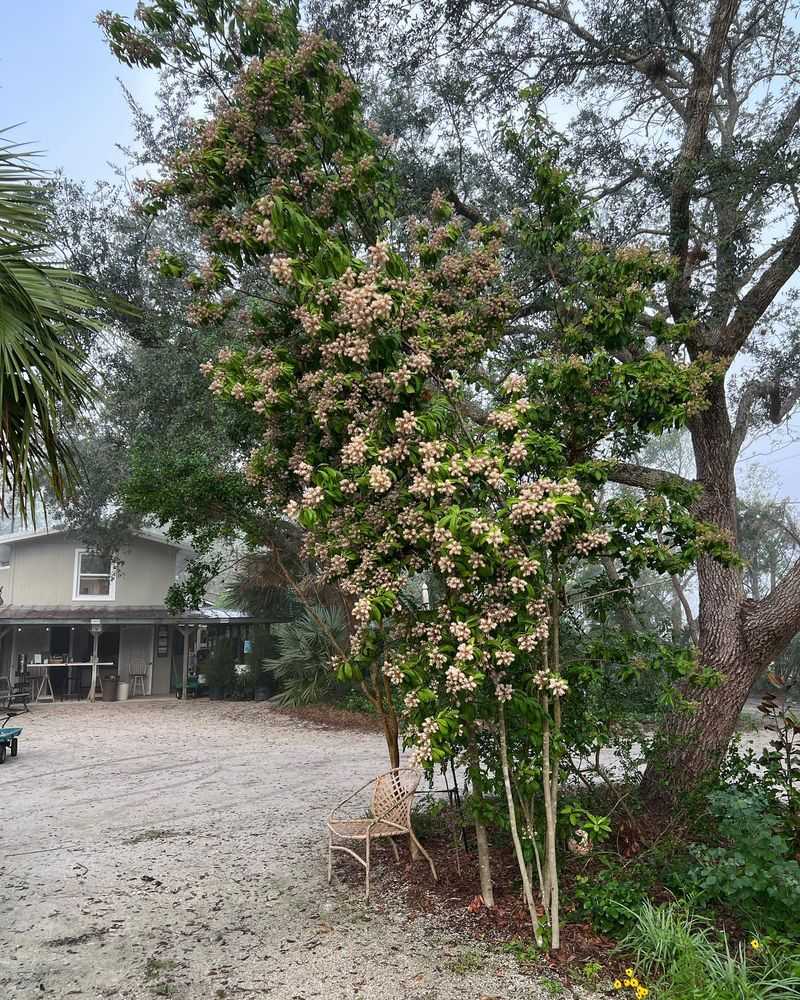
Shady fence lines often frustrate gardeners, but marlberry treats dim corners like a comfortable living room. This native shrub prefers part shade to full shade, which makes it a lifesaver under big oaks.
Plants usually reach 8 to 15 feet tall and 4 to 8 feet wide with an upright, tidy shape. Glossy dark green leaves grow densely, giving you a solid green wall without constant clipping or fussing.
Personally, I love the fragrant white to pinkish flowers that open in clusters from spring into summer. Blooms sometimes pop up at random times too, so bees and butterflies keep finding reasons to visit.
Shiny black berries follow in fall and winter, feeding birds and small mammals when other food grows scarce. The dense branches also offer safe cover for wildlife hiding from hawks or neighborhood cats.
Give it moist, well-drained soil rich in organic matter, and add mulch to hold moisture during establishment. After roots settle in, it handles dry spells well and shows moderate tolerance for salty air.
Do not confuse it with coral ardisia or shoebutton ardisia, which are invasive relatives. Check the scientific name Ardisia escallonioides on the tag before buying any plant.
6. Jamaica Caper
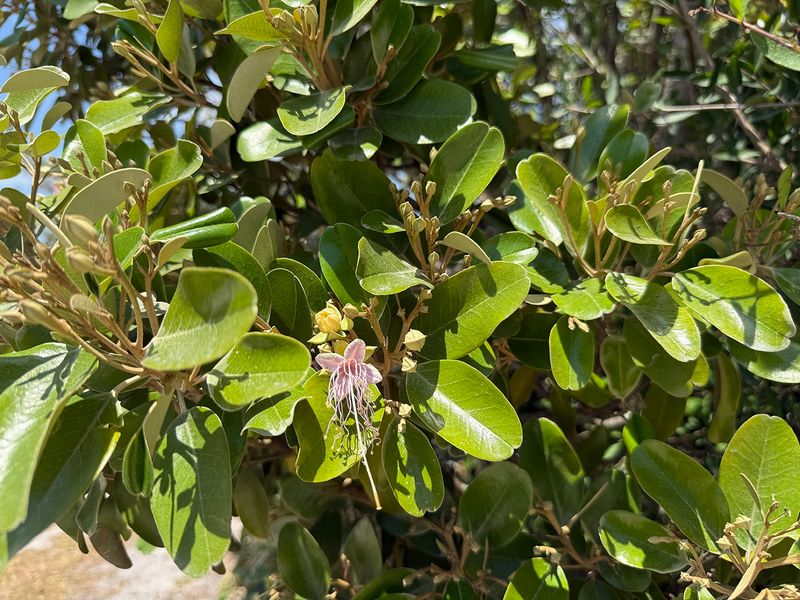
Flowers that change color during a single day sound like a magic trick, but this coastal native pulls it off. White blooms with long, wispy filaments slowly blush pink or purple as the afternoon goes on.
Jamaica caper grows 6 to 18 feet tall and spreads 6 to 12 feet, with an upright to spreading habit. New leaves arrive bronze, while mature leaves turn leathery with a silvery, scaly underside that catches light.
You’re in for a big surprise when the seed pods split open in summer. Inside, a bright coral lining holds shiny seeds that birds love to pluck and carry away.
It also serves as a larval host for the Florida white and great southern white butterflies. That means a few nibbled leaves usually signal baby caterpillars rather than a pest problem worth worrying about.
Plant it in full sun or partial shade with well-drained soil, especially while young roots get established. Once settled, it handles drought, salt spray, and hurricane winds, though it struggles with saltwater flooding.
Cold limits its range to warm southern and coastal central areas. Growth starts slow, then speeds up nicely once the roots feel at home.
7. Firebush
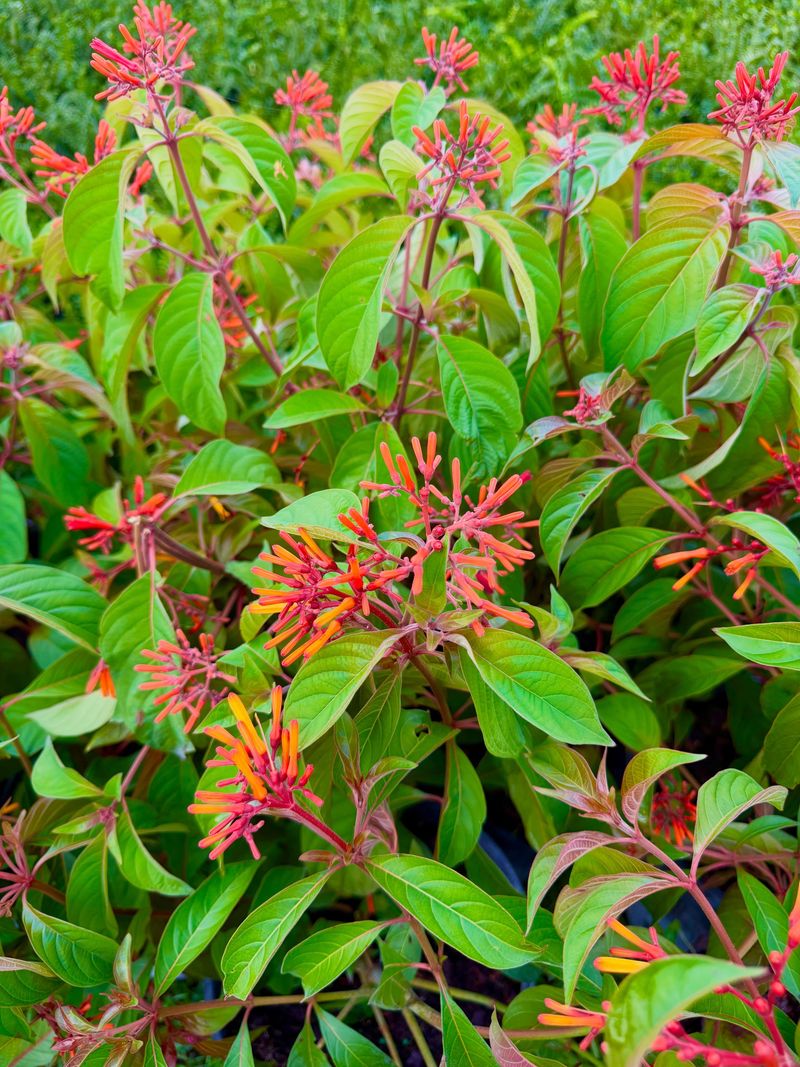
Hummingbirds treat firebush like a roadside snack bar, zipping in for nectar again and again all day. Butterflies follow close behind, so your fence line turns into a busy little wildlife highway.
Clusters of tubular orange-red flowers look like tiny firecrackers, which explains the name. Peak blooming runs from spring through fall, and leaves often take on reddish tones as weather cools.
This fast grower can reach 15 feet or more if left untrimmed, though many people keep it as a hedge. Pruning in late winter or early spring helps shape it before the big flower show begins.
Full sun brings the most blooms, but it still performs in partial shade with fewer flowers. Rich soil with plenty of organic matter gets it going, and drought tolerance improves once roots spread.
Freezes can knock it back in colder northern areas, but it often resprouts from the base in spring. South and central gardeners usually enjoy it as a year-round evergreen shrub.
Shop carefully, because compact or dwarf types sold as firebush are often a different, non-native variety. The native Hamelia patens feeds far more wildlife, so ask your nursery before you buy.
8. Yaupon Holly
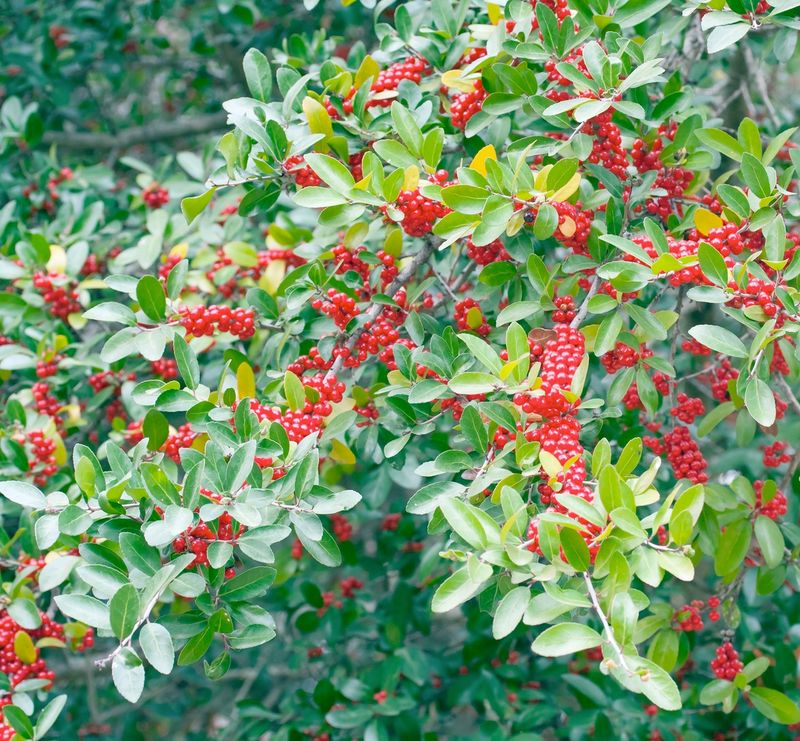
Few hedges come with a backstory involving caffeine, but yaupon holly does. Native Americans brewed its leaves into a ceremonial black drink, since this is the only native North American plant known to contain caffeine.
This native evergreen typically grows 10 to 20 feet tall, with small, glossy leaves and smooth gray bark. It takes pruning so well that you can shape a formal hedge or a graceful small tree.
I can’t imagine a tougher fence plant for mixed conditions across the state. It handles sun or partial shade, plus sandy, clay, wet, or dry soil once its roots settle in.
Female plants produce bright red berries in fall that often hang on through winter if birds leave any. You need a male plant nearby for good fruit, so buy a labeled female for the best display.
Bluebirds, mockingbirds, and robins gobble those berries, while the dense branches shelter nesting songbirds. Keep small kids away from the fruit, because the berries can upset stomachs if eaten.
Deer usually ignore it, and serious pests rarely show up. It also makes a smart native swap for invasive privet along shared property lines.
9. Sweet Viburnum
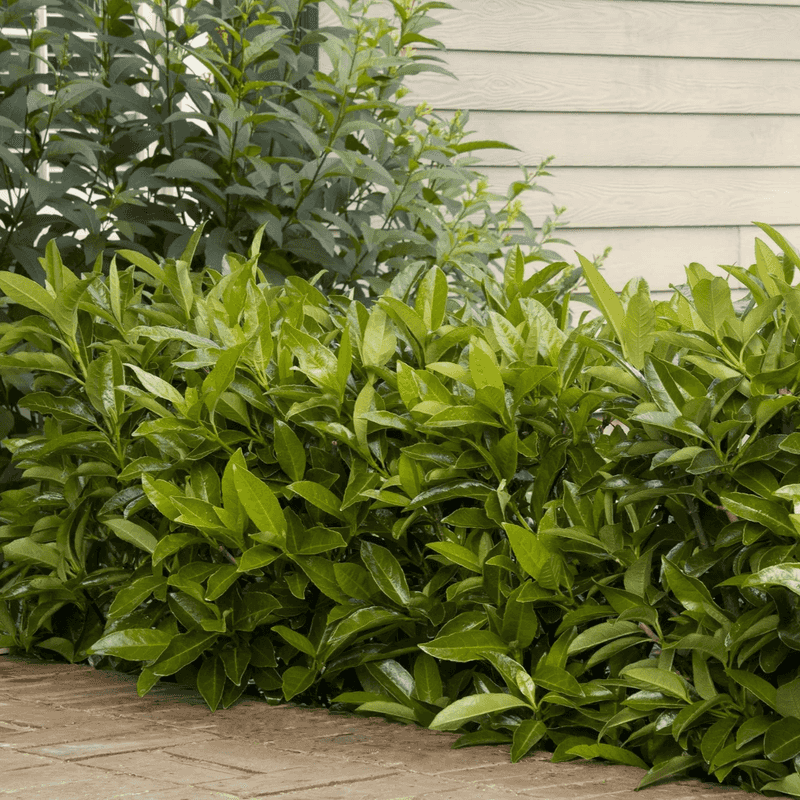
Neighbors peeking over the fence will soon see nothing but glossy green leaves once sweet viburnum takes off. This fast grower ranks among the most popular privacy hedges in suburban yards for good reason.
Left alone, it can reach 10 to 30 feet tall, but many people keep it trimmed between 4 and 8 feet. Its large, leathery leaves grow 4 to 8 inches long and pack together tightly for serious privacy.
It comes from Asia, yet it is considered non-invasive and earns Florida-Friendly Landscaping approval. Small white flowers smell wonderfully sweet in spring and pull in bees and butterflies looking for nectar.
Give it at least four to six hours of direct sun for the thickest growth possible. It adapts to clay, sand, or loam, as long as water drains away instead of pooling around the roots.
Salt is its weakness, so skip it for oceanfront yards that catch heavy spray. Inland gardeners get the best results, and the Awabuki cultivar offers extra-shiny leaves with a slightly smaller size.
Plan on regular trimming, since quick growth can push it past your fence fast. Remove root suckers yearly and thin branches to keep air moving.
10. Little Gem Magnolia
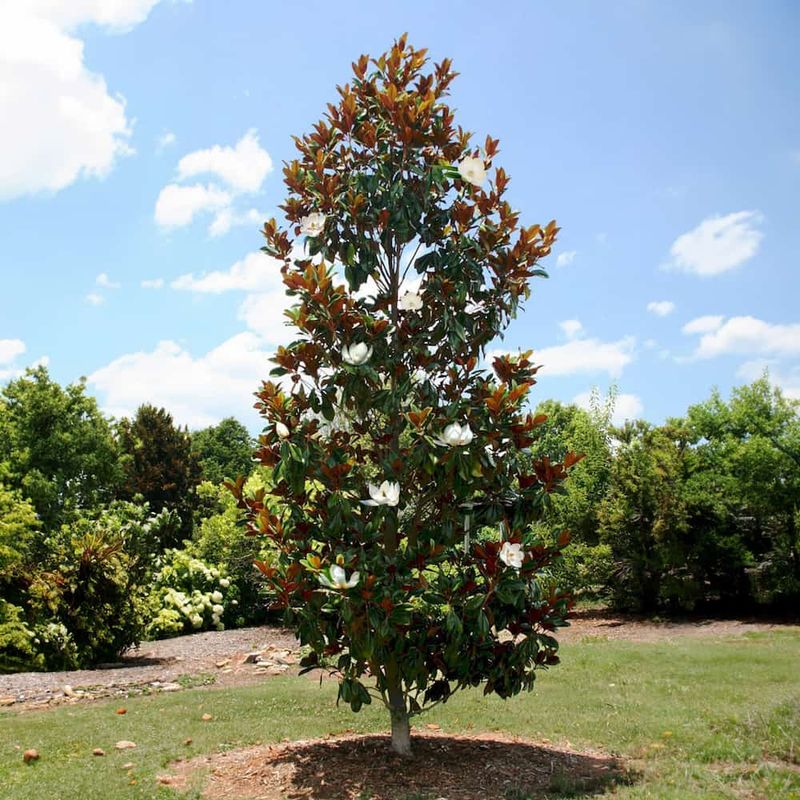
Southern magnolias can tower over houses, but Little Gem shrinks that classic beauty into a fence-friendly package. You still get those huge, creamy white flowers with a lemony scent that drifts across the yard.
This cultivar of the native southern magnolia usually grows 15 to 20 feet tall and 7 to 15 feet wide. Its narrow, upright shape makes it a smart choice for tight spaces between a fence and a driveway.
I like how quickly it starts blooming, since young trees often flower within their first few years. Blossoms appear from late spring through summer, then pop up sparsely into fall for a lovely bonus.
Glossy leaves wear fuzzy, rusty-brown undersides that flash beautifully when a breeze flips them over. Planted in a row, these trees create a dense evergreen screen that stays green through every season.
Give it at least six hours of sun and moist, well-drained, slightly acidic soil rich in organic matter. Water regularly during establishment, because extremely dry or soggy ground can leave it struggling.
Leaves do drop throughout spring and fall, so expect occasional raking near patios or pools. Scale insects sometimes appear, but deer usually leave this tree alone.
11. Bottlebrush
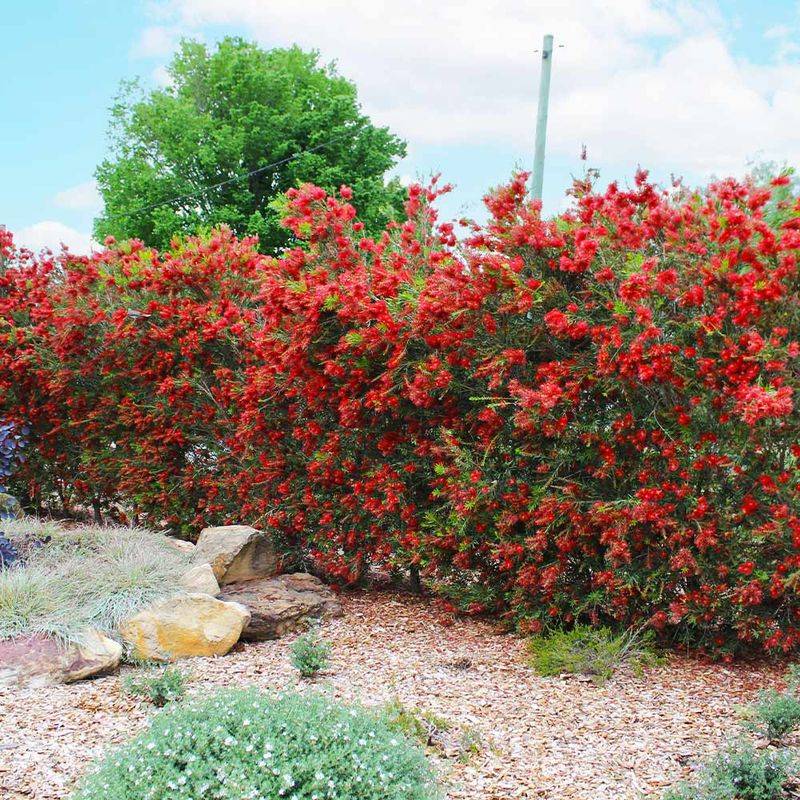
Bright red flower spikes that look exactly like kitchen bottle brushes make this shrub impossible to ignore. Kids usually point at it first, and hummingbirds tend to show up right behind them.
Crimson bottlebrush grows 3 to 15 feet tall as a dense evergreen with narrow, fine-textured leaves. New growth emerges coppery, and bruised leaves give off a pleasant lemony scent that reminds me of fresh citrus.
Choose Callistemon citrinus with its upright, stiff form rather than weeping types. Weeping bottlebrush has shown invasive tendencies in some areas, so reading plant tags carefully makes a real difference.
Full sun matters here, with at least six hours daily for the strongest flower show. It handles sandy, clay, or alkaline soil, but waterlogged ground can trigger root rot problems fairly quickly.
Blooms appear in flushes during spring and summer, sometimes returning in fall for an extra treat. Bees and hummingbirds visit constantly, since those fluffy spikes hold plenty of sweet nectar.
Established shrubs handle drought and salt spray, making them handy near canals and bays. Trim lightly after flowering to keep a tidy hedge shape, and watch occasionally for scale or spider mites.