These Are The 8 Ohio Shrubs That Give You Four Seasons Of Interest Without Any Work
Most Ohio shrubs have one good season and spend the rest of the year blending into the background. They earn their keep for a few weeks, then become part of the scenery you stop noticing.
A yard full of single-season shrubs is a yard that only really works in short bursts. Four-season shrubs play a completely different game.
Spring flowers, summer foliage, fall color, winter structure or berries. Not every shrub checks all four boxes, but the ones that come close are worth their weight in any landscape.
Ohio’s climate actually rewards this kind of planting more than most people realize. Cold winters make structure and berries matter.
Unpredictable springs make early bloomers earn serious appreciation. Long summers put foliage to work in ways warmer climates never quite demand.
Eight shrubs hold up across all four seasons in Ohio without asking much in return. Every yard has room for at least a few of them.
1. Plant Ninebark For Flowers Bark And Tough Structure
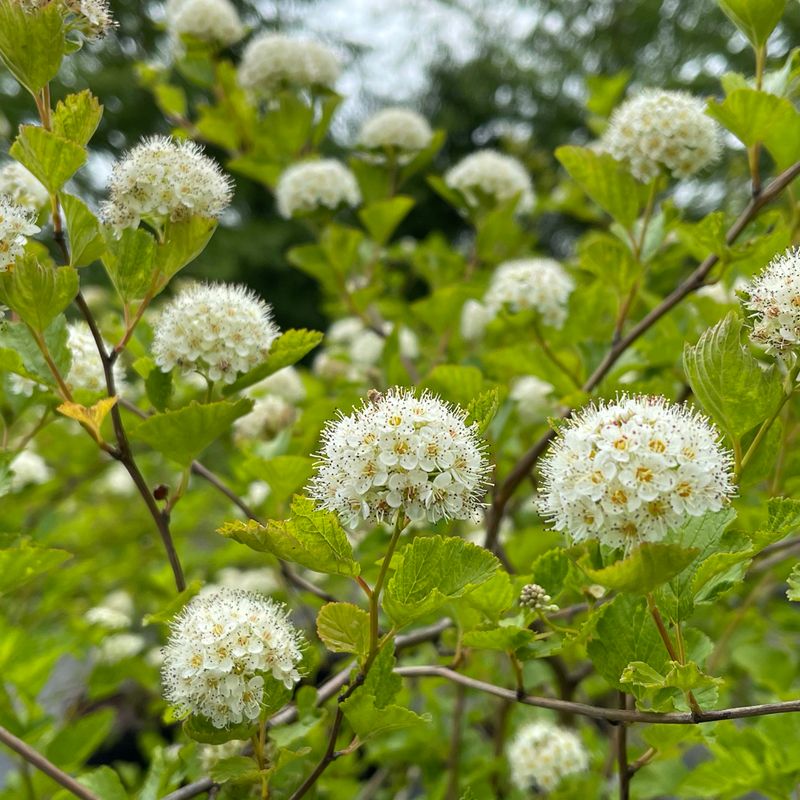
A shrub that still looks useful after its flowers fade has a big advantage in a small yard. Ninebark, known botanically as Physocarpus opulifolius, earns that advantage across every season.
In late spring, it covers its arching branches with clusters of white or pale pink flowers that attract native bees reliably.
Once the blooms drop, the show is far from over. The bark peels back in thin, papery layers to reveal warm reddish-brown tones underneath.
That gives the plant real texture during winter months when most other shrubs look completely bare. That peeling bark is where the common name comes from, and it is genuinely striking up close.
Cultivars like Diablo and Coppertina offer deep burgundy or coppery foliage that holds through summer, adding a strong color contrast in mixed borders. Mature size varies by cultivar.
Some selections stay around five feet tall, while straight species plants can reach eight to ten feet wide. Give it room before you plant.
Ninebark handles clay soil, dry spells after establishment, and even some deer pressure better than most ornamentals. It prefers full sun for the best leaf color and densest flowering.
Pruning is rarely needed, but removing older stems at the base every few years keeps the plant vigorous and the structure open.
2. Choose Winterberry For Bright Color After Leaves Drop
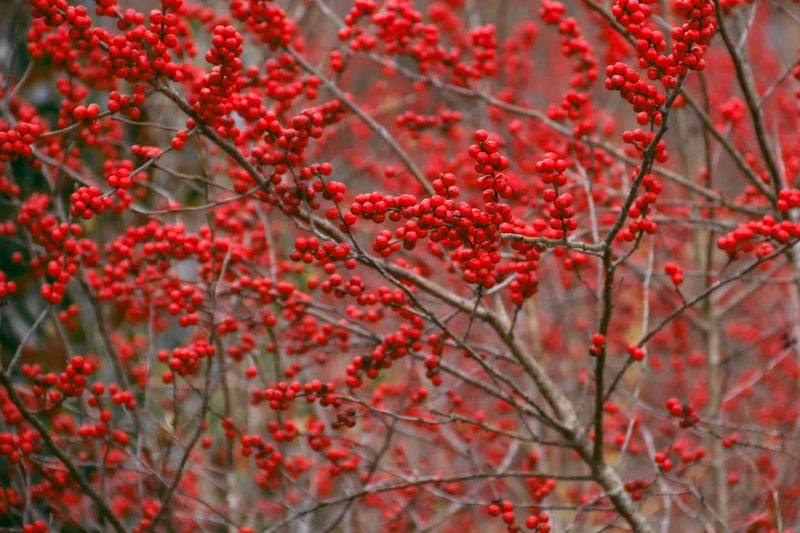
By the time November arrives and most of the yard has gone gray, a well-placed winterberry can stop you in your tracks. Ilex verticillata is a native holly that holds its berries tightly on bare branches long after the leaves drop.
The effect against a gray winter sky is genuinely dramatic.
The catch is pollination. Winterberry is dioecious, meaning female plants produce the berries, but only when a compatible male plant grows nearby.
Most sources recommend one male for every five to six female plants within about fifty feet. Without that male, your female plant may flower but will not fruit.
Check the cultivar pairing on the plant tag before you buy.
Soil matters just as much as pollination. Winterberry naturally grows along stream banks and in wet meadows, so it strongly prefers moist, acidic soil with a pH around 4.5 to 6.0.
Your Ohio Garden Changes Every Week. Your Plan Should Too.
Gardening in Ohio changes quickly throughout the season. Every Friday you’ll receive a simple weekly plan showing exactly what to plant, prune, fertilize, harvest, and protect so you never miss the right timing.
It tolerates seasonal flooding better than most shrubs. Dry alkaline spots will stress the plant and reduce berry production noticeably.
In the right site, though, this shrub needs almost nothing from you once established. It grows in full sun to part shade.
Birds, especially cedar waxwings and robins, will strip the berries in late winter. Compact cultivars like Berry Poppins stay around three to four feet, which suits smaller yards well.
3. Grow Red Osier Dogwood For Winter Stem Color
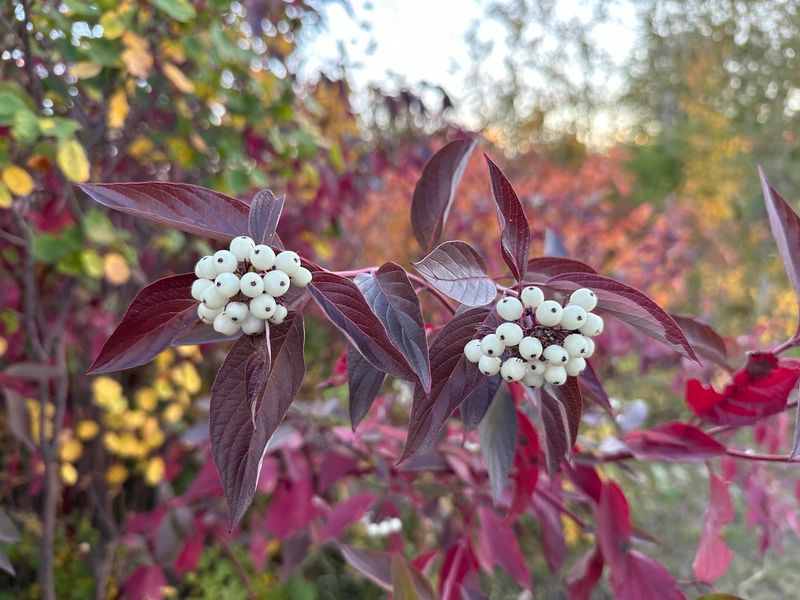
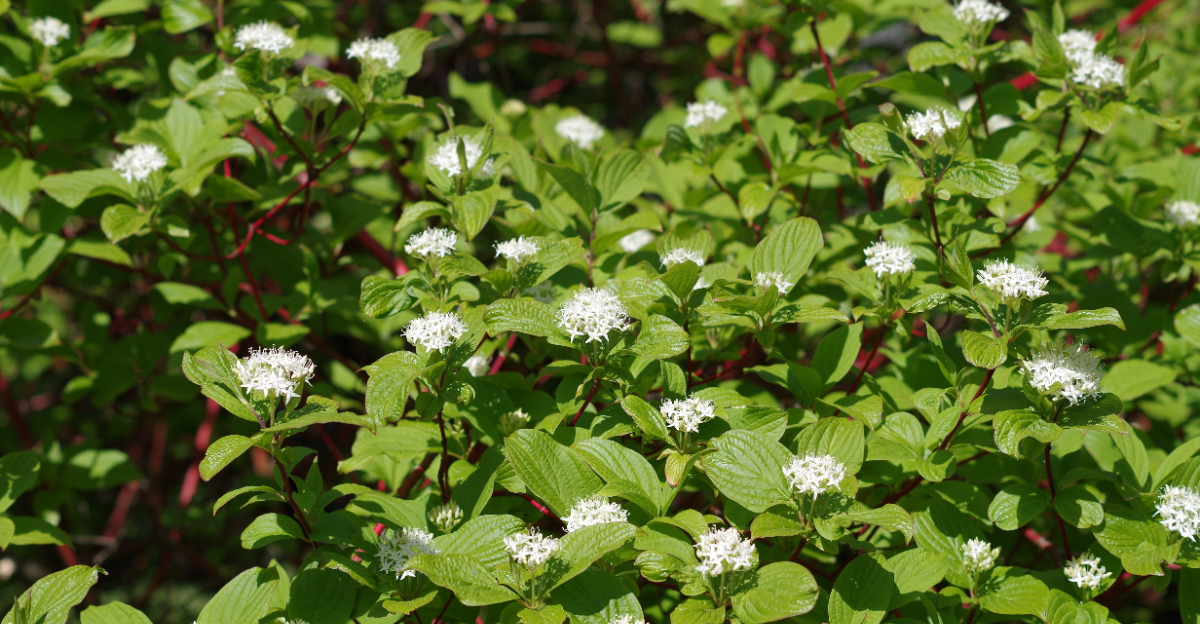
When the ground freezes and the garden goes quiet, red osier dogwood does something remarkable. Its stems glow a deep, saturated red that almost looks electric against snow or pale winter soil.
Cornus sericea is one of the most reliable sources of winter stem color available to Ohio home gardeners. It earns that reputation consistently year after year.
Spring brings flat-topped clusters of small white flowers that attract native pollinators before many other shrubs have even leafed out. Summer foliage is clean and medium green.
Fall color tends toward purplish red. White or bluish-white berries appear in late summer and feed birds reliably through early fall.
Here is the part that requires a little honesty: the brightest stem color comes from young growth. Older stems gradually fade to a duller brownish tone.
To keep the display vivid, cut one-third of the oldest stems down to the base every two to three years. This renewal pruning is simple and takes less than an hour.
Red osier spreads by root suckers and can form a colony over time, which makes it excellent for erosion control on slopes or along wet areas. It tolerates wet soil, clay, and part shade, though full sun produces the strongest stem color.
Give it space to spread, and it will reward you generously.
4. Use Arrowwood Viburnum For Flowers Berries And Fall Color
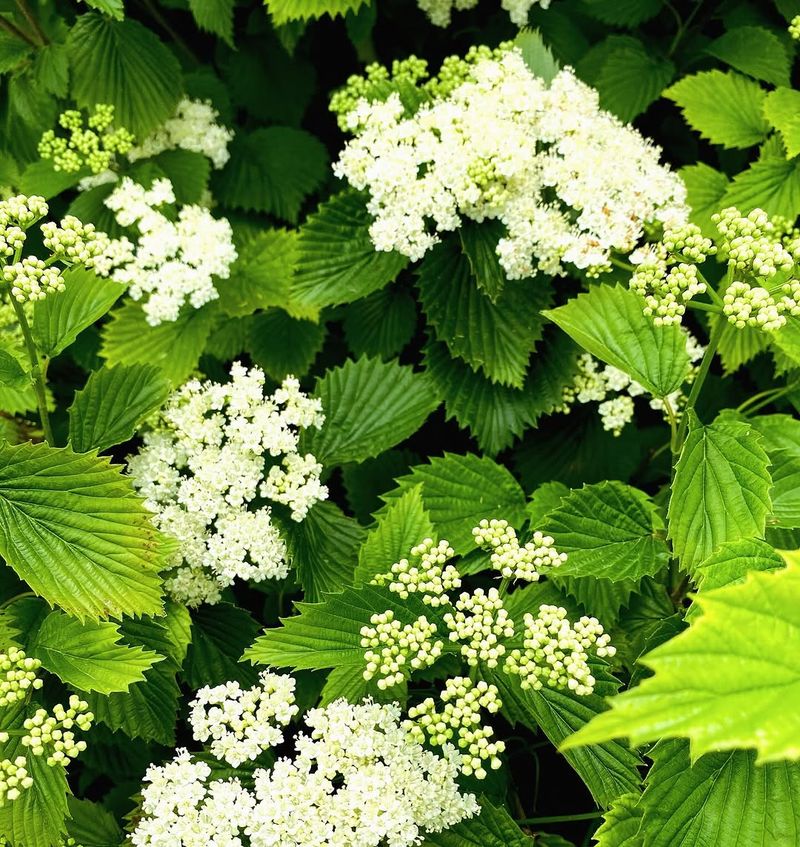
Few native shrubs pack as much seasonal variety into one plant as arrowwood viburnum. Viburnum dentatum opens flat-topped clusters of creamy white flowers in late spring, just as many spring bloomers are winding down.
Those flowers attract a wide range of native bees and beetles, making it a genuinely useful plant for pollinators beyond just honeybees.
Summer brings glossy, toothed foliage that stays clean and pest-resistant through the hottest months. If conditions are right, clusters of blue-black berries develop by late summer and persist into fall.
They draw migrating birds that depend on high-fat fruit before heading south. Fruiting can vary, and cross-pollination with a different cultivar often improves berry set noticeably.
Planting two or more selections nearby is worth doing if berries matter to you.
Fall color ranges from yellow to deep burgundy red, depending on the individual plant and the season. The display can be quite striking when the conditions align.
Mature size is typically six to ten feet tall and wide, so this is not a shrub for tight foundation beds. Give it room to develop its natural rounded form without heavy pruning.
Arrowwood adapts to a wide range of soils, from clay to sandy loam, and tolerates part shade reasonably well. Full sun generally produces the best flowering and fall color.
Established plants handle dry periods without much fuss.
5. Add Spicebush For Early Blooms And Wildlife Value
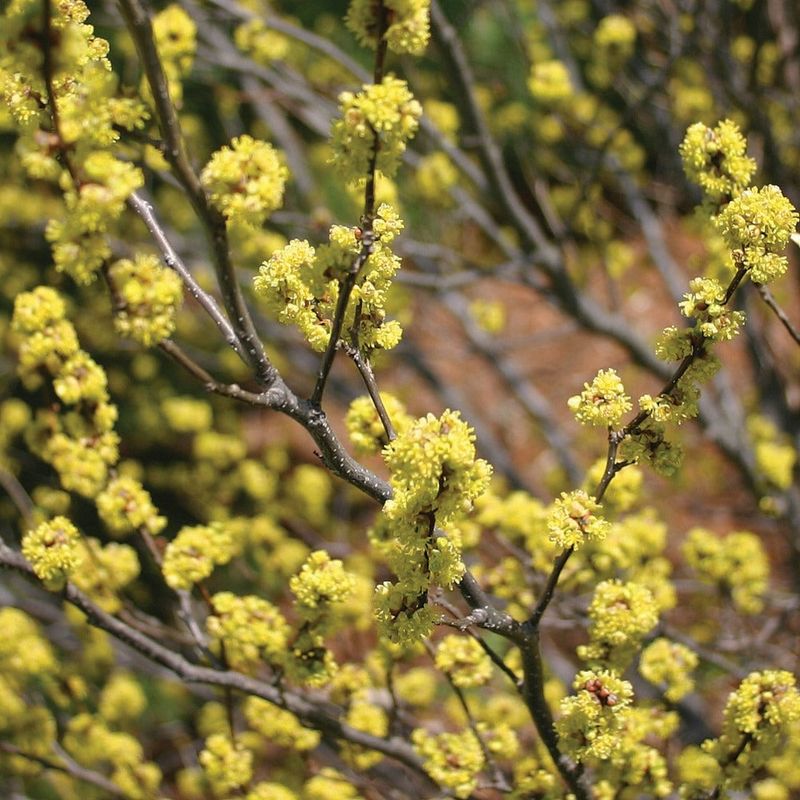
Before most trees have even thought about leafing out, spicebush is already blooming. Lindera benzoin pushes out clusters of tiny, butter-yellow flowers directly on bare branches in very early spring, sometimes as soon as late February in warmer years.
For pollinators emerging on the first warm days, that timing is genuinely important.
Spicebush is a shrub built for the woodland edge. It naturally grows along stream banks and in the understory of moist forests, which means it handles part shade to full shade better than most flowering shrubs.
It also works in open sites with consistent moisture. The glossy leaves have a spicy, aromatic scent when crushed, which is a pleasant surprise the first time you brush against a branch while weeding nearby.
Wildlife value is real and specific. Spicebush is the primary host plant for the spicebush swallowtail butterfly, a striking native species whose caterpillars feed almost exclusively on this plant.
Female plants also produce small, shiny red berries in fall that migrating birds consume quickly. You need both male and female plants for fruit, so planting at least two unrelated individuals improves berry production.
Fall foliage turns a clean, warm yellow. Mature shrubs typically reach six to twelve feet tall depending on site conditions.
Once established in a suitable moist spot, spicebush asks for very little beyond occasional cleanup of deceased wood.
6. Plant Serviceberry For Spring Flowers Fruit And Fall Color
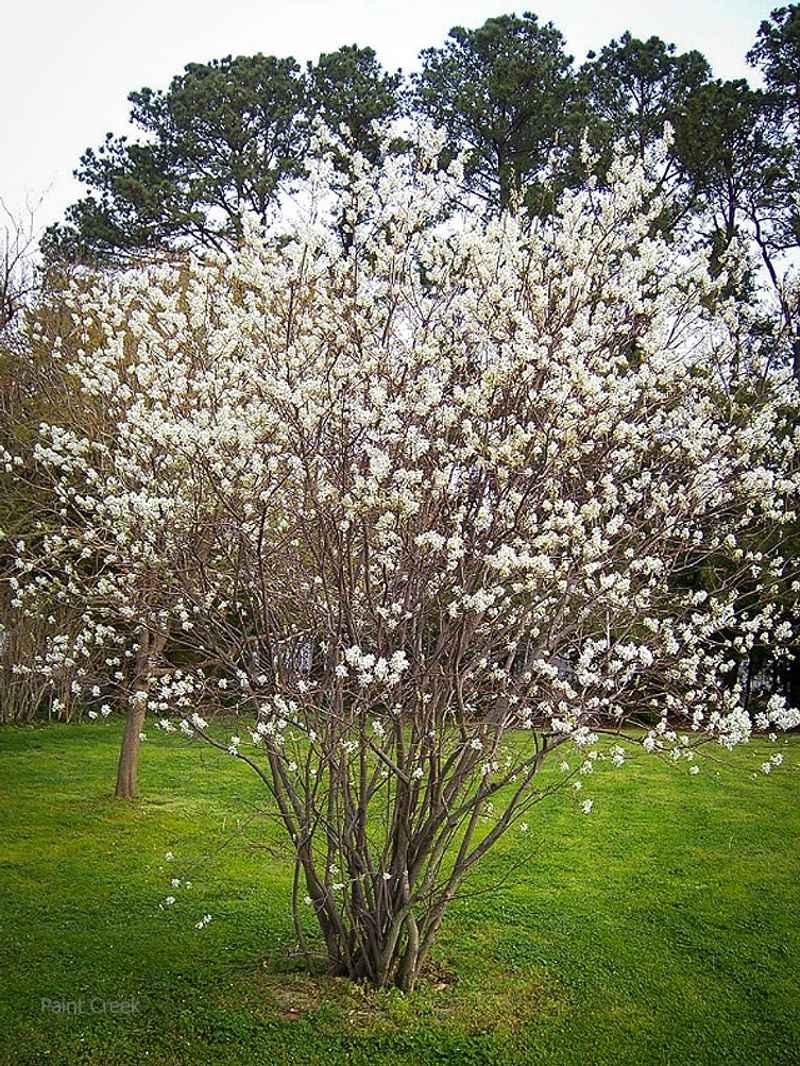
The first week of April in this state can feel almost magical when a serviceberry comes into bloom. Amelanchier species open masses of white, five-petaled flowers before or just as the leaves emerge.
They create a soft, cloud-like effect that few other plants can match that early in the season. The flowers appear when very little else is blooming, which makes them valuable for native bees coming out of winter.
Serviceberry walks the line between a large shrub and a small tree, and that flexibility is part of its appeal. Depending on the species and how it is grown, it may reach eight feet or twenty-five feet.
Shadblow serviceberry, Amelanchier canadensis, tends toward a multi-stem shrubby form. Downy serviceberry, Amelanchier arborea, often develops into a small tree.
Check the mature size on your specific plant before choosing a location.
Fruit ripens in June, turning from red to deep purple, and birds find it almost immediately. If you want to harvest any for yourself, act fast.
The fruit is sweet and edible, tasting something like a mild blueberry. Fall foliage ranges from orange to deep red, depending on the year and the individual plant.
Serviceberry grows well in full sun to light shade and adapts to a range of well-drained soils. It rarely needs pruning and has few serious pest problems once it settles in.
7. Grow Black Chokeberry For Glossy Fruit And Fiery Fall Leaves
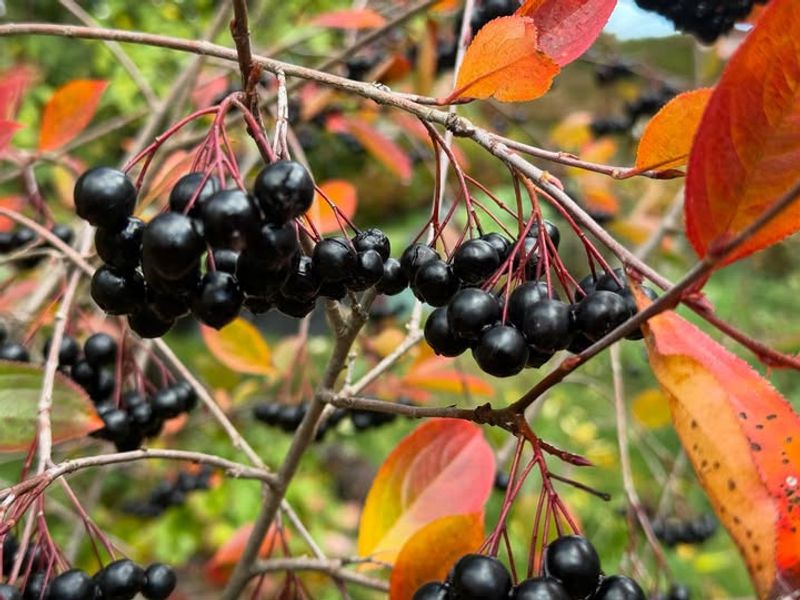
Some shrubs look polished all season long without any real effort on the gardener’s part. Black chokeberry, Aronia melanocarpa, is exactly that kind of plant.
Spring opens with clusters of white flowers that resemble apple blossoms, which makes sense since the two plants are related within the rose family.
Summer foliage is deep, glossy green and stays remarkably clean. Fungal issues and insect damage that plague other shrubs tend to pass right over chokeberry.
By late summer, clusters of dark purple-black berries develop and hang on the branches into fall. Birds and small mammals use them, though the fruit is quite astringent and rarely taken all at once.
That means the berries often stay visible through the fall season, adding to the display.
Fall color is where this shrub truly surprises people. The leaves turn a vivid combination of orange, red, and scarlet that rivals much showier ornamentals.
The contrast between the dark berries and the bright foliage is striking. One thing to plan for: black chokeberry spreads by root suckers and can slowly expand into a colony.
In a naturalistic planting or on a slope, that habit is an asset. In a formal border near other plants, you may want to remove suckers periodically to keep it contained.
Compact cultivars like Morton (sold as Iroquois Beauty) stay around three to four feet and spread more modestly.
8. Use Inkberry Holly For Evergreen Structure All Year
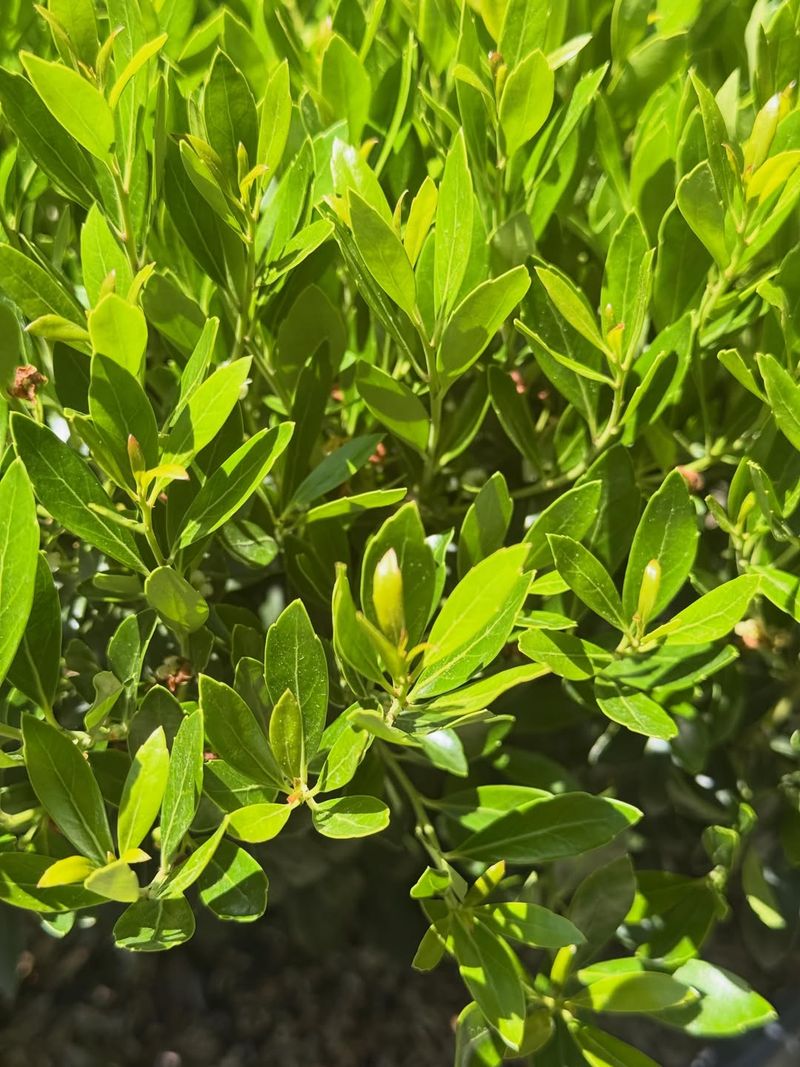
Most native shrubs go dormant in winter and leave a gap in the Ohio garden’s structure for four or five months. Inkberry holly fills that gap without asking much in return.
Ilex glabra holds its small, glossy, dark green leaves through even the coldest winters this state typically delivers. It provides a quiet but reliable backdrop when everything else is bare.
Inkberry is often described as a softer native alternative to boxwood or other formal evergreens, and that comparison is fair. It lacks the stiff formality of those plants, but in a naturalistic or mixed border, that relaxed quality is actually an advantage.
Small black berries develop in fall and persist through winter, providing food for birds including bluebirds, catbirds, and yellow-rumped warblers.
Soil preference matters here. Inkberry naturally grows in wet, acidic soils along pond edges and in low areas.
It performs best in moist, acidic, well-drained soil with a pH between 4.5 and 6.0. Dry, alkaline, or compacted soil will stress the plant and cause leaf yellowing over time.
Full sun to part shade both work well. The straight species can reach eight feet tall and spread aggressively by suckers.
For foundation plantings or smaller spaces, compact cultivars like Shamrock or Gem Box are far better choices. They stay around three to four feet and require almost no pruning to maintain a tidy shape.