These Are The Native Ohio Plants That Provide Afternoon Shade For Other Plants In Full Sun
Full sun Ohio beds sound like an advantage until July arrives. Some plants handle morning light beautifully and fall apart once afternoon heat builds.
The bed that looked perfect in spring turns into a stress environment by midsummer for anything that needed protection it never got. Native plants that grow tall enough to cast meaningful afternoon shade solve that problem naturally.
They belong in this landscape, support local wildlife, and protect shorter neighbors that would otherwise struggle before the season ends. Ohio’s natural plant communities have used this approach for thousands of years.
Taller natives shelter shorter ones. The logic is simple and it works.
The right natives for this job change how a full sun bed gets planned from the start. Some of the best options are already familiar.
Others deserve far more attention than they currently get in Ohio gardens.
1. Plant Cup Plant To Cast Tall Afternoon Shade
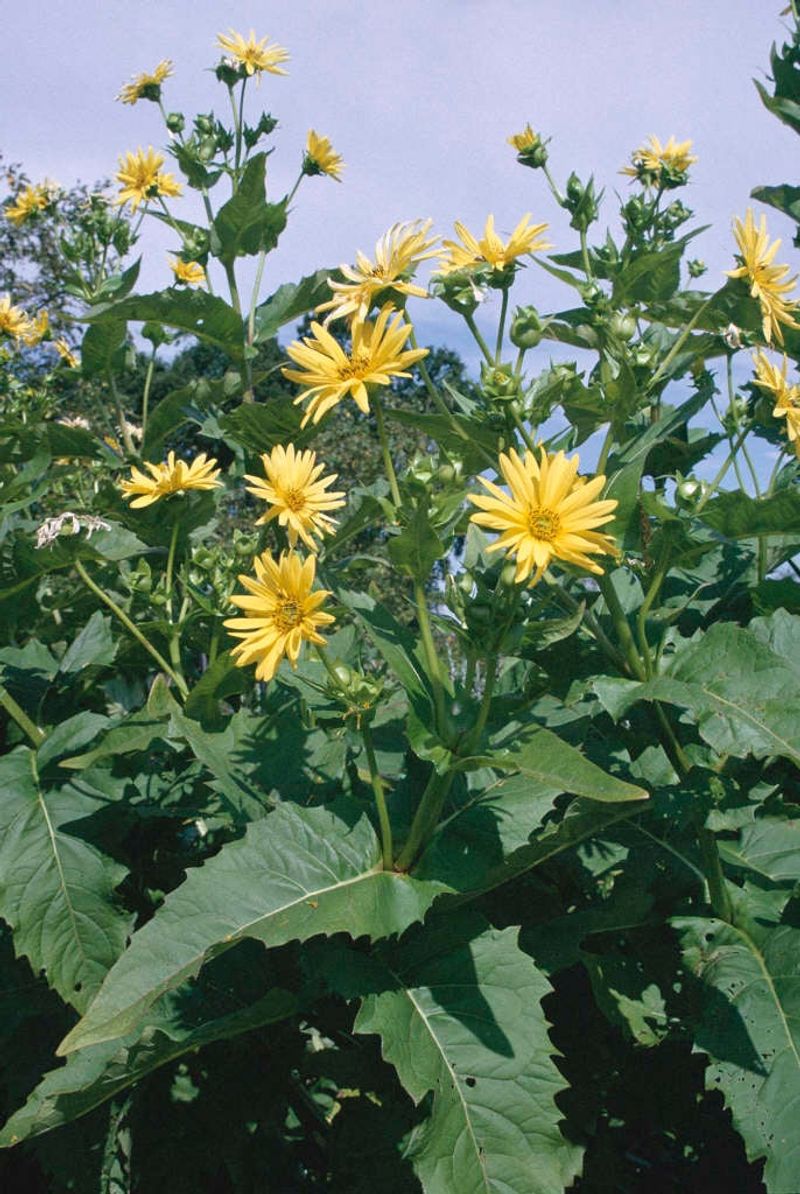
A bed that bakes after lunch sometimes needs height as much as it needs mulch. Cup plant, Silphium perfoliatum, is one of the tallest native perennials you can grow in a regional sunny border.
Mature plants commonly reach six to eight feet tall, and their large, paired leaves clasp the stem to form a small cup that holds rainwater. That leafy canopy casts real, shifting shade on shorter neighbors during the hottest part of the day.
Cup plant thrives in full sun and tolerates a range of soil types, but it performs best in moist to average soil with good organic content. It is a heavy feeder and a strong spreader.
In a happy spot, it will self-seed and expand its clump steadily, so small beds are not the right home for it. Give it a back-of-border position with at least three to four feet of clearance on each side.
The yellow, daisy-like flowers open in mid to late summer and attract a range of native bees and goldfinches. The plants behind cup plant get relief from harsh western sun while still receiving morning light.
Plan for its size before you plant it. Moving an established cup plant is difficult.
Site it once, site it well, and let it do its job season after season without much fuss from you.
2. Use Compass Plant For Big Leaves And High Summer Structure
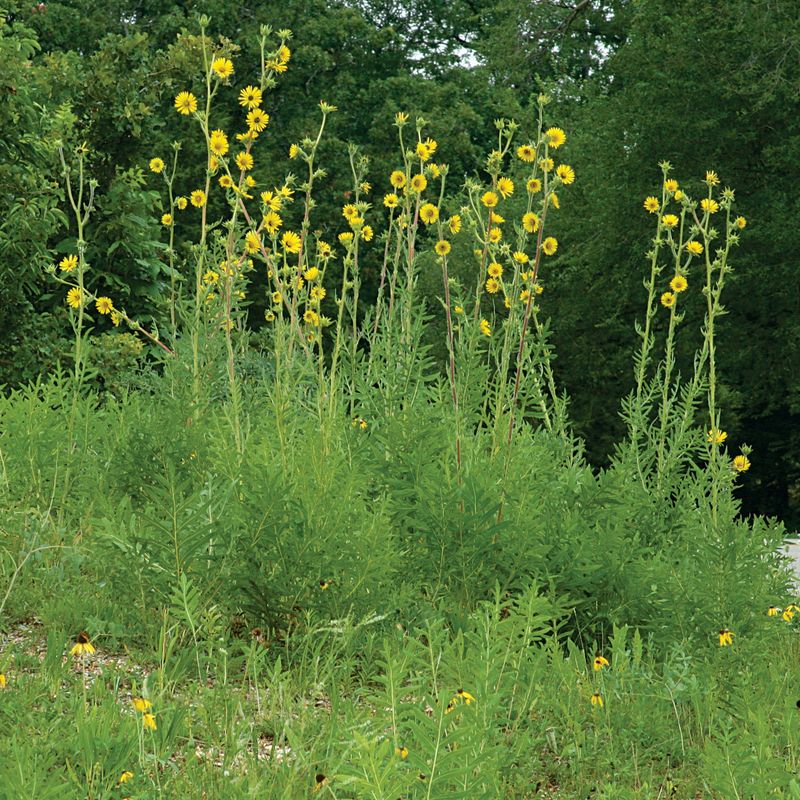
A sidewalk heat pocket near a west-facing fence is exactly where a tall prairie silhouette earns its place. Compass plant, Silphium laciniatum, sends up flower stalks that can reach six to nine feet in a good season.
Its deeply cut, rough-textured basal leaves are large enough to shade the soil around its base. Its tall stalks also create vertical structure that filters late-day sun for shorter plants growing nearby.
The name comes from an old observation that the large basal leaves tend to align themselves on a north-south axis. That alignment helped early travelers get their bearings on open prairies.
Whether or not your leaves cooperate, the plant itself is impressive. It grows best in full sun with well-drained to average soil and has a deep taproot that makes it extremely drought-tolerant once established.
Your Ohio Garden Changes Every Week. Your Plan Should Too.
Gardening in Ohio changes quickly throughout the season. Every Friday you’ll receive a simple weekly plan showing exactly what to plant, prune, fertilize, harvest, and protect so you never miss the right timing.
That deep root is also the reason you should place compass plant carefully. Moving it after the first season is rarely successful.
Choose a permanent spot in a prairie-style planting, a meadow border, or a large sunny bed where it can anchor the back row without crowding neighbors. Yellow flowers open in mid to late summer and attract native bees.
Spacing of three to four feet from neighboring plants keeps competition for water and nutrients at a manageable level for everyone in the bed.
3. Grow Joe-Pye Weed Behind Moisture-Loving Perennials
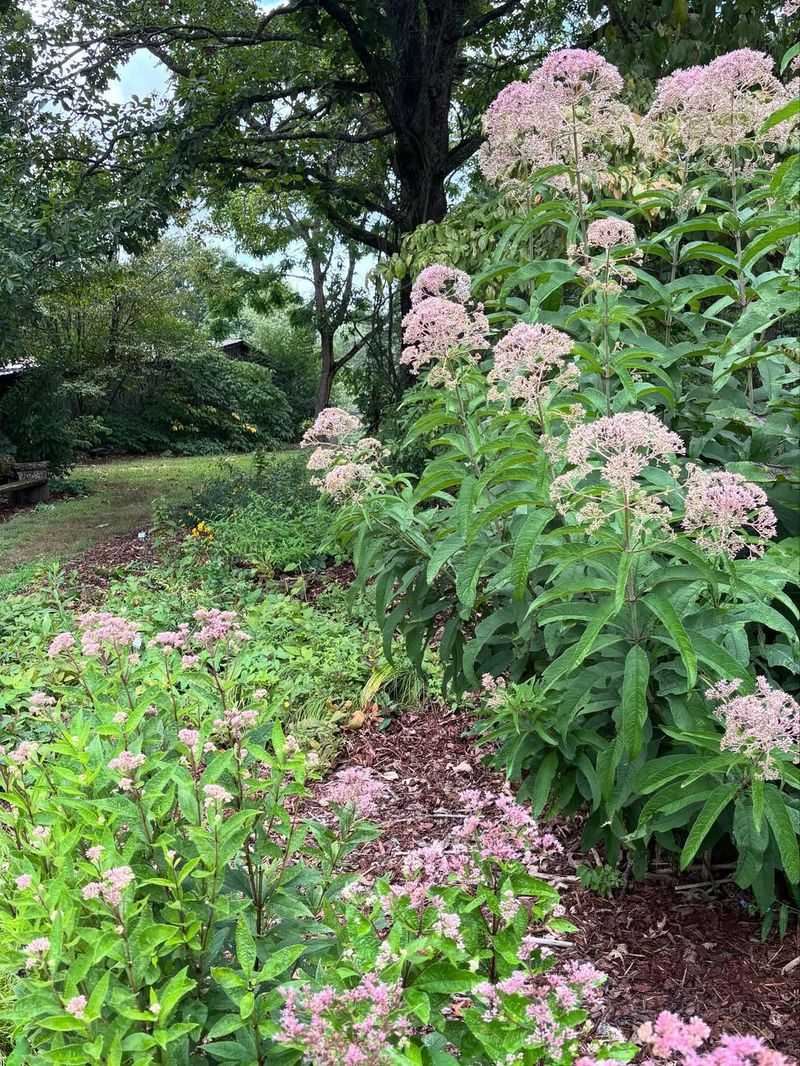
Moisture-loving corners of a sunny bed often get overlooked when Ohio gardeners plan for afternoon shade. Joe-Pye weed, native Eutrochium species, fills that role with authority.
Mature plants reach five to seven feet tall depending on species and site conditions. Their broad, whorled leaves and domed flower clusters create a soft canopy that filters western sun for shorter perennials planted in front of them.
This plant performs best in moist to consistently average soil. Rain gardens, low spots near downspouts, and beds that stay reliably damp through summer are ideal locations.
It struggles in dry, compacted ground, so do not place it in a spot that bakes and cracks between rainfalls. Full sun brings the best bloom, but it tolerates light afternoon shade without sulking.
The dusty rose-pink flowers open in late summer and draw native bees, butterflies, and other pollinators in good numbers. Plants spread slowly by rhizome and may self-seed in favorable conditions, so give each plant three feet of space at minimum.
Joe-Pye weed pairs well with ironweed, swamp milkweed, and native asters in moist borders. The key design move is placing it at the back of the bed so shorter plants in front receive afternoon shade from its tall stems.
Plan the moisture budget for the whole bed before committing to this plant.
4. Add Maximilian Sunflower Where A Tall Screen Makes Sense
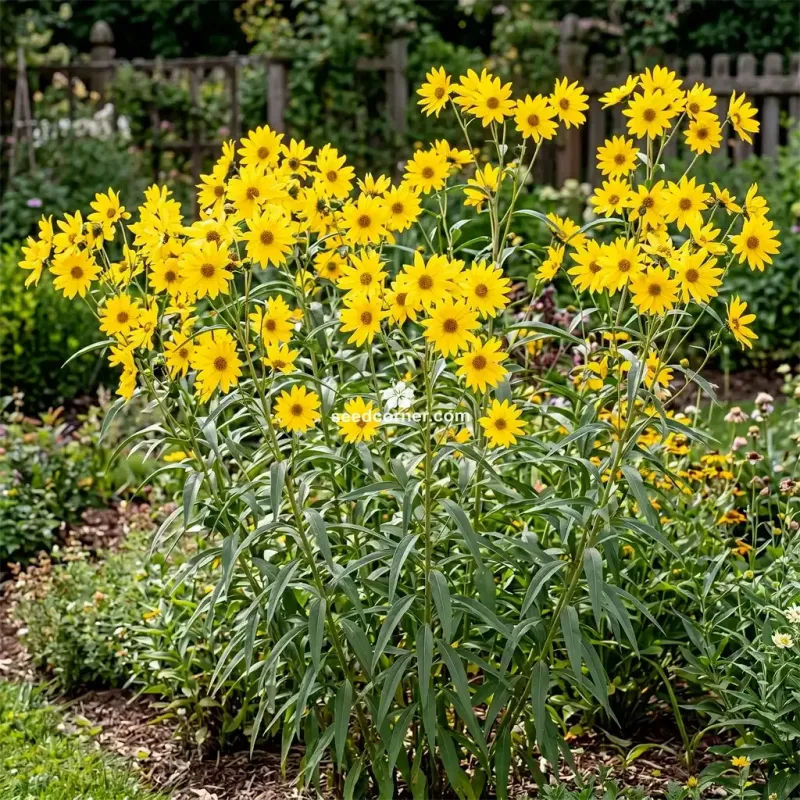
Late-season yellow flowers on a six- to ten-foot plant sound dramatic, and Maximilian sunflower, Helianthus maximiliani, delivers exactly that kind of presence. This warm-season native perennial grows fast once temperatures climb.
It forms a dense, upright screen that blocks harsh afternoon sun from plants growing on its eastern or northern side. The narrow, lance-shaped leaves cover the stems from base to tip, adding to the shading effect.
Maximilian sunflower thrives in full sun and tolerates a range of soil conditions, including dry to average sites. It is more drought-tolerant than many tall natives once its root system is established after the first season.
That adaptability makes it useful along fences, at the back of wide borders, or in spots where soil quality is inconsistent.
The spreading habit is the main planning consideration. This plant moves by rhizome and can expand its footprint steadily over several seasons.
Narrow foundation beds or small bordered spaces are not suitable homes. In a larger sunny bed or a naturalistic planting with room to grow, it earns its space.
Flowers open in late summer through fall and provide late-season resources for native bees. Spacing plants four to five feet apart and monitoring for spread each spring keeps the colony contained without much effort.
Plan the bed width before you plant.
5. Plant Culver’s Root For Filtered Shade And Vertical Bloom
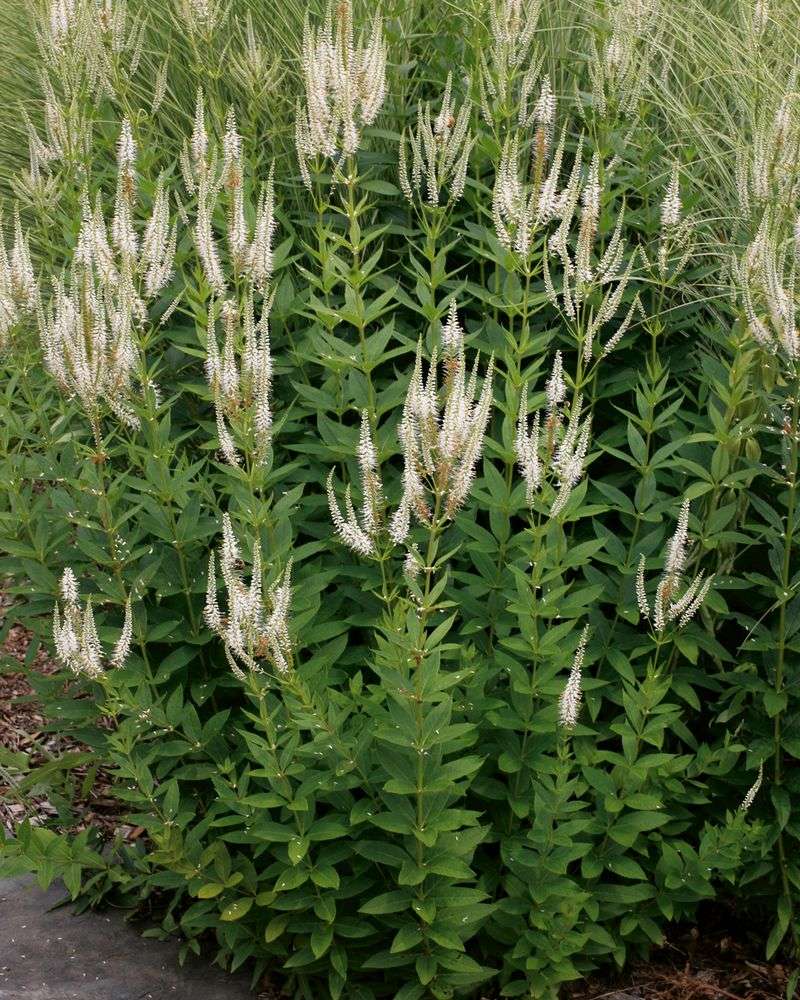
Tall, narrow flower spikes rise four to six feet above whorled foliage on Culver’s root, Veronicastrum virginicum. They give it a look that feels more architectural than most native perennials.
The shade it casts is lighter and more filtered than what broad-leaved plants like cup plant provide. That quality makes it useful for pairing with shorter neighbors that want some relief from harsh afternoon sun without losing too much light.
Culver’s root grows best in full sun to very light part shade and prefers consistently moist, fertile soil. Average Ohio garden beds with reasonable moisture retention work well.
Dry, sandy, or compacted soil slows its growth and reduces bloom. Established plants form an upright clump that expands slowly over time.
They are not aggressive spreaders, but they do benefit from two to three feet of space between plants.
The white to pale lavender flower spikes open in mid-summer and draw bumblebees, native sweat bees, and hummingbird moths in noticeable numbers.
Placing Culver’s root behind shorter summer bloomers like native coneflowers or black-eyed Susans creates a layered planting.
The tall spikes provide late-day sun filtering and vertical contrast at the same time. This plant does not need staking in a sheltered spot.
In open, windy sites, some support may help. It is a reliable, long-lived perennial that rewards good soil preparation at planting time.
6. Use Switchgrass To Soften Hot Afternoon Exposure
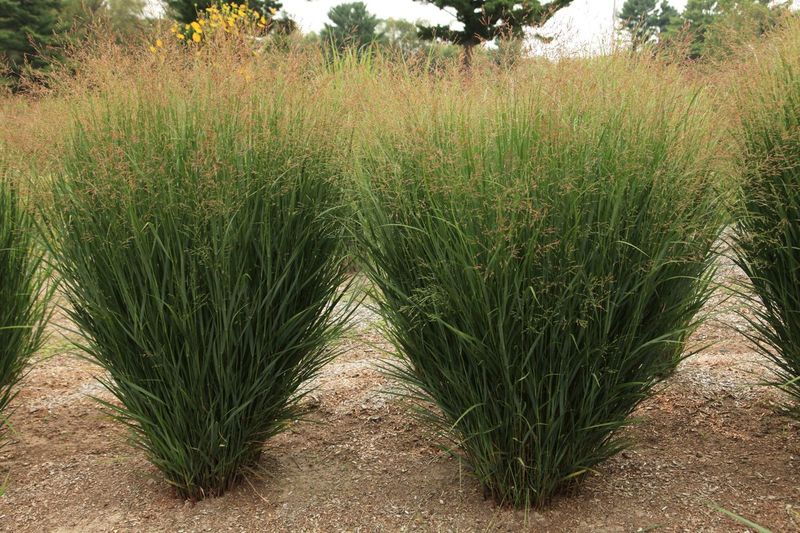
Reflected heat from a concrete patio or a gravel path can push afternoon temperatures well past what nearby plants prefer. Switchgrass, Panicum virgatum, does not block that heat with dense foliage.
Its upright, airy form filters moving air and softens direct sun exposure in a way that feels different from broad-leaved plants.
The fine-textured seed heads sway in the breeze and create a light, diffused shade that reduces harsh exposure without eliminating it entirely.
Native switchgrass is a warm-season grass that grows in full sun and adapts to a wide range of soil types, from moist lowlands to dry upland sites. Cultivars vary considerably in mature height, ranging from three feet to over six feet tall.
Always check the mature size of a specific cultivar before purchasing. Some compact selections are better suited to smaller beds, while taller cultivars work well at the back of a mixed border.
Switchgrass clumps are well-behaved. They expand slowly and do not spread aggressively by rhizome the way some grasses do.
Plant them two to three feet apart and allow the clumps to fill in naturally over two or three seasons. The seed heads persist through winter and provide food for small birds.
Pairing switchgrass with native asters, goldenrods, and coneflowers creates a planting that looks good from summer through the first hard frost of the season.
7. Grow Big Bluestem Behind Shorter Full-Sun Flowers
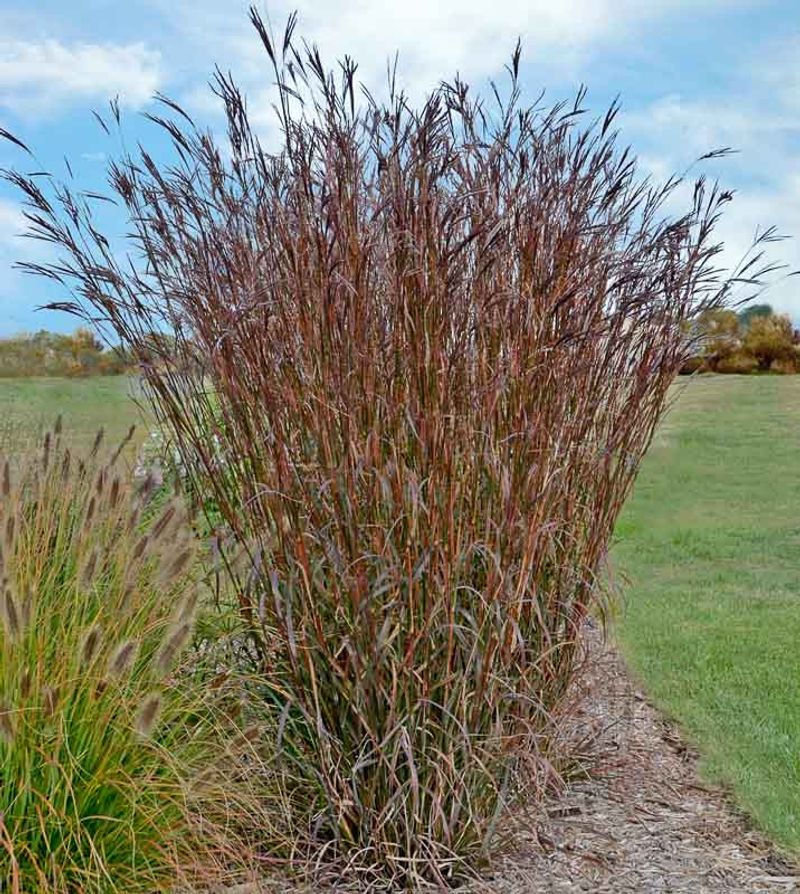
Few native grasses carry the visual weight of big bluestem, Andropogon gerardii, at the back of a sunny border. This warm-season grass reaches five to eight feet tall in a good season, with upright blue-green stems that turn copper, bronze, and rust in fall.
The distinctive three-parted seed heads, often called turkey foot, appear in late summer and hold their structure well into winter.
Big bluestem grows in full sun and prefers well-drained to average soil. It tolerates dry conditions better than many tall perennials once its root system is established, which typically takes a full growing season.
Moist, fertile soil encourages lush growth but can also cause flopping in some conditions. A site with good drainage and moderate soil fertility tends to produce the most upright plants.
As a background plant, big bluestem shades the soil at its base and provides late-day sun filtering for shorter plants growing in front of it. The shading effect is not heavy.
It is the kind of moving, filtered coverage that takes the edge off harsh western sun rather than eliminating it. Space plants two to three feet apart and avoid crowding them into narrow beds.
Big bluestem pairs naturally with native coneflowers, prairie dropseed, and wild bergamot. It is a long-lived grass that rewards patience and proper siting from the start.
8. Add Prairie Dock Where Huge Leaves Can Shield The Soil
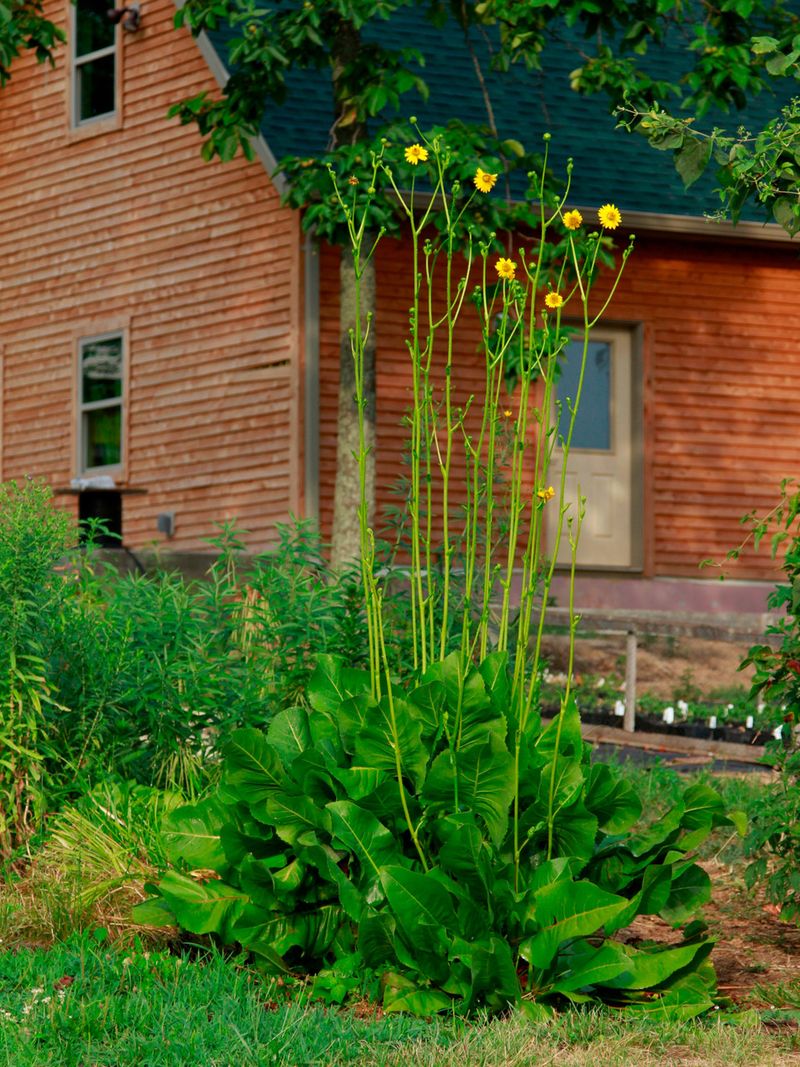
Among all the tall native plants suited to sunny regional beds, prairie dock, Silphium terebinthinaceum, has the most impressive leaves. The basal foliage can reach two feet long and nearly as wide, with a rough, sandpaper-like texture.
Those enormous leaves shade the soil around the plant’s base thoroughly, keeping ground temperatures lower and moisture retention higher during hot afternoons. Few other native perennials match that ground-level shading effect.
Above the basal leaves, slender flower stalks climb six to ten feet and produce small yellow flowers in mid to late summer. The stalks cast minimal shade themselves, but the leaf mass at the base creates a meaningful microclimate for nearby low-growing plants.
Prairie dock grows in full sun and requires deep, well-drained soil to support its long taproot. Shallow or compacted soil limits its growth and reduces its staying power over time.
Like compass plant, prairie dock should be placed in its permanent spot from the beginning. The taproot makes transplanting after the first season very difficult.
Choose a large, sunny bed or a prairie-style planting where it has room to develop without crowding its neighbors. Space it at least three to four feet from surrounding plants.
It is slow to establish but long-lived once settled. This plant suits experienced Ohio gardeners who are willing to plan ahead and give it the space it genuinely needs to perform well.