These Are The North Carolina Ground Covers You Plant Once And Never Have To Mulch Again
Mulching is one of those chores that sounds manageable until you’re actually doing it every spring across a big yard, hauling bags, spreading it out, watching it wash away in a heavy rain and break down by fall. Ground covers offer a real way out of that cycle.
The right ones spread steadily, suppress weeds on their own, and protect the soil the same way mulch does, except they come back every year without any help from you.
North Carolina’s climate supports a surprisingly wide range of ground covers, including some that stay green straight through winter.
A few of these get planted once, fill in over a season or two, and from that point on they basically take care of themselves. Your mulch budget quietly drops to zero.
1. Green And Gold
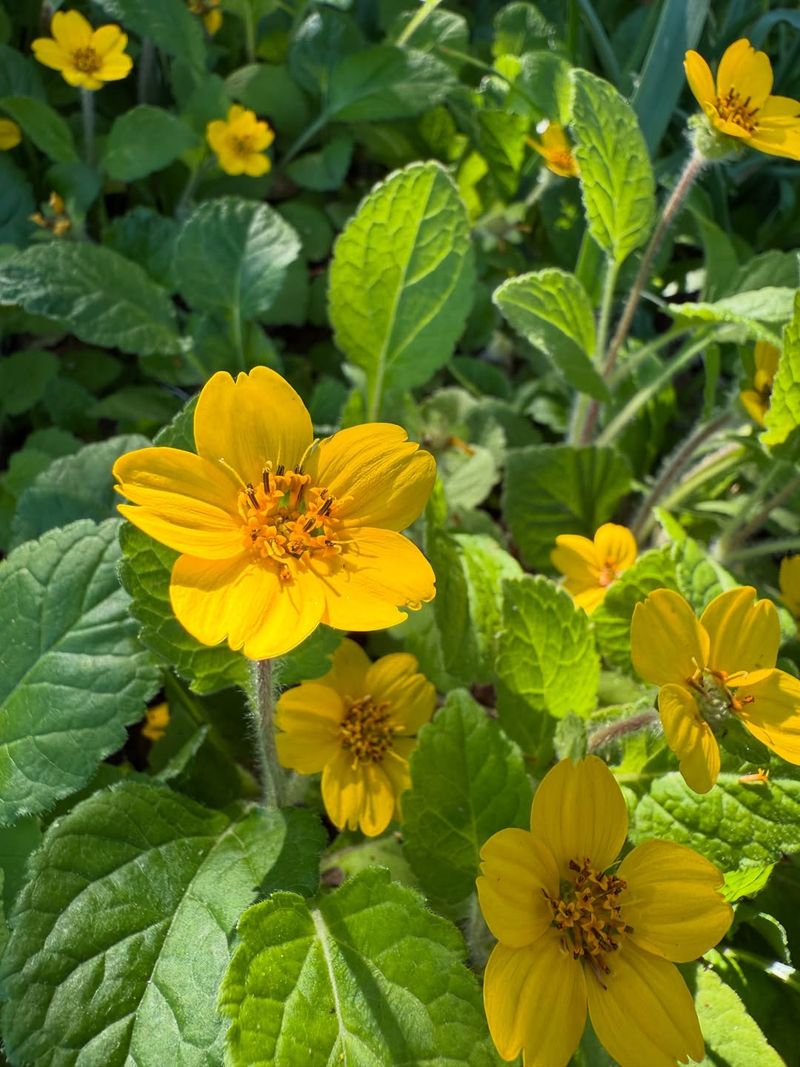
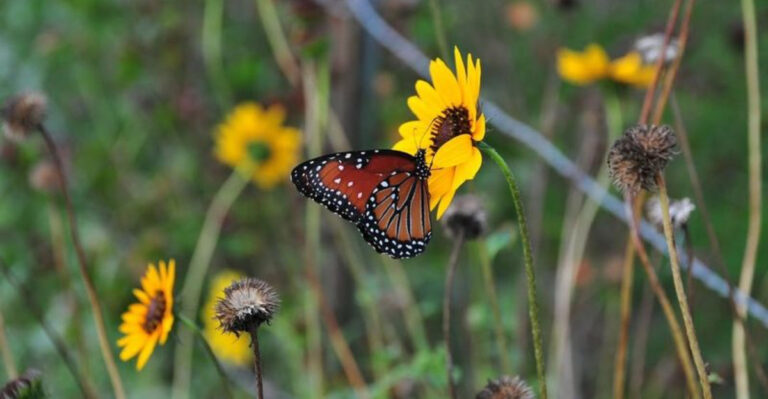
Bright yellow flowers popping up against a carpet of dark green leaves is one of spring’s best surprises, and Green and Gold delivers that show right in your own backyard. This native North Carolina wildflower is a true overachiever.
It spreads steadily to fill shaded and partly sunny spots, smothering weeds before they even get started.
What makes it especially valuable is the long bloom season. Most ground covers just give you foliage, but Green and Gold keeps producing cheerful yellow flowers from early spring well into fall.
That means color and coverage at the same time, which is a pretty great deal for a plant that practically takes care of itself.
It thrives in average to moist, well-drained soil and handles clay like a champ, making it ideal for the Piedmont and mountain regions of North Carolina. Once established, it needs almost no watering beyond natural rainfall.
Plant it in drifts under trees or along shaded borders, and it will knit together into a weed-suppressing mat within a season or two.
Pollinators absolutely love the flowers, so you get the added bonus of supporting bees and butterflies. Spacing plants about 12 inches apart gives them room to spread without taking forever.
Green and Gold is truly one of those rare plants that earns its place in any low-maintenance garden.
2. Foamflower
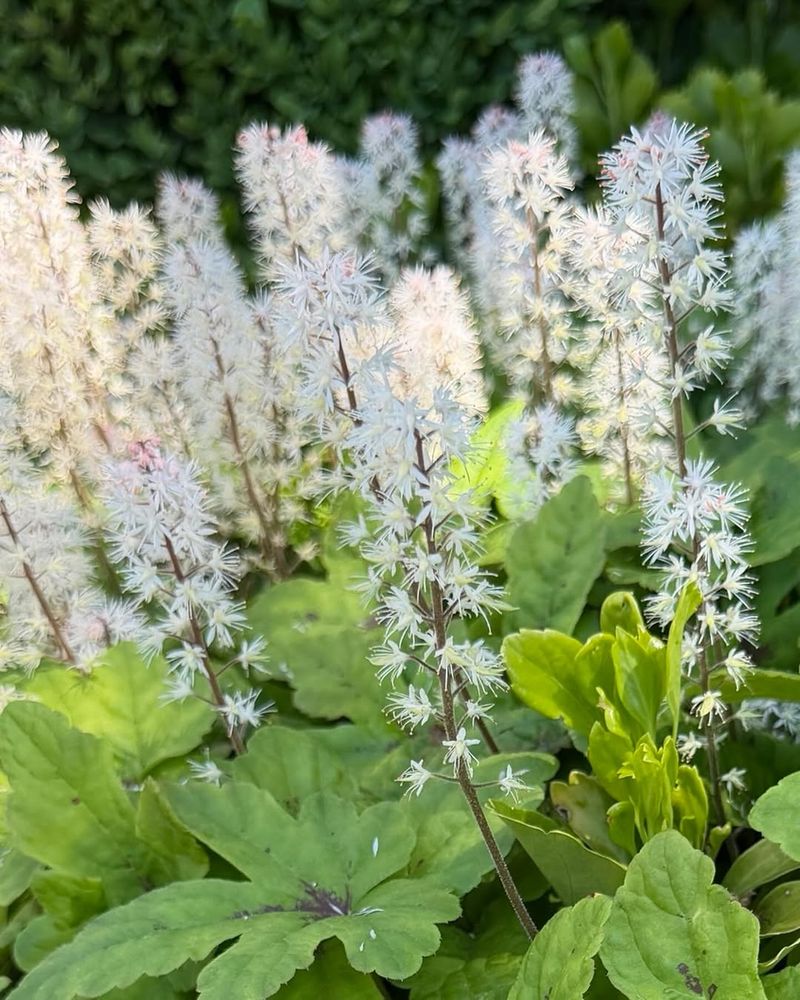
Picture a shaded garden bed suddenly erupting in feathery white flower spikes every spring, and you have a good idea of what Foamflower brings to the table.
Native to the eastern United States, Tiarella cordifolia is one of the most elegant ground covers you can grow in North Carolina, and it spreads all by itself through runners called stolons.
The foliage alone is worth growing it. Deeply lobed, maple-like leaves often show burgundy or bronze markings through fall and winter, giving the garden visual interest even when nothing is blooming.
Come spring, those soft foam-like flowers rise above the leaves and attract early pollinators looking for a meal after a long winter.
Foamflower prefers moist, humus-rich soil in full to partial shade, which makes it a natural fit under deciduous trees or along stream banks.
Once it settles in, it forms a thick mat that keeps the soil cool and moist without any mulch needed on top. The roots hold the soil beautifully, which is a bonus on sloped beds prone to erosion.
Your North Carolina Garden Changes Every Week. Your Plan Should Too.
Gardening in North Carolina changes quickly throughout the season. Every Friday you’ll receive a simple weekly plan showing exactly what to plant, prune, fertilize, harvest, and protect so you never miss the right timing.
Spacing plants about 12 to 18 inches apart gives each one room to send out runners and fill the gaps naturally.
Within two growing seasons, you will have solid coverage that looks lush and intentional. Few plants reward so little effort with so much beauty.
3. Wild Ginger
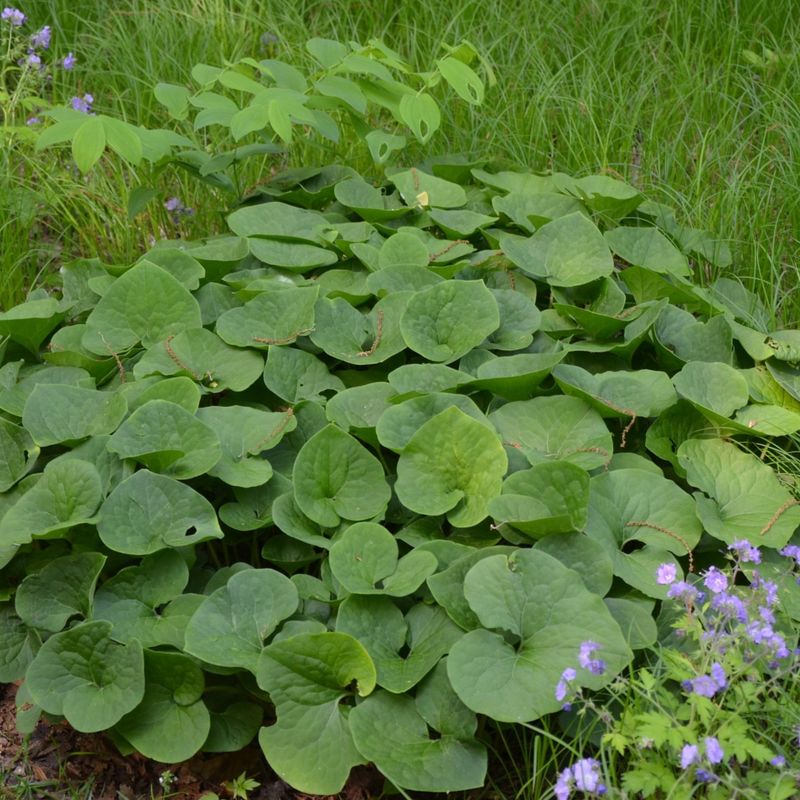
There is something almost magical about a plant that thrives in deep shade where almost nothing else will grow. Wild Ginger is that plant.
Its large, heart-shaped leaves form a lush, low canopy that shades the soil below so completely that weeds simply cannot compete. It is one of nature’s best weed suppressors, and it looks great doing the job.
Native to woodland areas throughout the eastern United States, Asarum canadense has been quietly carpeting forest floors long before anyone thought to put it in a garden.
The leaves smell faintly of ginger when crushed, which is a fun detail to share with curious visitors.
Hidden underneath the foliage in early spring, small brownish-purple flowers bloom at soil level, pollinated mostly by beetles and ants.
This plant is perfectly suited to the moist, shaded conditions found in mountain and Piedmont North Carolina gardens. Rich, well-drained soil with good organic content is ideal.
Once planted, Wild Ginger spreads slowly but surely through rhizomes, gradually filling in a bed without ever becoming invasive or aggressive.
Patience is key with this one. It will not cover ground as fast as some other options, but the payoff is a rich, dense mat that looks like a natural woodland floor.
Plant it under large trees or along shaded pathways for a look that feels effortless and completely at home in a North Carolina landscape.
4. Allegheny Spurge
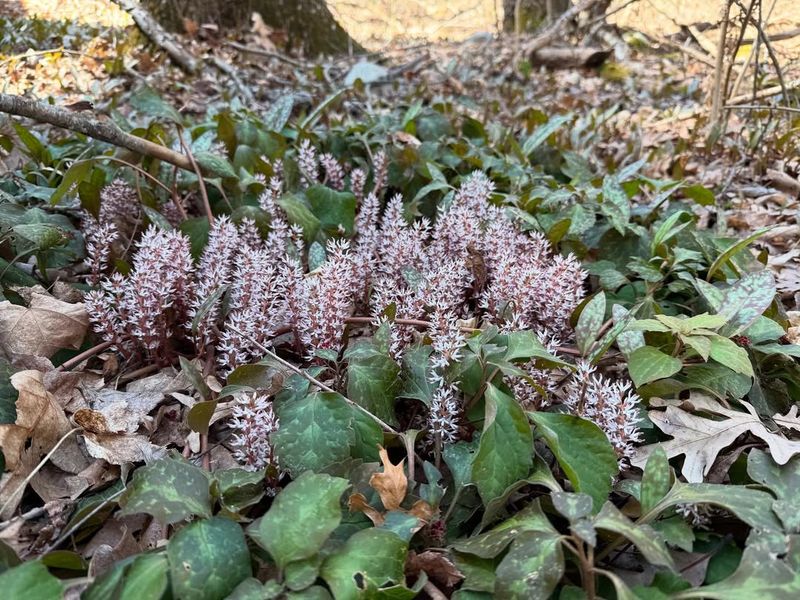
Most gardeners know Japanese Pachysandra, but the native American version is actually better suited to Southern gardens and far more interesting to look at.
Allegheny Spurge features beautifully mottled, silver-marked leaves that hold through winter in much of North Carolina, giving the garden structure during the coldest months when everything else has gone quiet.
In early spring, fragrant white flower spikes emerge just above the foliage, adding a subtle but lovely detail to shaded beds. The flowers are small, but up close they are genuinely beautiful, and they attract early pollinators before most other plants have woken up.
After flowering, the plant settles back into its role as a reliable, spreading ground cover for the rest of the season.
Allegheny Spurge grows best in moist, slightly acidic, well-drained soil under the canopy of deciduous trees. It handles the heavy clay soils common in the Piedmont region surprisingly well, especially once established.
The spreading habit is slow and clumping, so it never becomes a nuisance, but it does fill in reliably over time to create a clean, polished look in foundation plantings and woodland borders.
One of its biggest advantages over its Japanese cousin is better heat and humidity tolerance, which matters a great deal in North Carolina summers.
Plant it 12 inches apart and give it one good watering session during dry spells in the first year. After that, it largely fends for itself with impressive consistency.
5. Creeping Phlox
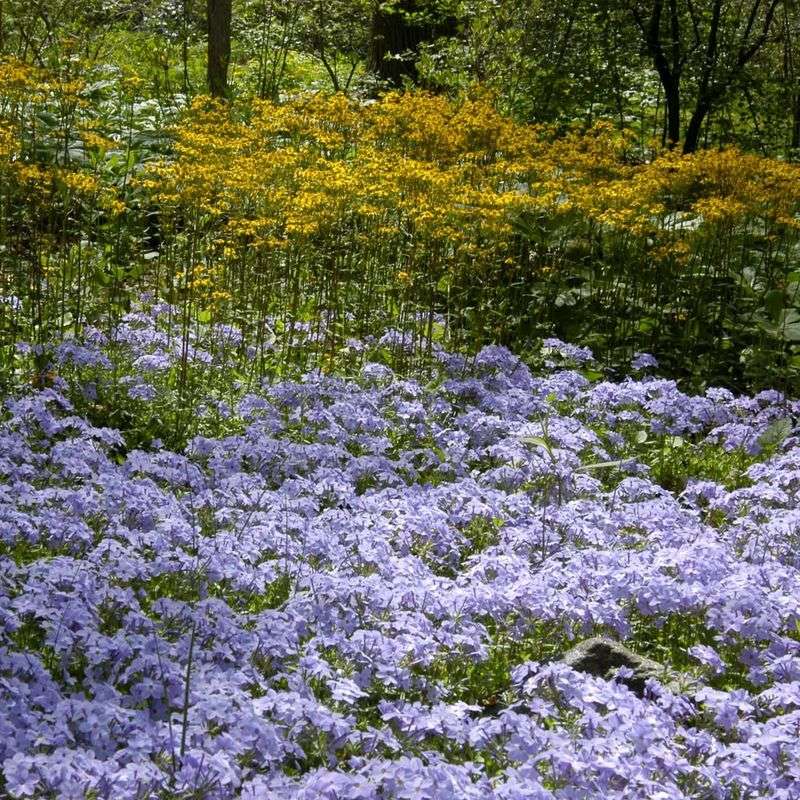
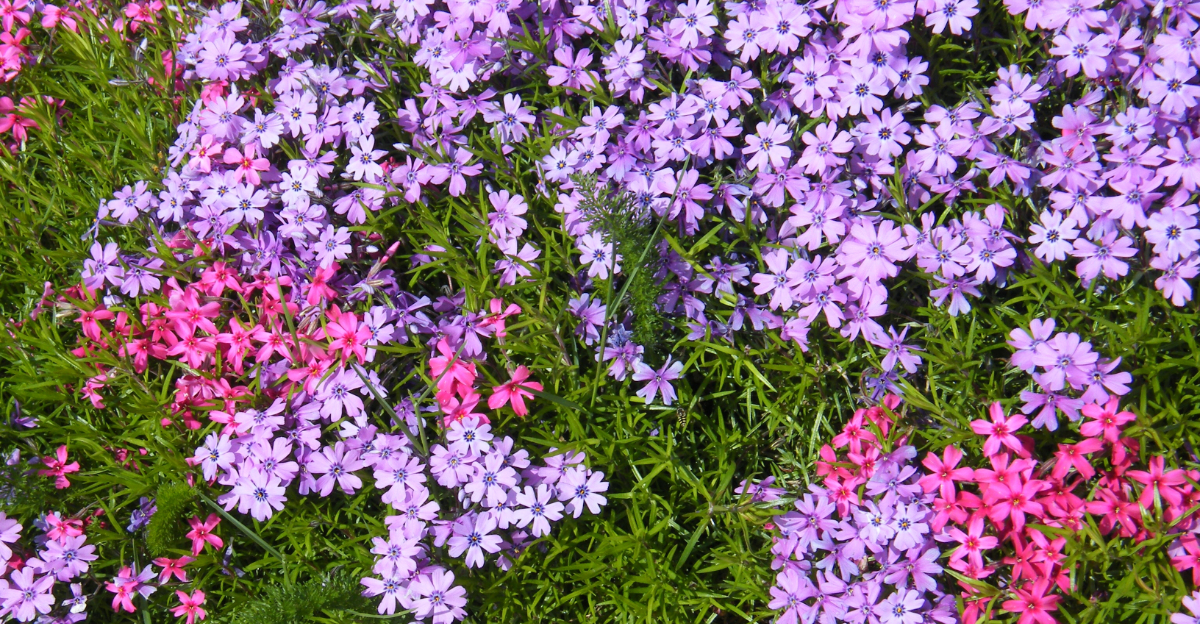
Few plants put on a spring show as dramatic as Creeping Phlox. When it blooms, the low mat of foliage almost disappears under a wave of purple, pink, or white flowers that seem to glow in shaded garden spots.
It is one of those plants that stops people mid-walk and makes them ask what it is. Unlike the more commonly sold Phlox subulata, which prefers full sun, Phlox stolonifera is a woodland native that actually thrives in partial to full shade.
That makes it a much better fit for the shaded borders, slopes, and woodland edges that are so common in North Carolina gardens.
It spreads by stolons to form a dense, weed-blocking mat that keeps the soil covered year-round.
The foliage is semi-evergreen in warmer parts of the state, meaning you get ground coverage even in winter. Moist, humus-rich, slightly acidic soil suits it best, and it grows happily under oaks, maples, and other large shade trees.
Once established, it tolerates drought reasonably well and requires almost no maintenance beyond an occasional trim after flowering to keep it tidy.
Butterflies, bees, and hummingbirds are all drawn to the flowers, so you are supporting local wildlife at the same time. Spacing plants about 12 to 18 inches apart gives them room to spread and fill in naturally.
Within a couple of seasons, you will have a flowering carpet that looks like it took years of effort but really did not.
6. Cherokee Sedge
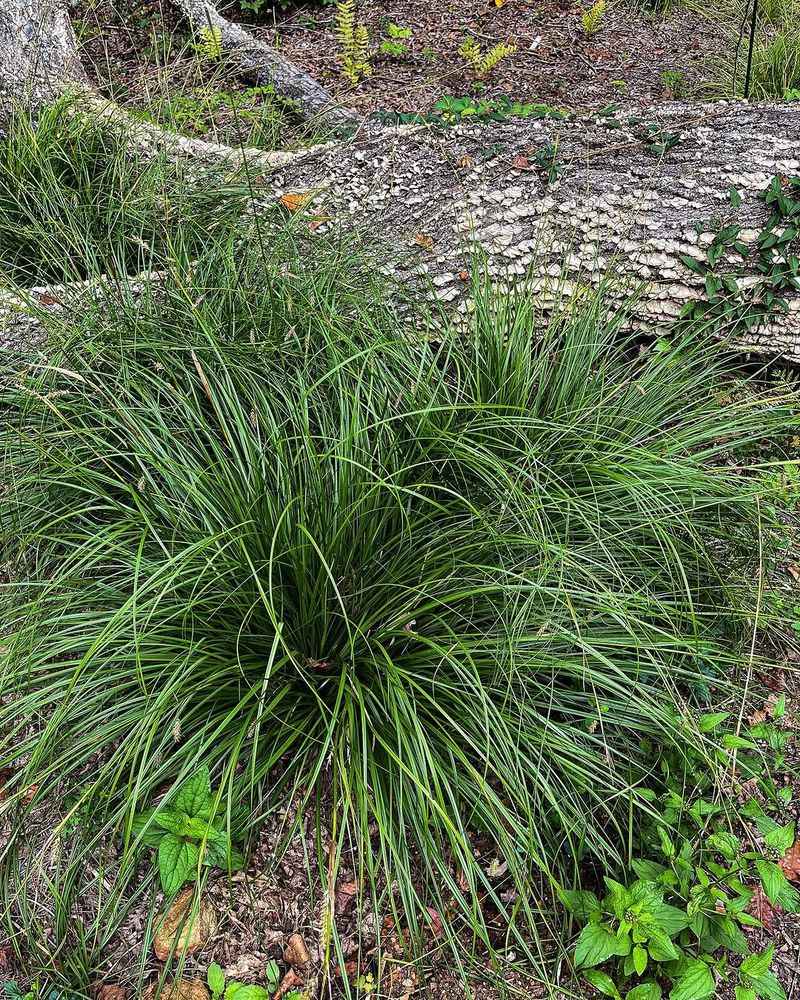
Grass-like plants have a way of adding softness and movement to a garden that broad-leaved ground covers simply cannot match.
Cherokee Sedge does exactly that, with gracefully arching, bright green blades that sway gently in the breeze and form a tidy, weed-suppressing mat in shaded spots across North Carolina.
Native to the Southeastern United States, Carex cherokeensis is one of the most underused native plants available to Carolina gardeners. It handles shade, clay soil, and occasional wet feet with equal composure, which is a rare combination.
Most ornamental grasses struggle in dense shade, but Cherokee Sedge actually prefers it, making it an excellent solution for those tricky dark corners under large trees.
The plant grows in clumping tufts that slowly spread and fill in a bed without becoming invasive.
It stays relatively low, reaching about 12 to 18 inches tall, which makes it ideal for edging paths, borders, and foundation plantings where you want a clean, natural look without constant trimming.
It stays green through mild North Carolina winters, giving the garden a finished appearance even in January.
One practical tip worth knowing: Cherokee Sedge handles foot traffic poorly, so keep it away from high-traffic areas. Plant it where it can spread undisturbed, and it will reward you with years of lush, grass-like coverage that never needs mulching.
Few plants offer this combination of beauty, toughness, and zero-maintenance appeal in a shaded Southern garden.
7. Partridgeberry
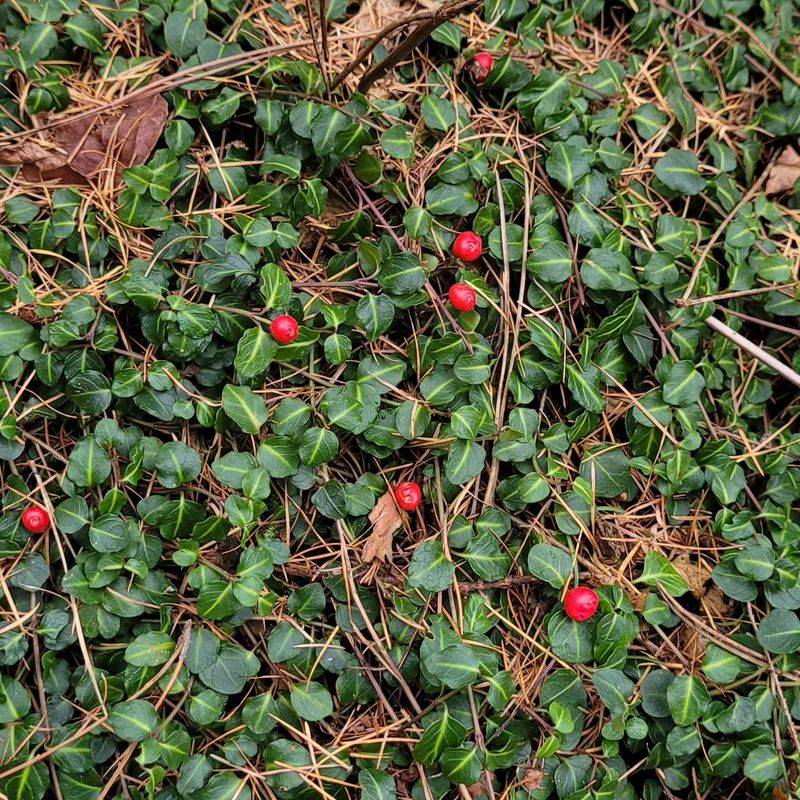
Tiny, trailing, and absolutely charming, Partridgeberry is one of those plants that makes you stop and look closely. The small, paired, glossy green leaves hug the ground in a tight mat, and in late fall and winter, bright red berries dot the surface like little ornaments.
It is evergreen, slow-growing, and one of the most delicate-looking plants that is actually quite tough.
Native to eastern North American woodlands, Mitchella repens grows naturally in the kind of deep, moist shade that most ground covers refuse to touch.
It is perfectly at home under hemlocks, oaks, and other large forest trees in the mountains and Piedmont of North Carolina.
The soil needs to be acidic, moist, and rich in organic matter, similar to what you find on a natural forest floor.
The plant blooms in late spring with small, paired white flowers that have a faint fragrance. Those flowers develop into the red berries that persist through winter, providing food for birds like grouse, foxes, and wild turkeys.
Planting Partridgeberry means supporting the local food chain in a quiet but meaningful way.
Because it spreads slowly, it works best in small, intimate spaces rather than large open beds. Tuck it between tree roots, along mossy paths, or at the base of a woodland garden feature where it can creep outward gradually.
Once settled, it needs virtually no attention and rewards patient gardeners with a jewel-like carpet that genuinely improves with age.
8. Wild Strawberry
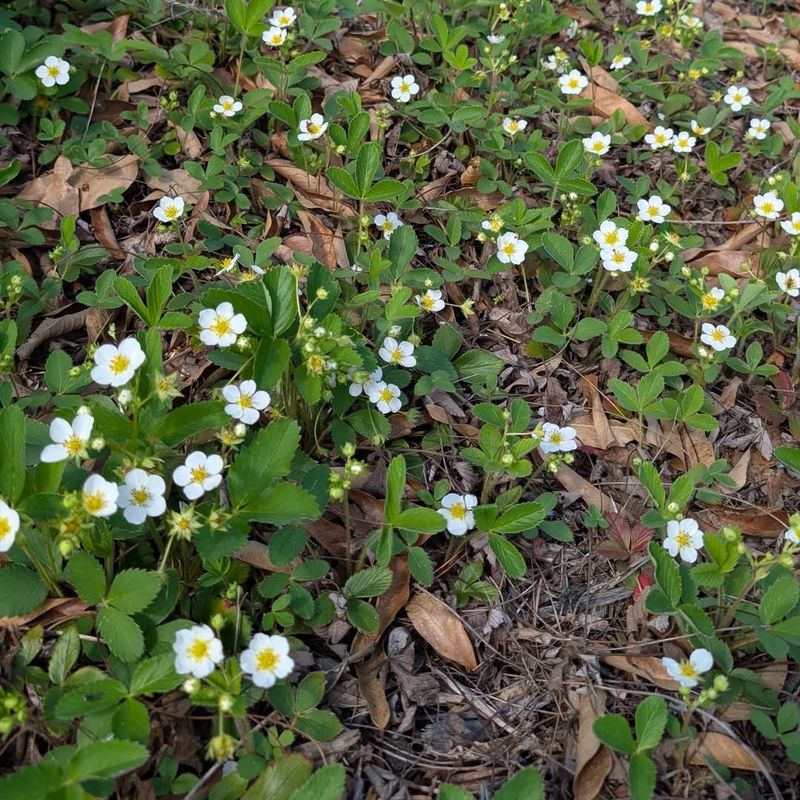
Wild Strawberry is proof that a ground cover can be both hardworking and genuinely fun. The trifoliate green leaves spread quickly through runners, covering bare soil in a season, and in spring the small white flowers bring in bees and butterflies from every direction.
Then come the tiny, intensely flavored red strawberries that are far tastier than anything you find at the grocery store.
Fragaria virginiana is native across much of North America and thrives in the full sun to partial shade conditions found along garden edges, open meadows, and disturbed areas throughout North Carolina.
It handles clay soil, sandy soil, and everything in between with surprising adaptability. Once established, it spreads through stolons to form a dense, weed-suppressing mat that keeps the soil covered without any help from mulch or fabric.
The foliage turns a beautiful burgundy red in fall, adding seasonal color just when most other ground covers are fading. In winter, the leaves remain semi-evergreen in warmer parts of the state, keeping the ground protected during cold spells.
The plant is also completely deer-resistant in most gardens, which is a significant advantage in suburban and rural North Carolina areas.
Spacing plants about 12 to 18 inches apart gives the runners room to spread and fill in quickly. Within one full growing season, you can expect solid coverage on a sunny slope or garden edge.
Wild Strawberry is one of the rare ground covers that gives back in flavor, color, and wildlife value all at once.