These Are The Ohio Boxwood Plants Showing Box Tree Moth Warning Signs Right Now
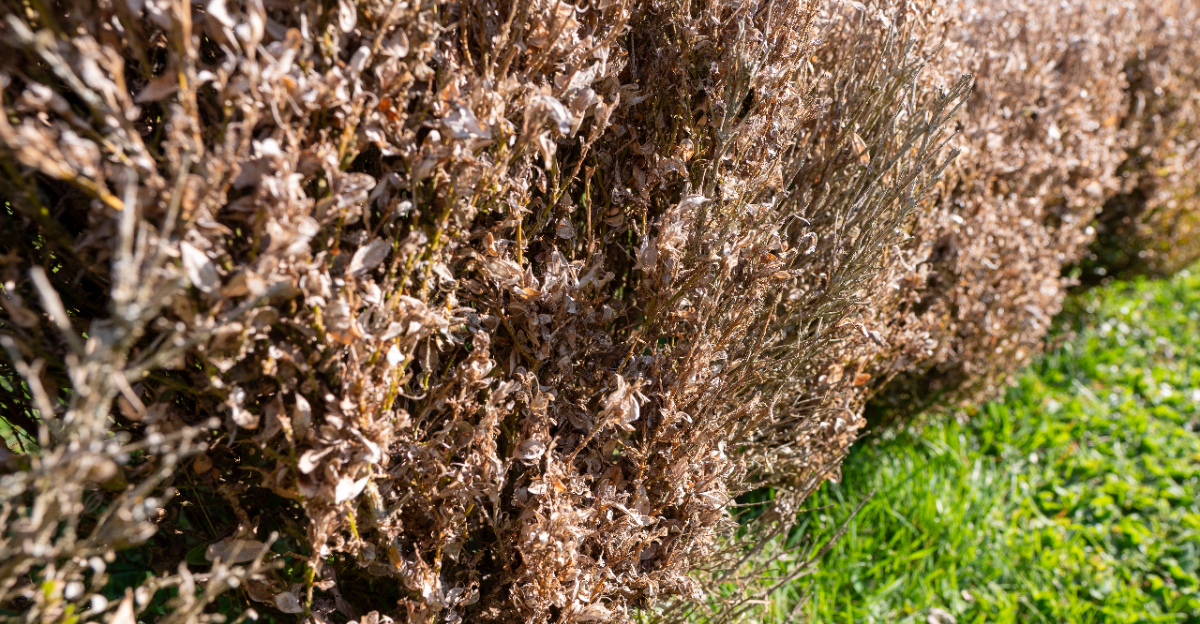
Box tree moth has arrived in Ohio and boxwood owners across the state are starting to see what that actually looks like up close. Not just news coverage and county alerts.
Real damage, on real plants, in real yards. The problem with box tree moth is how easy it is to miss in the early stages.
The warning signs do not announce themselves loudly. A little webbing tucked inside the canopy.
Some interior foliage that looks slightly off. A handful of small caterpillars that blend in better than they have any right to.
By the time the damage becomes obvious from a distance, the infestation is already well established and far harder to address. Ohio boxwood owners who catch the early signs have options.
Those who wait until the exterior shows serious decline have far fewer. So what are the actual warning signs showing up on Ohio boxwood plants right now?
1. Chewed Boxwood Leaves Signal The First Warning Sign
Most people walk past their boxwoods without getting close enough to notice the small but telling signs on individual leaves. Box tree moth larvae feed on boxwood foliage, and one of the earliest clues they leave behind is chewed leaf edges.
You might see missing tissue, uneven margins, or leaves that look almost see-through, like the green layer has been scraped away.
Dense boxwood shrubs can hide this kind of damage really well. The outer shell of the plant might look green and full while the inner branches already show feeding activity.
That is why a quick visual check from a few feet away is not enough.
Part the branches and look inside, especially toward the base and along the lower portions of the shrub. Early-stage chewing damage can be easy to confuse with leafminer activity, mite feeding, or even mechanical damage from foot traffic or tools.
Chewed leaves alone are not enough to confirm box tree moth. Other insects and environmental stressors can also cause leaf damage on boxwoods.
Before drawing any conclusions, check for additional symptoms like webbing, droppings, or caterpillars, and document what you find with clear photos.
State University Extension and the Ohio Department of Agriculture can help you interpret what you are seeing. Do not prune or discard anything until you have a clearer picture of what is going on inside that shrub.
2. Curled Brown Leaf Edges Point To Box Tree Moth Feeding
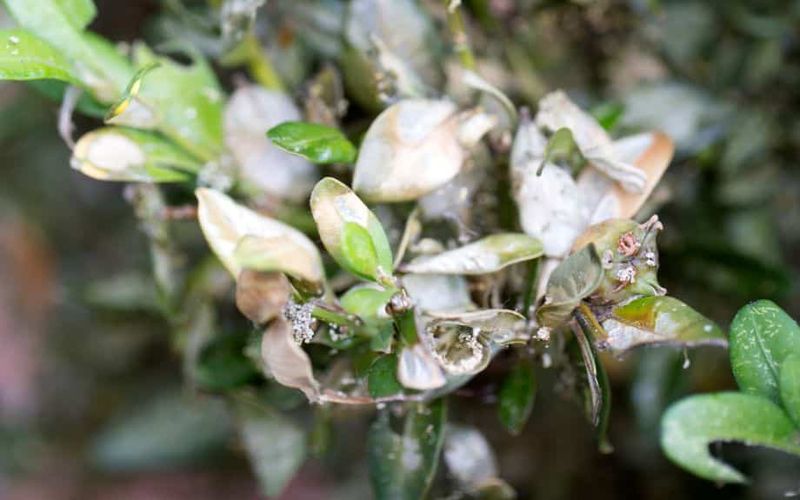
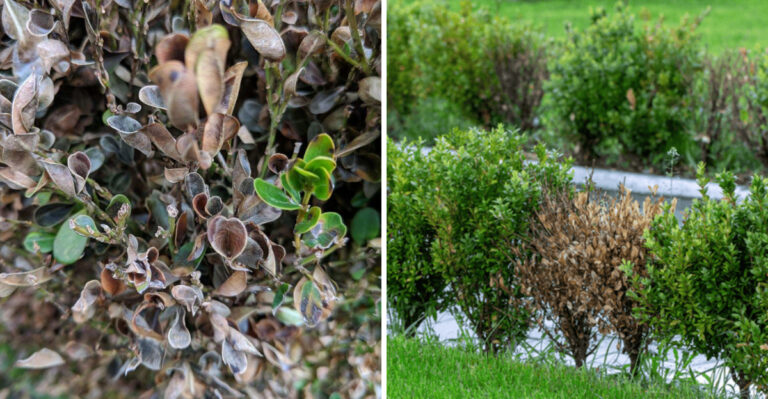
Curled leaves on a boxwood are one of those symptoms that can sneak up on you. State University Extension has noted that box tree moth feeding can cause leaves to curl, turn brown, or look distorted.
This is especially likely after repeated feeding on the same area of the plant. The curling effect can make damaged foliage look almost like it has been scorched or dried out.
What makes this symptom especially worth knowing is that boxwoods tend to hide damage inside their dense growth. A curled brown leaf tucked into the middle of a shrub is easy to overlook unless you are specifically looking for it.
Your Ohio Garden Changes Every Week. Your Plan Should Too.
Gardening in Ohio changes quickly throughout the season. Every Friday you’ll receive a simple weekly plan showing exactly what to plant, prune, fertilize, harvest, and protect so you never miss the right timing.
Gently spreading the outer branches and checking inward is a habit worth building right now. This is especially important if you live in or near areas where box tree moth has been detected in this state.
That said, curled brown edges are not exclusive to box tree moth. Drought stress, winter injury, root problems, and fungal diseases can all produce similar-looking leaf symptoms.
The key is to look for a cluster of signs together rather than treating one symptom as a definitive answer.
If you find curled leaves alongside chewing, webbing, or frass, that combination is worth reporting. Take sharp photos of the affected leaves from multiple angles.
Then contact your local county Extension office or the Ohio Department of Agriculture for next-step guidance before doing anything with the plant.
3. White Webbing Inside Boxwoods Deserves A Closer Look
Webbing inside a boxwood shrub is one of those clues that almost no one notices unless they are actively looking for it. Box tree moth larvae can spin webbing within the foliage, particularly inside the shrub where light and air circulation are limited.
From the outside, the plant might look completely normal.
To check for webbing, gently separate the outer branches and look into the interior. You are not trying to tear the shrub apart.
A slow, careful spread of a few branches at a time gives you a view of the inner structure without causing more damage. A flashlight can help if the shrub is especially thick.
Webbing by itself can also be produced by spider mites or other small arthropods that sometimes colonize boxwoods. So finding a strand or two of silk does not automatically point to box tree moth.
Look for webbing that appears alongside chewed leaves, greenish droppings, or small caterpillars. That combination is much more meaningful than any single sign on its own.
Boxwoods in shaded or sheltered spots, like those planted along a foundation or tucked under a tree canopy, may be harder to inspect thoroughly. Give those plants extra attention because larvae tend to favor protected areas inside dense growth.
If you find substantial webbing with other damage signs, photograph everything before touching it. Then reach out to the Ohio Department of Agriculture or State University Extension for guidance on what to do next.
4. Greenish Droppings Reveal Caterpillars Hiding In The Shrub
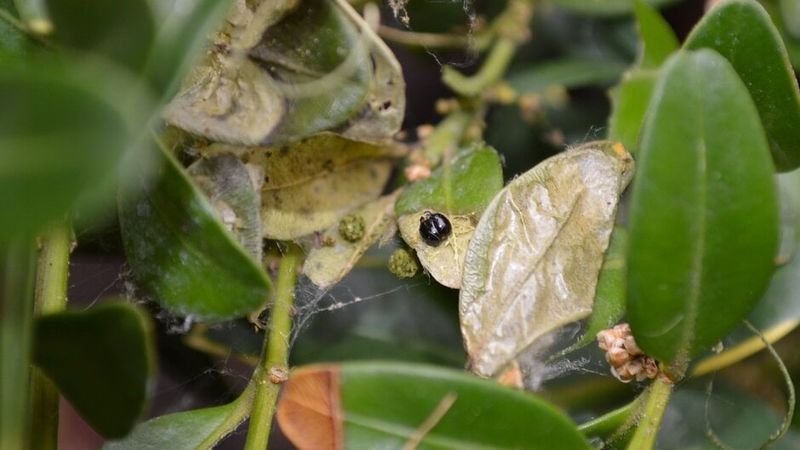
Frass is the technical word for insect droppings, and it is one of the more reliable clues that something is actively feeding inside your boxwood. State University Extension notes that box tree moth feeding can produce green-black frass.
It collects in the foliage, webbing, or along the inner branches of the shrub. Up close, it looks like tiny dark or greenish pellets, sometimes caught in silk threads or resting on leaf surfaces.
Finding frass means a feeding insect is present or was very recently active. It does not guarantee the culprit is box tree moth, but combined with chewed leaves or webbing, it raises the concern level significantly.
Check below areas of visible damage first, since droppings tend to fall and collect in lower branches or at the base of the plant.
Photographing frass is genuinely useful when you reach out for help. A clear close-up photo of the droppings alongside the surrounding damage gives specialists much better information.
It is more useful than a description alone.
Do not sweep away or remove the frass before documenting it. That material, along with any caterpillars you might find nearby, could be important for identification purposes.
If you spot frass and you are unsure what is causing it, treat the situation as worth reporting rather than waiting to see if the plant recovers on its own. Early attention leads to better outcomes for the shrub and the surrounding landscape.
5. Bare Interior Branches Show Damage Started Before You Noticed
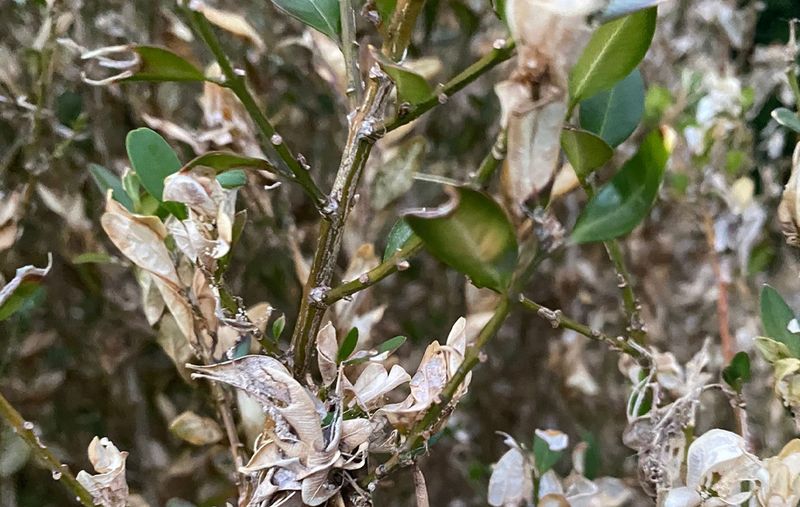
One of the trickier things about box tree moth damage is how long it can go unnoticed. A boxwood hedge can look presentable from the street while the interior is already thinned, stripped, or bare in patches.
The dense outer layer acts like a curtain, hiding what is happening deeper inside the plant.
Interior defoliation is a sign that feeding has been going on for a while. Box tree moth larvae are active feeders, and when populations build up, they can move through the inner structure of a shrub faster than most homeowners expect.
By the time the outside starts showing obvious browning, the inner damage may already be significant.
Make a habit of inspecting the interior branches, lower portions, and shaded sides of your boxwoods, especially during active growing and feeding periods.
If you live in or near a county where box tree moth has been confirmed, weekly checks are a reasonable precaution.
Look at your neighbor’s plants too, because a heavy infestation nearby raises the risk for your own landscape.
Bare interior branches can also result from natural shading, poor air circulation, or other boxwood problems like boxwood blight. Do not assume the cause before inspecting thoroughly.
Look for frass, webbing, or caterpillars alongside the bare branches to build a clearer picture.
If you find bare interior growth combined with other warning signs, contact your local county Extension office. Photograph the affected areas from multiple angles before doing any pruning or plant removal.
6. Striped Caterpillars Confirm The Box Tree Moth Problem
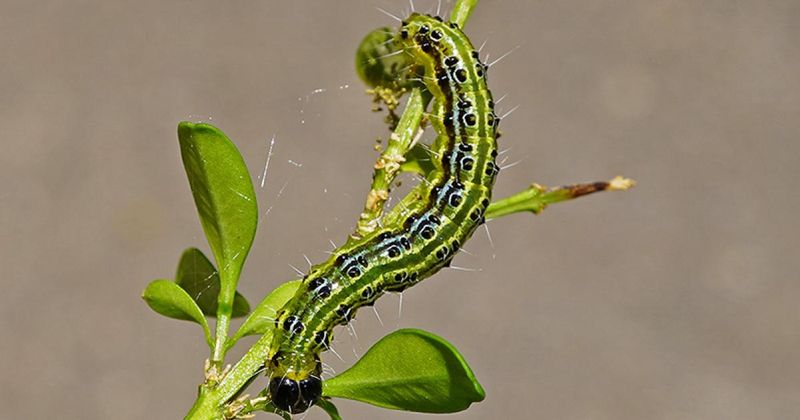
Spotting the actual caterpillar is the strongest piece of evidence you can find when checking boxwoods for this pest.
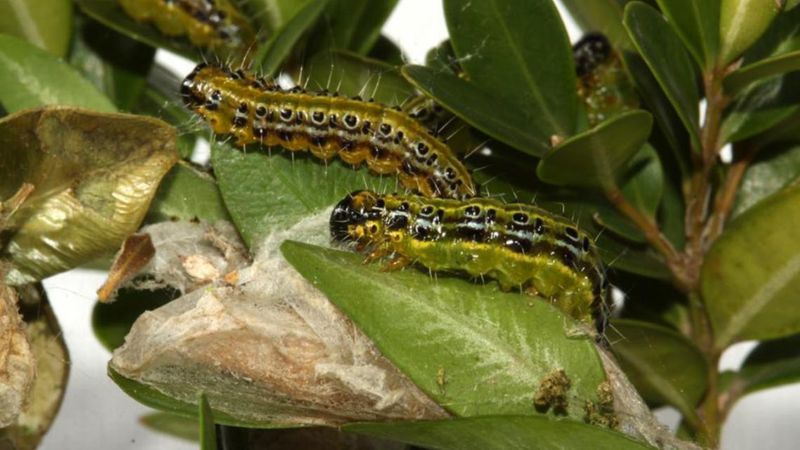
Box tree moth larvae are typically green to yellow-green with black and white stripes running along their body, along with dark spots and a dark or black head.
That description comes from current USDA APHIS and Extension guidance on identifying this pest.
Finding a caterpillar on boxwood alongside the other warning signs listed here is much more meaningful than leaf symptoms alone.
Damaged leaves can come from many sources, but a striped caterpillar actively feeding on your boxwood is a specific, reportable find.
Take clear photos from multiple angles before doing anything else.
Do not handle the caterpillar with bare hands if you are unsure what it is. Use a stick, a leaf, or gloves if you need to move it for a better photo.
Preserve the insect if possible, because Extension specialists or Ohio Department of Agriculture staff may want to examine it directly.
Larvae can be found inside the shrub, tucked in webbing, or feeding along the stems and leaves. They are not always easy to spot because their coloring blends with the plant.
Slow, careful inspection of the interior branches gives you the best chance of finding them.
Once you have good photos, report your find to the Department of Agriculture using their current reporting process. Do not move the plant or clippings to another location.
Early reporting helps track where the pest is spreading across affected areas of this state.
7. Fast Browning Means The Infestation May Already Be Heavy
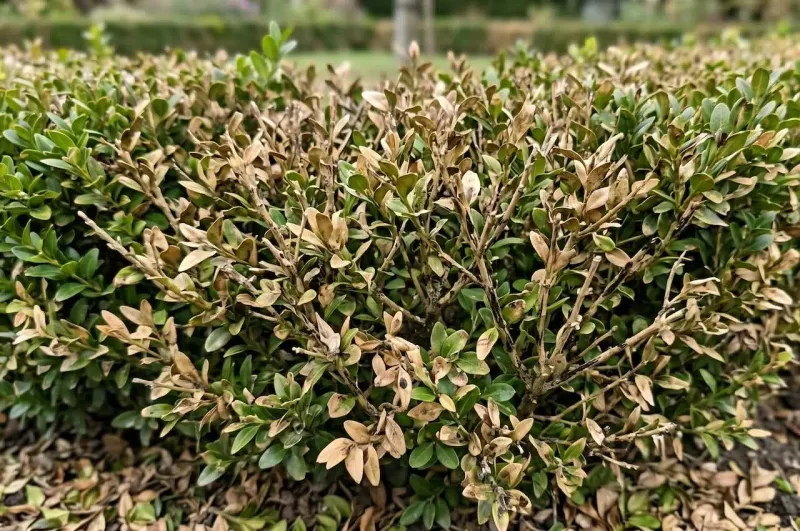
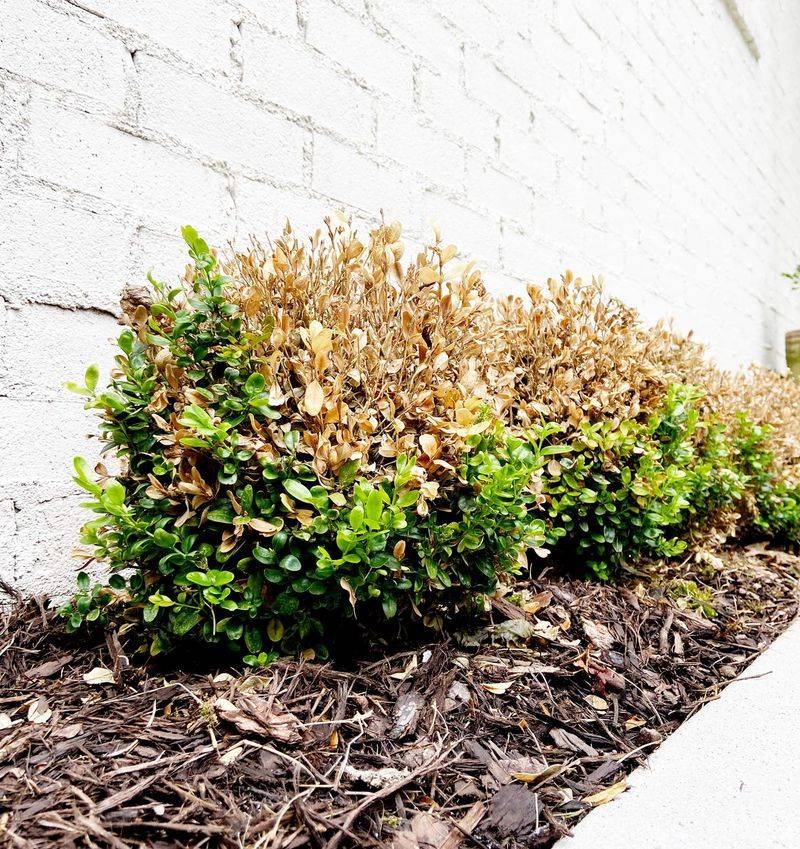
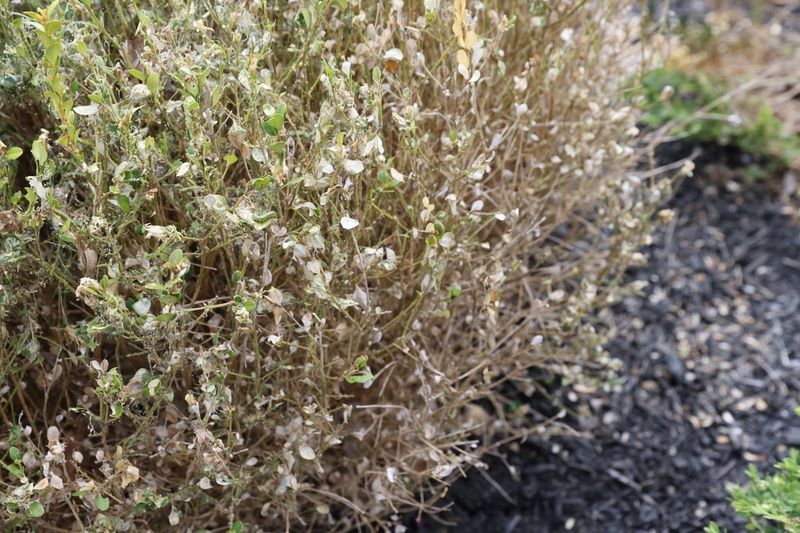
Sudden or fast-moving browning on a boxwood always deserves a second look. When a shrub goes from green to patchy brown in a short time, the instinct is often to blame heat, drought, or winter injury.
Those causes are real and common in home landscapes across this state. But heavy box tree moth feeding can produce a similar scorched or stripped appearance, and the two should not be confused without a proper inspection.
Severe feeding pressure can make a boxwood look almost burned, with large sections of foliage turning brown, dropping, or leaving bare stems behind.
That level of damage typically means larvae have been active for a while and the population has grown significantly inside the shrub.
Before treating or removing a rapidly browning boxwood, inspect it carefully. Look for webbing, frass, caterpillars, or chewed stems inside the plant.
Check the roots and soil for signs of drought stress or root damage too, because multiple problems can occur at the same time. Do not assume one cause when two or three might be contributing.
If you are in or near a county with confirmed box tree moth activity, heavy browning should prompt quick action. Contact State University Extension or the Ohio Department of Agriculture for guidance specific to your situation.
Do this before making any decisions about treatment or plant removal.
Speed matters when populations are high. Waiting a few weeks to see if the plant bounces back on its own is not the right call if box tree moth is a real possibility in your area.
8. Quarantine Counties Need Extra Care Before Moving Boxwoods
Plant movement is one of the fastest ways a pest like box tree moth spreads to new areas. Department of Agriculture has established quarantine rules for counties where box tree moth has been confirmed, and those rules exist for a reason.
Moving boxwood plants, clippings, nursery stock, or yard waste out of a quarantined area can carry the pest elsewhere. This can affect landscapes that have not yet been impacted.
Before you dig up a boxwood, move a container plant, or haul trimmings to a compost facility, check the current county quarantine list. Use the list from the Ohio Department of Agriculture.
Quarantine boundaries can change as new detections are confirmed, so a list that was accurate a few months ago may not reflect the current situation.
Homeowners are not the only ones who need to pay attention here. Landscapers, nurseries, garden centers, HOA groundskeeping crews, and property managers all need to stay current on movement rules.
A single shipment of infested plant material can introduce the pest to a neighborhood that has been free of it.
The Department of Agriculture website is the best place to find up-to-date quarantine information. You can also call your local county Extension office for help understanding what the rules mean for your specific situation.
Do not move any plant material from a boxwood you suspect may be infested. Photograph the plant, report your concerns, and wait for guidance from official sources before taking any action that could spread the problem further.