These Are The Pennsylvania Garden Plants That Spotted Lanternfly Avoids No Matter What
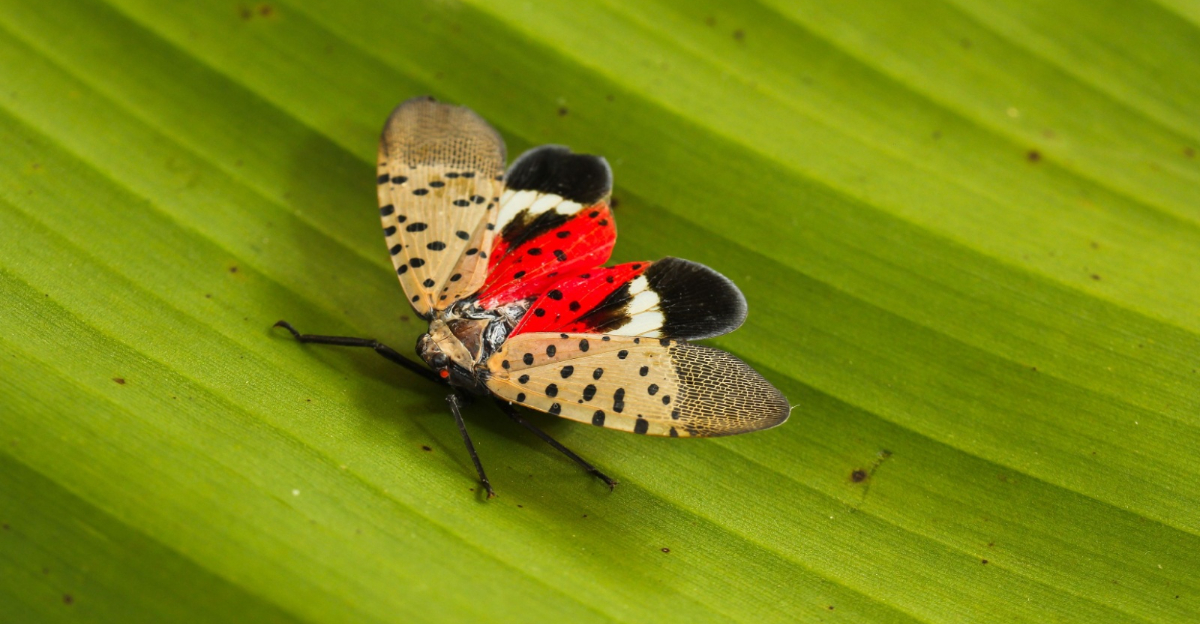
If you have spent any time in a Pennsylvania garden over the past few years, you already know spotted lanternfly is not exactly a shy insect.
It shows up everywhere, it travels in groups, and it has a remarkable talent for making itself comfortable on plants you actually care about.
By now most Pennsylvania gardeners know the basics: tree-of-heaven is its favorite hangout, grapes are a close second, and maples are definitely on the menu too.
But the question a lot of gardeners are really asking is whether there are plants that tend to attract less feeding attention.
That is a genuinely useful thing to know, and the answer is more interesting than a simple yes or no.
Conifers, it turns out, are a pretty good place to start, and understanding why can help you plant a little smarter going forward.
1. Pine Gets Less Attention
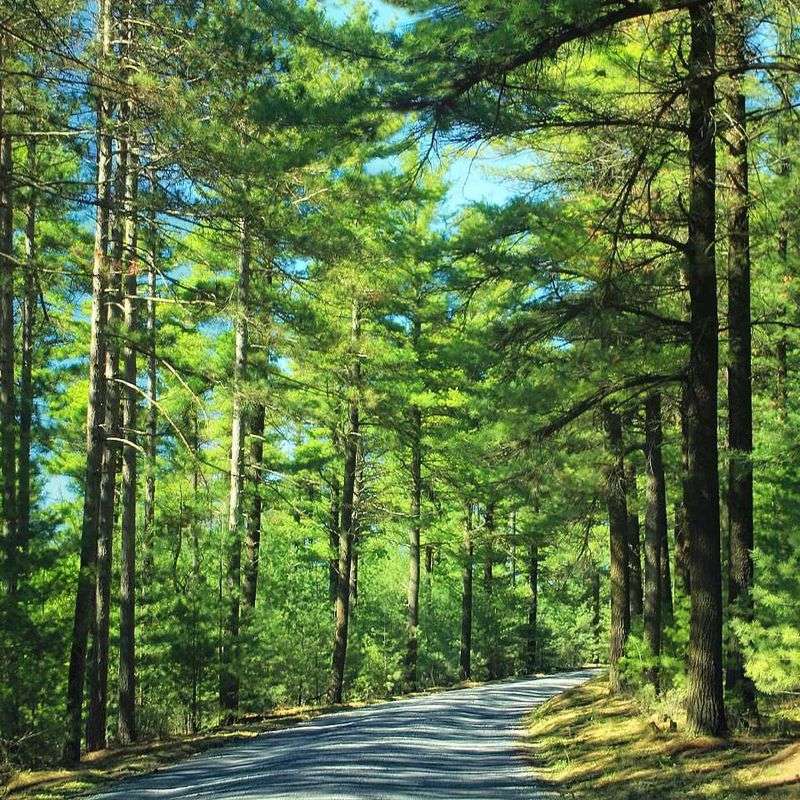
Eastern white pine is one of the most recognizable trees in Pennsylvania, planted across the state as a windbreak, privacy screen, and ornamental specimen.
Its soft, feathery needles and rapid growth make it a popular choice for homeowners who want to fill space quickly.
When spotted lanternfly populations began spreading across Pennsylvania, many gardeners wondered whether their pine trees would become targets.
Pines are generally considered poorer hosts for spotted lanternfly. The resin-rich tissue and needle structure of pines do not offer the same accessible sap that lanternflies seek in broadleaf trees like tree-of-heaven, black walnut, or red maple.
Spotted lanternfly has occasionally been observed resting on pine bark, but heavy feeding aggregations on pines are not commonly reported in Pennsylvania landscapes under typical infestation conditions.
That said, context matters a great deal. In areas where spotted lanternfly populations are extremely dense and preferred hosts have been stripped of easy feeding opportunities, even less-favored plants may receive some attention.
Gardeners in heavily infested parts should keep an eye on all their plants rather than assuming any one species is completely off the menu.
Still, pine remains a reasonable choice for homeowners who want to add evergreen structure to their yard while reducing the likelihood of heavy lanternfly feeding pressure on their most visible landscape plants.
2. Spruce Is Less Likely To Be Targeted
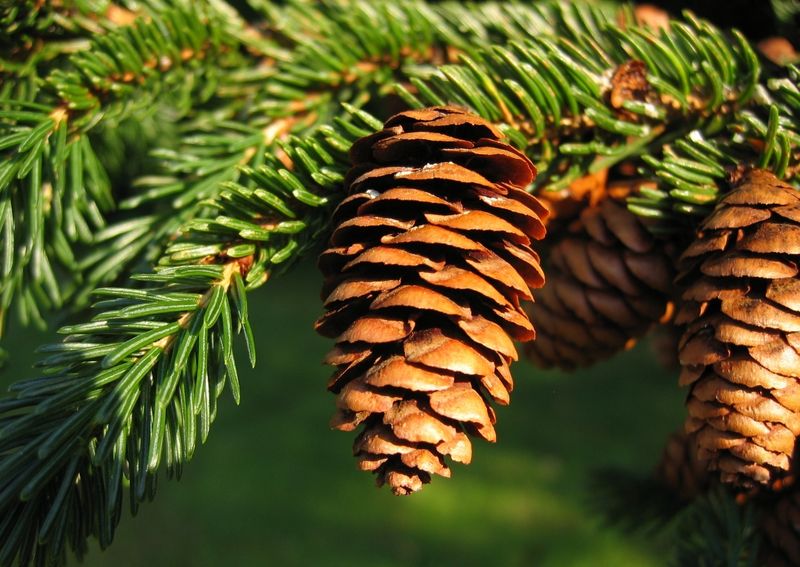
Spruce trees are a staple of Pennsylvania landscapes, used as windbreaks, specimen plantings, and holiday trees across the state.
Norway spruce and Colorado blue spruce are especially common in residential yards, where their dense branching and evergreen color make them standout features through every season.
When spotted lanternfly first began spreading across Pennsylvania, spruce owners paid close attention to whether their trees would become feeding sites.
Compared to the broadleaf trees that spotted lanternfly strongly prefers, spruce is generally considered a much less attractive host.
The resinous sap and needle structure of spruce make it a poor candidate for the kind of phloem feeding that lanternflies rely on when they target plants like grape, hops, or tree-of-heaven.
Reports of significant spotted lanternfly feeding on spruce in Pennsylvania home landscapes are uncommon under normal infestation conditions.
Your Pennsylvania Garden Changes Every Week. Your Plan Should Too.
Gardening in Pennsylvania changes quickly throughout the season. Every Friday you’ll receive a simple weekly plan showing exactly what to plant, prune, fertilize, harvest, and protect so you never miss the right timing.
Spruce does have its own set of pest and disease challenges that gardeners should be aware of, including adelgids, spider mites, and needle cast diseases. These issues are unrelated to spotted lanternfly but are worth monitoring.
The good news is that adding spruce to a yard for privacy or windbreak purposes does not typically mean inviting heavy lanternfly pressure.
Spruce can be a smart evergreen choice when you want functional screening without the added stress of managing a plant that lanternflies find highly appealing.
3. Fir Is Not A Strong Host
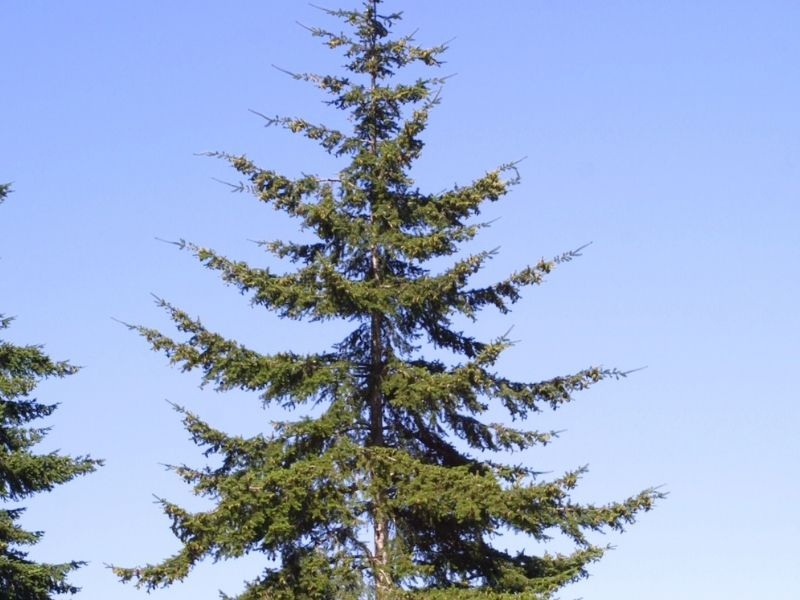
True firs have a quiet elegance that makes them appealing in Pennsylvania landscapes, though they can be particular about growing conditions.
Fraser fir, white fir, and balsam fir are among the species occasionally planted in yards as specimen trees or for holiday use.
Gardeners who have invested in these trees often wonder how spotted lanternfly activity in their area might affect them.
Firs are generally regarded as poor hosts for spotted lanternfly. Like other conifers, firs produce resinous compounds and have needle-bearing foliage that does not offer the kind of accessible, sugary phloem sap that spotted lanternfly prefers.
Heavy feeding aggregations on fir trees are not a pattern commonly observed in Pennsylvania residential landscapes, even in areas where lanternfly populations are well established.
Fir trees do have some sensitivity to heat, drought, and certain soil conditions in Pennsylvania, which can make establishment tricky in warmer or drier parts of the state.
Gardeners in cooler, higher-elevation areas of Pennsylvania often have better luck with firs than those in hotter lowland regions.
When site conditions are right, fir can be a rewarding evergreen that adds visual interest through all four seasons.
The fact that it tends to attract less spotted lanternfly attention than many broadleaf alternatives is one more reason to consider it when planning a low-pressure, low-maintenance evergreen planting in your yard.
4. Hemlock Is Less Appealing
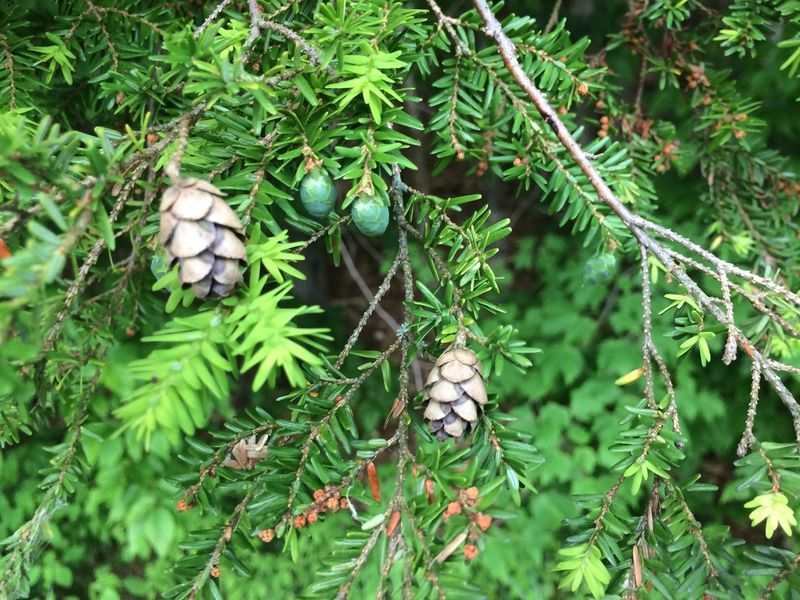
Eastern hemlock holds a special place in natural landscape.
Its graceful, drooping branches and delicate needles make it one of the most elegant native conifers in the eastern United States, and it shows up in Pennsylvania backyards as both a specimen tree and a dense privacy hedge when sheared.
With spotted lanternfly spreading across the state, hemlock owners have had understandable questions about whether their trees would become targets.
Eastern hemlock is generally considered a poorer host for spotted lanternfly compared to the broadleaf species the insect most heavily favors.
Spotted lanternfly has not been identified as a significant threat to hemlock in the way that woolly adelgid is, and heavy feeding aggregations on hemlock are not commonly reported in Pennsylvania landscapes.
The resinous, needle-bearing structure of hemlock simply does not offer the same sap-feeding opportunity that lanternflies seek in plants like grape or tree-of-heaven.
It is worth noting that hemlock in Pennsylvania faces serious pressure from hemlock woolly adelgid, an introduced pest that has caused widespread decline across the state.
Gardeners considering hemlock should research adelgid management before planting, particularly in lower-elevation areas of Pennsylvania where adelgid pressure tends to be higher.
When hemlock is healthy and planted in appropriate shade conditions, it can be a stunning addition to a yard, and the generally low lanternfly interest in this tree is a reasonable bonus for gardeners already dealing with multiple pest concerns.
5. Arborvitae Is Less Favored
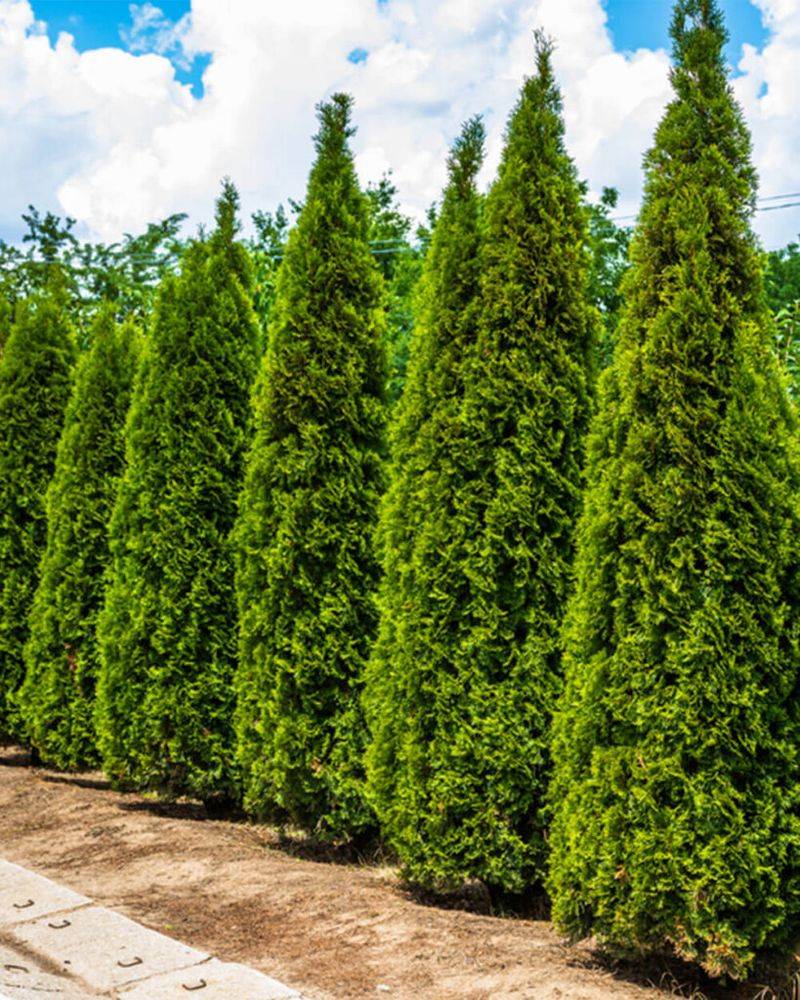
Few plants are more common in Pennsylvania residential landscapes than arborvitae. The Emerald Green variety lines thousands of property boundaries across the state, used as a fast-growing, low-maintenance privacy screen that stays green year-round.
When spotted lanternfly activity increased in Pennsylvania, many homeowners with arborvitae hedges started watching their plants more carefully for signs of feeding.
Arborvitae is generally not a preferred host for spotted lanternfly. Its scale-like foliage and resin-containing tissue make it far less attractive than the broadleaf trees and shrubs that lanternflies tend to concentrate on during the season.
Gardeners who have arborvitae growing near heavily infested areas typically report seeing lanternflies resting on the plants or using them as a surface rather than actively feeding on them in large numbers.
Arborvitae does have its own set of challenges in Pennsylvania landscapes, including deer browsing, bagworm infestations, and susceptibility to certain fungal issues in poorly drained soils. These concerns are worth factoring into any planting decision.
However, from a spotted lanternfly standpoint, arborvitae tends to receive less feeding pressure than grapes, hops, maples, or tree-of-heaven.
For homeowners who want a reliable privacy screen that is less likely to become a spotted lanternfly hotspot in the yard, arborvitae continues to be a practical and widely available choice across garden centers and nurseries.
6. Juniper Draws Less Feeding
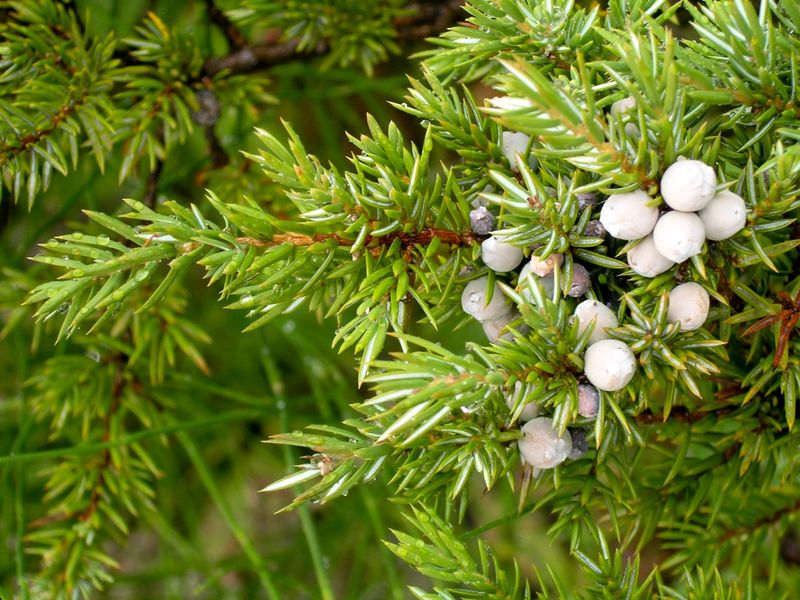
Junipers come in a remarkable range of sizes and forms, from low-spreading ground covers to tall columnar trees, and they are planted widely across Pennsylvania in both formal and naturalistic landscapes.
Their blue-green or silver foliage, tolerance for dry conditions, and year-round interest make them a dependable choice for slopes, foundation plantings, and mixed shrub borders.
Gardeners dealing with spotted lanternfly pressure have found that juniper tends to stay off the pest’s radar compared to more favored hosts.
Spotted lanternfly does not appear to find juniper particularly appealing as a feeding host. Junipers produce aromatic oils and compounds in their foliage and wood that likely contribute to their lower attractiveness to the insect.
In Pennsylvania landscapes where lanternflies are active, junipers typically do not show the kind of feeding aggregations or honeydew buildup that appears on heavily used hosts like tree-of-heaven or silver maple.
Junipers do have some pest concerns of their own, including cedar-apple rust, bagworms, and spider mites, which are worth monitoring in Pennsylvania plantings. These issues are unrelated to spotted lanternfly.
For homeowners who want to add low-maintenance, drought-tolerant evergreen structure to their landscape without adding a plant that lanternflies are likely to flock to, juniper is a sensible option.
It performs well across much of Pennsylvania and provides reliable texture and color through every season of the year.
7. False Cypress Is Not Preferred
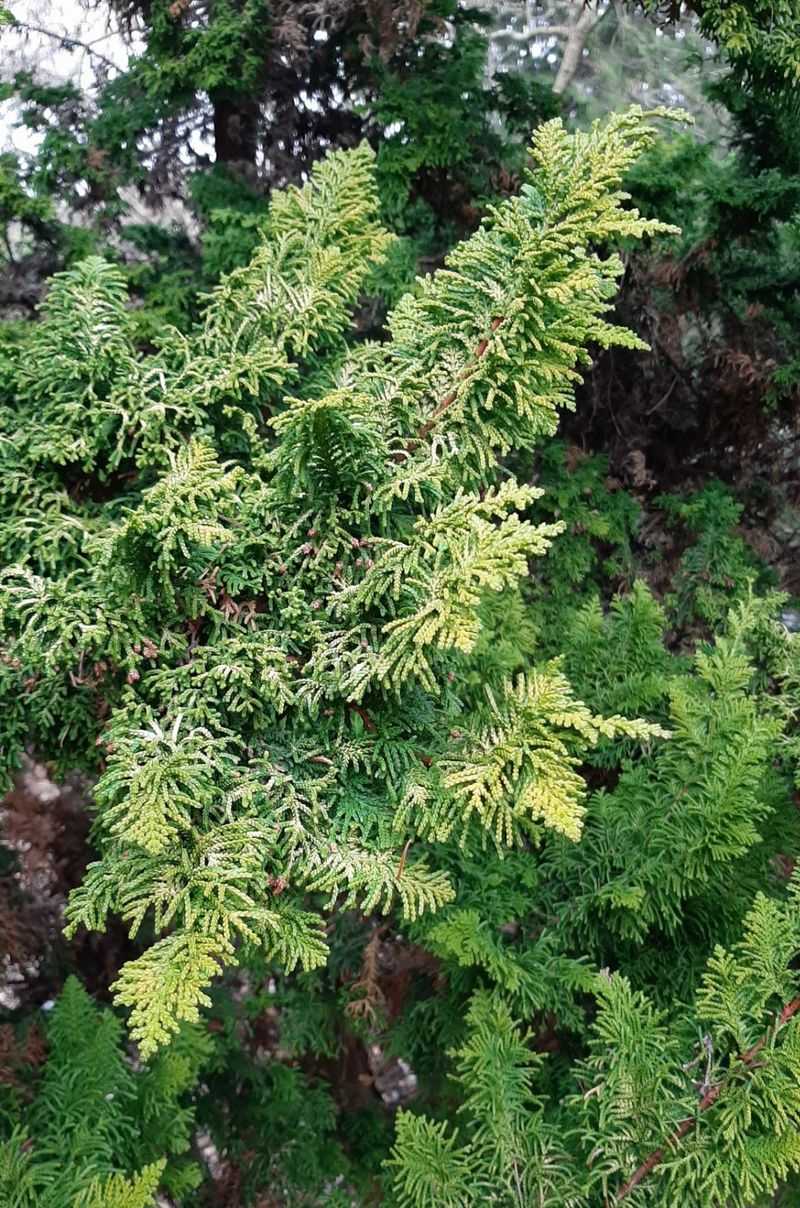
Hinoki false cypress and its many cultivars have become increasingly popular in Pennsylvania gardens over the past few decades, valued for their layered, feathery foliage and slow, sculptural growth.
Threadleaf false cypress varieties bring a soft, weeping texture to mixed borders and foundation plantings, and their rich gold or green tones add year-round visual interest.
Gardeners who have invested in these ornamental conifers are understandably curious about how spotted lanternfly activity might affect them.
False cypress is generally not considered a preferred host for spotted lanternfly. Like other conifers, it lacks the accessible sap profile that lanternflies seek in broadleaf trees and vines.
Gardeners with established false cypress plantings in lanternfly-active areas have not commonly reported heavy feeding aggregations on these plants, even when nearby broadleaf hosts were under significant pressure from the insect.
False cypress does best in well-drained, slightly acidic soil and benefits from protection against harsh winter winds in some parts of Pennsylvania, particularly in colder northern regions. Certain cultivars may show some winter burn in exposed locations.
These are site-specific considerations rather than pest-related ones.
From a spotted lanternfly perspective, false cypress fits comfortably into the category of plants that tend to receive less feeding attention than the broadleaf trees and shrubs that lanternflies strongly prefer throughout the Pennsylvania growing season.
It remains a refined and relatively low-pressure choice for ornamental gardens.