These Arizona Native Groundcovers Spread Fast Enough To Smother Weeds Before Spring
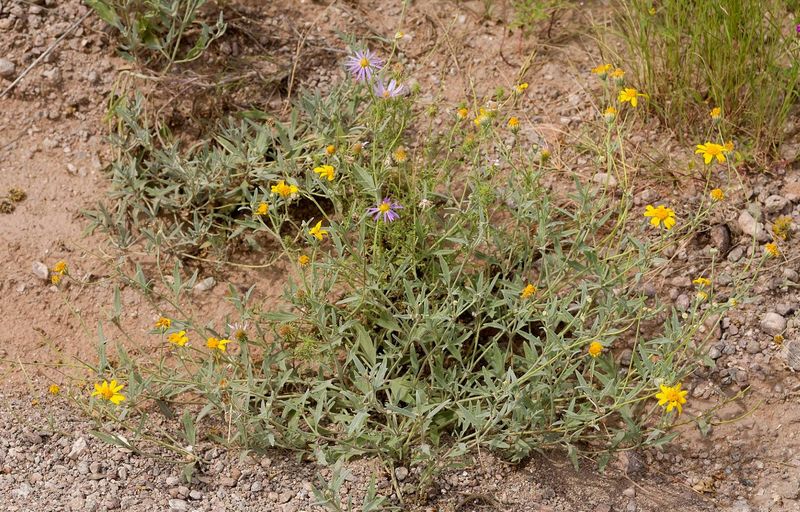
Every winter rain in the low desert wakes up a fresh crop of weeds, and by March they can take over bare dirt fast. The good news is that some native groundcovers grow quickly enough to claim that open soil first.
They shade the ground, hold onto moisture, and leave little room for weed seeds to sprout. Plant them in fall, and you could have a living carpet doing the weeding for you by spring.
1. Trailing Indigo Bush (Dalea greggii)
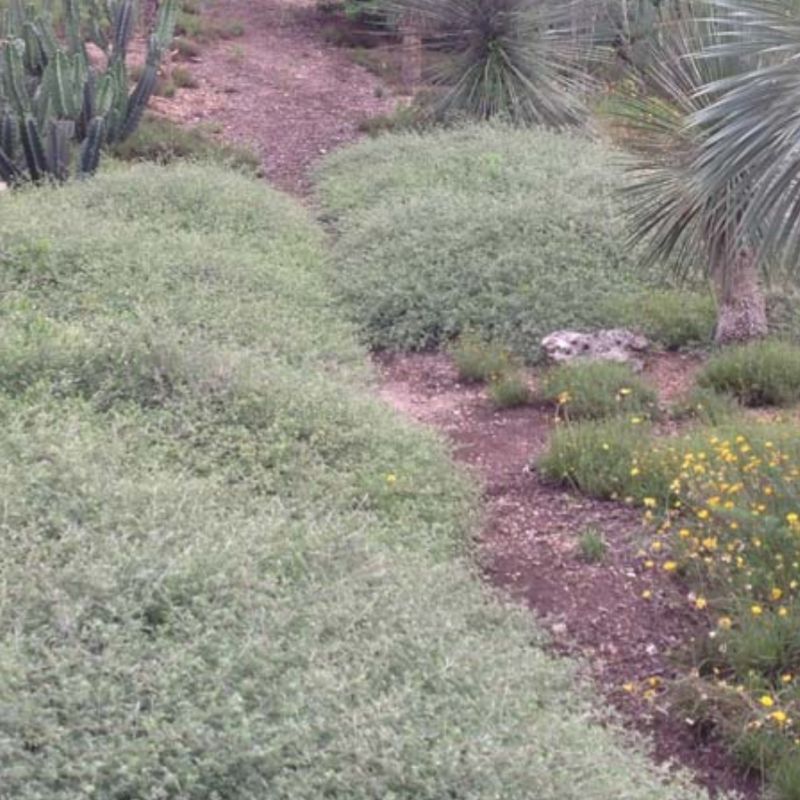
Picture a silver carpet that roots itself every time a branch touches the ground. Trailing indigo bush does exactly that, and a single plant can stretch 5 to 10 feet across.
That layering habit is what makes it such a strong weed blocker.
Its soft gray-green leaves form a dense mat over the soil surface. With sunlight blocked, many weed seeds have a hard time getting started.
Native to the Chihuahuan Desert, including parts of southern Arizona, it handles reflected heat from driveways and walls like a pro.
Small purple pea-shaped flowers show up from spring into summer, sometimes again in early fall. Native bees tend to visit them, so your weed control doubles as pollinator habitat.
That is a nice bonus for a plant that asks so little.
Once established, deep watering about every two weeks in summer, every three weeks in spring and fall, and monthly in winter is usually plenty. Skip the fertilizer and soil amendments, since it grows happily in rocky, alkaline ground.
Set out transplants in fall, roughly October through November, so roots settle in before the heat returns. Space plants 4 to 6 feet apart, and they should knit together faster than you might expect.
A light seasonal trim keeps edges tidy along paths.
2. Silverleaf Bahia (Bahia absinthifolia)
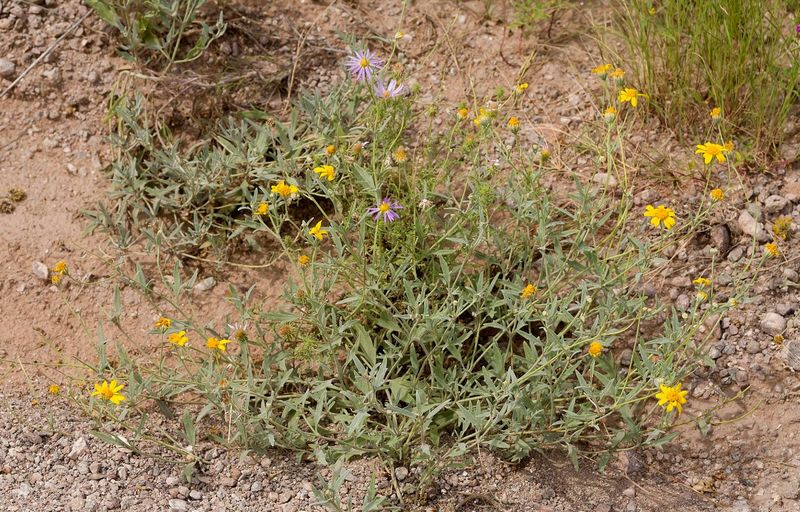
Some plants spread politely. Silverleaf bahia spreads with a little enthusiasm, creeping out on short underground stems and dropping seeds that pop up nearby.
Give it a season, and a few clumps can turn into a sunny patch.
Native to Arizona, New Mexico, and Texas, this tough wildflower grows in places most plants avoid. Poor, rocky, even caliche-heavy soil does not bother it at all.
Its fuzzy silver leaves reflect heat and help it hold onto moisture.
The real show is the flowers. Cheerful yellow daisies bloom from spring through fall in the low desert, and butterflies often stop by for a sip.
Later, seed-eating birds like finches may pick through the spent heads.
Water needs are tiny once roots are established. Many plants get by on natural rainfall, though a deep monthly soak during a dry monsoon can keep the blooms coming.
No fertilizer needed, ever.
For weed suppression, plant several starts close together in fall and let reseeding fill the gaps. A quick cutback in late winter encourages fresh, thick regrowth right when weeds are trying to move in.
Full sun or light shade both work fine, so it fits almost anywhere.
3. Centennial Desert Broom (Baccharis ‘Centennial’)
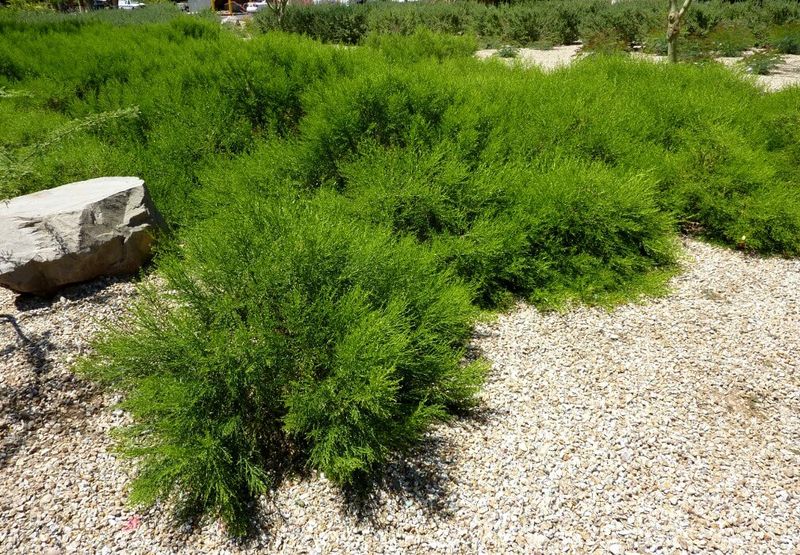
When a slope or wide open area needs covering fast, Centennial desert broom is the heavy lifter. This low-growing hybrid comes from native desert broom and coyote bush, bred to hug the ground instead of growing tall.
Your Arizona Garden Changes Every Week. Your Plan Should Too.
Gardening in Arizona changes quickly throughout the season. Every Friday you’ll receive a simple weekly plan showing exactly what to plant, prune, fertilize, harvest, and protect so you never miss the right timing.
It typically reaches 2 to 3 feet high and 6 to 10 feet wide.
Its many compact branches create a thick, evergreen blanket. Weeds underneath are left in deep shade, which makes it hard for them to compete.
Even in summer heat over 100 degrees, it tends to stay green without wilting.
Erosion control is another strong point. Roots grip loose soil on banks and slopes, which can help during heavy monsoon downpours.
Birds and pollinating insects also use the cover for shelter and food.
Soil is rarely a problem here. Sandy, clay, loam, and alkaline ground are all acceptable, as long as water drains well.
Low water use once established makes it a smart pick for large spaces where turf would be wasteful.
Mid-fall and early spring are the best planting windows, giving roots time to grow before the hottest months. Plan on one pruning a year to keep it neat.
Beyond that, it mostly takes care of itself.
4. Desert Zinnia (Zinnia acerosa)
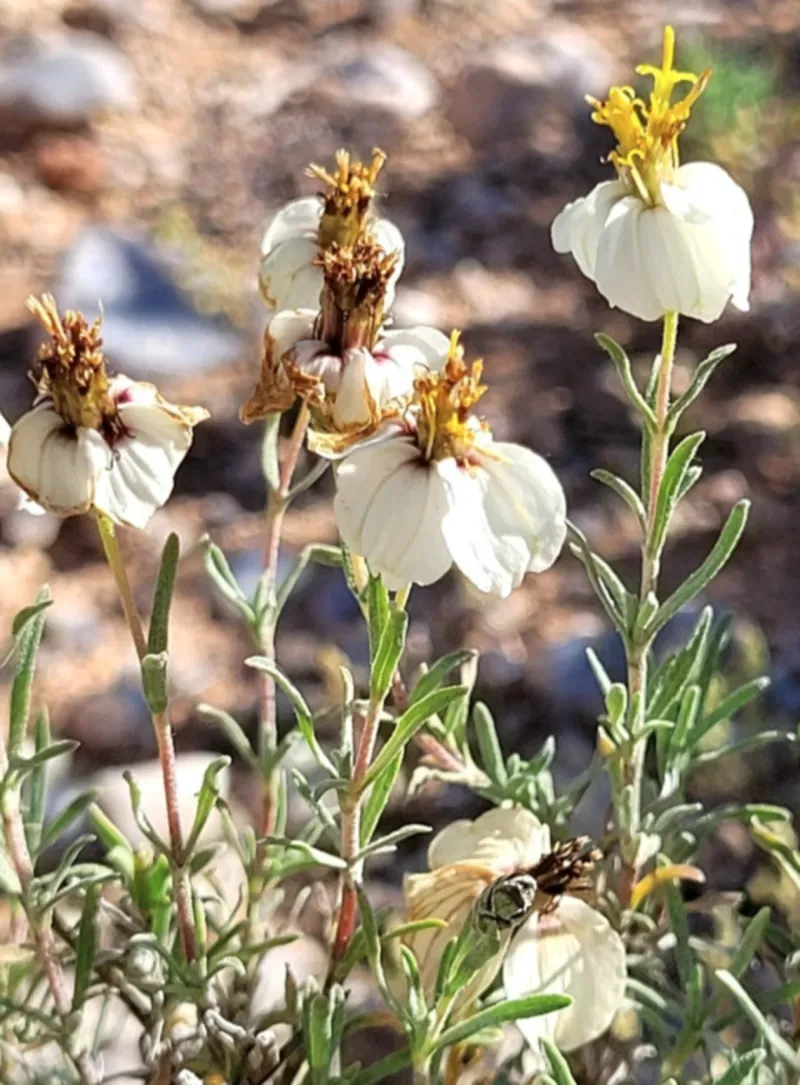
Tucked between flagstones or along a sunny edge, desert zinnia looks almost too delicate for Arizona. Do not be fooled.
This little native is built for blazing sun, rocky ground, and long dry stretches.
It forms low, dense mounds about 6 inches tall with needle-thin leaves. Over time, clumps spread outward and can fill small gaps where weeds love to sneak in.
Several plants grouped together create a tidy, cushiony cover.
White daisy flowers with golden centers appear on and off from spring through fall, especially after rain. Small native bees and butterflies may drop in for nectar.
The blooms dry to a papery tan instead of dropping messily, so cleanup is minimal.
Here is a fun detail: desert zinnia is a cousin of the bold garden zinnias many of us grew up with. The desert version simply traded big flowers for serious toughness.
Plant in fall in full sun and very well-drained soil, since soggy roots are its only real weakness. Water deeply every week or two while it settles in, then taper off to occasional summer soaks.
It works especially well in narrow strips and pathways where bigger groundcovers would sprawl too far.
5. Angelita Daisy (Tetraneuris acaulis)
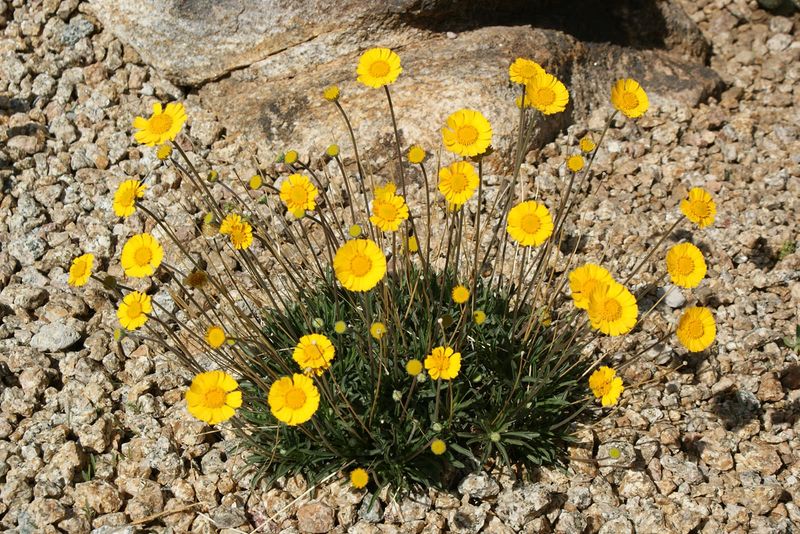
Most flowers take a break in winter. Angelita daisy barely notices the calendar, often flashing yellow blooms in nearly every month across the low desert.
That steady cheer makes it a favorite for front yards.
Each plant forms a tight green tuft of narrow leaves about a foot wide. Planted in groups roughly 18 inches apart, the tufts grow together into a low, weed-resistant mat.
It is especially handy for borders where you want a neat, finished edge.
Pollinators appreciate the long bloom season. Bees and small butterflies can find nectar here when little else is flowering, which helps support local insect life through cooler months.
Care is refreshingly simple. Full sun and well-drained soil keep it happy, and deep watering every one to two weeks in summer usually covers it.
In winter, rainfall alone may be enough. Shear off old flower stems once or twice a year if you like a clean look.
Fall planting gives it the best head start, with roots settling in while temperatures are mild. By late winter, a mass planting can already be crowding out the cheeseweed and mustard that tend to show up after rains.
6. Blackfoot Daisy (Melampodium leucanthum)
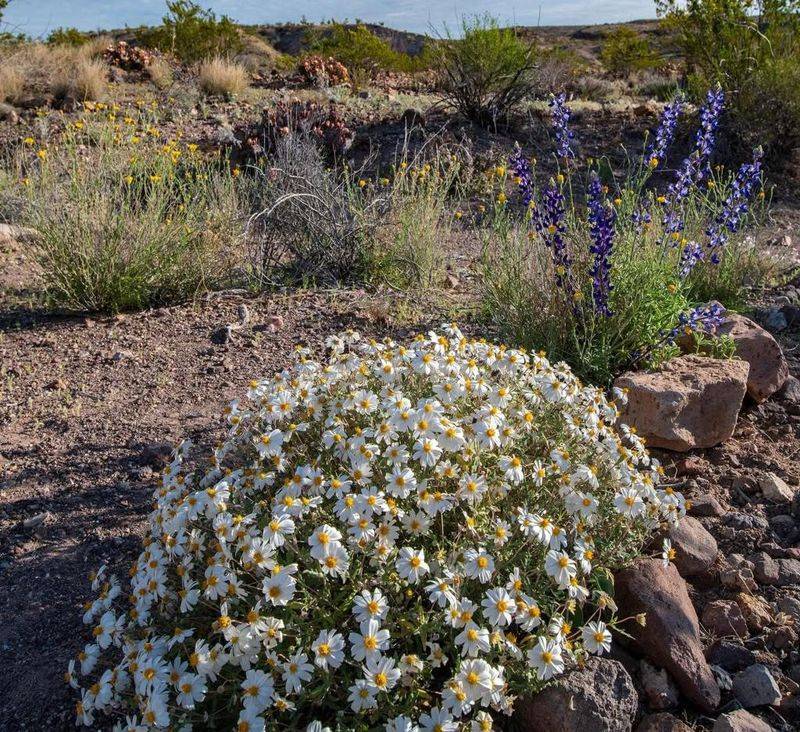
Walk past a patch of blackfoot daisy on a warm afternoon and you might catch a faint honey scent. That sweet fragrance comes from masses of small white daisies that cover the plant for months.
Native to Arizona and nearby states, it grows into rounded mounds about a foot tall and up to two feet wide. Clustered plantings blend together and shade the soil, leaving fewer openings for weeds.
It thrives in the same reflected heat that scorches many ornamentals.
Bees and butterflies tend to visit often, making it a solid addition to a pollinator-friendly yard. Seeds that drop may sprout new plants nearby, slowly filling bare spots over time.
The one rule to remember is drainage. Blackfoot daisy dislikes wet feet, so rocky or sandy soil and a light hand with the hose work best.
After establishment, a deep drink every couple of weeks in summer is usually enough.
Get it in the ground during October or November. A light trim in late winter refreshes leggy growth just before the spring flush.
Pair it with angelita daisy for a yellow and white combo that looks lovely and covers ground together.
7. Desert Marigold (Baileya multiradiata)
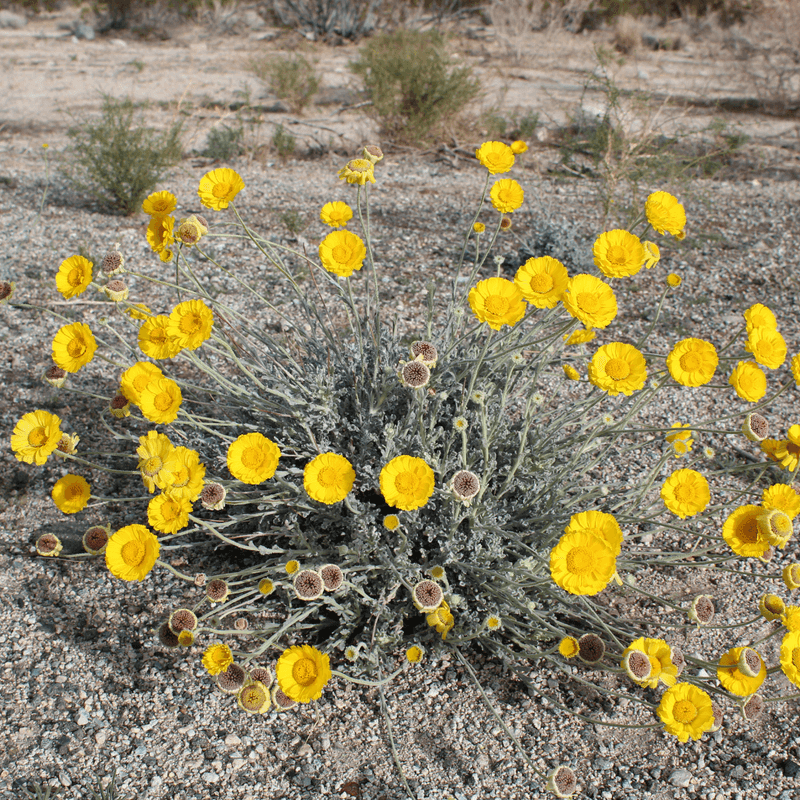
Think of desert marigold as the friendly neighbor who keeps showing up with more. It reseeds freely, so one season of plants can become a golden sweep the next.
For filling large, open areas quickly, that habit is a gift.
Woolly gray leaves form low rosettes close to the ground, while bright yellow flowers rise on stems about a foot tall. As seedlings sprout in fall and winter, they claim bare soil right when weeds are trying to do the same.
Timing really matters here.
Bees, butterflies, and seed-eating birds may all find something to enjoy. Gardeners also love that it blooms heavily in spring and often again after monsoon rains.
Little water is needed. Once established, many plants get by on rainfall plus an occasional deep soak during long dry spells.
Too much water or rich soil can actually shorten its life, so keep things lean.
Scatter seed or set out small plants in fall, ideally right before winter rains. Let some flowers go to seed to keep the cover going year after year.
Mix it with bahia or blackfoot daisy for a colorful, low-maintenance desert carpet.