These California Ground Covers Are Being Banned County By County
A ground cover can seem like the easiest part of a California landscape. It fills bare soil, handles tough conditions, and spreads without much attention.
Then local officials take a closer look, and that convenient plant suddenly comes with rules.
County bans can catch homeowners off guard because the same species may still appear in nearby yards. It may even remain available just outside the restricted area.
Nothing keeps garden shopping simple quite like a patchwork of local regulations.
The concern usually starts after a plant escapes its intended space. Once it reaches open land, its tidy reputation can unravel fast.
That is why familiar ground covers now face greater scrutiny across parts of California. A plant once praised for quick results may carry a very different status depending on the county line.
Check first, plant second, and avoid an expensive surprise tucked beneath all that greenery.
1. Big Periwinkle Is Spreading Beyond Yard Borders
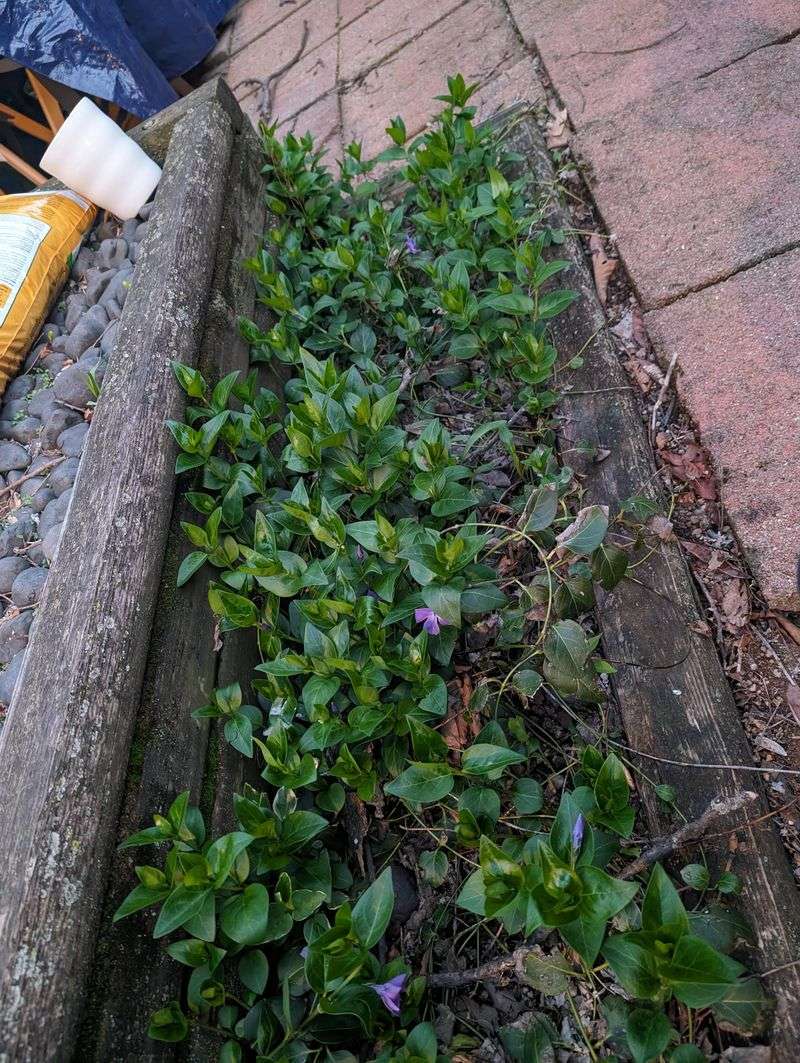
Few plants look as innocent as Big Periwinkle. Its shiny leaves and pretty purple-blue flowers make it a classic choice for slopes and shady spots.
For decades, homeowners across California planted it without a second thought. But here is the problem. Big Periwinkle does not stay where you put it.
It creeps along the ground, roots at every node, and spreads into nearby wild areas. Once it gets into a creek bed or a nature preserve, it forms a dense mat that blocks sunlight and prevents native seedlings from growing.
Several counties in our state have already added it to their invasive plant lists. Some areas in Northern regions have reported it taking over entire stream banks.
It is especially hard to remove because even small pieces of stem can re-root and start growing again.
If you currently have Big Periwinkle in your yard, you do not have to tear it all out at once. Start by removing any plants near fences, drainage areas, or slopes that lead to open land.
Replace it with native ground covers like creeping sage or island alumroot. These plants offer similar benefits without the risk of spreading.
Many local native plant nurseries can help you find the right replacement for your specific region. Making the swap now can save a lot of effort later and help protect the wild spaces we all enjoy.
2. English Ivy Can Smother More Than Walls
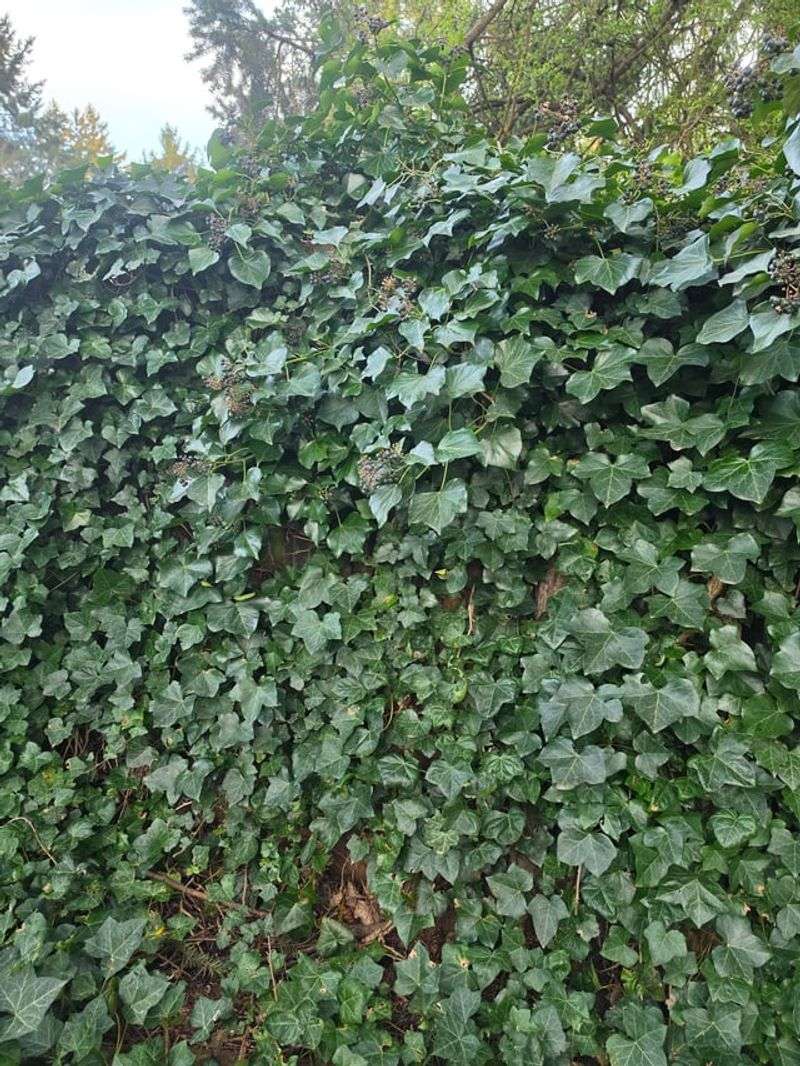
Almost any older neighborhood in California has English Ivy climbing fences, walls, and trees. It has been a landscaping staple for well over a century.
People love it because it grows fast, stays green year-round, and fills in bare spots quickly.
What most people do not realize is how aggressive it truly is. English Ivy spreads both along the ground and up into tree canopies.
When it climbs trees, it adds extra weight and makes them more likely to fall during storms. On the ground, it forms a thick layer that blocks out nearly all other plants.
It has been banned or restricted in several counties across our state, and more are expected to follow.
Your California Garden Changes Every Week. Your Plan Should Too.
Gardening in California changes quickly throughout the season. Every Friday you’ll receive a simple weekly plan showing exactly what to plant, prune, fertilize, harvest, and protect so you never miss the right timing.
In wooded areas of the Central Coast and Northern regions, it has taken over large stretches of forest floor.
Birds do spread its seeds, which makes it even harder to control once it is nearby.
Removing English Ivy takes patience. You need to cut the vines at the base of any trees first, then work on the ground cover in sections.
Do not compost it because it can re-root. Bag it and dispose of it properly.
Native alternatives like wild ginger or yerba buena make excellent replacements that support local wildlife.
Switching to a native ground cover is one of the most impactful things a homeowner can do for the local environment.
3. Algerian Ivy Is Another Ivy To Rethink
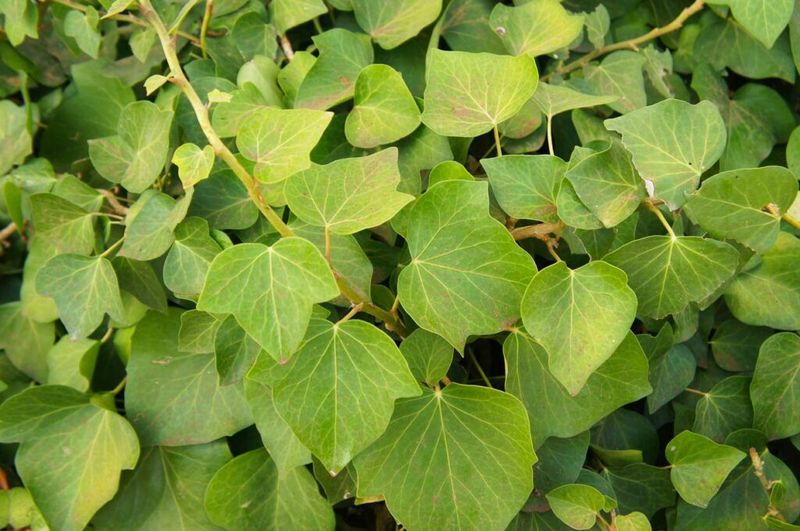
Algerian Ivy is the bigger, bolder cousin of English Ivy. Its leaves are larger and it grows even faster, which is exactly why so many landscapers recommended it for years.
It handles shade well, covers bare dirt quickly, and looks polished in formal garden settings.
However, speed is part of the problem. Algerian Ivy spreads outward at a rapid pace and can take over natural areas before anyone notices.
It is especially aggressive near shaded stream corridors and wooded hillsides, both of which are common in many parts of our state.
Like its close relative, it creates a dense monoculture on the forest floor. That means almost nothing else can grow beneath it.
Native wildflowers, ferns, and shrubs simply cannot compete. Some counties in Southern regions have already moved to restrict its sale and planting near natural open spaces.
Replacing Algerian Ivy does not mean your garden has to look bare or unfinished. Native ground covers like coyote brush, coffeeberry, or low-growing manzanita can fill similar roles in your landscape.
They provide food and shelter for native birds and pollinators, which Algerian Ivy does not. If your yard borders a park, a canyon, or any open natural land, replacing this ivy should be a top priority.
Talk to a local nursery about which native options grow best in your specific soil type and sun conditions.
4. Highway Iceplant Is Losing Its Coastal Pass
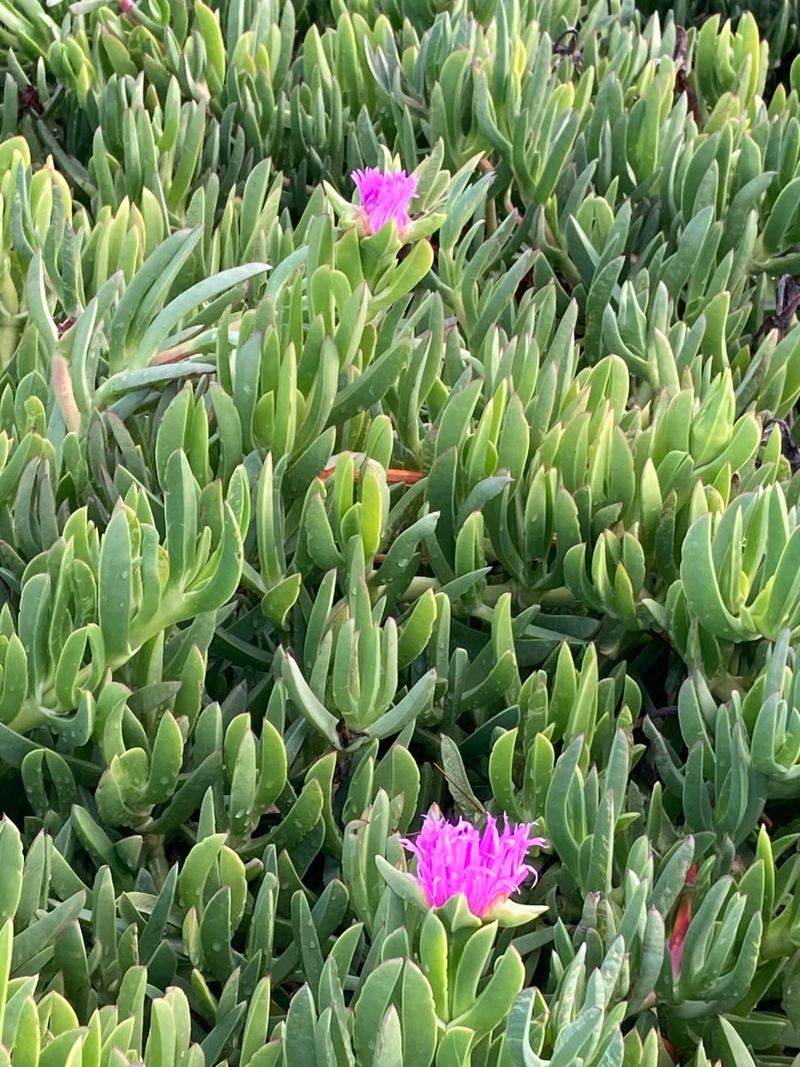
For decades, Highway Iceplant was the go-to solution for stabilizing roadsides and slopes across California. Caltrans and local agencies planted it by the mile along coastal highways because it grew fast and held soil in place.
Its bright magenta and yellow flowers even became part of the scenery that visitors expected to see.
But researchers started noticing something troubling. Highway Iceplant was spreading far beyond roadsides and into coastal bluffs, dunes, and native plant communities.
It forms such a heavy, wet mat that it actually destabilizes sandy slopes instead of protecting them. The weight of the plant can cause entire sections of bluff to slide.
On top of that, it outcompetes rare native coastal plants like dune lupine and sand verbena. These native species are critical habitat for endangered insects and shorebirds.
Several coastal counties have now restricted or banned its use entirely.
If you live near the coast and have Highway Iceplant on your property, check your county’s current planting guidelines. Many coastal cities now offer free native plant programs that can help you make the switch.
Native coastal ground covers like beach strawberry or seaside daisy are excellent alternatives. They are just as drought-tolerant and far more beneficial to local wildlife.
Removing Highway Iceplant from coastal areas is one of the most important restoration steps happening across our state right now.
5. Sea Fig Iceplant Is Not As Harmless As It Looks
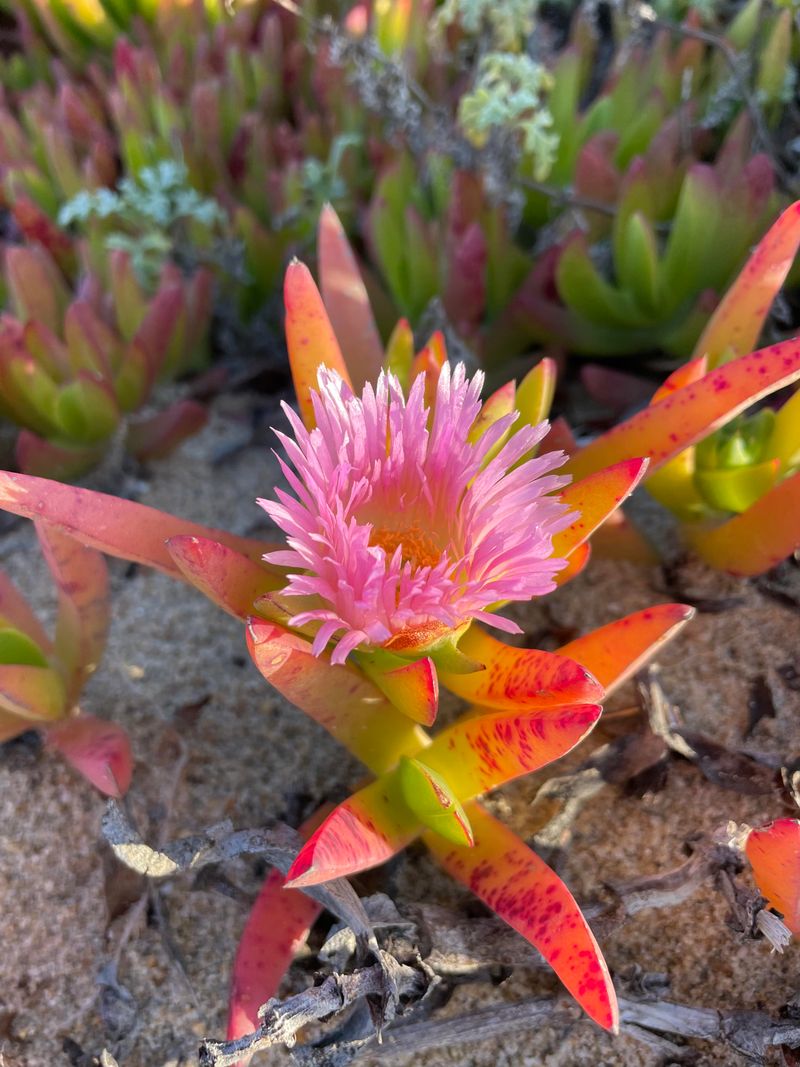
At first glance, Sea Fig Iceplant looks like a cheerful, low-maintenance plant. Its hot pink flowers pop against the gray-green foliage, and it thrives in sandy, salty, dry conditions where most plants struggle.
That toughness made it a popular choice for coastal gardens and erosion control projects.
Sea Fig is actually one of the most ecologically damaging plants along our coastline. It is closely related to Highway Iceplant and shares many of the same problems.
It spreads aggressively across dunes and bluffs, forming thick mats that crowd out native coastal vegetation. Unlike native plants, it does not provide the right food sources for local wildlife.
California’s coastal dunes are some of the rarest ecosystems in the world. They support plants and animals found almost nowhere else.
Sea Fig has already altered large sections of dune habitat in both Northern and Southern coastal regions. Restoration crews spend enormous amounts of time and resources removing it every year.
Homeowners near the coast should take a close look at what is growing along their property edges. If Sea Fig is creeping toward any natural area, removing it promptly is the responsible move.
Native dune plants like dune buckwheat or silver beach weed can replace it beautifully. These natives are just as tough and drought-hardy, but they actually support the butterflies, bees, and birds that make coastal areas so special.
Local conservation groups often host volunteer removal events if you want help getting started.
6. Cape Ivy Can Blanket Shrubs And Creek Banks
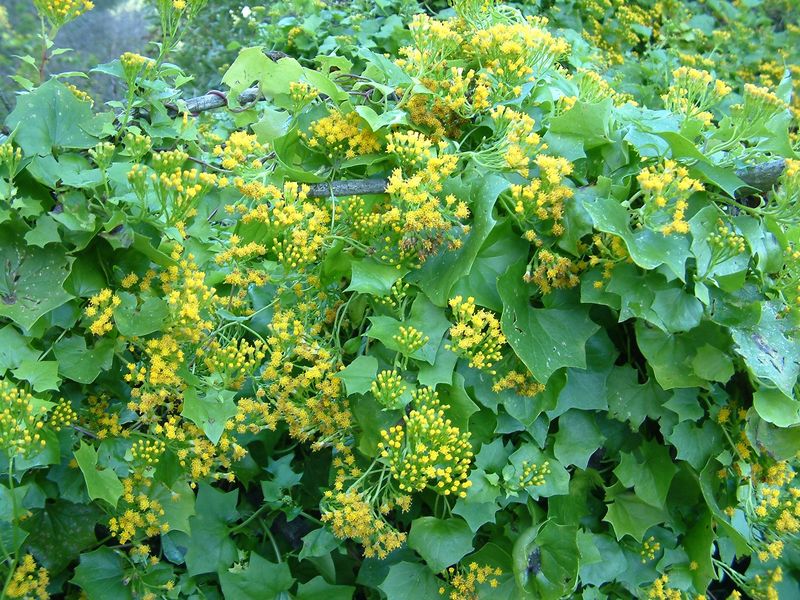
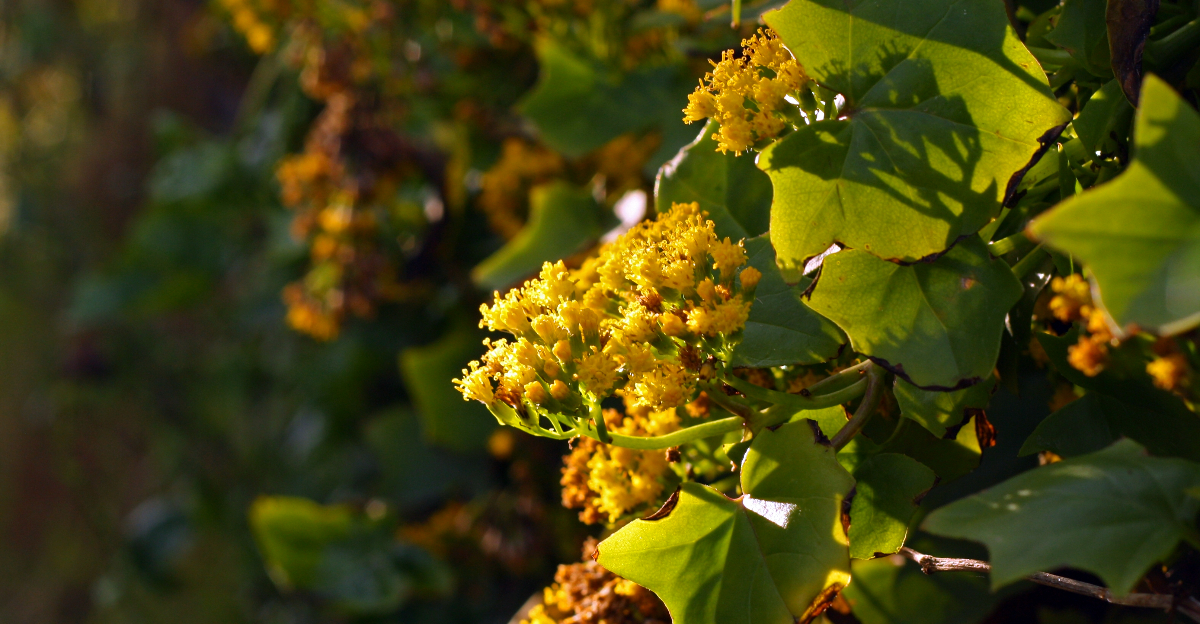
This is probably one of the sneakiest plants on this list. It starts out looking like a harmless, cheerful vine with small yellow daisy flowers.
People sometimes even mistake it for a native plant because it blends in so easily with natural surroundings. That is part of what makes it so dangerous.
Originally from South Africa, Cape Ivy thrives in the mild, moist conditions found along creek corridors and shaded canyons across our state. It climbs over shrubs and small trees, eventually smothering them under a heavy green blanket.
It spreads incredibly fast, especially after wet winters, and it re-grows quickly if not fully removed.
It has been identified as a high-priority invasive plant in many counties, especially in coastal and Central regions. Riparian areas, which are the plant communities along streams and rivers, are especially at risk.
These habitats support an enormous variety of native birds, amphibians, and insects. Cape Ivy disrupts all of that.
Removing Cape Ivy requires consistent effort over multiple seasons. You need to pull it out by the roots and monitor the area for re-growth.
Do not leave cut material on the ground since it can root again from stem fragments. Native alternatives for shaded, moist areas include creek monkeyflower or western columbine.
Both are beautiful and support pollinators. If your yard backs up to a creek or a canyon, Cape Ivy removal should be near the top of your garden to-do list this season.
7. Red Apple Iceplant Belongs On The Watch List
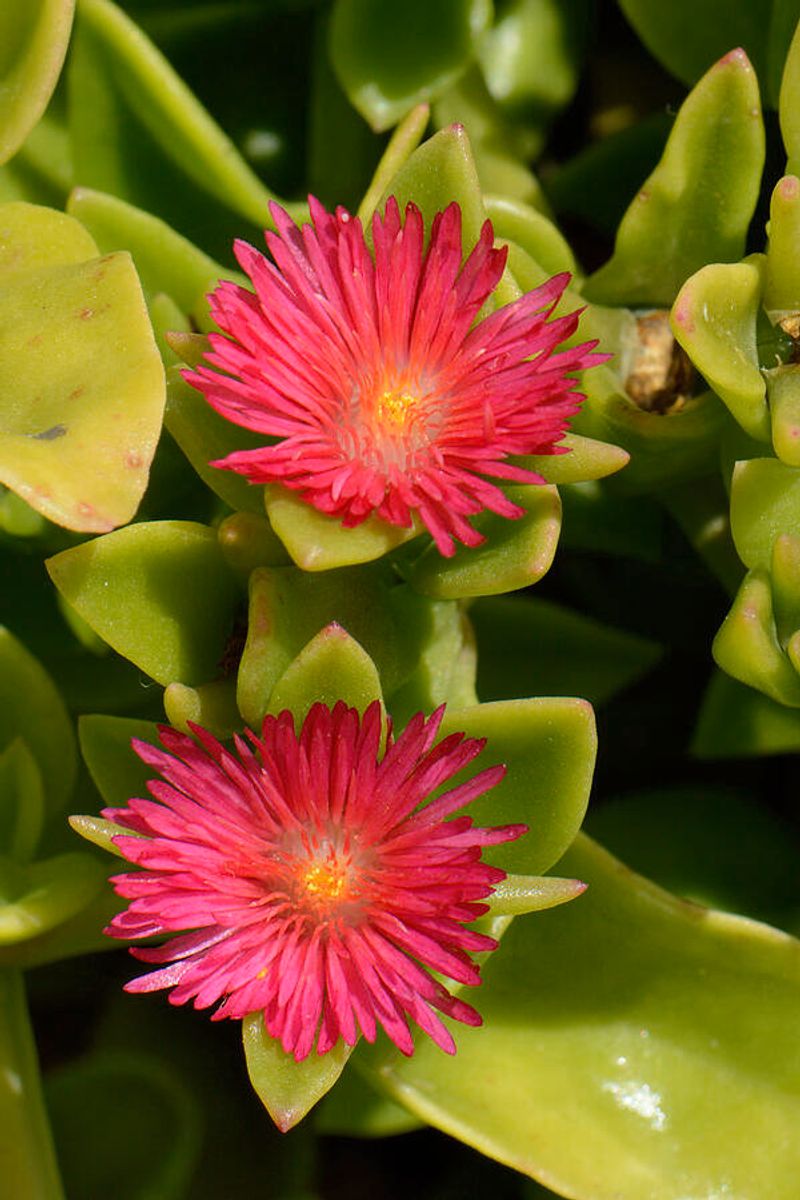
Red Apple Iceplant has been one of the most widely sold ground covers in our state for the past several decades.
Garden centers across Southern and Central regions stocked it heavily because it was colorful, easy to grow, and needed very little water once established. Homeowners loved how quickly it covered bare slopes.
Unlike its coastal relatives, Red Apple Iceplant has not yet been banned in most counties. But it is showing up on watch lists with increasing frequency.
It has been found spreading beyond garden borders into dry scrubland and open hillsides in several inland counties. Its thick, fleshy mats crowd out native annuals and grasses that many insects and small animals depend on.
The concern is growing among ecologists and land managers. Once a plant with this kind of spreading ability gets into fire-prone chaparral, it can change how a fire moves through the landscape.
Native plants in these areas have evolved with fire, but iceplants have not, and their presence can disrupt natural fire recovery cycles.
Now is a good time to evaluate whether Red Apple Iceplant is the right choice for your yard, especially if you live near open land.
Native alternatives like prostrate ceanothus or low-growing toyon offer similar slope coverage with real ecological benefits.
They attract native bees and birds and require minimal care after the first year. Getting ahead of potential restrictions now gives you more time to plan a thoughtful, beautiful native garden.