What It Means When Quail Visit Your California Yard Every Morning
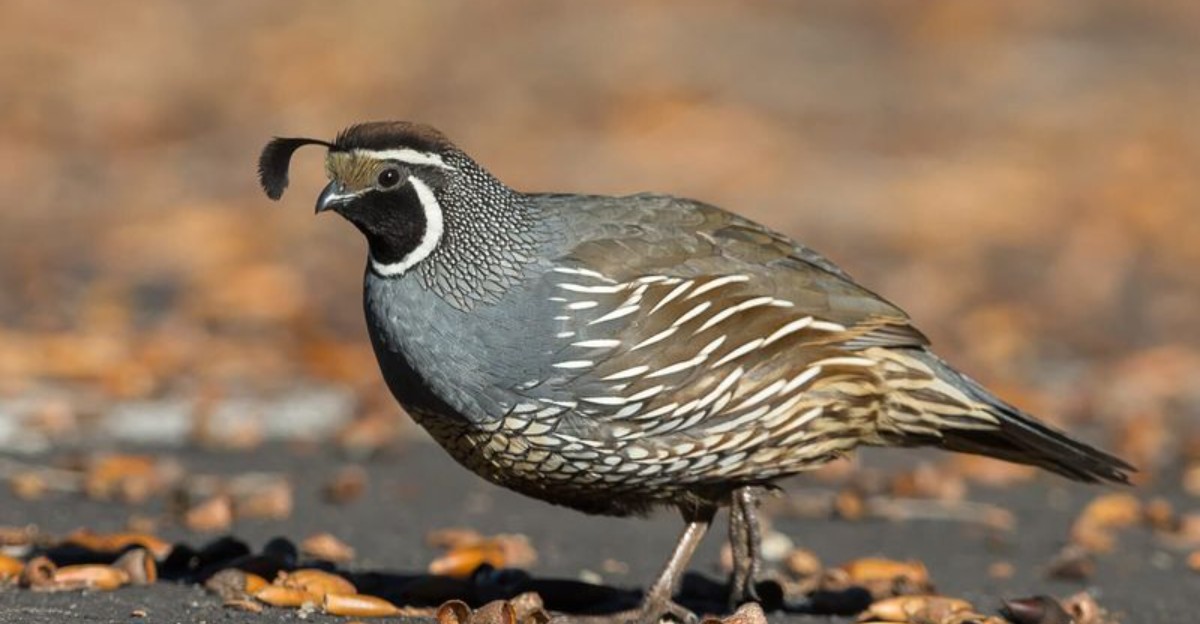
Some of the most charming yard visitors arrive on a reliable schedule. They appear at nearly the same hour, follow nearly the same path, and leave just as quietly as they came.
Their visits are rarely random. Each part of their routine reflects a careful choice, shaped by safety, food, and a strong sense of community.
A little observation reveals a surprising amount of personality behind those daily appearances.
Certain behaviors hint at what the yard already provides, while others point toward small improvements that could make the space even more welcoming.
None of those changes call for much money or effort.
Sometimes a yard earns its most delightful guests simply by offering the right mix of comfort and calm.
They Are Foraging In A Covey
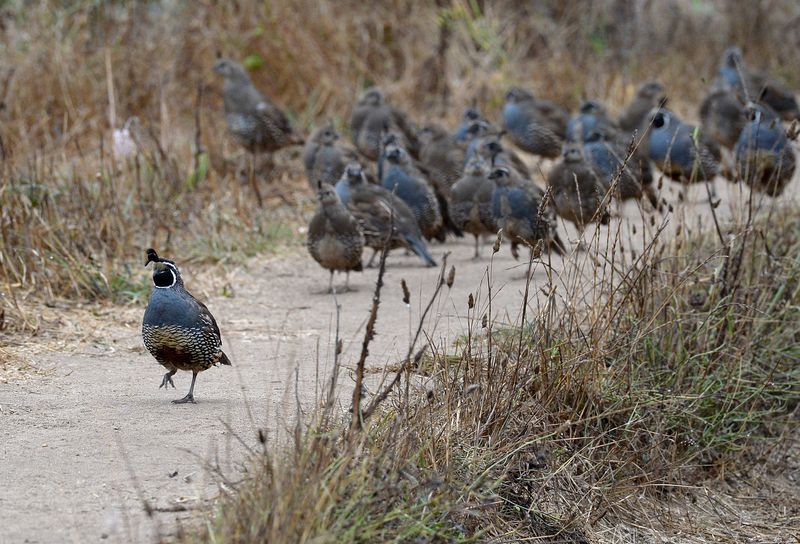
A lone quail strolling the lawn makes a rare sight. California quail, the state bird, move in groups called coveys, eating, walking, and resting as a team.
A covey often begins as a family. In spring and summer, a pair raises a brood of chicks, and the young follow their parents everywhere.
Sometimes two or more families join forces, so a crowd of adults may appear with chicks of slightly different sizes. Later in the year, coveys can grow much larger, sometimes numbering dozens of birds.
Group living works like a neighborhood watch. More eyes mean a hawk or cat gets spotted sooner.
Soft contact calls keep the birds in touch while they scratch through leaves. A separated bird often gives a loud rallying call that sounds a bit like someone saying chi-ca-go.
One quail at the edge of the yard usually means the rest are close behind. They tend to leave cover in a steady trickle, then spread out a little to feed, much like clowns emerging from a tiny car.
A regular morning visit signals that the whole group trusts the space. The covey has mapped out food, shelter, and safe routes, and the yard made the list.
Slow, quiet movement helps when they arrive. Sudden noise can send everyone flushing into the bushes, and they may pick a calmer spot tomorrow.
Morning Is Their Prime Feeding Time
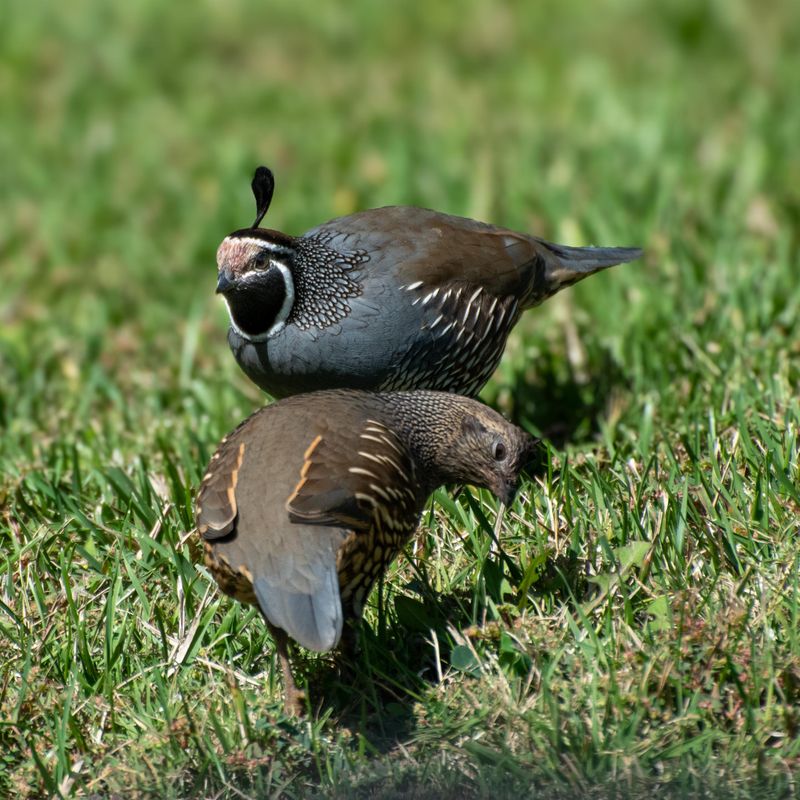
Seven o’clock arrives, and the covey shows up right on cue. That timing is no accident, since California quail do much of their feeding in early morning and again in late afternoon.
After a long night tucked into a roost, the birds wake up hungry. Cool morning hours make foraging safer and more comfortable.
Midday heat across much of California can be tough, so quail often slip into shade during the warmest hours. There they rest, preen, and stay out of sight.
As the sun drops, the covey returns for a second meal before heading to a roost for the night, usually in dense shrubs or trees.
Many yards see a matching evening visit, so dinnertime offers another chance to watch.
That schedule helps with planning. Watering, mowing, or running a leaf blower later in the morning, after the birds have moved on, keeps their breakfast peaceful.
Your California Garden Changes Every Week. Your Plan Should Too.
Gardening in California changes quickly throughout the season. Every Friday you’ll receive a simple weekly plan showing exactly what to plant, prune, fertilize, harvest, and protect so you never miss the right timing.
Letting dogs out at times that don’t clash with the quail rush helps, too.
Patient watchers can learn the exact path a covey uses. Many groups follow the same route each day, almost like a commute.
A seat near a window a few minutes before the usual arrival may reveal the first bird peeking out. Later October sunrises nudge that schedule back a little each week, so the show may start a few minutes later than it did in summer.
A Sentinel Stands Guard On High
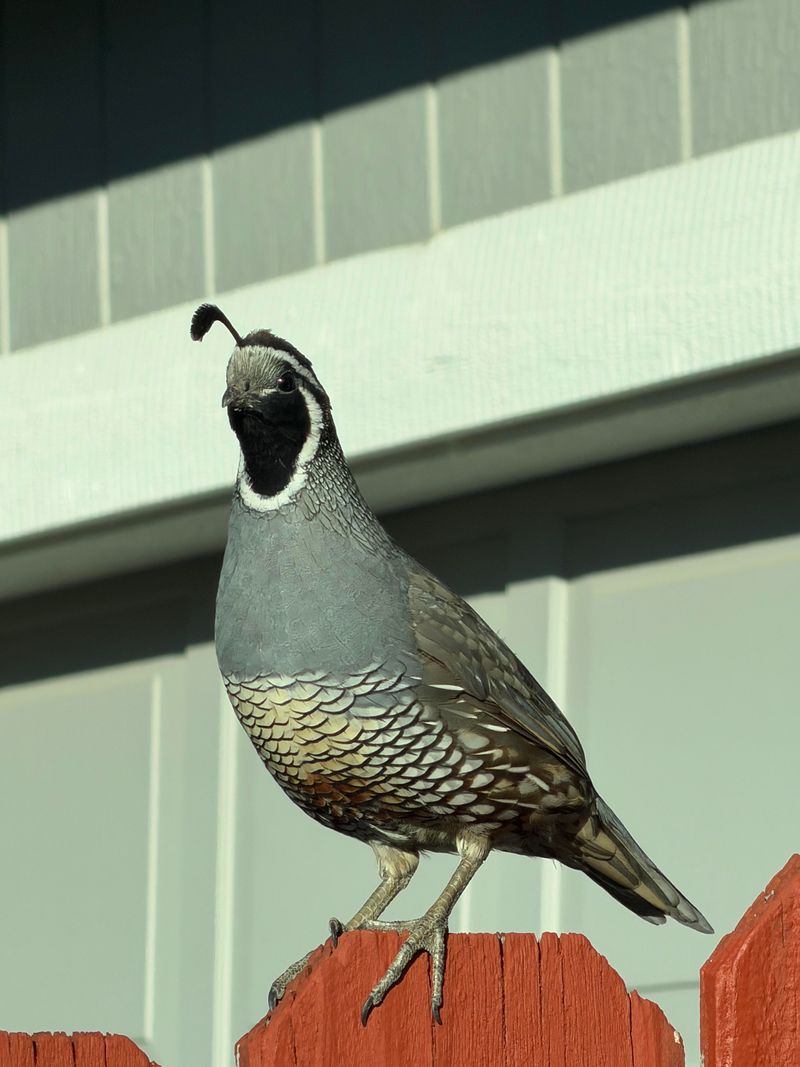
A single bird standing tall on a fence post, not eating at all, often catches the eye. That bold black face framed in white stripes belongs to the lookout.
While the covey feeds, a male California quail often climbs to a high perch. A fence, rock, stump, or low tree branch all serve the purpose.
From there, he scans for danger while the others keep their heads down and peck. Males stand out with dark throats outlined in white and large, curled topknots.
The guard takes his job seriously. A hawk, coyote, or prowling cat triggers an alarm call, often a sharp, urgent note the whole covey recognizes.
The covey reacts in a flash, running for cover or bursting into short, noisy flights. Quail prefer running to flying, though they can rocket upward when needed.
A sentinel reveals plenty about the yard. It shows that the group feels exposed on open ground and depends on teamwork to stay safe.
It also means the birds found a perch with a clear view of the feeding area.
Leaving those lookout spots in place helps. An old fence post or sturdy shrub near open feeding areas gives the guard a reliable station.
Walking straight toward a perched male is best avoided. Calm, slow movement may convince him that people are simply part of the scenery, and the morning routine can continue undisturbed.
Seeds And Greens Draw Them In
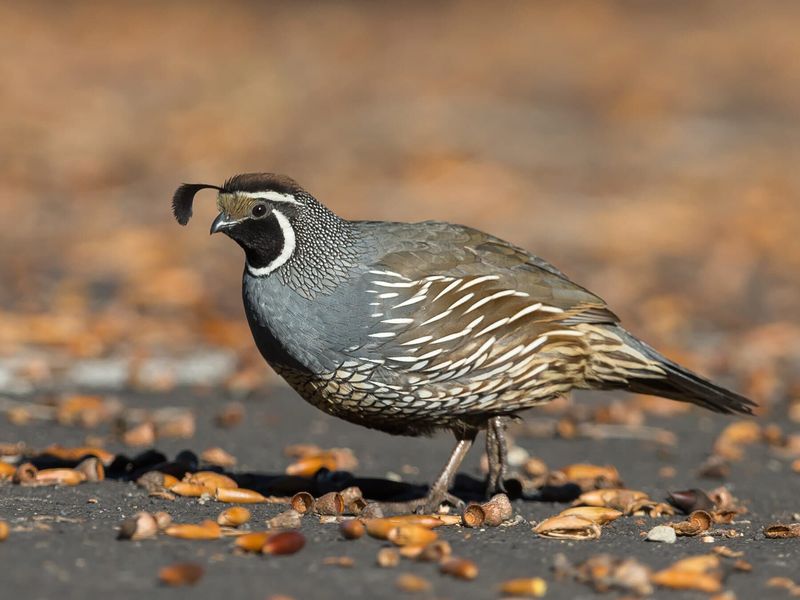
Scratch, peck, peck. A minute spent watching a quail reveals a bird working the ground like a tiny gardener with a plan.
California quail eat mostly plants. Seeds from grasses, weeds, and wildflowers make up a big part of their diet.
They also nibble leafy greens, flowers, and buds, especially in spring when tender growth appears. Insects round out the menu, and chicks rely on bugs more heavily as they grow.
Many yards offer a quiet buffet without anyone realizing it. Native plants such as lupine, clovers, and wildflowers drop seeds the birds love.
Fresh green shoots after fall rains offer another big draw. Even a slightly messy garden bed can hide a treasure chest of fallen seeds.
Avoiding pesticides helps in two ways. Sprays can harm the birds directly, and they also sharply reduce the insects young quail need.
Letting some plants go to seed in late summer and fall adds natural food without extra work.
Scattered birdseed calls for caution. Seed left overnight can attract rats and mice, which in turn draw predators.
Those visitors bring far more trouble than the quail ever would, and they tend to stick around.
Small amounts that the covey finishes quickly, with leftovers cleaned up, work better. Seed-producing natives make the smarter long-term plan, and October planting gives them a full rainy season to establish before next year’s harvest.
Dense Shrubs Give Them Escape Cover
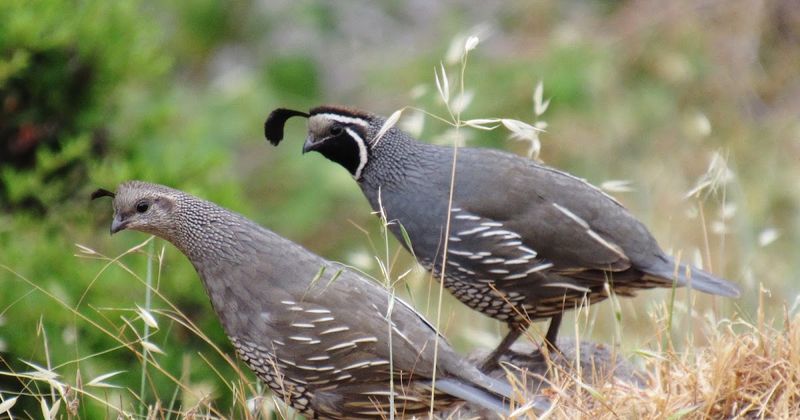
One sharp alarm call, and the lawn empties in seconds. Every quail vanishes under the nearest thick bush, a quick getaway that explains why these birds stay close to dense cover.
California quail live on the ground, and danger comes from above and around them. Hawks swoop from the sky, while cats, foxes, and coyotes hunt at ground level.
Thick, twiggy shrubs give quail a hiding place where predators struggle to follow. The birds tend to feed within a short dash of that safety.
Cover matters at night, too. Coveys usually roost off the ground in dense shrubs or low trees, where tightly packed branches keep them hidden and a bit warmer.
Morning arrivals reveal where the birds spend the night. Most likely they emerge from a hedge, a brush pile, or a tangle along the property line.
That hiding spot forms the heart of their routine. Pruning it bare or ripping it out can make the yard feel unsafe overnight.
Native shrubs make strong choices for quail habitat. Toyon, coyote brush, California lilac, and native sages offer good structure across much of the state.
Lower branches left full, rather than trimmed into neat lollipop shapes, provide better shelter.
In fire-prone areas, dense shrubs belong beyond the first five feet around the house, where newly approved Zone 0 rules limit woody plants. A thick, shaggy corner well away from the walls can turn a quick stopover into a true quail hideout.
Dust Baths Keep Them Clean
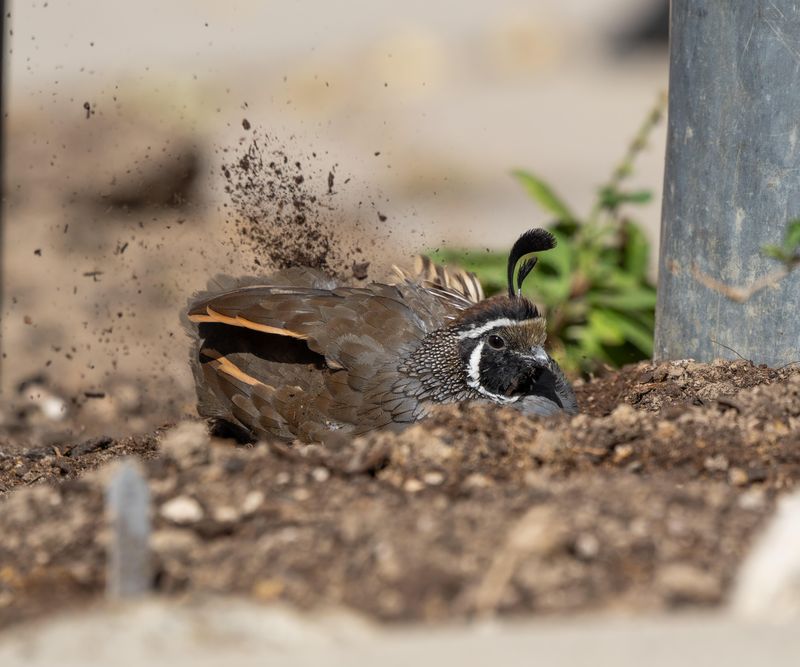
Small, round dips in a dry garden bed often get blamed on the neighbor’s cat or a digging squirrel. Quail may be the real culprits.
California quail love a good dust bath. A bird settles into loose, dry soil, fluffs its feathers, and wiggles around, flicking dirt over its back and wings.
By the end, it looks as though it rolled in cocoa powder. Then it stands and gives a big, satisfying shake.
Bathing in dirt may sound backward, but it works. Dust helps absorb extra oil on feathers and can help control tiny pests such as mites.
Clean, well-kept feathers matter for staying warm and flying when danger strikes. Several birds often bathe side by side, turning the routine into a social break.
Those shallow hollows signal that a yard offers something special. Loose, fine soil in a sunny, sheltered spot works like a quail spa.
Heavy mulch, covered areas, and hard-packed ground fall far short by comparison.
A small patch of bare, crumbly soil near shrubs encourages the habit. Placement close to cover helps the birds feel safe while they’re fluffed up and distracted.
Chemical treatments are best kept off that spot. The dips are worth leaving alone, since the covey reuses them like tiny bathtubs.
Dry fall afternoons often bring plenty of bathing, offering one of the silliest, sweetest sights a California backyard can provide.
Coveys Stick Together Through Winter
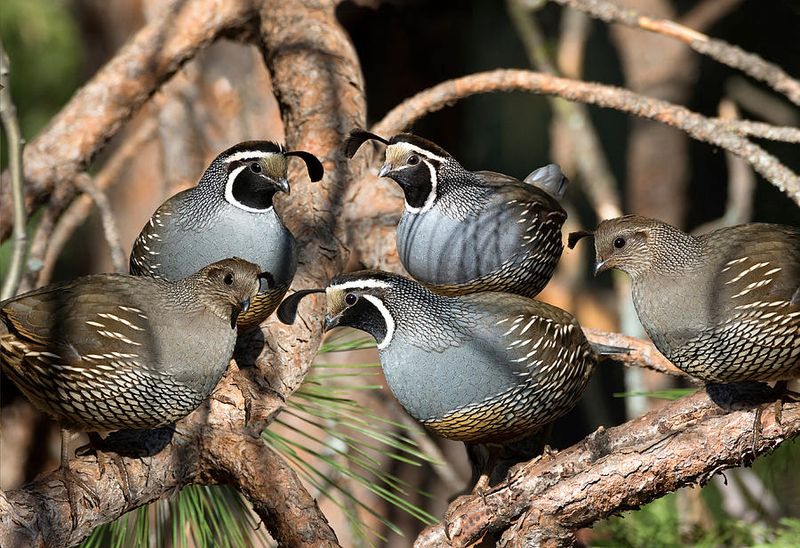
Fall arrives, the chicks look grown, and many people expect the group to break apart. Instead, the covey often seems even bigger.
California quail stay in coveys through fall and winter. Families that spent summer apart often merge into larger groups during the cooler months.
Bigger coveys mean more watchful eyes when food grows scarce and predators stay hungry. The birds feed together, roost together, and move along familiar routes.
Winter coveys can be impressive. On some mornings, a long stream of quail may pour across the yard, and their soft calls and rustling footsteps make the place feel lively even on gray days.
October often marks the moment these groups start swelling.
Spring changes everything. As breeding season approaches, the groups split into pairs, and each pair searches for a nesting spot.
Nests usually sit in a hollow on the ground, hidden under shrubs, brush, or tall grass. The female lays a large clutch of eggs, and the chicks leave the nest soon after hatching.
Ground nests call for extra care in spring. Clearing brush piles, weed-whacking thick edges, and moving heavy debris during nesting season are best avoided, and cats are safest kept indoors.
Steady winter visits are a great sign. A covey that sticks with a yard through the cold months has found reliable food and shelter, and that trust may lead to the next generation by summer.