These Native North Carolina Flowering Trees Are Worth Planting In April
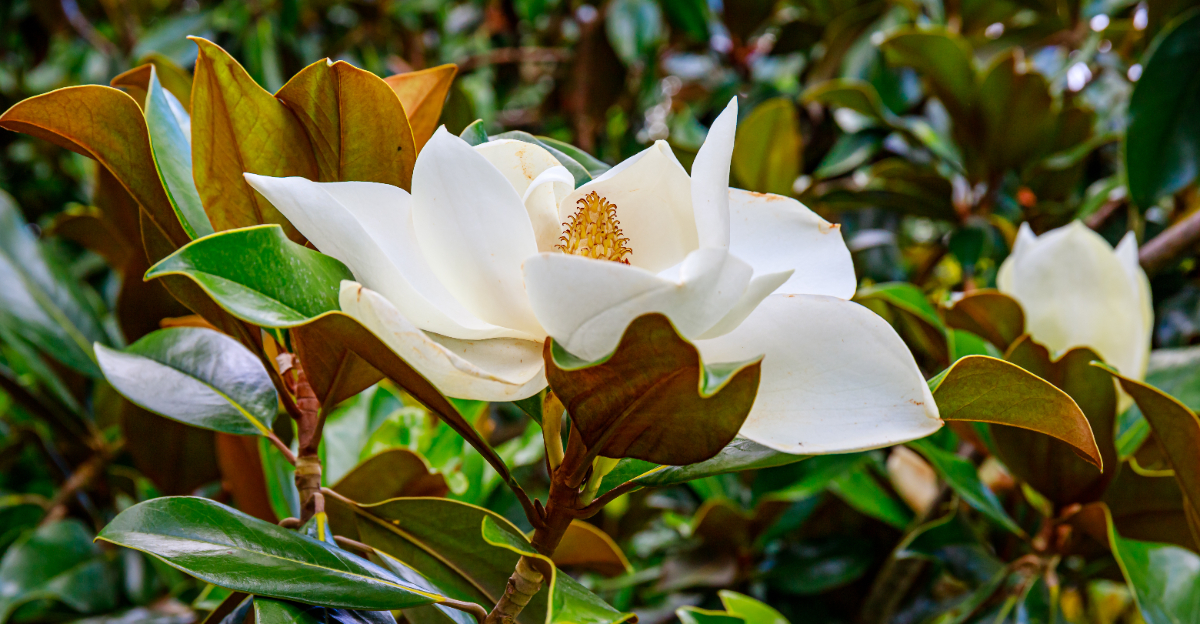
April is one of the best times to plant flowering trees in North Carolina, especially if you want them to settle in before the heat of summer arrives.
As the soil warms and spring rains become more consistent, young trees have a better chance to establish strong roots. Choosing native varieties makes this timing even more valuable.
These trees are adapted to North Carolina’s climate, which helps them grow with less stress and fewer problems over time.
They also bring natural beauty to the landscape, with blooms that can brighten yards and support local pollinators.
Some offer soft, delicate flowers, while others create bold bursts of color that stand out from a distance.
If you are planning to add a tree this season, April is the perfect window to get started. These native flowering trees are well worth a place in your landscape.
1. Eastern Redbud (Cercis canadensis)
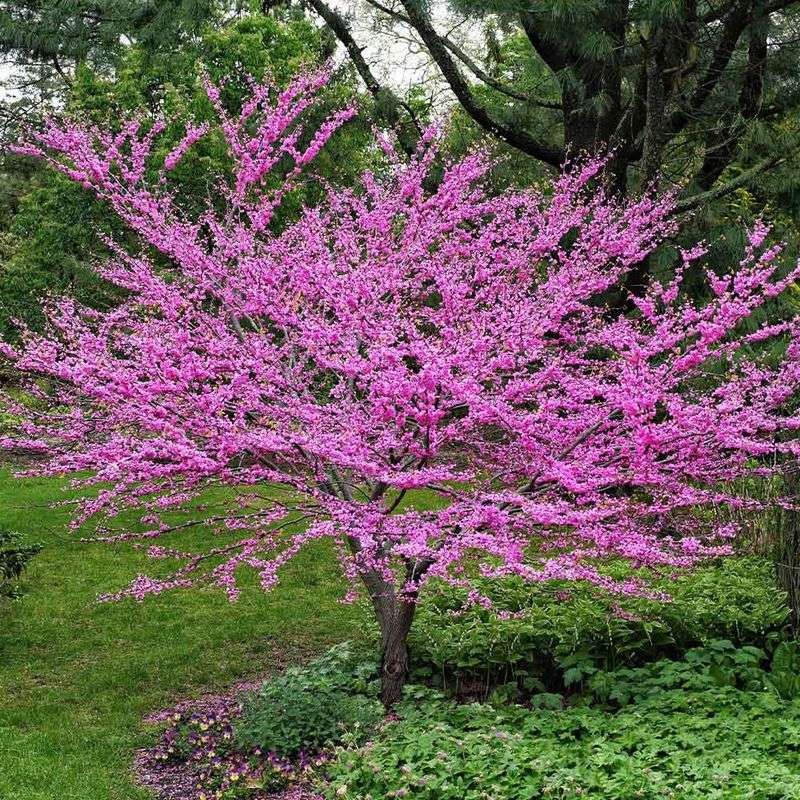
Few trees stop people in their tracks quite like the Eastern Redbud when it bursts into bloom each spring.
Before its heart-shaped leaves even open, the branches are completely covered in clusters of bright pink to magenta flowers, creating one of the most vivid displays in any North Carolina landscape.
It is a true showstopper that earns its spot in the yard every single April. Eastern Redbud is a small to medium tree, typically growing between 20 and 30 feet tall, which makes it a fantastic fit for suburban yards and garden borders.
It handles full sun to partial shade really well and is not picky about soil as long as drainage is decent.
North Carolina gardeners across the Piedmont, Coastal Plain, and mountain foothills have had great success with this tree.
Planting it in April gives the roots a full growing season to get established before winter. Place it where it gets morning sun and some afternoon shade for the best bloom performance.
Wildlife also benefits enormously from this tree since native bees go absolutely wild for its early spring nectar.
The Eastern Redbud is one of those trees that rewards you every single year with almost zero effort once it settles in.
2. Flowering Dogwood (Cornus florida)
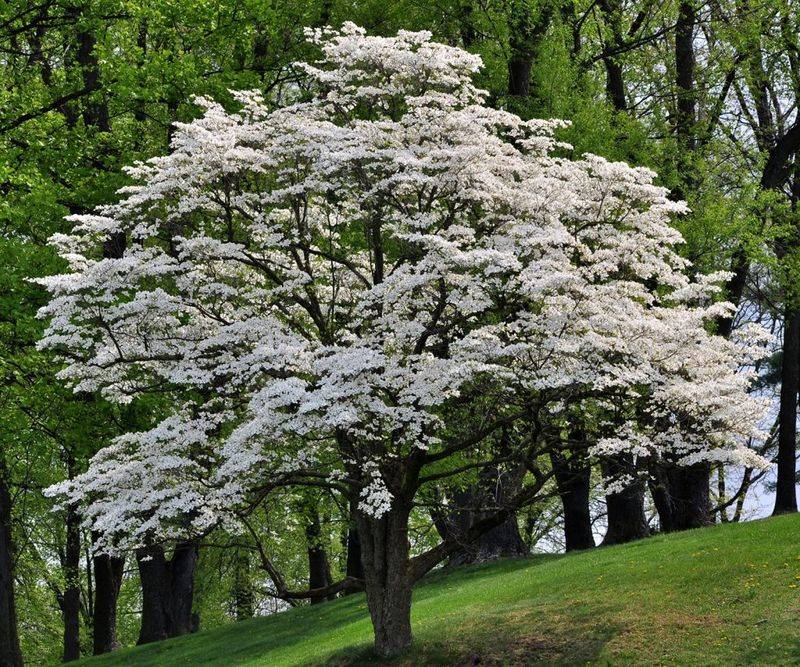
North Carolina has an official state flower, and it belongs to this tree. The Flowering Dogwood is so deeply tied to the identity of North Carolina that spotting one in bloom feels like seeing an old friend.
Those wide, rounded white or pink bracts surrounding the tiny central flowers are instantly recognizable and absolutely gorgeous against a clear April sky.
Growing best in partial shade or morning sun, this tree is a natural understory plant that thrives beneath taller trees or along woodland edges.
It reaches about 15 to 30 feet tall and spreads into a graceful, layered canopy that provides beautiful dappled shade.
Good drainage and a layer of mulch over the root zone make a real difference in how well it performs over the years.
One of the biggest tips for success with Flowering Dogwood in North Carolina is choosing a planting site carefully.
Your North Carolina Garden Changes Every Week. Your Plan Should Too.
Gardening in North Carolina changes quickly throughout the season. Every Friday you’ll receive a simple weekly plan showing exactly what to plant, prune, fertilize, harvest, and protect so you never miss the right timing.
Avoid compacted soil, heavy foot traffic zones, and spots with harsh afternoon sun. When planted right, this tree rewards you with spring flowers, glossy red berries in fall, and brilliant red foliage before the leaves drop.
Birds absolutely love those berries, so you will notice more wildlife activity around your yard once this tree matures. April is the ideal month to get it in the ground.
3. Downy Serviceberry (Amelanchier arborea)
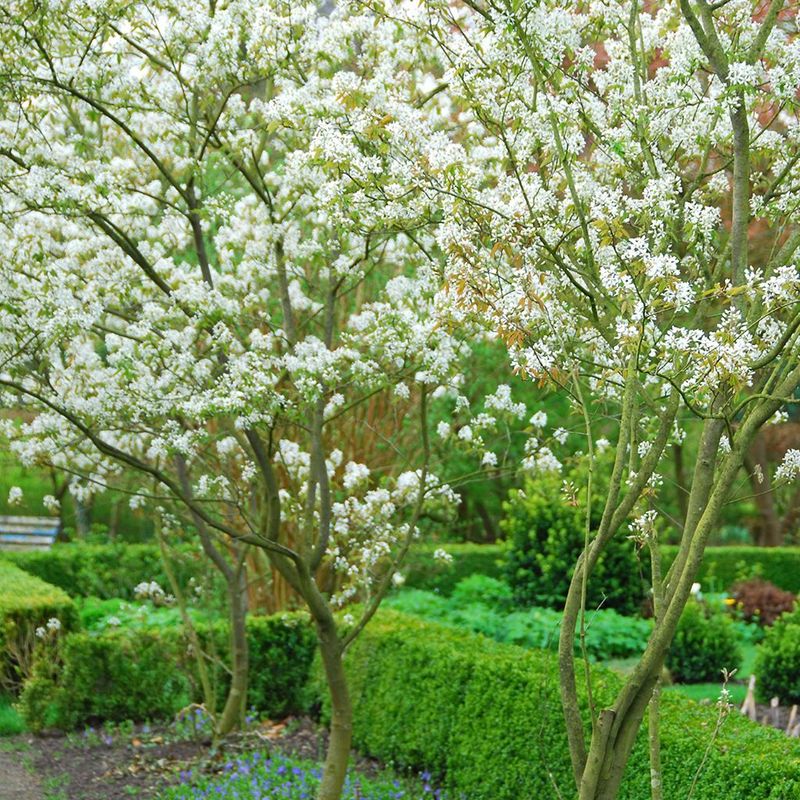
Spring arrives early when you have a Downy Serviceberry in your yard.
This native tree often blooms before most other flowering trees wake up, sometimes even before the Flowering Dogwood, making it one of the first signs that winter is truly over in North Carolina.
The clusters of small white flowers are airy and delicate, almost like a soft white cloud settled into your landscape.
Downy Serviceberry grows throughout North Carolina and adapts well to a range of conditions, from moist stream banks to drier upland slopes.
It typically reaches 15 to 25 feet tall and can be trained as a single-trunk tree or left to grow in a natural multi-stem form.
Both shapes look beautiful in a home garden setting. Beyond the spring flowers, this tree gives you edible berries that ripen in early summer, which are sweet and popular with birds and other wildlife.
Fall color is another bonus, with leaves turning shades of orange, red, and gold before dropping.
Planting it in April in North Carolina allows the tree to develop a strong root system while the weather is still mild.
It also pairs wonderfully with Flowering Dogwood in a layered native planting scheme, creating a staggered bloom sequence that stretches early spring color across several weeks.
4. Allegheny Serviceberry (Amelanchier laevis)
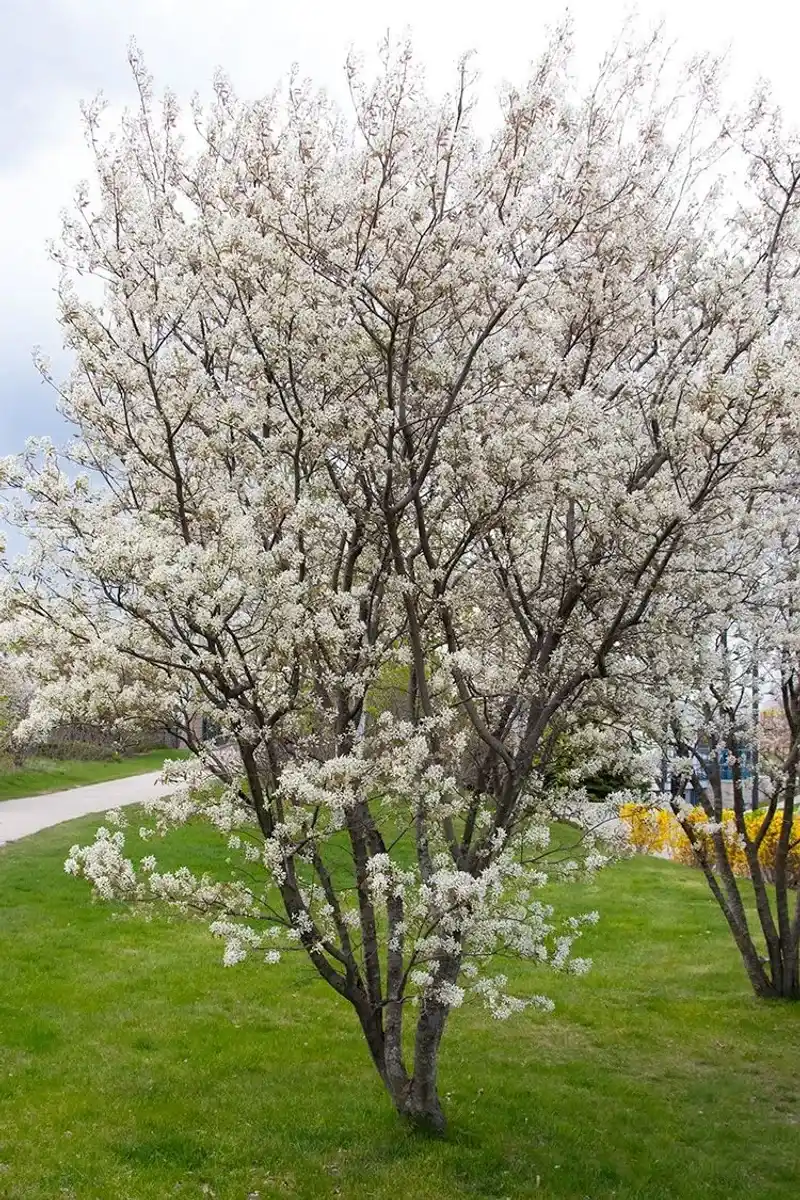
Up in the mountains of western North Carolina, the Allegheny Serviceberry is a native gem that deserves far more attention than it gets.
Its white spring flowers appear just as the new leaves emerge, giving the tree a soft, two-toned look that is absolutely lovely in a mountain or foothill garden.
The flowers have a refined, graceful quality that feels right at home in cooler, higher-elevation landscapes.
Compared to Downy Serviceberry, the Allegheny variety tends to have a slightly smoother leaf surface and a somewhat more upright growth habit.
It reaches a similar size, usually between 15 and 25 feet, and fits beautifully in the same layered native plantings that work so well across western North Carolina.
It performs best in moist, well-drained soil with some organic matter worked in at planting time.
Edible berries follow the flowers in early summer, and they are sweet enough to eat right off the tree or use in homemade jams and pies.
Fall color on Allegheny Serviceberry is outstanding, with warm orange and red tones lighting up the foliage as temperatures drop.
April planting gives this tree the best possible start since the roots can grow steadily through spring and early summer.
For mountain and foothill gardeners in North Carolina looking for a native small flowering tree, this one checks every box.
5. American Fringetree (Chionanthus virginicus)
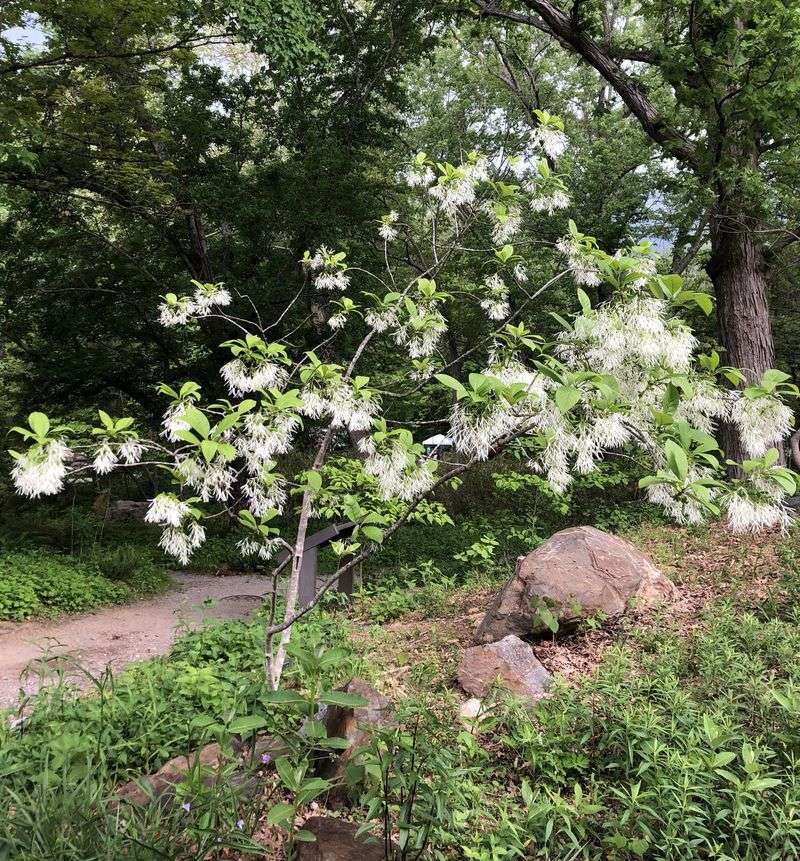
There is nothing quite like the American Fringetree in full bloom. The flowers look like someone draped the entire tree in soft white fringe, which is exactly how it earned its common name.
Blooming in mid to late spring, this native North Carolina tree produces an extraordinary floral display that turns heads every single year without fail. One of the best things about American Fringetree is its manageable size.
It typically grows 12 to 20 feet tall, which makes it an excellent choice for smaller yards, front garden beds, or any spot where you want a native specimen tree that will not overwhelm the space.
It handles full sun to partial shade and thrives in a wide range of North Carolina soils as long as drainage is reasonable.
This tree is genuinely underused in North Carolina landscapes, which is a real shame because it is so easy to grow and so rewarding.
Female trees produce dark blue berries in fall that birds find irresistible, adding another layer of wildlife value to your yard.
Male trees tend to produce more flowers, so if maximum bloom impact is your goal, look for a male plant at your local nursery.
Planting in April sets this tree up perfectly to establish through the growing season. Once settled in, it comes back stronger and more floriferous every year.
6. Carolina Silverbell (Halesia carolina)
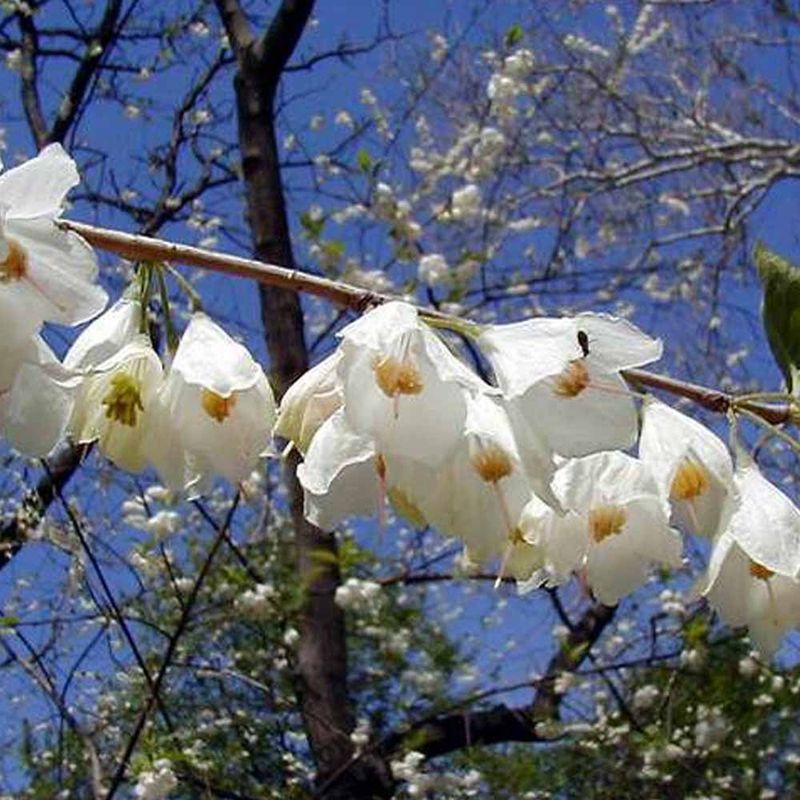
Imagine tiny white bells hanging in clusters from every branch, swaying gently in an April breeze.
That is the magic of the Carolina Silverbell (Halesia tetraptera), a native North Carolina flowering tree that feels like something out of a fairy tale when in full bloom.
It is especially beloved in the mountain and upper Piedmont regions, where it grows naturally along stream banks and wooded slopes.
The tree typically reaches 20 to 40 feet tall at maturity, making it a medium-sized specimen with a real presence.
It thrives in partial shade with moist, well-drained, acidic soil, the exact conditions found in many western North Carolina gardens.
Adding compost to the planting hole and mulching generously around the base ensures the best possible start. Beyond its springtime splendor, the Silverbell offers multi-seasonal interest.
As the delicate blossoms fade, they are replaced by unique, four-winged seed pods that turn a toasted brown in autumn, providing a whimsical silhouette against the winter sky.
Its yellow fall foliage adds a bright pop of color to the canopy before revealing a distinctive, striped bark texture on older branches.
7. Sweetbay Magnolia (Magnolia virginiana)
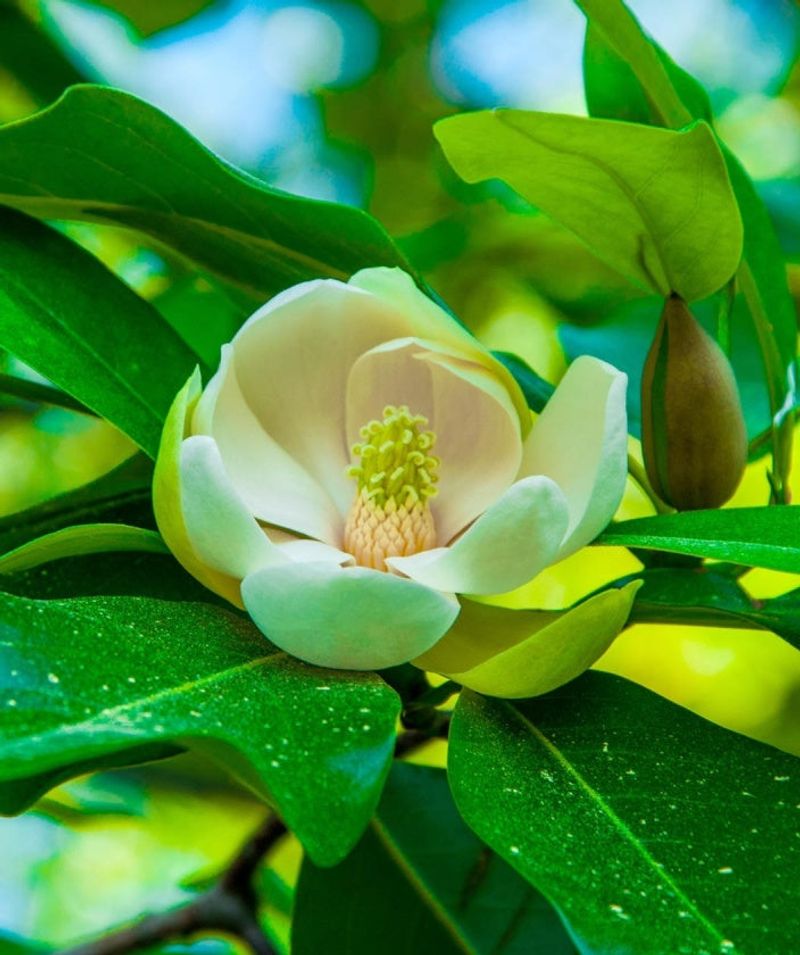
Not every magnolia needs a large, open landscape to make an impression. Sweetbay Magnolia is a more compact and adaptable native that fits comfortably into a wider range of garden settings.
It grows naturally in moist, acidic soils across much of North Carolina and is especially well suited to the eastern part of the state, where those conditions are more common.
Its creamy white flowers carry a soft, pleasant fragrance, appearing in late spring and often continuing into early summer.
The blooms have a light, elegant look, and their extended season adds a gentle rhythm to the garden rather than a single, brief display.
One of its biggest advantages is its tolerance for wetter soils, making it a great choice for areas where other ornamental trees might struggle.
Sweetbay Magnolia can be grown as a single-trunk tree for a more classic shape, or allowed to develop into a multi-stemmed form that feels relaxed and natural.
Planting in April gives it time to settle in and establish strong roots before the heat of summer, helping it transition smoothly into its first growing season.
8. Southern Magnolia (Magnolia grandiflora)
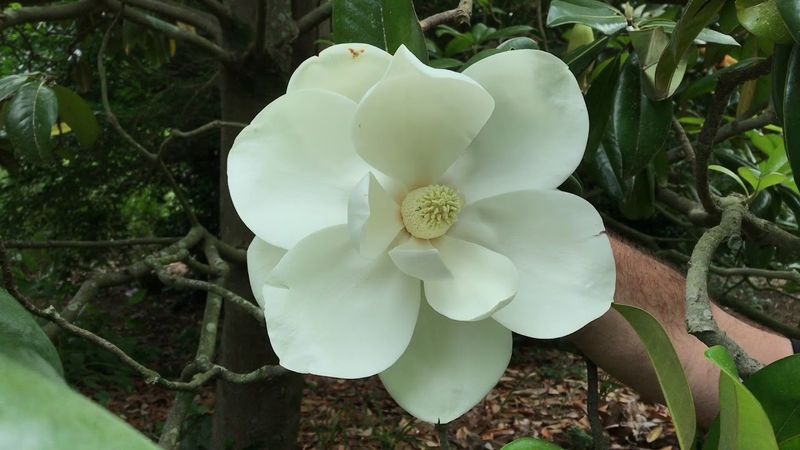
There is something undeniably grand about a Southern Magnolia in full bloom. Native to North Carolina’s Coastal Plain and other warmer parts of the region, this iconic evergreen tree produces huge, creamy white flowers with a rich, unmistakable fragrance.
Each bloom can stretch close to a foot across, making it one of the most striking sights in a summer landscape.
If your yard has the space to accommodate a large, long-lived tree, planting in April gives it an ideal head start.
The roots have time to settle in before the heat of summer, setting the stage for steady growth. Even when it is not in bloom, Southern Magnolia holds its presence.
Its glossy, leathery leaves stay deep green throughout the year, adding structure and a sense of permanence to the garden.
This tree performs best in well-drained soil and appreciates plenty of room to spread both above and below ground.
Given the right conditions, it becomes a lasting focal point, anchoring the landscape with its size, elegance, and seasonal bursts of fragrance and beauty.
9. Sourwood (Oxydendrum arboreum)
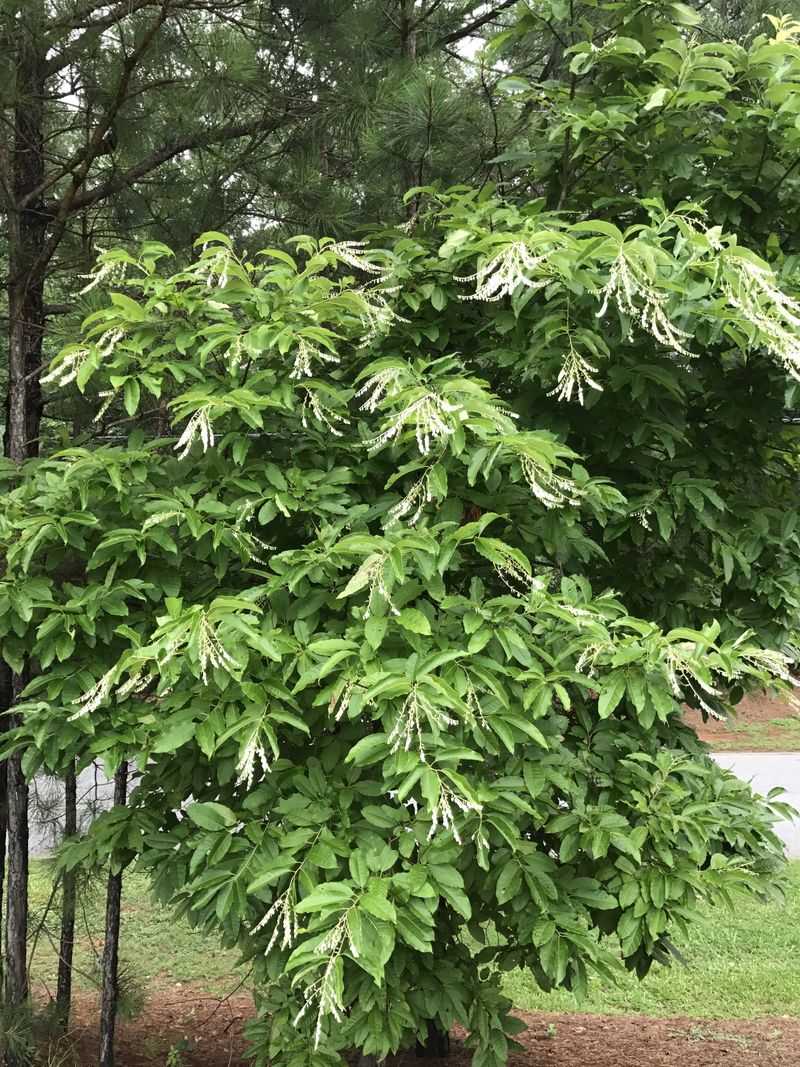
Sourwood earns its place in the garden by offering something many flowering trees simply cannot: lasting interest from one season to the next.
Native to much of North Carolina, this graceful tree stands out in midsummer, when it sends out long, gently drooping clusters of small white flowers just as most spring bloomers have already faded.
That timing alone makes it a welcome highlight when the landscape can start to feel a bit quiet. As the seasons shift, sourwood continues to impress.
In fall, its foliage transforms into rich shades of deep red and glowing orange, creating a vivid display that easily competes with the most colorful trees in the yard.
Planting it in April gives it a strong start, allowing the roots to establish comfortably before the warmer months and its blooming period arrive.
Sourwood prefers acidic, well-drained soil and is especially well-suited for sloped areas where other trees might struggle.
Beyond its visual appeal, it also supports local wildlife, with bees drawn to its nectar-filled flowers throughout the summer.
All together, it is a tree that brings both beauty and life to the garden over an extended stretch of the year.