These Scary Garden Bugs Are Actually Doing Pest Control In Your Pennsylvania Garden
Not every frightening looking creature in your Pennsylvania garden is a problem. In fact, some of the most alarming insects you’ll come across out there are doing incredibly valuable work that directly benefits your plants, your soil, and your entire garden ecosystem.
The instinct to grab something and eliminate them is completely understandable. But in these cases, that instinct is wrong.
Some of the best pest controllers in your garden look like nightmares. Long pincers, strange body shapes, unsettling movement, colors that seem designed to make you back away slowly.
These bugs have all the visual hallmarks of something you want gone. But look a little closer and you’ll find that many of them are actively hunting the insects that actually damage your plants, often working through the night when you’re not watching.
Before you reach for the spray, take a moment to identify what you’re dealing with. Here are the scary looking Pennsylvania garden bugs that deserve your protection, not your pesticide.
1. Assassin Bugs
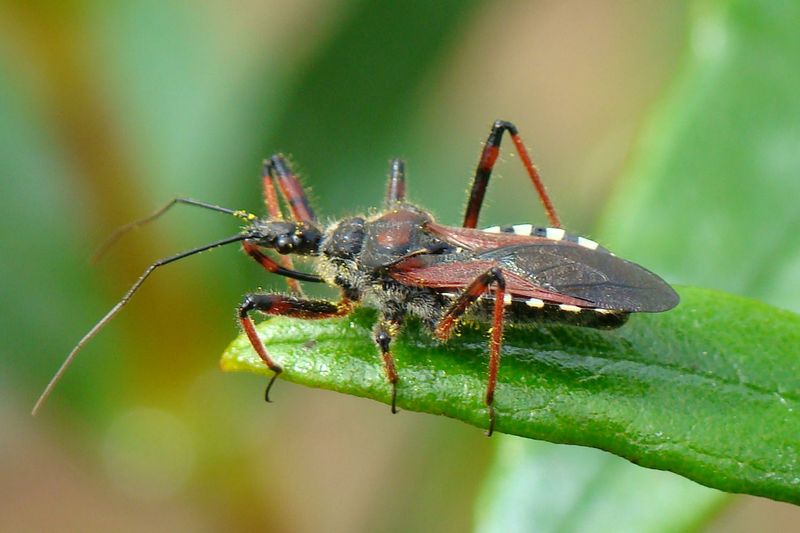
Few garden bugs look as fierce as the assassin bug. The wheel bug, one of the most common types in Pennsylvania, has a jagged, gear-shaped crest on its back that makes it look like something out of a science fiction movie.
But that wild appearance is exactly what makes it so fascinating. Assassin bugs are ambush predators. They wait patiently on leaves and stems, then use their long, curved beak to grab caterpillars, beetles, leafhoppers, and other soft-bodied pests.
That beak delivers a powerful digestive fluid that quickly subdues their prey. They are especially useful in gardens dealing with heavy caterpillar pressure.
You might spot one sitting completely still on a plant, almost like it is posing. That stillness is part of its hunting strategy.
Once a pest wanders too close, the assassin bug strikes fast. It is a remarkably efficient predator that works without any help from you.
If you see one, the best thing to do is simply leave it alone. Assassin bugs will not chase you or bother your plants.
However, if you pick one up or accidentally squeeze it, it can deliver a painful bite. So admire it from a distance and let it do its thing.
Attract more assassin bugs by planting dense shrubs and flowering plants like goldenrod and Queen Anne’s lace near your garden beds. These plants provide shelter and draw in prey insects.
Reducing pesticide use also helps, since broad-spectrum sprays can harm these helpful hunters along with the pests they chase.
2. Ground Beetles
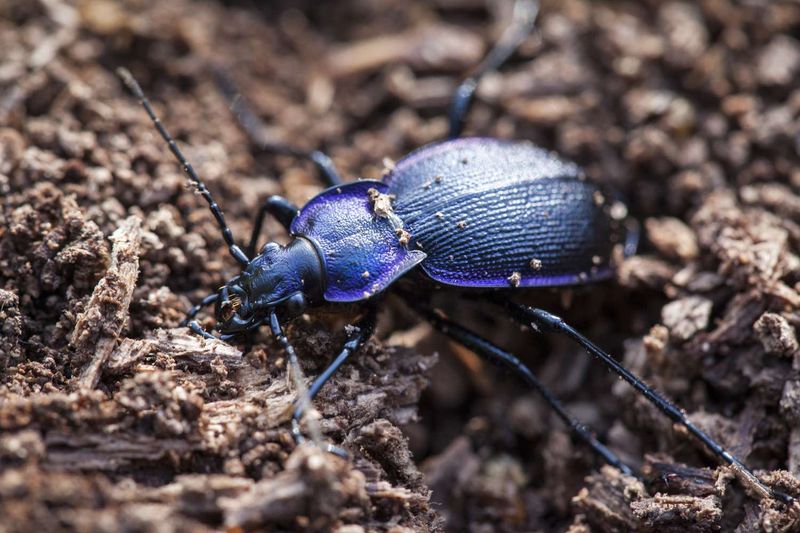
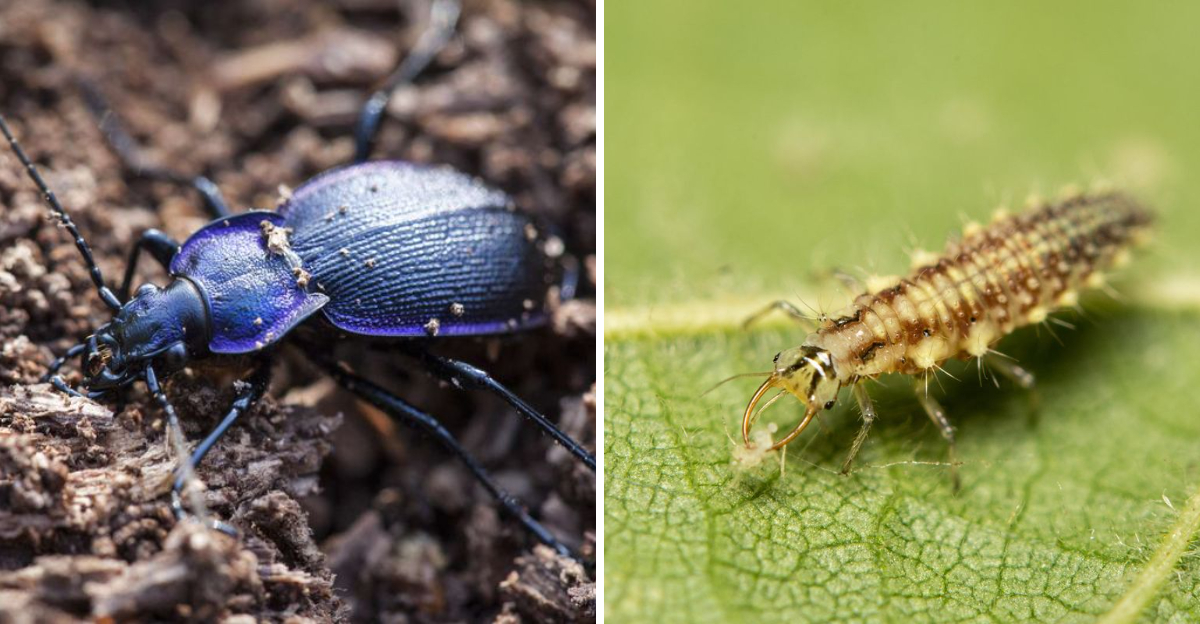
Flip over a stone, a pot, or a piece of old wood in your Pennsylvania garden, and you might find a shiny, fast-moving black beetle scrambling for cover. That is almost certainly a ground beetle, and it is one of your garden’s most hardworking nighttime helpers.
Ground beetles are nocturnal hunters. While you are sleeping, they patrol the soil surface looking for slugs, cutworms, caterpillars, and other ground-level pests.
Some species even climb plants to hunt aphids and other small insects. They are not picky eaters, which makes them incredibly useful in a wide range of garden settings.
Your Pennsylvania Garden Changes Every Week. Your Plan Should Too.
Gardening in Pennsylvania changes quickly throughout the season. Every Friday you’ll receive a simple weekly plan showing exactly what to plant, prune, fertilize, harvest, and protect so you never miss the right timing.
There are hundreds of ground beetle species found across Pennsylvania. Most are dark-colored, fast on their legs, and have a slightly flattened body that helps them squeeze under debris.
They spend their days hiding under mulch, boards, and rocks, then emerge after dark to hunt. Their larvae are also predatory and live in the soil, targeting pest eggs and small grubs.
One of the easiest ways to support ground beetles is to add a thick layer of mulch around your garden beds. Mulch gives them a safe place to rest during the day and keeps the soil moist, which attracts the soft-bodied prey they love.
Avoid tilling the soil too often, since tillage disrupts their habitat and can harm both adults and larvae.
Planting a variety of ground covers and leaving some leaf litter around garden edges also helps. Ground beetles thrive in stable, undisturbed environments.
The less you disturb the soil, the more likely these helpful beetles are to stick around and keep working for you.
3. Lacewing Larvae
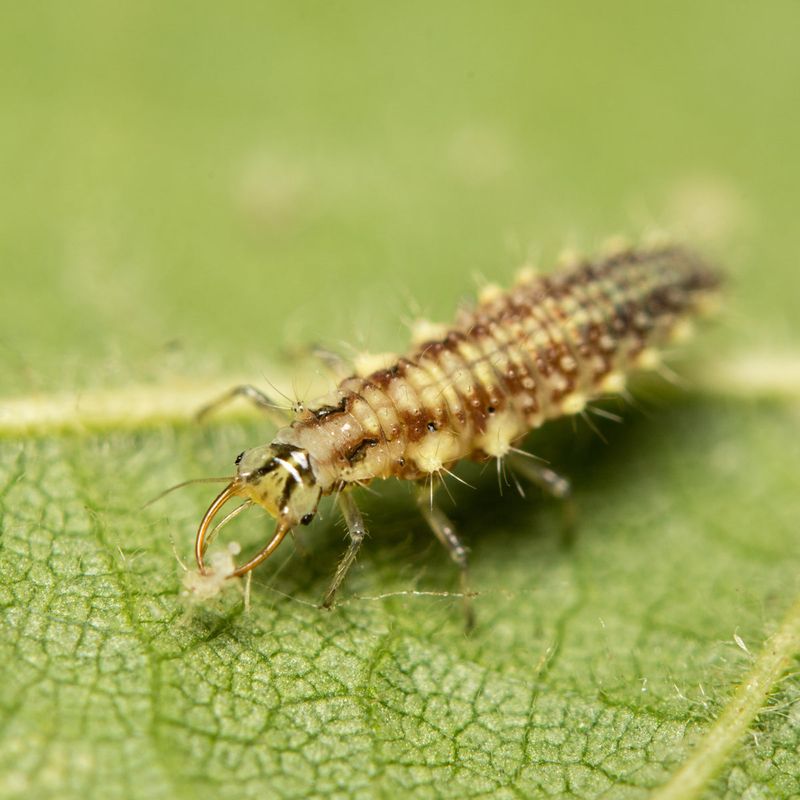
If you have ever seen a tiny creature with long curved jaws crawling across your plants and thought it looked like a miniature monster, you probably spotted a lacewing larva. And honestly, to an aphid, it absolutely is a monster.
These small larvae are some of the most aggressive predators in the garden world. Adult lacewings are delicate, lacy-winged insects that flutter around at night and feed mostly on nectar and pollen. But their larvae?
Completely different story. Lacewing larvae have sickle-shaped jaws they use to grab aphids, spider mites, small caterpillars, whiteflies, and other soft-bodied pests.
They inject a paralyzing fluid and then suck out the contents. One larva can consume hundreds of aphids during its short larval stage.
You can actually buy lacewing eggs from garden suppliers, which shows just how valued these insects are. But if you avoid pesticides and grow the right plants, they will show up on their own.
Lacewings are attracted to flowers like dill, fennel, coriander, and yarrow. These plants provide nectar and pollen for the adults, encouraging them to lay eggs nearby.
Spotting lacewing larvae can be tricky because they sometimes camouflage themselves by sticking debris and the remains of their prey onto their backs. It looks strange, but it helps them sneak up on more prey without being noticed. Pretty clever for something so small.
Next time you see a weird-looking spiky creature on your plants, take a closer look before brushing it off. It might just be one of your garden’s best defenders working hard to keep pest populations in check without any chemicals at all.
4. Lady Beetle Larvae
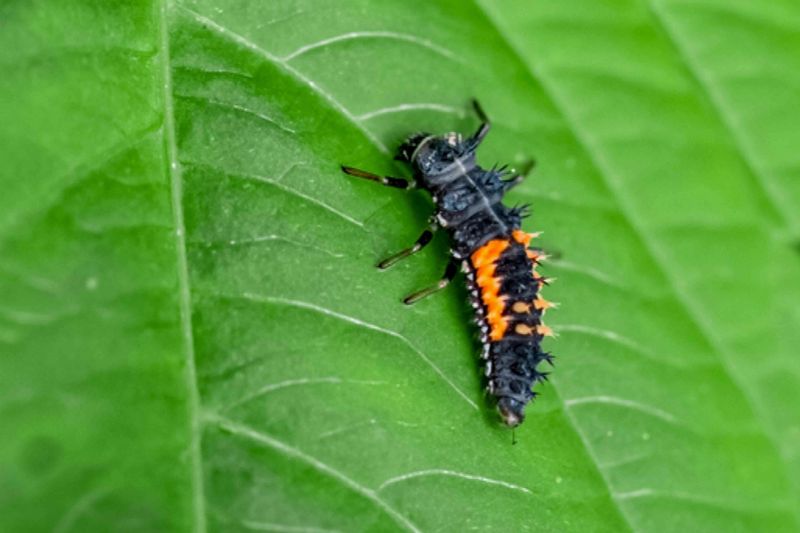
Most people love ladybugs. Those cheerful red-and-black spotted beetles are practically garden celebrities.
But before they reach that recognizable adult form, lady beetles go through a larval stage that looks nothing like the bug you know and adore. Lady beetle larvae look like tiny black-and-orange spiky alligators, and many gardeners mistake them for something harmful.
Here is the thing: those strange-looking larvae are even better at controlling pests than the adults. A single lady beetle larva can consume dozens of aphids per day.
Over the course of its larval development, it may eat several hundred. They also feed on mealybugs, small caterpillars, insect eggs, and other soft-bodied pests. They are relentless, hungry, and completely on your side.
Lady beetle larvae are typically found wherever aphid colonies are thriving, which makes sense since that is their preferred food source. Check the undersides of leaves on roses, beans, tomatoes, and other commonly infested plants.
If you see clusters of yellow-orange eggs nearby, those are likely lady beetle eggs waiting to hatch into more helpful larvae.
Supporting lady beetles in your Pennsylvania garden is straightforward. Avoid broad-spectrum insecticides, which can wipe out larvae along with pests.
Grow plants like dill, fennel, marigolds, and dandelions, which attract adult lady beetles to your garden. Once adults arrive and find a good food source, they will lay eggs and start the cycle again.
So the next time you spot a spiky little creature crawling around your plants, resist the urge to remove it. That odd-looking larva is earning its keep by cleaning up the pest population one aphid at a time.
5. Spined Soldier Bugs
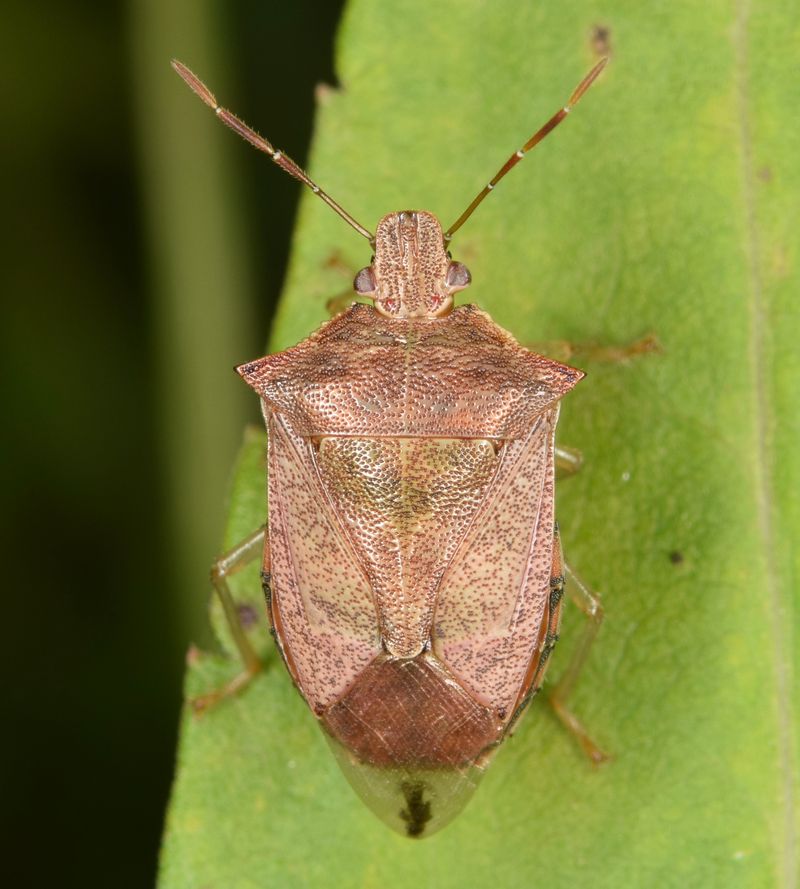
At first glance, the spined soldier bug looks a lot like the brown marmorated stink bug, one of Pennsylvania’s most frustrating garden pests. Same shield shape.
Same muted brown color. It is an easy mix-up to make, and it causes many gardeners to accidentally remove one of their best allies.
The key difference? The spined soldier bug has sharp, pointed spines on its shoulders, while the pest stink bug has rounded ones.
Spined soldier bugs are predatory stink bugs, meaning they hunt other insects rather than feeding on your plants. They are particularly useful in vegetable gardens where caterpillars and beetle larvae cause the most damage.
Cabbage worms, Colorado potato beetle larvae, fall armyworms, and imported cabbageworms are all on their menu. They use a piercing beak to grab and subdue prey, similar to the assassin bug.
These bugs are commercially available as a biological control option, which tells you a lot about how effective they are. Pennsylvania vegetable growers dealing with heavy caterpillar pressure can benefit greatly from having spined soldier bugs around.
They are most active during warm months and tend to be more visible in gardens with diverse plantings.
To attract and keep spined soldier bugs, reduce or eliminate pesticide use in your garden. They are sensitive to chemical sprays and will leave or avoid treated areas.
Planting a variety of flowering herbs and vegetables also helps create the kind of habitat they prefer.
Learning to tell them apart from pest stink bugs takes a little practice, but it is worth the effort. Once you can spot a spined soldier bug, you will know to leave it right where it is and let it get to work.
6. Tachinid Flies
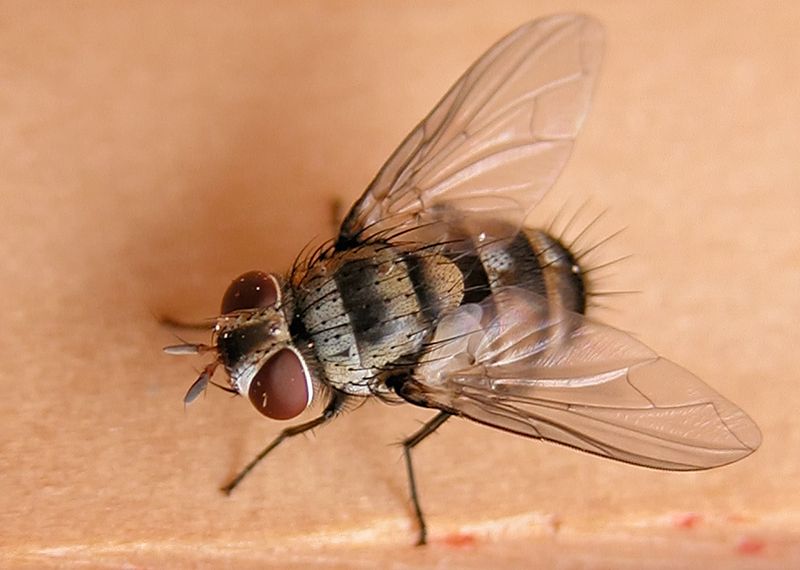
Tachinid flies do not get nearly enough credit. They look like oversized, bristly houseflies, which means most people either ignore them or swat them away.
But these flies are quietly doing some of the most impressive pest control work in your entire Pennsylvania garden, and they do it in a way that is both fascinating and a little wild.
Adult tachinid flies feed on nectar and pollen, so they are also helpful pollinators. But it is their larvae that really earn their place in the garden.
Female tachinid flies lay their eggs directly on or inside host pests. Once the eggs hatch, the larvae feed on the pest from the inside, eventually ending its life.
Their targets include caterpillars, beetles, true bugs, sawflies, grasshoppers, squash bugs, and even Japanese beetles.
There are over 1,300 species of tachinid flies in North America, and many of them are found in Pennsylvania.
Different species target different pests, which means a garden with a healthy tachinid fly population has protection against a wide range of harmful insects. You may not even realize they are working because so much of it happens out of sight.
Attracting tachinid flies is simple. Plant nectar-rich flowers with small, open blooms that are easy for flies to access.
Dill, cilantro, sweet alyssum, and buckwheat are all excellent choices. These plants act as a food source for adult flies and encourage them to stay and reproduce in your garden.
Once you know what tachinid flies look like, you will start noticing them everywhere. And every time you do, you can feel good knowing your garden has a secret weapon working hard behind the scenes.
7. Tiny Parasitic Wasps
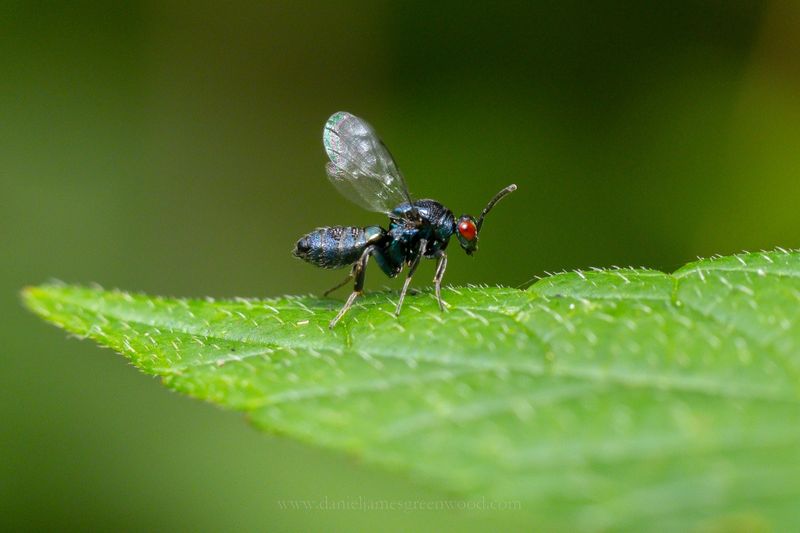
The word wasp tends to make people nervous, and that reaction makes total sense. But not all wasps are the aggressive, stinging insects most people picture.
Many parasitic wasps are so small you could barely see them without a magnifying glass, and they have zero interest in stinging people. Their entire focus is on finding the right pest to use as a host for their eggs.
Parasitic wasps lay their eggs in or on other insects. Once the eggs hatch, the larvae develop inside the host, slowly consuming it.
Common targets include aphids, caterpillars, whiteflies, leaf miners, mealybugs, stink bug eggs, and a long list of other garden troublemakers. Some species are so specialized that they only target one type of pest, making them incredibly precise pest controllers.
One of the most recognizable signs of parasitic wasp activity is a mummified aphid. If you look closely at an aphid colony and notice some that look puffed up, brown, and stiff, those have already been parasitized.
A tiny wasp larva is developing inside, and eventually a new adult wasp will emerge to continue the cycle.
You can encourage parasitic wasps by planting a wide variety of flowering plants that provide nectar for the adults. Fennel, parsley, dill, and other members of the carrot family are especially attractive to them.
Leaving some areas of your garden a little wild and untrimmed also gives these small insects places to shelter and reproduce.
Parasitic wasps are proof that the best pest control does not always come in a bottle. Sometimes it is already flying quietly through your garden, doing the work without anyone even noticing.