Privacy Plants Pennsylvania Gardeners Are Using Instead Of Arborvitae That Deer Won’t Touch
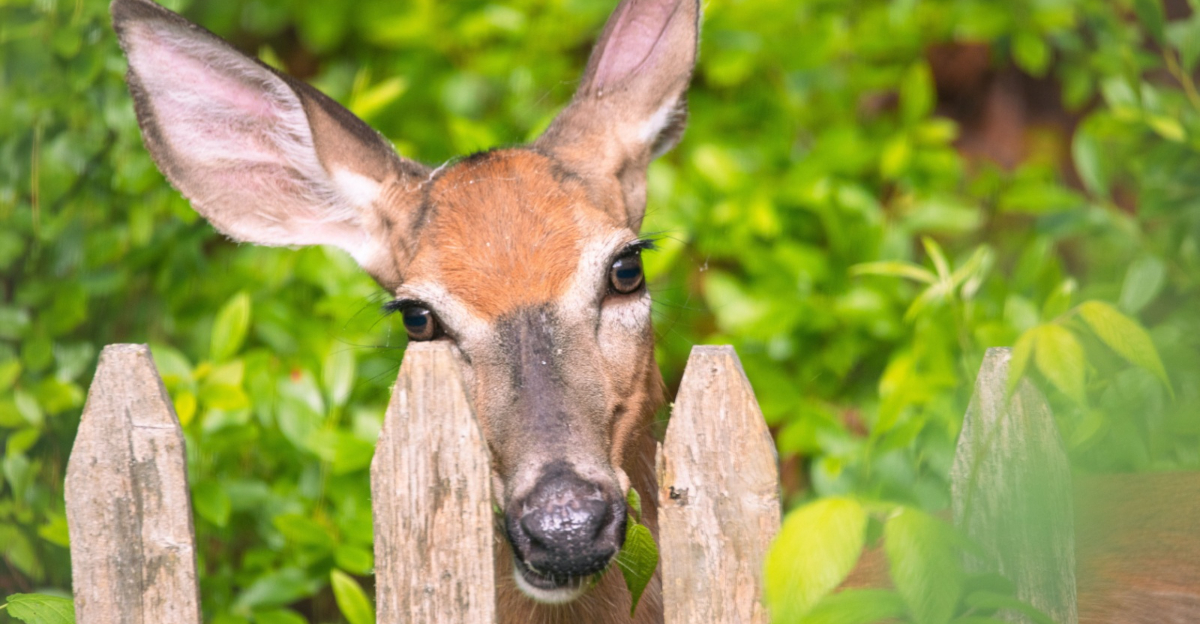
Planting arborvitae for privacy in Pennsylvania can feel like a great idea right up until the deer show up and start helping themselves. One season it looks full and green, and the next it looks a little too open for comfort.
That kind of surprise tends to make gardeners rethink the whole plan pretty quickly. A lot of gardeners still want the same privacy, structure, and year-round presence, just without turning the planting into a deer favorite.
Thankfully, there are other shrubs and evergreens that can do the job with a lot more staying power in deer-prone yards. Some stay dense and green, some offer a looser natural screen, and some even bring fragrance or seasonal color along the way.
Honestly, privacy plants that do not double as a winter snack sound like a much better arrangement.
1. Eastern Redcedar Brings Strong Evergreen Privacy
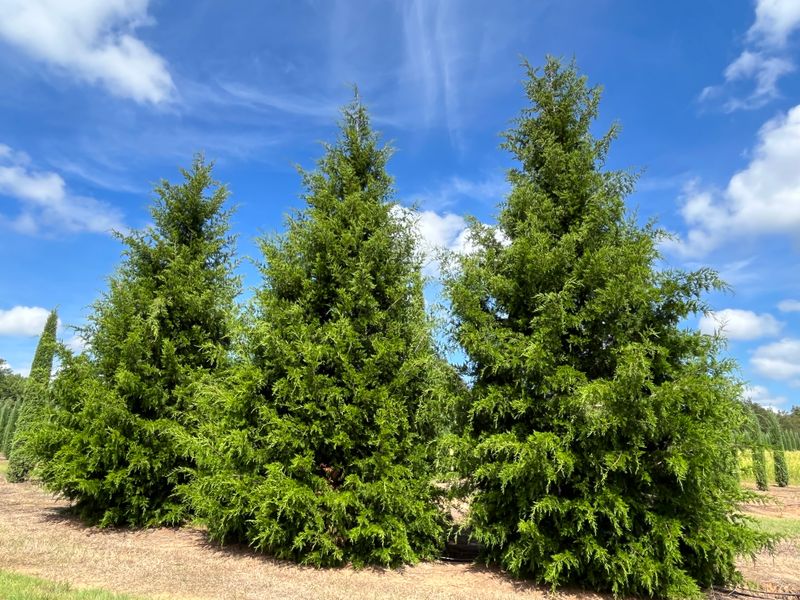
Few evergreens can match the durability of Eastern redcedar when it comes to holding a strong privacy screen through winter.
This native conifer grows naturally across much of the state, and its dense, scale-like foliage creates a thick visual barrier that fills in well over time.
Unlike arborvitae, deer tend to avoid Eastern redcedar more consistently, likely because of its aromatic oils and prickly texture.
In a home landscape, Eastern redcedar can reach 30 to 40 feet tall with a spread of 8 to 15 feet, though many cultivated varieties stay narrower and more manageable for backyard use.
It tolerates a wide range of soil conditions, handles drought fairly well once established, and does not need much attention after the first few growing seasons.
Full sun brings out the best growth and densest foliage.
The berrylike cones that appear in fall and winter add some ornamental interest and attract birds, which is a bonus for gardeners who want wildlife value without the deer browsing headaches.
Eastern redcedar is not completely immune to deer pressure in every Pennsylvania yard, but it is widely regarded as a much more dependable choice than arborvitae in areas with heavy deer activity.
For year-round evergreen screening along a fence line or open boundary, it is one of the more reliable native options available to gardeners today.
2. Inkberry Holly Adds Dense Green Screening
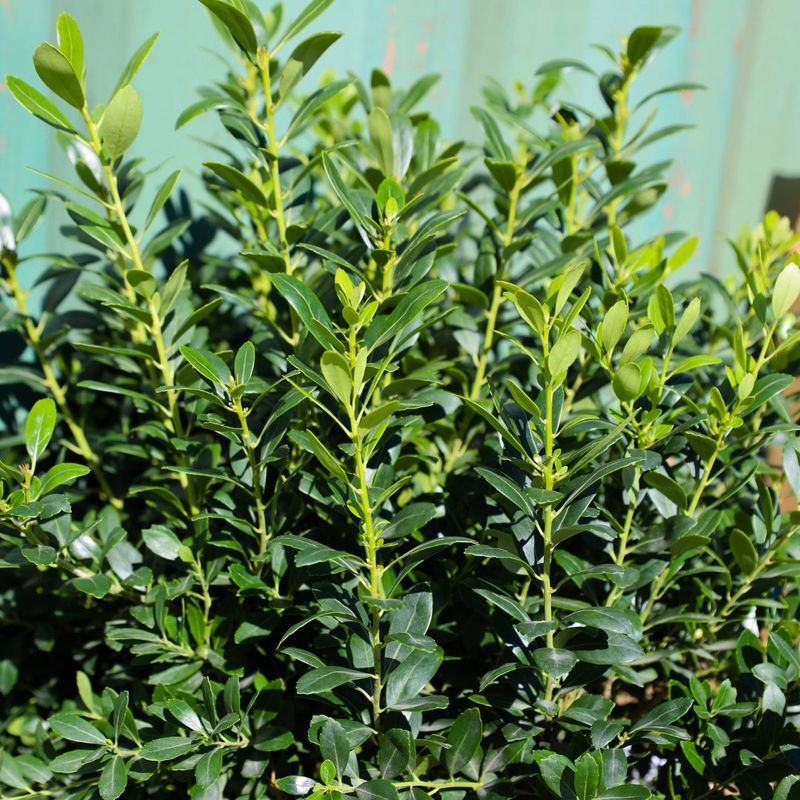
Backyard privacy does not always require a tall conifer, and inkberry holly proves that point well.
This native evergreen shrub grows naturally in moist, low-lying areas across Pennsylvania and produces a thick mass of dark green foliage that holds its color through most of the winter season.
Deer tend to pass over inkberry more often than arborvitae, making it a practical choice for gardeners dealing with regular browsing pressure along wooded property edges.
Inkberry typically reaches 6 to 8 feet tall and wide at maturity, though some compact cultivars stay closer to 3 to 4 feet, which works well for lower screens or layered border plantings.
It grows best in full sun to partial shade and handles wet or poorly drained soils better than most shrubs, which makes it especially useful in yards that stay soggy after heavy rain.
Your Pennsylvania Garden Changes Every Week. Your Plan Should Too.
Gardening in Pennsylvania changes quickly throughout the season. Every Friday you’ll receive a simple weekly plan showing exactly what to plant, prune, fertilize, harvest, and protect so you never miss the right timing.
It also tolerates clay soils reasonably well.
Small black berries appear in late summer and persist into winter, providing food for birds while adding subtle seasonal interest to the planting.
Because inkberry spreads gradually by suckering, a small planting can fill in over several seasons and create a more natural-looking screen than a clipped hedge.
Deer resistance is not absolute, and browsing can still occur under high pressure, but inkberry tends to hold up far better than arborvitae in most Pennsylvania landscapes where deer are a regular presence.
3. American Holly Brings Classic Privacy And Structure
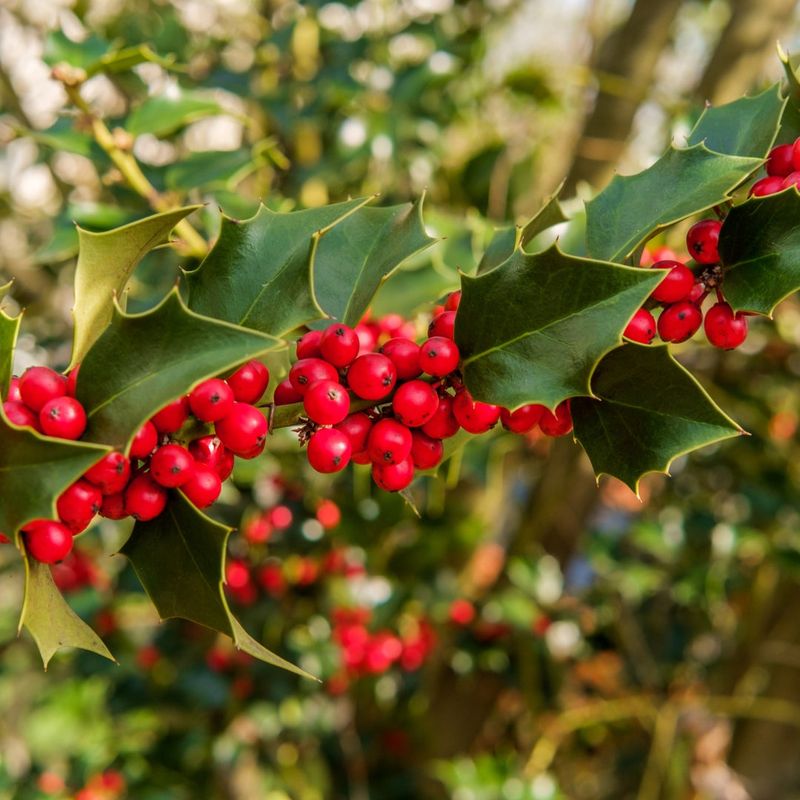
There is something unmistakably classic about a well-grown American holly standing along property line in December.
The glossy, deep green leaves and bright red berries make it one of the most recognizable native trees in the eastern United States, and its dense, upright form provides solid year-round screening that holds up well in home landscapes.
Deer tend to leave American holly alone more often than arborvitae, partly because the spiny leaf margins make browsing uncomfortable.
American holly can grow 15 to 30 feet tall over time, which makes it a better fit for larger properties or back boundaries where height is not a concern.
It prefers well-drained, slightly acidic soils and grows well in full sun to partial shade, conditions that are common across much of Pennsylvania.
Planting both male and female trees nearby encourages better berry production, which adds to the ornamental value of the screen.
Because it grows more slowly than arborvitae, American holly requires some patience before it fills in as a full privacy screen.
However, once established, it is a durable, long-lived planting that rarely needs much intervention.
The combination of evergreen foliage, winter berries, and relative resistance to deer browsing makes it a worthwhile investment for gardeners who want structure and seasonal beauty in their privacy plantings.
Results can vary depending on local deer pressure, soil conditions, and how much sun the planting receives.
4. Northern Bayberry Adds A Softer Native Screen
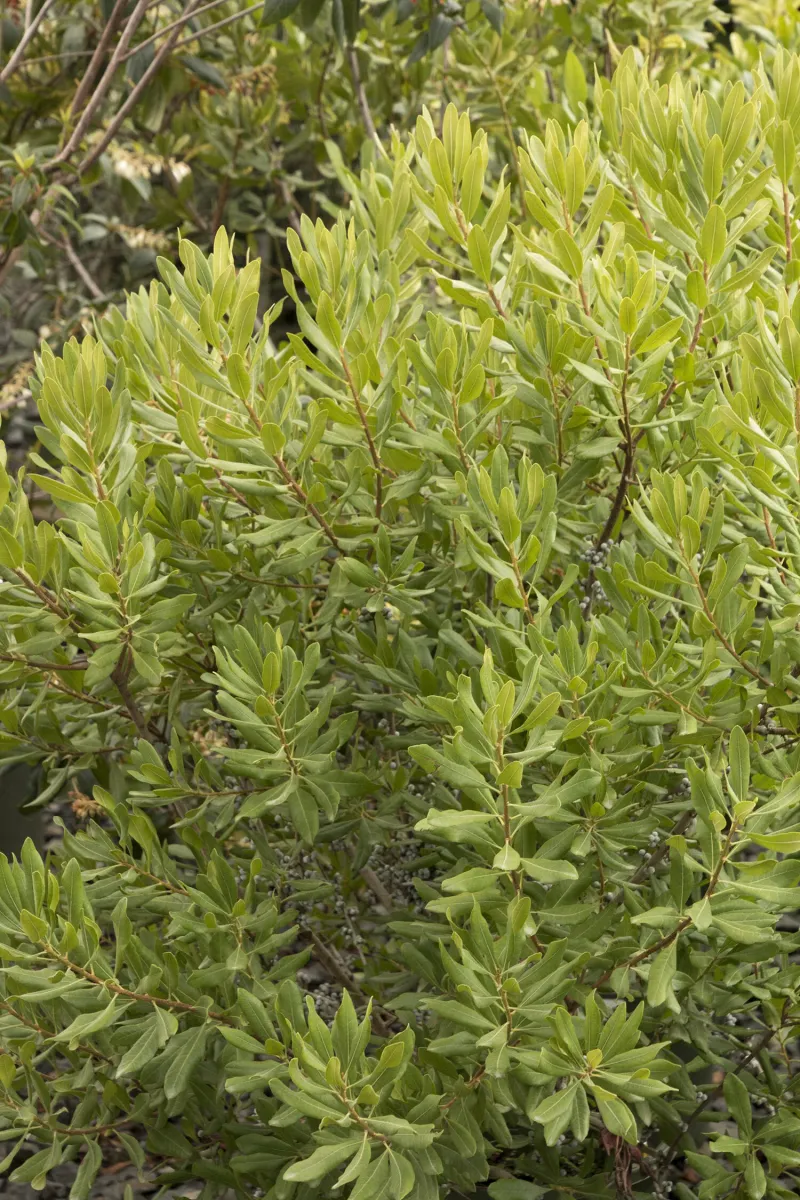
Not every privacy planting needs to be a rigid wall of dark green, and northern bayberry offers something a little different for gardeners who prefer a looser, more natural-looking screen.
This native shrub produces semi-evergreen to deciduous foliage with a pleasant, waxy fragrance when the leaves are brushed or crushed.
Deer tend to avoid it consistently, which many gardeners in deer-heavy areas of Pennsylvania find to be one of its most appealing qualities.
Northern bayberry grows 5 to 12 feet tall depending on site conditions, with a rounded, spreading habit that fills in gradually over several seasons.
It handles sandy, infertile, and coastal-influenced soils well, but it also adapts to the average Pennsylvania yard without much fuss.
Full sun produces the densest growth, though it tolerates light shade reasonably well. Once established, bayberry is notably drought-tolerant and requires very little supplemental care.
Clusters of waxy gray berries appear on female plants in late summer and often persist well into winter, providing food for birds and adding quiet seasonal texture to the landscape.
Because it spreads naturally by suckering, northern bayberry works well as a mass planting along a back fence or open boundary where a natural, informal screen is the goal.
It is not a replacement for a formal evergreen hedge, but for gardeners who want a low-maintenance native screen that deer tend to overlook, it is a genuinely solid option worth planting.
5. Sweetshrub Brings Fragrance And Backyard Cover
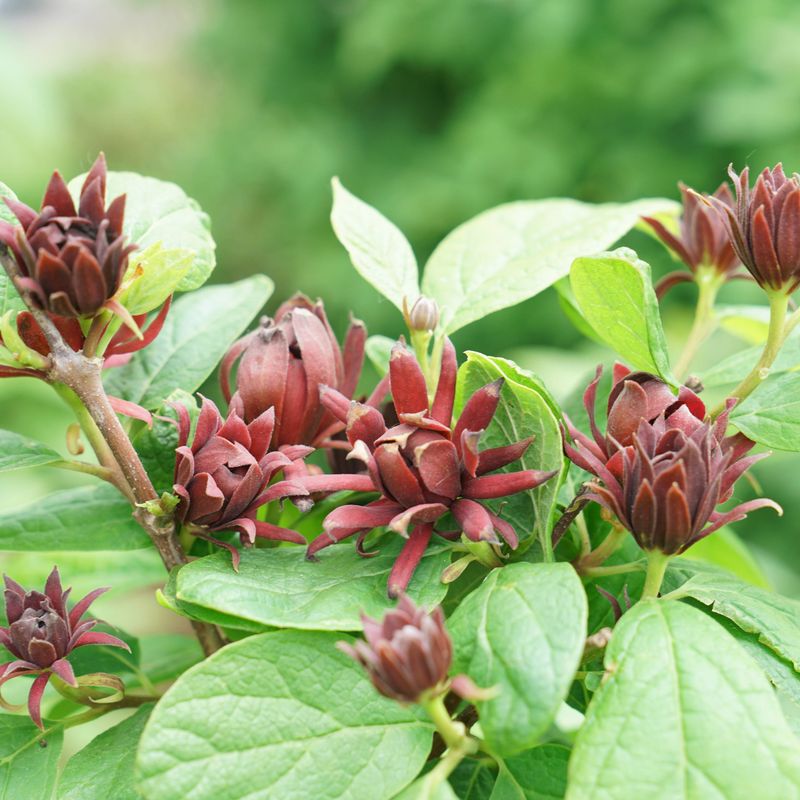
Walking past a sweetshrub in bloom on a warm afternoon is a sensory experience worth planning around.
The deep reddish-brown flowers carry a spicy, fruity fragrance that is genuinely unusual in the shrub world, and the dense, arching growth habit fills in quickly enough to provide meaningful coverage along a garden border or property edge.
Deer tend to pass over sweetshrub fairly reliably, which has made it a popular backyard choice in parts of Pennsylvania where browsing pressure runs high.
Sweetshrub typically grows 6 to 9 feet tall with a similar spread, forming a rounded, multi-stemmed clump that works well as an informal screen or layered backdrop in a mixed border.
It prefers moist, well-drained soil with partial shade to full sun, and it performs well under the dappled light found along woodland edges, which are common in many backyards.
It is deciduous, so it loses its leaves in fall and does not provide year-round visual blocking on its own.
Pairing sweetshrub with evergreen plantings nearby can help bridge the seasonal gap in screening. The fragrant flowers appear in late spring to early summer, and the foliage turns a pleasant yellow in fall before dropping.
For gardeners who want a native shrub with personality, fragrance, and reasonable deer resistance rather than a standard evergreen hedge, sweetshrub brings a lot of character to a backyard privacy planting without demanding much in return.
6. Arrowwood Viburnum Adds Full Growth And Seasonal Beauty
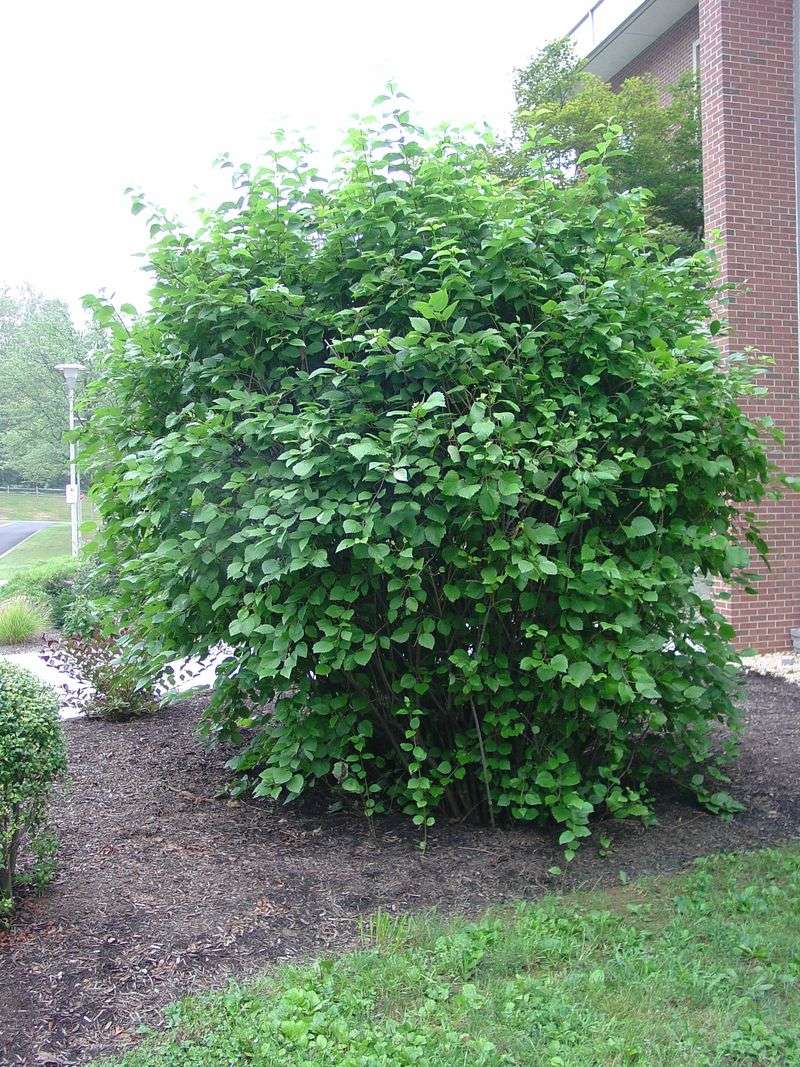
Plenty of Pennsylvania gardeners have discovered that arrowwood viburnum can fill a privacy gap faster than expected, especially when planted in a row along a fence or property boundary.
This native shrub grows with a full, upright to arching habit that reaches 6 to 10 feet tall and wide, providing solid visual coverage from early spring through late fall.
Deer tend to browse arrowwood less aggressively than arborvitae, though browsing can still occur when deer pressure is especially high in a given area.
One of the more appealing qualities of arrowwood viburnum is how much seasonal interest it packs into a single growing season.
Flat-topped clusters of white flowers appear in late spring and attract pollinators, blue-black berries ripen by late summer and feed birds, and the foliage shifts to shades of red and purple before dropping in fall.
It is deciduous, so the screening effect is reduced in winter, but the dense branching structure still provides some visual separation between properties.
Arrowwood viburnum grows well in full sun to partial shade and adapts to a range of soil types found across Pennsylvania, including clay-heavy and moderately moist conditions.
It is also relatively low-maintenance once established and rarely needs heavy pruning to stay attractive.
For gardeners who want a privacy shrub with four seasons of interest and a track record of holding up better than arborvitae where deer are present, arrowwood viburnum is consistently worth recommending.
7. Red-Osier Dogwood Brings Color And Natural Privacy
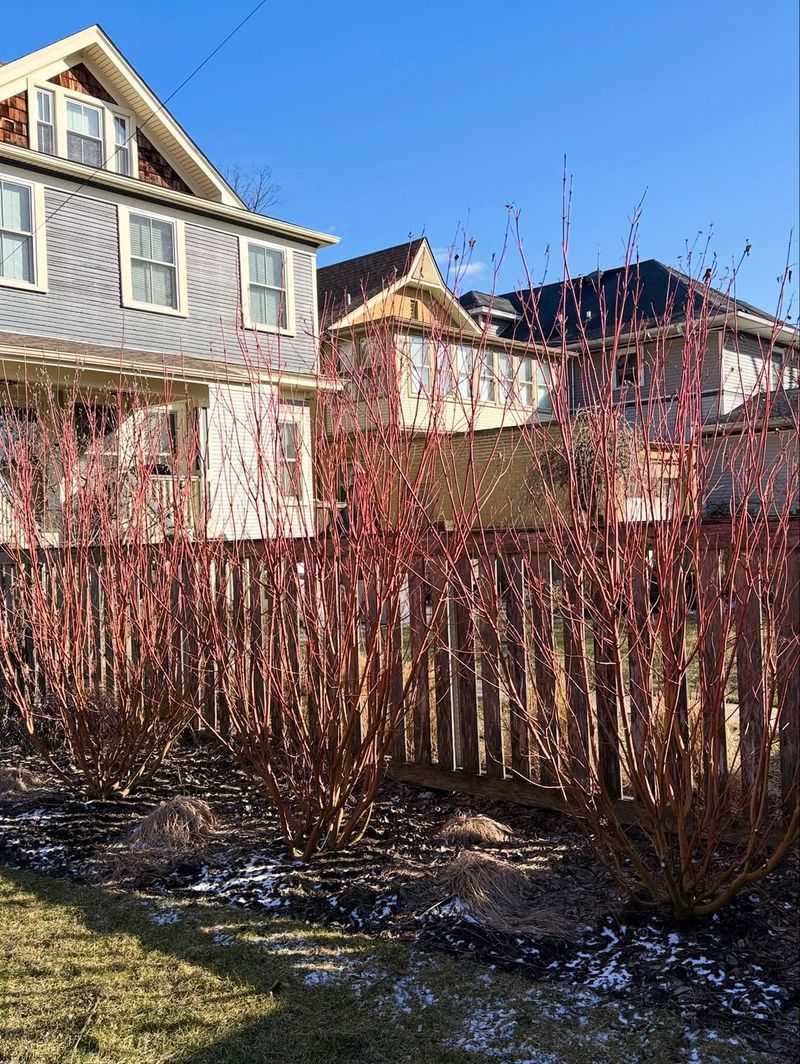
When most shrubs go bare and gray in winter, red-osier dogwood does something unexpected – it turns up the color.
The bright red stems glow against snow and dormant landscape, making it one of the most visually striking native shrubs available for winter interest in a home garden.
Beyond the seasonal color, red-osier dogwood grows into a dense, spreading thicket that provides meaningful natural screening along property lines and back boundaries.
Red-osier dogwood typically reaches 7 to 9 feet tall with a spread that can be even wider over time, especially since it spreads by suckering and gradually fills in open areas.
It grows best in moist to wet soils with full sun to partial shade, making it a strong candidate for low spots in Pennsylvania yards that stay damp after rain.
It handles clay soils and periodic flooding better than most privacy shrubs.
Deer tend to browse red-osier dogwood less than arborvitae, though it is not completely off the menu in every yard.
Heavier browsing can occur in areas with very high deer populations, so results may vary depending on local conditions across Pennsylvania.
White flower clusters appear in late spring, and the small white berries that follow attract birds through summer and fall.
For gardeners who want a native privacy option with strong winter color, wildlife value, and better deer resistance than arborvitae, red-osier dogwood brings a lot of natural energy to backyard screen.