These Shrubs Are Illegal To Sell In Texas
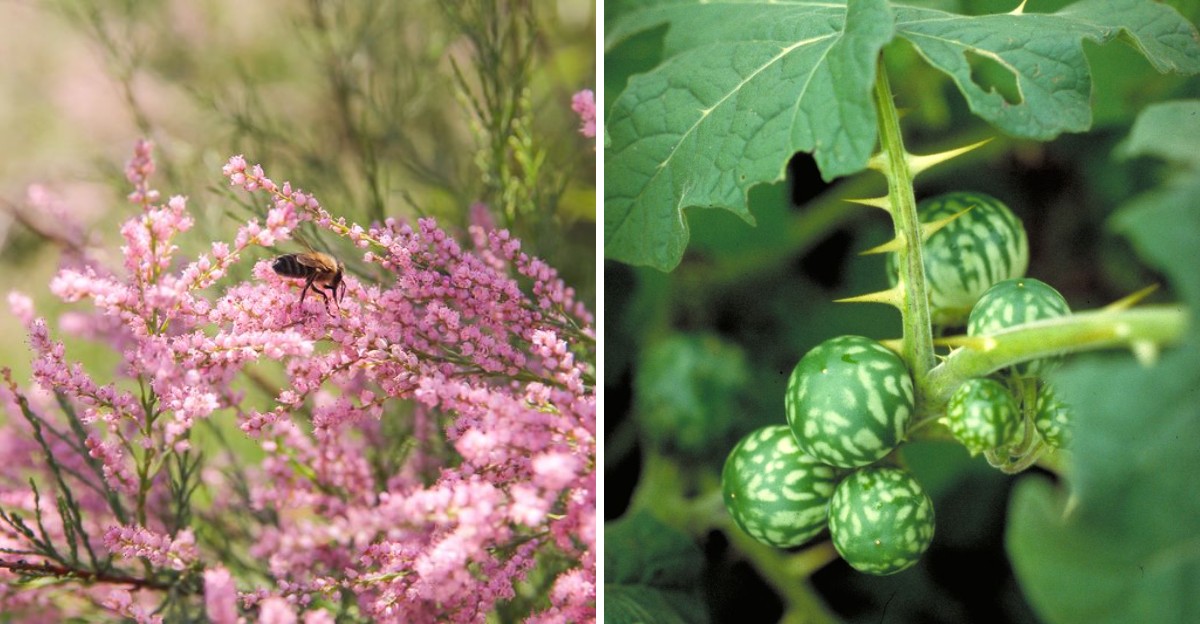
Can a plant really break the law? In Texas, the answer is yes. Some shrubs are actually banned from sale in the Lone Star State.
It sounds strange at first. Why would anyone outlaw a bush? The reason is simple.
Certain plants spread so aggressively that they crowd out native species, choke waterways, and wreck habitats that wildlife depend on.
Once they escape into the wild, getting rid of them is a costly, never-ending battle. That’s why Texas keeps an official list of noxious and invasive plants.
Some of them might already be growing in your yard. Curious which shrubs made the list? Let’s dig in and find out.
1. Brazilian Peppertree (Schinus Terebinthifolius)
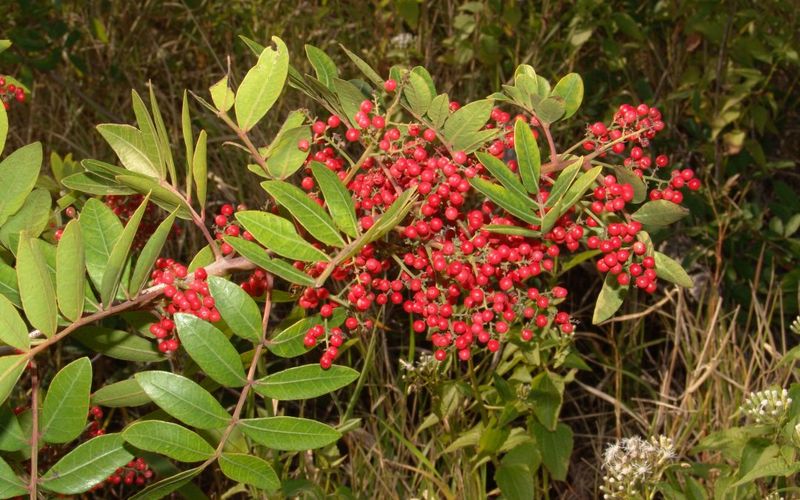
Those cheerful red berries look like they belong on a holiday wreath. In fact, some people call Brazilian peppertree Florida holly for that reason. But behind the pretty look hides a real bully.
Brazilian peppertree is an evergreen shrub or small tree from South America. It sits on the TDA noxious plant list, so no one can sell it or import it into Texas. That rule exists for a good reason.
Here is a surprising fact. The plant belongs to the same family as poison ivy and poison sumac.
Touching the sap or crushing the leaves can cause itchy rashes for some people. Even the smell of the blooms can bother folks with allergies.
Birds love the berries. They eat them and drop the seeds far away, which helps the plant spread fast. Soon, thick tangles of branches crowd out native plants in coastal areas.
Little sunlight reaches the ground under those thickets, so other plants struggle to grow.
Spotting it is not too hard. Look for leaves made of several small, shiny leaflets that smell a bit like pepper when crushed. The red berries show up in fall and winter in heavy clusters.
If you find one on your land, wear gloves and long sleeves before you touch it. Small plants can be pulled up by the roots. Larger ones may need cutting and a follow-up treatment, since stumps often sprout again.
Want red berries without the headache? Try yaupon holly or possumhaw. Both are Texas natives that feed birds and brighten winter yards.
They give you that festive color while keeping your local plants happy and safe from a pushy invader.
2. Saltcedar (Tamarix Species)
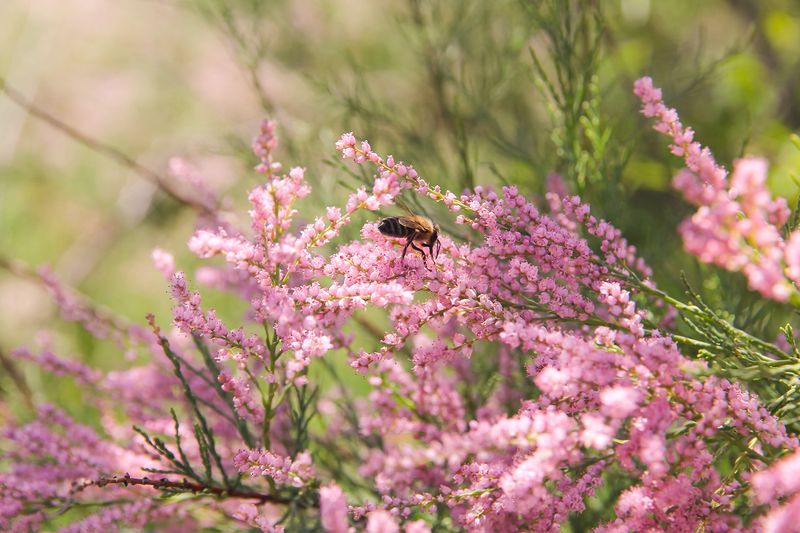
Along the Pecos River and the Rio Grande, you may see soft pink blooms waving in the breeze. They look lovely against the desert sky. Sadly, that fluffy beauty comes with a thirsty secret.
Saltcedar, also called tamarisk, arrived from Eurasia in the 1800s. People planted it to stop erosion and shade homes. Today, six species of saltcedar appear on the TDA noxious list, so selling them in Texas is against the rules.
So what went wrong? Saltcedar drinks water like a sponge. One large plant can soak up a surprising amount each day.
In dry West Texas, that loss can shrink streams and hurt wildlife that needs those waters.
Your Texas Garden Changes Every Week. Your Plan Should Too.
Gardening in Texas changes quickly throughout the season. Every Friday you’ll receive a simple weekly plan showing exactly what to plant, prune, fertilize, harvest, and protect so you never miss the right timing.
There is another trick up its sleeve. The plant pulls salt from deep in the soil and releases it through its leaves. When those leaves fall, the ground gets saltier.
Native trees like cottonwoods and willows have a hard time growing in that salty soil.
You can spot saltcedar by its feathery, scale-like leaves that look a bit like a cedar branch. The pink or white flowers grow in long, fuzzy clusters. The bark is reddish brown on young stems.
Removing it takes patience. Roots grow deep, and cut stems often sprout back. Many land managers use a mix of cutting, careful herbicide use, and even tiny leaf beetles that feed only on saltcedar.
For a native swap, think about desert willow. It has pretty pink and purple blooms, handles drought well, and uses far less water. Your yard gets color, and local rivers keep more of their precious flow.
3. Tropical Soda Apple (Solanum Viarum)
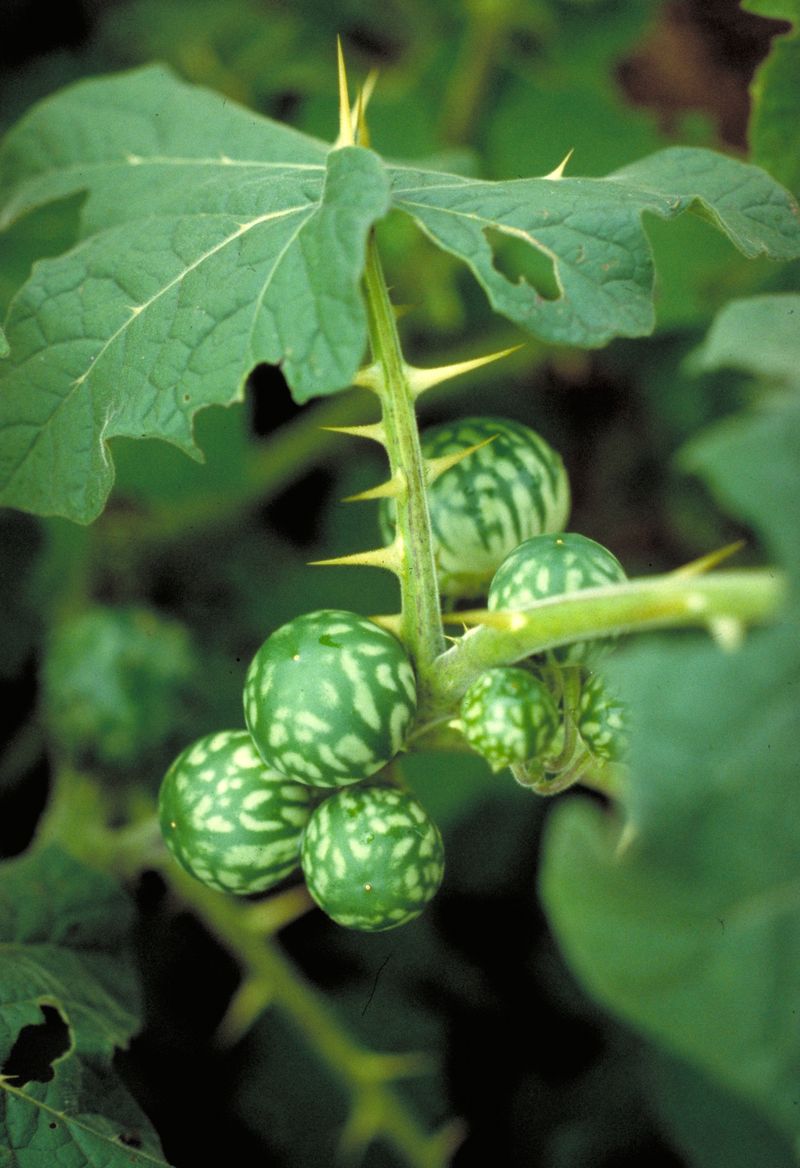
Ranchers have a nickname for this plant, and it is not a kind one. Some call it the plant from the wrong side of the fence. Once tropical soda apple shows up in a pasture, it rarely leaves on its own.
Tropical soda apple is an upright shrub from South America. It usually grows about three to six feet tall.
Its leaves look a little like oak leaves, but they are covered in sharp, straight thorns that poke through jeans with ease.
The fruit is easy to remember. Each one is about the size of a golf ball and has green and white stripes, almost like a tiny watermelon.
As it ripens, it turns yellow. A single plant can make many fruits packed with hundreds of seeds each.
That is exactly why TDA lists it as noxious. Cattle and wild animals eat the fruit and spread seeds in their droppings.
Before long, prickly patches take over grazing land. Cows avoid the thorny plants, so good pasture space shrinks fast.
Hay and moving livestock can carry seeds too. That is one reason buying clean hay from trusted sellers matters so much. Checking new animals and equipment can also help stop a surprise invasion.
If you spot tropical soda apple, act before the fruit ripens. Mow or dig out young plants and bag any fruit you find. Do not leave fruit on the ground where animals can reach it.
Also, let your county extension office know. They track this weed and can share the best control steps for your area. Catching it early saves a lot of work and money down the road.
4. Camelthorn (Alhagi Species)
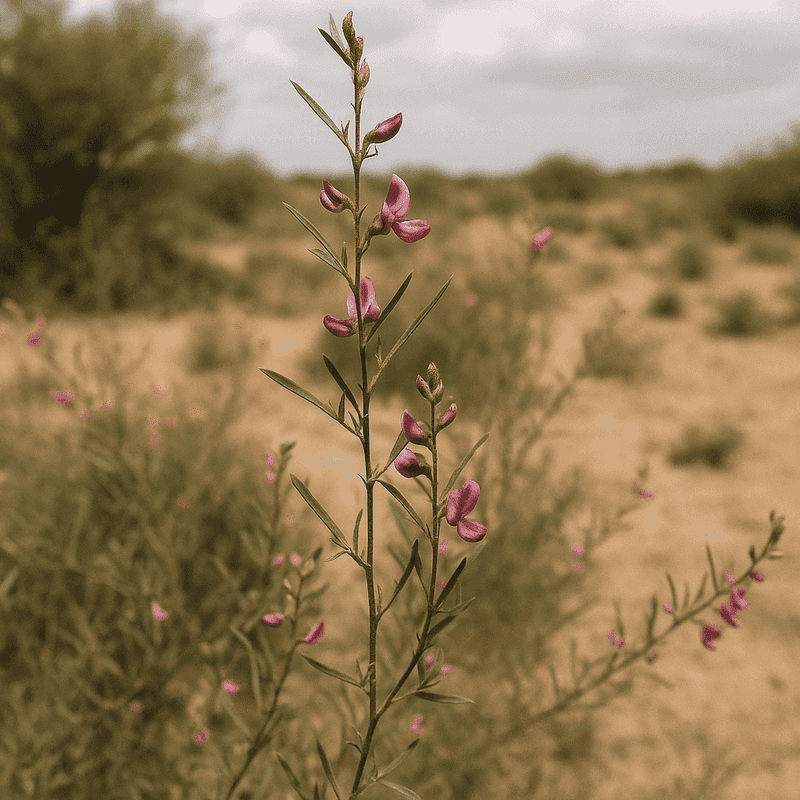
Some plants are tough. Camelthorn is tough on another level. Its roots can reach far down into the ground, sometimes deeper than a house is tall.
Camelthorn is a spiny shrub from Asia and the Mediterranean region. As the name hints, camels in its home range munch on it without much fuss.
In Texas, though, it is not welcome at all, and it sits on the TDA noxious plant list.
The plant belongs to the pea family. That means it has small, pea-like flowers in shades of pink to purple. It also forms little seed pods shaped like a string of beads.
Most plants stay low, often only a few feet tall.
The real problem hides underground. Camelthorn spreads through a huge network of roots that send up new shoots far from the parent plant. Pull one stem, and another may pop up several feet away.
It can even push through pavement in some places.
Farmers and landowners hate it for good reason. It crowds out crops and forage plants. The sharp spines make it hard for people and animals to walk through a patch. Once it settles in, getting rid of it can take years.
So how can you spot it? Look for green, stiff stems covered in thorns about an inch long. The leaves are small and simple, and the whole plant has a bushy, scratchy look.
Early action is your best friend here. Report any sightings to local experts right away. Small patches are much easier to handle than big ones, and quick reports help protect nearby farms too.
5. Chinese Tallow Tree (Triadica sebifera)
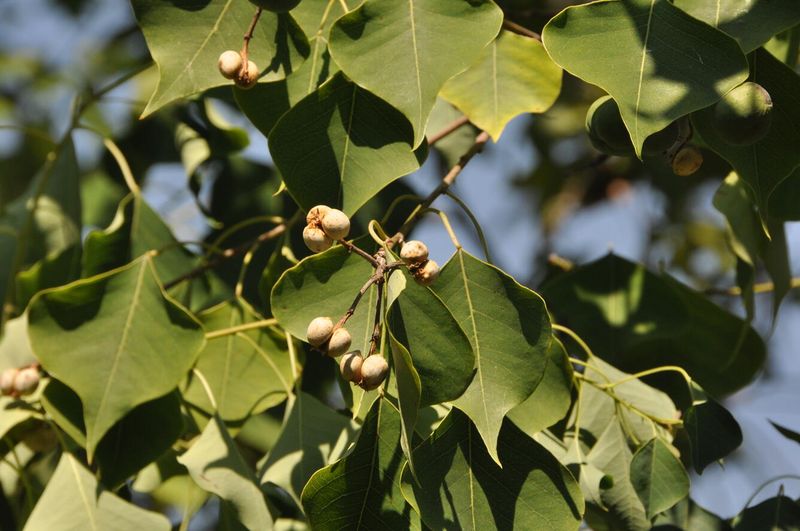
Grandma may have planted one in the front yard years ago. Back then, Chinese tallow was a favorite shade tree across the South. Its leaves turned brilliant red, orange, and yellow each fall, which was rare for coastal Texas.
Times have changed. Today, Chinese tallow is on the TDA list as both a noxious and an invasive plant. Selling it in Texas is not allowed, and experts urge homeowners to replace older trees.
What made it so popular also made it a problem. The tree grows very fast and handles wet soil, salty air, and poor ground.
It also makes loads of seeds covered in white wax. Birds carry those seeds everywhere.
Along the Gulf Coast, tallow trees have marched into prairies and wetlands. Open grasslands that once hosted native flowers and birds are turning into thick tallow forests. Scientists say some coastal prairies have changed almost completely in just a few decades.
The leaves may also harm the water. When they fall into ponds and marshes, they can change the water in ways that are hard on frogs and other small creatures.
Wondering how to tell it apart? Look for heart-shaped leaves with a pointed tip and those waxy white seeds in fall. The sap is milky and can irritate skin, so wear gloves.
If you have one, think about removing it and planting a native tree instead. Red maple, black gum, and Mexican plum all offer lovely color. You still get a bright fall show, and wildlife gets food it actually needs.
6. Paperbark (Melaleuca Quinquenervia)
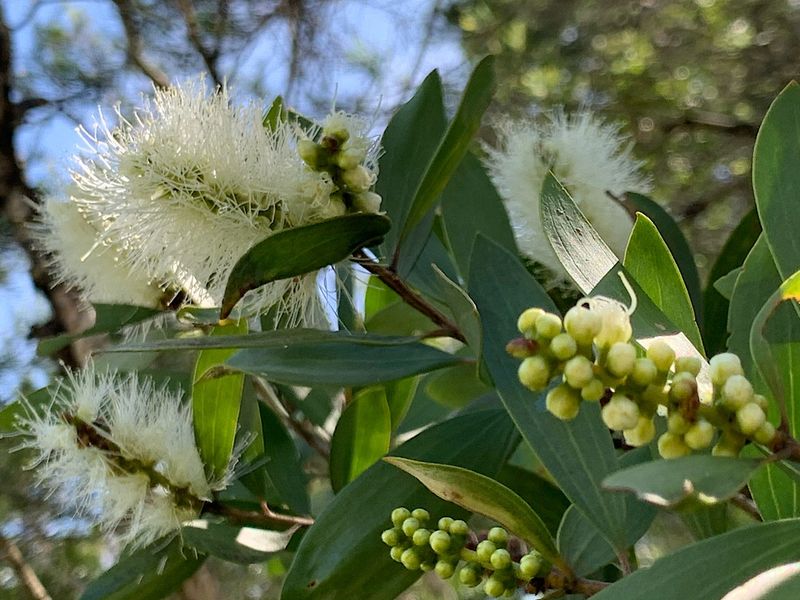
Peel back a strip of its bark, and it feels like soft layers of paper. Kids find that fun, and so did the folks who first brought paperbark to North America. Yet this plant holds a special spot on the Texas list for all the wrong reasons.
Paperbark, also called melaleuca, comes from Australia and nearby islands. It has thick, spongy white bark and creamy flowers shaped like bottle brushes. In the early 1900s, people in Florida planted it to help dry out swamps.
That plan worked a little too well. The tree spread across huge areas of wetlands, forming dense stands where little else could grow. Texas saw that story and decided to act early.
Paperbark is on the TDA noxious list, so it cannot be sold here. But there is more. It is also one of Texas Parks and Wildlife’s prohibited exotic aquatic plants. That second listing changes everything.
According to TPWD rules, no one may possess a listed species unless the department gives permission.
So while other plants on this list are illegal to sell, paperbark is actually illegal to have. Keeping one in your yard or a pot could land you in trouble.
The tree also has a few other downsides. Its blooms can bother people with allergies, and its oily leaves burn easily during wildfires.
If you ever spot one, contact TPWD or your local extension office. They can confirm what it is and explain the next steps. For a safe choice, try native buttonbush, which loves wet spots and draws butterflies.