10 Post-Bloom Moves That Keep Maryland Azaleas Thriving Year After Year
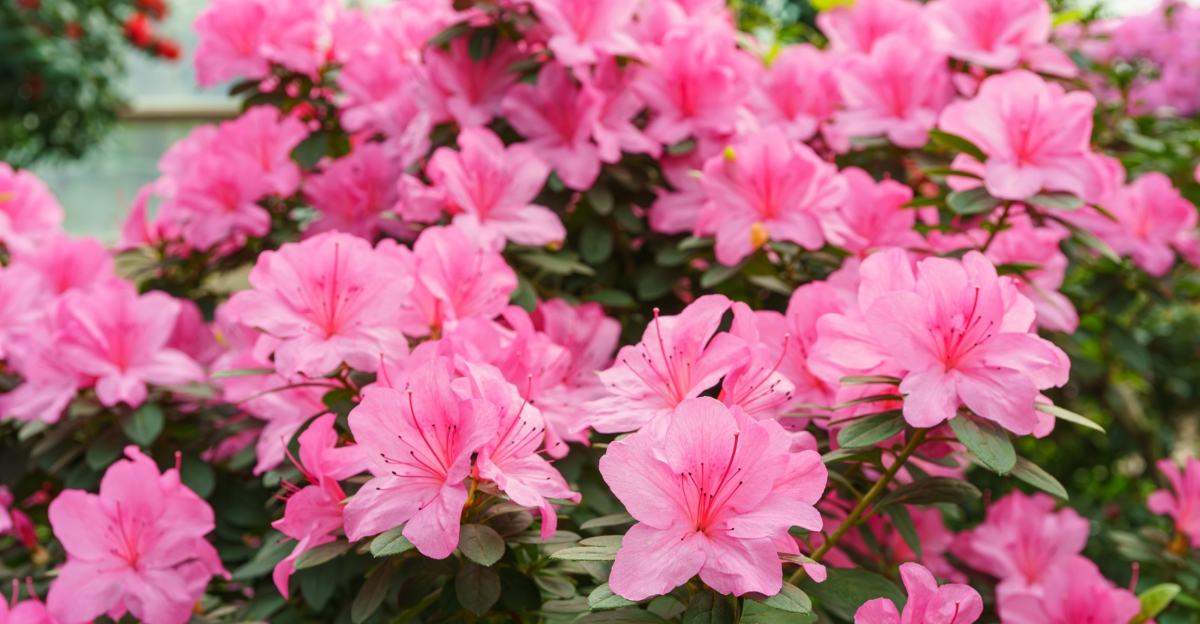
Everyone trims azaleas when they look bad. But those browning blooms clinging to the branch tips?
That’s actually your window opening, not closing. The moment spent flowers start dropping, the shrub shifts gears. It stops performing and starts planning. What happens if you miss the next six weeks?
Next April, you’ll walk outside expecting that same coral explosion and get nothing but a wall of glossy green. Just leaves. Polite, healthy, utterly flowerless leaves. I know because I stood there.
My Coral Bells, a variety I’d fussed over for three seasons, gave me exactly that silent treatment one spring after I let July slip by without touching it. No clipping, no pruning, no attention.
The plant was fine. The blooms never came. Here’s what nobody tells you upfront: azaleas set next year’s flower buds on this year’s new growth, and that growth needs a running start.
The six-week window after bloom isn’t a gardening suggestion. It’s the actual biological cutoff the shrub is racing toward, regardless of your schedule.
And the hard part is, an azalea won’t warn you, won’t wilt, won’t show a single sign of protest until spring arrives and the silence speaks for itself. Your future blooms are being decided today.
1. Prune Within 2-3 Weeks Of Blooming (Before July)
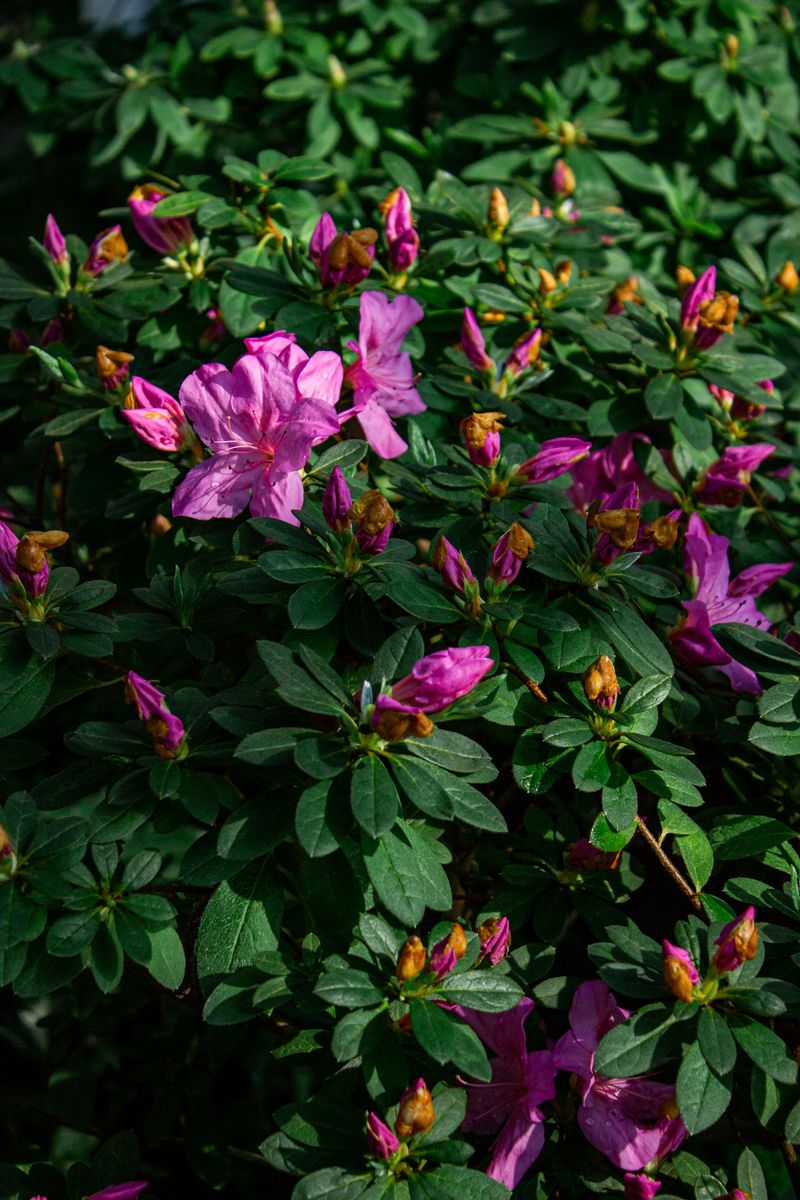
Timing is everything with azalea pruning. Miss the window, and it costs you a full season of blooms.
Azaleas set their flower buds for next year almost immediately after the current blooms fade. Pruning after July means snipping off those future buds before they ever get a chance.
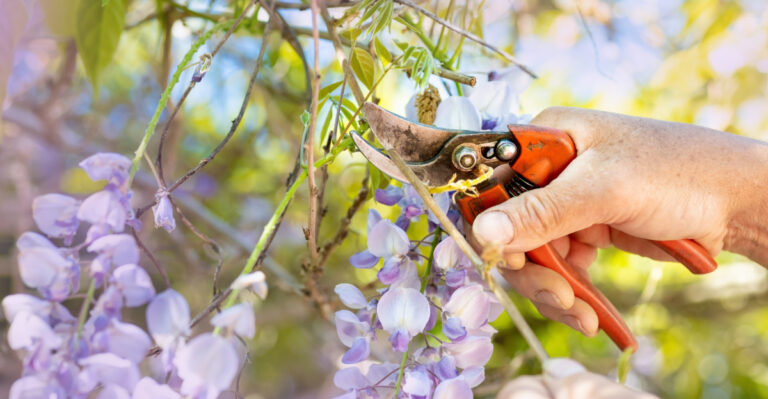
Aim to prune within two to three weeks of the last flower dropping. Use clean, sharp bypass pruners to make smooth cuts just above a leaf node. Dull blades crush stems and invite disease, so sharpen your tools before heading outside.
Focus on crossing branches, dry wood, and any stems ruining the shrub’s natural shape. A light shaping is usually all these plants need after a healthy bloom season.
Remove no more than one-third of the plant at once to avoid stressing the root system. Maryland summers heat up fast, and stressed shrubs struggle to bounce back once humidity sets in.
Keep in mind that azaleas are toxic to dogs, cats, horses, and humans if ingested, so plant placement matters in yards with pets or young children.
A well-timed trim now means a fuller, more compact plant going into fall. Get your pruners out before the Fourth of July, and you are already ahead of the block.
2. Remove Spent Flowers

Spent azalea blooms are draining your shrub’s energy with every day they stay on. Pinching off those faded flowers redirects the plant’s energy from seed production back into root and bud development.
That energy shift is exactly what sets up a stronger bloom for next spring. Work your way around the shrub and snap off each spent flower cluster right at the base where it meets the stem.
Your Maryland Garden Changes Every Week. Your Plan Should Too.
Gardening in Maryland changes quickly throughout the season. Every Friday you’ll receive a simple weekly plan showing exactly what to plant, prune, fertilize, harvest, and protect so you never miss the right timing.
Your fingers work fine for this job, though small pruners help if the stems feel woody. Avoid pulling hard, which can strip bark and leave open wounds that invite fungal problems.
Skipping this step means the plant spends weeks making seeds instead of storing energy for next year’s show. That is a trade-off that rarely pays off in a Maryland garden.
Most people overlook it simply because azaleas do not demand it the way roses do. Think of it as a five-minute task that buys you weeks of better performance down the road. Walk the shrub with a small bucket, toss the spent blooms in, and you are done.
Small efforts made right after bloom season tend to deliver the biggest rewards come spring.
3. Fertilize With Acid-Loving Fertilizer
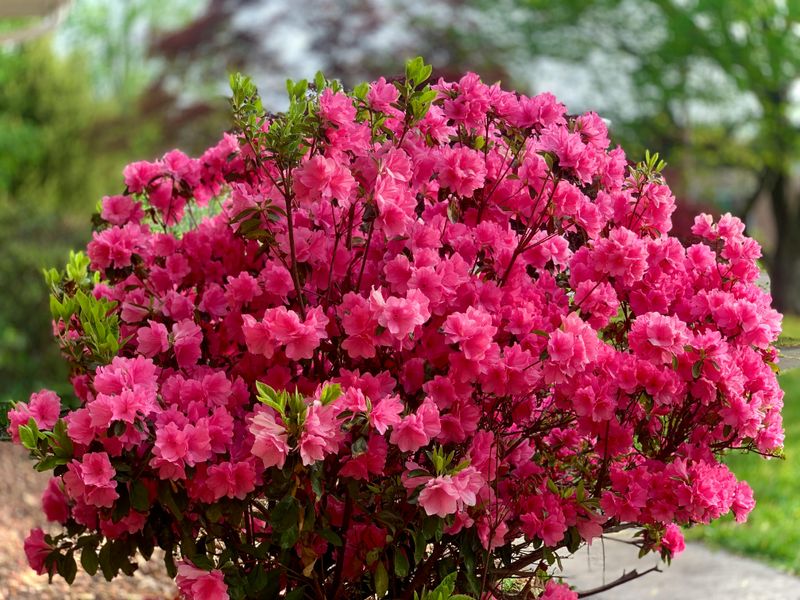
Azaleas have opinions about food. Strong ones. Give them the wrong fertilizer and they won’t throw a fit. They’ll just quietly underperform in ways you won’t notice until bloom season rolls around and something feels off.
Most general purpose fertilizers are made for agreeable, easygoing plants. Azaleas are neither.
They like things a little acidic, a little specific, and very much on their own terms. Anything else?
They’ll take it, smile politely, and give you half the flowers you were expecting. Look for products labeled for azaleas, rhododendrons, or camellias, and check that the nitrogen source is ammonium-based rather than nitrate-based.
Apply fertilizer right after bloom, while the plant is pushing out new growth and can actually use the nutrients. Scatter granules evenly under the drip line of the shrub, which is the outer edge of the branches.
Water thoroughly after applying so the nutrients move down toward the roots where they belong.
Avoid piling fertilizer against the trunk or main stems. Direct contact burns tender bark and causes more harm than good.
A light, even application spread wide is always better than a heavy dose concentrated in one spot.
Slow-release granular formulas are a smart pick for Maryland gardens because they feed steadily over several weeks.
Liquid fertilizers work faster but wash out quickly in summer rain, which Maryland gets plenty of. One good feeding right after bloom gives your shrubs the fuel they need to build strong buds for next season.
4. Stop Fertilizing By Midsummer
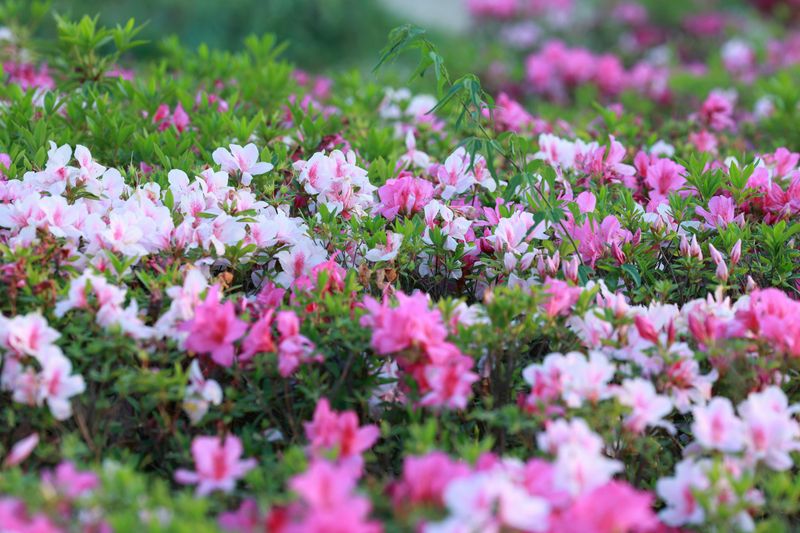
Stopping matters just as much as starting. Most people think about what to feed their azaleas and forget to think about when to stop.
Push fertilizer into midsummer and the plant gets the wrong idea. It puts out a fresh wave of soft, tender growth right when it should be slowing down, toughening up, and quietly preparing for fall. That new growth is hopeful.
It is also completely unprepared for what is coming. That young growth has no chance to harden off before Maryland’s first frost arrives, and the damage can be severe.
Most recommendations point to stopping all fertilization by late June or early July at the latest. By that point, the plant has taken what it needs and should be shifting focus toward storing energy for winter.
Adding more fertilizer after midsummer is like feeding a sprinter a huge meal right before they need to rest.
If you are using a slow-release granular product, check the label for its active feeding window.
Some formulas keep releasing nutrients for three to four months, which means even an early June application can carry into fall. Time your last feeding accordingly so you are not accidentally fueling late-season growth.
Letting your shrubs wind down naturally through late summer is one of the kindest things you can do for them.
A plant that eases into dormancy on its own schedule arrives at winter in far better shape. Resist the urge to tinker, and trust the plant to know what it needs as the season turns.
5. Water Deeply And Consistently Through Summer
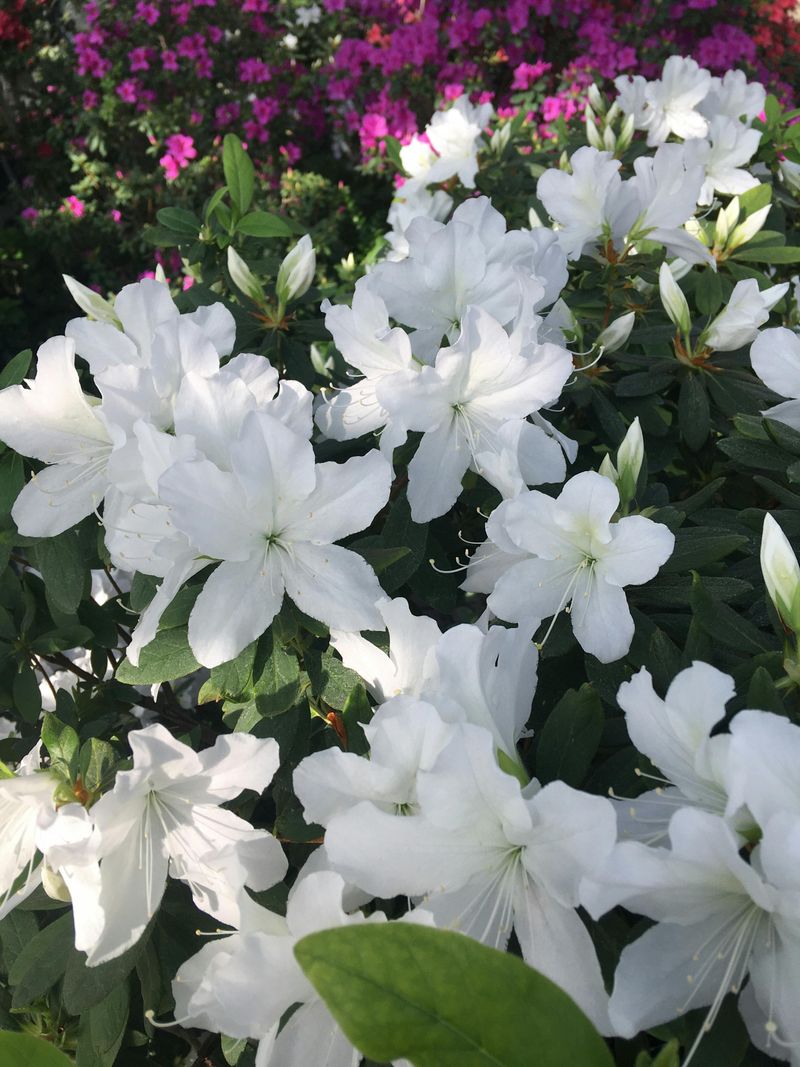
Azaleas are deceptively fragile underground. Those roots sit just below the soil surface, shallow and fine, with almost no buffer between them and a dry spell.
One week without rain in July or August is all it takes. The shrub doesn’t collapse, doesn’t droop dramatically, doesn’t ask for help.
It just quietly files the stress away and settles the score the following April, when the blooms you were counting on simply don’t show up.
Deep, consistent watering through summer is not optional in Maryland’s heat. It is essential.
Aim to give your shrubs about an inch of water per week, either from rainfall or from your hose.
Water slowly and deeply at the base of the plant rather than spraying the foliage. Wet leaves sitting overnight create perfect conditions for fungal diseases, which Maryland’s humid summers already encourage plenty of.
A soaker hose laid around the drip line works beautifully for azaleas because it delivers moisture directly to the roots without splashing. Set it to run for about 30 to 45 minutes twice a week during dry stretches.
That slow soak encourages roots to grow deeper, making the plant more resilient over time.
Check the soil before watering by pressing a finger two inches into the ground near the shrub. If it feels dry at that depth, it is time to water.
Keeping moisture levels steady through the hottest months is one of the most reliable ways to protect your investment in these beautiful plants.
6. Maintain Soil PH Of 4.5-6.0
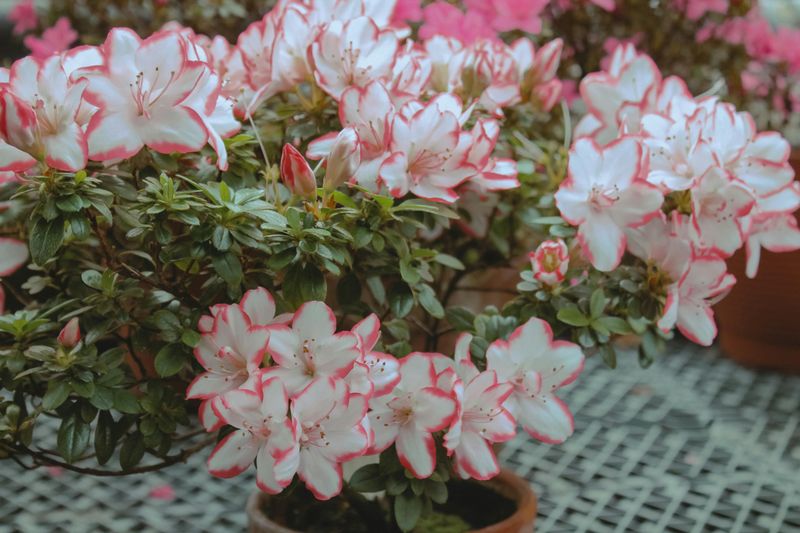
Soil pH is the silent controller of everything that happens in your garden, and azaleas are especially sensitive to it. When pH climbs too high, these shrubs cannot absorb iron and other key nutrients even if those nutrients are sitting right there in the soil.
The result is yellowing leaves, weak growth, and a flower display that disappoints year after year.
Azaleas grow best in soil with a pH between 4.5 and 6.0, with the sweet spot around 5.0 to 5.5. Testing your soil every spring or every other year gives you a clear picture of where you stand.
Simple test kits from a garden center work well, or you can send a sample to your local cooperative extension office for a detailed report.
Maryland soils vary widely depending on your county and proximity to the Chesapeake Bay region. Some areas naturally run acidic, while others trend toward neutral or slightly alkaline, especially near limestone outcroppings.
Knowing your baseline saves you from guessing and accidentally making conditions worse.
Once you know your pH, you can adjust with precision rather than hope. A soil test is a small investment that pays back in healthier, more vibrant shrubs season after season.
Get that number, and every other step in this routine becomes easier to execute with confidence.
7. Amend Soil With Sulfur If Needed
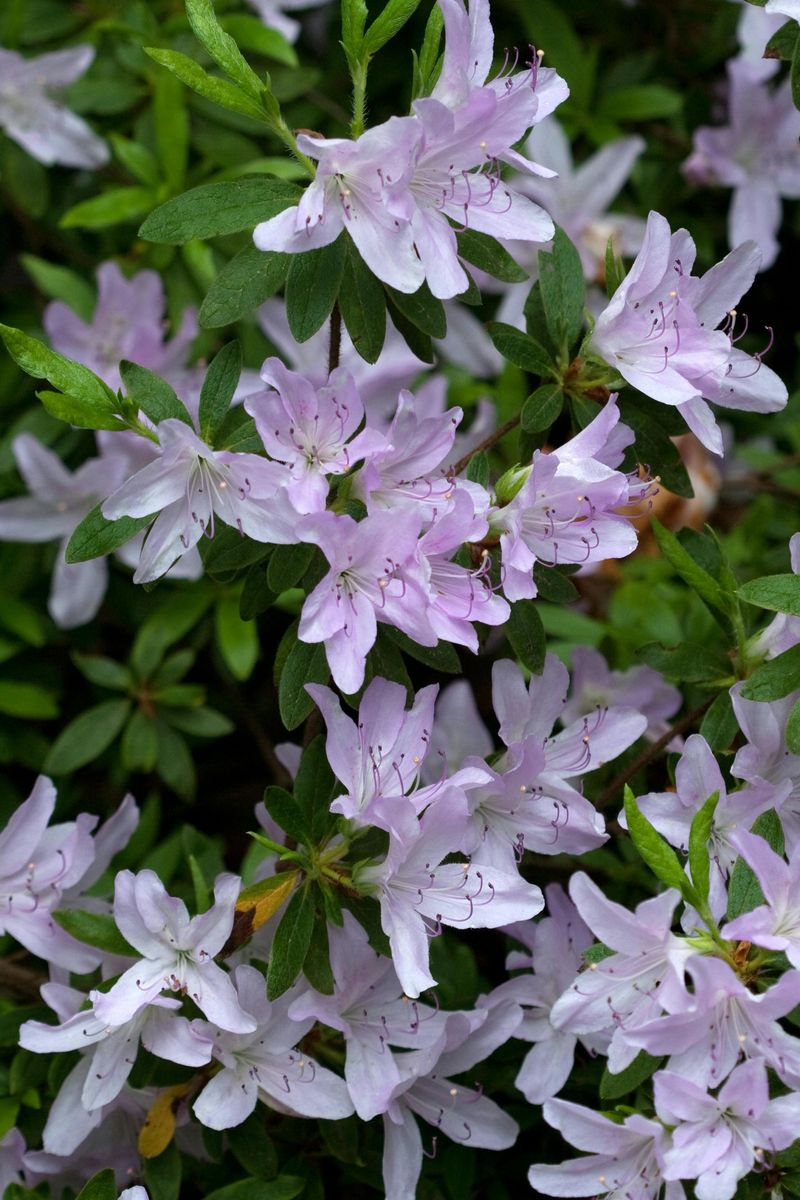
Granular sulfur is one of the most underused tools in the azalea grower’s toolkit, and it is remarkably effective at lowering soil pH.
If your test reveals a pH above 6.0, adding elemental sulfur to the soil can gradually bring it back into the range your shrubs prefer. The key word here is gradually. Sulfur works slowly, often taking several months to show a measurable change.
Apply sulfur in spring or early summer so it has time to work through the soil before the next growing season. Work it lightly into the top inch or two of soil around the drip line, keeping it away from the main stems.
Always follow package rates carefully, because over-applying can drop the pH too low and create a whole new set of problems.
Acidifying fertilizers like ammonium sulfate also help lower pH over time when used consistently. Combining a slow-release acidifying fertilizer with a one-time sulfur treatment can speed up the correction without unsettling the plant.
Retest your soil six months after amending to measure how much progress you have made. Patience is the most important ingredient when amending soil chemistry.
Rushing the process with large doses rarely ends well and can harm beneficial soil organisms. Small, consistent adjustments made over one or two seasons tend to produce the most stable and lasting results.
8. Mulch 2-3 Inches Around The Base
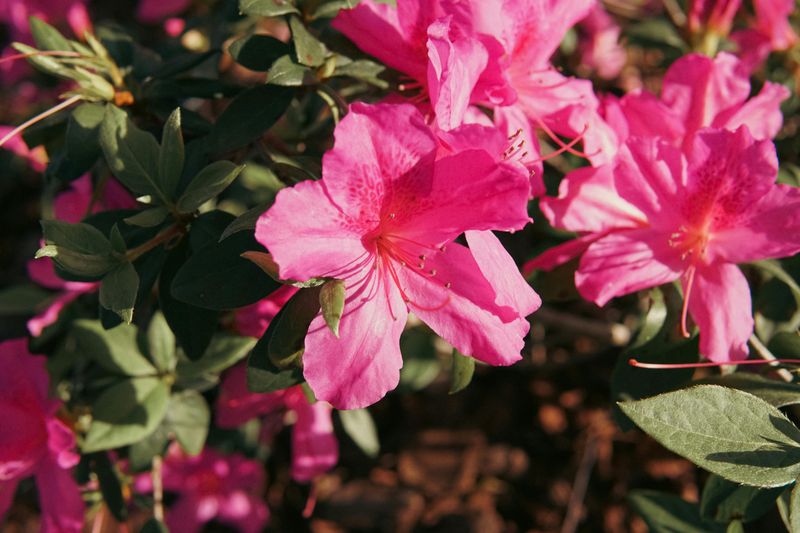
A good layer of mulch around your azaleas does more work than most people realize. It keeps soil moisture from evaporating during Maryland’s hot, dry summer spells.
It moderates soil temperature, protecting those shallow roots from the kind of heat stress that quietly sets back a shrub for an entire season.
Spread mulch two to three inches deep in a wide circle around the shrub, extending out to the drip line if possible.
That wide coverage area is what really makes the difference, since azalea roots spread outward more than they grow down. A narrow ring right at the base looks tidy but misses most of the root zone where moisture retention actually matters.
Pull the mulch back a couple of inches from the main stems to prevent rot and discourage pests that like to hide in damp, dark spots. The goal is ground coverage, not stem coverage.
A volcano of mulch piled against the trunk is one of the most common and costly mistakes home growers make.
Refresh your mulch layer every spring to maintain that two to three inch depth as the old material breaks down.
Decomposing organic mulch also adds a small but steady stream of nutrients back into the soil. That combination of moisture control, temperature regulation, and gentle soil enrichment makes mulching one of the highest-return habits in azalea care.
9. Use Pine Needles Or Shredded Oak Leaves As Mulch
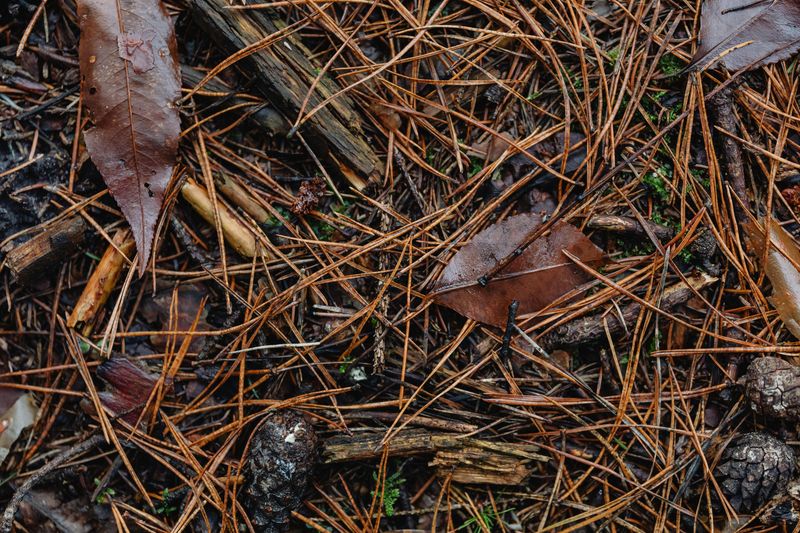
Not all mulches are created equal, and for azaleas, the type you choose can actually influence your soil chemistry over time.
Pine needles and shredded oak leaves are the gold standard for acid-loving shrubs because they break down slowly and may gently support a lower pH over time.
Using them is one of those rare gardening moves that looks good, protects the plant, and improves the soil all at once.
Pine needles, sometimes called pine straw, are lightweight, easy to spread, and resist compacting even after heavy rain. They allow water to pass through freely while still shading the soil beneath.
Many Maryland garden centers sell them in bales, and they stay put better than shredded bark on sloped beds.
Shredded oak leaves are a free resource for anyone with oak trees on their property. Run them through a lawn mower or leaf shredder to break them into smaller pieces that knit together and resist blowing away.
Whole leaves can mat down and block water from reaching the soil, so shredding is a step worth taking.
Avoid dyed wood chip mulches near azaleas, since the dyes and wood composition can affect soil biology in unpredictable ways. Sticking with natural, organic materials keeps your soil ecosystem healthy and your shrubs thriving.
Simple choices made at the mulch pile can echo through years of stronger, more consistent bloom seasons.
10. Monitor And Treat For Lace Bugs

Azalea lace bugs are tiny, but the damage they cause looks anything but small. These flat, lacy-winged insects spend their lives on the undersides of leaves, sucking out plant fluids and leaving behind stippled, bleached foliage and black, tar-like droppings.
By midsummer, a heavily infested shrub can look like it is under serious stress, and it likely is. Check the undersides of leaves every couple of weeks starting in late May.
Early detection makes treatment far easier and less disruptive to the rest of your garden ecosystem.
If you spot the insects or their characteristic damage, act quickly before populations surge in the summer heat.
Horticultural oil or insecticidal soap sprayed directly on the undersides of leaves smothers lace bugs without leaving harsh residues. Neem oil is another effective option that also discourages future infestations.
Always apply these treatments in the early morning or late evening to avoid burning foliage in direct sun.
Azaleas planted in full sun tend to attract more lace bugs than those in partial shade, so placement matters. If your Maryland garden has shrubs in hot, exposed spots, plan to scout them more frequently through the season.
Catching a lace bug problem early is the difference between a quick spray and a season-long battle that taxes both you and the plant.