These Texas Plants Don’t Need Rich Soil To Thrive
Most gardening advice starts with improving the soil. Amend it, enrich it, build it up over time until it’s the kind of deep, fertile growing medium that plants love. That’s sound advice for a lot of situations. But Texas yards don’t always cooperate.
Caliche layers, hard clay, rocky outcroppings, sandy patches that drain before roots can take a drink. Many Texas gardeners are working with soil conditions that no amount of amendment fully fixes, at least not quickly.
The smarter approach in those situations is to stop fighting the soil and start working with it. There are Texas plants that don’t just tolerate poor soil. They actually prefer it.
They evolved in lean, rocky, or sandy conditions that would slow down or destroy plants that need rich growing medium, and they perform at their best in exactly the soils that most gardeners consider a liability.
These plants don’t need feeding, heavy amending, or constant intervention. They need the right conditions and then they largely take care of themselves.
1. Red Yucca
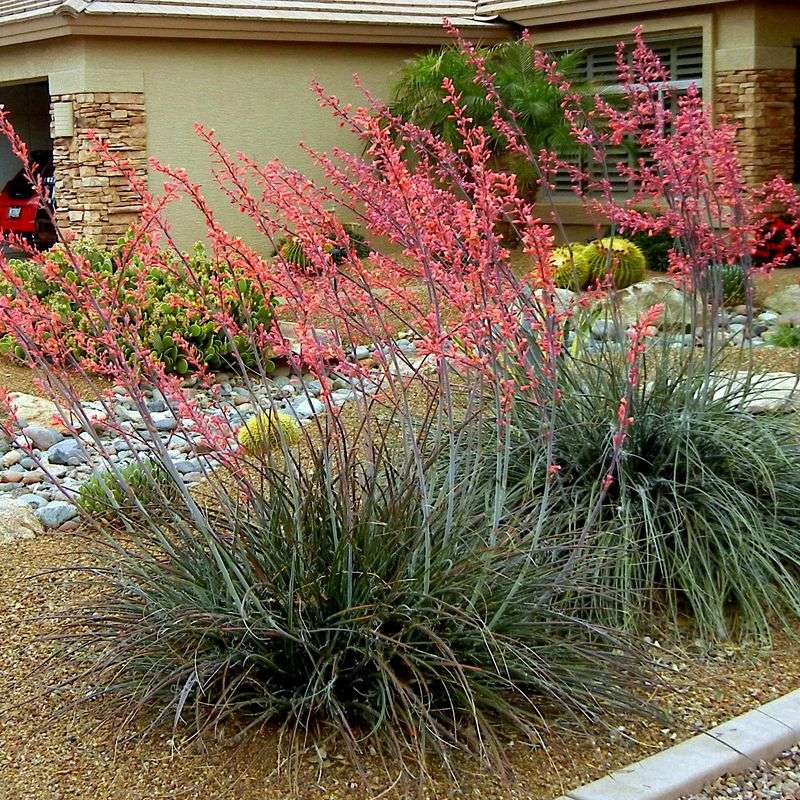
Red Yucca is the kind of plant that makes people stop their cars and stare. Its long, arching grass-like leaves stay green through most of the year, and in spring and summer, tall flower spikes shoot up covered in coral-pink blooms.
Hummingbirds absolutely love it, making your yard feel like a nature documentary. Despite looking like something that belongs in a fancy botanical garden, Red Yucca performs best in rocky, gravelly, low-fertility ground.
Rich soil can actually cause root problems by holding too much moisture. This plant was built for the kind of lean, well-drained conditions that most other plants would struggle in.
Hot, dry Texas landscapes are where Red Yucca truly shines. It tolerates full sun, intense summer heat, and long dry spells with ease.
Once established, you can basically walk away and let it grow. It rarely needs supplemental watering except during extreme droughts.
Planting Red Yucca is straightforward. Dig a hole in a sunny spot with good drainage, set the plant in place, backfill with native soil, and water it in well.
After that first season, you can cut back on watering significantly. Avoid amending the soil with compost or organic matter, as this can create conditions that are too moist.
Red Yucca is also extremely long-lived. Many gardeners report their plants thriving for a decade or more with almost zero maintenance.
If you want a dramatic, wildlife-friendly plant that practically takes care of itself in tough Texas soil, Red Yucca is a fantastic choice for any yard.
2. Texas Sage
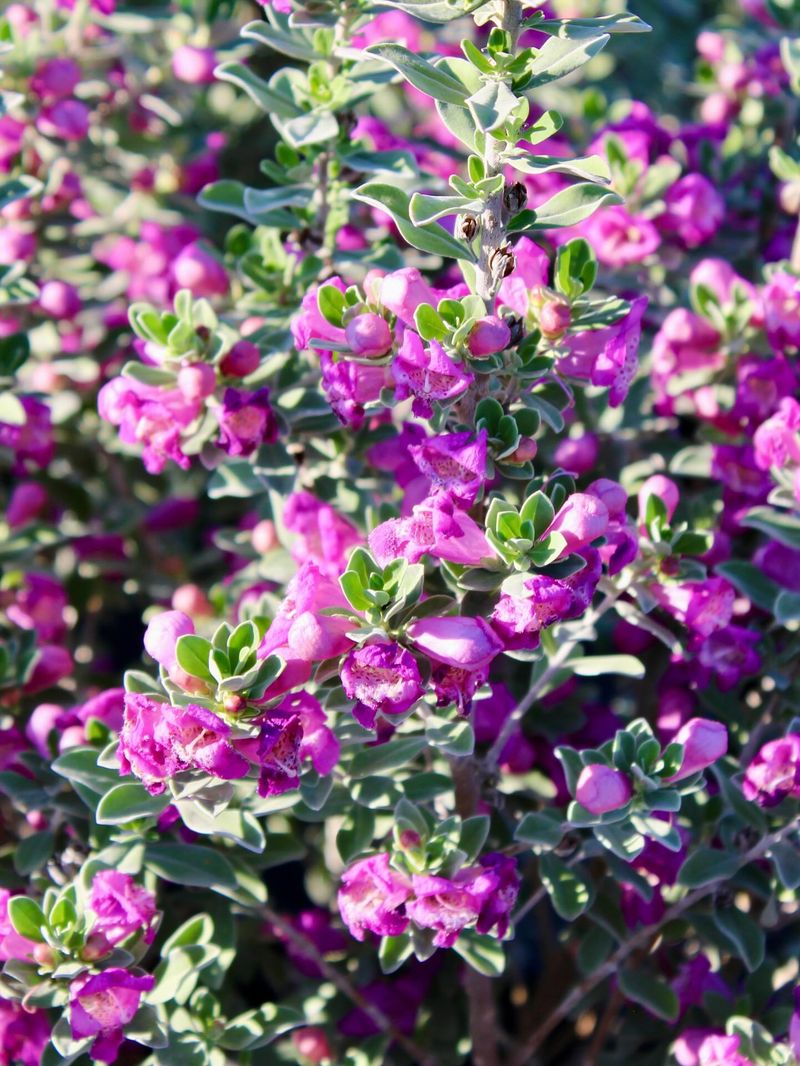
Walk through any Hill Country neighborhood in late summer, and you will almost certainly spot the silvery-purple glow of Texas Sage. This tough shrub is sometimes called the “barometer bush” because it tends to bloom right after a good rain.
Gardeners have come to love it not just for its beauty, but for how little it demands. Texas Sage thrives in lean, alkaline, well-drained soil. It actually prefers soil that is not rich.
Your Texas Garden Changes Every Week. Your Plan Should Too.
Gardening in Texas changes quickly throughout the season. Every Friday you’ll receive a simple weekly plan showing exactly what to plant, prune, fertilize, harvest, and protect so you never miss the right timing.
Too much fertilizer pushes the plant to produce weak, floppy growth that looks more like a mess than a garden feature. Skip the extra feeding and let the plant do its thing naturally.
It handles reflected heat from sidewalks and driveways without complaint. Plant it along a fence line, near a driveway, or as a low-maintenance hedge and it will reward you with silvery foliage year-round.
The purple blooms show up several times a year, especially after summer rains. Full sun is a must for Texas Sage. Shady spots will cause it to stretch and look weak.
Give it open sky, gritty or rocky soil, and minimal water once established, and it will perform beautifully for years. Pruning once or twice a year keeps the shape tidy without harming the plant.
Texas Sage is also a pollinator magnet. Bees and butterflies visit the blooms regularly, making it a smart choice for anyone trying to support local wildlife.
It is truly one of the most low-effort, high-reward native plants available to Texas gardeners.
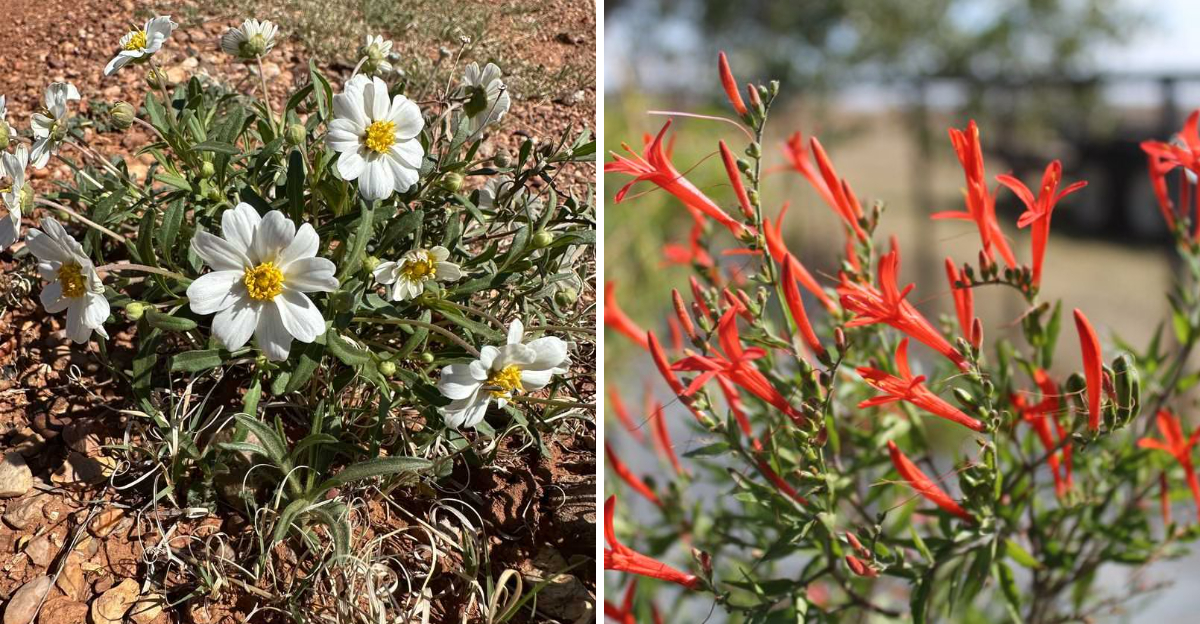
3. Blackfoot Daisy
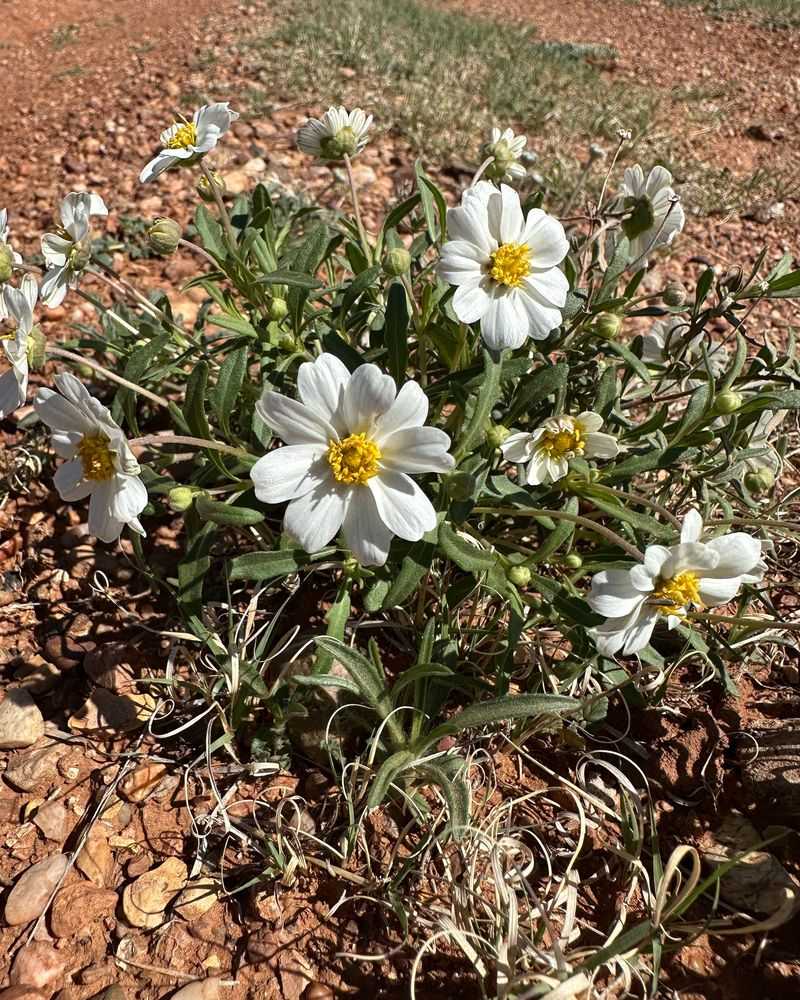
Few plants bring as much cheerfulness per square foot as the Blackfoot Daisy. Small white flowers with bright yellow centers pop up from late winter all the way through fall, covering the plant in waves of color.
Native to the rocky limestone hills of central and west Texas, this little wildflower has serious staying power.
Blackfoot Daisy naturally grows in rocky limestone soils where most other flowering plants would give up. The thin, gritty ground it calls home drains quickly and stays dry, which is exactly what this plant needs.
Rich or overly wet soil can actually shorten its life, causing root rot and weak, sprawling growth that eventually collapses.
Gardeners who try to pamper this plant by adding compost or fertilizer often end up disappointed. The plant responds to too much nutrition by growing leggy and falling apart.
Keep the soil lean, the drainage sharp, and the sun full, and Blackfoot Daisy will bloom its heart out season after season.
It works beautifully along rock walls, in gravel gardens, or at the edge of a sunny path. The compact mound shape stays tidy without much pruning, though a light trim after a big bloom cycle can encourage fresh growth.
Pair it with other native low-water plants for a cohesive, natural-looking garden design. Pollinators are big fans of Blackfoot Daisy, too. Bees and small butterflies visit the blooms constantly during the growing season.
If you are looking for a carefree, wildflower-style plant that loves tough Texas conditions, Blackfoot Daisy is one of the easiest choices you can make.
4. Autumn Sage
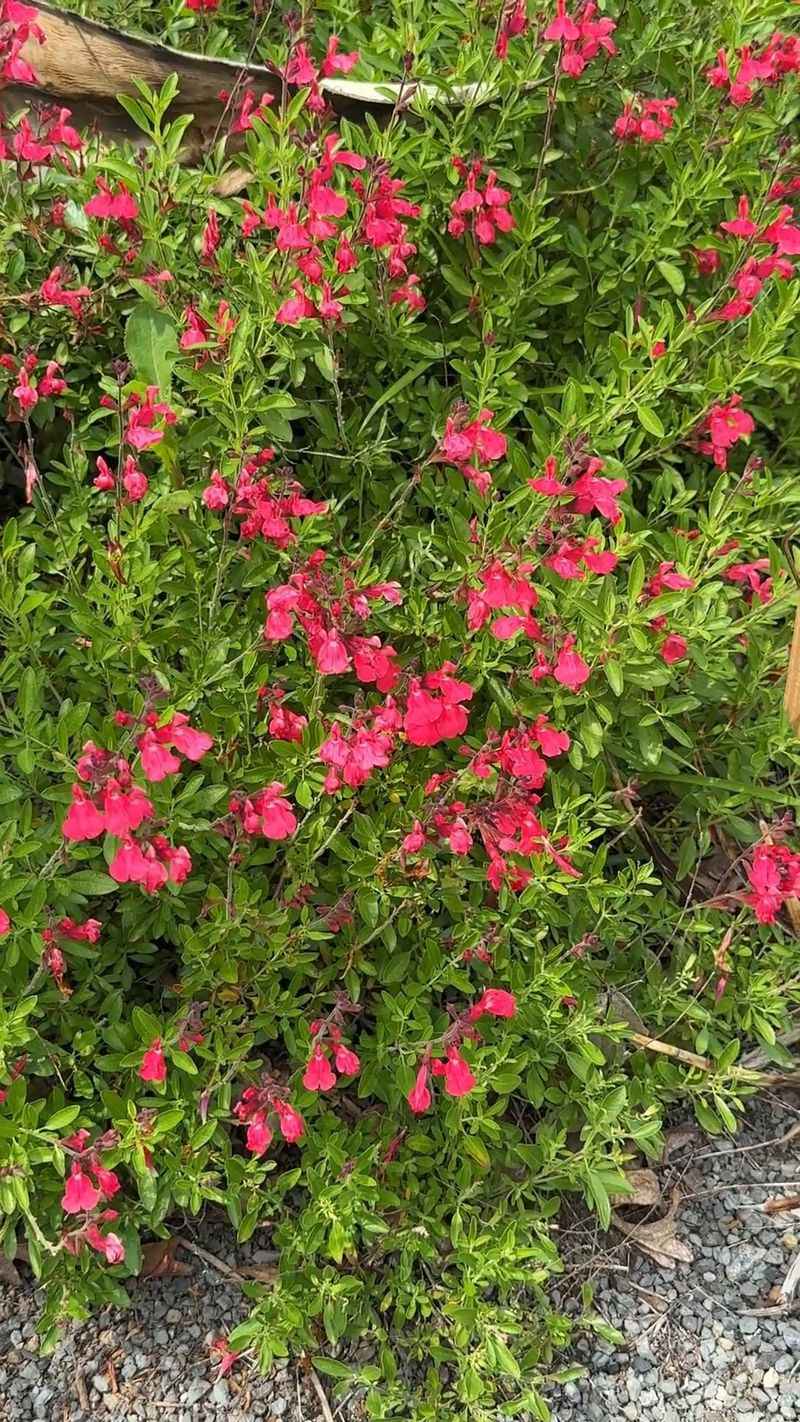
Autumn Sage has a reputation for being one of the most reliable bloomers in the Texas native plant world. From spring all the way through the first cold snap, it produces tubular flowers in shades of red, pink, coral, and white.
Hummingbirds treat it like a favorite restaurant, returning again and again throughout the season.
What makes Autumn Sage especially appealing is how well it handles thin, rocky soil with good drainage. You do not need to prepare a fancy planting bed or load up on soil amendments.
Just find a sunny spot with decent drainage, plant it, and step back. The plant takes it from there with very little fuss.
Heavy feeding is not something Autumn Sage needs or wants. Applying too much fertilizer pushes leafy growth at the expense of flowers.
If you want those colorful blooms to keep coming, hold back on the plant food and let the natural soil conditions do the work. A light trim after each bloom cycle keeps the plant looking fresh.
Autumn Sage pairs well with other Texas natives like Texas Sage and Blackfoot Daisy, creating a layered, wildlife-friendly garden that looks intentional without requiring much work. It grows to about two to three feet tall and wide, making it a perfect mid-border plant.
One fun fact: Autumn Sage is actually a Texas native salvia, which means it belongs to the same family as culinary sage. It is not edible, but it is certainly beautiful.
For a plant that gives so much color with so little soil requirement, Autumn Sage is a true garden overachiever.
5. Flame Acanthus
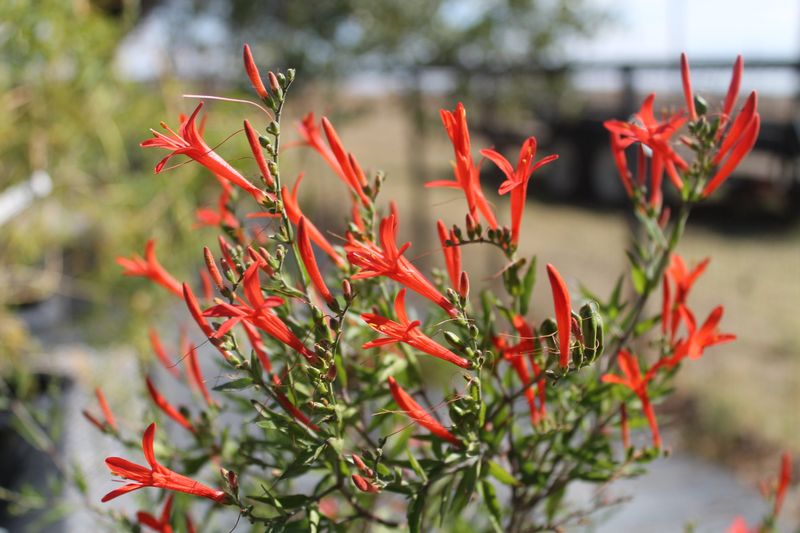
If you have ever seen a shrub absolutely covered in tiny flame-colored trumpets in the middle of a blazing Texas summer, you have probably spotted Flame Acanthus.
This native plant earns its name with clusters of vivid orange-red flowers that light up the landscape from summer into fall. And the best part? It grows in conditions that would send most plants into distress.
Flame Acanthus tolerates poor soil and intense reflected heat better than almost any other flowering shrub. Planting it near a south-facing wall, a concrete patio, or a sun-baked driveway is not a problem.
Those conditions actually seem to suit it just fine. The plant has evolved to handle the kind of heat that bounces off hard surfaces in Texas summers.
Once established, Flame Acanthus needs relatively little water. During its first growing season, some regular watering helps it settle in.
After that, you can pull back dramatically. Many gardeners report watering their established plants only during the most extreme dry spells, and the plants continue to bloom and grow without issue.
Hummingbirds are especially attracted to the tubular flowers, which are perfectly shaped for their long bills. Planting Flame Acanthus near a window or porch gives you a front-row seat to the hummingbird action all summer long.
It is one of the best native plants for attracting these tiny birds to a Texas yard. Pruning in late winter or early spring encourages strong new growth and a tidy shape. The plant may look bare in winter, but do not worry.
It comes back with enthusiasm once warm weather returns, filling in quickly with fresh stems and flowers.
6. Agarita
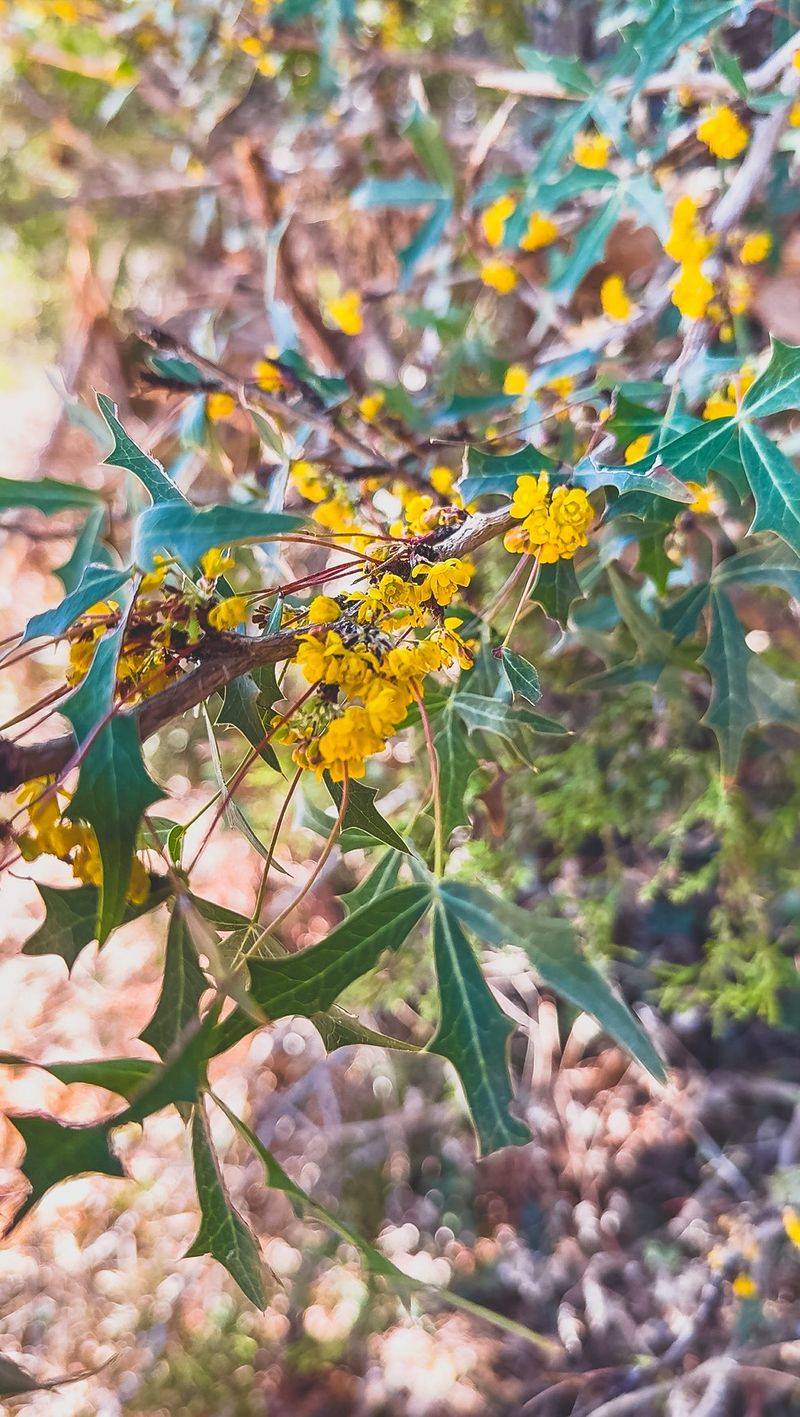
Agarita is one of those plants that has been part of the Texas landscape for so long that it feels almost ancient. Native Americans used its roots to make a yellow dye, and the tart red berries have been used to make jelly for generations.
Beyond its history, Agarita is simply one of the toughest, most self-sufficient native shrubs you can grow in Texas.
It grows naturally in rocky, calcareous Texas soils, which means the kind of alkaline, limestone-heavy ground that gardeners in the Hill Country know well. The plant needs little to no soil improvement once it is established.
No compost, no fertilizer, no amendments. Just plant it in a sunny or partly shaded spot and let it grow.
The evergreen foliage is spiny and holly-like, which makes Agarita a great plant for creating a natural barrier. Birds love to nest in its dense, prickly branches where predators cannot easily reach.
In late winter or early spring, small yellow flowers appear and fill the air with a sweet, honey-like fragrance that is genuinely surprising for such a tough-looking plant.
After the flowers fade, clusters of small red berries develop by late spring. These berries attract wildlife and can also be harvested by patient gardeners willing to brave the spines. Wearing thick gloves is highly recommended during any pruning or harvesting.
Agarita rarely needs pruning, and it handles drought with impressive calm. For gardeners who want a truly no-fuss native evergreen that supports wildlife and thrives in poor soil, Agarita is one of the most rewarding choices in the Texas native plant palette.
7. Damianita
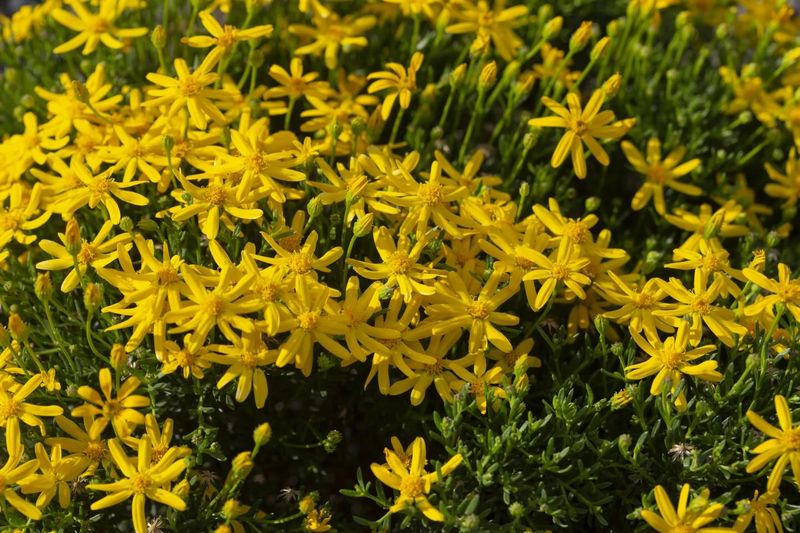
Damianita might be a plant you have never heard of, but once you see it in full bloom, it is hard to forget. This low-growing native shrub covers itself in cheerful yellow daisy-like flowers in spring, and sometimes again in fall.
The fine, needle-like foliage stays green most of the year and releases a pleasant herbal scent when brushed against.
Dry, rocky, limestone-based soil is where Damianita feels most at home. It is a plant of the Chihuahuan Desert and the rocky hills of west and central Texas, where the ground is thin, fast-draining, and low in organic matter.
Rich soil is completely unnecessary for its bright yellow flowers, and too much moisture in the root zone can cause serious problems.
Gardeners who grow Damianita in xeriscape or rock garden settings find it to be one of the most satisfying plants in the lineup. It stays compact, rarely needs pruning, and does not spread aggressively.
The mounding shape fits neatly into small spaces or along the edges of dry garden beds. Full sun is essential for the best flowering. In shadier spots, the plant may survive but will not bloom as heavily.
Pairing Damianita with other low-water natives like Red Yucca or Blackfoot Daisy creates a cohesive, low-maintenance garden that looks colorful and intentional.
One more thing worth knowing: Damianita has a long history of traditional use in northern Mexico as an herbal remedy.
While it is not something to experiment with medically without guidance, that cultural background adds an interesting layer to an already impressive little plant. It is tough, beautiful, and full of character.