These Underused Native Texas Trees Were Made For Front Yards
Front yard trees in Texas tend to follow a short list of the same familiar options, and while those choices are not wrong, they leave a lot of untapped potential on the table.
Texas has a remarkable collection of native trees that are perfectly sized, shaped, and adapted for front yard use, yet most of them never make it into a nursery cart.
These are trees that handle Texas heat and drought without demanding constant attention, trees that offer seasonal interest, wildlife value, and genuine curb appeal without the mess, the invasive roots, or the water bills that come with less suitable choices.
Some of them produce flowers that stop traffic in spring. Others hold their color well into fall in ways most people do not expect from Texas trees.
If your front yard has a tree shaped hole in it, or a tree that has been more trouble than it is worth, this list is worth a close look.
1. Mexican Plum
Before the leaves even show up in spring, the Mexican Plum puts on a show that stops people in their tracks. Clusters of small, sweet-smelling white flowers cover every branch, turning the whole tree into a cloud of blossoms.
It happens early in the season, often before most other trees even think about waking up. This small tree usually tops out between 15 and 25 feet, making it a perfect fit for front yards where space is limited. It never feels overwhelming or out of place next to a house.
The size is just right for adding shade, structure, and charm without blocking windows or crowding walkways.
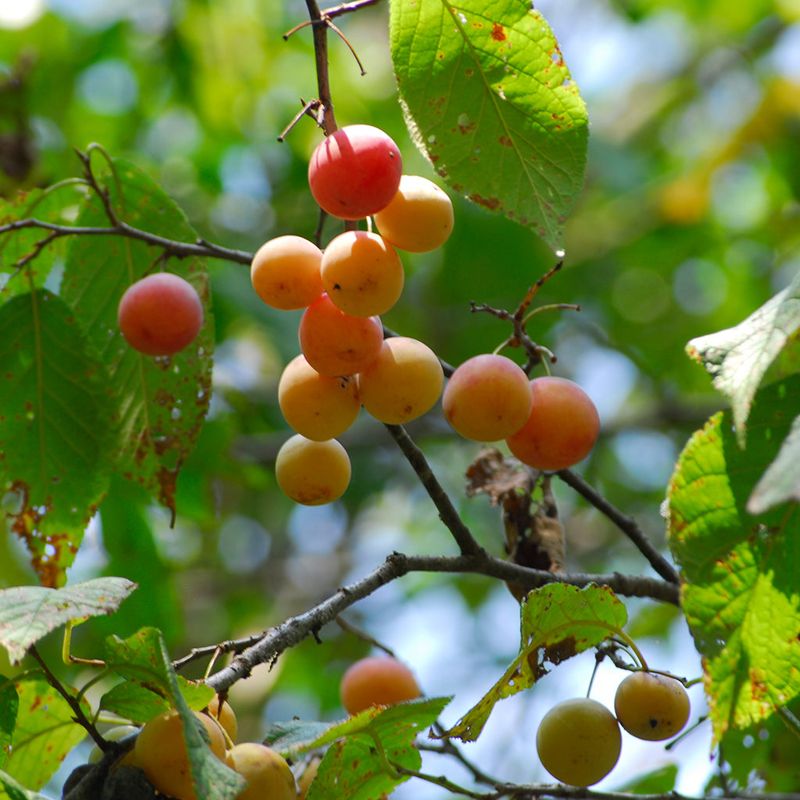
Later in the season, the tree produces small plums that wildlife absolutely loves. Birds, deer, and other animals treat them like a feast. If you get there first, the fruit is edible for people too, and some folks use it to make jelly.
One of the most underrated features of the Mexican Plum is its bark. As the tree matures, the bark develops a beautiful peeling texture with rich reddish-brown tones underneath.
Even in winter, when the branches are bare, the tree still looks striking and interesting in a landscape.
Native to central and east Texas, this tree handles clay soil surprisingly well. It also tolerates drought once established, which makes it a smart pick for low-water landscapes.
Plant it in a sunny spot, give it a little time to settle in, and it will reward you with flowers, fruit, and gorgeous bark for many years to come.
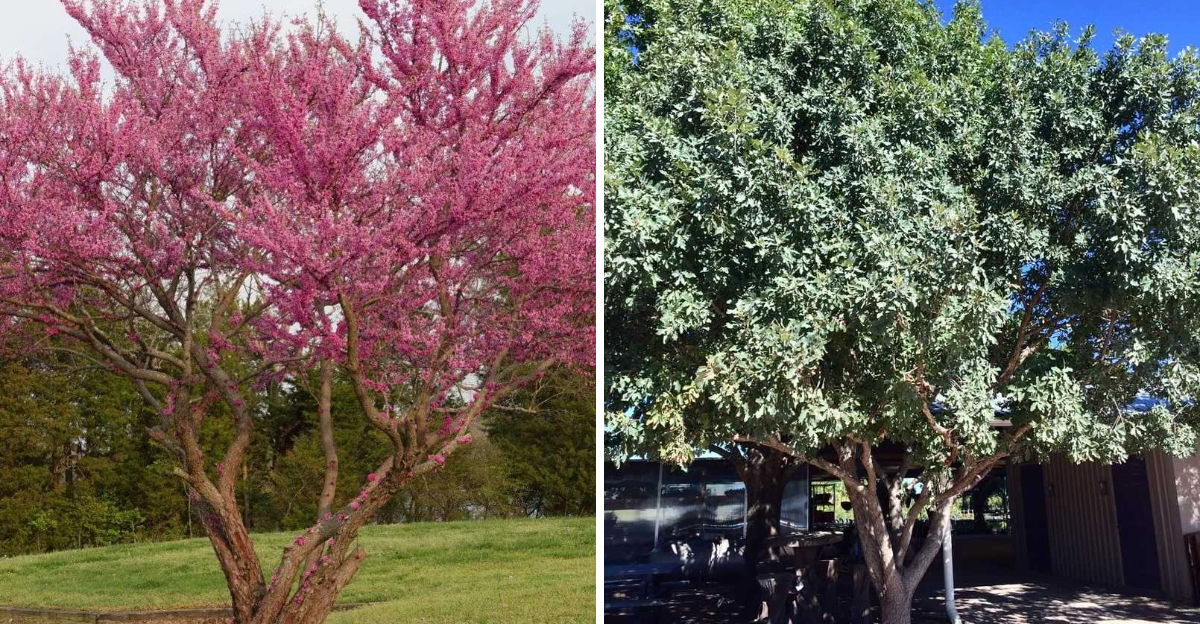
2. Texas Redbud
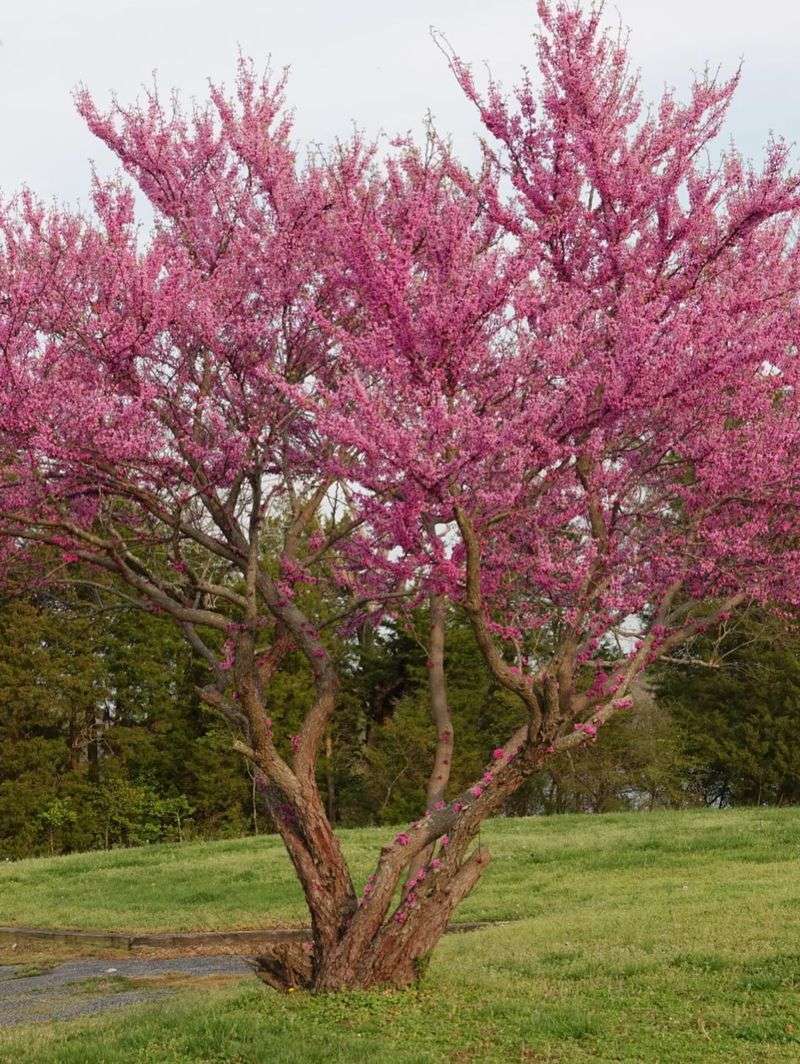
Few trees make a statement quite like the Texas Redbud in early spring. Before a single leaf appears, the entire tree explodes in vivid shades of pink and magenta.
It is honestly one of the most eye-catching sights you can have in a front yard, and neighbors will definitely notice.
What makes the Texas Redbud special compared to the common Eastern Redbud is how well it handles the Texas heat and dry conditions. It was born for this climate.
Once it gets established, it needs very little water and keeps performing year after year without much help from you.
Your Texas Garden Changes Every Week. Your Plan Should Too.
Gardening in Texas changes quickly throughout the season. Every Friday you’ll receive a simple weekly plan showing exactly what to plant, prune, fertilize, harvest, and protect so you never miss the right timing.
The heart-shaped leaves that follow the flowers are charming in their own right. They emerge with a slightly reddish tint and then turn a rich green through summer.
In fall, they shift to yellow before dropping, giving you something interesting to look at across multiple seasons.
Texas Redbuds stay on the smaller side, usually reaching 12 to 20 feet tall. That compact size makes them ideal for planting near driveways, entryways, or alongside a front porch. They add vertical interest without overwhelming the space around them.
Fun fact: the flowers of the redbud are actually edible. Some people toss them into salads for a mild, slightly tangy flavor and a pop of color. It is a fun detail to share with guests who admire the tree.
Plant your Texas Redbud in well-drained soil with full sun to partial shade. It adapts to many soil types found across the state, from rocky Hill Country ground to the heavier soils of central Texas.
3. Possumhaw Holly
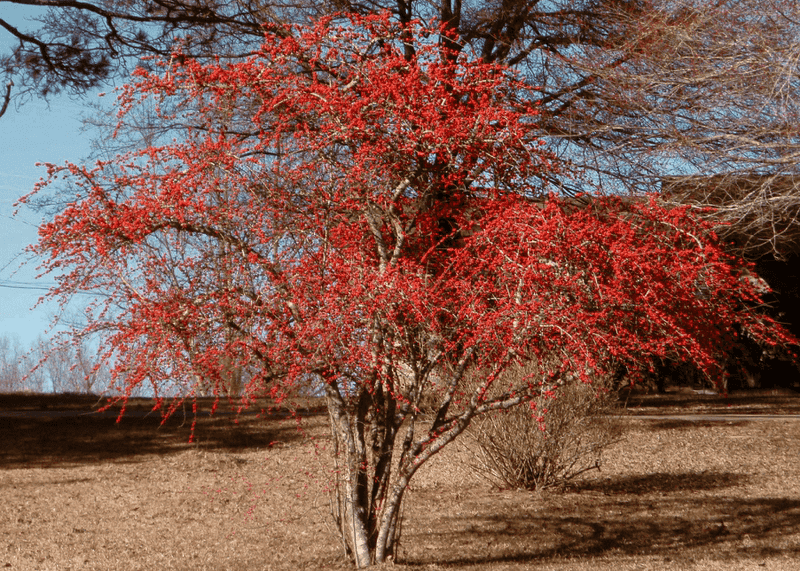
Most trees look pretty forgettable once winter rolls around and the leaves are gone. Possumhaw Holly does the complete opposite.
When everything else goes bare and brown, this native tree lights up with hundreds of bright red or orange berries that cling to every branch. It is like having a natural holiday decoration growing right in your yard.
The berries appear in late fall and stick around through most of the winter. Birds go absolutely wild for them, especially cedar waxwings and mockingbirds.
If you enjoy watching wildlife from your front window, planting a Possumhaw Holly is one of the best decisions you can make.
During the warmer months, the tree blends in nicely with glossy green leaves. It does not demand attention in summer, but it earns it back big time once the cold arrives. That seasonal shift is part of what makes it such a smart landscape choice.
Possumhaw Holly is a deciduous holly, which surprises some people who assume all hollies stay evergreen. It typically grows 7 to 15 feet tall, making it manageable for most front yard spaces.
You can find varieties with red, orange, or even yellow berries depending on your preference.
One important note: you may need both a male and female plant nearby to get the best berry production. Ask your local nursery about which varieties pair well together. Once you have the right setup, berry production is generous and reliable every single year.
This tree thrives in full sun and handles wet or dry soil with equal ease, making it a truly flexible native option for Texas landscapes.
4. Eve’s Necklace
If you have never heard of Eve’s Necklace, you are not alone, and that is exactly what makes it such a hidden gem.
This native Texas tree is wildly underplanted despite having some of the most interesting features of any small tree in the state. Once you learn about it, you will wonder why it is not everywhere.
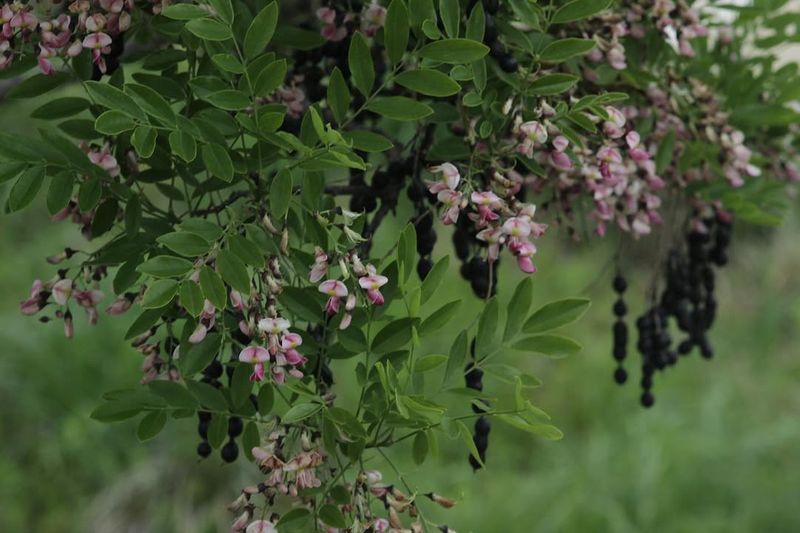
The name comes from the seed pods, which look like a string of dark beads linked together in a chain.
They hang from the branches in late summer and fall, creating a unique texture that is unlike anything else in a typical neighborhood yard. It is a genuine conversation starter.
In spring, the tree produces clusters of fragrant pink flowers that attract pollinators by the dozens. Bees and butterflies love them.
The blooms are soft and delicate-looking, which contrasts beautifully with the tree’s tougher reputation as a drought-tolerant native.
Eve’s Necklace grows 15 to 25 feet tall and has a graceful, rounded canopy. The compound leaves give it a light, airy look that works well in both formal and casual landscape styles.
It fits nicely in a front yard without looking out of place next to a house or along a street. Drought tolerance is one of its strongest selling points. Once established, it handles dry Texas summers without complaint.
It prefers well-drained soils and does especially well in the rocky, limestone-rich soils found across the Hill Country and central Texas regions.
Plant it where it gets full sun to light shade, and give it a couple of seasons to settle in. After that, it practically takes care of itself.
5. Lacey Oak
Oak trees have a reputation for being massive, slow-growing, and better suited to large properties. Lacey Oak quietly breaks every one of those assumptions.
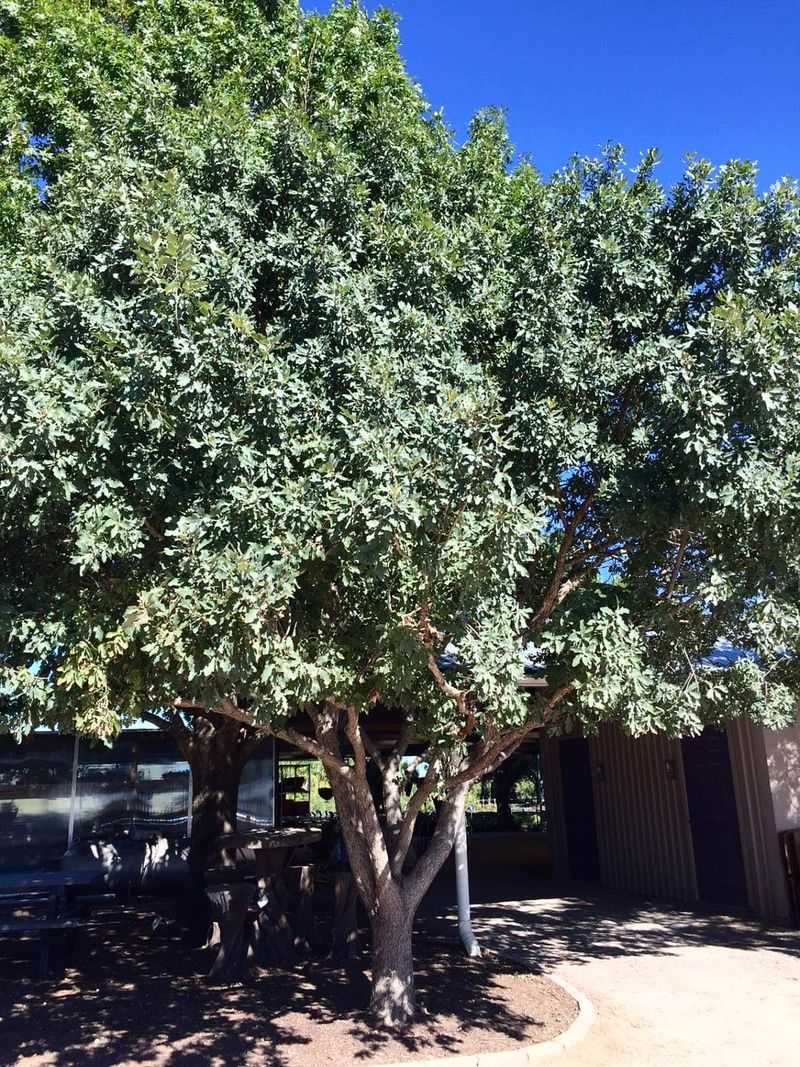
It stays compact, grows at a decent pace, and brings something to the table that almost no other oak can offer: striking blue-green foliage that looks almost painted.
The leaf color is genuinely unusual. That soft blue-green tone catches the light differently throughout the day and gives the tree a cool, almost silvery quality in certain conditions.
In fall, the leaves shift to soft shades of yellow, orange, and rose before dropping. The seasonal color show is surprisingly rich for a smaller tree.
Lacey Oak typically reaches 20 to 30 feet tall, which puts it in a sweet spot for front yards. It is large enough to provide real shade over a driveway or entryway, but not so big that it threatens your roof or power lines.
The canopy spreads nicely with age, giving it a classic, well-rounded shape. Heat and drought tolerance are where Lacey Oak truly shines.
It evolved on the rocky slopes and canyon edges of the Edwards Plateau, one of the toughest environments in Texas.
That background means it handles summer heat, alkaline soils, and long dry spells without skipping a beat.
Wildlife benefits from this tree too. Acorns provide food for birds and small mammals throughout the fall season.
Planting a Lacey Oak means you are adding ecological value to your yard, not just visual appeal.
Full sun and well-drained, rocky or sandy soil suit it best. Give it room to spread and it will reward you for decades.
6. Desert Willow
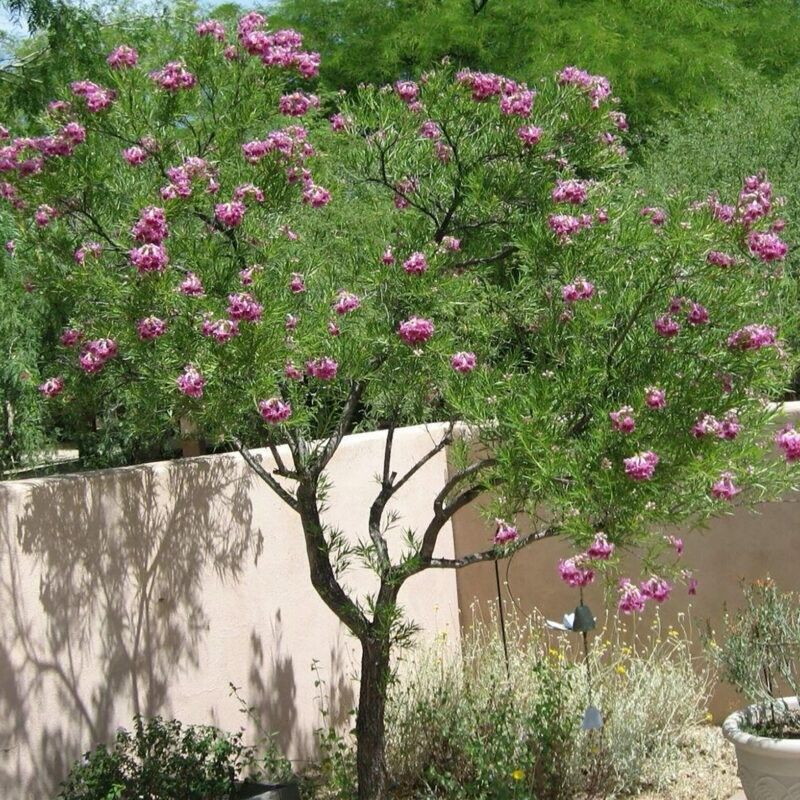
There is something almost tropical about Desert Willow in full bloom, which makes it all the more surprising that it thrives in some of the driest parts of Texas.
From late spring through fall, it pumps out trumpet-shaped flowers in shades of pink, lavender, white, and deep purple. The blooms keep coming for months, long after most flowering trees have finished for the season.
Hummingbirds are obsessed with Desert Willow. The tubular flowers are perfectly shaped for them, and planting one near your front yard means you could have hummingbirds visiting regularly from spring all the way into autumn.
It also attracts bees and butterflies, turning your yard into a lively, buzzing little ecosystem. Despite the name, Desert Willow is not actually a willow. It belongs to a completely different plant family and is more closely related to the trumpet vine.
The long, narrow leaves do give it a willow-like look, though, especially when a breeze moves through the canopy.
Size-wise, it usually grows 15 to 25 feet tall with a loose, open branching structure. That airy quality lets light filter through nicely, which works well in smaller front yards where you want shade without total darkness underneath. It never feels heavy or crowded.
West Texas and the Trans-Pecos region are where this tree truly comes from, and that origin tells you everything about its toughness. Poor soils, rocky ground, intense heat, and minimal rainfall are conditions it handles with ease.
For central and west Texas homeowners especially, Desert Willow is one of the smartest native trees you can plant in a front yard.