These Texas Flowers Stay Colorful In Containers Even During Dry Summer Weeks
Container gardening in a Texas summer is a test of both the gardener and the plants. Heat radiates off pavement and walls, pots dry out faster than you expect, and a few days of missed watering during a busy week can set a container planting back significantly.
Most flowers are not equipped to handle that kind of pressure and still look good. The ones that are built for it though can carry a porch, patio, or entryway with bold color even through the driest and hottest stretches of summer.
Texas heat is not a dealbreaker for container color when you are working with the right flowers.
Some of them actually respond to the warmth by blooming harder, and their ability to bounce back after a dry spell makes them genuinely reliable in a way that more delicate options are not.
If your containers have been struggling to hold up past June, the plant selection is almost certainly where the problem starts.
1. Lantana
Few plants put on a show quite like lantana does during a Texas summer. This flower was practically made for heat.
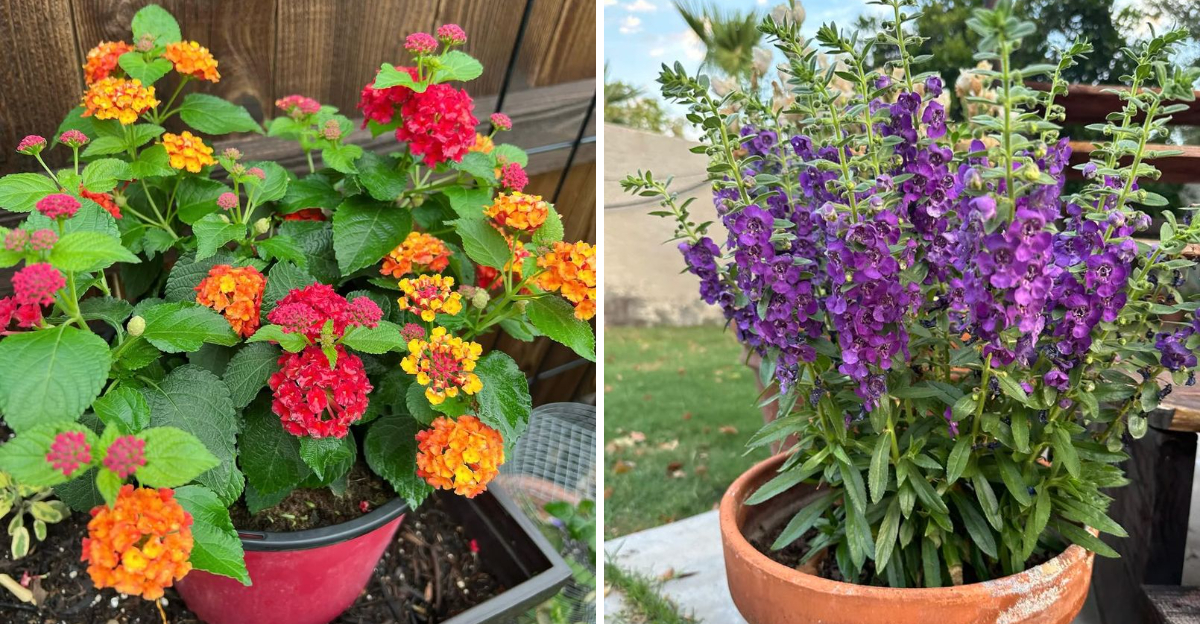
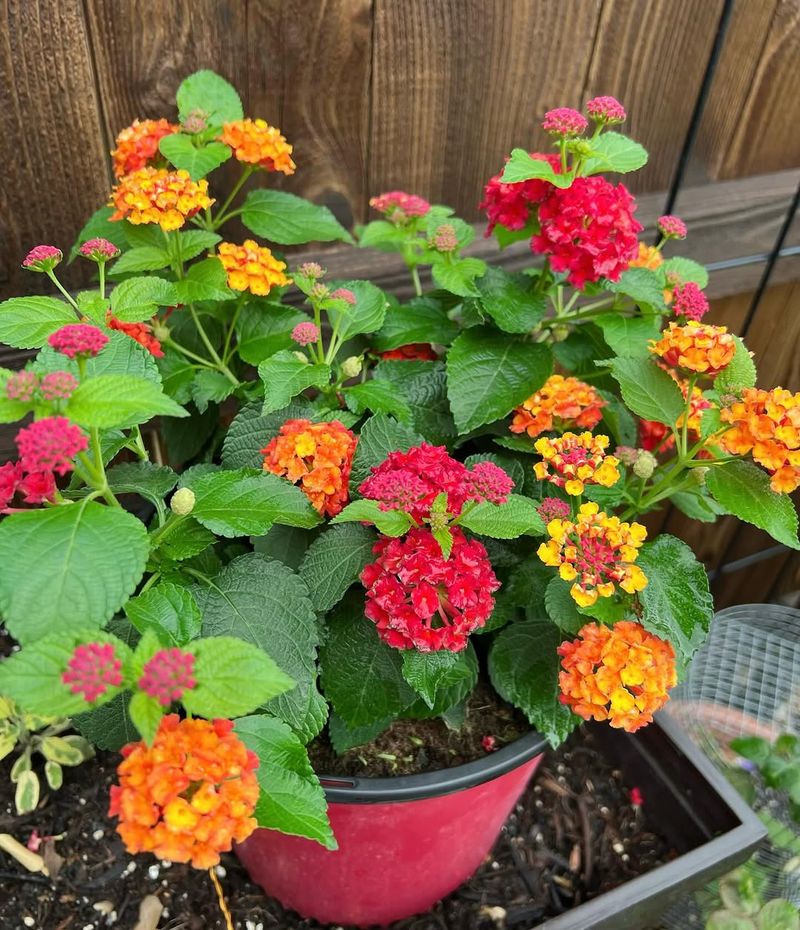
It loves full sun, handles dry spells without complaint, and keeps pumping out clusters of tiny blooms in shades of orange, yellow, red, pink, and purple all season long.
Lantana is a fantastic choice for containers because it does not need constant watering. Once it gets established, it can go several days without water and still look great.
In fact, overwatering is more of a problem than underwatering with this plant. Let the soil dry out a bit between waterings and it will reward you with even more flowers.
One fun thing about lantana is that its flower clusters often change color as they age. A single cluster might start yellow and shift to orange or red as the blooms mature. This gives each plant a multicolored, eye-catching look that is hard to beat.
For containers, look for compact varieties like ‘Bandana’ or ‘Luscious’ series. These stay a manageable size without getting leggy or overgrown.
Plant lantana in a pot with good drainage and a quality potting mix, then place it somewhere that gets at least six hours of direct sun daily.
Butterflies and hummingbirds absolutely love lantana, so you get a bonus wildlife show along with your blooms. Deadheading spent flowers is not required, but a light trim now and then keeps the plant tidy and encourages fresh new growth throughout the summer.
2. Angelonia
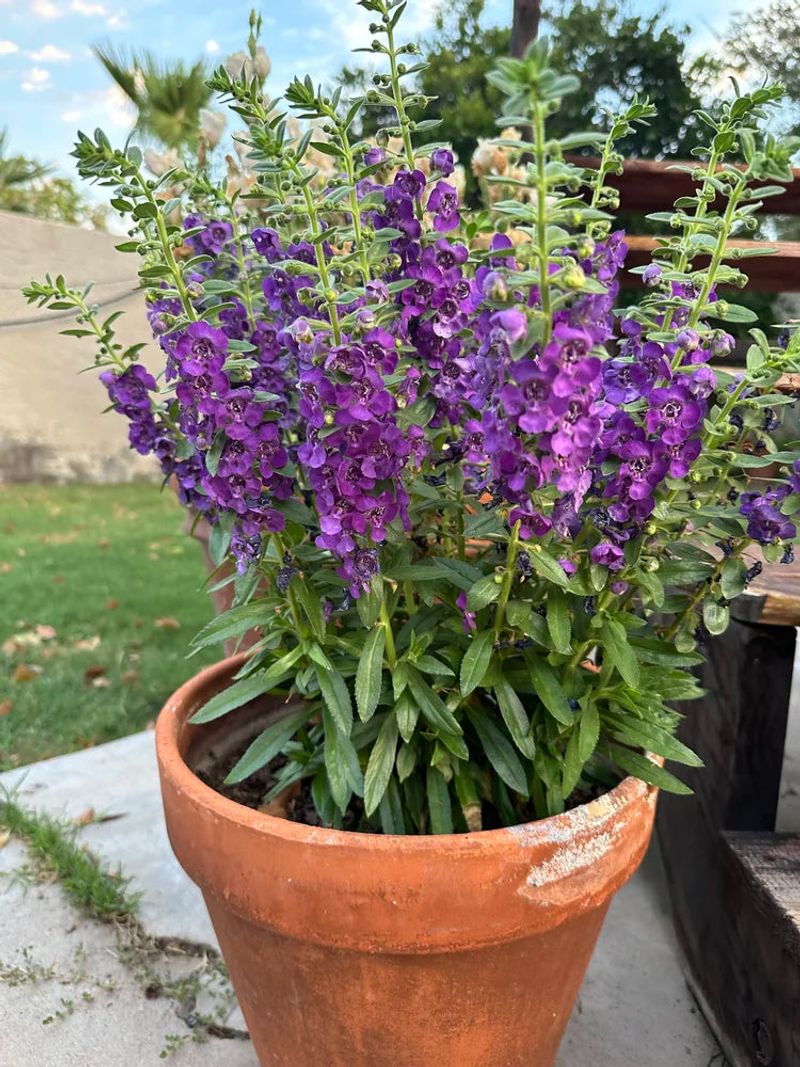
Nicknamed the summer snapdragon, angelonia is one of the most underrated container flowers for Texas gardeners. It produces tall, slender spikes covered in small orchid-like blooms in shades of purple, pink, white, and lavender.
The flowers have a light, sweet fragrance that makes sitting near your pots even more enjoyable on a warm evening.
What makes angelonia stand out is how it handles extreme heat. While many flowers slow down or stop blooming when temperatures push past 95 degrees, angelonia just keeps going.
It does not wilt dramatically, it does not drop its flowers, and it does not ask for anything extra. Consistent sunlight and moderate watering are really all it needs.
Your Texas Garden Changes Every Week. Your Plan Should Too.
Gardening in Texas changes quickly throughout the season. Every Friday you’ll receive a simple weekly plan showing exactly what to plant, prune, fertilize, harvest, and protect so you never miss the right timing.
Angelonia grows upright and reaches about 12 to 18 inches tall in a container, making it a great thriller plant in mixed pot arrangements. Pair it with trailing purslane or sweet potato vine for a full, layered look that holds up all summer.
Water angelonia deeply but not too frequently. Let the top inch of soil dry out before watering again.
This encourages strong root growth and keeps the plant healthy even during dry stretches. A slow-release fertilizer added at planting time will keep blooms coming without extra effort.
One more reason to love angelonia is that deer tend to avoid it. If you garden in an area where deer wander through, this plant gives you gorgeous color without the worry of overnight snacking.
It is a reliable, beautiful, and surprisingly tough summer performer.
3. Purslane
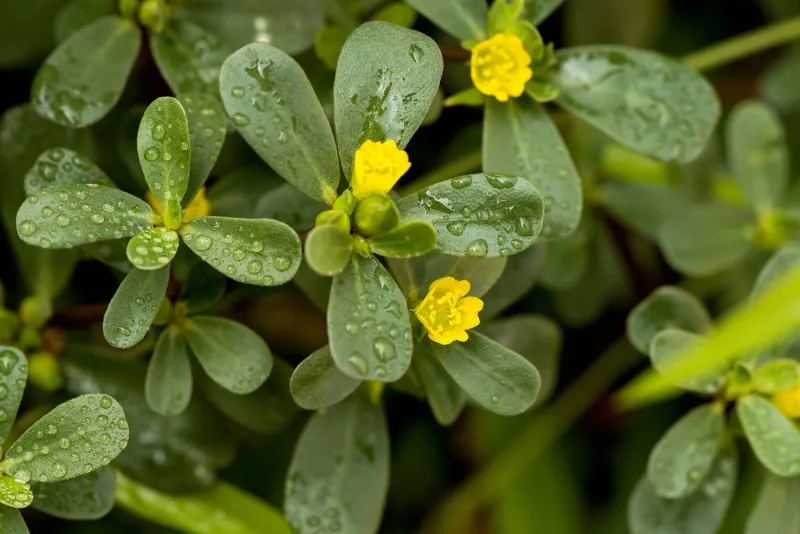
Purslane might just be the toughest flowering plant you can grow in a Texas container. It stores water in its thick, succulent-like leaves, which means it can handle days of dry heat without skipping a beat.
Gardeners who forget to water regularly will find purslane to be their most forgiving and loyal summer companion.
The flowers come in bold, cheerful shades of hot pink, orange, red, yellow, and white. They open wide in the sunshine and create a carpet of color that spills beautifully over the edges of pots and hanging baskets.
Each bloom only lasts a day, but the plant produces so many flowers that you never notice the turnover.
Purslane loves heat so much that it actually blooms more intensely as temperatures rise. Give it a spot in full sun with at least six to eight hours of direct light per day and watch it explode with color.
It grows low and spreading, making it perfect as a filler or spiller in container arrangements.
Use a well-draining potting mix and avoid letting water sit in the saucer beneath the pot. Purslane does not like wet roots, and soggy soil can cause problems quickly. Water it when the soil feels dry about an inch down and then leave it alone until next time.
Did you know that purslane is actually edible? Its leaves are used in salads and cooking in many parts of the world.
Of course, the ornamental varieties are bred for looks rather than flavor, but it is a fun fact that makes this tough little plant even more interesting.
4. Zinnia
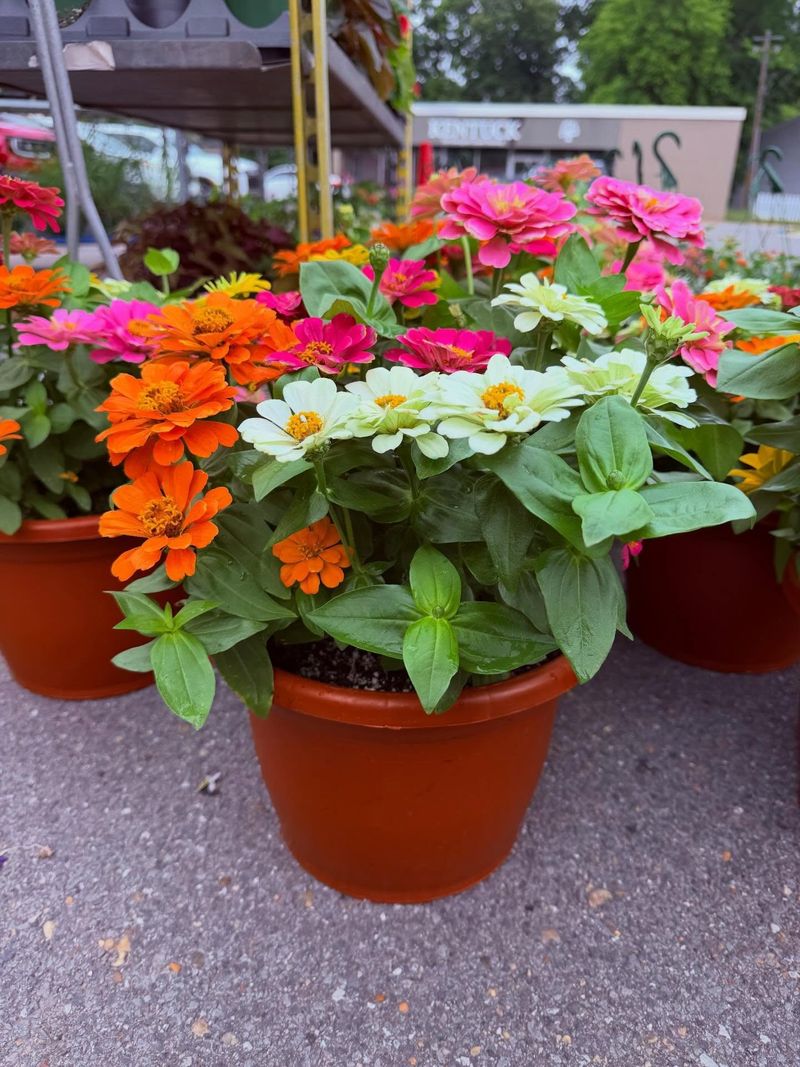
Zinnias are the kind of flower that makes people stop and stare. Their bold, layered blooms in nearly every color of the rainbow bring instant cheer to any container garden.
Compact varieties like ‘Zahara’ and ‘Profusion’ are especially well-suited for pots because they stay bushy and full without getting too tall or top-heavy.
One of the best things about growing compact zinnias in containers is how long they bloom. Plant them in late spring and they will keep flowering straight through summer and into fall.
Even during the hottest, driest weeks of a Texas summer, these tough little plants hold their color and keep pushing out new blooms without much fuss. Zinnias need full sun to perform their best. At least six hours of direct sunlight daily is ideal.
They also appreciate good air circulation, so avoid crowding too many plants into a single pot. Spacing them properly helps prevent powdery mildew, which can sometimes appear on zinnia leaves in humid conditions.
Water zinnias at the base of the plant rather than overhead. Wet leaves can encourage fungal issues, especially during the humid parts of a Texas summer.
A deep watering every few days, letting the soil dry slightly between sessions, keeps the roots happy without overwatering.
Butterflies flock to zinnias like they are holding a party. If you want a container that attracts pollinators while delivering nonstop summer color, compact zinnias are one of the smartest choices you can make for your Texas patio or porch.
5. Moss Rose
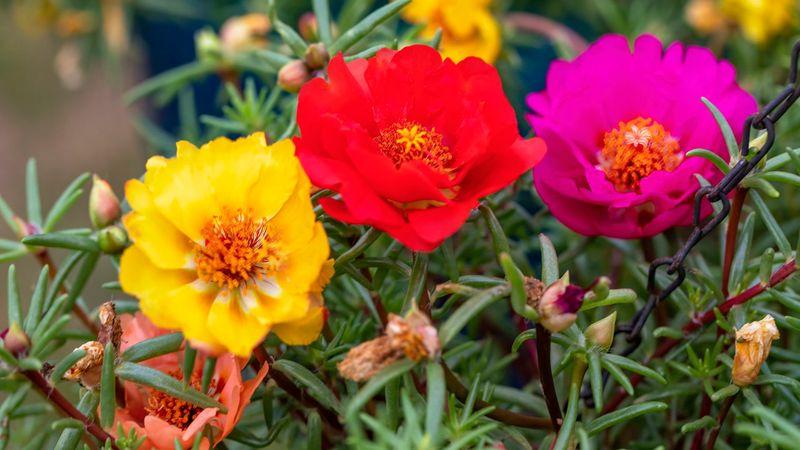
Moss rose, also known as portulaca, is the definition of a low-maintenance summer flower. It thrives in hot, dry conditions that would stress most other plants.
Its small, papery blooms in shades of red, orange, yellow, pink, and white open up bright and cheerful every morning when the sun comes out.
The secret to moss rose’s toughness is in its leaves. Like purslane, moss rose has thick, fleshy leaves that store moisture.
This built-in water reserve lets the plant sail through dry spells with ease. It is genuinely one of the best choices for gardeners who want color without a demanding watering schedule.
Moss rose works beautifully in shallow containers, window boxes, and hanging baskets. It spreads outward rather than growing tall, so it creates a low, colorful mat that spills over edges in a very satisfying way.
Mix several colors together in one pot for a mosaic-like display that looks professionally designed.
Plant moss rose in the sunniest spot you have. It needs full sun and actually performs poorly in shade.
The more direct sunlight it receives, the more flowers it produces. A south or west-facing patio or porch is ideal for getting the most out of this plant all summer long.
Watering needs are minimal once established. Allow the soil to dry out completely between waterings.
Moss rose does not need fertilizer often, but a light feeding every few weeks with a balanced fertilizer can encourage extra blooming during the peak of summer heat. It is truly a set-it-and-enjoy-it kind of plant.
6. Esperanza
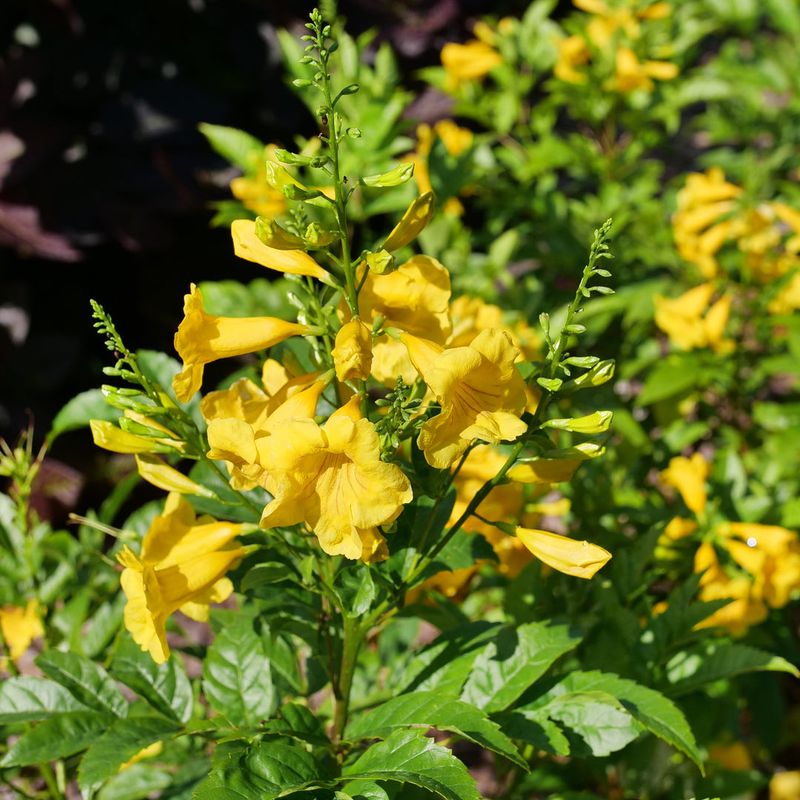
Walk past a blooming esperanza on a hot Texas afternoon and it is almost impossible not to stop and admire it. This plant produces clusters of vivid, trumpet-shaped yellow flowers that seem to glow in the summer sun.
Also called yellow bells or Tecoma stans, esperanza is a Texas native that was built for exactly the kind of heat and drought that sends other plants into retreat.
Esperanza grows larger than most container flowers, so it needs a big pot to really shine. A container that holds at least 15 to 20 gallons gives the roots enough room to spread and supports strong, healthy growth.
Once it gets established in a large container, it can handle extended dry periods with very little supplemental watering needed.
Place esperanza in a spot with full sun all day long. It blooms most heavily when it receives maximum sunlight.
The more heat and light it gets, the more those golden clusters multiply and cascade across the plant. It can grow several feet tall in a season, creating a dramatic focal point on any patio or deck.
Prune esperanza lightly in early summer to encourage branching and more flower production.
Removing spent flower clusters also keeps the plant looking tidy and pushes it to produce new blooms faster. A slow-release fertilizer at planting time gives it a strong foundation for the whole season.
Hummingbirds are absolutely drawn to esperanza’s tubular yellow blooms. If you have a large container and a sunny spot, this plant delivers bold, reliable color and a little wildlife excitement from midsummer all the way through fall.
7. Vinca
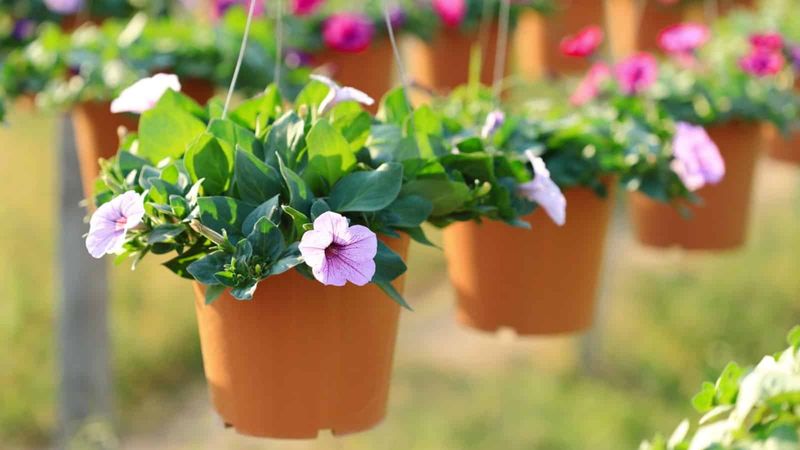
Vinca, sometimes called periwinkle or catharanthus, has earned a loyal following among Texas gardeners for one very good reason: it simply does not quit.
During the kind of dry, scorching weeks that make most flowers look tired and faded, vinca keeps its leaves glossy, its stems upright, and its flowers fresh and bright. It is a genuinely impressive performer.
The flowers come in shades of white, pink, red, coral, and lavender, often with a contrasting eye at the center.
Modern varieties like the ‘Cora’ and ‘Titan’ series have been bred specifically for heat and humidity tolerance, making them excellent choices for Texas container gardens. They resist the fungal issues that used to trouble older vinca varieties.
Vinca does best in full sun but can tolerate a bit of afternoon shade in the hottest parts of the state. It grows in a mounded, bushy shape that fills containers beautifully without spilling over too aggressively.
Pair it with taller plants like angelonia or esperanza for a layered container arrangement that looks lush all season.
Water vinca regularly but avoid overwatering. It handles short dry periods well but performs best with consistent moisture.
Good drainage is essential because standing water around the roots can cause problems. Use a quality potting mix and make sure your container has drainage holes at the bottom.
Fertilize vinca every few weeks with a balanced liquid fertilizer to keep blooms coming strong through the hottest months.
Deadheading is not necessary since the plant is self-cleaning, which makes it one of the easiest and most rewarding flowers you can grow in a Texas summer container.