Think Twice Before Touching This Fuzzy Caterpillar On Your New York Patio
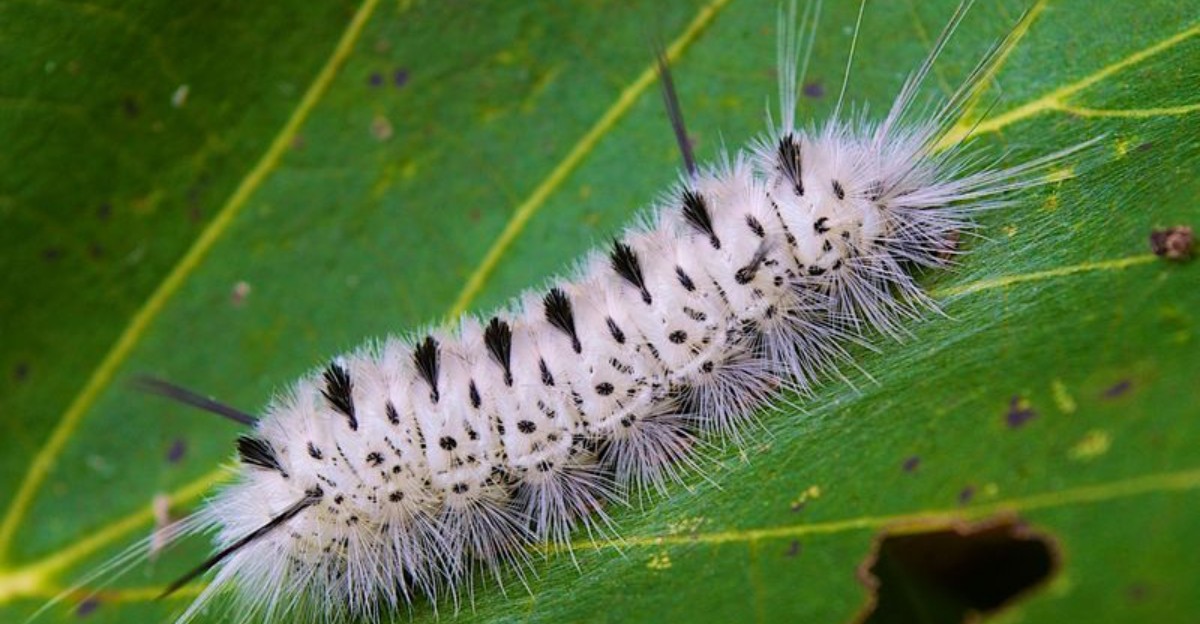
Some of the softest-looking caterpillars in New York carry hollow, brittle hairs that can snap off and lodge in your skin. One brush can leave a red, itchy rash that looks a lot like poison ivy.
I found one inching across my patio table last September, white and fluffy like a tiny cotton ball with black tufts. My first instinct was to scoop it up and show the kids. A quick look at an extension fact sheet changed my mind fast.
These little crawlers are native to New York and mostly harmless to your trees. They show up from late summer into fall, often right where you sit, sip coffee, and sweep leaves.
You might notice them on chair legs, planters, or the side of your house. So what makes that fuzz so prickly, and what should you do when one turns up?
That Fluffy White Caterpillar Has a Hidden Trick
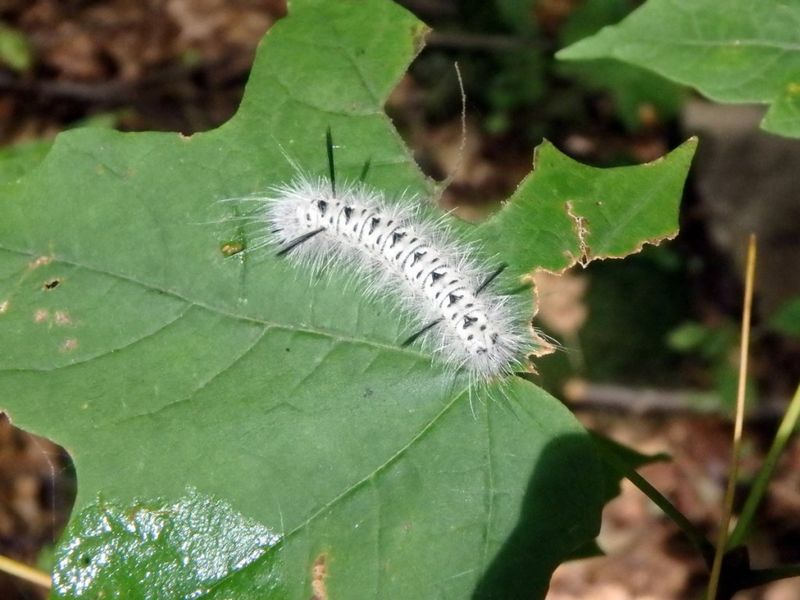
Soft as a cotton swab, sneaky as a splinter. That sums up the fuzzy visitor many New York gardeners spot on patios each fall.
The coat on these caterpillars is not just decoration. Many fuzzy species carry special hairs called urticating hairs or setae. They are tiny, stiff, and often barbed, built to break off when something touches them.
Birds and small animals learn quickly that a mouthful of fuzz is a bad idea. People learn the same lesson, usually by accident. The hairs can lodge in skin and trigger itching, redness, bumps, or a mild burning feeling.
Scientists still debate how much of the reaction comes from chemicals and how much comes from the hairs poking skin. Some people react strongly, while others barely notice anything. Your own sensitivity plays a big role.
I find the design pretty clever. A slow, soft insect cannot run or bite, so it wears its protection like a fluffy sweater full of pins.
Most of these caterpillars are native and play a normal part in backyard food webs. They are not out to get you.
They just do not like being handled, and your skin will be happier if you respect that boundary from the start.
Hickory Tussock Moth Caterpillars Are the Usual Suspects
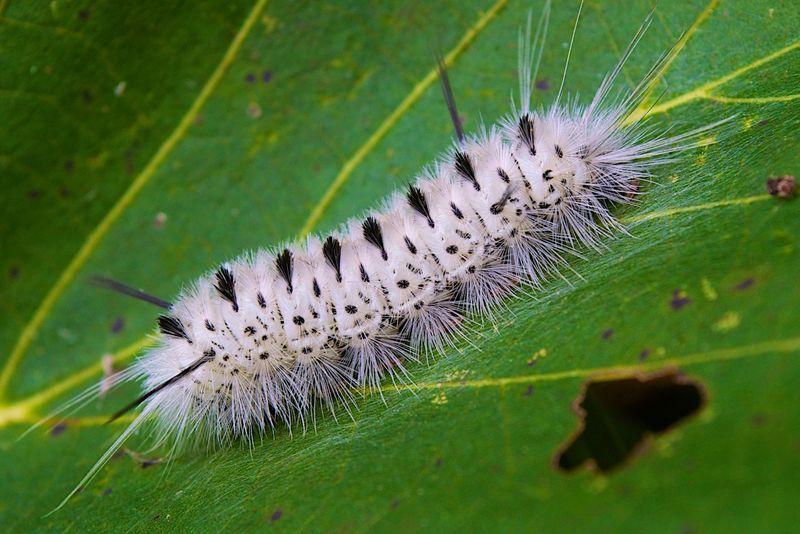
Ask around in any New York garden group in September, and someone will post a photo of this one. The hickory tussock moth caterpillar, Lophocampa caryae, is the fuzzy star of late summer.
Look for a body about 1.5 inches long, covered in white hairs. A row of black markings runs down the back, and two pairs of long black pencil tufts stick out near the front and rear. The head is black too.
These caterpillars feed on hickory, walnut, butternut, oak, ash, and other hardwood trees. Late summer into early fall, they leave the trees to find a sheltered place to spin a cocoon. That trip is why they end up crawling across decks, steps, and outdoor furniture.
Contact can cause an itchy rash, welts, or a stinging feeling that may last from a few hours to a couple of days. Penn State Extension notes reactions vary widely from person to person.
Fun fact: the cocoon includes the caterpillar’s own hairs woven into the silk. So even the resting stage keeps its prickly armor. If you find a fuzzy brown cocoon under a ledge, leave it alone too.
Got Brushed by Fuzz? Grab the Tape First

Tape, soap, and a cool cloth. That simple kit handles most caterpillar run-ins, and you probably have all three in the kitchen drawer. Start by resisting the urge to rub or scratch. Rubbing pushes the tiny hairs deeper into skin.
Instead, press a strip of clear tape or duct tape onto the spot and peel it away. Repeat with fresh pieces until you lift as many hairs as possible.
Next, wash the area gently with soap and water. Change your shirt if the caterpillar touched your clothes, and wash that clothing separately.
For itching and swelling, a cool compress or wrapped ice pack can help. Many people find relief with calamine lotion, hydrocortisone cream, or a baking soda paste. An oral antihistamine may calm the itch, but check with a pharmacist if you have questions.
Watch closely for bigger reactions. Trouble breathing, swelling of the face or throat, a spreading rash, or hairs near the eyes call for prompt medical care.
I keep a roll of tape in my garden tote now. It weighs nothing, and it has saved me a lot of grumbling after weeding under the oaks.
A Few Other Prickly Caterpillars Live in New York Too
Our state hosts a small cast of other caterpillars that deserve the same polite distance. Getting to know them makes yard walks a lot more fun.
The American dagger moth caterpillar is bright yellow with long black hair tufts. It feeds on maple, oak, birch, and other trees, and its hairs can cause irritation.
The saddleback caterpillar is hard to miss. It has a green patch on its back with a brown spot, like a tiny saddle blanket, plus spiny horns at both ends. Those spines can deliver a sharp sting.
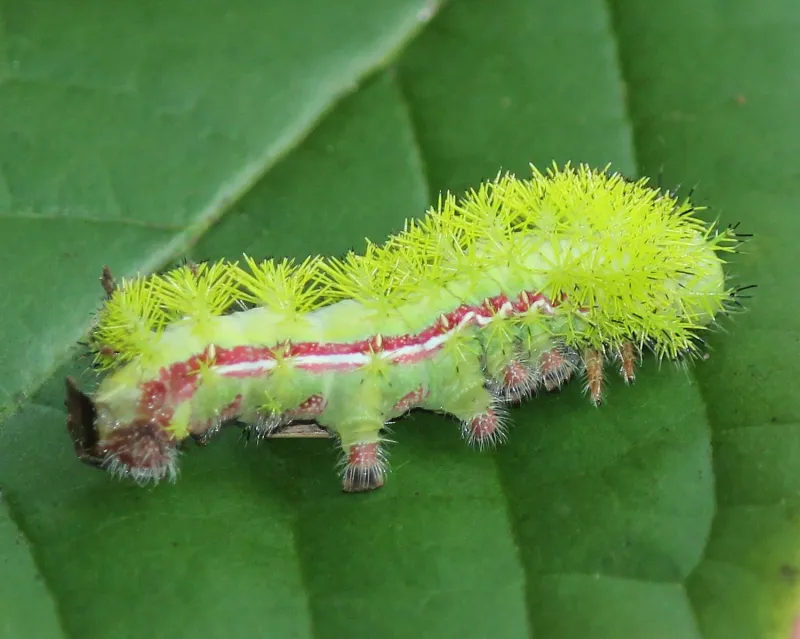
The io moth caterpillar is lime green with branching spines and a red and white side stripe. Its sting can feel like a nettle or bee. Spiny oak-slug caterpillars are small, green, and covered in spiky lobes.
You may also read about the puss caterpillar, which has a very painful sting. It is mainly a southern species, so New Yorkers are far less likely to see one.
A simple rule works well here. If a caterpillar is hairy, spiny, or brightly marked, and you are not sure what it is, admire it with your eyes and snap a photo instead.
Kids and Curious Dogs Need a Look Don’t Touch Rule

Little hands love fuzzy things. Honestly, so do I, which is exactly why kids need a clear plan before they meet a caterpillar on the patio.
Children may be more likely to get caterpillar rashes than adults because they tend to pick insects up, let them crawl on arms, and then rub their eyes. A quick talk helps. Teach them to look, point, and call a grown-up.
Turn it into a game. Hand them a magnifying glass or a phone camera and challenge them to count the black tufts. Curiosity stays alive, and skin stays calm.
Dogs and cats are another story. A pet that sniffs or mouths a fuzzy caterpillar may drool, paw at its face, or show a swollen lip or tongue.
Rinse the mouth gently with water if your pet allows it, and call your veterinarian for advice.
Check play areas, sandboxes, and the edges of outdoor rugs during late summer and early fall. Those are favorite crawling routes.
Gloves help adults too. Wear them when stacking firewood, moving pots, or sweeping leaf piles near hickory, walnut, and oak trees. One small habit spares a lot of itchy evenings.
Late Summer Into Fall Is Peak Caterpillar Crawling Season
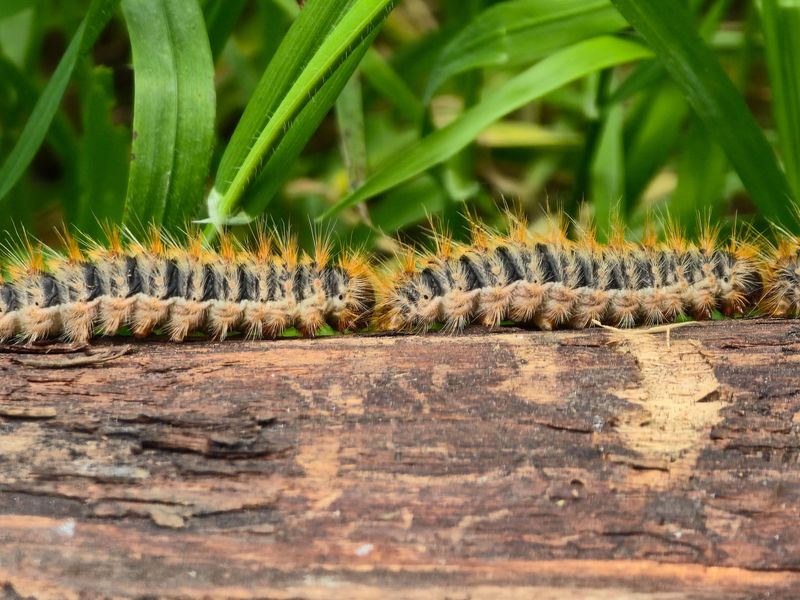
Timing explains a lot. Hickory tussock moth caterpillars feed in the treetops through mid to late summer, mostly out of sight.
Once they finish growing, usually from late August into October, they climb down and wander. They are searching for a protected nook to spin a cocoon for winter. Patio corners, siding, garage edges, and woodpiles all look like perfect hideouts to them.
That is why so many sightings happen right as New Yorkers are enjoying cool evenings outside. The insects are not new or unusual. They are just more visible during this short travel window.
Wooded areas see more of them. Yards near hardwood trees in the Hudson Valley, the Catskills, central regions, and western parts of the state often get regular visits. City patios can still host a few, especially near parks.
Numbers rise and fall from year to year, mostly due to weather, predators, and natural diseases. A busy season one fall does not mean an outbreak is coming.
By the time hard frosts settle in, the caterpillars have tucked themselves away. The adult moths fly the following late spring and early summer, and they are harmless to touch.
Your Hickory and Oak Trees Will Be Just Fine

Spot some chewed leaves on the hickory? Take a breath. Extension experts generally agree that hickory tussock moth caterpillars cause little lasting harm to healthy trees.
They feed late in the season, when trees have already stored most of their energy for next spring. Losing some leaves in September is far less stressful than losing them in May.
Spraying insecticides for these caterpillars is rarely needed. Sprays can hurt pollinators and the many harmless caterpillars that birds rely on to feed their young. Chickadees, for example, need thousands of caterpillars to raise a single brood.
If one wanders somewhere inconvenient, move it gently. Slide a stiff piece of paper or a leaf under it, wearing gloves, and set it at the base of a nearby tree.
Natural checks keep populations in balance. Parasitic wasps, flies, birds, and diseases all take their share, which is why big years usually fade on their own.
I like thinking of these fuzzy wanderers as part of the season, like falling acorns. A little caution keeps the itch away, and the trees carry on without any help from us.
Snap a Photo of That Fuzzy Visitor Instead
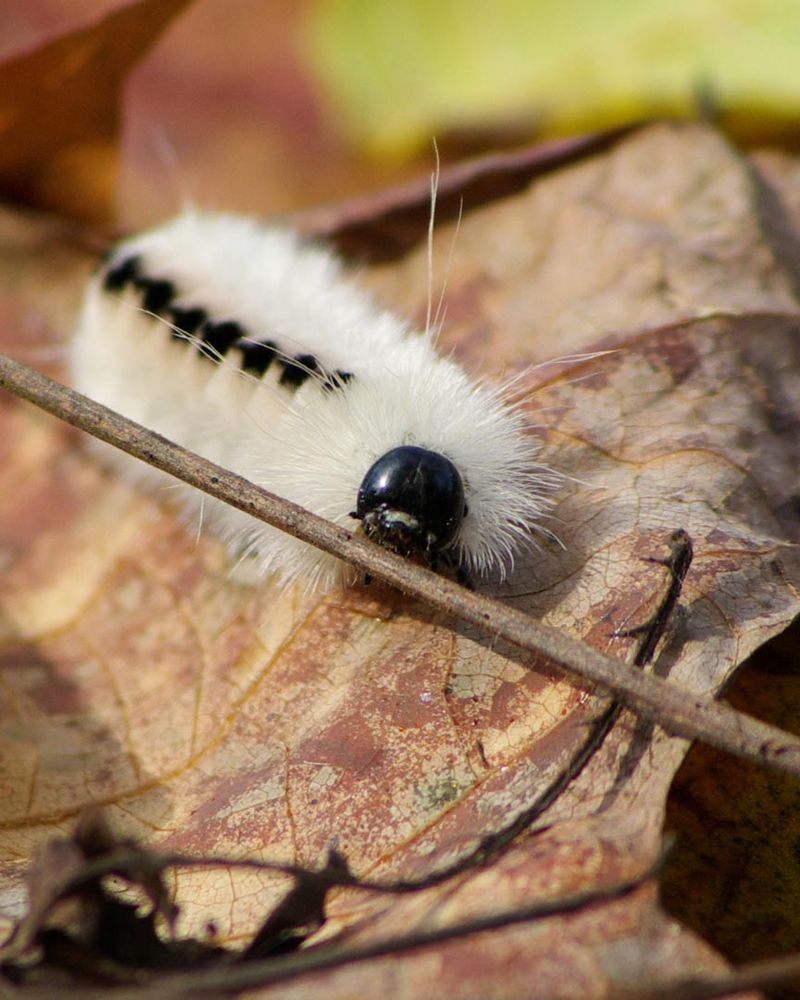
My favorite way to handle a caterpillar these days involves zero touching. I grab my phone, take a clear photo, and look it up.
Free apps like iNaturalist and Seek can help you identify what you found. Your photos also add useful records for researchers tracking insects across New York. That turns a patio surprise into a small science project.
Get a sharp image of the back and sides. Note the color, any tufts or spines, and the plant it was on. These details make identification far easier.
Build a few easy habits for the season. Shake out cushions before sitting, glance at chair arms, and wear gloves when cleaning up leaves or firewood. Keep tape and hydrocortisone cream near the back door.
Share what you learn with neighbors and kids. Most fuzzy caterpillars are native insects doing ordinary caterpillar things, and knowing which ones to avoid takes the fear out of the encounter.
A fluffy crawler on your patio is a sign of a healthy, living yard. Give it room, enjoy the view, and let it get on with its journey toward becoming a moth next summer.