This Bacterial Disease Is Turning New Jersey Oak Leaves Brown By Late Summer
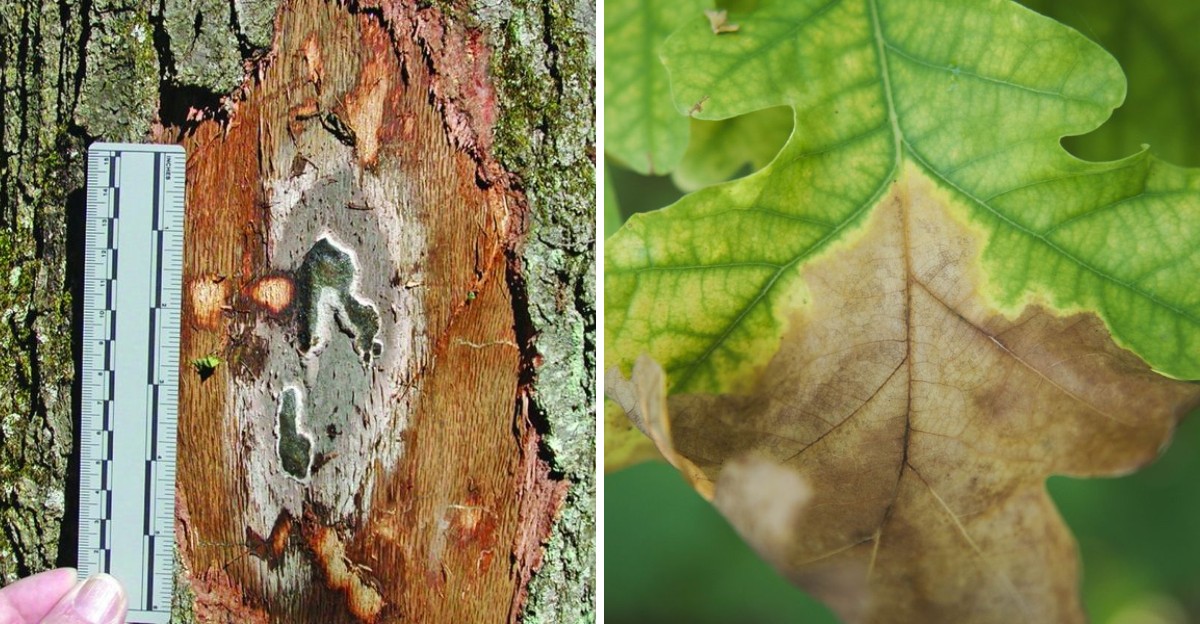
Curiosity strikes the moment you notice those crisp brown edges. Crispy leaves crept across your canopy long before autumn officially arrived. Heat gets blamed instantly, yet heat rarely explains this pattern alone.
Drought stress quietly weakened bark tissue across countless New Jersey properties. Underneath that visible damage, a tiny insect has stayed remarkably active. Small pests exploit exactly this kind of seasonal weakness with precision.
Neighbors down your street are noticing identical symptoms in trees. Timing matters here, since browning now arrives earlier each summer. Patterns like this rarely appear without a hidden cause.
Trees across New Jersey are showing the same warning signs. Bark, leaves, and branches each reveal a part of your story.
Reading those signs correctly can protect more years of your canopy health. Waiting too long turns a fixable issue into an expensive mess. Your tree’s next chapter depends entirely on what you discover right now.
Scorched Leaf Edges With A Telltale Yellow Halo
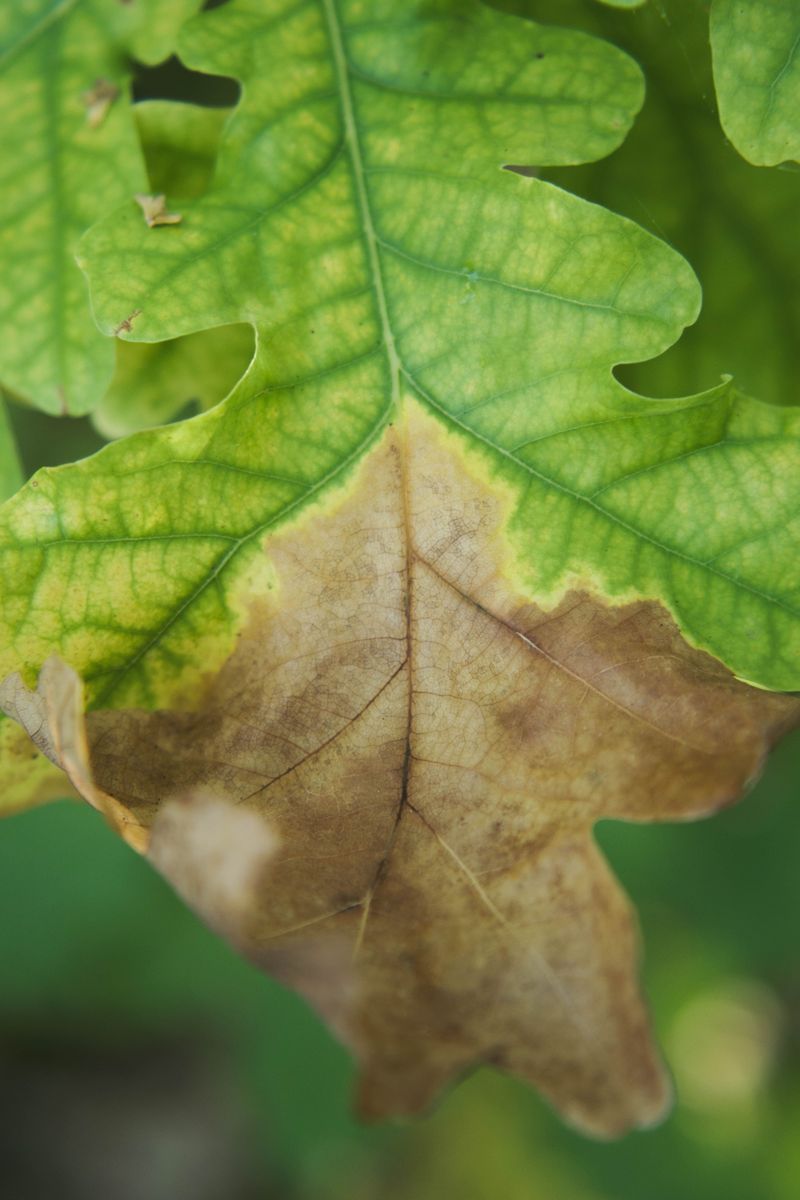
Picture a healthy green canopy in late August, then one morning the leaf edges look singed, as if someone brushed them with a hot iron. That crisp brown rim is the calling card homeowners across New Jersey keep reporting this summer.
The browning starts at the tip and margin of each leaf and creeps inward toward the midrib. Between the brown band and the still green tissue, many oaks show a thin yellow or reddish halo, which is a strong clue.
Symptoms usually show up on one branch or one side of the crown first. The following summer, the affected area spreads a little farther, and the timing shifts earlier in the season.
Leaves rarely drop right away, so the tree wears a scorched look into September while neighbors stay green. From the sidewalk it can seem sudden, though the bacteria have been moving through the wood for seasons.
Grab a few leaves and hold them up to the light before you worry. Heat scorch tends to be patchy and random across the canopy, while this pattern repeats branch by branch with that soft yellow border.
Snap photos with your phone each week and note which limbs change. A simple record helps an arborist judge how fast things are moving and what care makes sense next spring.
Mark the calendar too, since first browning in mid July hints at something different than browning after a heat wave in September. Dates matter more than you would guess.
The Fussy Microbe Clogging The Plumbing

Meet the microbe behind the mess: Xylella fastidiosa, a bacterium so small that thousands could line up across a pencil point. It lives inside xylem, the plumbing that carries water from roots up to leaves.
As colonies build up, they form sticky gum that clogs those narrow pipes. Water moving upward slows, and leaf edges, sitting farthest from the supply, dry out first.
The species name fastidiosa means fussy, and it fits. Researchers struggled for years to grow it in the lab because it demands very particular nutrients. That same fussiness is part of why no quick spray fixes it.
Your New Jersey Garden Changes Every Week. Your Plan Should Too.
Gardening in New Jersey changes quickly throughout the season. Every Friday you’ll receive a simple weekly plan showing exactly what to plant, prune, fertilize, harvest, and protect so you never miss the right timing.
Different strains trouble grapes, almonds, oleander, and elms around the world. The oak strains stay mainly within shade trees, so your vegetable garden can relax.
Cold winters slow the bacteria down, which is one reason symptoms flare during hot, dry stretches. New Jersey summers, with humid heat and rainless spells, hand it a friendly schedule. Drought years make the scorch look worse and arrive earlier.
Lab tests confirm the culprit. Certified plant diagnostic labs run ELISA or PCR tests on leaf petioles collected in late summer.
September happens to be prime sampling time, since bacterial counts peak then. A confirmed result guides care choices rather than guesswork.
Knowing the culprit also lowers household stress. Lawn grass, hostas, and porch annuals in the same yard stay unaffected by the oak strains.
Leafhoppers And Spittlebugs Run The Delivery Route
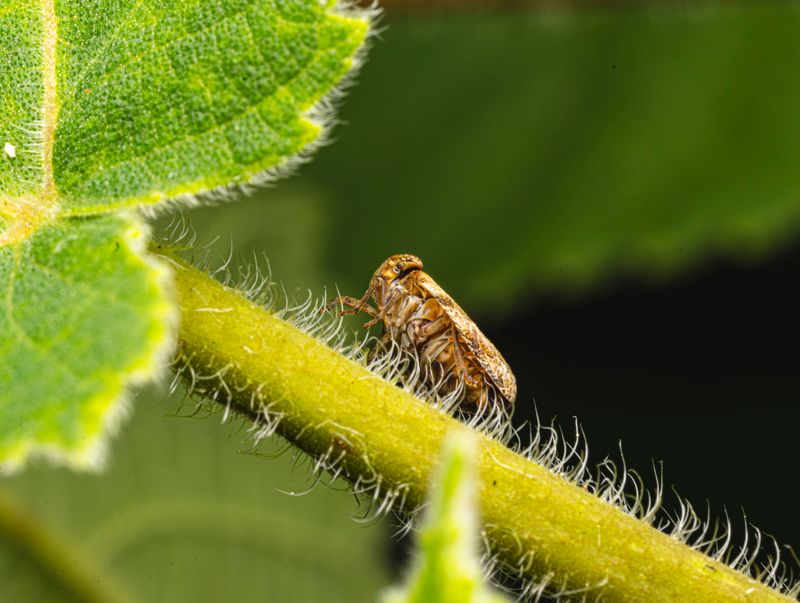
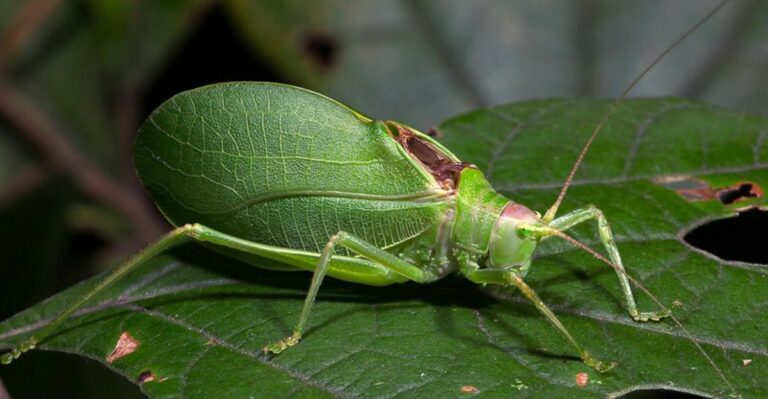
Insects act as the delivery mechanism. Sharpshooter leafhoppers and spittlebugs sip xylem sap, and bacteria riding in their mouthparts get a free transfer to the next tree.
These insects measure well under half an inch, and they hop away before you get a decent look. Spittlebug nymphs give themselves away in spring with frothy bubbles stuck to stems.
Feeding continues through summer, which is why infection creeps across a neighborhood instead of arriving overnight. An infected street tree may contribute to spread among nearby oaks over time.
Spraying insecticide broadly rarely solves anything here. Vectors fly in from woodlots, meadows, and hedgerows, and wide sprays also hit pollinators and helpful predatory insects.
Pruning tools can move bacteria too, though far less efficiently than insects do. Wipe blades with rubbing alcohol between trees, especially after working on an oak showing scorch.
Letting weedy edges grow a bit shaggy helps in some yards, since mixed plantings support spiders and parasitic wasps that keep hopper numbers in check.
Curious kids love this part: sweep a net through tall grass in June and count the hoppers you catch. A yard problem turns into a backyard science project pretty quickly.
Timing matters as well, because young trees planted beside an infected specimen face more insect visits. Give new plantings room and good soil so they grow vigorous from the start.
Why New Jersey Pin Oaks Take The Hardest Hit
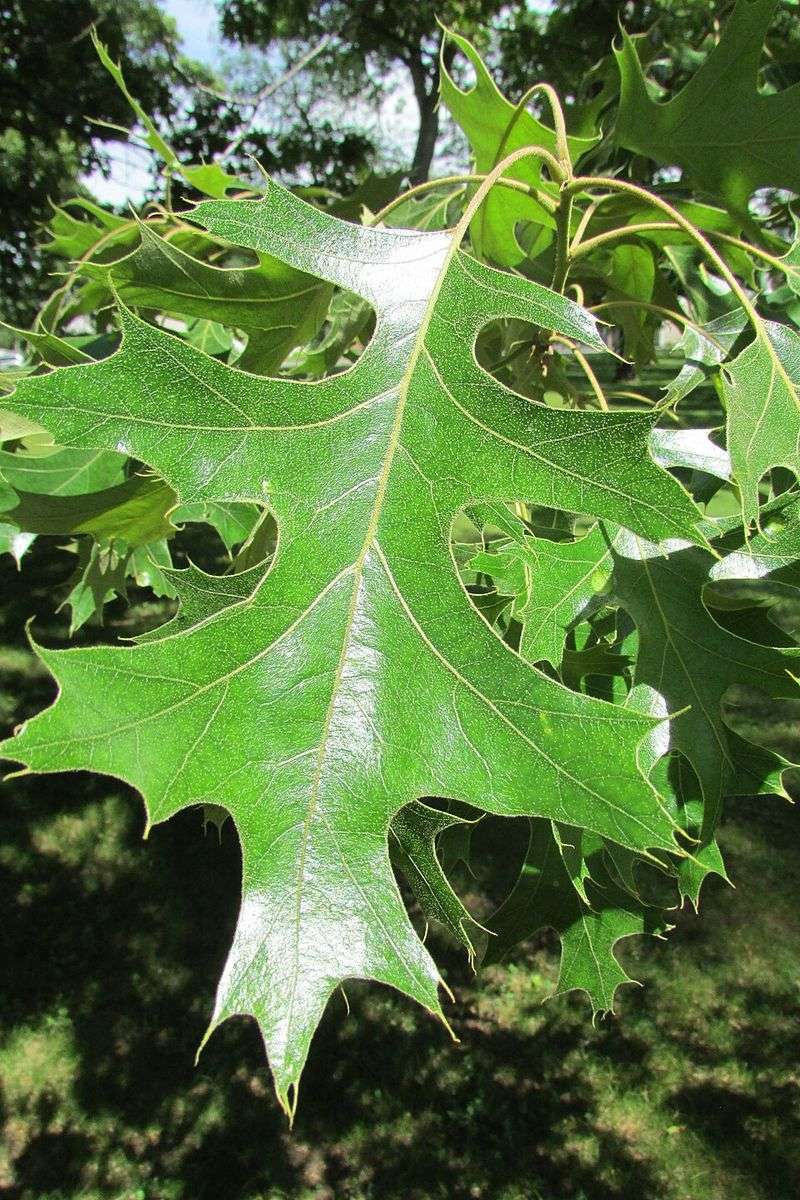
Drive through many New Jersey suburbs in September and count the crispy crowns lining the streets. A large share belong to pin oak, widely planted in the decades following World War II.
Red oak, scarlet oak, black oak, and shingle oak also show symptoms regularly. White oak, bur oak, and swamp white oak tend to shrug the bacteria off more often. Leaf shape helps you sort them: pointed, bristle tipped lobes signal the red oak group.
Street trees struggle hardest because their roots sit under pavement, compacted fill, and winter road salt. Stress and reflected heat make a plumbing problem feel far worse.
Sycamore, red maple, American elm, and sweetgum are among other species that can carry related bacterial strains in New Jersey. The scorch pattern looks remarkably similar across those species.
Many New Jersey towns have watched mature canopy thin over the past two decades. Shade goes, cooling goes, and August electric bills climb. Removal of one large street tree can often cost several thousand dollars, depending on the region.
Replanting with variety makes sense going forward. Consider swamp white oak, hackberry, Kentucky coffeetree, black gum, or a disease resistant elm to spread the risk around.
Diversity along a block works like a balanced investment portfolio. When one species struggles, the rest keep sidewalks shaded and cool.
Check town shade tree commission records for planting dates, since trees set out the same decade often decline in the same few years.
Telling Scorch Apart From Drought, Fungus, And Salt
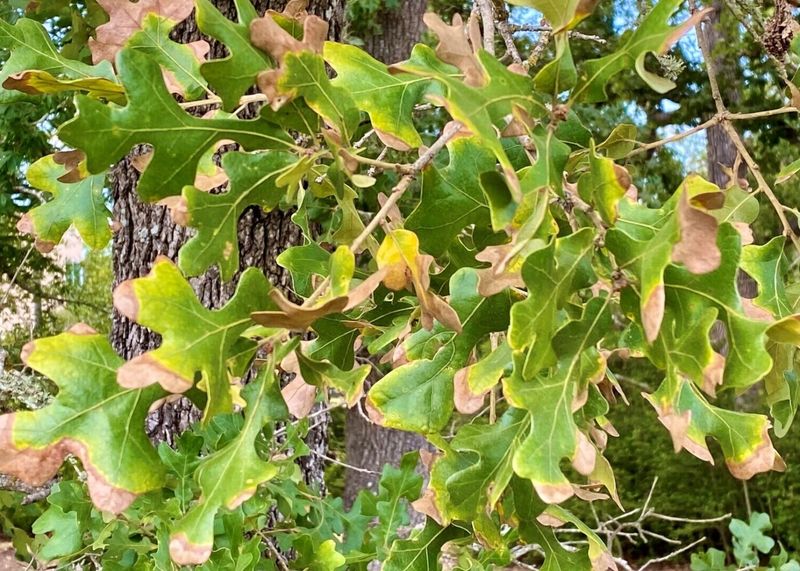
Hold off before assuming disease is the cause. Drought scorch, anthracnose, oak wilt, and girdling roots each produce brown leaves that can fool a careful eye.
Drought damage shows up across the whole crown at once, usually after a rainless stretch. It also skips that yellow band between green and brown tissue. Deep watering brings visible improvement within a couple of weeks when thirst is the real cause.
Anthracnose, a fungal issue, strikes during cool wet springs and follows leaf veins with irregular blotches. Symptoms fade as summer warms up.
Oak wilt moves fast and affects the red oak group quickly, browning a crown within weeks. Bacterial scorch takes seasons and returns to the same limbs year after year.
Girdling roots restrict a trunk from below. Trees in that situation decline slowly and often lean with the wind.
Salt spray from winter road treatment burns foliage on the road facing side only. Check whether the browning faces the street or the backyard before blaming a pathogen.
When doubt lingers, collect ten petioles from symptomatic leaves, bag them, and ship them off. Local university extension services typically handle sample testing for a modest fee.
Guessing wrong wastes money on treatments that do not match the problem. A lab test is typically far less expensive than an unnecessary trunk injection.
Care Steps That Buy Your Shade Tree More Good Years
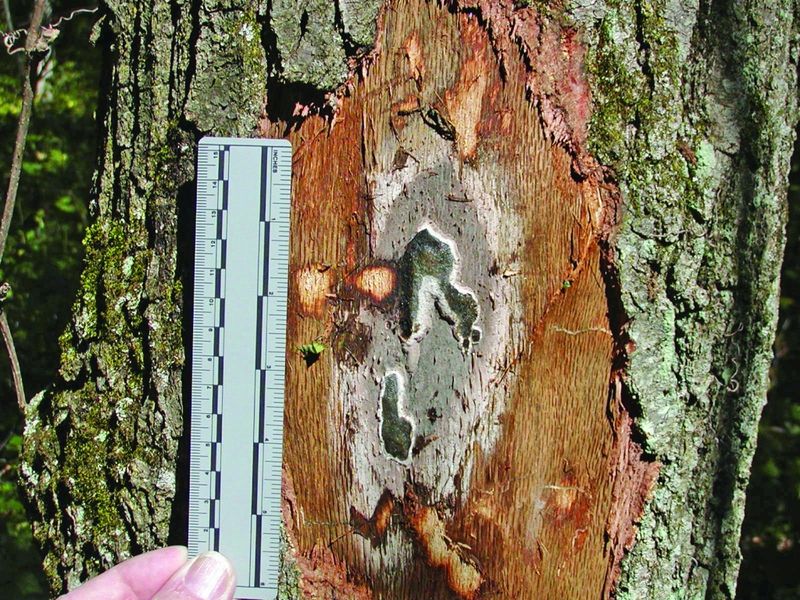
Good news for worried tree owners: a confirmed diagnosis does not mean the chainsaw comes out this fall. Plenty of oaks hold on for a decade or longer with thoughtful care.
Water deeply during dry spells, arborists commonly suggest about ten gallons per inch of trunk diameter, once a week, adjusting for soil and rainfall. Early September is a fine time to start, since late summer drought stress adds up fast.
Spread two to three inches of wood chip mulch out toward the drip line, keeping it off the bark. Mulch cools roots, holds moisture, and feeds soil life.
Prune scorched limbs during the dormant season to reduce hazard and tidy the crown. Skip heavy pruning in summer heat.
Certified arborists can inject oxytetracycline into the trunk each spring. The treatment suppresses bacteria and eases symptoms for a season, though it does not cure the tree.
Plan on repeating injections yearly, at a cost that scales with trunk size. Weigh that against the shade, curb appeal, and cooling your oak provides.
Protect roots from construction, trenching, and parked cars. Compacted soil undoes a lot of good watering.
Skip high nitrogen fertilizer, which pushes tender growth the plumbing cannot support. A soil test tells you what the ground actually lacks.
Plant a replacement nearby now, so a young tree gains size while the older one still stands. Future you will appreciate that head start.