This Bright Green Caterpillar In Massachusetts Gardens Is Worth Knowing Before You Touch It
Something this striking rarely comes without a catch. You might walk past it without noticing anything unusual.
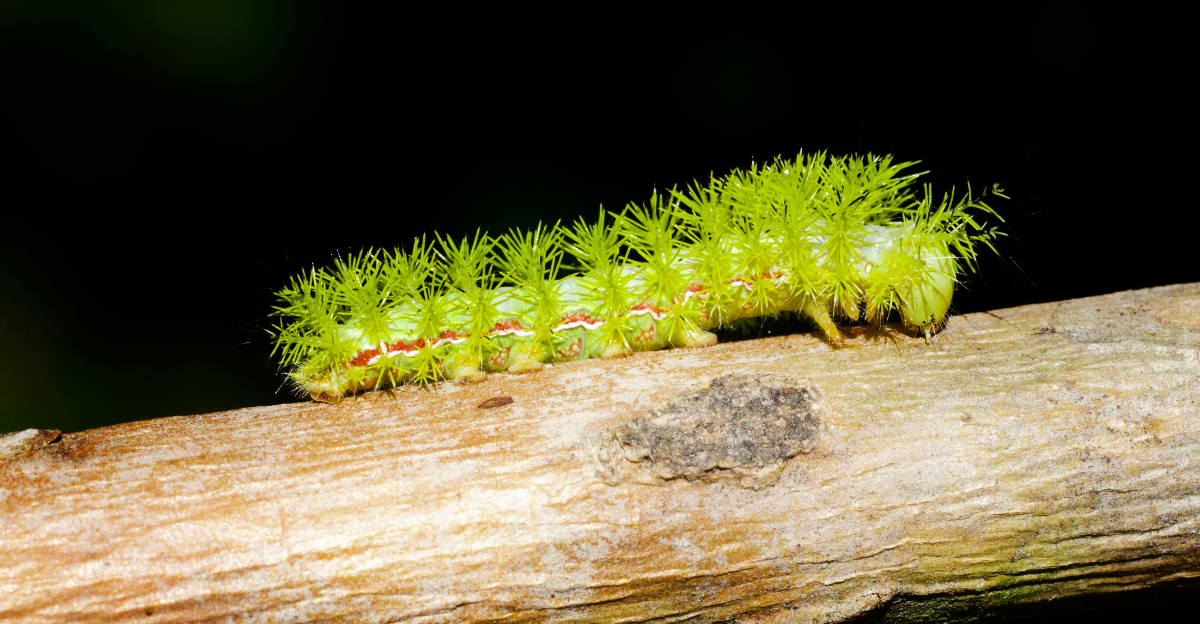
Bright green spines cover its body like a bold signal. Touching those spines can leave you uncomfortable quickly.
Massachusetts gardens host this creature more often than expected. Its sting can trigger swelling that lingers for hours. Some reactions bring nausea, redness, or tightened breathing.
Children across Massachusetts face the highest chance of contact. Pets exploring your garden rarely notice it in time. It remains active in Massachusetts gardens well into fall.
Late spring through early fall marks its busiest stretch. Every patch of foliage could be hiding another one. Nobody expects a caterpillar to cause this much reaction.
Recognizing it early could spare you real discomfort later. This caterpillar is a familiar sight in Massachusetts gardens each year.
Ignoring this bright green surprise in your garden could leave you with more discomfort than you expect.
Identifying The Io Moth Caterpillar
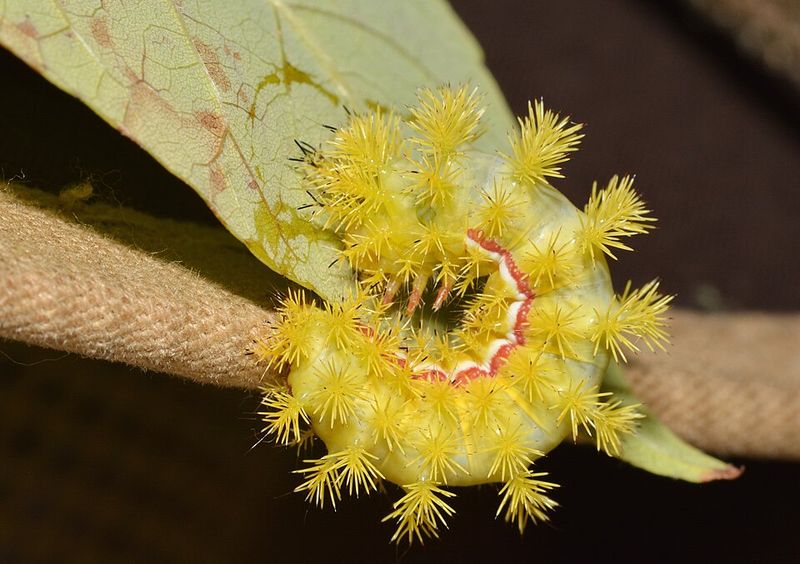
Bright green and covered in spiky clusters, the Io moth caterpillar stands out immediately among the leaves. Its body is lime green, plump, and lined with tufts of sharp, branching spines that catch the light. Those spines are not decorative.
They form the caterpillar’s defense system, and they mean serious business. Along each side, you will notice a thin stripe running from head to tail. That stripe is usually red on top and white along the bottom edge.
This color combination works as a natural warning sign, much like the markings found on other stinging insects. The caterpillar can grow past two inches long as it matures.
Young caterpillars start out lighter in color and darken as they age. Spotting one early gives you a real advantage before contact happens. You might confuse it with other green caterpillars at first glance in the garden.
The key difference lies in those clustered, branching spines covering nearly every inch of its body. No other common garden caterpillar found in Massachusetts looks quite like this distinctive creature.
Bright green caterpillars hiding in Massachusetts gardens often go unnoticed until someone reaches in to move a branch.
Knowing what the Io moth caterpillar looks like before you encounter it could save you a lot of unexpected pain. Keep your eyes open and your hands back.
Why It’s More Dangerous Than It Appears
Looks can be incredibly deceiving in the natural world. The Io moth caterpillar is a perfect example of something beautiful causing real harm.
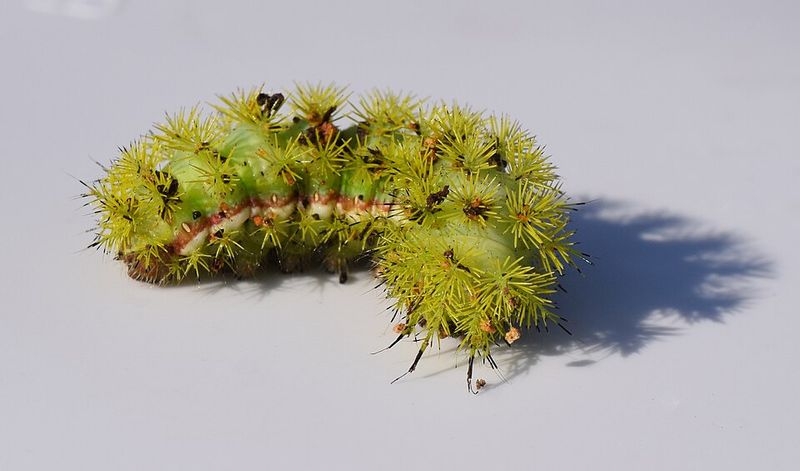
Those soft-looking spines are actually hollow and filled with venom. When you brush against them, the spines break off and embed in your skin.
The venom releases almost instantly upon contact. Pain follows within seconds, often described as a sharp burning or stinging sensation.
Some people experience swelling, redness, and a rash that spreads beyond the contact point. In rare cases, individuals with sensitivities may experience stronger reactions than usual.
Your Massachusetts Garden Changes Every Week. Your Plan Should Too.
Gardening in Massachusetts changes quickly throughout the season. Every Friday you’ll receive a simple weekly plan showing exactly what to plant, prune, fertilize, harvest, and protect so you never miss the right timing.
Anyone who feels chest tightness or difficulty breathing after contact should seek medical attention right away. Children are especially at risk because they tend to pick up interesting-looking things without hesitation.
A caterpillar this colorful is almost irresistible to a curious kid. Teaching them to look without touching is a lesson worth repeating every season. The caterpillar does not chase or provoke anyone nearby.
It simply sits on a leaf, minding its own business quietly. But passive does not mean harmless in this case.
Bright green caterpillars found in Massachusetts gardens may look like harmless garden visitors at first. This one carries a sting that can cause noticeable discomfort. Respect the spines and keep a safe, sensible distance.
Common Hiding Spots In Your Garden
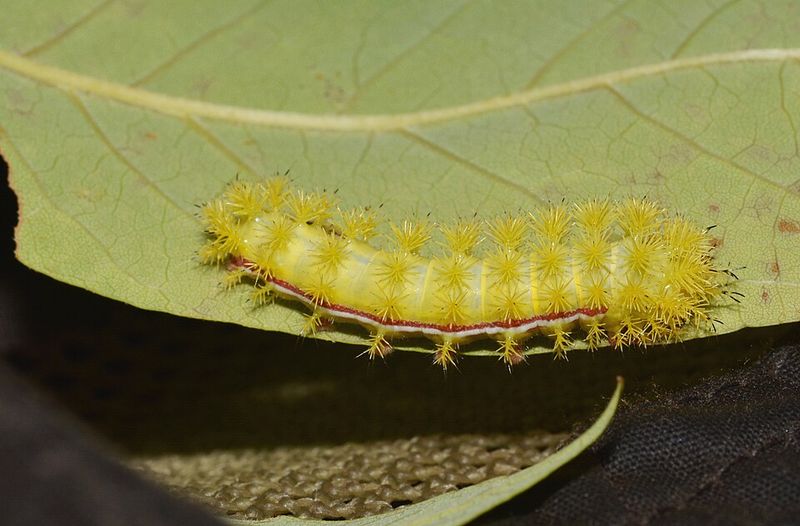
Finding this caterpillar is both easier and harder than you might expect. It blends into green foliage surprisingly well despite its bright color. Gardens with dense shrubs or leafy trees are prime territory for sightings.
Oak trees remain a favorite host plant for the Io moth caterpillar. Willows, maples, and roses also attract them on a regular basis.
If you have any of these plants growing in your yard, check leaf undersides often. The caterpillar tends to feed along leaf edges, leaving behind ragged, chewed margins as evidence. Following that damage is often the fastest way to locate one nearby.
Trace the chewing, and you will find the culprit nearby. Roses are a particularly sneaky hiding spot because gardeners often reach in without looking closely first.
Thorns already make rose pruning a careful task solo. Adding a stinging caterpillar to that mix makes wearing thick gloves non-negotiable.
Vegetable gardens can also host them, especially near corn, beans, and other broad-leafed plants.
Checking your garden in the early morning, when caterpillars are most active and visible, gives you the best chance of spotting them before contact happens.
A quick scan before you start weeding or pruning could protect your hands from an unpleasant, painful surprise. Stay alert, move slowly, and check carefully before you grab anything green in your garden.
The Painful Sting And How To Treat It
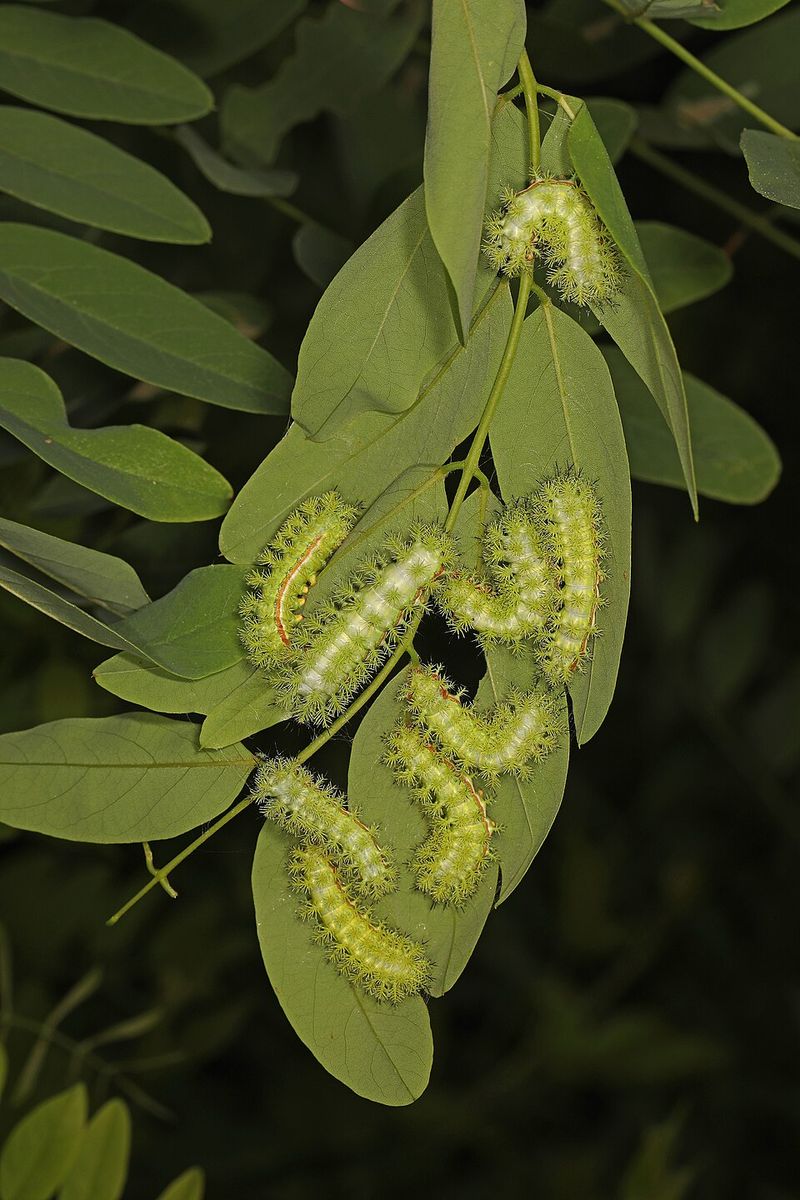
Getting stung by this caterpillar is not a subtle experience. The burning starts almost immediately after contact. Most people describe it as a combination of a bee sting and a bad rash all at once.
Your first move should be to remove any visible spines from the skin. Use tape, like scotch or packing tape, and press it gently over the affected area. Peel it off slowly to lift the spines out without pushing them deeper.
Avoid rubbing the area at all costs. Rubbing breaks the spines further and spreads the venom across more skin. Patience during this step makes a noticeable difference in how quickly the pain fades.
After removing the spines, wash the area with soap and water. Applying hydrocortisone cream or calamine lotion can help reduce itching and inflammation. An oral antihistamine may also ease the reaction if swelling develops.
Ice wrapped in a cloth can bring down swelling and numb the area temporarily. Most reactions resolve within a few hours to a couple of days.
However, anyone showing signs of a severe allergic response needs medical care immediately.
Knowing how to treat a sting from bright green caterpillars found in Massachusetts gardens could make a stressful situation much more manageable. Stay calm, act quickly, and you will get through it fine.
Safe Ways To Remove It From Plants
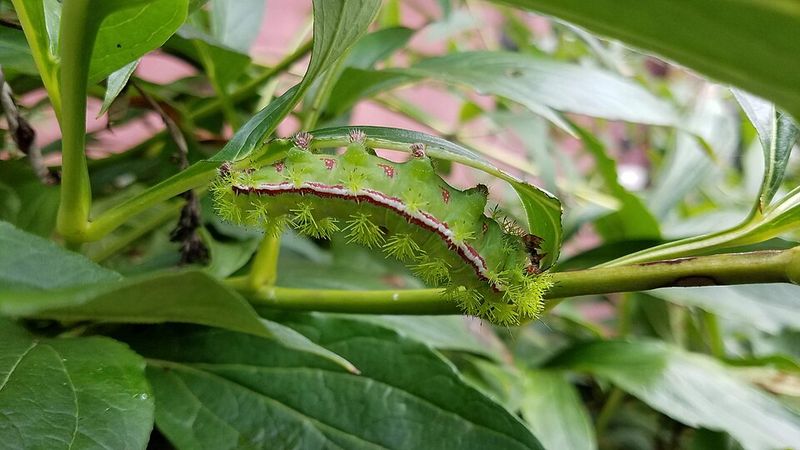
Removing this caterpillar does not have to be a dramatic event. The key is protection first, action second. Never attempt removal with bare hands, no matter how careful you think you are being.
Thick gardening gloves are a solid starting point, but leather gloves offer even better protection against the spines. The spines can push through thin fabric, so thicker material is always the safer choice. Pair gloves with long sleeves for full coverage.
Long kitchen tongs or tweezers work well for picking the caterpillar off a leaf without direct contact. Gently grasp the leaf it sits on rather than the caterpillar itself. This reduces the chance of agitating it and keeps you at a safe distance.
Once removed, place the caterpillar in a sealed container or jar. You can relocate it to a wooded area away from your garden.
Releasing it in a natural setting allows it to complete its life cycle without causing problems near your plants.
Some gardeners choose to use a stick to knock the caterpillar into a bucket of soapy water. This is effective but less ideal if you prefer a catch-and-release approach.
Whatever method you choose, always prioritize your own safety over speed. Removing bright green caterpillars from Massachusetts gardens is manageable with the right tools and a steady hand. Slow and careful wins every time.
Its Transformation Into A Moth
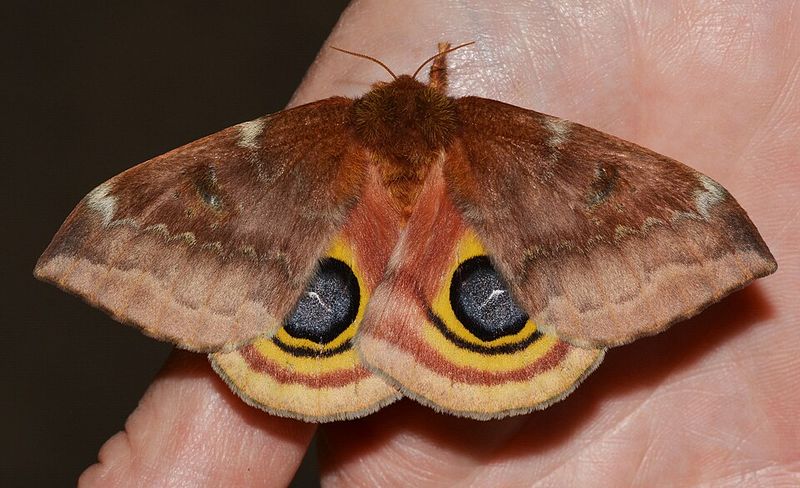
What comes after the caterpillar stage marks a notable change in appearance. The Io moth is one of the most striking moths found across North America.
Its wings are broad, vivid, and patterned with large eyespots that stop people in their tracks.
Male Io moths display bright yellow wings with bold blue and black eyespots near the center. Females tend toward a deeper reddish-brown color with the same dramatic eyespots. Both are stunning, and both are completely harmless as adults.
The caterpillar spins a papery cocoon among leaf litter or in loose soil. Inside, it pupates over several weeks before emerging as a fully formed moth.
The whole process is a remarkable shift from something sharp and defensive to something graceful and fleeting.
Adult Io moths are nocturnal and are often drawn to porch lights on warm summer nights. They do not feed as adults, living only long enough to mate and lay eggs. Their lifespan in adult form is brief, usually just a few days.
Seeing one land near your porch light is a distinctive sight after sharing your yard with it. The same creature that required caution as a caterpillar becomes a strikingly patterned visitor as a moth.
The bright green caterpillar in Massachusetts gardens is just one chapter in a truly fascinating story. The caterpillar’s life cycle is one example of nature’s variety.