This Fast-Growing Tree Is Spreading Across Indiana Yards
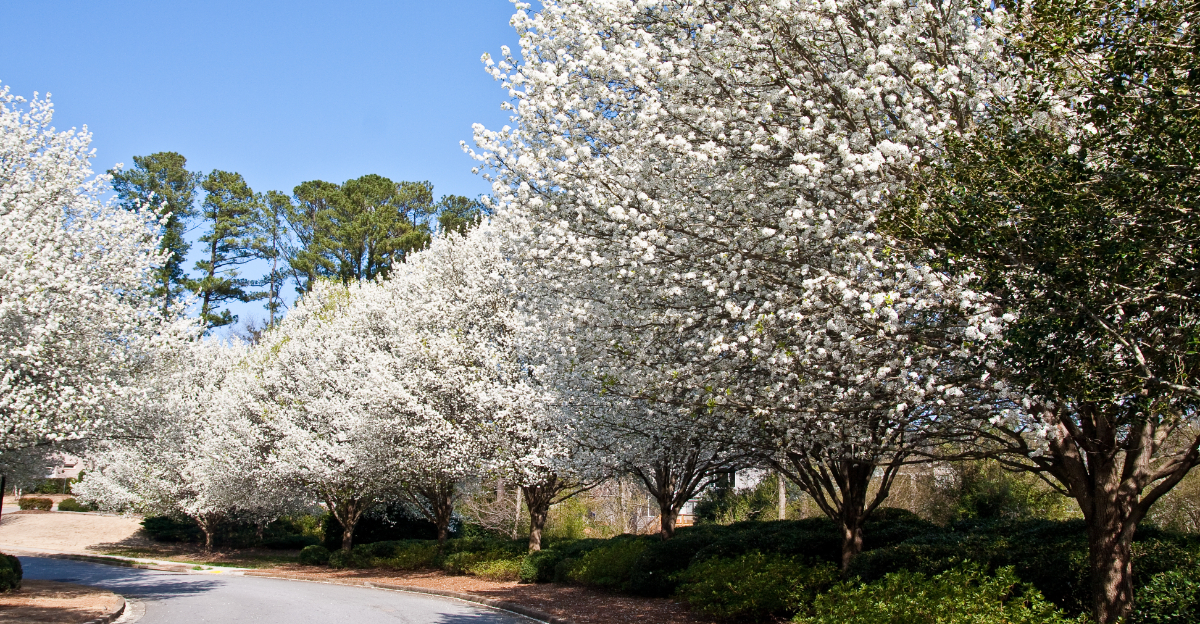
Every spring, Indiana neighborhoods get hijacked by something that looks almost too pretty to be a problem. White blooms, perfect shape, instant curb appeal.
Neighbors plant them on purpose. Developers order them by the dozen. Showy flowers, neat shape, low maintenance, what’s not to love? Turns out, quite a lot.
What looks like a dream tree is quietly becoming one of the biggest headaches for Indiana yards, natural areas, and local wildlife.
It spreads faster than most homeowners realize, crowds out native plants, and once it gets going, it is stubborn as anything. Experts have been sounding the alarm for years now, and the message is finally getting loud enough to hear.
If that tree is already in your yard or creeping in from a neighbor’s, this is the moment to pay attention.
The Pretty Spring Tree That’s Actually A Problem
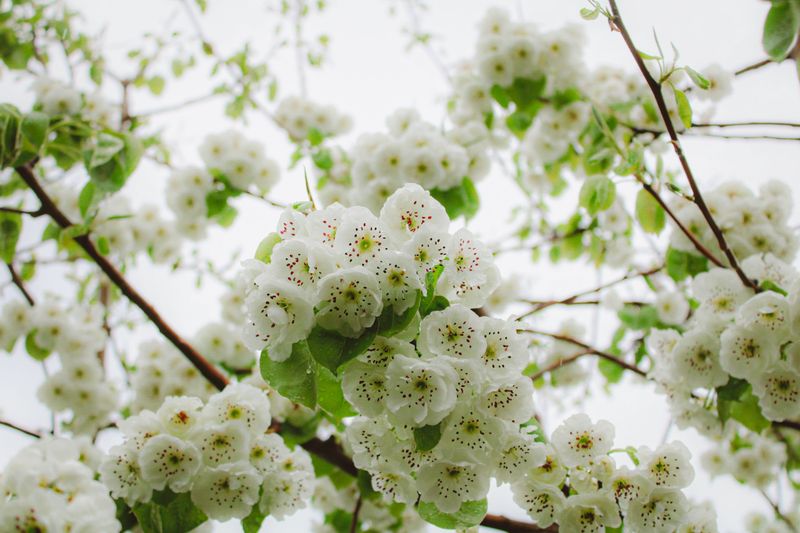
White flowers, perfect shape, low effort. The Bradford pear tree looks like a dream come true for any homeowner wanting instant curb appeal.
Planted widely across American suburbs since the 1960s, this fast-growing tree became a landscaping staple almost overnight. Nurseries loved selling it, and buyers loved planting it.
But beneath all that beauty is a serious problem quietly unfolding. Bradford pears rarely stay put, and they tend to disrupt native ecosystems wherever they spread.
Originally from China and Taiwan, the Callery pear was brought to the U.S. as an ornamental tree. Nobody expected it to escape yards and take over wild spaces the way it has.
Each spring, those gorgeous white blooms produce thousands of tiny seeds. Birds eat the fruit, fly off, and drop seeds into fields, roadsides, and forest edges.
Within a few years, dense thickets crowd out native wildflowers and shrubs. The tree spreads so aggressively that Indiana officials have taken serious notice.
Homeowners often feel blindsided when they learn the truth. That cheerful tree they planted a decade ago has been quietly causing damage the whole time.
Understanding what this tree actually is marks the first step toward making smarter choices. Once you see the full picture, those white blooms never look quite the same again.
Why Indiana Experts Are Concerned About This Tree
Alarm bells are ringing. State ecologists, extension agents, and conservation groups are all saying the same thing about this fast-growing tree spreading across Indiana yards.
The Callery pear, which includes the Bradford variety, has been flagged as a species of concern by Indiana conservation experts for years. Experts have watched it march steadily across the state, and the spread shows no signs of slowing down.
Native plants cannot compete with its aggressive growth rate. A Bradford pear can grow up to two feet per year, shading out slower-growing native species before they get a chance.
Callery pear has been reported spreading across 38 states, with populations recorded throughout the eastern and midwestern U.S.
Indiana’s Department of Natural Resources has urged residents to stop planting it entirely. Some counties have gone further, offering removal assistance programs to help homeowners transition away from it.
Your Indiana Garden Changes Every Week. Your Plan Should Too.
Gardening in Indiana changes quickly throughout the season. Every Friday you’ll receive a simple weekly plan showing exactly what to plant, prune, fertilize, harvest, and protect so you never miss the right timing.
The concern is not just ecological. Thick roadside thickets created by escaped Bradford pears reduce visibility for drivers and crowd out grasses that stabilize soil.
Local farmers have reported the tree invading pastures and fence lines, making land management far more difficult. Once established, removing mature trees requires serious effort and cost.
Experts stress that individual homeowners have real power to help slow this spread. Choosing not to plant or replace Bradford pears makes a measurable difference at the neighborhood level.
Spot It Before It Spreads
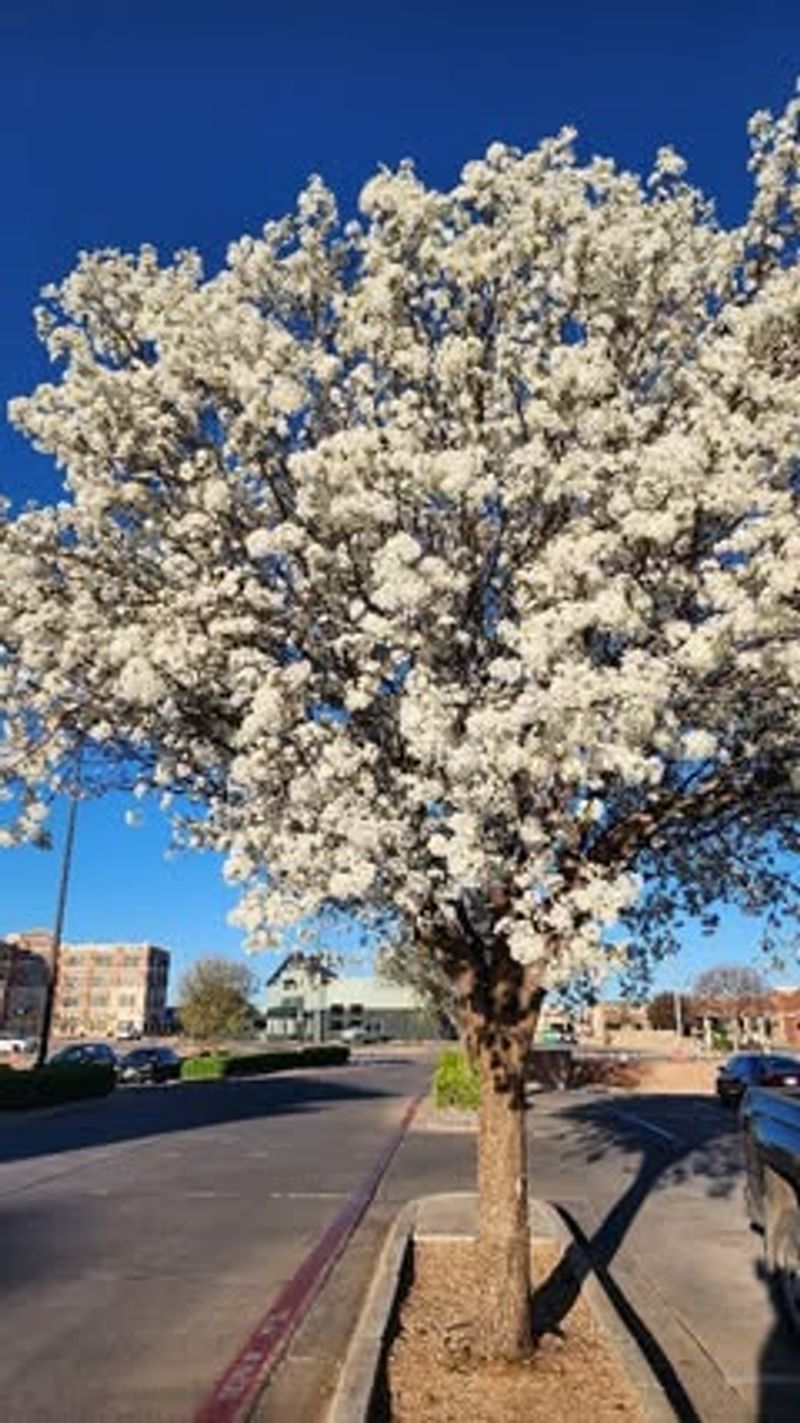
Spotting this tree is easier than you might think. Once you know what to look for, you will start noticing it absolutely everywhere during spring.
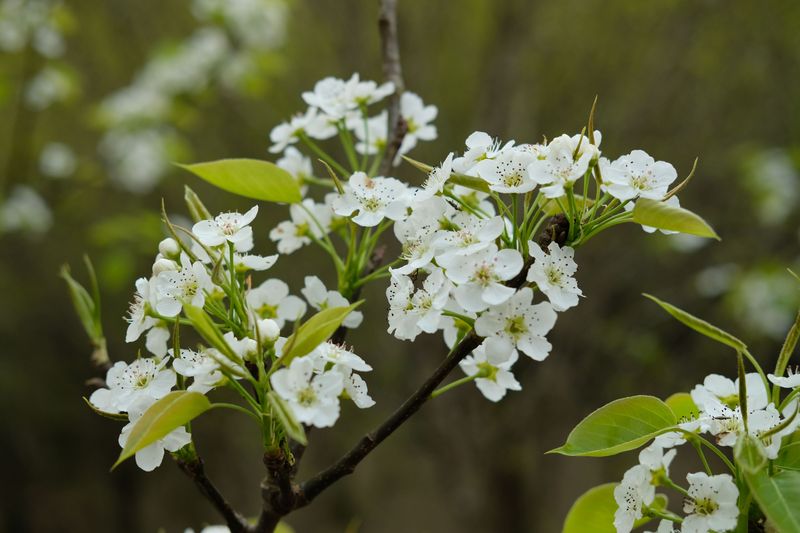
Bradford pears bloom in early spring, usually before most other trees leaf out. That timing makes them stand out dramatically against bare brown branches in the landscape.
The flowers are small, white, and have five petals arranged in clusters. Up close, many people notice the blooms carry a faint, unpleasant smell similar to rotting fish.
Leaves are glossy, dark green, and roughly oval with slightly wavy edges. In autumn, the foliage turns brilliant shades of red, orange, and purple, making identification possible year-round.
The tree has a classic symmetrical, teardrop shape when young. Older trees often split dramatically at the crotch due to weak branch structure, a known engineering flaw in the variety.
Wild escapees growing along roadsides or field edges tend to look scraggier. They often develop thorns, unlike the cultivated Bradford variety sold at nurseries.
Fruit appears in late summer as small, hard, round berries about the size of a marble. They start green and turn brownish-purple as they ripen in fall.
If you see a cluster of white-blooming trees along a highway or at a forest edge, chances are strong you are looking at escaped Callery pears. They travel fast and far.
The Ways It Invades Your Yard
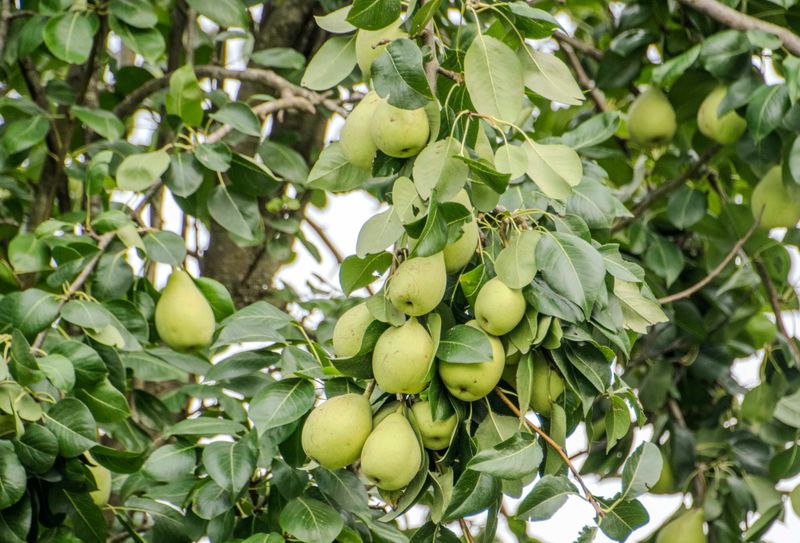
Birds are the main culprits here, and they are remarkably efficient. A single flock of cedar waxwings can strip a Bradford pear and scatter seeds across a wide area in one afternoon.
The small fruits ripen after the first frost, which is exactly when migrating birds are hungry and on the move. Timing could not be worse from a containment standpoint.
Seeds pass through bird digestive systems intact and remain fully viable. Each one lands ready to germinate wherever a bird happens to perch or rest next.
Squirrels also carry the fruit and bury it, sometimes forgetting their stash entirely. Those forgotten caches sprout quietly in garden beds, hedgerows, and lawn edges the following spring.
Water movement spreads seeds too. Heavy rains wash fruit from trees into drainage ditches, streams, and low-lying areas where conditions are often perfect for germination.
Once a seedling establishes itself, it grows fast enough to be unrecognizable within a single season. A tiny sprout in spring can become a knee-high sapling by fall.
Homeowners often mistake young seedlings for desirable native trees. By the time the mistake gets noticed, the root system is already well established and harder to remove.
Having even one mature Bradford pear nearby essentially turns your yard into a seed-receiving zone. Wind, birds, and water keep delivering new recruits season after season without any help from you.
What Happens If You Leave It Alone
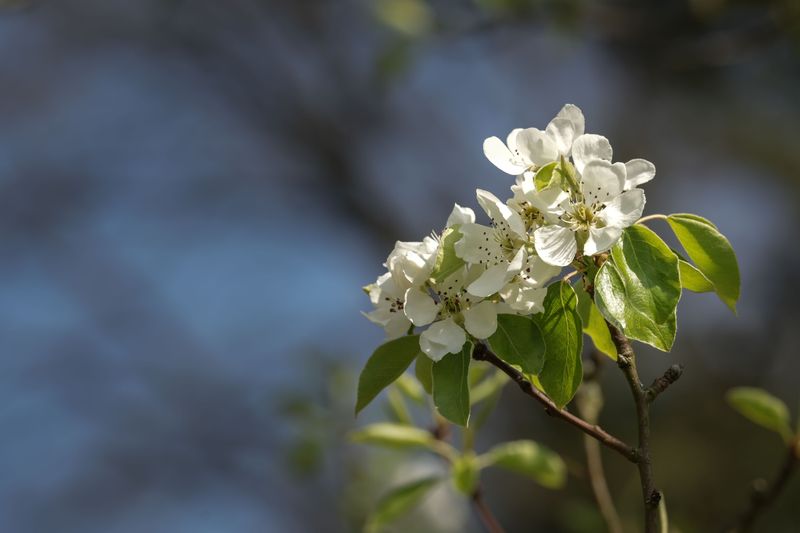
Neglect has consequences here. Leaving a Bradford pear unchecked sets off a slow chain reaction that reshapes the landscape around your property over time.
Within five years, a single tree can produce hundreds of offspring scattered across nearby land. Those offspring are often thornier and more aggressive than the original cultivated parent.
Wild Callery pear thickets grow dense enough to block sunlight from reaching the ground. Native wildflowers, grasses, and shrubs beneath them struggle to survive that level of shade.
Pollinators suffer too. Native bees and butterflies depend on specific native plants that disappear when invasive thickets take over their habitat.
Property values can be affected when invasive growth makes a yard look unkempt or difficult to manage. Overgrown fence lines and pasture edges become expensive problems to clear.
Structurally, Bradford pears are prone to catastrophic splitting as they age. Branches break off during ice storms and high winds, creating safety hazards and property damage.
Insurance claims related to fallen Bradford pear branches are surprisingly common across the Midwest. The tree’s weak crotch angles make it a liability waiting to happen in storm-prone regions.
The longer removal gets delayed, the costlier and more labor-intensive the process becomes. Addressing a young sapling takes five minutes with a shovel, but a mature tree requires professional help. Acting sooner protects both your yard and your wallet.
Better Trees To Plant In Its Place
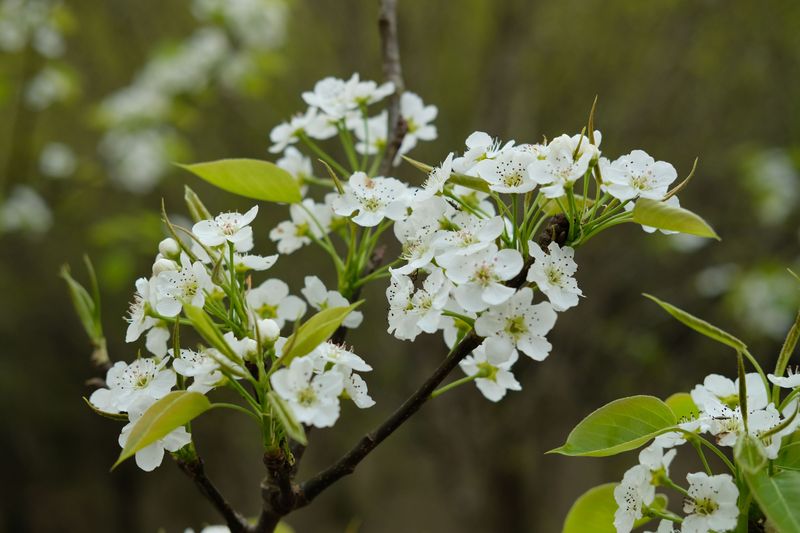
Good news exists here, and it is genuinely exciting. Indiana is home to some spectacular native trees that offer beauty, wildlife value, and structural strength far beyond what Bradford pears provide.
Serviceberry is often called the best swap for a Bradford pear. It blooms white in early spring, produces edible berries, and supports over 100 species of native caterpillars and moths.
Redbud trees offer a completely different spring display with brilliant pink-purple blooms. They stay compact, handle shade well, and attract native bees before most other flowering trees open up.
Eastern dogwood brings layered beauty across three seasons. White spring bracts, red fall berries, and rich burgundy autumn leaves make it one of the most rewarding trees a homeowner can plant.
For a larger shade tree, consider planting a native white oak or tulip poplar. Both grow impressively tall, live for centuries, and support hundreds of native insect species that birds depend on.
Hawthorns are another excellent option for yards with limited space. They bloom white in spring, produce fruit that wildlife loves, and require almost no maintenance once established.
Many Indiana nurseries now stock certified native trees and clearly label them. Some counties even offer free native trees to homeowners who show proof of removing a Callery pear from their property.
Swapping one fast-growing invasive for a thriving native tree creates ripple effects across the entire neighborhood ecosystem. Your yard becomes a refuge, not just a landscape.