This Georgia Lawn Pest Can Leave Brown Patches Almost Overnight
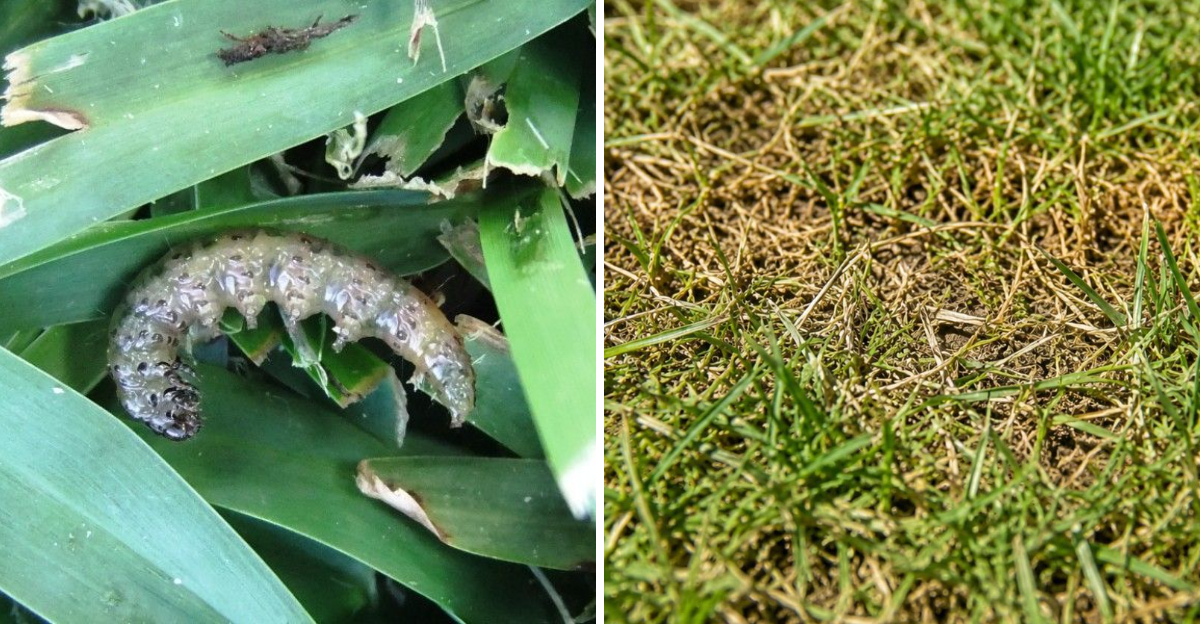
Brown patches that seem to appear out of nowhere can make a healthy lawn look completely different within days. When the change happens fast, something beneath the grass may deserve your attention.
One small lawn pest can feed so aggressively that damaged areas become noticeable surprisingly quickly. The grass may first look thirsty, making the real cause easy to miss.
During hot Georgia weather, these insects can stay active while lawns are already dealing with summer stress. That combination makes sudden discoloration especially frustrating for homeowners.
Take a closer look at the edges of each brown patch instead of immediately adding more water. The grass itself can provide important clues.
Catching the cause early gives you a better chance of limiting further damage.
Knowing what to look for can help you tell ordinary summer stress from an active lawn pest.
1. Sod Webworms Can Turn Healthy Grass Brown Fast
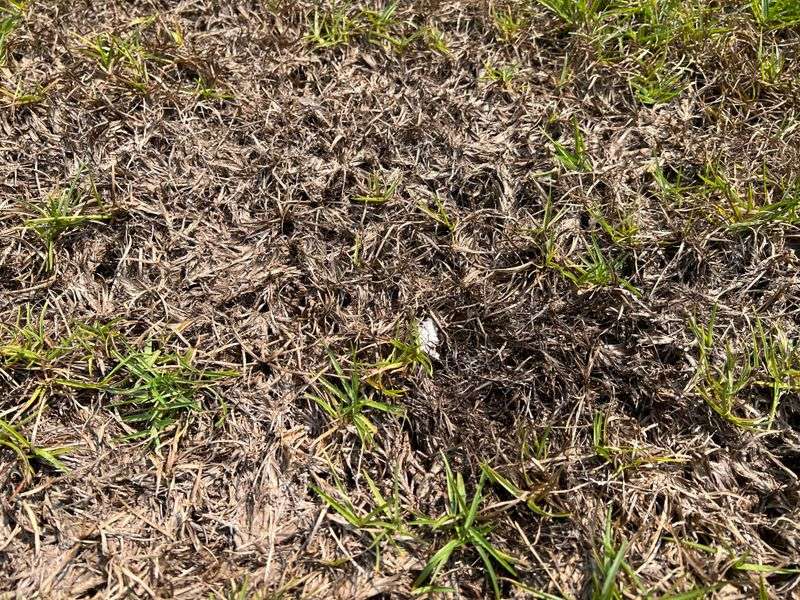
Patches of brown grass showing up overnight are one of the most frustrating sights for any homeowner. Sod webworms move fast, and under the right conditions, a small infestation can cause widespread turf damage within just a few days.
These pests are the larvae of small lawn moths. Adult moths do not feed on grass, but they lay eggs directly in the turf.
Once the eggs hatch, the caterpillars start feeding right away.
Warm-season grasses like bermuda and zoysia are commonly targeted. In Georgia, the hottest months of summer tend to bring the heaviest infestations.
Sod webworms chew grass blades down near the soil surface. Over time, the turf thins out and turns brown in irregular patches that can grow and merge together.
What makes this pest especially tricky is the speed. Damage that looks minor on Monday can look severe by Friday.
Catching an infestation early is the best way to protect your lawn.
Staying alert during late spring and summer gives you the best shot at spotting problems before they spread. Walking your lawn regularly and checking for unusual brown spots can help you act before damage gets too far along.
2. Early Feeding Damage Is Easy To Miss
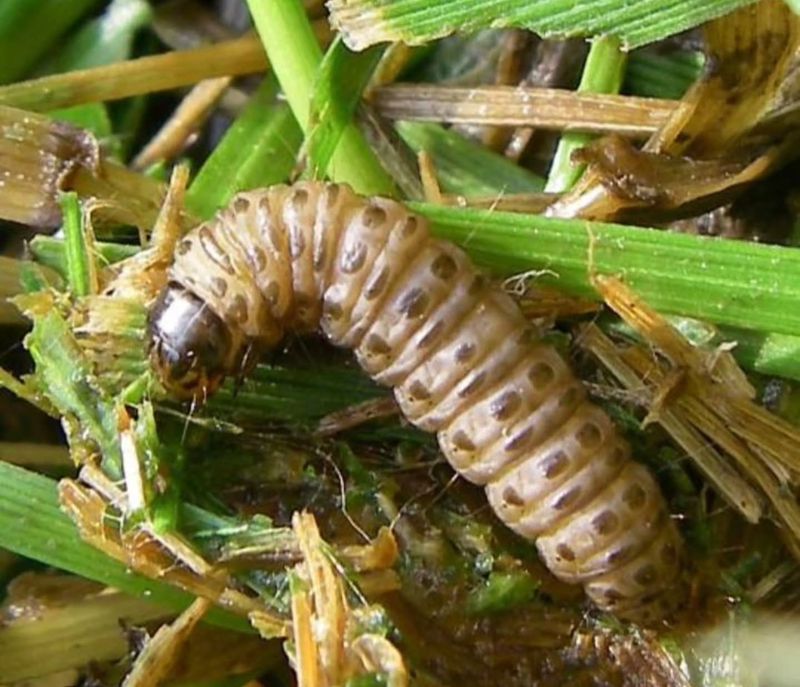
Sod webworm damage does not always start with obvious brown patches. Early feeding often shows up as slightly thin or pale grass that blends right in with the rest of the lawn.
Young caterpillars are tiny and feed lightly at first. The grass may look a little off, but nothing that screams pest problem right away.
Many homeowners mistake early damage for drought stress or a watering issue.
Checking the color and texture of your grass up close helps. Grass blades that look scraped or slightly transparent near the tips are often early signs of feeding activity.
Look for small green droppings called frass near the soil surface. Frass is a reliable indicator that caterpillars are actively feeding, even when you cannot see them.
Another early sign is increased bird activity on your lawn. Robins and starlings often peck at turf where caterpillars are present, giving you a natural clue that something is feeding below the surface.
Your Georgia Garden Changes Every Week. Your Plan Should Too.
Gardening in Georgia changes quickly throughout the season. Every Friday you’ll receive a simple weekly plan showing exactly what to plant, prune, fertilize, harvest, and protect so you never miss the right timing.
Catching the problem at this stage gives your lawn the best chance of bouncing back without major intervention.
A lawn that is healthy and well-watered can sometimes handle light feeding pressure better than one that is already stressed from heat or drought conditions.
3. Dry Sunny Areas Often Show The Worst Damage
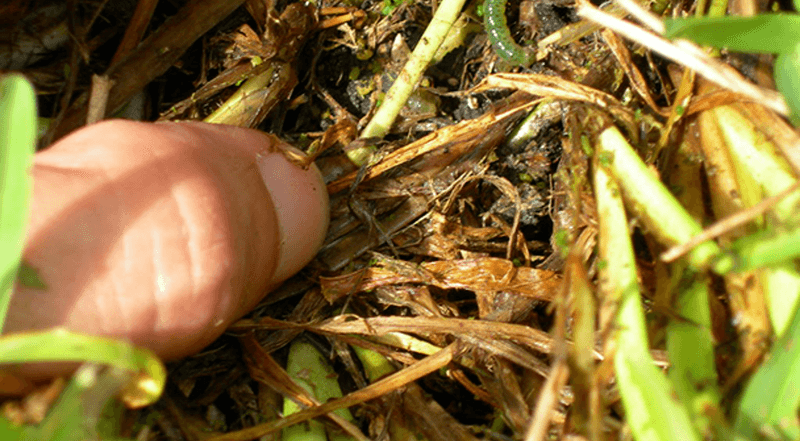
Not all parts of a lawn suffer equally. Open, sunny spots that dry out quickly tend to show sod webworm damage faster and more severely than shaded or well-irrigated areas.
Heat stress and pest pressure together are a tough combination for turf. Grass that is already struggling to hold moisture has less energy to recover from feeding damage, so the visible impact shows up faster.
South-facing slopes and areas near driveways or sidewalks often experience the most intense heat. These zones are worth checking first when you suspect a webworm problem in your lawn.
Irrigation habits play a role too. Deep, infrequent watering encourages deeper root growth, which can help grass handle surface-level feeding stress better than shallow daily watering.
In Georgia, summer temperatures regularly push turf to its limits.
Adding pest pressure on top of heat stress creates conditions where even moderate caterpillar populations can cause surprisingly fast damage.
Shaded areas under trees tend to stay cooler and retain more moisture.
Those sections often hold up better during an infestation, which can make the contrast between shaded and sunny lawn areas look dramatic when damage is at its peak.
4. A Soap Flush Can Reveal Caterpillars Hiding Below
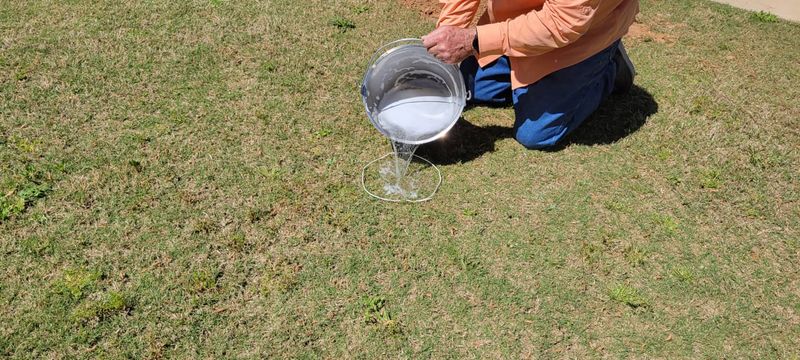
Suspecting webworms but not seeing them? A soap flush is one of the simplest and most reliable ways to confirm their presence without any special equipment.
Mix two tablespoons of plain dish soap into a gallon of water. Pour it slowly and evenly over a two-square-foot section of lawn where you suspect activity.
Wait about two to three minutes.
Caterpillars irritated by the soap solution will start moving to the surface. Count what you find.
Finding six or more caterpillars per square foot in a two-square-foot area is generally considered a threshold worth treating, though that number can vary depending on grass type and overall turf health.
Performing the flush in two or three different spots gives a more accurate picture of how widespread the infestation actually is. One spot might be light while another shows heavy activity just a few feet away.
Do the flush in the early morning or late afternoon for best results. Caterpillars tend to be closer to the surface during cooler parts of the day rather than during peak afternoon heat.
Soap flushes do not harm the grass or soil when used at this dilution. It is a practical first step before deciding whether treatment is necessary or if the population is still at a manageable level.
5. Ragged Grass Blades Reveal Their Nighttime Feeding
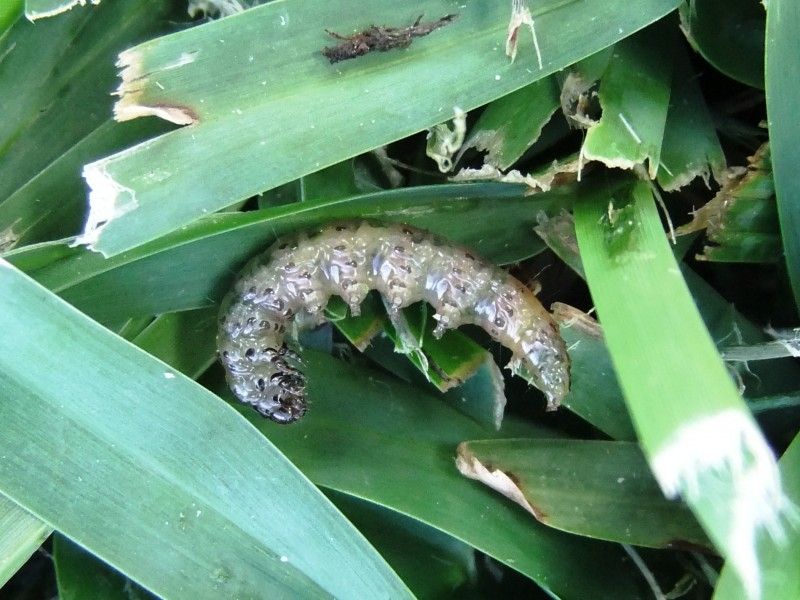
Sod webworms are nocturnal feeders. During the day they hide in the thatch layer, and once the sun goes down they come out to chew.
Ragged, uneven grass blade tips are a clear giveaway. Healthy grass has clean, even cuts from mowing.
Webworm feeding leaves behind jagged, torn edges that look nothing like a clean mow line.
Getting down close to the turf and looking at individual blades tells you a lot. Grab a handful of grass and examine the tips carefully.
Frayed or chewed ends point directly to caterpillar feeding activity.
Feeding tends to happen in concentrated areas rather than spreading evenly across the lawn. You might notice a patch where the grass looks shorter or thinner even though you have not mowed recently.
Going out at night with a flashlight is one of the most effective ways to spot active caterpillars. They are easier to find after dark when they are actively moving and feeding on the surface.
Warm, humid nights seem to increase feeding activity. In Georgia summers, those conditions show up regularly, which is part of why sod webworm damage can escalate so quickly once an infestation takes hold in your turf.
6. Small Yellow Patches Can Quickly Spread Together
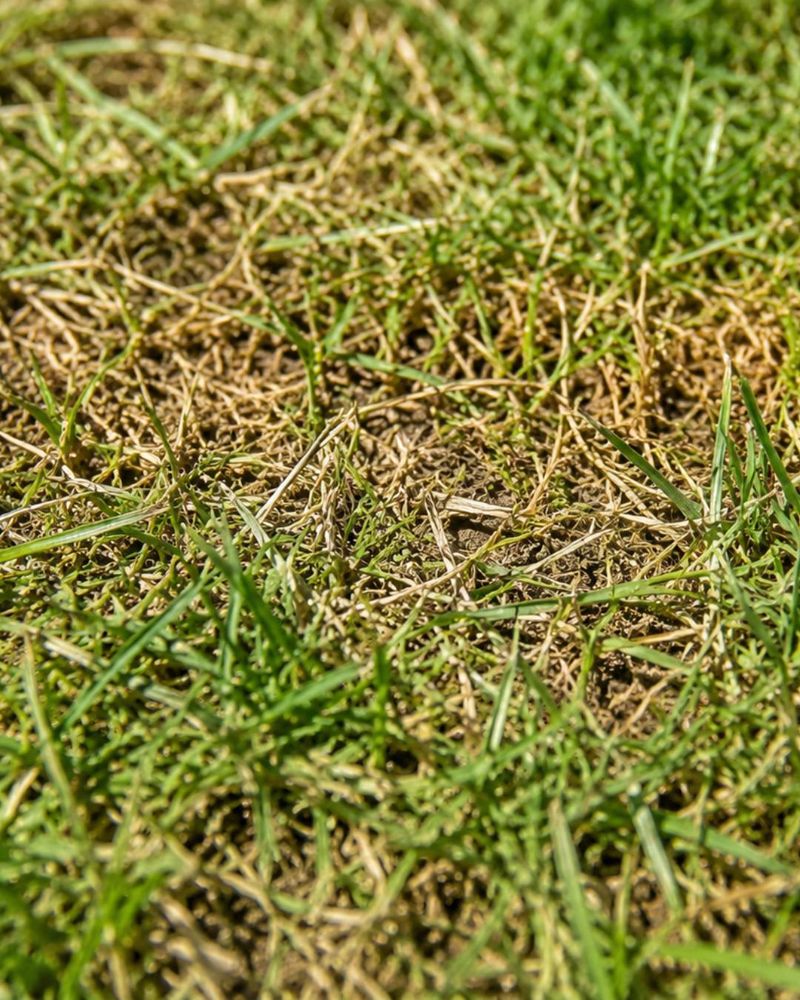
Yellow patches are often the first visible stage before turf turns fully brown. Sod webworms tend to start feeding in small concentrated spots, and those spots grow outward as the caterpillar population increases.
What starts as a few quarter-sized yellow areas can merge into large irregular sections over a week or two. Once patches connect, the damage looks much worse and becomes harder to reverse quickly.
Stressed turf is more vulnerable. Grass that is already dealing with heat, low moisture, or compacted soil tends to show webworm damage faster than turf that is in good shape going into summer.
Pay attention to how patches change from week to week. A single isolated yellow spot might be nothing serious.
But if new spots keep appearing nearby, that pattern suggests active feeding is spreading through the area.
Mowing height matters here too. Cutting grass too short removes the protective upper portion of the blade and makes it easier for caterpillars to feed closer to the crown.
Keeping your mowing height appropriate for your grass type adds a small layer of protection.
Acting when patches are still small and separate gives you more options. Once patches merge and turf is heavily thinned, recovery takes longer and requires more consistent follow-up care to restore the lawn.
7. Early Action Gives Damaged Turf A Better Chance To Recover
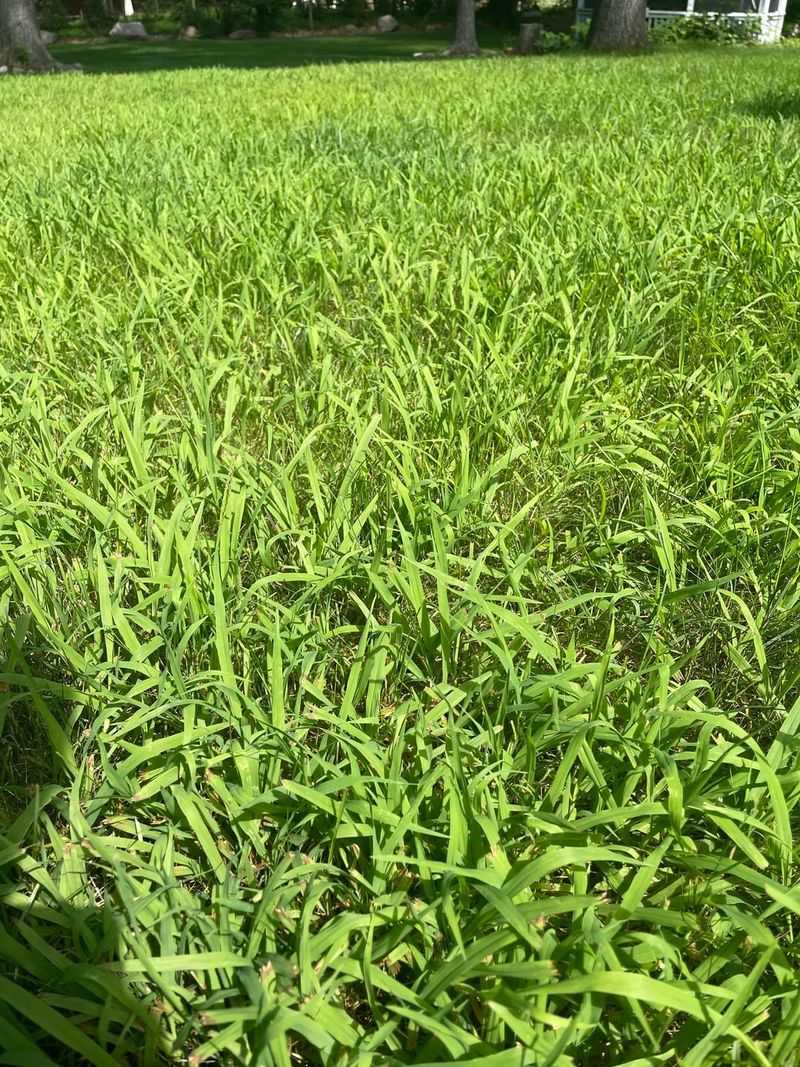
Acting quickly after spotting webworm damage gives your turf a much better shot at bouncing back before the end of the growing season. Waiting too long allows caterpillars to complete their feeding cycle and move deeper into the thatch.
Biological options like Bacillus thuringiensis, commonly called Bt, can be effective against young caterpillars. Bt is a naturally occurring bacterium that targets caterpillar larvae without posing significant risks to beneficial insects when applied as directed.
Timing matters with any treatment. Applying in the late afternoon or early evening targets caterpillars when they are most active near the surface.
Morning applications on wet grass tend to be less effective.
After treating, focus on recovery. Water consistently but avoid overwatering, which can create other problems.
A light fertilizer application, appropriate for your grass type and the season, can support new growth as the turf fills back in.
Avoid heavy foot traffic on recovering areas. Thin or stressed turf is more sensitive, and giving it space to regrow without extra pressure helps it come back faster.
Georgia summers are long enough that lawns treated in mid-summer can often show solid recovery before cooler fall temperatures arrive.
Consistent follow-up care over several weeks gives recovering turf the best environment to thicken back up and fill in damaged areas.