This Glowing Orange Mushroom Popping Up In Michigan Yards Looks Edible But Isn’t
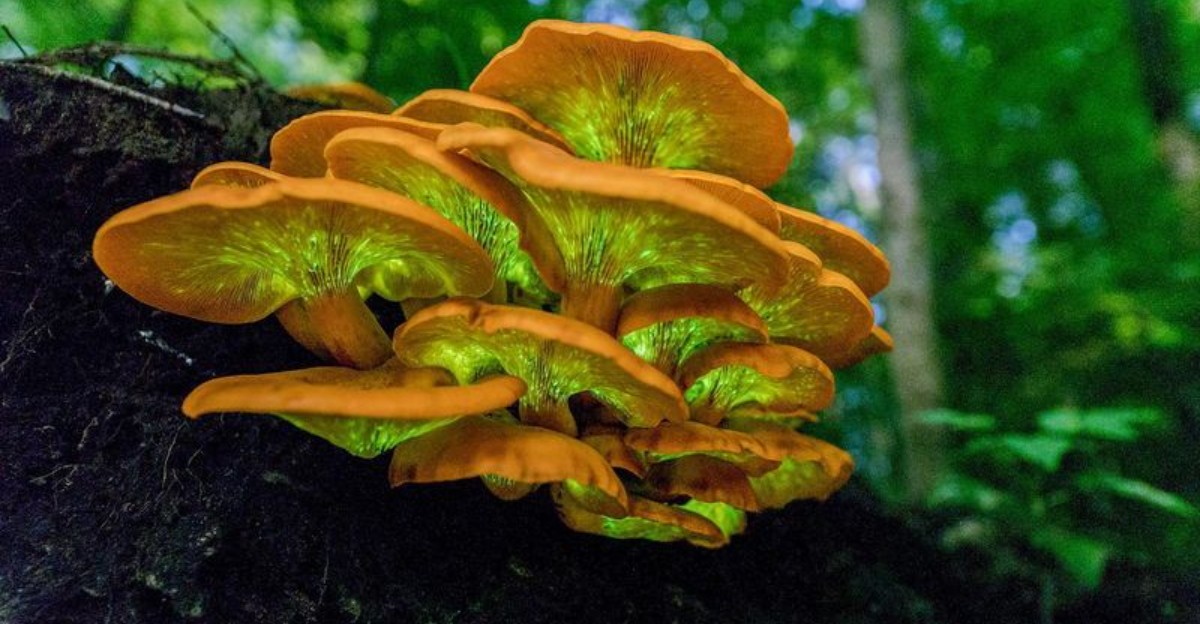
A cluster of bright orange mushrooms at the base of a stump can look like a lucky find. To the untrained eye, they resemble chanterelles, a prized edible. That resemblance is the trouble.
This lookalike grows in tight bunches on wood, often near buried roots, while true chanterelles grow singly from the soil. The underside gives it away. Real chanterelles have blunt, forked ridges, but this mushroom has sharp, true gills.
Eating it causes severe stomach illness, with cramps and vomiting. Odder still, the gills are said to glow faintly green in total darkness. Michigan’s damp fall weather brings these mushrooms out in force.
Never eat any wild mushroom without expert confirmation, and keep children and pets away from them. Knowing the differences helps you admire it safely.
1. Meet The Jack-O’-Lantern Mushroom
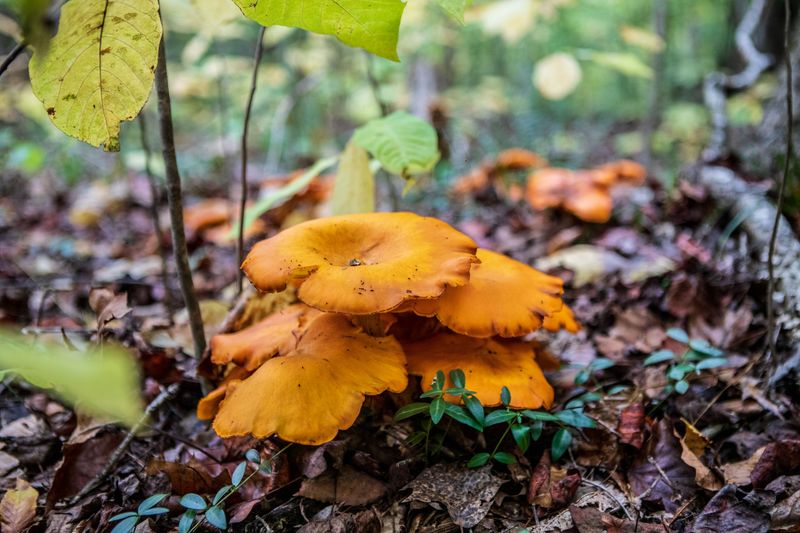
Walk outside on a crisp October morning, and you might spot what looks like a pile of tiny pumpkins sitting at the foot of a tree.
That bold orange cluster is the jack-o’-lantern mushroom, known to scientists as Omphalotus illudens. Once you notice it, you will start seeing it everywhere.
Size is a big part of its charm. Each smooth cap can stretch several inches across, and dozens of them often crowd together in one tight bunch. The color is so bright that it almost seems to shine against green grass or brown fallen leaves.
Look closely at where the bunch is growing. You will usually find it on the ground near a tree, an old stump, or a spot where roots hide below the soil. Oaks are a favorite, though other hardwoods can host it too.
Young caps start out rounded and gently curved. As the mushrooms get older, the edges often turn upward, making each cap look a bit like a shallow funnel or bowl.
The stems are sturdy and often fused together at the base, which is why the whole group seems to grow as one.
Timing matters as well. In Michigan, these mushrooms tend to show up from late summer through fall, after warm days and good rain. That is right when many families are raking leaves, letting kids play outside, and walking dogs through the yard.
Learning its look is the first step toward handling it wisely. Snap a photo the next time you see an orange cluster, compare it to field guide pictures, and you will quickly build confidence in spotting this colorful fall visitor.
2. Pretty To Look At, Painful To Eat
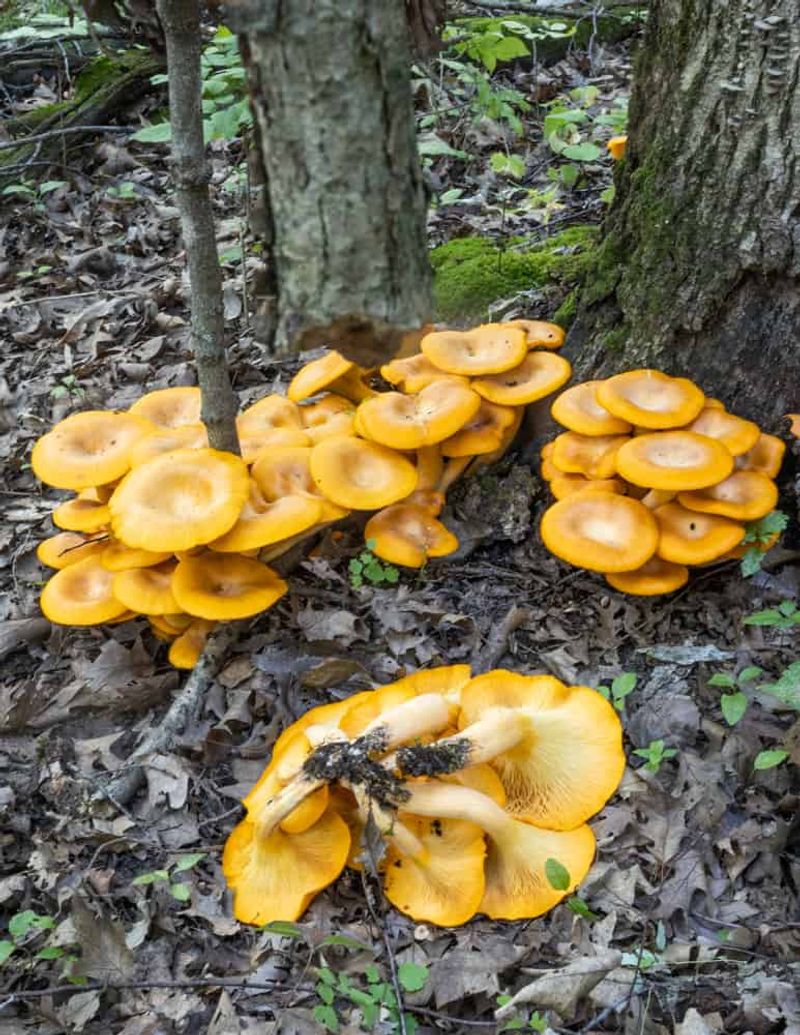
Plenty of people have gazed at that glossy orange cluster and thought it looked ready for a frying pan. Sadly, the jack-o’-lantern mushroom is poisonous, and eating even a small amount can turn a nice evening into a miserable night.
Toxins inside the mushroom upset the stomach in a big way. Symptoms usually start within a few hours and include strong cramps, vomiting, and diarrhea.
The good news is that it is rarely life-threatening, yet the sickness can be rough enough that some people need medical care to recover.
Your Michigan Garden Changes Every Week. Your Plan Should Too.
Gardening in Michigan changes quickly throughout the season. Every Friday you’ll receive a simple weekly plan showing exactly what to plant, prune, fertilize, harvest, and protect so you never miss the right timing.
So what is the safest rule? Never eat any wild mushroom unless an expert has identified it in person. Photos, apps, and guesses are not enough, because many mushrooms look alike at first glance.
Accidents can still happen, so keep a key number handy. If someone eats a jack-o’-lantern or any unknown mushroom, call Poison Help right away. Trained specialists answer around the clock and can tell you exactly what to do next.
Pets need fast help too. Dogs love to sniff and chew things in the yard, and an orange mushroom can grab their attention.
If your pet eats one, contact your veterinarian immediately, and if possible, bring a piece of the mushroom or a clear photo along. Michigan has a strong foraging culture, and that is wonderful.
Still, every fall, some hopeful hunters mix this mushroom up with tasty kinds and end up sick. Saving the Poison Help number in your phone today takes ten seconds and could make a real difference later.
3. The Chanterelle Look-Alike Trap
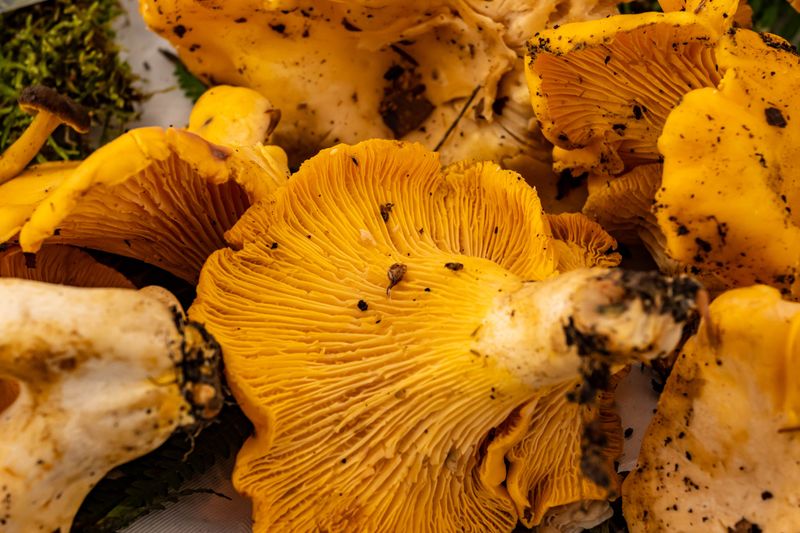
Ask any Michigan mushroom hunter about mix-ups, and chanterelles will come up fast. These golden treasures are prized in kitchens, and they happen to share a warm orange color with the jack-o’-lantern.
Both also show up in summer and fall, which makes confusion easy. Growth habits offer the first big clue.
Jack-o’-lanterns grow in tight clusters, often with stems joined at the base, rising from wood or buried roots. Chanterelles usually pop up one at a time or scattered loosely across the soil. Next, flip the mushroom over and check the underside.
A jack-o’-lantern has true gills, which are thin, sharp-edged blades packed closely together. Chanterelles have blunt, rounded ridges that fork and run down the stem, looking more like wrinkles than knife edges.
Even with these tips, mistakes still happen. Lighting, age, and weather can change how a mushroom looks, and a quick glance in the woods is not the same as a careful check. If you feel even a little unsure, leave it uneaten.
Here is a smarter path for curious cooks. Join a local mushroom club, such as the Michigan Mushroom Hunters Club, and bring your finds to experienced members. Many groups host walks and identification sessions where beginners learn hands-on.
Chanterelle season draws crowds into Michigan forests every year, and that excitement sometimes leads people to rush.
Slow down, study each find, and get an expert opinion before anything goes in the pan. Your stomach will thank you, and you will grow into a much sharper forager along the way.
4. A Spooky Green Glow After Dark
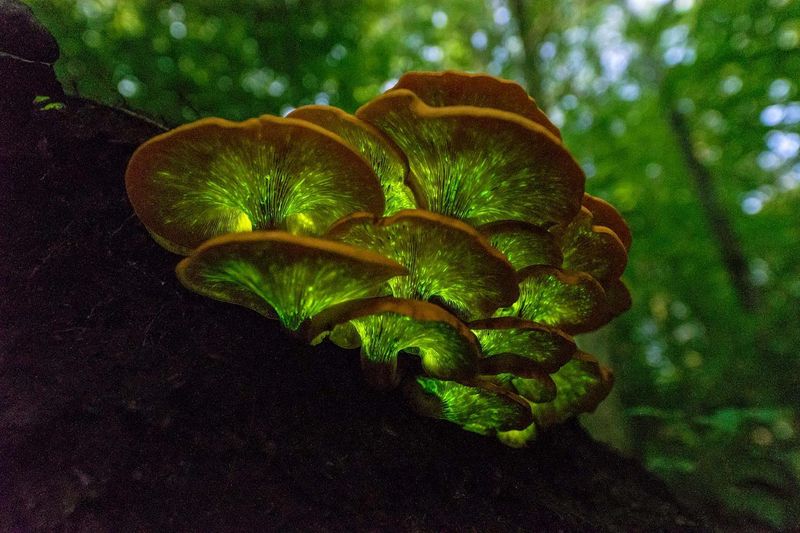
Turn off the lights, wait a few minutes, and something magical might happen. Fresh jack-o’-lantern mushrooms can give off a faint greenish glow from their gills. Scientists call this bioluminescence, the same kind of natural light that fireflies make.
Don’t expect a bright nightlight, though. The glow is soft and dim, and you will only notice it in complete darkness after your eyes have fully adjusted. Give yourself at least ten to fifteen minutes with no phone screens or lamps nearby.
Freshness makes a huge difference. Mushrooms picked the same day, or still growing in the yard, glow best. Older caps that have started to dry out usually lose their sparkle, so timing your experiment matters.
Want to try it at home? Wearing gloves, place a freshly cut mushroom on a plate in a windowless room or closet, then sit quietly in the dark. Outdoors works too, as long as you are far from porch lights and streetlamps.
Remember to wash your hands and toss the mushroom afterward. That eerie light helped give the mushroom its playful name. Like a carved pumpkin with a candle inside, it seems to shine on its own, and its orange color only adds to the effect.
Michigan families often find these clusters right around Halloween, which makes the story even better.
A backyard glow hunt can become a memorable science lesson for kids, as long as an adult handles the mushrooms and everyone understands they are for looking, never for tasting.
5. Hidden Wood Feeds The Show
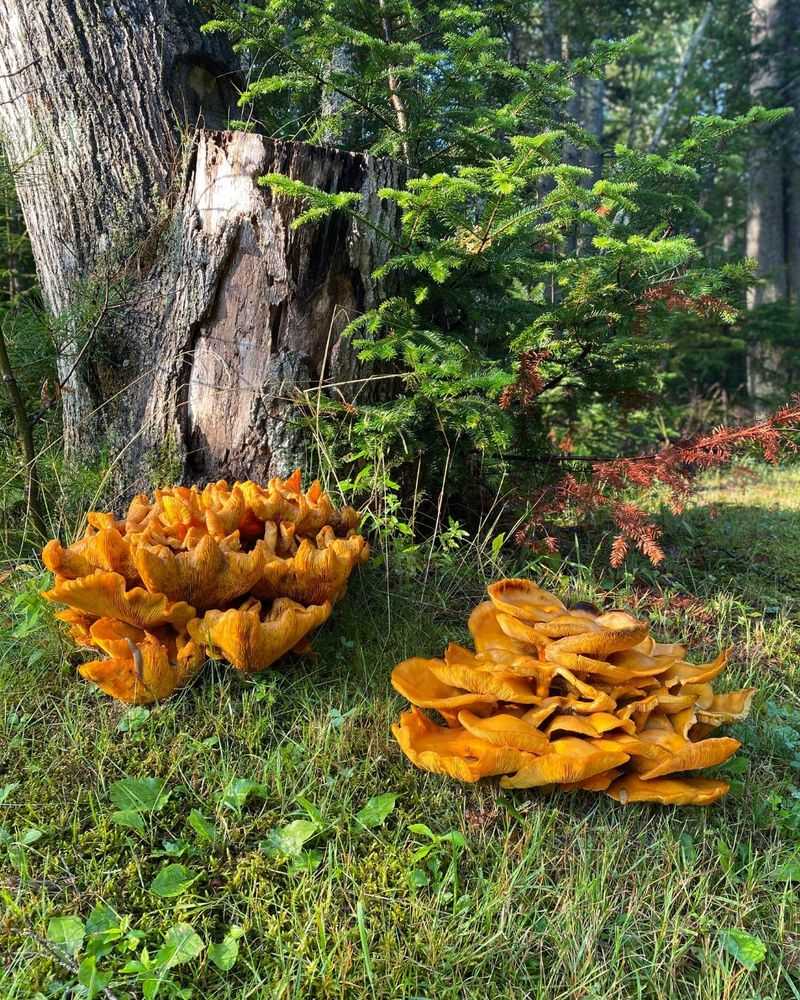
Underground, out of sight, a busy fungus is hard at work. The orange mushrooms you notice are only its fruiting bodies, a bit like apples on a tree. The real living fungus spreads through the soil as thin threads that feed on old wood.
Stumps, buried roots, and leftover chunks of timber are its favorite meals. That is why clusters often appear where a tree was cut down years ago, even if no stump remains above the grass. They also crop up around the base of standing trees.
Nature benefits from this quiet recycling. As the fungus breaks wood apart, it turns tough material into nutrients that enrich the soil. Without fungi like this one, forests and yards would be buried under old logs and roots.
Expect repeat visits. Because the food source sits in one place, mushrooms may return to the same spot each fall for several years. Once the wood is fully broken down, the clusters slowly stop appearing.
Living trees deserve a closer look, however. When mushrooms circle the trunk of a healthy-looking tree, they can signal decay in the roots. A certified arborist can inspect the tree and tell you whether it is still sturdy or might become a hazard.
Many Michigan neighborhoods are shaded by big, mature oaks, and plenty of yards hold old stumps from past storms or removals.
If orange clusters keep popping up near a large tree close to your house, booking an arborist visit is a smart, affordable way to protect your home and your family.
6. Good News For Your Grass And Garden
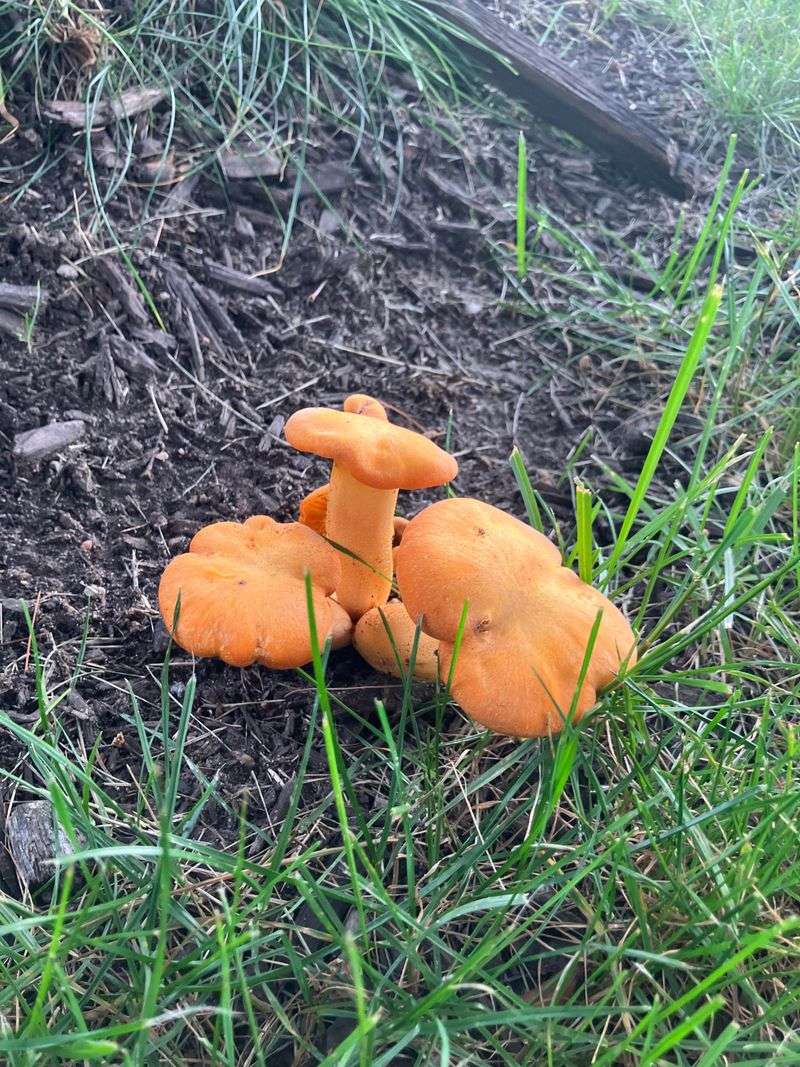
Relax, gardeners. Seeing a bright orange clump in the lawn does not mean your grass is sick. Jack-o’-lantern mushrooms are not a lawn disease, and they will not harm your turf, flowers, shrubs, or vegetables.
All that orange color simply points to old wood breaking down below. The fungus feeds on stumps and roots, not on living grass blades or garden plants. Over time, it actually returns useful nutrients to the soil, which can help nearby plants thrive.
So what should you do with them? You have choices. If no young kids or pets play in that part of the yard, leaving the mushrooms alone is perfectly fine.
They add a splash of fall color and give you a fun nature lesson right outside the door.
Removing them is fine too. Some people simply prefer a tidy lawn, or they want to avoid any risk near play spaces. Taking them out will not hurt the soil, though the fungus underground may send up new ones later.
Patience also works wonders. These mushrooms do not last long, usually fading and breaking down on their own within a week or two. Once colder weather settles in, they disappear until the next season.
Plenty of Michigan homeowners panic when they first see a cluster, worried about fungus spreading across the whole lawn.
Keep up your normal care instead, like mowing at a good height, watering wisely, and raking leaves. Your grass will stay green and strong while the mushrooms quietly do their recycling job.
7. Safe Cleanup When Kids Or Pets Play Nearby
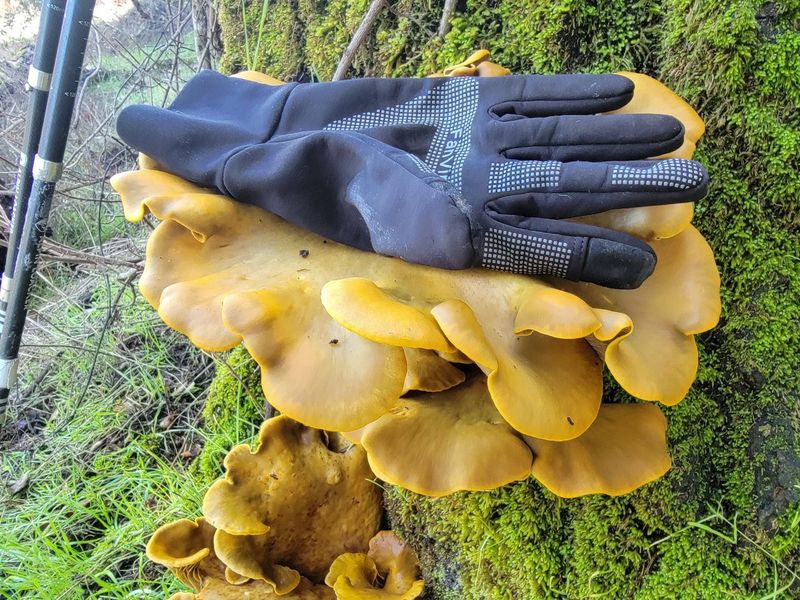
Toddlers and curious puppies share one habit: they put almost anything in their mouths. A shiny orange mushroom can look like a toy or a treat, which makes it a real worry in busy family yards.
Start by grabbing a pair of garden gloves. Pull the mushrooms out gently, or cut them right at the base with a small knife or trowel. Try to collect every piece, including broken bits that may have fallen into the grass.
Next, place everything into a plastic bag, tie it shut, and put it in the trash. Skip the compost pile, since pets might dig there and spores could spread back into your garden. Afterward, wash your hands well with soap and water, even if you wore gloves.
One cleanup is rarely the end of the story. Because the fungus keeps living underground, fresh clusters can pop up days later. Walk the yard every few days during fall, especially after rain, and remove new mushrooms while they are still small.
Teaching helps as much as pulling. Show older kids the mushrooms and explain a simple family rule: never touch or taste anything growing wild without asking an adult. For dogs, a leash during yard time in mushroom season makes supervision much easier.
Across Michigan, these orange clusters love to appear beside swing sets, sandboxes, and dog runs, often near shady trees.
A quick weekly check from September through November keeps those favorite play spots safe, so everyone can enjoy crunchy leaves and cool autumn air without a worry.