This Hidden Georgia Garden Turns Into A Stunning Fall Destination Every October
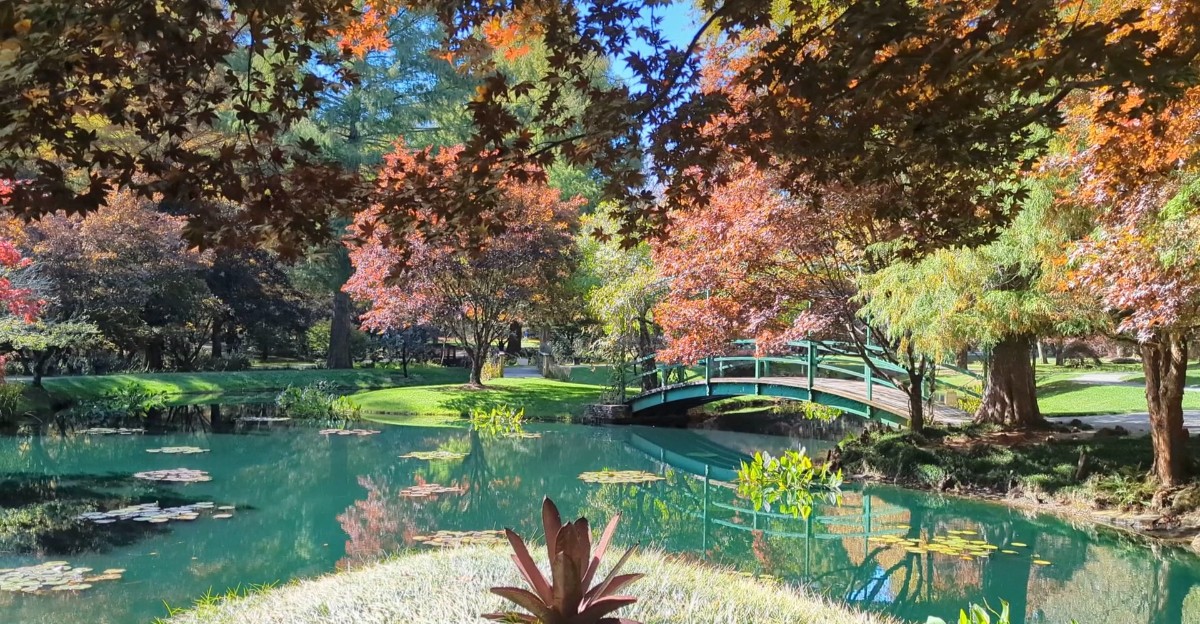
October brings a different kind of beauty to Gibbs Gardens, where changing leaves turn an already impressive landscape into a colorful fall escape.
Located in Ball Ground, Georgia, this destination offers much more than the usual neighborhood garden. Its wooded surroundings and carefully designed spaces give visitors plenty to explore.
Fall colors become especially appealing as cooler temperatures settle over the property.
Instead of rushing through, take time to enjoy how the seasonal colors frame the paths and water features. Different areas offer their own views as the foliage changes.
The experience depends on timing, since peak color can vary from year to year.
Plan your visit around current garden updates rather than assuming every October weekend looks the same. That little preparation can help you enjoy the scenery when the colors are at their best.
1. October Color Transforms This Garden Hidden In North Georgia
Quiet hills hide one of the best fall gardens in the Southeast. Gibbs Gardens sits in Ball Ground, Georgia, in the foothills north of Atlanta, and the drive takes roughly an hour depending on traffic.
Wooded slopes, spring-fed ponds, and winding paths spread across the property, so you get plenty of room to wander.
October is a season of change here. Early in the month, the gardens may still look mostly green, with only hints of red and yellow showing up along the edges.
As nights cool down, color usually builds week by week across the trees and shrubs.
Weather plays a big role in how this unfolds. A warm, dry stretch can slow the show, while cooler nights tend to bring out stronger reds and oranges.
Because of that, checking the garden website or social pages before your trip is a smart move, since staff often share updates on fall progress.
Plan for plenty of walking, since the paths cover hills and uneven ground in places. Comfortable shoes and a water bottle will make the day far more pleasant.
Mornings and late afternoons often bring softer light, which makes the colors glow and helps if you like taking photos.
Whatever day you pick, expect a mix of bold color and quiet, peaceful corners.
2. Thousands Of Japanese Maples Turn Brilliant Shades Of Red And Gold
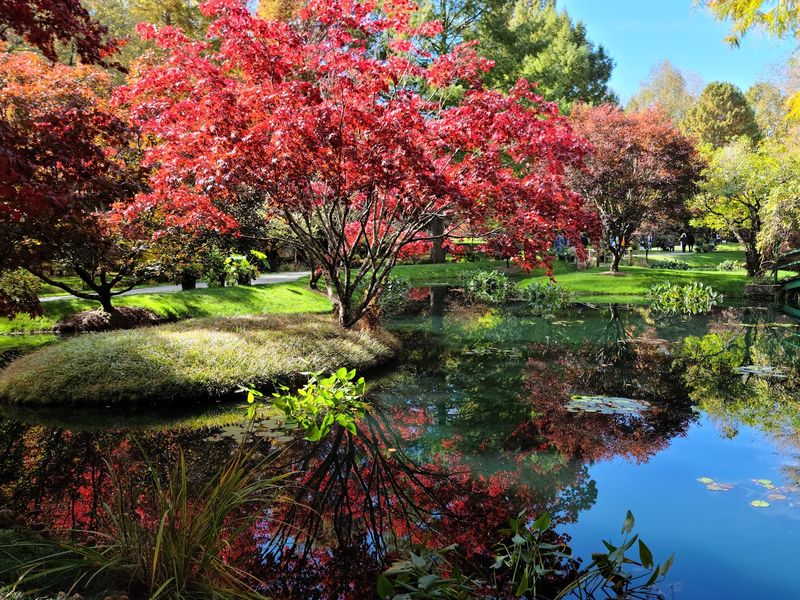
Red leaves glowing like stained glass are the big reason people visit in fall. Japanese maples are planted throughout Gibbs Gardens, and they are the star attraction once autumn settles in.
Each tree changes at its own pace, which keeps the scene shifting from one week to the next.
Generally, the strongest maple color in this part of Georgia develops from mid-October into November. Some trees peak early, while others hold onto green leaves much longer.
Variety matters a lot here.
Some maples turn deep crimson, while others shift to orange, yellow, or a soft gold. You may even see several shades on one tree as the leaves move through their change.
Weather can push the timing earlier or later in any given year.
A dry summer or an unusually warm fall can mute the colors a bit, and a sudden freeze can drop leaves fast. That is why late October visits are often a safer bet if maples are your main goal.
Your Georgia Garden Changes Every Week. Your Plan Should Too.
Gardening in Georgia changes quickly throughout the season. Every Friday you’ll receive a simple weekly plan showing exactly what to plant, prune, fertilize, harvest, and protect so you never miss the right timing.
Walk slowly when you reach these trees, and look up through the branches. Sunlight shining through thin maple leaves can make the colors look even brighter than they do from a distance.
Bring a camera, but also take a moment just to enjoy the view.
3. Ponds Bridges And Stone Lanterns Create A Striking Japanese Garden
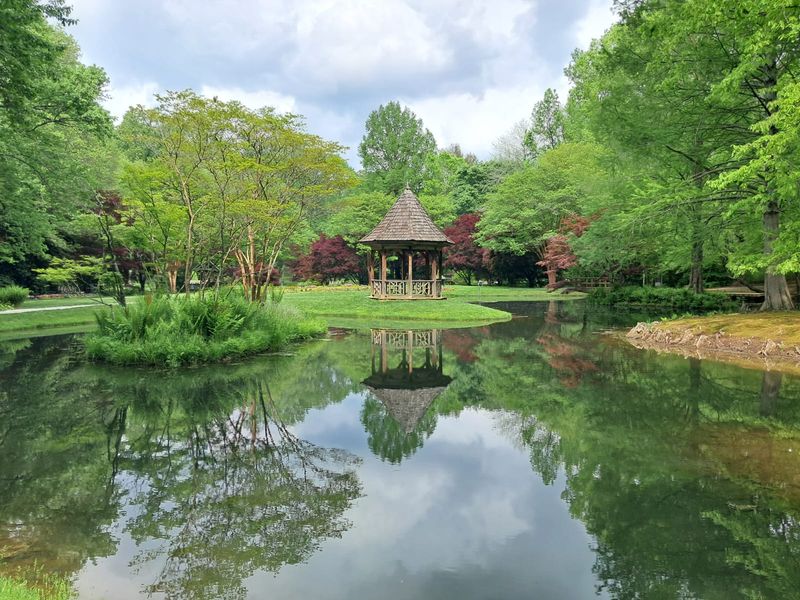
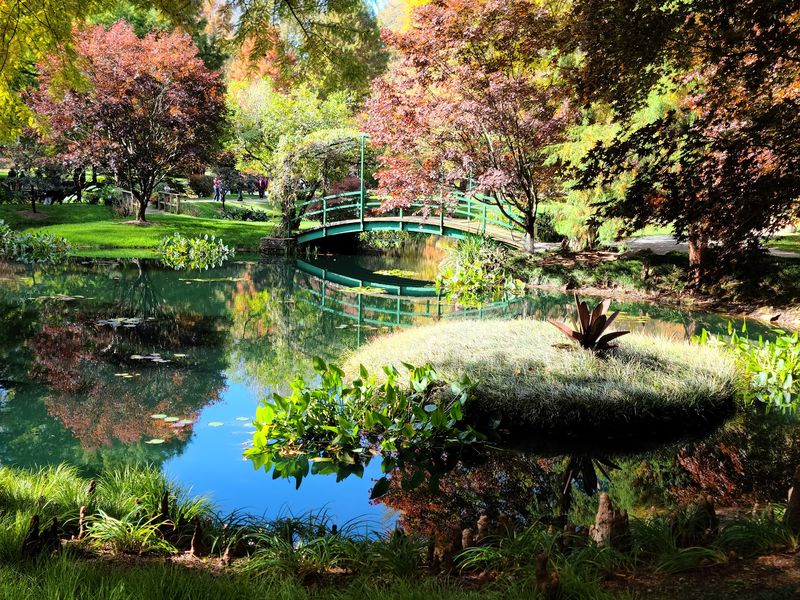
Still water changes everything. In the Japanese Gardens at Gibbs Gardens, calm ponds reflect the trees around them, so fall color shows up twice.
Bridges cross the water at different points, giving you new angles as you walk the loop.
Stone lanterns sit along the paths and near the water’s edge. Their gray, weathered look makes a nice contrast with bright maple leaves in October.
Islands, rocks, and carefully shaped plants add to the peaceful feel.
Here, the design invites you to slow down rather than rush. Pausing on a bridge or near a lantern lets you notice small details, like leaves floating on the surface or ripples from fish.
Photographers tend to love this area on calm days.
Wind can break up reflections, so a still morning often gives the clearest mirror effect on the ponds. Cloudy skies can also help, since soft light keeps colors rich without harsh shadows.
Color here depends heavily on the maples, so it may look stronger later in the month than earlier. Even before peak, the bridges, stones, and water make this one of the most striking spots in North Georgia.
Give yourself extra time in this section, since it is easy to linger.
4. Fall Wildflowers Fill The Meadow With Late Season Color
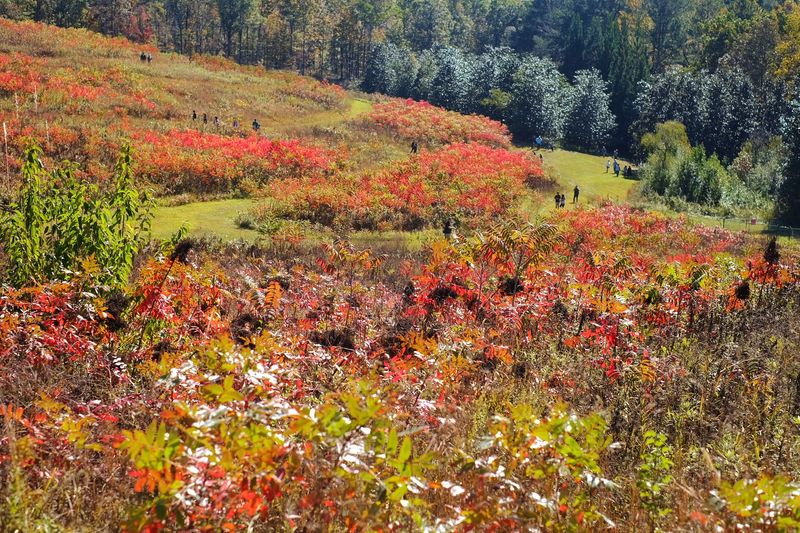
Not every fall highlight hangs from a tree branch. The wildflower meadow at Gibbs Gardens can offer a softer, more casual kind of autumn beauty.
Open sky and swaying blooms make it feel very different from the shaded Japanese Gardens.
Late season flowers may still be going in October, adding pops of color among grasses and seed heads. What you see can change from year to year, since meadows shift with rain, heat, and timing.
Earlier in the month often brings more blooms than the last week of October.
As flowers fade, seed heads and tawny grasses take over. That golden, textured look has its own charm, especially in warm afternoon light.
Pollinators may still visit on mild, sunny days.
Bees and butterflies sometimes work the remaining flowers before cooler weather settles in for good across Georgia. Watching them from the path is a nice way to slow down between the bigger garden areas.
Home gardeners can pick up ideas here too, since a meadow shows how a planting can stay interesting even as blooms wind down. Leaving seed heads standing in your own yard can add texture into late fall.
Bring sunglasses and a hat, since the meadow gets more sun than many other parts of the property.
5. Reblooming Encore Azaleas Put On Another Show In Fall
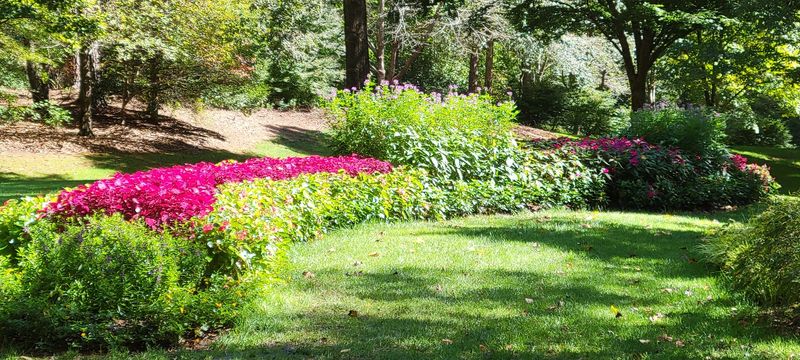
Azaleas in October? It sounds odd, but reblooming Encore azaleas can do just that.
Gibbs Gardens features these shrubs, which are bred to bloom in spring and then flower again later in the season.
Their fall flowers are often lighter than the big spring display. Still, patches of pink, red, coral, or white can look cheerful next to turning leaves.
Bloom strength varies quite a bit.
Weather, sunlight, and the specific Encore variety all affect how many flowers appear in fall. A hot, dry summer can reduce reblooming, while steady moisture may help.
Timing is not exact either, so you may find some shrubs in full flower while others show only a few buds.
If you grow azaleas at home in Georgia, these plants are worth a close look. Seeing them in person helps you judge their size, color, and fall flower habit before buying.
Encore azaleas usually do best with some sun and well-drained soil, though needs vary a bit by variety. Checking the plant tag or asking a local nursery is the easiest way to match one to your yard.
Snap a photo of any colors you like, since it makes shopping much easier later.
6. Waterlilies Continue Flowering In The Monet Inspired Ponds
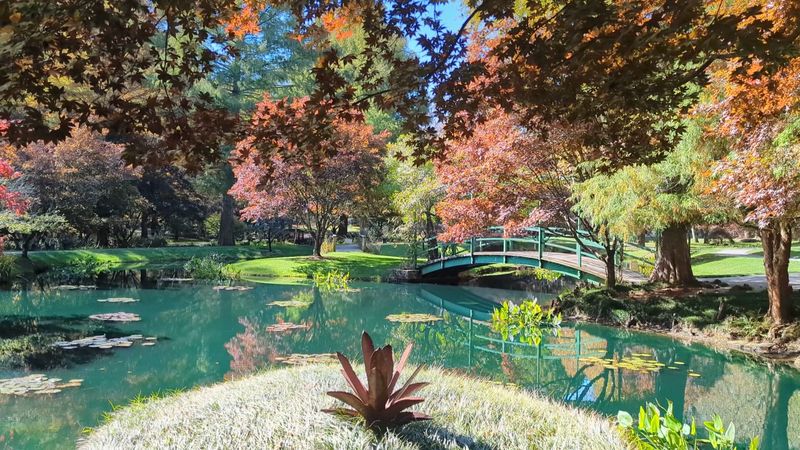
Picture a famous painting come to life, and you are close to what this area feels like. Gibbs Gardens has a waterlily garden inspired by Claude Monet’s gardens at Giverny, complete with ponds and bridges.
In early fall, lily pads still crowd the water’s surface.
Waterlilies can keep flowering into autumn while the weather stays warm. Blooms tend to slow as days get shorter and temperatures drop, so early October usually offers better odds than late October.
Flowers often open during the day and close later, so midday visits may show more blooms. Sunny days generally help them open fully.
Look for a mix of colors, from white and pink to yellow and deeper shades.
Even with fewer flowers, the ponds stay lovely in fall. Turning trees around the edges add warm tones that reflect on the water between the pads.
This area pairs nicely with the Japanese Gardens if you enjoy calm water scenes. It also gives you a gentler, more open feel than some of the shaded paths in this corner of Georgia.
Find a bench nearby and give your feet a break while you take in the view.
7. Roses Keep Adding Color To The Gardens Well Into Fall
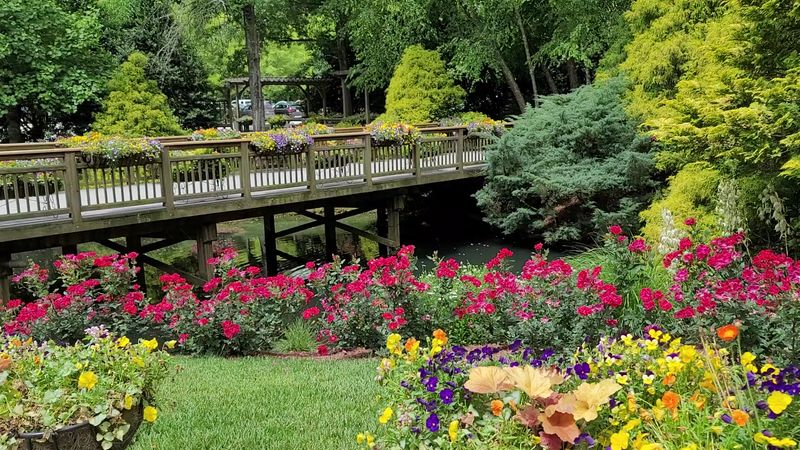
Roses rarely get credit as a fall flower, yet they often deserve it. At Gibbs Gardens, rose plantings can keep producing blooms as summer heat eases into autumn.
Cooler air sometimes helps flowers last a bit longer.
Many repeat-blooming roses push out a new round of flowers in fall. Colors may even look richer than in the heat of summer, though this varies by variety and weather.
Expect some variation from bed to bed.
Some bushes may be covered in flowers, while others show just a few blooms or rose hips. Rain, heat stress, and plant health all affect how much color remains in October.
Get close and take a sniff, since fragrance differs widely between varieties.
Home gardeners in Georgia can learn a lot by noting which roses look strong this late in the year. Those plants may handle local heat and humidity better, though results in your yard still depend on sun, soil, and care.
Roses make a fine final stop before heading back to the car. After a day of maples, ponds, and meadow views, these familiar blooms wrap up a fall visit to Ball Ground on a sweet, colorful note.