This Is The Invasive Insect Defoliating Pennsylvania Oak Trees At An Alarming Rate
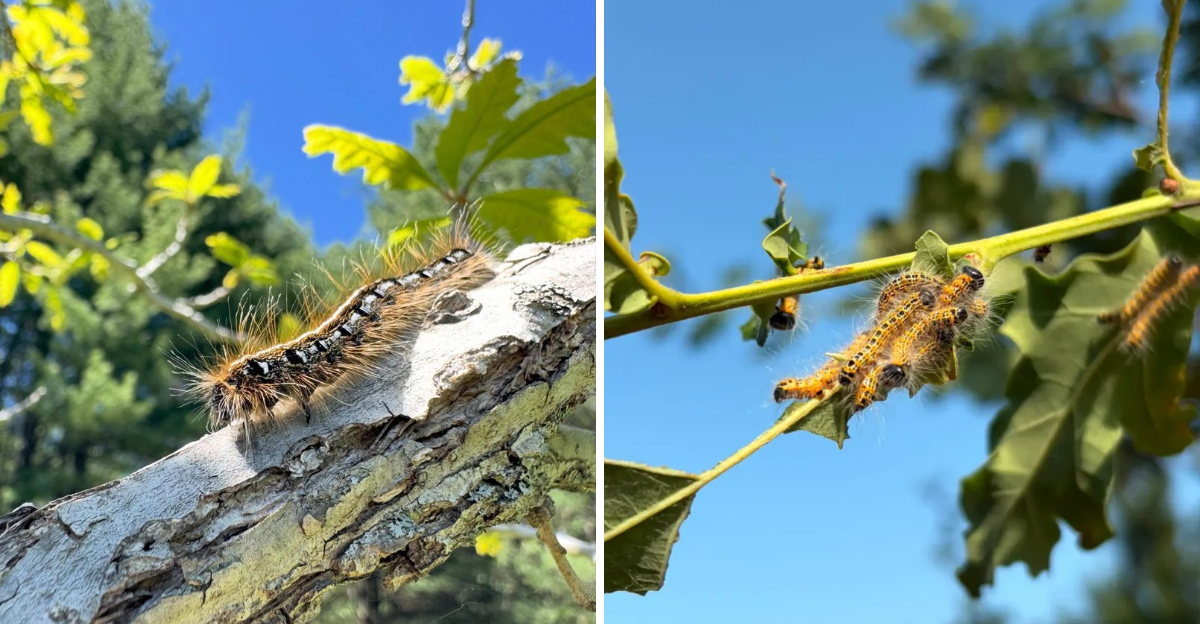
Pennsylvania oaks can look perfectly healthy in April and strangely bare only a few weeks later.
One branch loses leaves. Then another. Soon ragged foliage hangs from the canopy, and small caterpillars drift from silk threads beneath the tree.
That pattern deserves attention.
The invasive spongy moth, Lymantria dispar, has been feeding on Pennsylvania forests for decades, and local outbreaks can strip large sections of oak canopy during late spring. One season of heavy feeding may look dramatic.
Repeated defoliation can place far more stress on trees that are already dealing with drought, root damage, or other problems.
So what should homeowners watch first?
Start with the caterpillars, then check for egg masses, feeding intensity, and the condition of the tree itself. Timing matters because the easiest management window arrives while larvae are still small.
The goal is not to panic over every chewed leaf.
It is to recognize the pest early, protect valuable oaks when pressure is high, and support stressed trees after the feeding wave passes through statewide.
Name The Culprit Spongy Moth
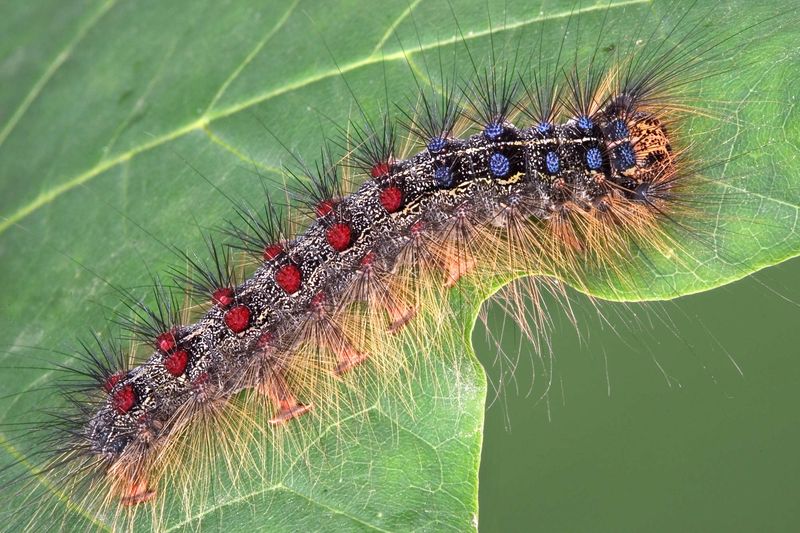
A caterpillar with blue and red dots is one clue worth remembering.
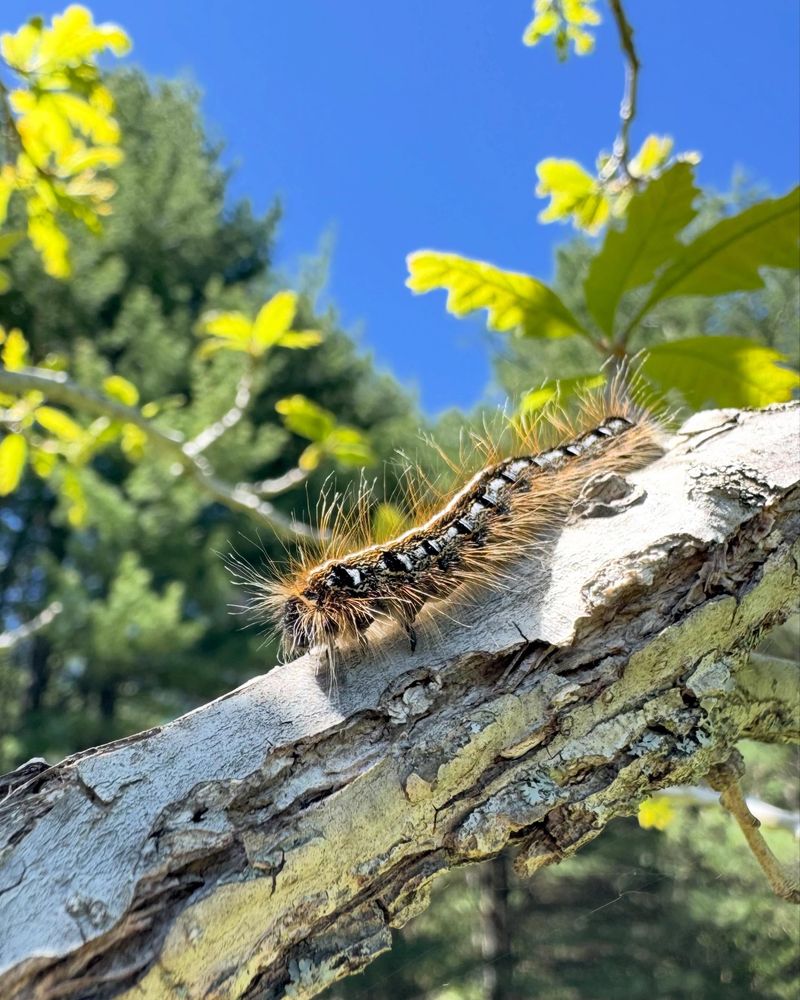
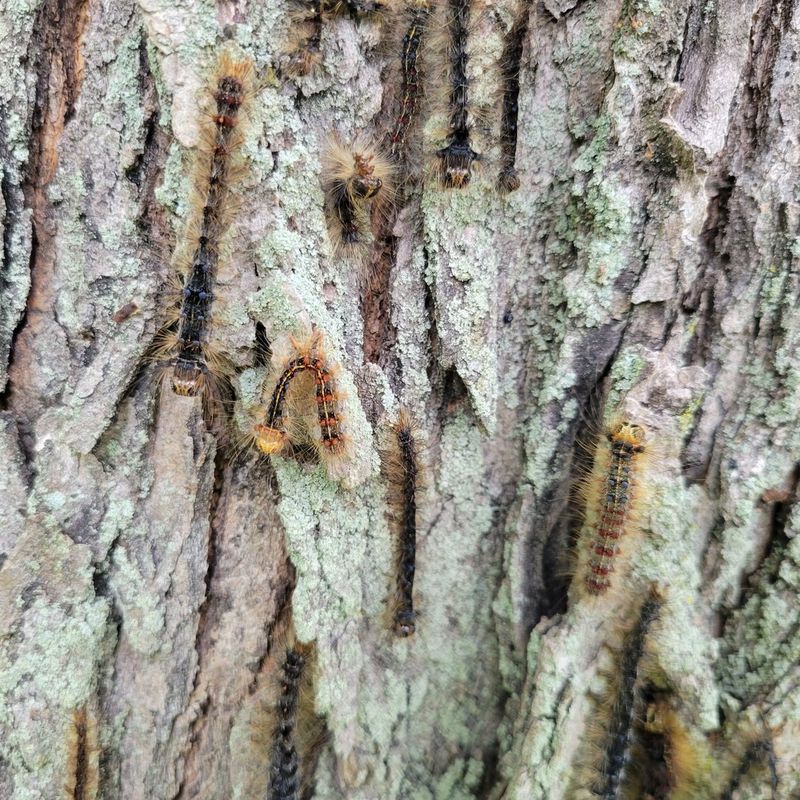
Spongy moth larvae can grow to roughly 2½ inches long, and older caterpillars usually show five pairs of blue spots followed by six pairs of red spots along the back. The body is hairy, and the pattern becomes easier to see as the larva grows.
The species was introduced near Boston in 1869 and has spread across the Northeast since then.
That identification matters because plenty of harmless caterpillars share Pennsylvania trees.
Adults look completely different.
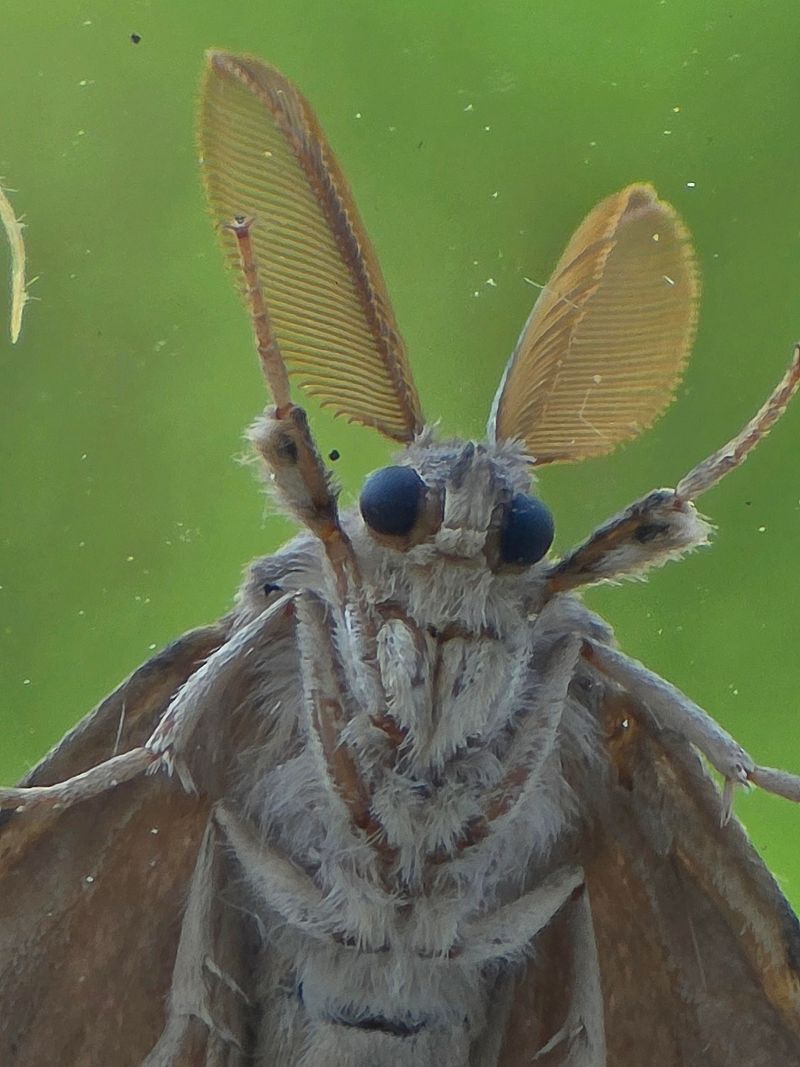
Males are brownish and active fliers. Females are pale with darker markings and usually remain close to the place where they emerged.
The egg stage may be even easier for homeowners to spot.
Females leave tan, fuzzy masses on bark, rocks, firewood, outdoor furniture, trailers, and other sheltered surfaces. Those masses can contain hundreds of eggs and remain in place through winter.
That fuzzy coating explains the current common name.
Learning all three stages gives you a much better chance of catching the insect before heavy feeding begins. A caterpillar found in May tells you the season is underway. An egg mass found in October tells you where next spring’s pressure may start.
Identification comes before treatment.
A few minutes spent checking dots, egg masses, and host trees can prevent an expensive response aimed at the wrong insect.
Those clues turn a mysterious bare branch into a much clearer starting point.
Expect Oaks To Take The Heaviest Feeding
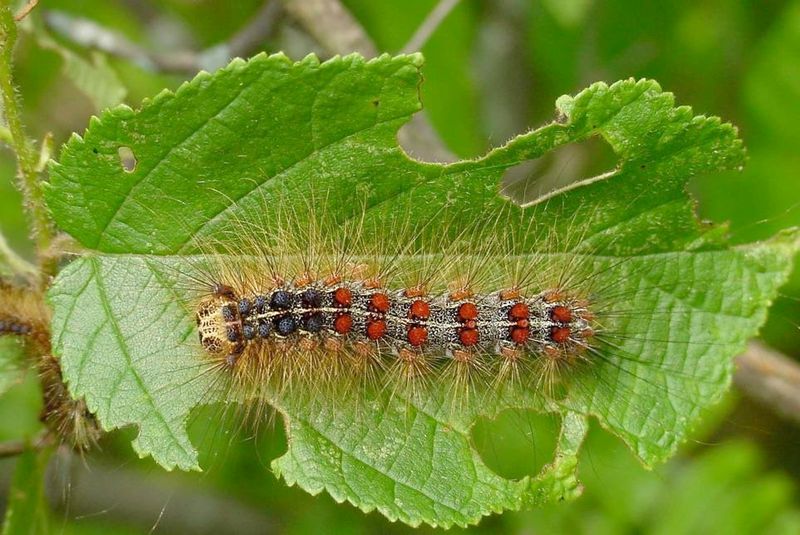
The first trees to look ragged during an outbreak are often the oaks.
Red oak and white oak are among the preferred hosts, which puts mature Pennsylvania yards with a large oak canopy at higher risk during population surges.
Fresh spring foliage makes the timing especially convenient for the caterpillars.
Egg hatch often overlaps with bud break, so newly emerged larvae can begin feeding as tender leaves expand. That gives them several weeks to consume foliage before they pupate in early summer.
Your Pennsylvania Garden Changes Every Week. Your Plan Should Too.
Gardening in Pennsylvania changes quickly throughout the season. Every Friday you’ll receive a simple weekly plan showing exactly what to plant, prune, fertilize, harvest, and protect so you never miss the right timing.
Other trees can be used too.
Aspen, birch, apple, and cherry may show feeding. Heavy outbreaks can push larvae onto additional species once preferred hosts become crowded or depleted.
Mixed plantings usually spread the pressure more effectively than a canopy dominated by one favorite host.
That matters in both woodlots and residential landscapes.
A property with several large oaks should get more attention during outbreak years, especially when those trees already face compacted soil, drought stress, construction damage, or limited root space.
Do not judge risk only by tree size.
A giant oak can tolerate some leaf loss, but repeated severe defoliation forces it to spend stored energy on replacement foliage.
One rough season may be survivable. Several in a row can turn a strong tree into a much more vulnerable one.
That history matters when deciding which trees deserve the closest spring watch.
Track Caterpillars From Their Spring Hatch
The most useful scouting window starts around oak bud break.
Across much of Pennsylvania, spongy moth eggs hatch from late April into May, though elevation and spring weather can shift the calendar. Cooler areas may run later than warmer valleys.
New larvae are tiny.
They can spin silk threads and ride air currents away from the original egg mass. That movement helps explain why a yard with few visible egg masses can still receive caterpillars from nearby trees.
Once they land, feeding begins quickly.
Young larvae are easier to manage than older ones, so early scouting has more value than waiting for obvious canopy loss.
Check lower branches first.
Look for small caterpillars on new leaves, silk threads, and fresh chewing damage. As larvae grow, many feed at night and hide in bark crevices or shaded areas during the day.
That habit can make a population look smaller than it really is.
By late June, many caterpillars have reached the final feeding stage and begin pupating. At that point, the main opportunity for larval treatment has largely passed.
The whole feeding period is short compared with the rest of the year.
That is why spring matters so much.
Six quiet weeks can determine how much foliage stays on the tree, and by the time a canopy looks obviously thin, the easiest management window may already be closing.
Count Egg Masses Before The Next Season
Winter bark can reveal next year’s problem months before the first leaf opens.
Spongy moth egg masses look tan, fuzzy, and slightly raised. They often appear on trunks and larger branches, but they can also show up beneath railings, on stacked firewood, under outdoor furniture, and on equipment stored near trees.
A few masses do not automatically predict disaster.
Clusters across several trees tell a different story and deserve closer attention.
Walk the property after leaves drop.
That makes trunks easier to inspect and gives you time to plan before spring hatch begins. Note which trees carry the heaviest concentration and which valuable oaks stand nearby.
Accessible egg masses can be removed mechanically.
Scrape them into a container of soapy water rather than dropping them onto the ground, where some eggs may remain viable. This will not eliminate every larva in the area, but it can reduce the number starting on individual trees.
Keep expectations realistic.
A homeowner count is only a rough indicator. Egg masses high in the canopy or beyond property lines stay out of sight, and wind can move tiny larvae from neighboring areas after hatch.
Still, the survey is useful.
One calm walk in fall can tell you far more than waiting until May and hoping the canopy looks normal.
Egg masses are basically next season’s RSVP list. A crowded one is worth reading early.
It also gives you time to line up help before hatch begins.
Protect High Value Oaks Before Heavy Feeding
Not every chewed oak needs a rescue plan.
Healthy trees can often replace lost foliage after one heavy feeding period, especially when rainfall is adequate and other stresses stay low.
High-value trees deserve a closer calculation.
Large shade oaks near a house, patio, driveway, or street may justify more active protection when egg masses are abundant and the tree has already been weakened by drought, root disturbance, or previous defoliation.
Physical tactics can help on smaller problems.
Burlap bands wrapped around trunks can create daytime shelter for older caterpillars. Check beneath the fabric regularly and remove the larvae that gather there.
The method reduces numbers rather than stopping the outbreak completely.
Sticky barriers can catch climbing larvae too, but they need careful use because non-target insects and small wildlife can become trapped.
For tall canopy trees, professional help may make more sense.
A certified arborist can evaluate tree condition, canopy access, and treatment timing before feeding becomes severe.
Do that planning early.
Waiting until the crown is already stripped leaves fewer useful options and turns a manageable spring decision into a midsummer emergency.
Protection makes the most sense when the tree matters, pressure looks high, and timing still favors action.
Not every oak needs a bodyguard. The irreplaceable ones may deserve one before the caterpillars reach the buffet.
Early preparation also keeps treatment choices calmer, narrower, and easier to justify.
Use Bt While Caterpillars Are Still Small
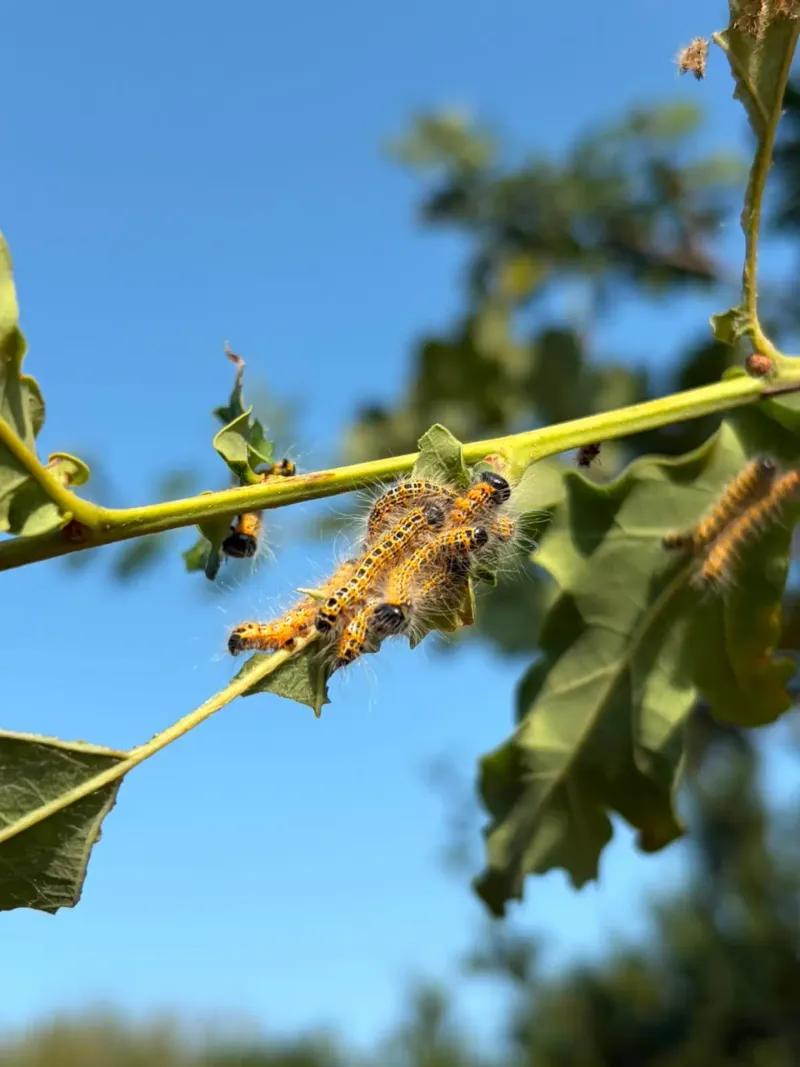
The treatment window gets narrower as the caterpillars get larger.
Bacillus thuringiensis var. kurstaki, usually called Btk, is a biological insecticide used against young moth and butterfly larvae. It works only after a caterpillar eats treated foliage, so timing and coverage matter.
Small larvae are the best target.
Early growth stages respond better than large caterpillars nearing pupation. In many Pennsylvania areas, that puts the most useful application period around early to mid-May, with local weather shifting the exact timing.
Leaf coverage needs to be thorough.
A lightly misted trunk will not solve a canopy-feeding problem. The caterpillars must consume treated leaves for the product to work.
Rain can shorten the useful period on foliage.
That may make another application necessary under label directions when hatch stretches over several days or weather washes material away.
Read the label before every use.
Btk is more selective than many broad-spectrum insecticides, but it can still affect caterpillars of non-target moths and butterflies that eat treated leaves.
That is another reason to focus treatment on high-value trees with confirmed pressure rather than spraying everything nearby.
Large oaks create a practical challenge.
Reaching the upper canopy may require professional equipment, and poor coverage can waste both time and product.
Btk works best as an early, targeted tool. Once giant larvae are marching down the trunk, the calendar has already moved past its favorite moment.