This Is The Invasive Insect Targeting Pennsylvania Mountain Laurel At An Alarming Rate In Shaded Gardens
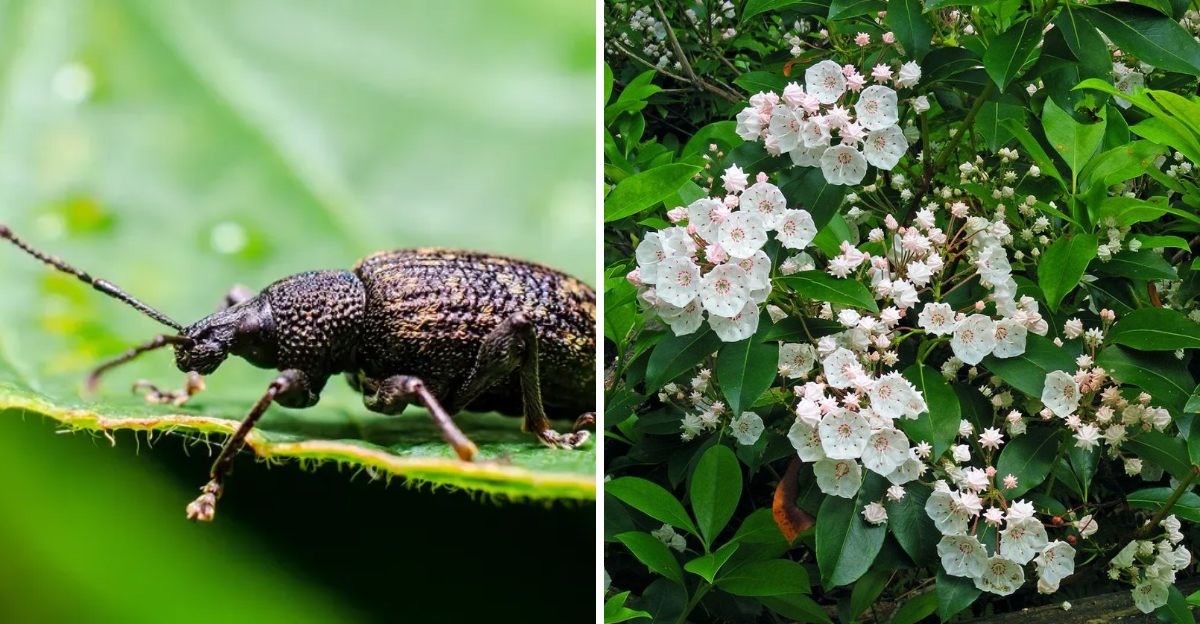
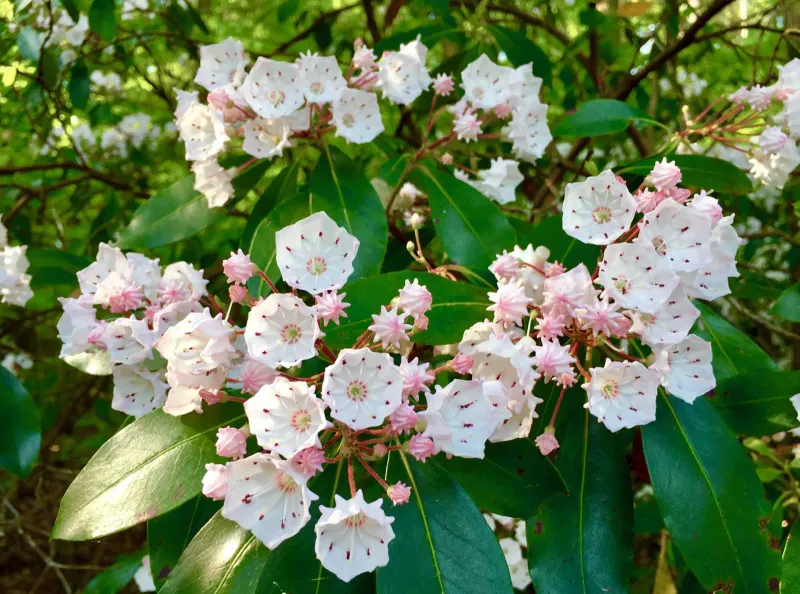
Mountain laurel is one of Pennsylvania’s most iconic native plants. That spectacular late spring bloom tucked into shaded woodland gardens and hillsides is a sight that defines the Pennsylvania landscape in a way few other plants can match.
But across the state, mountain laurel is under threat from an invasive insect that is spreading through shaded gardens at a pace that has plant experts paying serious attention.
This pest is easy to miss until the damage becomes hard to ignore. It works quietly, often on the undersides of leaves and along stems where casual inspection doesn’t catch it.
By the time most gardeners notice something is wrong with their mountain laurel, the infestation has been active for longer than they’d realize, and the plant has already been significantly weakened.
Reports of affected mountain laurel are increasing across Pennsylvania’s shaded garden communities, and awareness among homeowners remains far too low for a pest doing this level of damage.
Here’s what this invasive insect is, how to identify it early, and what Pennsylvania gardeners can do to protect their mountain laurel right now.
Meet The Invasive Pest Hiding In Plain Sight
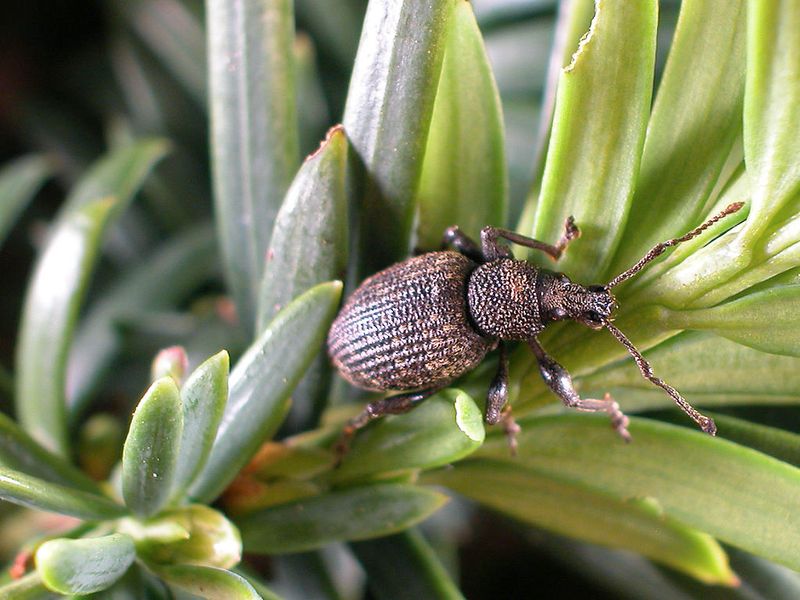
Not every garden pest announces itself loudly. The black vine weevil is one of those quiet invaders that sneaks in without much fanfare, yet causes real problems once it settles in.
Originally from Europe, this flightless, dark-colored beetle has now firmly established itself across the northern United States and Canada, making it a widespread concern for home gardeners and nursery professionals alike.
Penn State University considers the black vine weevil a serious pest of both nursery stock and landscape plantings. It targets a surprisingly wide range of popular shrubs.
Mountain laurel, azalea, rhododendron, yew, and euonymus are among its preferred hosts, which means many Pennsylvania gardens are already at risk without their owners even knowing it.
The beetle is about a third of an inch long, dull black or grayish, and has a distinctive snout. It cannot fly, so it spreads mainly by crawling or through the movement of infested plant material.
Because it looks unremarkable and moves slowly, it often goes unnoticed for long stretches of time. Many gardeners only realize something is wrong after the damage has already become visible on their plants.
Understanding what you are dealing with is the first step toward protecting your garden. The black vine weevil is not a new pest, but its impact on Pennsylvania landscapes continues to grow.
Recognizing it early gives you a real advantage. Knowing its preferred host plants, its European origins, and why Penn State flags it as a serious landscape pest helps you stay one step ahead of an insect that would rather stay hidden than be caught.
The U-Shaped Leaf Damage That Reveals An Infestation
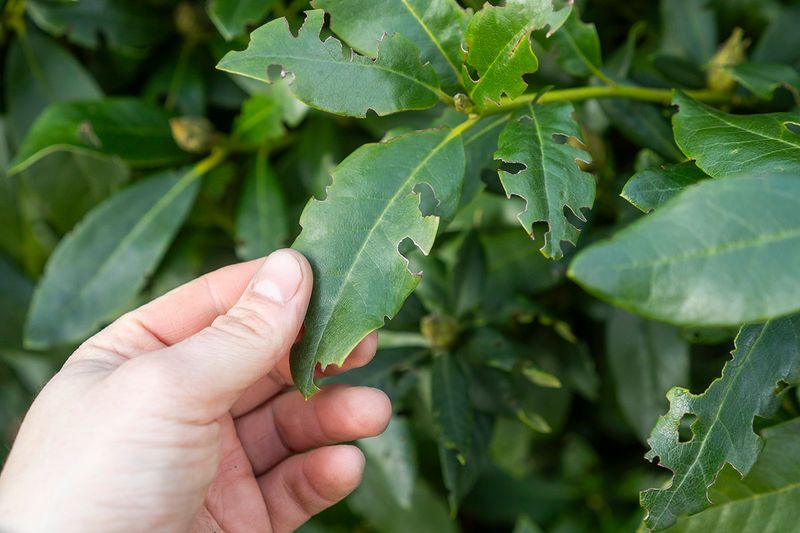
One of the first clues that black vine weevils have moved into your garden shows up right on the leaves.
Adult weevils chew rounded or semicircular notches along the margins of leaves, leaving behind a scalloped edge that looks almost like someone took a tiny hole punch to the foliage. Once you know what to look for, this pattern is surprisingly easy to spot.
Your Pennsylvania Garden Changes Every Week. Your Plan Should Too.
Gardening in Pennsylvania changes quickly throughout the season. Every Friday you’ll receive a simple weekly plan showing exactly what to plant, prune, fertilize, harvest, and protect so you never miss the right timing.
Interestingly, the damage often shows up first on interior or protected foliage rather than on the outermost leaves. The beetles tend to feed in sheltered spots where they feel less exposed.
So if you are only checking the outer edges of your shrubs, you might miss the early warning signs hiding deeper inside the plant.
On established, healthy mountain laurels, adult feeding is generally considered cosmetic. A few notched leaves here and there will not seriously harm a mature, well-rooted shrub.
The plant can handle some surface-level leaf damage without much trouble, especially if it is otherwise growing well in good soil with proper moisture.
However, extensive notching across many leaves is a different story. When you see that kind of widespread damage, it often signals that a large number of egg-laying adult weevils are present.
More adults mean more eggs, and more eggs mean a bigger population of root-feeding larvae underground. That underground generation is where the real threat lies.
Paying close attention to the degree of leaf notching helps you gauge how serious your infestation might be and whether it is time to take action before the problem grows larger.
Why The Beetles Are So Difficult To Find In Shaded Beds
Ever wonder why you can see the damage but never seem to catch the pest in action? Black vine weevil adults are strictly nocturnal feeders.
They come out after dark to chew on leaves, then retreat before sunrise. During daylight hours, they stay completely out of sight, which makes them one of the more frustrating garden pests to track down.
Their hiding spots are cleverly chosen. Weevils tuck themselves beneath mulch layers, leaf litter, loose soil, and any other dark, sheltered spaces near the base of host plants.
A thick layer of mulch around your mountain laurel, while great for moisture retention, also creates the perfect daytime refuge for these beetles. They are essentially sleeping right under your nose.
Gardeners often spend time examining damaged leaves without ever laying eyes on a single weevil. The insect responsible for all that notching simply is not there when you look.
This creates a confusing situation where the evidence is obvious but the culprit stays invisible. It can make diagnosis feel nearly impossible without knowing the beetle’s nocturnal habits.
Shaded garden beds can make it even harder to observe activity because low light conditions during the evening make nighttime inspections more challenging.
Worth noting, though, is that shade alone does not cause unusually high infestation rates. The weevils are present in sunny and shaded settings alike.
The difficulty in spotting them in shaded areas is more about visibility during nighttime checks than about shade actually attracting or increasing the pest population. Knowing this helps you plan smarter monitoring strategies.
The Most Dangerous Damage Happens Underground
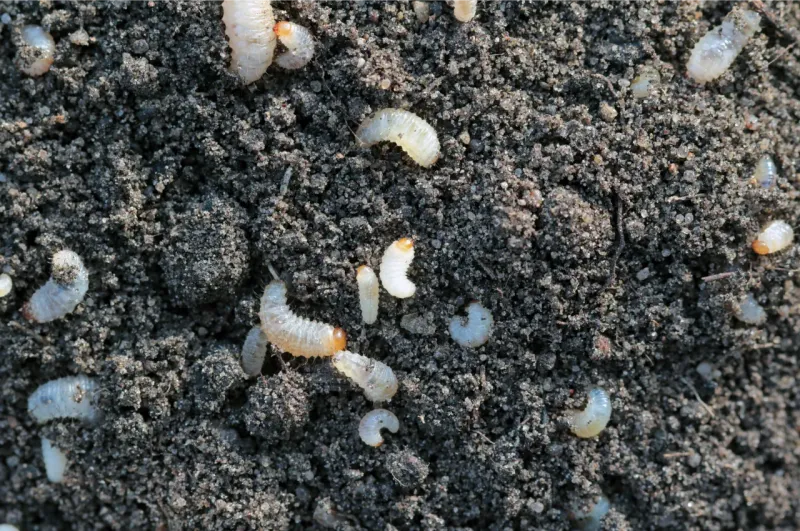
Leaf notching gets your attention, but the real danger from black vine weevils is completely out of sight. After adult females feed, they deposit eggs near the base of host plants.
The eggs eventually hatch into pale, legless, C-shaped grubs that begin their lives feeding on the fine feeder roots of your mountain laurel.
As the larvae grow, they move on to larger roots and eventually the crown of the plant. Crown feeding is especially destructive because it can girdle the plant, cutting off the flow of water and nutrients.
A mountain laurel that seemed perfectly healthy can begin declining rapidly once crown damage sets in, and by the time symptoms appear above ground, significant harm has already occurred below.
Root injury often shows up as wilting, poor new growth, yellowing leaves, or a general look of decline that does not improve even when you water regularly. Gardeners sometimes assume the problem is drought stress or a disease.
Without checking the roots, the true cause stays hidden. Digging carefully around the base of a struggling shrub and looking for pale grubs is an important diagnostic step.
Young mountain laurels and recently transplanted shrubs face the greatest risk. Their root systems are smaller and less established, so even moderate larval feeding can cause serious setbacks.
A large shrub might tolerate some root loss and bounce back over time, but a newly planted specimen can suffer major damage from a relatively modest grub population.
Protecting younger plants with early monitoring and appropriate management is especially important when weevil activity has been confirmed nearby.
How Pennsylvania Gardeners Can Confirm The Culprit
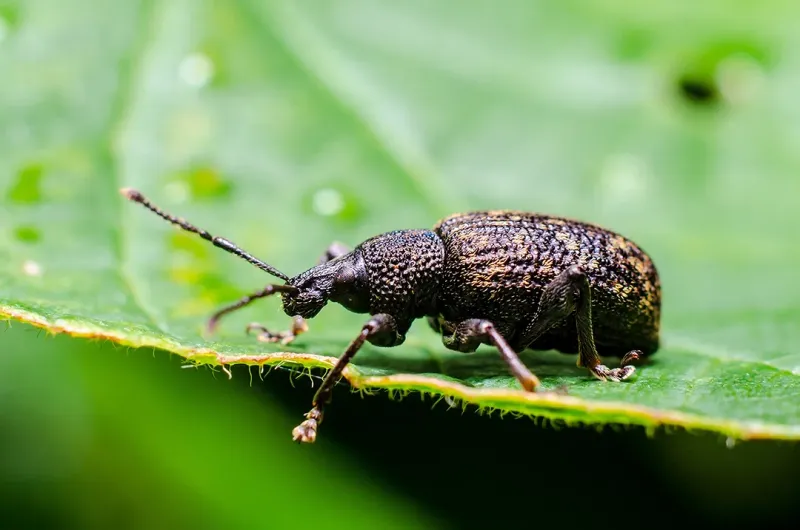
Catching a black vine weevil in the act takes a little patience and the right timing. Head out to your garden after dark with a good flashlight and check the leaves of your mountain laurel carefully.
Adult weevils are slow-moving and relatively easy to spot once you find them actively feeding at night. A flashlight inspection on a warm evening is one of the most reliable ways to confirm their presence.
During the day, try placing crumpled burlap or a piece of cardboard around the base of the plant. Weevils seeking shelter will often hide inside the folds.
Check it the next morning and see what you find. Pitfall traps, which are simply containers sunk into the soil so the rim sits at ground level, can also help you determine whether adult weevils are active and moving around your garden beds.
When a shrub is wilting without a clear cause, it is worth gently examining the roots. Look for pale, curved grubs in the soil around the root zone, especially if you have also noticed leaf notching on the same plant.
The combination of both symptoms is a strong indicator that black vine weevils are responsible for the decline.
One important caution before reaching for any treatment: do not act on leaf notching alone. Several other weevil species produce very similar semicircular notches on leaves, and treating for the wrong pest wastes time and money.
Confirming the actual species present, either through nighttime inspection, trapping, or root examination, ensures that any management steps you take are targeted and genuinely effective for your specific situation.
The Smartest Way To Protect Mountain Laurel
Getting ahead of a black vine weevil problem is much easier than recovering from a serious one. Start monitoring when fresh leaf notching first appears, which often happens in late spring or early summer when adult weevils become active.
Catching the problem early, before large numbers of eggs have been laid, gives you the best chance of keeping your mountain laurel healthy and thriving.
Hand-removing adults during nighttime flashlight inspections is a simple, chemical-free option that can genuinely reduce the population. Drop collected weevils into a container of soapy water.
Adults found hiding inside burlap traps or pitfall traps can be removed the same way. Consistent trapping and removal over several weeks can make a noticeable difference, especially in smaller garden beds.
Beneficial nematodes offer another promising approach for managing soil-dwelling larvae. Certain species of microscopic nematodes actively seek out and attack grubs in the soil.
For them to work well, you need the right nematode species, soil temperatures above 55 degrees Fahrenheit, and consistently moist soil. Following application instructions carefully is essential for getting real results from this biological control method.
If you are considering a pesticide, always choose one that is specifically labeled for black vine weevil, for use on mountain laurel, and for the application site, whether that is a home landscape or a garden bed. Read and follow every direction on the label without shortcuts.
Before making any treatment decision, reaching out to Penn State Extension or your county Master Gardener program is a genuinely smart move. They can help you choose the safest and most effective approach for your specific garden conditions.