These Georgia Native Vines Will Cover Your Fence In One Season And Feed Your Hummingbirds
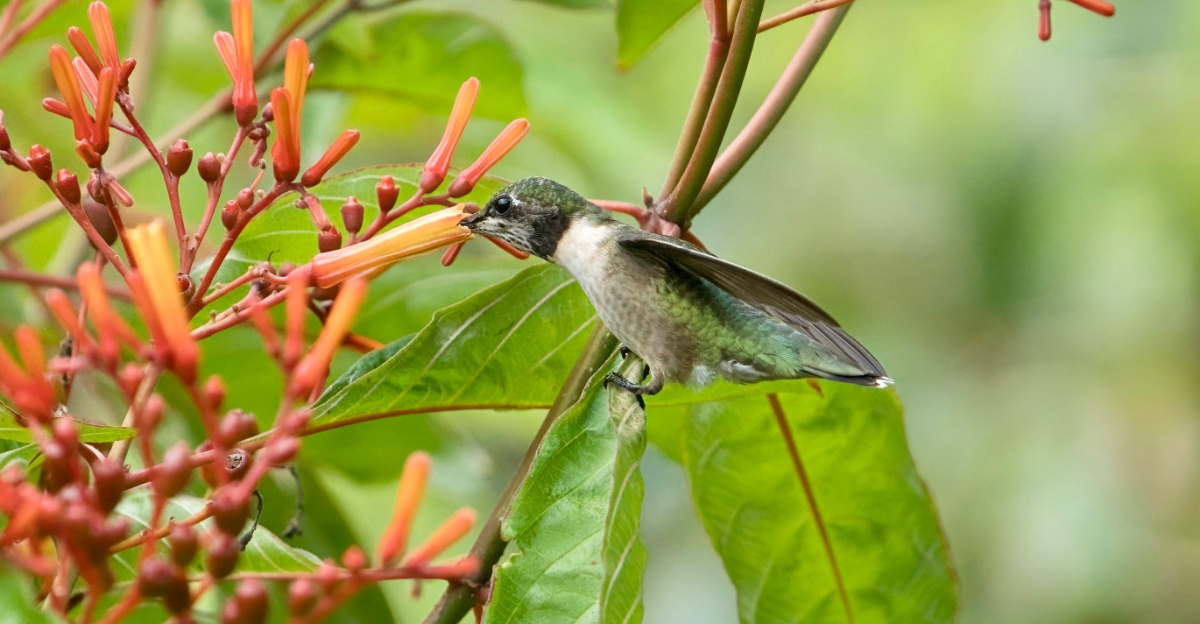
Some fences do nothing for a yard until plants change their purpose entirely.
Instead of sitting in the background, they can become part of the landscape itself, filling in with growth that shifts how the whole space feels.
Native vines are getting more attention because they don’t just grow for coverage. Once they take hold, they spread upward and outward in a way that creates natural screening while also adding seasonal flowers that attract hummingbirds.
Warm, humid conditions in Georgia make it easier for certain vines to establish quickly, especially when they are given early support to climb. That early structure often decides how fast they fill a space.
When the right plants are used, a simple fence line can turn into a living vertical layer that supports both privacy and wildlife activity.
1. Crossvine Covers Fences With Fast Seasonal Growth
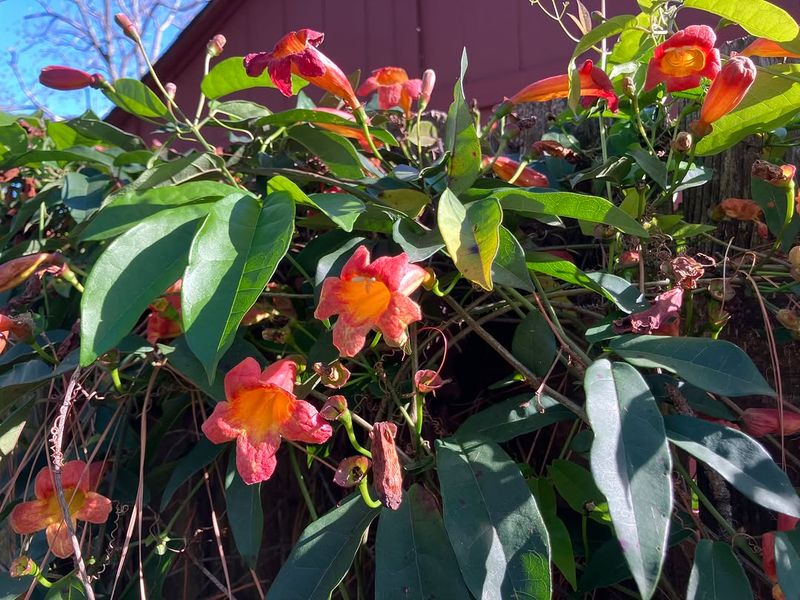
Crossvine earns its reputation fast. In a single growing season, it can push eight to twenty feet of new growth, which means a bare fence won’t stay bare for long.
Spring is when it really puts on a show. Clusters of orange and yellow trumpet flowers open in April and May, often covering entire fence sections before summer even starts.
The color is bold and hard to miss from across the yard.
Hummingbirds hit it early in the season when other nectar sources are still getting started. That timing matters because early migrants need reliable food right after arrival.
Crossvine fills that gap well.
Evergreen in mild winters, it holds its glossy leaves through most of the year in the Southeast. After a cold snap, it may drop some foliage, but new growth returns quickly once temperatures rise again.
It bounces back without any help.
Full sun produces the heaviest bloom, though it handles partial shade with less flowering. Sandy or clay soil both work as long as drainage is decent.
Waterlogged roots slow growth considerably, so avoid low spots in the yard.
Crossvine attaches using adhesive tendrils, so it grips wood, brick, and metal fencing without needing wire supports. Give it something to grab early in the season and it takes off on its own.
Minimal intervention required once it’s established.
2. Passionflower Climbs Quickly During Warm Weather
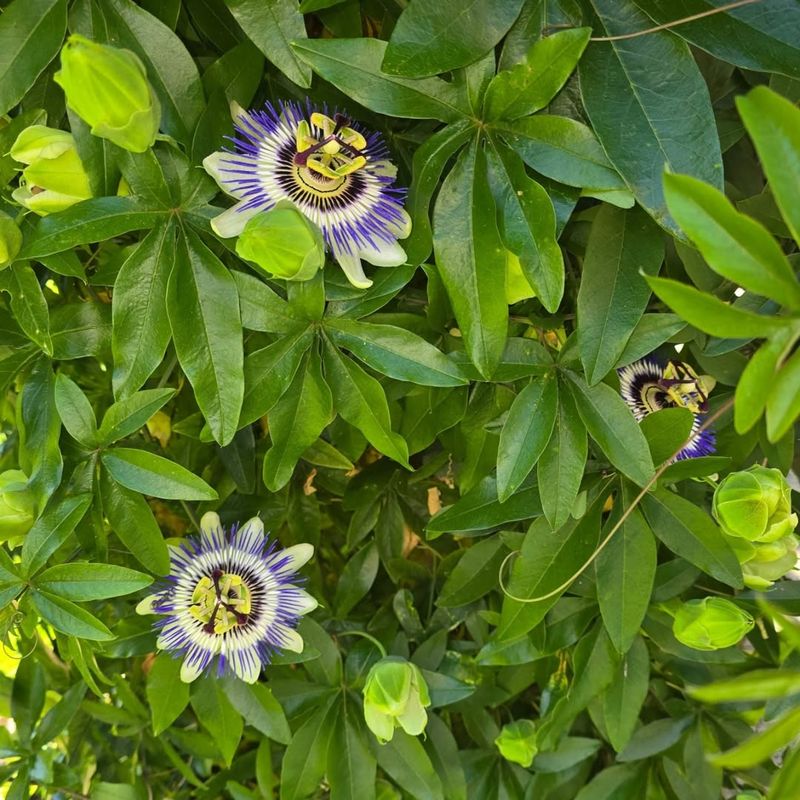
Nothing in a Southern garden stops people in their tracks quite like passionflower. The blooms look almost alien, with intricate purple and white fringe radiating from the center.
First-time visitors always ask what it is.
Warm weather is when it moves fast. Once soil temperatures rise in late spring, the vines push several inches of new growth per day under good conditions.
A fence can go from bare to covered within a couple of months.
Hummingbirds visit the flowers, but passionflower also supports Gulf fritillary and zebra longwing butterflies, which use it as a host plant. That means you’re feeding multiple wildlife species from one vine.
It’s a strong ecological investment for a small garden.
Fruits develop after pollination, small yellow-green orbs that wildlife snacks on through late summer. The foliage stays dense and green throughout the warm season, providing solid visual coverage along fences or trellises.
Your Georgia Garden Changes Every Week. Your Plan Should Too.
Gardening in Georgia changes quickly throughout the season. Every Friday you’ll receive a simple weekly plan showing exactly what to plant, prune, fertilize, harvest, and protect so you never miss the right timing.
Partial shade is tolerated, but full sun pushes faster growth and heavier flowering. Sandy or loamy soil drains well and suits it best.
Clay soil works if you amend it slightly or plant on a raised section of ground.
Underground rhizomes let it spread gradually, so expect new shoots a few feet from the original plant over time. Mowing or pulling unwanted sprouts keeps it contained.
It’s a manageable spreader rather than an aggressive one with reasonable maintenance.
3. American Wisteria Covers Structures Without Becoming Invasive
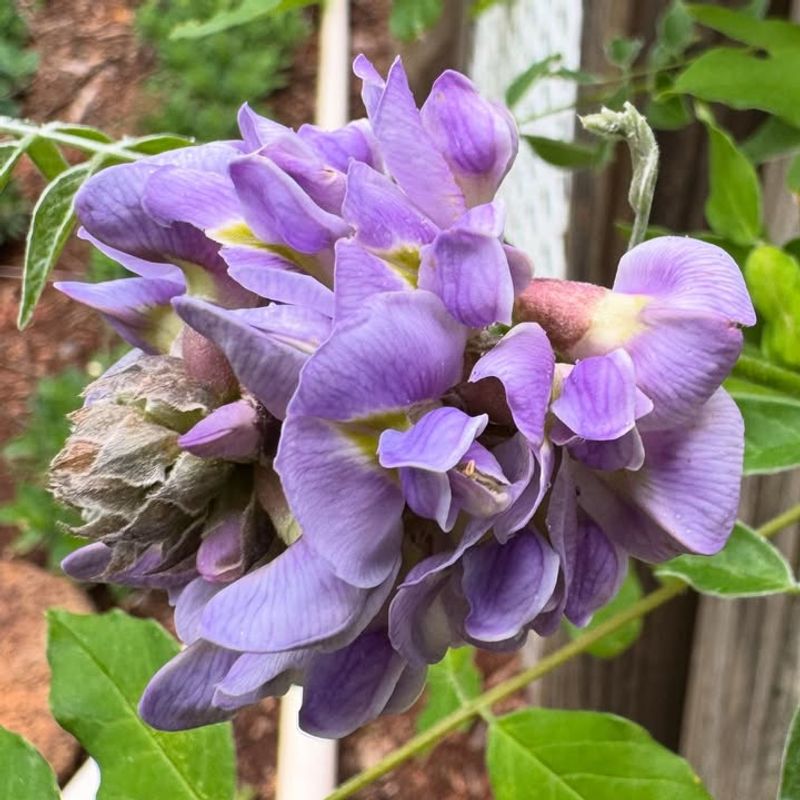
Wisteria has a bad reputation, but that belongs to the Asian species. American wisteria is a completely different story.
It blooms beautifully, climbs steadily, and won’t swallow your entire yard or your neighbor’s fence.
Flower clusters hang in loose, fragrant cascades of purple or lavender. They open in late spring and sometimes rebloom lightly in late summer.
The fragrance draws pollinators and makes the garden smell incredible on warm afternoons.
Hummingbirds probe the tubular florets for nectar. They tend to visit during the first heavy bloom when flower density is highest.
Bees and butterflies also work the clusters heavily, so the vine supports a wide range of pollinators.
Growth is vigorous but manageable. Expect several feet of extension in the first season, with coverage building substantially by year two.
It twines around supports rather than clinging with rootlets, so it needs a fence, post, or pergola to climb properly.
Full sun produces the best flowering. Afternoon shade in hot climates may reduce bloom count but keeps the foliage healthier looking through August.
Average soil works fine; overly rich soil tends to push leaves over flowers.
Pruning twice a year keeps size and shape under control. Cut back after the spring bloom and again in late summer.
That routine encourages stronger flowering the following season without letting the vine get out of hand. It rewards consistent attention.
4. Carolina Jessamine Brings Early Flowers To Vertical Spaces
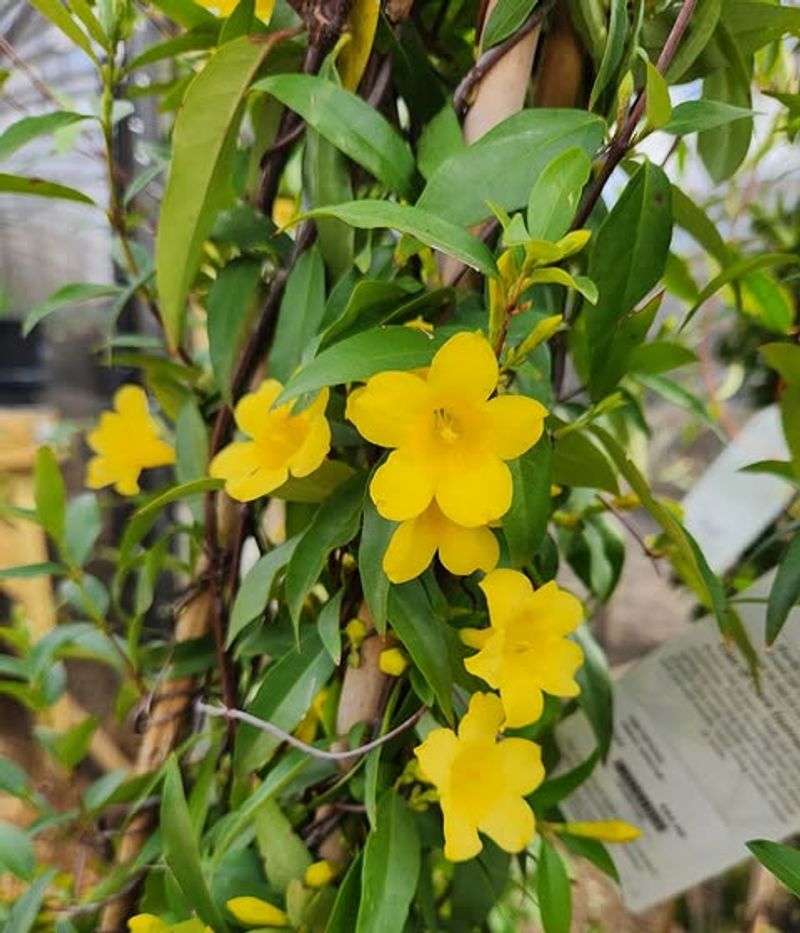
When everything else in the garden is still asleep, Carolina jessamine is already blooming. Bright yellow flowers open as early as February in warmer parts of the South, making it one of the first nectar sources available each year.
Hummingbirds that winter over or arrive early on their spring migration benefit directly from those early blooms. The tubular yellow flowers hold nectar well, and the vine can be covered in hundreds of small blossoms during peak bloom.
It’s a significant early-season resource.
Evergreen foliage means the fence stays covered year-round, not just during the growing season. Deep green, glossy leaves hold their color through winter and provide dense coverage that looks intentional rather than wild.
It’s tidy by nature.
Growth is moderate rather than explosive. Expect steady coverage over one to two seasons rather than overnight sprawl.
That pace actually makes it easier to manage along a fence without constant trimming chasing runaway shoots.
Full sun to partial shade both work well. It handles Georgia’s heat and humidity without much complaint.
Once established, supplemental watering becomes largely unnecessary except during extended dry spells.
Worth knowing: all parts of the plant are toxic if eaten, so keep that in mind if children or pets spend time in the garden. As a visual feature and wildlife resource, though, it’s one of the most reliable performers you can put on a fence.
Fragrance is a bonus.
5. Climbing Aster Extends Nectar Availability Into Fall
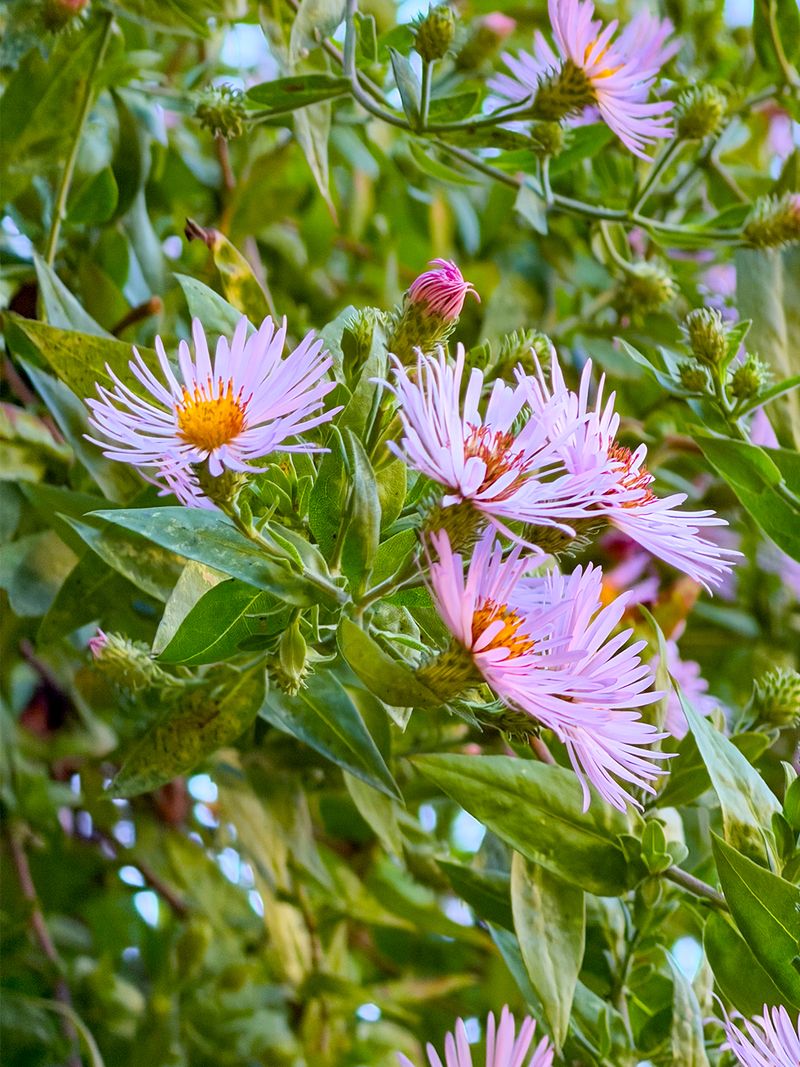
Most flowering vines are winding down by September, but climbing aster is just getting started. Small white and lavender daisy-like flowers open in late summer and carry through October, filling a critical gap in the nectar calendar.
Hummingbirds preparing for fall migration need reliable food sources in August and September. Climbing aster delivers exactly that.
Southbound birds stop to feed, and resident pollinators like bees and skippers work the flowers heavily through the season’s end.
Growth habit is sprawling rather than tightly twining. It leans and scrambles through fence openings and over nearby shrubs, which gives it a natural, relaxed look.
A little support early in the season helps direct it along the fence line.
Partial shade suits it well, which makes it a practical option for fence sections that don’t get full sun all day. It’s one of the few native vines that performs well in shadier spots without significantly reducing flower production.
Soil doesn’t need to be perfect. Average to slightly poor ground works fine.
Overly amended or fertilized soil pushes leafy growth at the expense of flowers, so resist the urge to add too much compost at planting.
After frost, seed heads form and attract finches and sparrows. Cutting it back in late winter keeps it from getting too woody at the base.
New growth emerges reliably each spring, and the cycle starts again without replanting. It’s a dependable fall performer.
6. Trumpet Creeper Draws Hummingbirds Throughout Summer
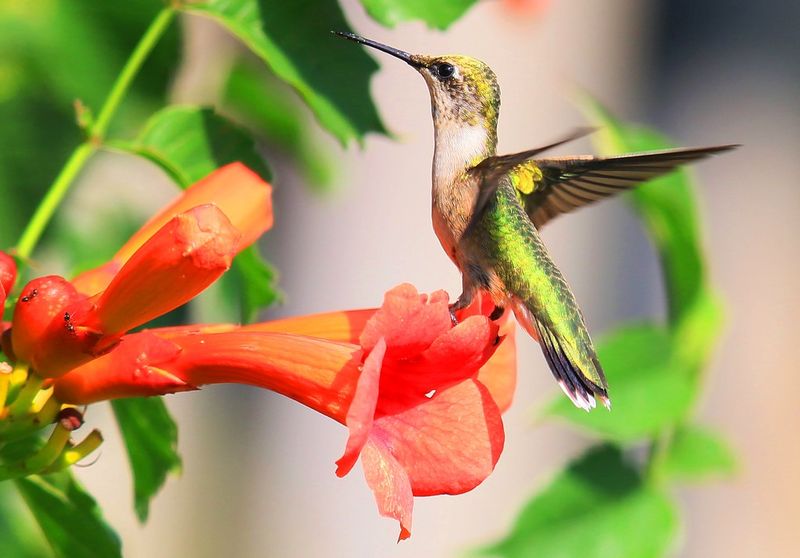
Trumpet creeper doesn’t ask for much, but it gives back enormously. Thick clusters of fiery orange-red blooms open from June through August, right when hummingbirds need the most energy during nesting season.
Ruby-throated hummingbirds are so drawn to it that gardeners sometimes call it the hummingbird vine. The wide, flared blooms hold a generous amount of nectar.
Multiple birds may visit the same plant within minutes of each other on a warm morning.
Growth is genuinely fast. Under ideal conditions, trumpet creeper can extend fifteen to thirty feet in a season.
That kind of speed means it can cover a long fence run without needing multiple plants.
Worth noting: it spreads through underground runners and self-seeds, so it does require management. Pulling suckers from the base and trimming regularly keeps it from creeping beyond its intended space.
It’s vigorous, not uncontrollable, with consistent attention.
Plant it in full sun for the strongest bloom. It tolerates poor soil, compacted ground, and dry stretches better than most vines.
Once established in Georgia’s summer heat, it rarely needs supplemental watering.
Brick walls, metal fences, and wooden structures all work well as support. The vine grips using aerial rootlets, which hold firmly to rough surfaces.
Smooth surfaces may need wire or trellis support to give it something to anchor to early on.
7. Virgin’s Bower Grows Rapidly During The Growing Season
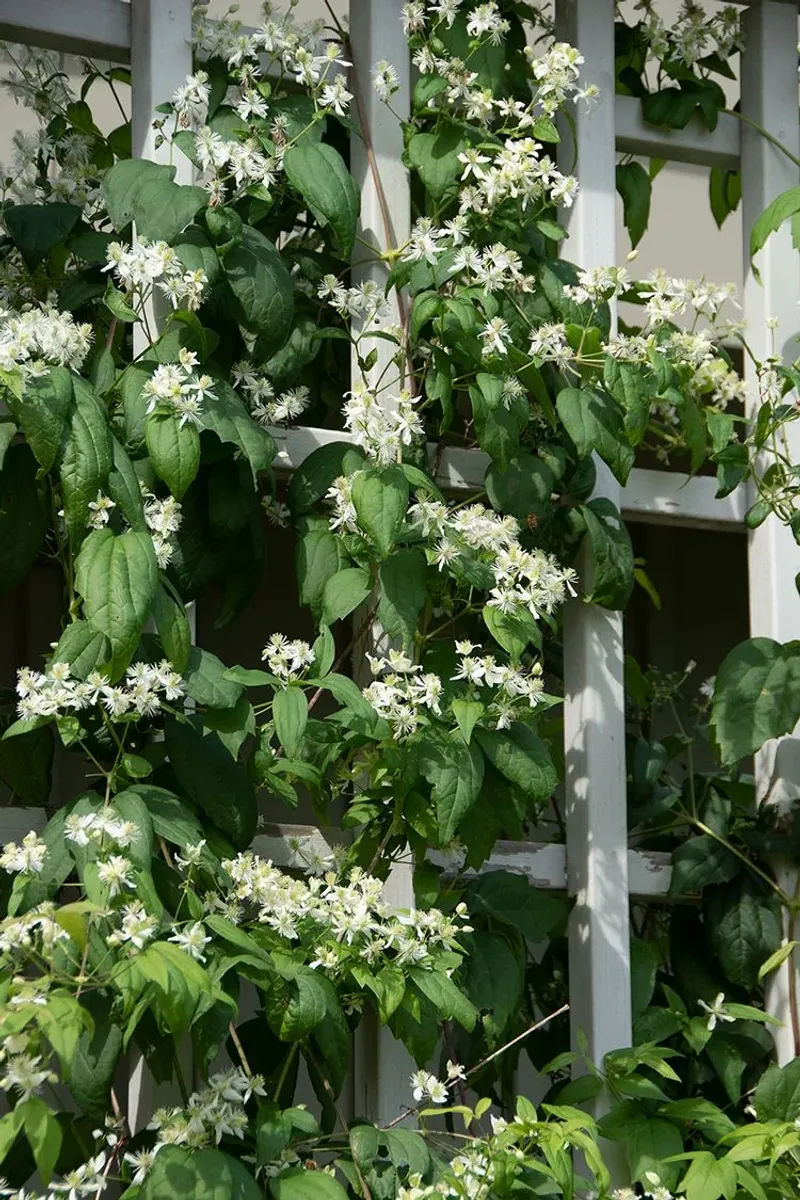
Speed is what sets virgin’s bower apart from most other native vines. Under warm conditions with decent moisture, it can push ten to twenty feet of growth in a single season.
A bare fence becomes a green wall faster than you’d expect.
White flowers open in late summer, small and star-shaped, covering the vine in a frothy cloud of blooms. After pollination, silky seed plumes develop and stay decorative well into fall.
The visual transition from flower to seed head is genuinely attractive.
Hummingbirds visit the flowers during late summer feeding, and songbirds use the fluffy seed heads for nesting material the following spring. Planting it gives multiple wildlife groups something useful across different seasons.
Partial to full shade suits it better than intense afternoon sun. It naturally grows along woodland edges and stream banks, so it’s a smart pick for fence lines that run along shadier parts of the yard.
Moisture-retentive soil helps it establish quickly.
Once it gets going, very little maintenance is needed. It twines through fence openings and over other vegetation without damaging nearby plants.
Pruning in late winter removes old woody stems and encourages fresh growth from the base each spring.
Native throughout the Southeast, it’s well adapted to the region’s climate and rarely struggles with local pests or disease. Planting it in fall or early spring gives roots time to settle before the main growth push begins.
Consistent moisture in year one makes a noticeable difference in coverage speed.
8. Coral Honeysuckle Produces Nectar From Spring Through Fall
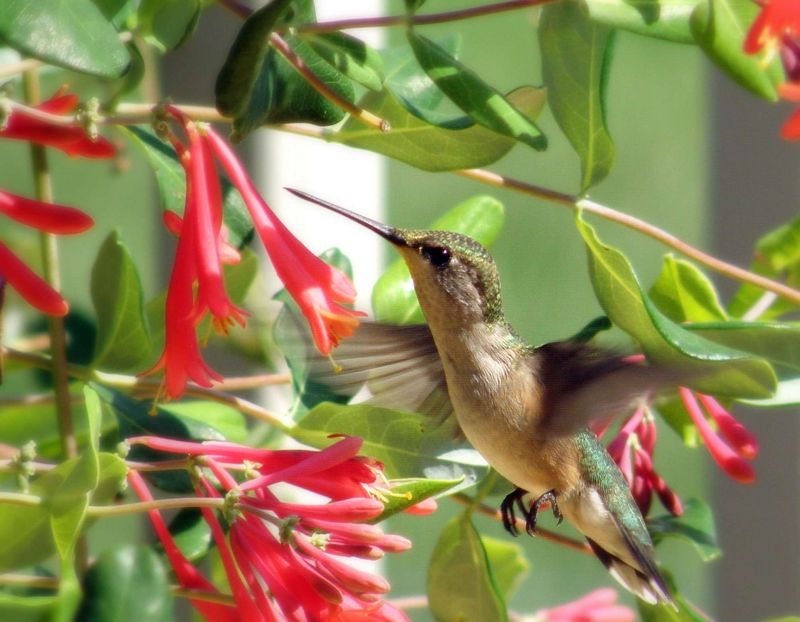
Few vines deliver as consistently as coral honeysuckle. It starts blooming in early spring and keeps going well into fall, making it one of the longest-performing nectar sources you can plant.
Ruby-throated hummingbirds are practically drawn to it by instinct. The long, tubular red and orange flowers are shaped perfectly for their narrow bills.
Plant it near a fence post and watch them hover within days of the first bloom.
Unlike its invasive Japanese cousin, coral honeysuckle plays nicely with other plants. It climbs by twining, so it won’t strangle your shrubs or overwhelm a small yard.
Growth is steady rather than aggressive.
Full sun brings the most flowers, but partial shade works fine too. It tolerates drought once established, which is a real advantage during hot Southern summers.
Watering during the first season helps it settle in faster.
Coral honeysuckle pairs beautifully with wooden fences, trellises, and chain-link. By midsummer, you’ll have solid coverage along most of the structure.
Pruning after the main bloom keeps it tidy without reducing next season’s flower count.
Butterflies and native bees also visit regularly, so you’re supporting more than just hummingbirds. One plant can spread six to ten feet in a single growing season under good conditions.
It’s a reliable, low-maintenance choice that earns its space every year.