This Is Why Arizona Gardeners Should Think Twice Before Shearing Texas Sage Into Boxes
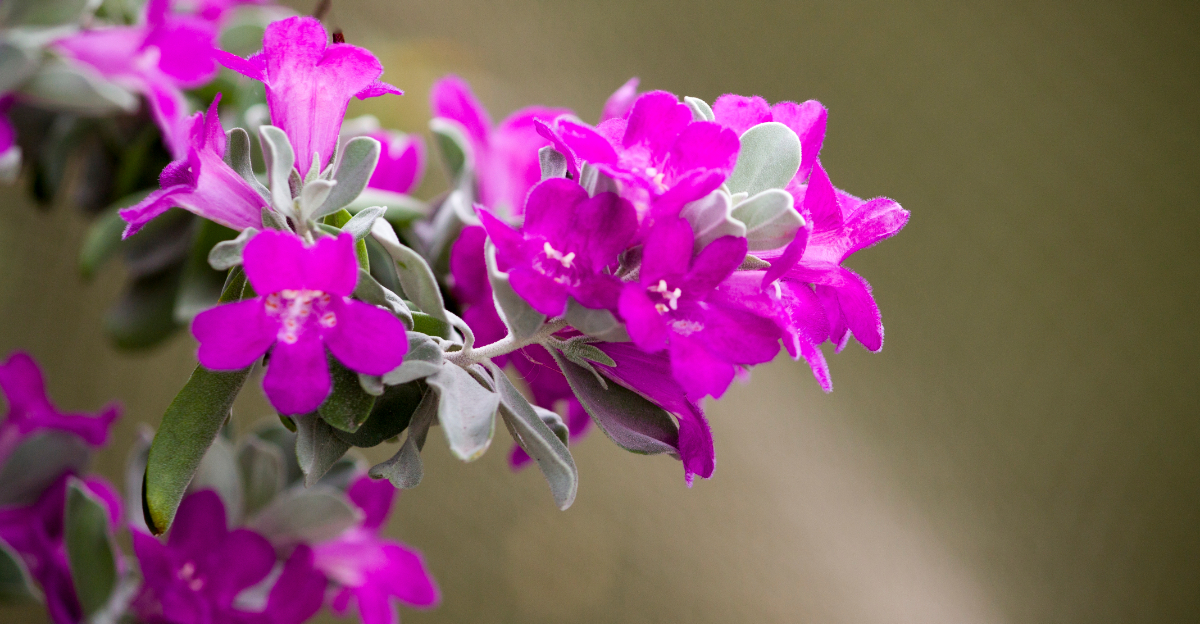
Those perfectly squared Texas sage shrubs may look tidy, but that neat shape comes with a tradeoff worth understanding.
Repeated shearing changes how this naturally loose shrub grows and can affect the display gardeners value most.
Texas sage is well suited to Arizona landscapes, where its soft foliage and colorful flowers can stand out beautifully. Forcing that natural growth into a tight box works against the form the plant develops on its own.
Before reaching for hedge shears, decide whether strict shape is really worth the extra maintenance. Your pruning choices now can influence how the shrub looks as new growth develops.
Frequent shearing can also leave the outside looking dense while hiding problems deeper inside. Better results often come from working with the shrub instead of fighting it.
Your Texas sage may look better with less cutting.
1. Those Perfect Boxes Come With Hidden Problems
A neatly trimmed box looks sharp from the street, but that crisp shape can quietly work against your Texas Sage in ways that are not obvious at first.
When you shear a shrub into a geometric form, you are cutting across branch tips in one flat pass. That forces the plant to push out a dense wall of new shoots along the outer edge.
Over time, that outer shell gets thicker and thicker.
Behind that shell, the interior of the plant starts to suffer. Air movement drops.
Moisture gets trapped in tight spots. Pests and fungal issues can find comfortable hiding places inside that dense growth.
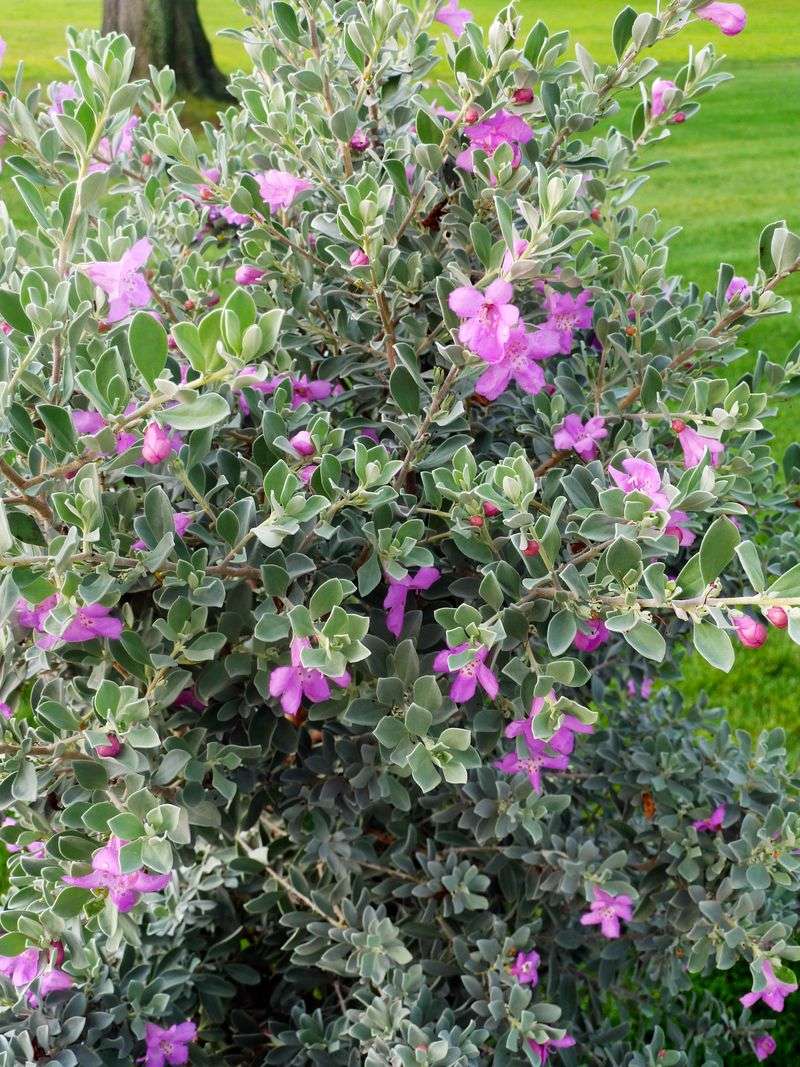
Texas Sage naturally grows in a loose, rounded shape with open branching. That open structure is not just for looks.
It actually helps the plant shed heat, move air, and stay healthy in harsh desert conditions.
Forcing it into a box shape fights against that natural design. The plant has to spend extra energy pushing out new growth along sheared edges instead of developing strong interior branches.
Gardeners in the Phoenix area and Tucson often notice that boxed-up Texas Sage plants look great for a season or two, then start looking tired and patchy.
That decline usually traces back to repeated shearing that disrupted the plant’s natural growth pattern over time.
2. Repeated Shearing Creates Dense Growth Near The Surface
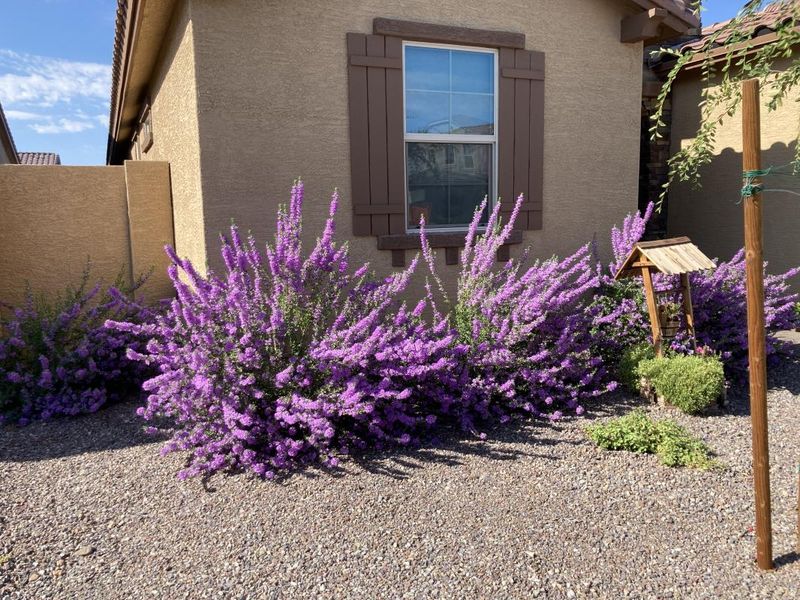
Every time you run hedge trimmers across a Texas Sage, the plant responds by sending out clusters of new shoots right at the cut points. That is just how shrubs work.
Cut once, and you get a flush of new growth. Cut again in the same spots a few months later, and that growth gets even denser.
Repeat this over a couple of years, and you end up with a thick outer shell packed with tiny twiggy branches.
That dense layer at the surface might look full and lush from a distance. Up close, though, you can see that nearly all the life is concentrated in just the outer inch or two of the plant.
Underneath that shell, the interior branches are bare and woody. Very little light reaches them.
Your Arizona Garden Changes Every Week. Your Plan Should Too.
Gardening in Arizona changes quickly throughout the season. Every Friday you’ll receive a simple weekly plan showing exactly what to plant, prune, fertilize, harvest, and protect so you never miss the right timing.
Very little new growth forms inside the shrub at that point.
Arizona summers are brutal, and a plant that has pushed most of its energy to the outer edge is not managing heat the way it should. Open branching helps desert plants breathe.
Dense surface growth works against that.
Reducing how often you shear can help slow this cycle. Letting the plant grow out a bit between cuts gives interior branches a better chance to stay active and keeps the whole shrub healthier over the long run.
3. Interior Branches Can Lose Leaves As Light Gets Blocked
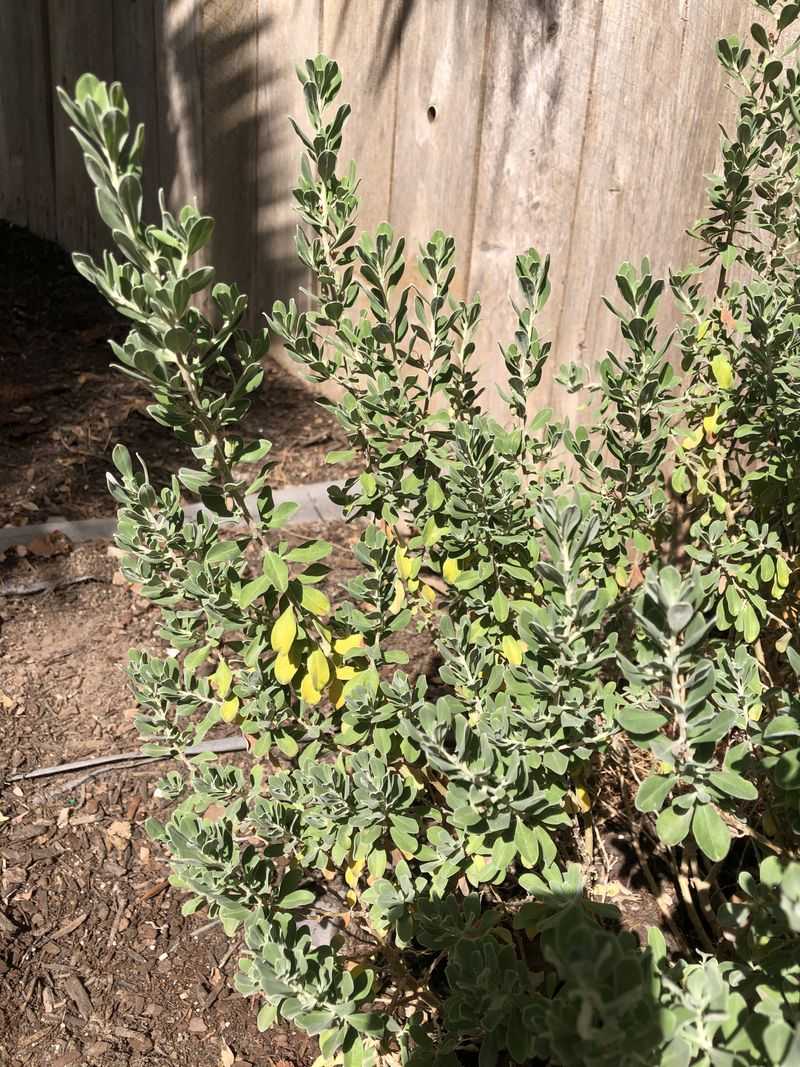
Peel back the outer layer of a heavily sheared Texas Sage, and you might find a surprise: bare, leafless branches running through the middle of the plant.
Light is what keeps interior branches productive. When the outer shell of a shrub gets dense enough to block sunlight, those inner branches stop getting what they need to support leaf growth.
Leaves thin out, then drop off entirely.
At that point, the interior of the plant is basically bare wood. It is not contributing much to the shrub’s growth.
Most of the photosynthesis is happening in that thin outer layer of new growth.
This creates a fragile structure. If a branch breaks, gets damaged, or needs to be cut back hard, there may be very little green growth left to recover from.
Shrubs need active growth along their branches to bounce back from heavy cuts.
Texas Sage can handle tough conditions, but it still needs some light to reach its inner structure. Natural, open branching allows sunlight to filter through the whole plant, keeping interior growth alive and giving the shrub more resilience.
Gardeners who notice bare interior branches should consider scaling back on shearing and allowing the plant to push some outward growth naturally.
It takes patience, but the plant tends to respond well when given room to breathe and fill back in.
4. Regular Shearing Removes Flower Buds And Flowers
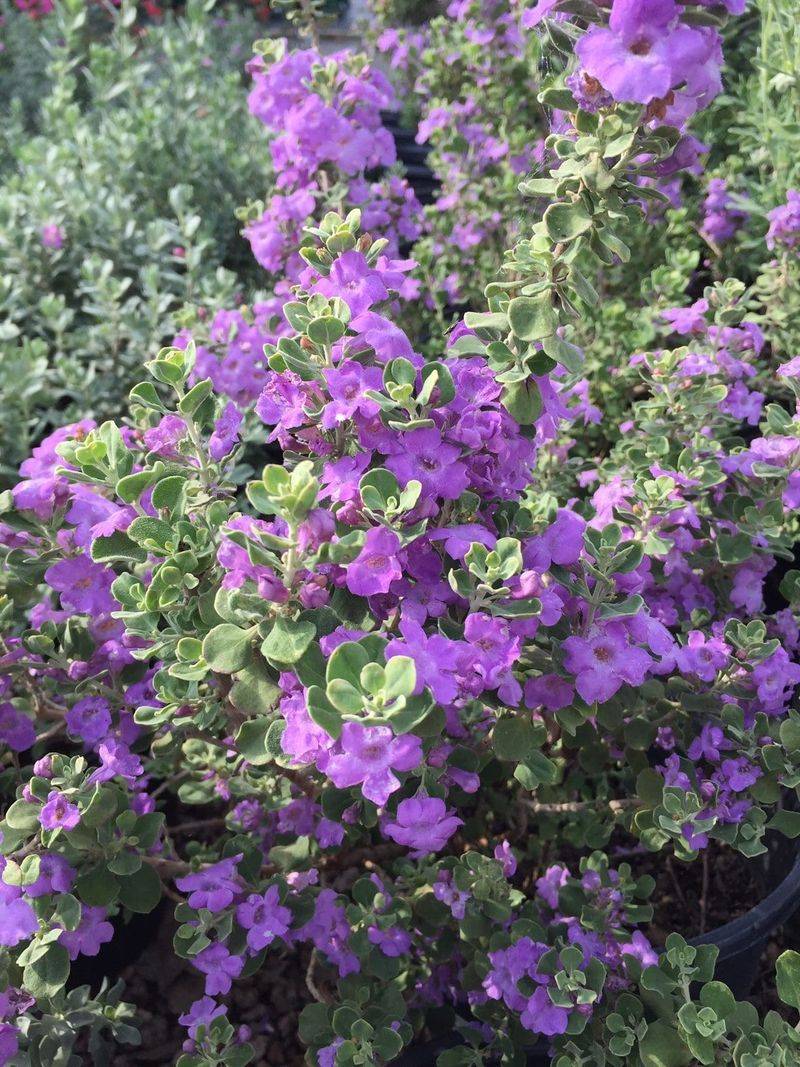
One of the best things about Texas Sage is those purple flowers. They pop up after monsoon rains and can keep appearing through late summer and into fall.
Shearing works against that show in a direct way.
Flower buds form on new growth, but they need a little time to develop before they open. When you shear a shrub on a regular schedule, you are often cutting off those developing buds before they ever get a chance to bloom.
Trim right before or during a flowering cycle, and you can wipe out weeks of potential color in a few minutes. The plant will push out new growth, but the blooming window may already be closing by the time buds form again.
Gardeners who shear their Texas Sage frequently sometimes wonder why their plant rarely blooms as heavily as their neighbors’ plants do. Bloom frequency and shearing frequency are often directly connected.
Timing matters a lot if you do choose to prune. Light shaping right after a bloom cycle gives the plant time to set new buds before the next one.
Pruning during active bloom periods tends to reduce the overall flower display.
Letting Texas Sage grow more freely through the warm months, especially during monsoon season, gives it the best chance to put on a full flower display. That is really when this plant shines brightest in the landscape.
5. Constant Cutting Can Put Extra Stress On The Shrub
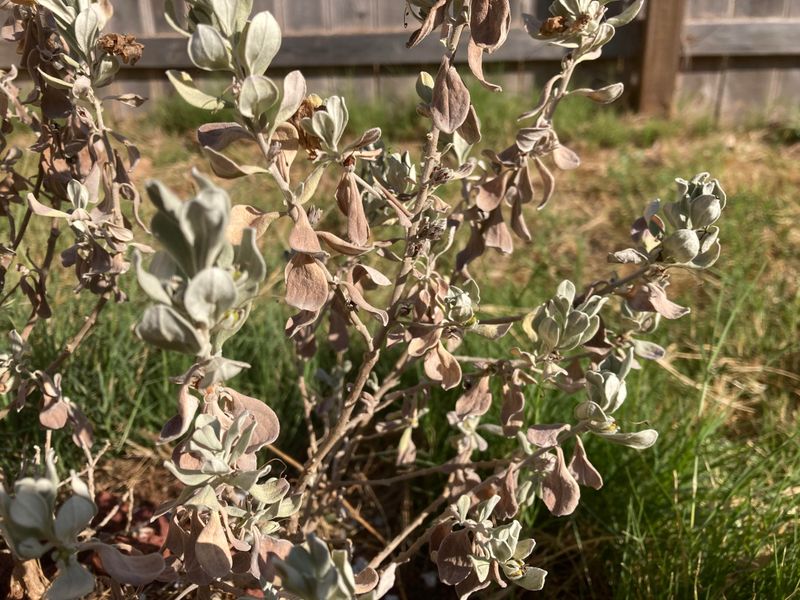
Shearing is not a neutral act for a plant. Every cut triggers a response, and that response costs the plant energy it could be using elsewhere.
After a shearing session, Texas Sage has to mobilize stored energy to push out new shoots at every cut point. Do that once, and the plant handles it without much trouble.
Do it repeatedly across a full growing season, and the plant is constantly in recovery mode.
A shrub that is always recovering from cuts has less energy available for root development, drought tolerance, and building up the reserves it needs to handle heat stress. In a region like the Sonoran Desert, those reserves matter a lot.
Texas Sage is tough, but tough does not mean unlimited. Repeated stress over several growing seasons can gradually weaken a plant’s overall condition, making it more vulnerable to pests, disease, and weather extremes.
Cutting frequency is worth thinking about honestly. If you are shearing your Texas Sage more than two or three times a year, you may be asking more of the plant than it can comfortably handle without showing wear over time.
Scaling back to occasional, selective pruning rather than scheduled shearing sessions can help the plant stay stronger. Less frequent cutting means more energy stays available for healthy growth, root support, and flowering throughout the season.
6. Selective Pruning Preserves Its Natural Shape
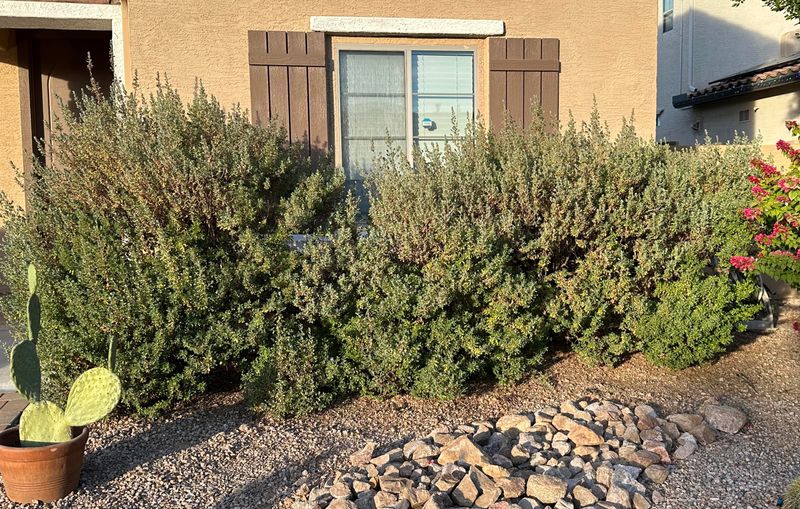
Hand pruners beat hedge trimmers when it comes to Texas Sage. Selective pruning means choosing individual branches to cut rather than shearing across the whole surface at once.
With selective cuts, you can remove branches that are crossing, growing in awkward directions, or extending too far past where you want the shrub to sit. The plant keeps its natural rounded form, and interior branches stay exposed to light and air.
This approach takes a little more time than running a trimmer across the top and sides. However, the results hold up much better over a full season.
The plant looks natural rather than clipped, and it tends to bloom more consistently.
Selective pruning also gives you better control over the size and spread of the plant without triggering a dense flush of new surface growth. You are working with the plant’s natural structure instead of fighting against it.
A good rule of thumb is to step back and look at the overall shape before making any cut. Identify the branches that are actually causing a problem, then remove just those.
Avoid cutting healthy branches that are contributing to the plant’s natural form.
In the low desert, where Texas Sage thrives with minimal care, this lighter touch tends to produce the healthiest, most attractive plants over time. Less intervention usually means a stronger, more resilient shrub season after season.
7. Enough Growing Space Means Less Pruning Over Time
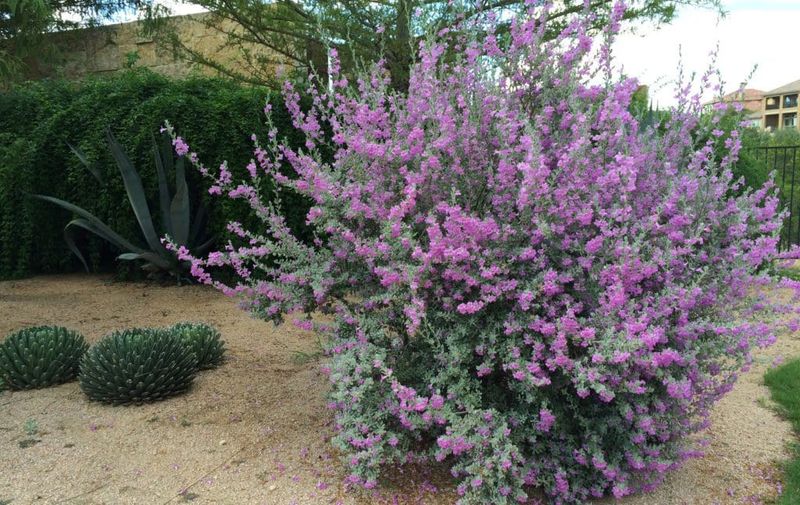
Where you plant Texas Sage can determine how much pruning it needs for years to come.
This shrub naturally spreads outward as it matures, so squeezing it into a narrow space creates maintenance that could have been avoided from the beginning.
Check the mature width of your particular variety before choosing a location. Texas Sage comes in different sizes, and a spot that looks roomy around a young plant may become crowded once the shrub reaches its full dimensions.
Pay attention to nearby sidewalks, driveways, entrances, windows, and neighboring plants. Leaving enough clearance around these areas gives branches somewhere to spread without constantly reaching into spaces where they become inconvenient.
Spacing matters between shrubs as well. Planting several too closely may look full at first, but their mature widths can eventually overlap and create pressure to keep reducing their size.
This is why mature dimensions matter more than the size of the plant sitting in its nursery container. Planning for what the shrub will become prevents a long-term battle with a location that was simply too small.
When Texas Sage fits its planting site from the start, routine maintenance becomes much simpler.
Instead of constantly controlling its size, you can focus only on occasional adjustments when they are actually needed.