Those Shiny Green Figeater Beetles in Arizona Yards Rarely Bother Ornamental Plants
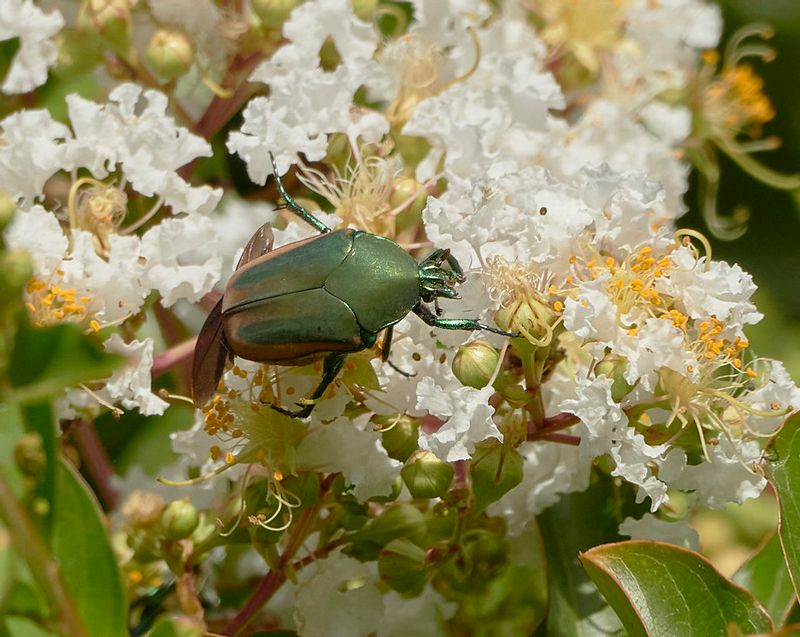
A big, metallic green beetle can buzz into your yard like a tiny helicopter and land with a thump. Most people wonder right away if it will chew up their plants.
In Arizona, the answer depends on which beetle it is and what you grow. Let’s sort out the figeater, the fruit it likes, and the plants it mostly leaves alone.
How to Recognize a Likely Figeater
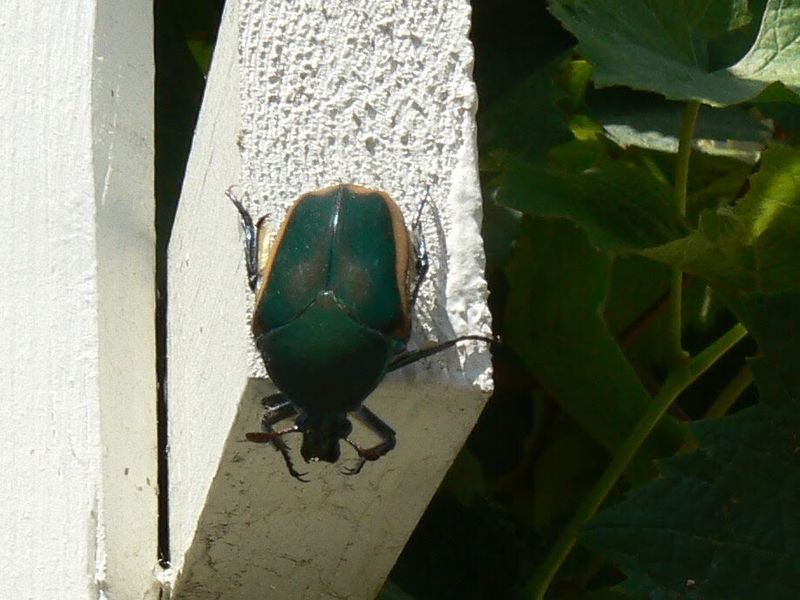
Meet the figeater, also called the green fruit beetle, a chunky insect that gets a lot of attention for its looks. It is the subject of this article, not a nickname for every shiny green bug in your yard.
Adults are large metallic green scarab beetles, roughly three-quarters of an inch to about an inch and a third long. They are heavy-bodied and fly with a loud, clumsy hum, so you often hear one before you see it.
UC IPM describes the green fruit beetle this way and notes that adults are occasional fruit pests rather than leaf chewers.
Here is the catch: looks alone may not settle the question. Several other beetles also flash green, and some are smaller or striped.
Think of color and size as clues, not proof.
If you want to be careful, snap a clear photo from above and from the side. Hold off on any pest plan until you know what you have.
A single beetle on your patio is not a reason to panic.
What Figeater Grubs Eat—and When They Can Matter
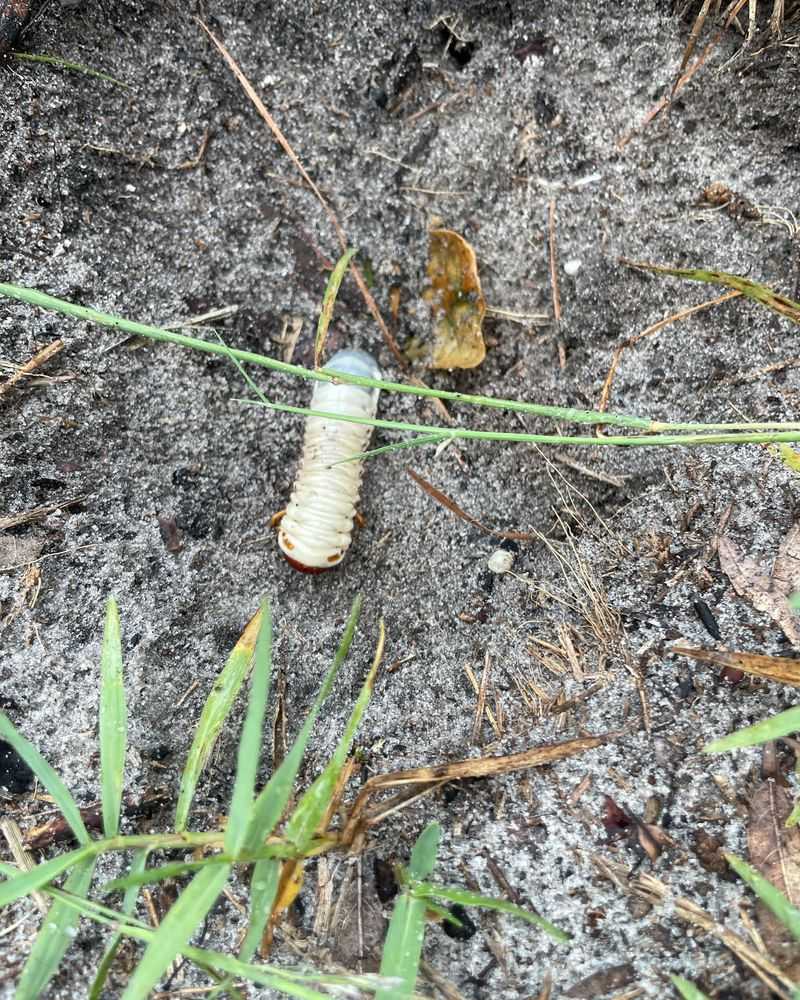
Dig into an old compost pile and you might meet a plump, cream-colored grub curled into a C. Figeater grubs can reach about two inches long, and they look a lot like other scarab grubs.
Their usual menu is decaying organic matter such as compost, manure, and lawn clippings. UC IPM says the grubs generally do not damage living plants, so a grub in your compost bin is normal.
There is one caveat worth knowing. A University of Arizona Extension fact sheet says that in some cases very large grub numbers can harm lawns and pasture by feeding on roots.
So the practical clue is numbers and location. A few grubs in rich compost are ordinary, while a patchy lawn with many grubs in the turf deserves a closer look.
If you are unsure, ask your local Extension office.
Adults Can Damage Ripening Fruit
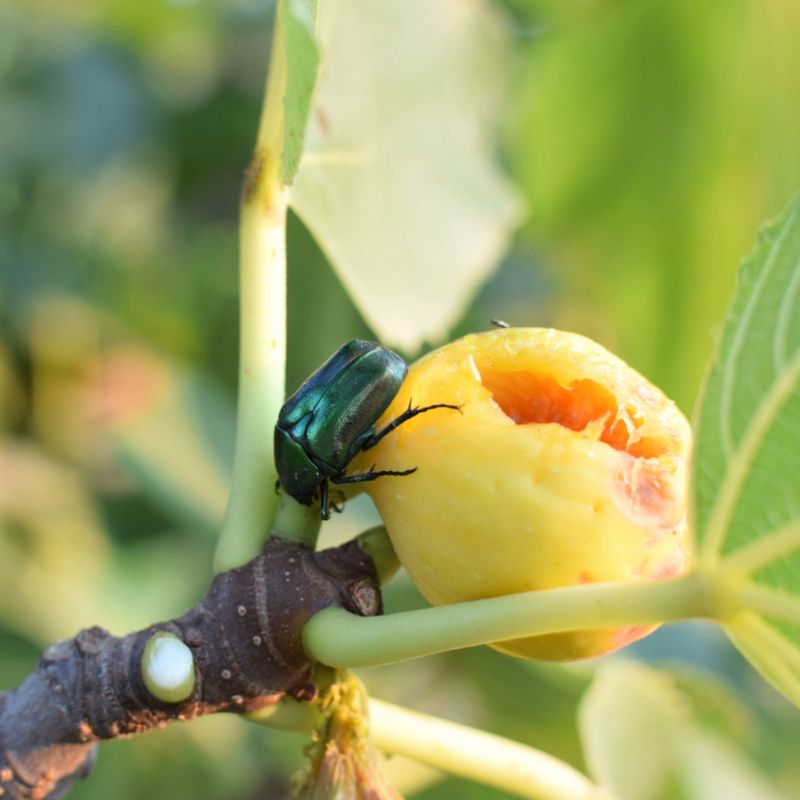
Fruit growers should hear this part clearly: adult figeaters like soft, ripe fruit. Their best-known garden damage is to figs, peaches, plums, apricots, grapes, and similar crops.
They can chew into fruit that is already sweet and juicy, and damaged fruit often draws other pests. UC IPM lists these fruits as the main targets, which is why the reassurance in this article stops at ornamental plants.
Adults show up from late spring through early fall, so the window is long. That does not make a single sighting an infestation.
One beetle on a branch is just a visitor.
What matters is whether you see beetles on ripening fruit. Check your trees and vines now and then in the warm months, especially as fruit softens, and plan your protection around that timing.
Protect Fruit With Harvesting and Barriers
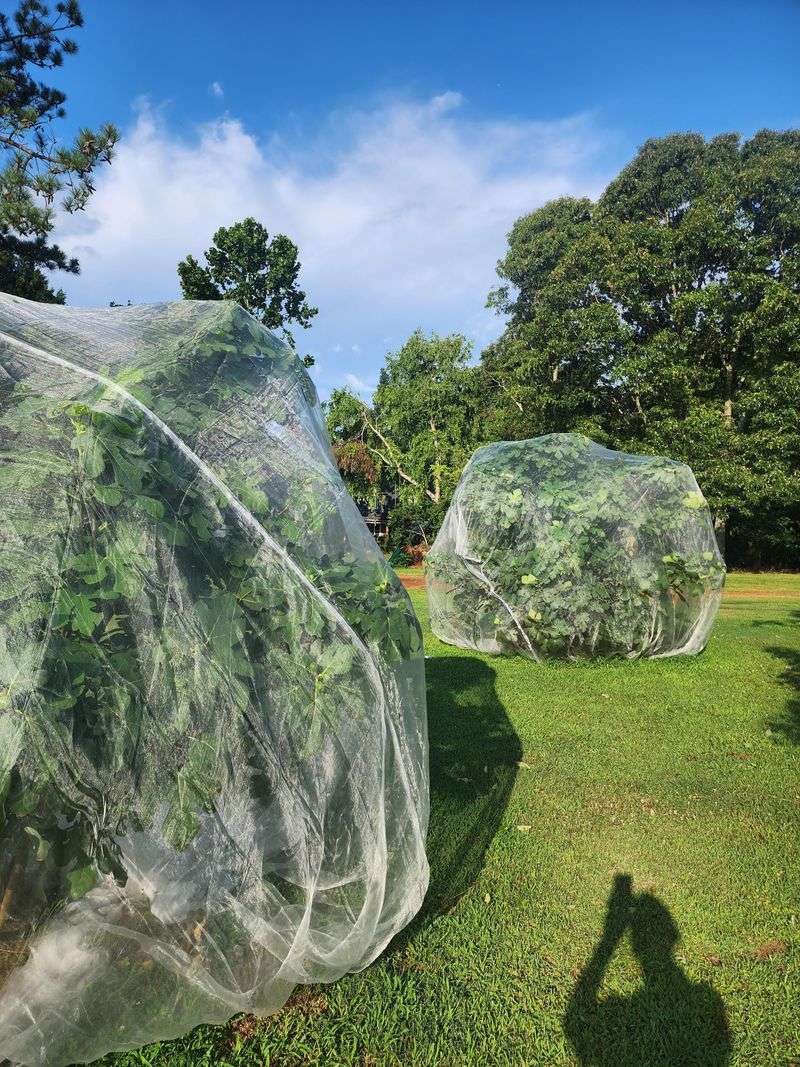
Protecting the crop is easier than chasing beetles. The goal is not to remove every beetle, only to keep your fruit from becoming their lunch.
Start by harvesting ripe fruit promptly. UC IPM advises picking fruit as it ripens and cleaning up fallen fruit so it does not attract more beetles.
Next, think about a physical barrier. You can bag fruit or cover it with netting after pollination and before ripening, which keeps beetles from reaching the soft flesh.
Timing matters. Cover too early and you may interfere with pollination, and wait too long and beetles may already be feeding.
A quick walk each morning to check the fruit goes a long way.
Manage Nearby Organic Matter Without Routine Sprays

Where you put the compost pile may matter more than any spray. Since grubs feed in decaying material, keeping compost, manure, and clippings away from fruit trees may reduce breeding habitat nearby.
A screened compost bin is another option. This is a way to lower the odds, not a guaranteed fix, since beetles can fly in from elsewhere.
As for insecticides, they are not a routine answer. Arizona Extension cautions against treating adults near harvest, and UC IPM does not recommend applications for this beetle.
If anyone does choose a pesticide, the label rules, including harvest intervals, must be followed. For most home gardens, tidy piles, quick picking, and barriers are the calmer and safer plan.
Not Every Shiny Green Beetle Is a Figeater
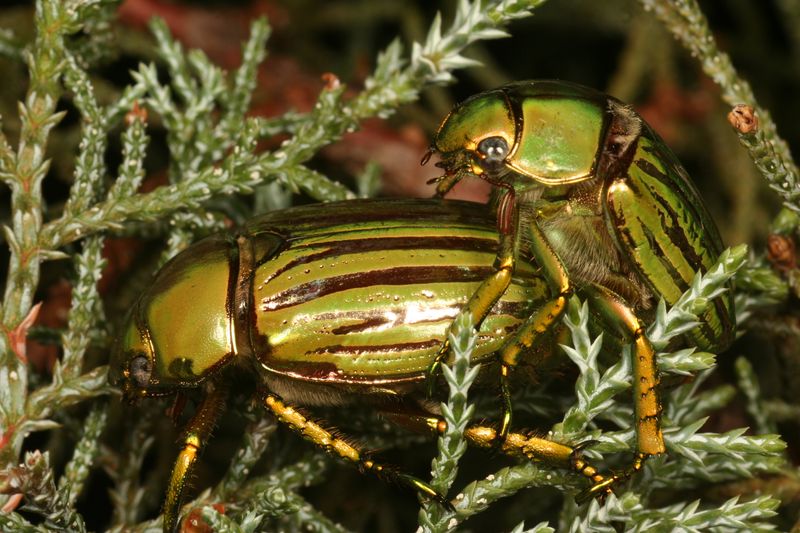
Plenty of beetles flash green, so a quick comparison helps. Arizona’s glorious beetle, Chrysina gloriosa, has distinctive stripes and is associated with junipers at higher elevations, as a University of Arizona Extension newsletter explains.
Japanese beetles are another lookalike. They are much smaller than figeaters and have white hair tufts along the abdomen, according to New Mexico State University Extension.
If you are not sure what landed in your yard, share a clear photo with your local Cooperative Extension office. Do that before applying any pest advice, including the tips above.
In the end, judge your concern by the beetle you have and the crop at risk. A shiny visitor is a question, not an answer.