Toad Lilies Bring Orchid-Like Blooms To Shady Georgia Gardens In October
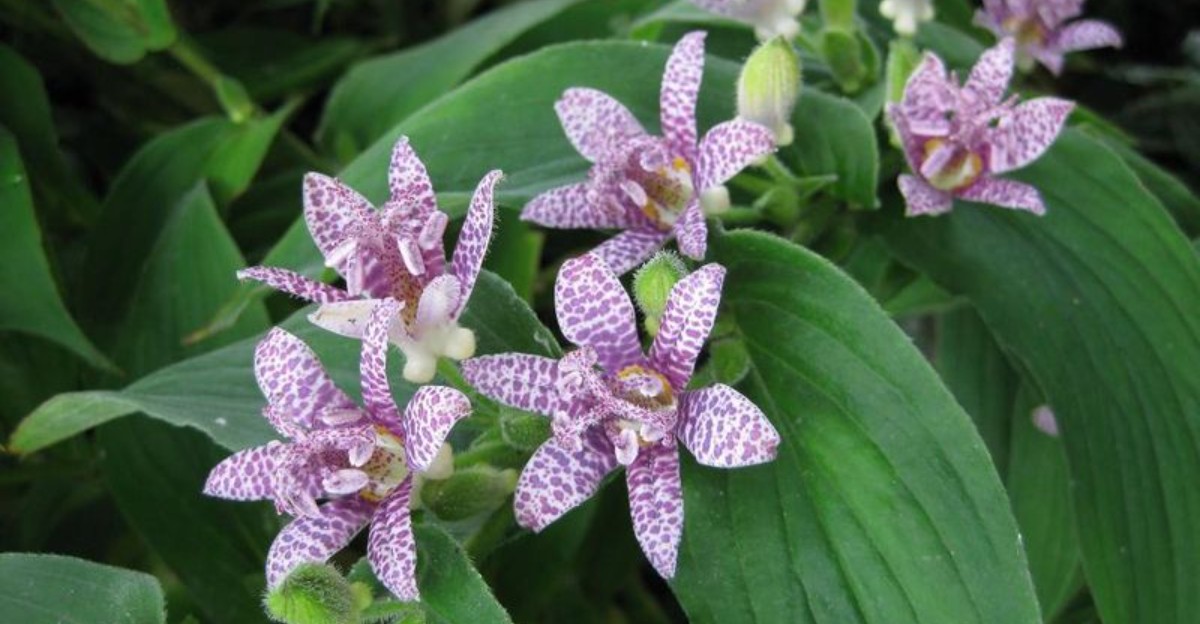
Most shade gardens are winding down by October, but a few spotted blooms can still surprise you in a Georgia bed.
Toad lilies open right as hostas and ferns start to fade, often catching even experienced gardeners off guard.
Their small, speckled flowers look a lot like orchids up close, with purple spots on pale petals. Many varieties bloom along arching stems that lift the flowers to where you can see them easily.
They are easy to miss from a distance, which is part of what makes finding them so satisfying.
Shady, moist spots that stay too dark for most flowering plants often suit them well.
Plant them near a path or patio where you will actually see the blooms. A plant this unusual deserves a spot that gets noticed.
1. Spotted Flowers Show Up Just As Shade Gardens Start Fading
Timing is where toad lilies really earn their spot. While hostas and astilbes are winding down, these plants are just getting started.
Most common types, such as Tricyrtis hirta and its hybrids, bloom from late summer into fall.
In a typical Georgia garden, that often means flowers in September and October. Exact timing can shift a bit with the variety, the amount of shade, and how warm the season runs.
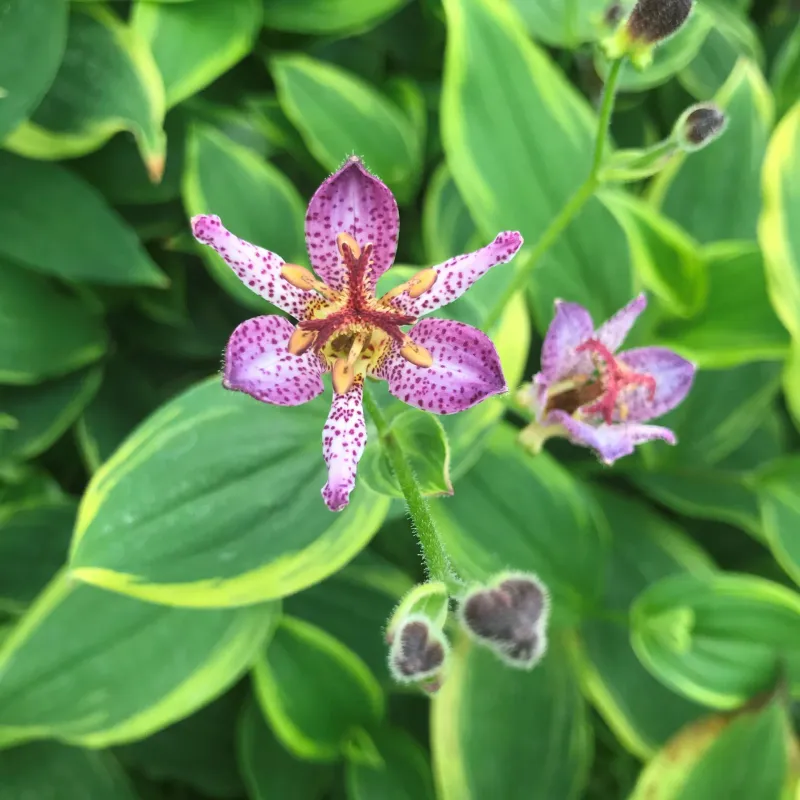
Each bloom is usually white or pale lavender, covered in small purple or maroon speckles. Some cultivars lean more toward solid purple or soft yellow.
Shade gardens rarely get this kind of fresh color so late in the year.
Fall-blooming perennials for shade are not easy to find, so toad lilies fill a real gap. They pair nicely with plants that offer foliage color in autumn, like ferns or heucheras.
Keep in mind that the show is not loud or showy from a distance.
Flowers are fairly small, often around an inch across. They open over several weeks rather than all at once, which stretches out the season.
If an early frost arrives, the blooms may get cut short. That is more likely in the mountains than in middle or south parts of the state, but it can happen anywhere during a cold snap.
2. Close Up The Blooms Look More Like Tiny Orchids Than Lilies
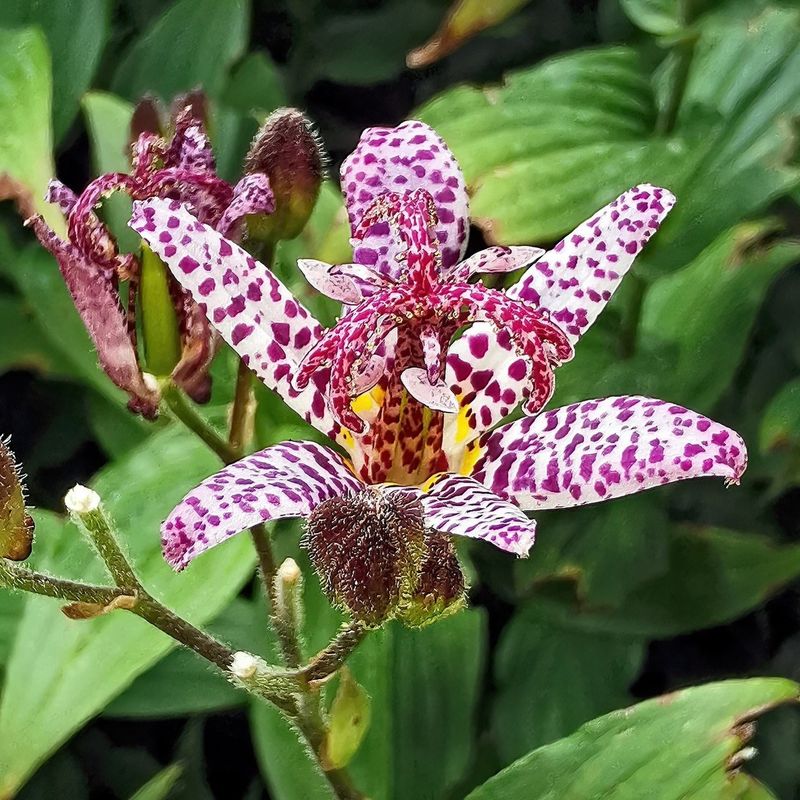
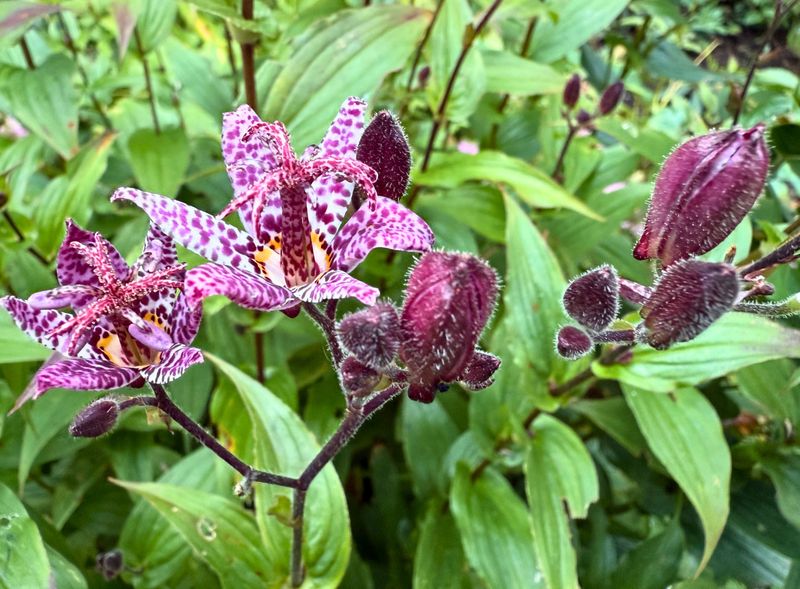
Lean in once, and you will see why people call them orchid-like. Each flower has six spotted tepals that spread open like a little star.
Rising from the center is an upright structure made of the style and stamens.
That central column often has its own speckles and tiny knobs, which gives the flower an almost sculpted look. Orchid fans tend to notice the resemblance right away.
Despite the comparison, toad lilies are not orchids at all.
Botanists place them in the lily family, Liliaceae, and they come from East Asia. Japan, Taiwan, and parts of China are home to the wild species.
So where does the odd common name come from? Most sources link it to the spotted pattern, which some people think looks a bit like toad skin.
Your Georgia Garden Changes Every Week. Your Plan Should Too.
Gardening in Georgia changes quickly throughout the season. Every Friday you’ll receive a simple weekly plan showing exactly what to plant, prune, fertilize, harvest, and protect so you never miss the right timing.
Photographers in Georgia often find these flowers a fun late-season subject.
Soft, cloudy light shows the spots best, since bright sun can wash out the details. A phone camera with a close-up setting usually works well enough.
Patterns can vary quite a bit between cultivars. Some have heavy, dark freckles, while others show only light dotting on pale petals.
If you plan to buy one, try to see it in bloom first so you get a look you really enjoy.
3. Arching Stems Carry Flowers Where Leaves Meet The Stem
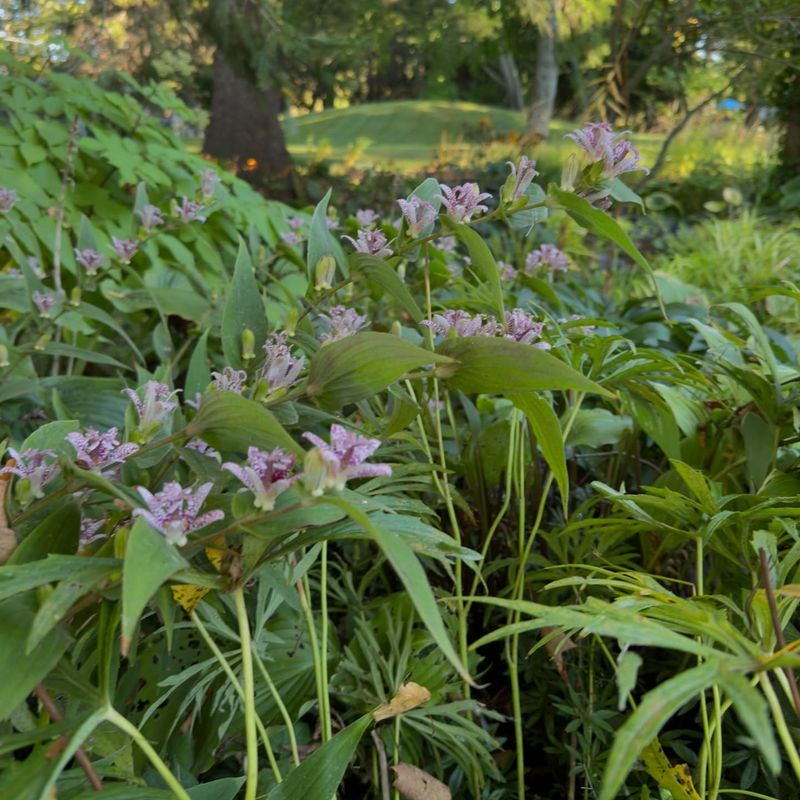
Picture a stem bending gently toward the ground, with flowers tucked along its length. That graceful shape is a big part of the appeal.
On many common toad lilies, blooms form in the leaf axils, the spots where each leaf joins the stem.
Some types also produce flowers at the stem tips. Tricyrtis hirta, a species often sold in garden centers, tends to bloom along much of the stem.
Plant height varies by type and growing conditions, but many reach roughly two to three feet.
Leaves are usually lance-shaped and alternate along the stem. Some cultivars have gold or cream edges that brighten dark corners even before flowers appear.
Arching stems look lovely spilling over a low wall or the edge of a raised bed.
Gardeners in Georgia sometimes notice stems leaning more than expected. Too much shade can make plants stretch toward available light, so a spot with bright, filtered shade often works better than deep gloom.
Staking is rarely needed for most varieties.
Heavy rain can knock taller stems sideways, though. Planting near sturdy neighbors like ferns or hellebores gives them a little support without any ties.
Once frost arrives, the stems brown and can be cut back during winter cleanup or in early spring.
4. Moist Rich Soil In Partial To Full Shade Keeps Them Happy
Think forest floor. Toad lilies grow best in soil that stays evenly moist and has plenty of organic matter.
Leaf mold, compost, or shredded leaves worked into the bed can make a noticeable difference.
Georgia clay holds water well but can turn heavy and airless. Mixing in compost helps loosen it, while still keeping moisture around the roots.
Drainage still matters, even for a moisture-loving plant.
Soggy, waterlogged soil in winter can lead to root problems. A gentle slope or slightly raised bed helps where water tends to pool after storms.
Light needs are fairly simple. Partial shade to full shade suits most varieties, and morning sun with afternoon shade is often ideal.
Deep shade with no direct light may mean fewer flowers, depending on the cultivar.
A layer of shredded leaves or pine straw around the plants helps hold moisture. It also keeps soil cooler during hot spells, which these plants appreciate.
Hardiness depends on the type, but many toad lilies are rated for roughly USDA zones 4 through 8 or 9.
Gardeners in the warmest coastal and southern areas may find them harder to keep thriving. Checking the plant tag and asking a local nursery can help you pick a variety that fits your yard.
5. Hot Weather And Dry Soil Can Stress These Woodland Perennials
Summer is the real test. Toad lilies come from cool, moist woodlands, and long stretches of heat can wear them down.
Brown, crispy leaf edges are a common sign that a plant has been short on water or exposed to too much sun.
Other causes can produce similar damage, so check soil moisture before deciding what went wrong. A finger pushed a couple of inches into the soil tells you a lot.
During dry spells, a deep soaking at the base is usually more helpful than frequent light sprinkles.
Morning watering lets leaves dry during the day. Soaker hoses work well in shade beds because they put water right at the roots.
Hot Georgia summers can be tough on these plants, especially in middle and south regions.
Afternoon shade becomes even more important where nights stay warm. A spot that gets midday sun may scorch leaves even if the soil stays damp.
Stressed plants may bloom less or look ragged by October.
Most established toad lilies bounce back the next year once conditions improve. Still, a plant that struggles every summer may simply be in the wrong spot.
Moving it in early spring or fall to a cooler, shadier place can help, though results vary with weather and soil.
6. Slugs Sometimes Chew Holes In The Leaves
Ragged holes overnight? Slugs and snails are a frequent suspect in moist, shady beds where toad lilies grow.
Their damage usually shows up as irregular holes in leaves, sometimes with shiny, dried slime trails nearby.
Caterpillars and other insects can also chew foliage, so look closely before blaming slugs. Checking plants with a flashlight after dark often reveals the culprit.
Wet springs and rainy stretches tend to bring more slug activity.
Thick mulch and dense ground covers give them cool hiding spots during the day. Pulling mulch back an inch or two from stems can help a little.
Hand-picking works well for small gardens. Drop slugs into soapy water, or relocate them far from the bed.
Shallow traps baited with beer are another option some gardeners use.
Iron phosphate baits are labeled for slugs and are generally considered a lower-risk choice around pets and wildlife. Always follow the label directions closely.
A few holes rarely harm an established plant.
Most toad lilies keep growing and blooming even with some leaf damage. Gardeners across Georgia often decide that minor chewing is not worth heavy treatment.
If damage is severe year after year, combining cleanup, traps, and careful baiting tends to give better results than any one method alone.
7. Planting Near A Path Lets You Appreciate The Details
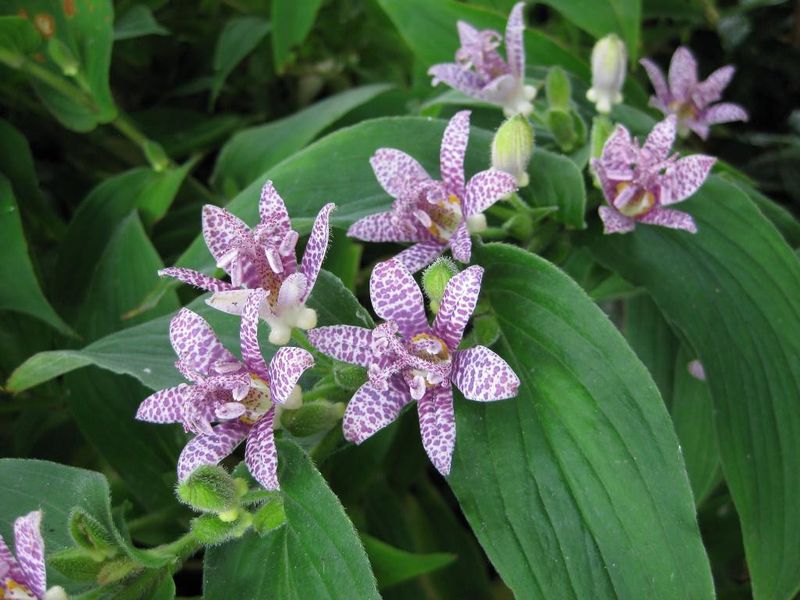
Small flowers deserve a front-row seat. Toad lilies tend to get lost when planted at the back of a big border.
Placing them beside a walkway, patio edge, or garden bench brings those speckled blooms right to eye level.
You notice the spots and the little central column every time you walk by. Visitors usually stop and ask what they are.
Raised beds and containers work too, since they lift the flowers closer to your face.
Pots dry out faster than garden soil, though. Expect to water more often, especially during warm fall days in Georgia.
Choose a path spot that still meets their needs for shade and steady moisture.
A sunny walkway edge may look convenient but can stress the plants. A shaded path under trees or along the north side of a house is often a better match.
Spacing matters as clumps slowly spread over time.
Give them enough room so stems can arch without blocking the walkway. Many types spread gradually by rhizomes and can be divided in early spring if they crowd the path.
Good partners include ferns, hellebores, and low sedges, which offer texture without hiding the flowers.
Early October is a nice time to stroll that path and enjoy the late-season show.