Georgia Homeowners May Spot Young Copperheads Around Yards This September
Small snakes can be easy to overlook among fallen leaves, mulch, and low plants around the yard. In September, one young snake deserves extra care before you get any closer.
Young copperheads are already venomous, even though their smaller size can make them seem less concerning.
This is also a time when recently born copperheads may be encountered in Georgia. Their coloring provides useful clues, but relying on a single feature can still lead to a mistaken identification.
So give any snake you cannot confidently identify plenty of room.
Keep children and pets away, and avoid trying to pick up or handle the snake yourself. Once the area is clear, you can decide whether professional help is needed.
Knowing what to watch for makes an unexpected September sighting much easier to handle safely.
1. Those Small Snakes In The Yard Deserve A Closer Look
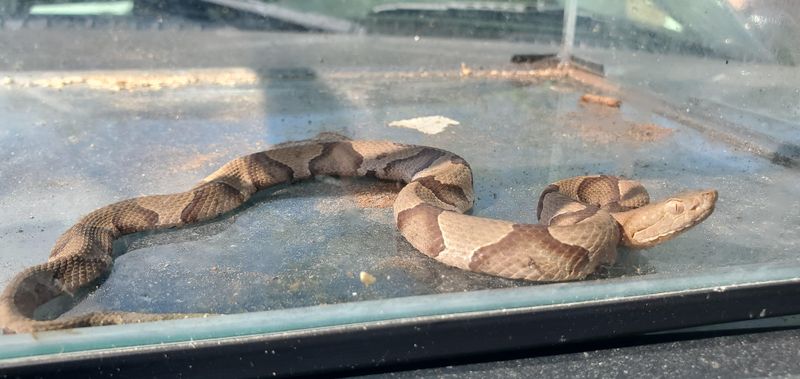
A snake the length of a pencil can still be a copperhead. Size tells you almost nothing about what species you are dealing with.
Plenty of harmless snakes share the same yards. Ring-necked snakes, brown snakes, and young rat snakes all turn up in mulch beds and under porch steps during fall.
Look at the pattern instead of the size.
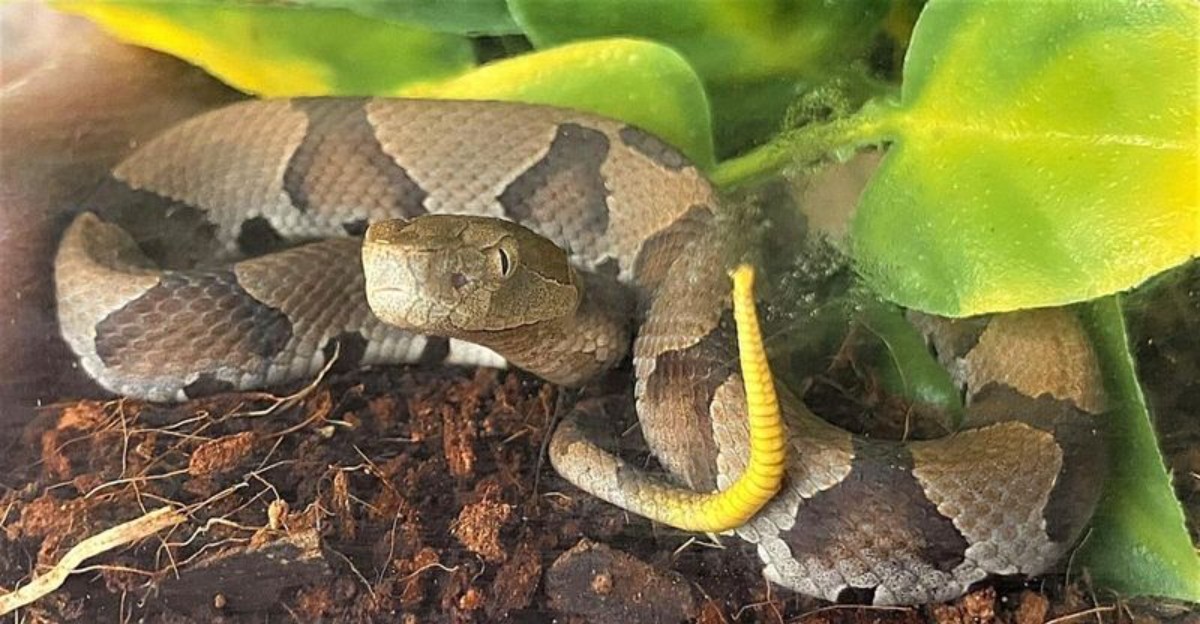
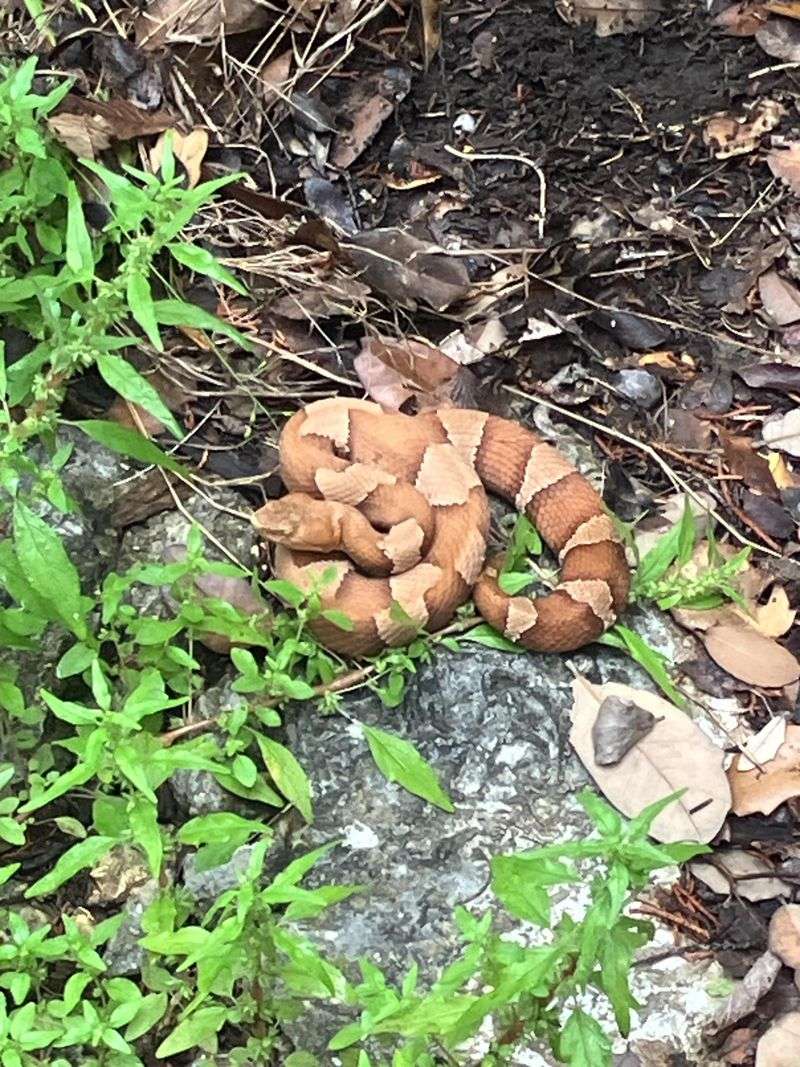
Copperheads carry dark bands shaped a bit like an hourglass across a tan or copper body. Those bands are wide along the sides and pinch narrow along the spine.
Young ones show that same pattern, just smaller and sometimes sharper in color.
Head shape helps too, though it can mislead you. Copperheads have broad, triangular heads, but some harmless snakes flatten their heads when scared.
Best approach is to slow down and observe from several feet back.
Take a photo with your phone if you can do it safely, then zoom in later. A clear picture beats a rushed guess every time.
Georgia is home to more than forty snake species, and only a handful are venomous.
Odds usually favor a harmless snake. Still, treating every unknown snake as if it could be a copperhead is the sensible habit during September.
2. Young Copperheads Are Born Around Late Summer And Early Fall
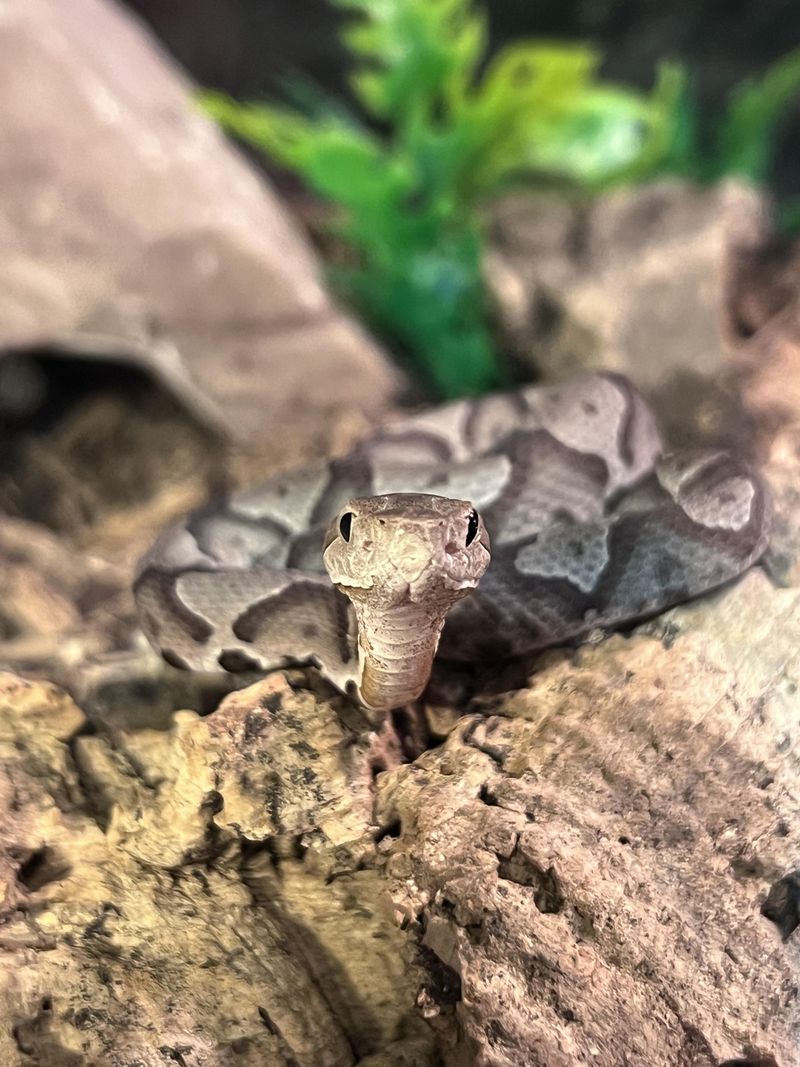
Timing explains a lot about September sightings. Copperheads give birth in late summer, usually somewhere between August and early October.
Unlike many snakes, they do not lay eggs. Females carry their young and give birth to live babies, often several at a time.
Litters typically range from about three to ten.
Those newborns do not stay put. Within days they scatter and start hunting on their own, which puts more small snakes on the move at once.
Suddenly a yard that seemed snake-free has visitors.
Warm afternoons and mild nights keep them active. Cooler weather later in fall slows them down, but September in most of Georgia stays plenty warm for a snake looking to feed.
Young copperheads eat small prey like insects, frogs, and lizards.
Grass edges, garden beds, and damp spots near downspouts all attract those food sources. Where the food goes, the snakes tend to follow.
Your Georgia Garden Changes Every Week. Your Plan Should Too.
Gardening in Georgia changes quickly throughout the season. Every Friday you’ll receive a simple weekly plan showing exactly what to plant, prune, fertilize, harvest, and protect so you never miss the right timing.
Exact timing shifts year to year with weather, so treat these weeks as a general window rather than a fixed schedule.
Homeowners often notice a short burst of sightings, then things quiet down. That pattern lines up with birthing season and the young spreading out to find their own territory.
3. A Bright Yellow Tail Can Help Identify A Young Copperhead
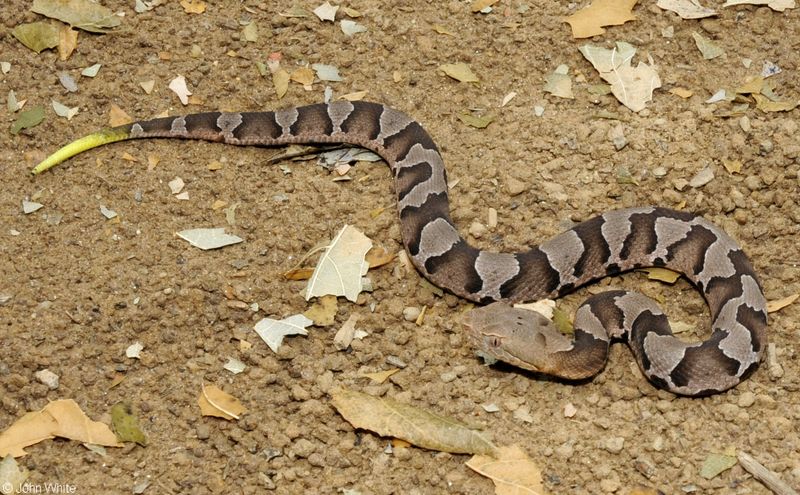
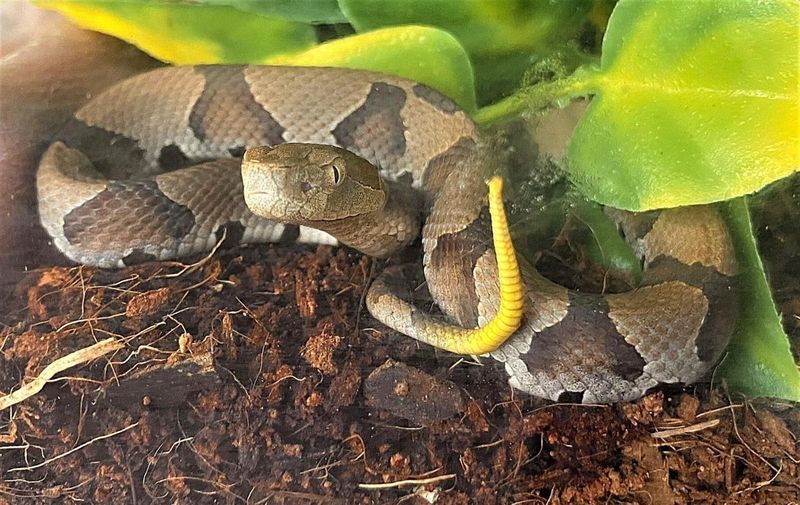
The tail tip is the giveaway. Young copperheads often have a bright yellow or greenish-yellow tail that stands out against their tan body.
Biologists believe the young snake wiggles that colorful tip to lure curious frogs and lizards close enough to grab. A built-in fishing lure, basically.
Color fades as the snake grows.
Most lose that yellow within their first year or so, which means the trait only shows up on the youngest snakes. Adults show no trace of it.
Other young pit vipers can have pale tails too, so the tail alone is not proof.
Pair it with the hourglass bands and a copper-toned head for a stronger read. Two or three matching clues beat one.
Never move closer just to check the tail.
Zoom lenses and phone cameras exist for a reason, and a photo from six or eight feet away gives you all the detail you need. Local wildlife groups in Georgia will often help identify a picture if you are unsure.
Lighting can trick your eyes, especially in shade or wet grass.
What looks yellow at dusk might read tan in daylight. When the identification feels shaky, treat the snake as venomous and simply leave it alone.
4. Brush Piles And Fallen Logs Give Them Places To Hide
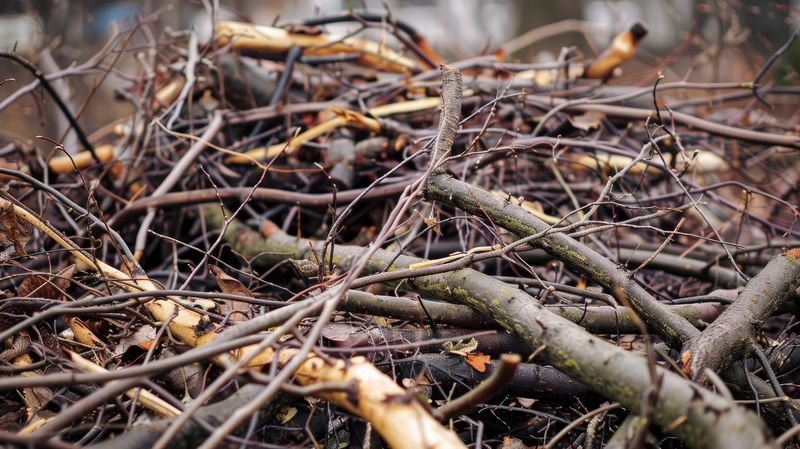
Clutter is an invitation. A brush pile offers shade, cool ground, and a steady supply of insects and small prey.
Young copperheads are small enough to tuck into spaces you would not think twice about. Gaps under a log, the underside of a plywood scrap, or the hollow beneath a landscape timber all work fine.
Leaf litter hides them completely.
Their coloring matches dry oak and hickory leaves so closely that people walk right past without noticing. That camouflage is their main defense.
Firewood stacks deserve extra caution in fall.
Wood held directly on soil traps moisture and attracts rodents, and rodents draw snakes. Raising the stack on a rack helps quite a bit.
Rock walls and stacked pavers create similar shelter.
Damp mulch beds near foundations also rank high on the list, especially where irrigation keeps the ground moist. Small pockets of humidity matter more than most people expect.
Wear gloves and boots when moving yard debris.
Use a rake or long-handled tool to shift piles before reaching in with your hands. Across Georgia, that one habit prevents a lot of unpleasant surprises during September cleanup.
Sunny mornings pull snakes toward warm edges.
Driveways, walkway borders, and south-facing beds warm up first, so scan those spots before kneeling down to work.
5. Young Copperheads Are Venomous From The Time They Are Born
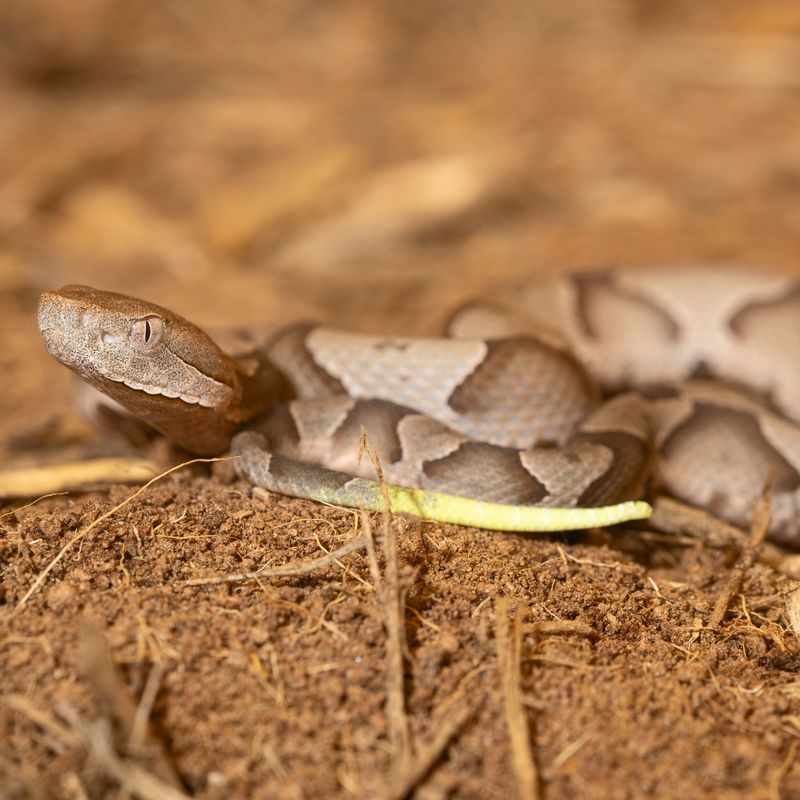
Small does not mean harmless. Copperheads have working venom glands and functional fangs from birth.
An old backyard rumor claims baby snakes are more dangerous than adults. That idea does not hold up, since adults carry far more venom.
Both deserve the same respect.
Copperhead bites in the United States are rarely life-threatening for healthy adults, but they hurt badly and can cause serious swelling and tissue damage. Medical care is the right call every time.
Children and pets face higher risk because of body size.
A dog nosing around a woodpile is exactly the kind of encounter that ends with a vet visit. Keeping pets away from brush helps.
Most bites happen when someone tries to move or handle the snake.
Leaving it alone drops the risk dramatically. Copperheads would rather stay frozen and unnoticed than strike at something large.
If a bite happens, call for help right away.
Keep the limb still and below heart level, remove rings or tight items, and head to an emergency room. Skip tourniquets, ice, and cutting, since those old methods cause more harm.
Georgia poison control lines can walk you through next steps by phone.
Save that number in your contacts before you ever need it.
6. Give Any Suspected Copperhead Plenty Of Space
Backing away solves most snake problems. Copperheads do not chase people, and they strike only when they feel cornered.
Step back slowly and watch where you put your feet. Sudden jumping around does not help and can land you closer than before.
Six to eight feet is a comfortable buffer.
Keep kids and dogs inside until the snake moves on. Most will slip away within a short time if nobody bothers them.
Trying to relocate one yourself is a bad idea.
Shovels, brooms, and grabbing tools put your hands and legs right in strike range. Wildlife removal services handle this work for a reason.
Copperheads freeze instead of fleeing.
That stillness fools people into thinking the snake is not alive or not aware. It is simply relying on camouflage, and it will hold that position for a long while.
Snakes in Georgia play a real role in controlling rodents and insects around homes.
Removing every snake you see rarely fixes anything, since new ones move into empty territory. Managing habitat works better than chasing individuals.
Mark the spot mentally and check it later.
If a snake keeps returning to the same corner, that area probably offers shelter or food worth changing.
Flashlights help after dark, especially on warm September evenings.
7. Clearing Common Hiding Spots Can Make Yards Less Inviting
Yard maintenance beats any repellent on the market. Take away shelter and food, and snakes have less reason to stick around.
Start with the obvious clutter. Haul off brush piles, break down old lumber stacks, and clear scrap metal or unused pots from along the fence line.
Mow regularly through fall.
Short grass gives snakes little cover and makes them easier to spot from a distance. Trimmed shrub bottoms do the same thing.
Rodent control matters more than people realize.
Spilled birdseed, open pet food, and unsealed trash cans feed mice, and mice bring larger snakes. Cleaning those sources up shifts the whole balance.
Thin out heavy mulch near doorways and walkways.
Two or three inches is plenty for most beds, and deeper layers just create hiding pockets. Pull mulch back a few inches from the foundation as well.
Seal gaps around crawlspace vents, garage doors, and utility lines.
Quarter-inch mesh over openings blocks small snakes without trapping moisture. Check those spots each season since screens tear.
Snake repellent granules have little proven effect, so skip the expense.
Habitat changes give real results, though no yard in Georgia can be made totally snake-free with woods or creeks nearby.
Work in gloves and closed shoes during cleanup.
Fall chores put your hands in exactly the places snakes prefer, so slow down and look first.