8 Unique Cactus Plants To Grow In Florida If You Love Cacti And Succulents
Florida and cactus sound like a contradiction.
The state gets sixty inches of rain a year in some spots, the humidity rarely drops below uncomfortable, and some sites stay wet after summer storms, while many sandy yards drain fast but still get soaked again and again during rainy season..
Everything about that picture says cacti don’t belong here. But here’s what most people get wrong.
Florida has its own native cactus tradition, and the right varieties don’t just tolerate this climate, they genuinely thrive in it. The same intense sun that wilts other plants is exactly what certain cacti live for.
Sandy, fast-draining soil in coastal and central Florida suits them better than almost anywhere else in the country. Even the rain becomes a non-issue once you understand drainage and variety selection.
Succulent lovers who write off Florida as a lost cause are missing out on one of the most rewarding plant niches the state has to offer. These prove exactly that.
1. Start With Florida Prickly Pear
Few cacti have deeper roots in Florida’s landscape than prickly pear, and for good reason.
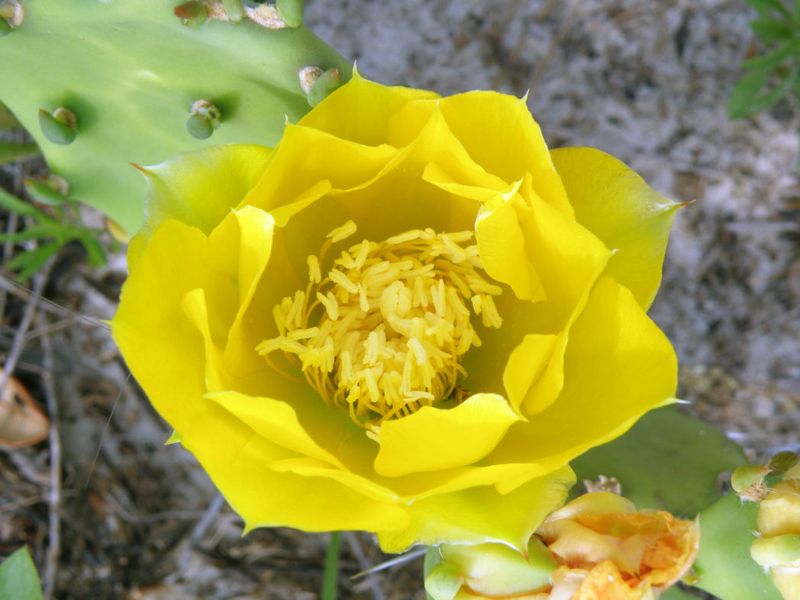
Several native Opuntia species grow naturally across the state’s sandy ridges, coastal dunes, and scrub habitats, making them genuinely suited to Florida’s heat, drought, and thin soils.
When you source nursery-propagated pads from a reputable native plant nursery, you get a cactus that is already adapted to your region without any guesswork.
The flowers are a warm golden yellow and bloom reliably in spring and early summer. After the blooms fade, the reddish-purple fruits ripen and attract birds, gopher tortoises, and other wildlife.
That ecological value alone makes prickly pear worth growing in a sunny Florida yard with excellent drainage and room to spread.
Sandy or gravelly soil is ideal. Heavy clay or poorly drained spots will cause the pads to rot quickly, especially during the summer rainy season.
In wetter areas of the state, raised beds or mounded planting sites help move excess moisture away from the root zone.
One caution worth repeating clearly: never collect pads or whole plants from wild areas, dunes, roadsides, nature preserves, or state parks. Florida’s native prickly pear populations face pressure from habitat loss and illegal collection.
Stick to nursery-grown plants and you support both conservation and responsible horticulture at the same time.
2. Grow Ladyfinger Cactus For Small Spaces
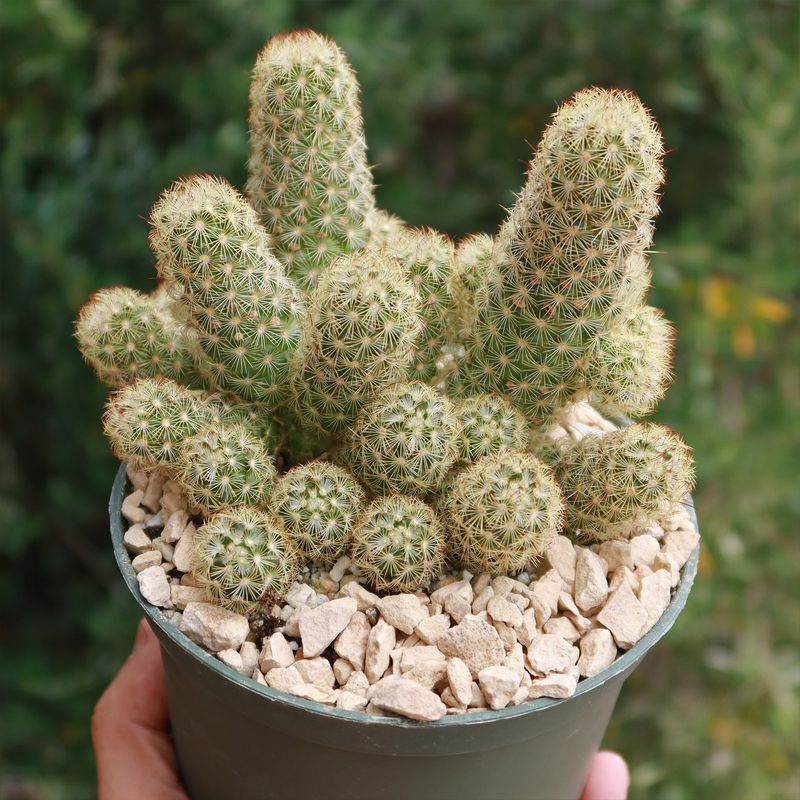
Compact, clustering, and genuinely charming, Mammillaria elongata earns its common name with slender cylindrical stems that look almost delicate compared to most spiny cacti.
Each stem is covered in small star-shaped spine clusters, and in good light the whole clump takes on a golden or rusty tone that looks especially striking in a terracotta pot against a bright Florida porch or shelf.
For Florida gardeners with limited space, this is one of the most practical options around. It stays small, grows slowly, and fits comfortably on a windowsill, a covered patio ledge, or a sunny sheltered balcony.
The key is keeping it in a pot with fast-draining cactus mix and never letting it sit in moisture during humid summer months.
Your Florida Garden Changes Every Week. Your Plan Should Too.
Gardening in Florida changes quickly throughout the season. Every Friday you’ll receive a simple weekly plan showing exactly what to plant, prune, fertilize, harvest, and protect so you never miss the right timing.
Florida’s rainy season is the trickiest time for ladyfinger cactus. Repeated soaking from afternoon downpours can cause rot at the base of the stems, especially in containers without drainage holes or in mixes that hold too much moisture.
Moving the pot under a covered overhang during the heaviest rain weeks helps enormously.
Bright direct light for several hours each day keeps the stems compact and healthy. Stretched, pale stems are a sign the plant needs more light.
Water sparingly, but do not follow a calendar blindly. In warm bright months, water only after the mix dries; in cooler months, reduce watering even more.
During Florida’s rainy season, shelter matters more than extra irrigation.
3. Use Bunny Ears Cactus For Bold Pads
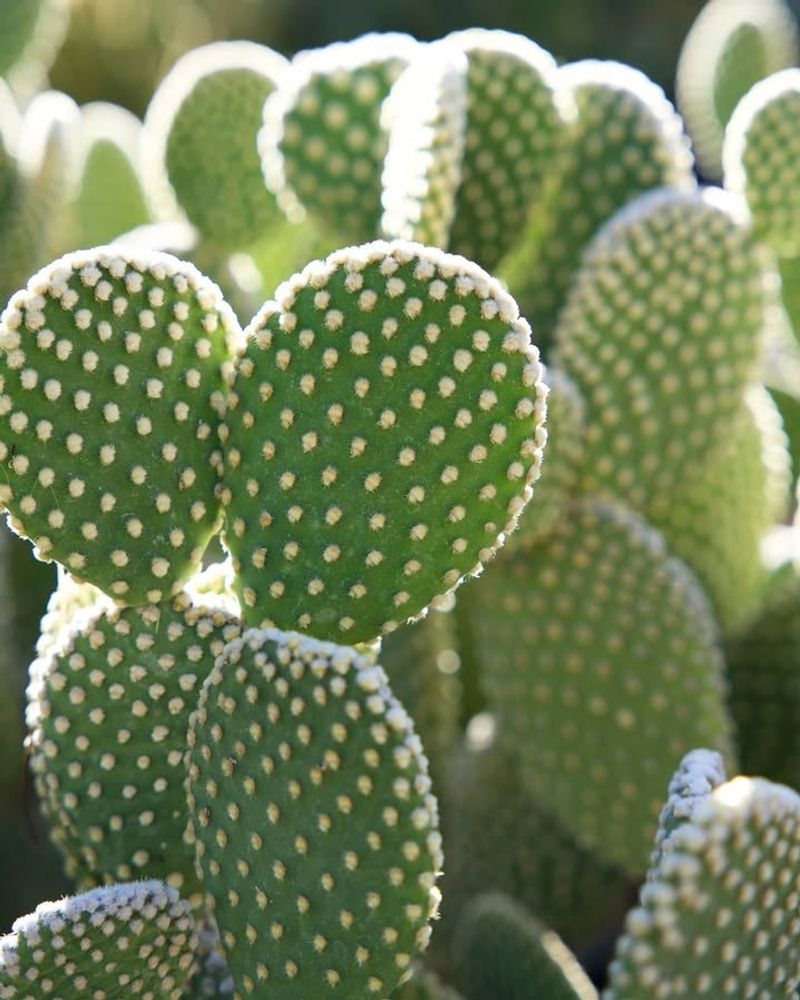
Opuntia microdasys has a look that stops people in their tracks. The flat, rounded pads covered in neat rows of white or yellow glochids give it a soft, almost cartoon-like appearance, which is exactly what makes it misleading.
Those tiny glochids detach at the slightest touch and embed in skin with surprising persistence, so placement around children, pets, or high-traffic seating areas is a bad idea regardless of how approachable the plant looks.
As a container specimen on a sunny Florida patio, it works well.
The sculptural quality of the paired pads gives any outdoor space a strong visual anchor, and it handles Florida’s heat without complaint as long as the mix drains fast and the pot does not collect standing water.
A gritty cactus mix with added perlite or coarse sand is the right foundation.
Full sun is non-negotiable for bunny ears cactus. Less than five or six hours of direct light leads to stretched, floppy pads that lose the crisp upright look that makes this species so distinctive.
South or west-facing patios in Florida tend to give the best results.
During the summer rainy season, moving the pot to a covered area or under a deep overhang protects it from prolonged wet conditions.
North Florida gardeners should bring the pot indoors or under shelter during cold snaps, as extended freezing temperatures can damage the pads significantly.
4. Choose Fishbone Cactus For Filtered Light
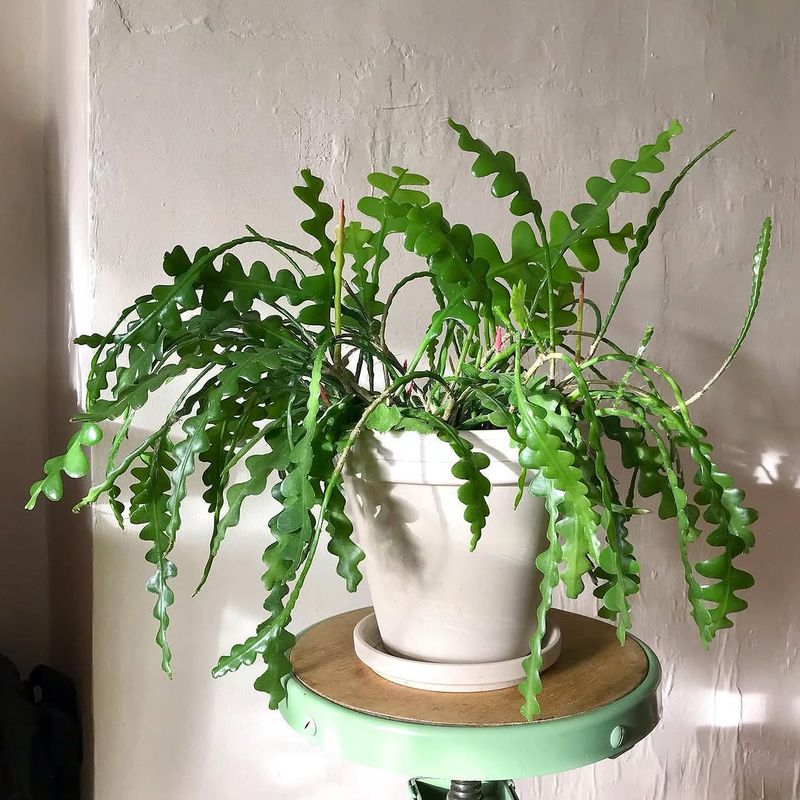
Not every Florida cactus grower has a blazing south-facing wall or a spot that bakes in full sun all day. Fishbone cactus, known botanically as Disocactus anguliger or Epiphyllum anguliger depending on the source, is genuinely built for something different.
Its deeply lobed, zigzag stems look unlike any other cactus in a collection, and it prefers the kind of bright filtered light found on a shaded lanai, a covered east-facing porch, or near a window with morning sun.
This is an epiphytic cactus, meaning it grows naturally in the canopy of tropical forests rather than in desert soil. That origin shapes everything about how you care for it in Florida.
It wants a loose, airy mix with good organic content, similar to what you might use for an orchid, rather than a dry gritty desert blend. Humidity is not a problem for this one since Florida’s summer air actually suits it well.
The caution is soggy soil. Even though fishbone cactus tolerates more moisture than a desert cactus, sitting in waterlogged mix will cause root problems quickly.
Hanging baskets work especially well because they promote airflow around the roots and drain freely after watering.
When conditions are right, fishbone cactus rewards patient growers with large, fragrant flowers that may open at night when the plant is mature and conditions are right.
The blooms are short-lived but genuinely impressive, making the wait worthwhile for anyone who enjoys unusual flowering cacti.
5. Let Night Blooming Cereus Steal The Show
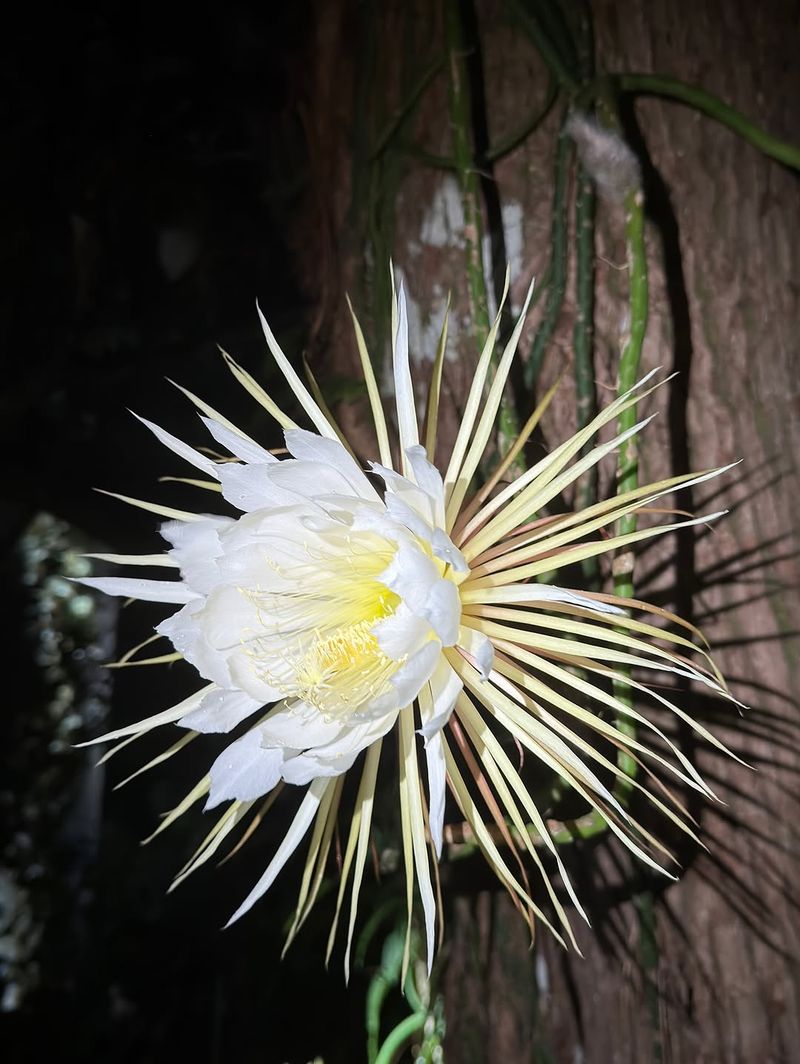
There are few gardening moments in Florida quite like the night a cereus blooms. The flowers are enormous, white, and intensely fragrant, opening after dark and lasting only until morning.
Neighbors have been known to gather in yards specifically to watch the event, which tells you something about how dramatic this cactus can be when it decides to perform.
The common name night blooming cereus covers several different cacti, which creates real confusion at nurseries and garden centers. Hylocereus, Selenicereus, and Epiphyllum species all go by that name at various times.
Checking the botanical name before buying helps you understand what you are actually getting in terms of growth habit, size, and care needs.
Most night-blooming cereus types grown in Florida are epiphytic or semi-climbing, meaning they do better with support, bright filtered light, and a well-drained but not bone-dry mix rather than harsh full desert sun. A sturdy trellis or fence works well.
They can get large over time, so give them room.
Cold sensitivity varies by species, but most prefer protection from hard freezes. In South and Central Florida they often grow outdoors year-round with minimal fuss.
North Florida gardeners should have a plan for moving container specimens under cover when temperatures threaten to drop below freezing. Always buy from reputable nurseries rather than taking cuttings from unknown sources in the landscape.
6. Add Rat Tail Cactus To Hanging Baskets
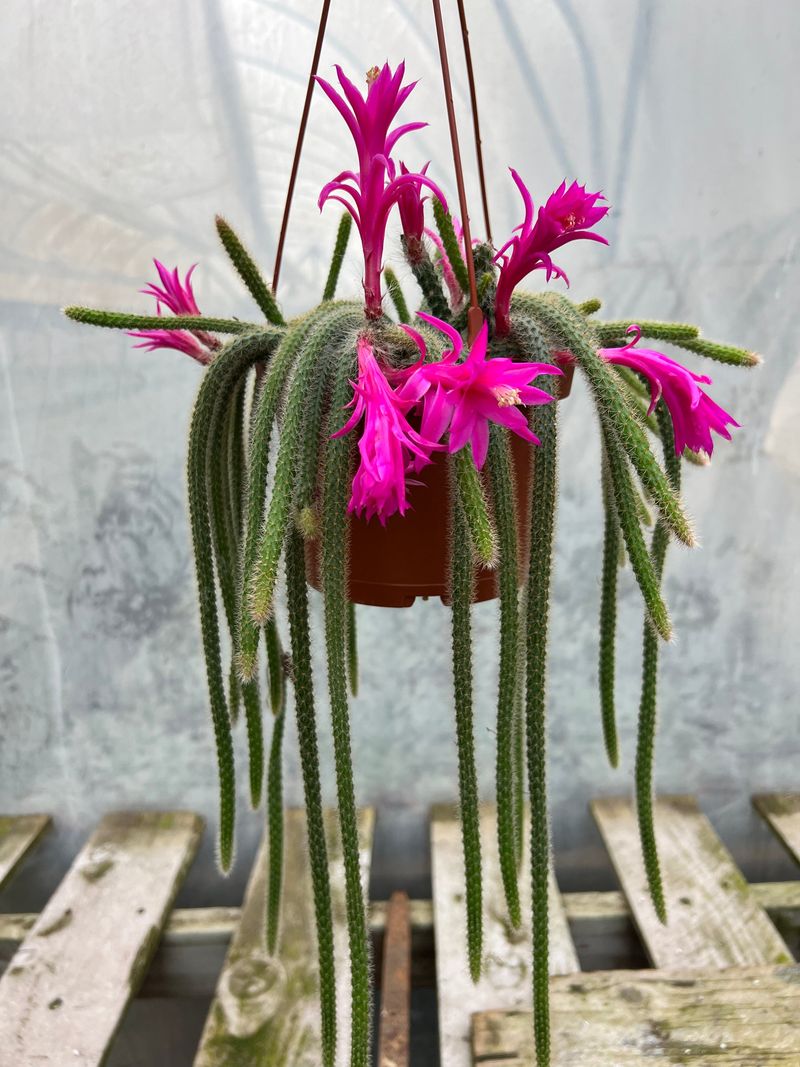
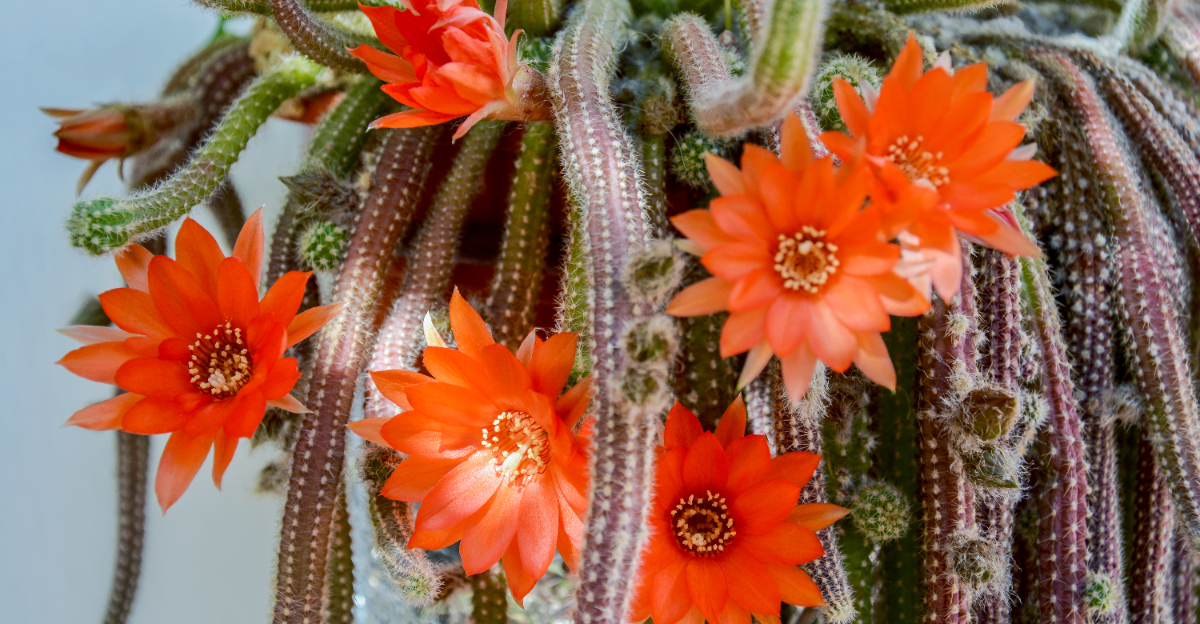
Rat tail cactus earns its name honestly. The long, slender, trailing stems covered in fine bristly spines hang down from a basket in dense curtains that look completely different from any upright desert cactus you might picture.
When the bright reddish-pink flowers open along the stems in spring, the whole thing becomes genuinely eye-catching in a way that surprises people who did not expect a cactus to look that lively.
Known botanically as Aporocactus flagelliformis or reclassified by some sources as Disocactus flagelliformis, this trailing cactus is a natural fit for Florida’s hanging basket culture.
It thrives in the kind of bright but slightly filtered light found under a covered porch roof or a pergola that blocks the most intense midday rays while still delivering good overall brightness.
Airflow is important for rat tail cactus in Florida’s humid summers. A basket that dries out reasonably between waterings and hangs where breezes move through the stems stays much healthier than one tucked into a stagnant corner.
Fast-draining mix is essential since the stems will show yellowing and softness quickly if roots stay wet too long.
During the heaviest weeks of summer rain, moving the basket under a deep overhang or covered entry protects it from the kind of prolonged saturation that causes problems.
A little cold sensitivity means North Florida growers should bring the basket inside when temperatures fall toward freezing in winter.
7. Keep Golden Barrel Cactus In A Dry Pot
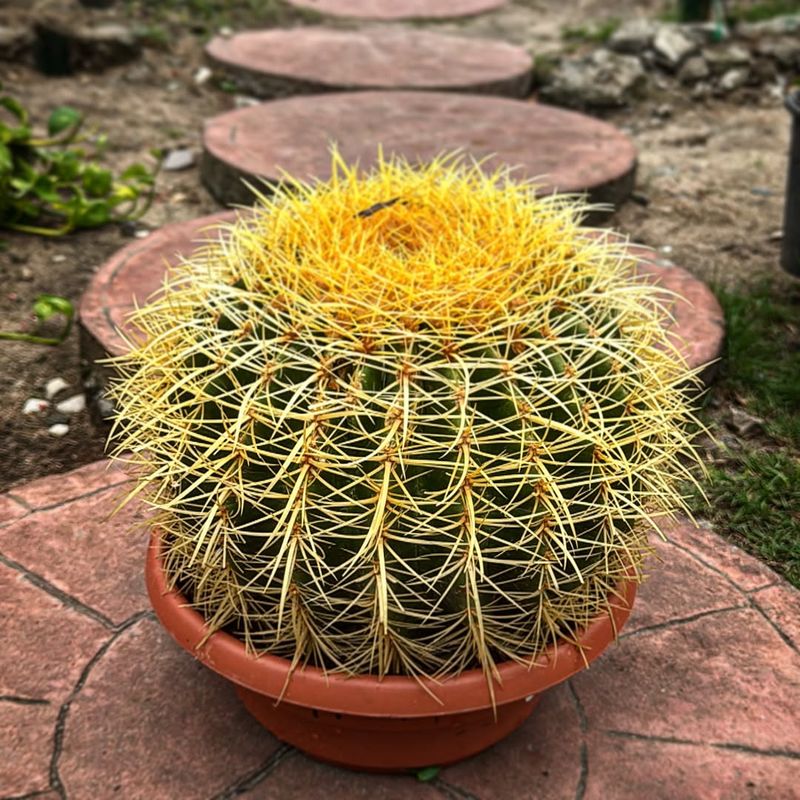
Round, golden-spined, and unmistakably bold, Kroenleinia grusonii, still widely sold under its older name Echinocactus grusonii, is one of those cacti that commands attention the moment it appears in a space.
The dense ribs lined with sharp yellow spines give it a sculptural quality that works well as a standalone specimen on a sunny entry or a dry covered patio where it can be appreciated without being bumped into accidentally.
In Florida, the honest advice is to keep golden barrel in a container rather than planting it directly in the ground in most parts of the state.
Florida’s summer rainy season delivers far more moisture than this cactus tolerates well, and even sandy soil can stay wet longer than golden barrel prefers after heavy daily storms roll through.
A container with a gritty mix and a drainage hole gives you real control over moisture levels in a way that open garden beds simply do not.
Full sun is essential. Less than five or six hours of direct light causes slow, uneven growth and reduces the intensity of those signature golden spines.
South or west-facing covered patios, movable pot platforms, or dry entryways with good sun exposure all work well.
Watering should be restrained and thoughtful. During the dry season, a deep soak followed by a complete dry-out period suits this cactus well.
In summer, keep it where rainfall does not repeatedly soak the mix, and water only when the container has dried thoroughly.
8. Try Star Cactus For A Compact Statement
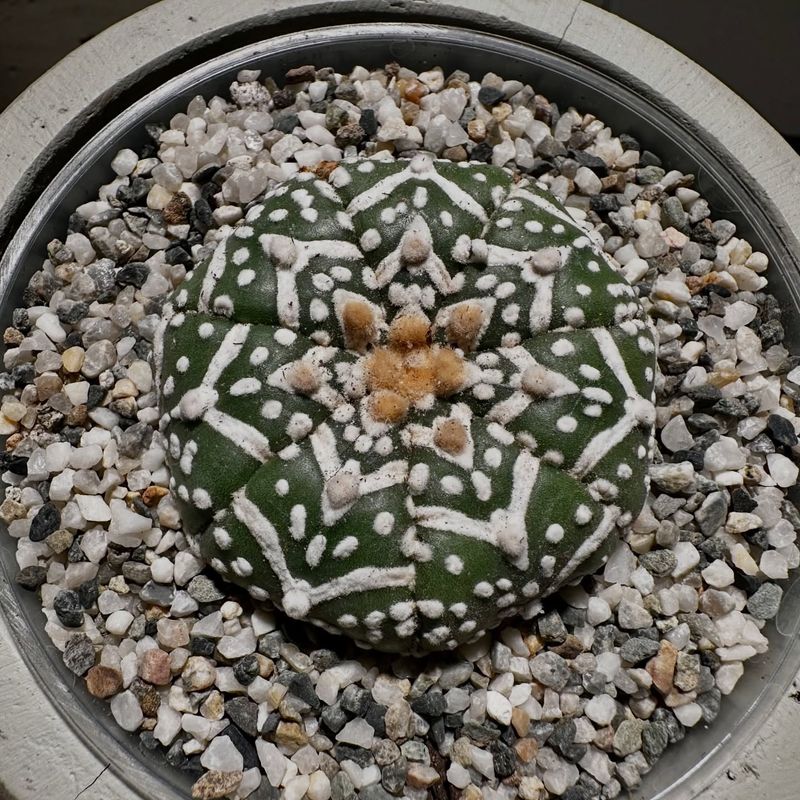
Star cactus has a quiet, almost geometric beauty that appeals strongly to collectors and careful gardeners. Astrophytum asterias, sometimes called sand dollar cactus, is flat, nearly spineless, and patterned with small white tufts arranged in neat rows across its surface.
Astrophytum myriostigma, the bishop’s cap, has a similar white-dotted look but grows more upright with distinct ribs. Both are compact enough to live comfortably on a bright windowsill or a sheltered outdoor shelf.
These are not plants for casual landscape beds in Florida. They need precise drainage, very restrained watering, and protection from the heavy downpours that roll through Central and South Florida almost daily in summer.
A covered porch, a sheltered entry, or a spot under a deep roof overhang works far better than an exposed outdoor bed where rain falls freely on the pot.
The mix matters enormously. A very gritty blend with high mineral content and minimal organic matter keeps the roots healthy and reduces the risk of rot during humid stretches.
During the rainy season, keep it sheltered from downpours and water only after the mix has dried thoroughly.
One conservation note worth mentioning clearly: Astrophytum asterias is listed as endangered in parts of its native Texas and Mexico range. Always buy only nursery-propagated specimens from reputable sellers.
Demand for collector cacti has contributed to illegal wild collection pressure, and responsible sourcing makes a genuine difference for long-term conservation of this species.